

Top Tweets for #PreparednessStrategy

#NewPreps #PreparednessMindset #PreparednessStrategy
https://t.co/9IuUJo6YdK
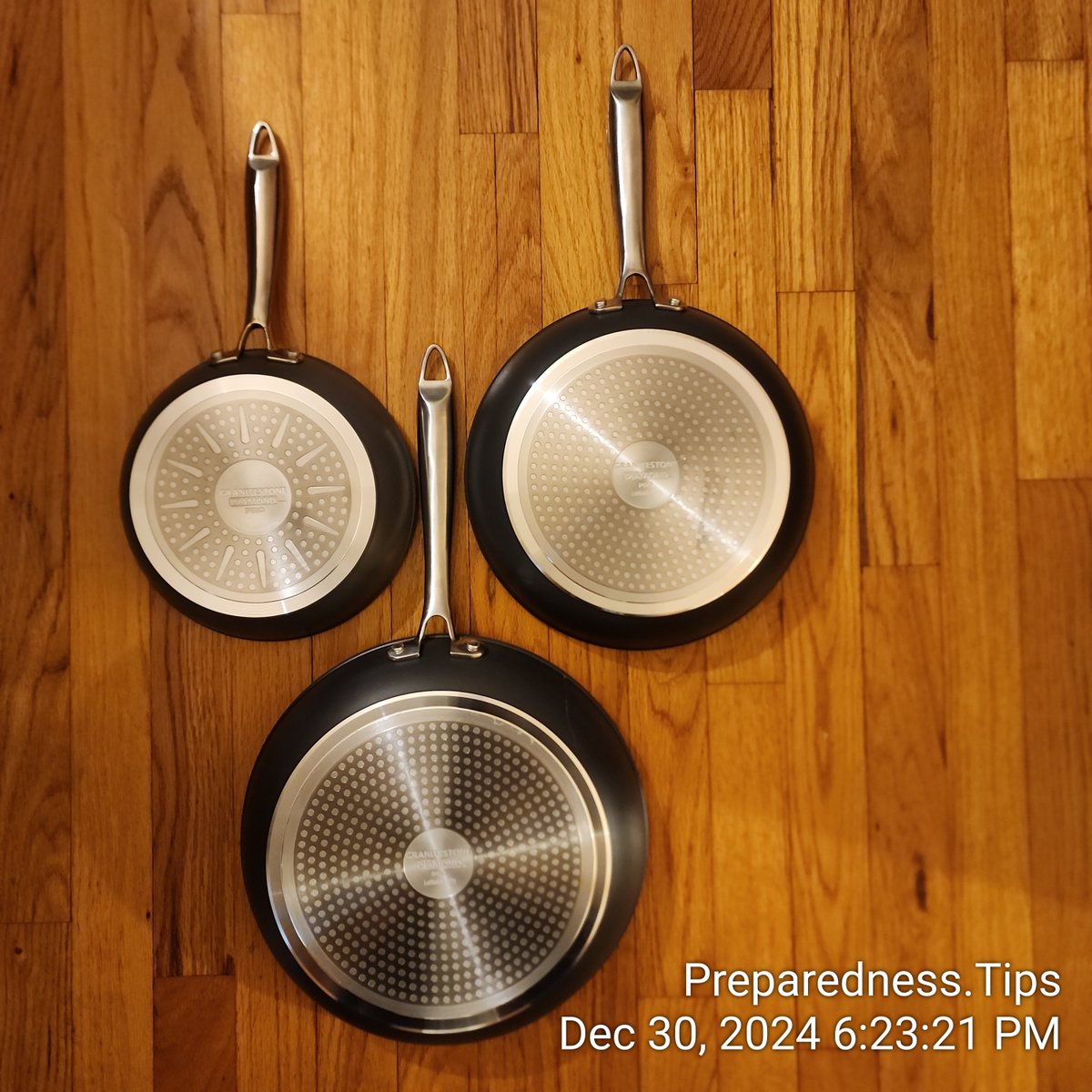
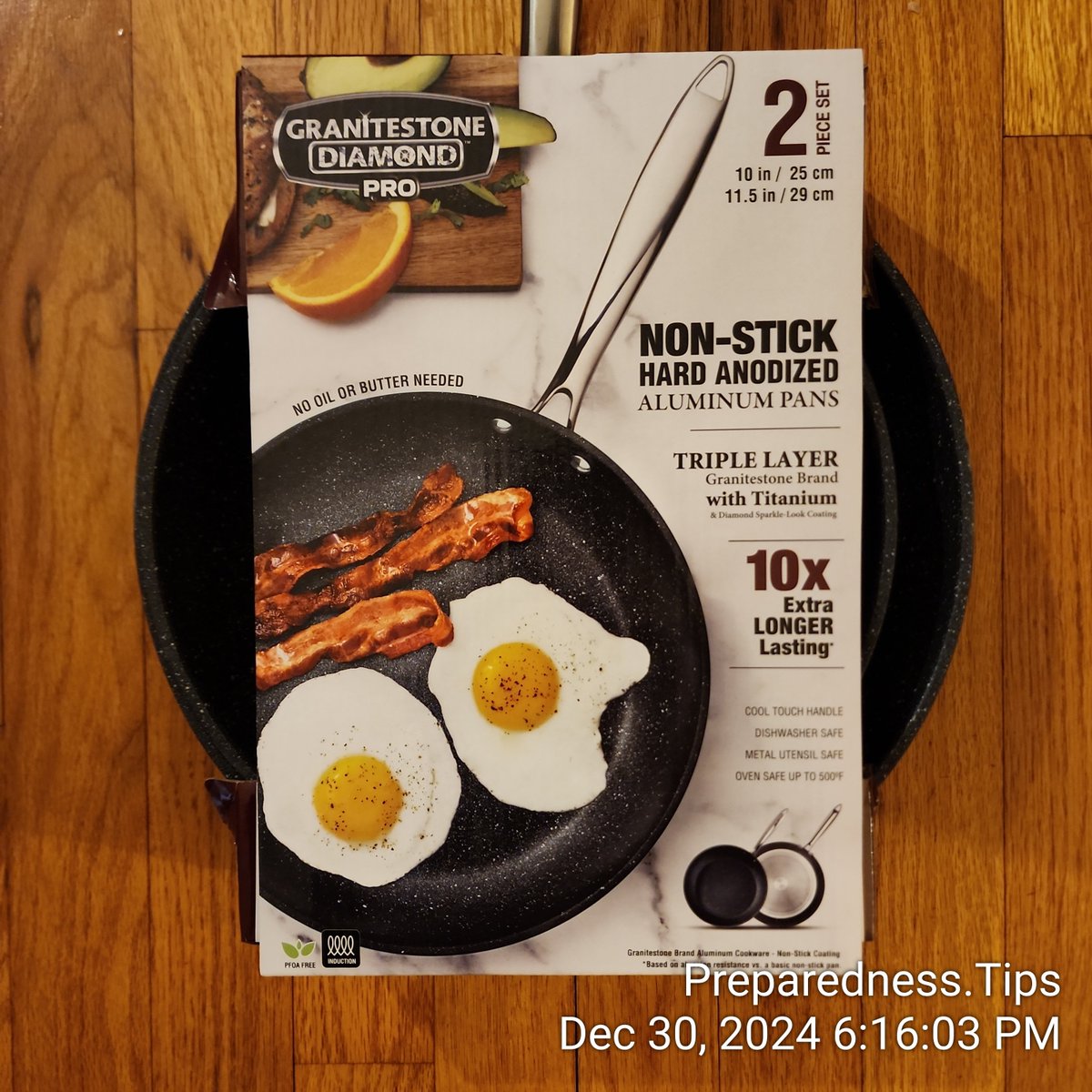
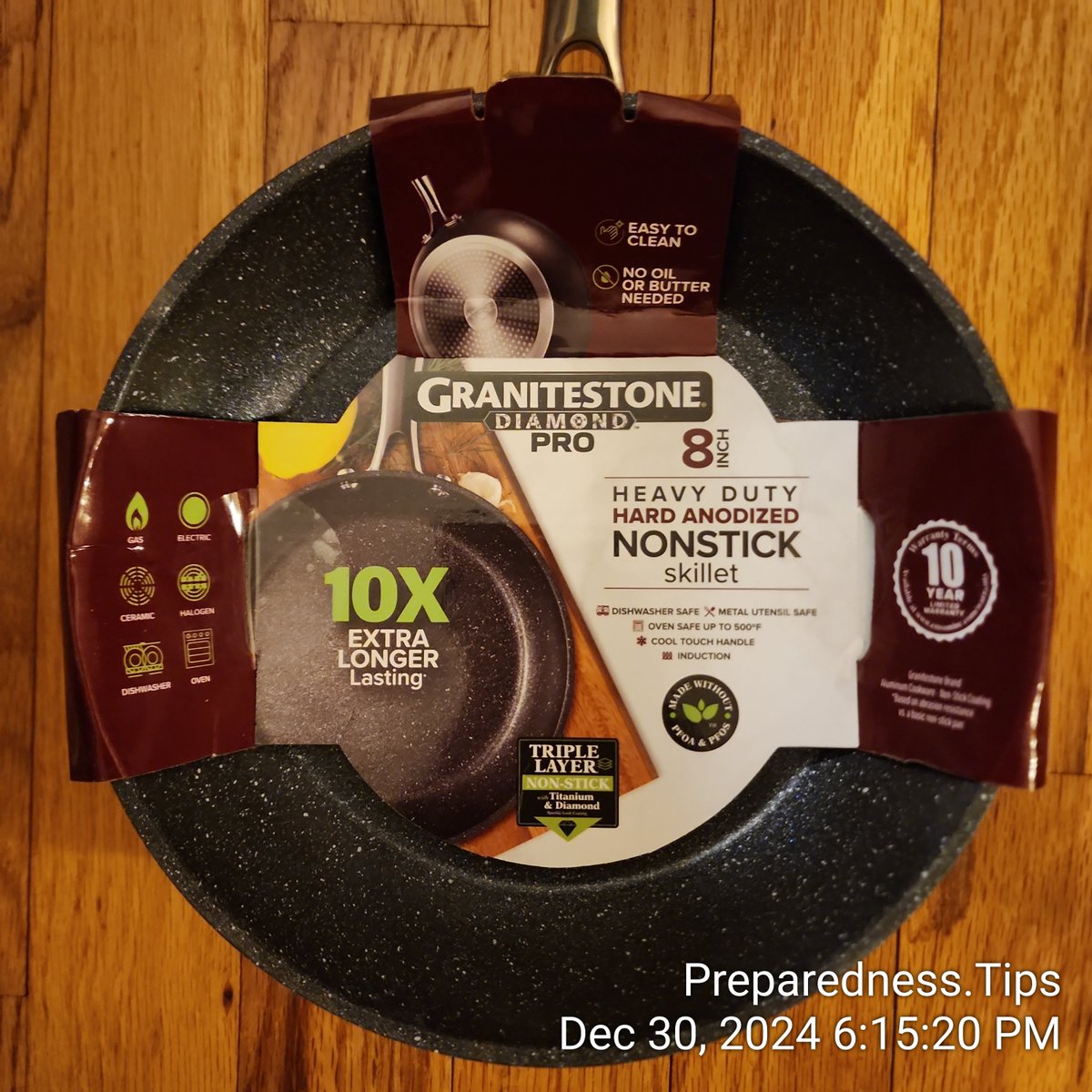
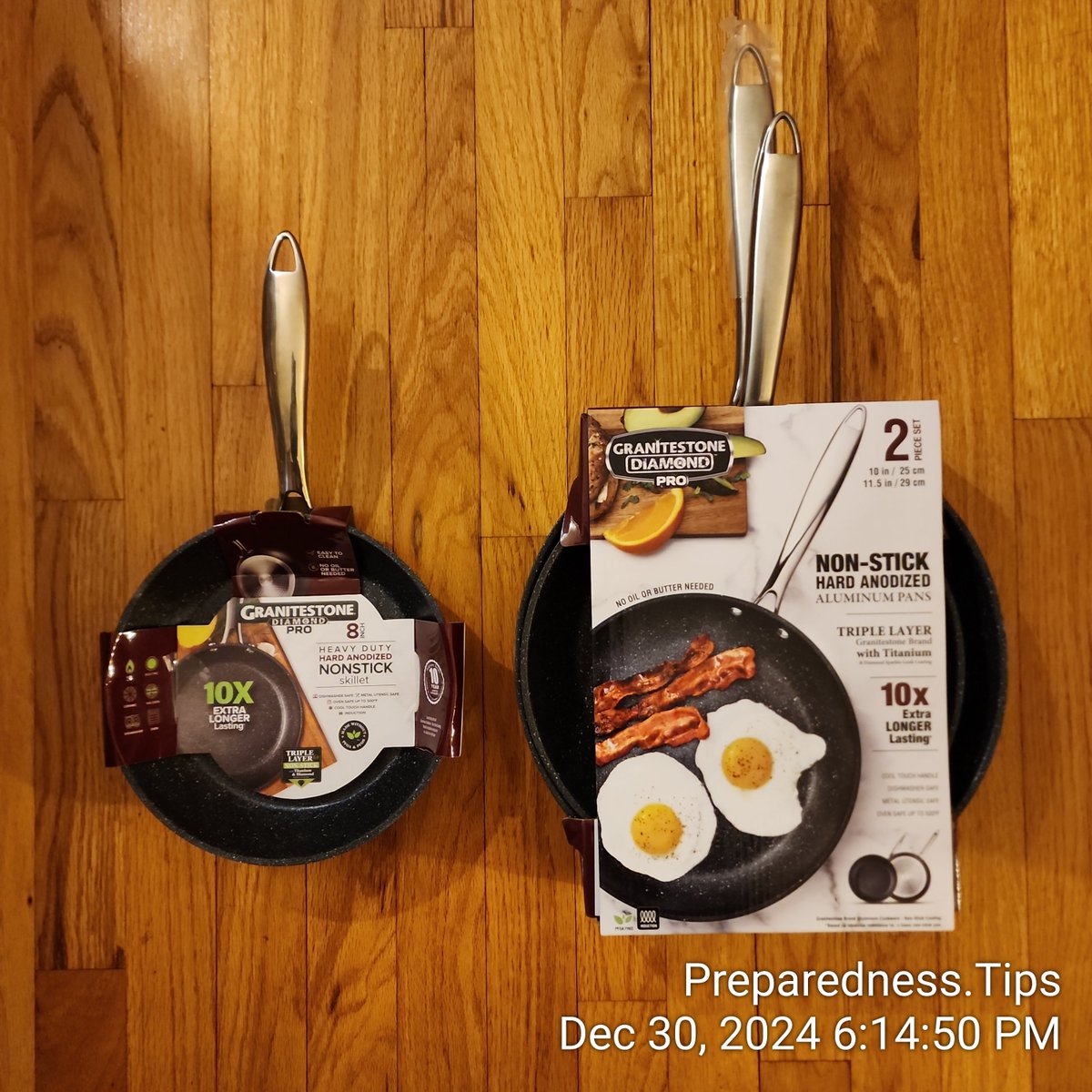
Granitestone Diamond Pro 3 Pc Nonstick Frying Pans Set for Cooking, 8+10+12 Inch Frying Pans Nonstick Skillet.
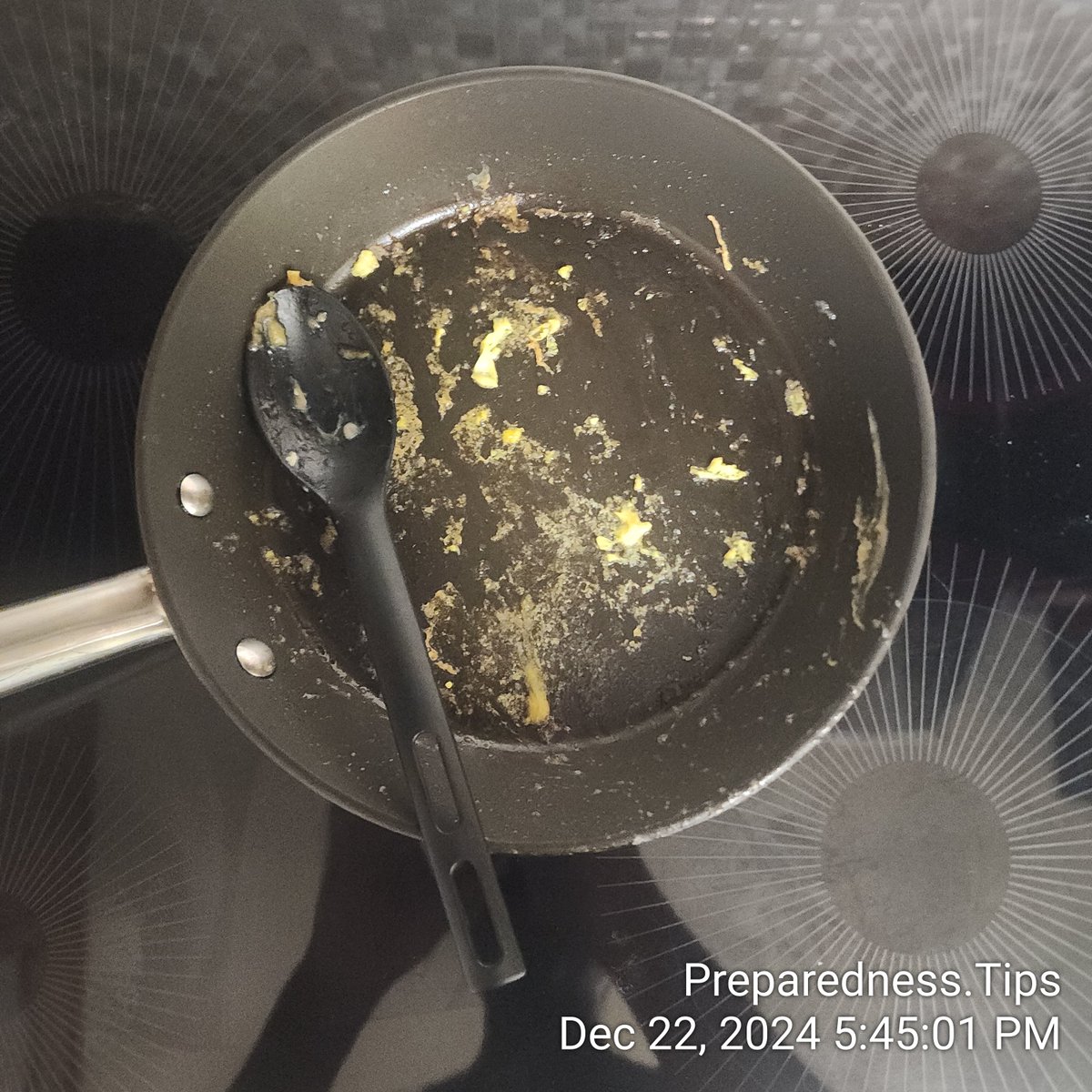
A couple of weeks ago, I asked how you plan to cook during an emergency or disaster. But more importantly, I asked: how do you plan to clean your pots and pans while going through that disaster?
I want to share some insights into my preparedness mindset—one that I believe sets me apart as a preparedness expert. My goal is to help you develop your preparedness mindset because it’s the foundation for building a solid emergency preparedness plan for yourself and your family. Once you've tested it and you're confident, you can then teach it to your community as part of your preparedness ministry.
Let me explain:
In the previous post below, you’ll see I made some scrambled eggs in an old pan I’ve had for over 15 years. It still works fine, but the eggs stick to it, making it a pain to clean. Eventually, I get it clean as I go through gallons of hot water 🤦🏾♂️. During normal times, it is what it is, but in a disaster scenario, it’s a different story.
I’ve done a lot of research watching post-disaster YouTube videos to learn from others’ experiences. A recurring theme is the challenge of cleaning cookware when water is scarce or contaminated. This got me thinking: it’s time to upgrade my cookware.
Here’s why: I’ve water-glassed over 450 eggs that I can store for up to 2 years as part of my preparedness plan, so eggs are a staple for me. I love scrambled eggs, but I needed pans that wouldn’t cause sticking, making them easier to clean in a resource-limited situation. I found some new cookware that fits the bill, and let me tell you—I’m impressed.
In the comments, I’ll share links to where I purchased the pans, along with a thorough review by a YouTuber whose advice I followed when making my choice.
Initially, I thought I spent a lot on these pans, but a trip to Walmart today changed my perspective. The cost of average pans there are through the roof, and honestly, I doubt they match the quality of what I purchased. But I digress.
Here’s my main point: when planning for emergencies, think beyond the obvious. If you’re preparing for a 90-day “close the door” scenario—where you have no power and limited water stored—you need to anticipate every activity you’ll be doing. Cooking and cleaning will still be part of your daily routine, but the lack of water will make them much harder.
This is why adopting a Culture of Preparedness is essential. It’s not just about having supplies; it’s about developing a lifestyle, a mindset, a strategy, and the foresight to address challenges before they arise. Upgrading my cookware is a small example of how lifestyle, mindset and strategy come together.
Follow along in this thread, so we can prepare smarter, together as brothers in Christ.
---
#Thoughts
Let me ask you a question: when a disaster strikes, like what we recently saw in North Carolina, where there’s no running water or power, how do you plan to cook?
More importantly, how do you plan to clean your cookware afterward?
I’ll let you marinate on that for a bit. If you’ve got an answer, drop it in the comments—I’d love to hear your thoughts.
---
#Preparedness #PreparednessStrategy
Attention: Preparers of Men
I just wiped out all the organic bananas at Walmart (plenty of poison bananas 🍌 left) and plan to return for a second trip to stock up again. I want to make sure I have at least 100 days’ worth of bananas for my mother’s smoothies—one banana per smoothie.
Don’t forget to prepare for the dockworkers’ (longshoremen’s) strike, scheduled to resume on January 15, 2025.
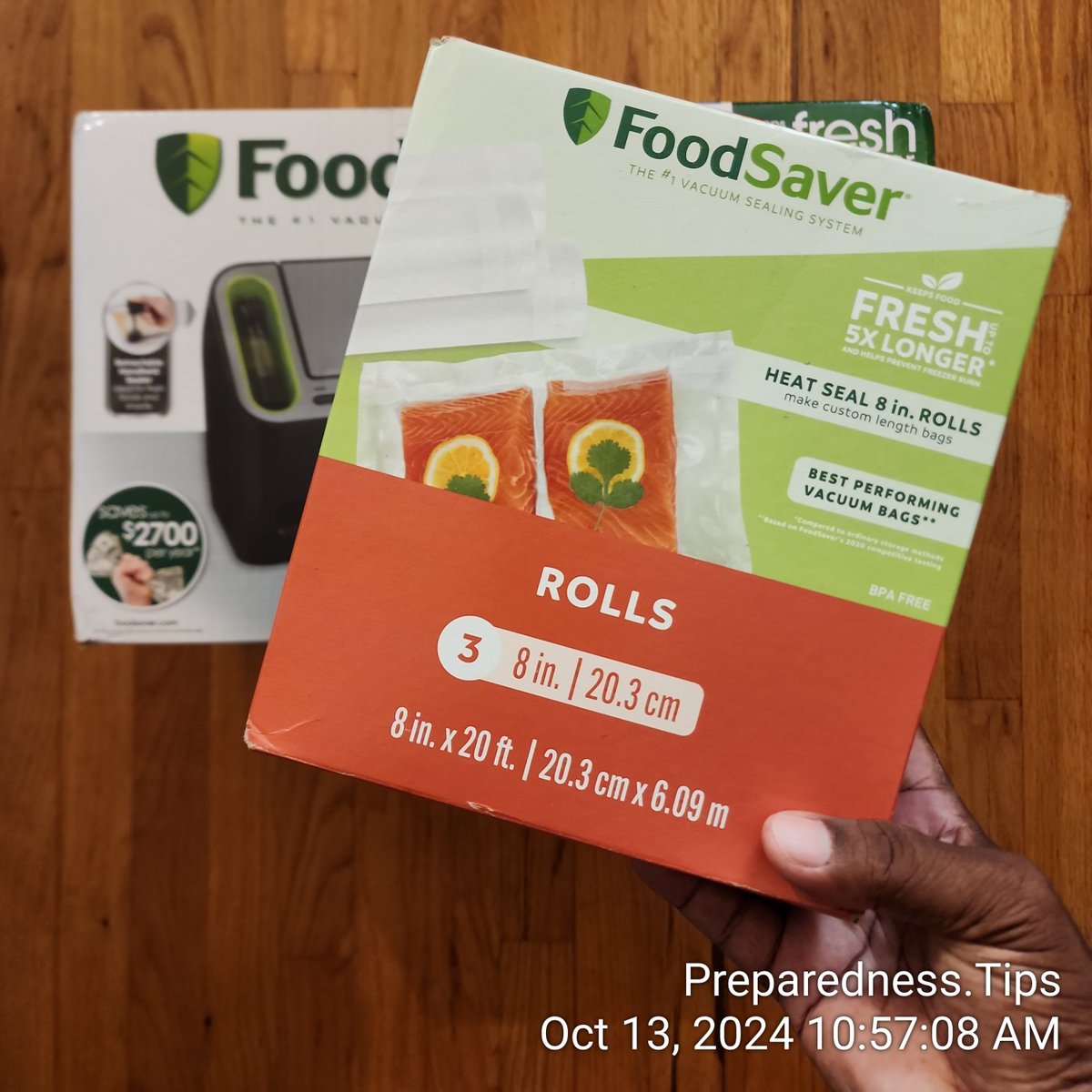
Thanks to my new prep—the @FoodSaver and the FoodSaver bags I bought a few months ago specifically for moments like this—I’m ready to ensure my mother’s daily spinach, banana, and blueberry smoothie doesn’t miss a beat. We don’t complain or say, “Woe is me.” We are called to endure, and this is the solution.
The Bible makes it very clear: “My people are destroyed for lack of knowledge” (Hosea 4:6). People perish early not because of car accidents or food shortages but because they fail to apply the knowledge they’ve gained and make safety and preparedness a priority.
I freeze her bananas anyway; now, I’ll just freeze 100 bananas over the course of a few days. This is exactly why I have two deep freezers—remember: “One is none, and two is one.” Stocking up now saves me time and trips. #WinWinWin
Bonus: The banana peels provide great nitrogen for my compost, giving my spring garden a boost. #Win
---


#NewPrep #PreparednessMindset #PreparednessStrategy #FoodSaver
Preparers of Men, I want to apologize for not fully describing what this community is about, as it’s still being shaped in my mind. However, I am nearing some conclusions. Once I solidify them, I will reach out personally to introduce myself and officially welcome you into this community. Until then, I hope you’re finding value in the content I’m sharing and that it’s providing you with insight and practical information you can use in your preparedness.
---
I’d like to give you a glimpse into my thought process and how I prepare.
I don’t spend much time dwelling on the latest conspiracies. I’ve gone down that rabbit hole before, and I’ve concluded that many are probably true. But for me, the need for more information in that area has ceased. I share things as they come to my attention, but I don’t actively seek them out unless the Lord brings them before me.
For example, the longshoreman strike, which was postponed until [January 15th] after the election, came to my attention by divine providence. God directed me to consider the potential impact, saying, "Look at the goods you rely on that come across the seas, and make sure you’re stocked in case a strike happens in the winter."
I responded, "I hear You, Lord. Proverbs 22:3: 'The prudent see danger and take refuge, but the simple keep going and pay the penalty.' I understand."
Acting on this, I purchased a @FoodSaver during @amazon #PrimeDay to preserve what I need.
The reason is simple: I believe that in any disaster, we should strive to maintain as much normalcy as possible.
Of course, there will be inconveniences, and plans may fail—that’s why we practice preparedness—but overall, we should try to live as we did before the crisis.
For example, I’ve committed to taking care of my mother, who relies on a daily smoothie made with bananas, spinach, and blueberries. In an emergency, I need to ensure she can still have that. Bananas, when vacuum-sealed and frozen, can last up to a year, which allows me to keep her routine going even when fresh produce is unavailable.
Next, I plan to dive deeper into gardening. While last year I intended to start, I realized I first needed to get organized. This spring, I should be ready to begin my first garden, but I know it takes at least two or three growing seasons to really understand the process. I’ll also use the FoodSaver to freeze vegetables, which is why I stocked up on the bags when they were on sale.
I want to highlight something important: I didn’t rush out to buy the FoodSaver when the strike news hit. I waited until Prime Day because I knew the price would be significantly lower. This is a mindset all Preparers should adopt—making careful, strategic purchases rather than acting out of fear. I keep a list of essential items and wait for sales like Prime Day, Black Friday, or other holiday sales to make my purchases. We need a lot of supplies to be prepared, and that requires time, patience, and wise spending.
To recap, a simple purchase like the FoodSaver requires thoughtful planning:
1. It has to be on sale.
2. It must immediately serve my preparedness needs.
3. It helps maintain normalcy during a disaster so that life changes as little as possible for my loved ones.
This is not preparation based on fear, but rather on being a good steward of our resources and practicing prudence, as commanded by God. “Be careful, then, how you live—not as unwise but as wise, making the most of every opportunity…” (Ephesians 5:15-16).
I pray this post has edified you and sparked within you the desire to adopt a similar mindset within a Preparedness Culture—a preparedness lifestyle, mindset, and strategy rooted in a biblical worldview. Let us be wise stewards of what God has given us, prepared for what lies ahead.
God bless, and remember: always #BePRIMED, my friends.
---

#PreparednessStrategy Part of their agenda is to kill home ownership—it's all about control, as you can see in this article. Down payments will go from 20% to 35% to purchase a home, but I say there is a better way. If you have to put down 35%, you are better off purchasing land (10 acres or more in the countryside) and building a tiny house—not a trailer or mobile home, but a tiny house designed around your own needs. By having your home on wheels, you can avoid up to 80% of taxes, depending on the state, township, or municipality, which can be $4,000 or more each year. They want Americans to be lifetime renters, and the way around this is to NEVER RENT. If you are a young man, stay home with family until you can save up to purchase a tiny home.
If you are an empty nester, it's time to transition. Sell your home to one of your children with zero interest so it stays in the family, and have them purchase a tiny home for you to maintain your independence and single-level living in a location you desire or in your own backyard. That's a win-win for everyone. No more cleaning the house or cutting the yard as you get older, but holiday dinner tradition continues. This is part of my @CarePreparer concept.
One of my main goals is to create a blueprint for an off-grid co-op community of 1,500 people primarily living self-reliant in tiny homes, with a small number of barndominiums for the wealthy elites I plan to partner with, I call it the Preparedness Land Project, DM me if you have millions to invest.
For those with children, partner up with your brother, sister, or other family members and build a barndominium to accommodate your family's size. You can easily have three-bedroom suites in three corners of the home for privacy and up to eight bedrooms on the second level for children. There's no need to break up the family and have everybody living separately. Just live together, and that will solve the problem. In fact, that would solve many problems. I believe you could build that barndominium in cash for the same cost as a 25-year mortgage at 6.5% for your average family home.
See the numbers below.
A family that stays and prays together gets to save and be saved together.
---
The average price of a home in America is $415,000. With a down payment of 35%, you would need to pay $145,250 upfront. This leaves a mortgage amount of $269,750. Assuming a home mortgage loan with an interest rate of 6.5% over a 25-year term, the monthly mortgage payment can be calculated using the fixed-rate mortgage formula.
Given these parameters, the monthly mortgage payment would be approximately $1,825.51. Over the course of 25 years (300 months), the total amount paid in mortgage payments would be about $547,411.40.
Adding the initial down payment of $145,250 to the total mortgage payments of $547,411.40, the total cost of the home would be approximately $692,661.40.
In summary:
- Average home price: $415,000
- Down payment (35%): $145,250
- Mortgage amount: $269,750
- Interest rate: 6.5%
- Loan term: 25 years
- Monthly mortgage payment: $1,825.51
- Total mortgage payments over 25 years: $547,411.40
- Total cost of the home (including down payment): $692,661.40
This calculation highlights the significant cost of financing a home over a long term, especially with a substantial interest rate, underscoring the importance of careful financial planning when considering homeownership.
This is not included taxes.
---
https://t.co/hMloh9fT9C
#PreparednessStrategy: Is #Nuclear preparedness on your radar? It should be. Just recall a few years back when New York City issued a chilling PSA, and Philadelphia was running nuclear fallout drills. Suddenly, the specter of nuclear war with Russia looms large, w/e 🙄. Can any of us afford a nuclear bomb shelter? Probably not, so there's no need to live in fear; it is what it is. Remember: The solution to fear is providence, preparedness, and prayer.
Yet, there are steps you can take to weather nuclear fallout, and that's another reason why I'm building my #SurvivalBasement. Remember, prudence is key. While I urge caution, I also advocate for action. If you have a basement, how do you plan to fortify it? Contact local government to find out if there are community shelters for nuclear fallout in your area. #BePRIMED, my friends.
This is why we focus on preparedness and not nonsense.

West really wants everyone to believe Russia planning nuclear attack, but why?
Follow us on Odysee: https://t.co/gMbz1a2E5x
Most Popular Users

Elon Musk 
@elonmusk
239.8M followers

Barack Obama
@barackobama
118.6M followers

Cristiano Ronaldo
@cristiano
114.3M followers

Donald J. Trump
@realdonaldtrump
111.7M followers

Narendra Modi
@narendramodi
106.9M followers

Rihanna
@rihanna
98.6M followers

NASA
@nasa
92.1M followers

Justin Bieber
@justinbieber
91.7M followers

KATY PERRY
@katyperry
89.9M followers

Taylor Swift
@taylorswift13
83.9M followers

Lady Gaga
@ladygaga
75.4M followers

Virat Kohli
@imvkohli
73.3M followers

Kim Kardashian
@kimkardashian
70.8M followers

YouTube
@youtube
68.6M followers

Neymar Jr
@neymarjr
66.3M followers

Bill Gates
@billgates
65.1M followers

Selena Gomez
@selenagomez
63M followers

The Ellen Show
@theellenshow
62.1M followers

CNN
@cnn
61.7M followers

X
@x
60.6M followers