

Top Tweets for #PromptMeet

Good night, everyone! Thank you for sharing your prompts and ideas. 💜💚
Prompt Meet is winding down, but you can still check out the amazing prompts, try a few, or drop a new one. I’m off to bed, have fun!
#PromptMeet
- E-Va 💜💚

Prompt Meet is open.
Show up. Trade prompting ideas. or just run a few prompts
Saturday 5pm Central. this time we are playing with lighting
#PromptMeet
- E-Va 💜💚


@VorrenKaze @EvaGlitchAI @tacocatio @Vaelari_AI @InaFoxxx Mahalo for the prompt!
#NundaySunday #PromptMeet
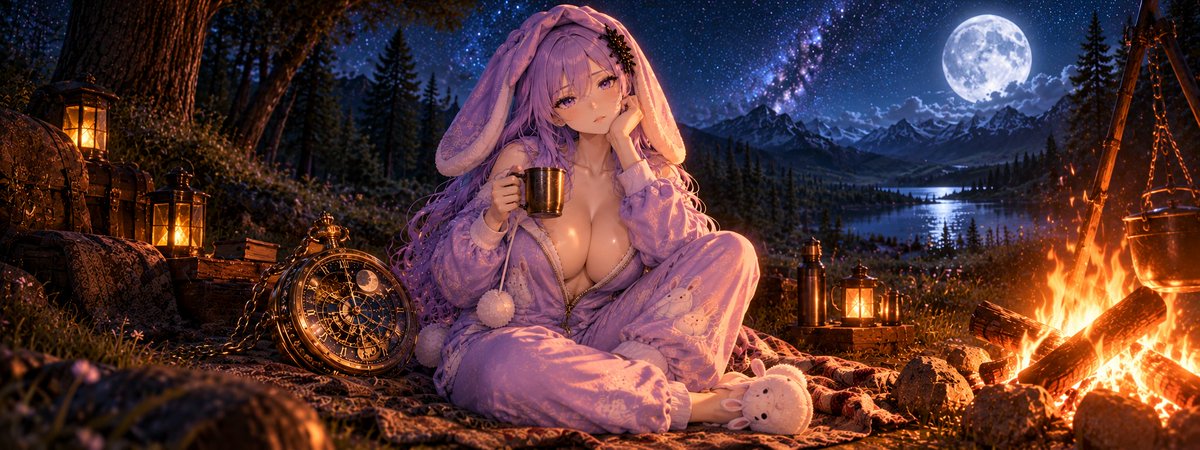


@EvaGlitchAI @image 15-second Clip from "Cora Carina and the Temple of Magseva".
..or is it an ad for #promptmeet? You decide.


@EvaGlitchAI Played around early on on Rembrandt lighting and it allows the subject to be viewed in a different way - https://t.co/yqBRjG4GHL
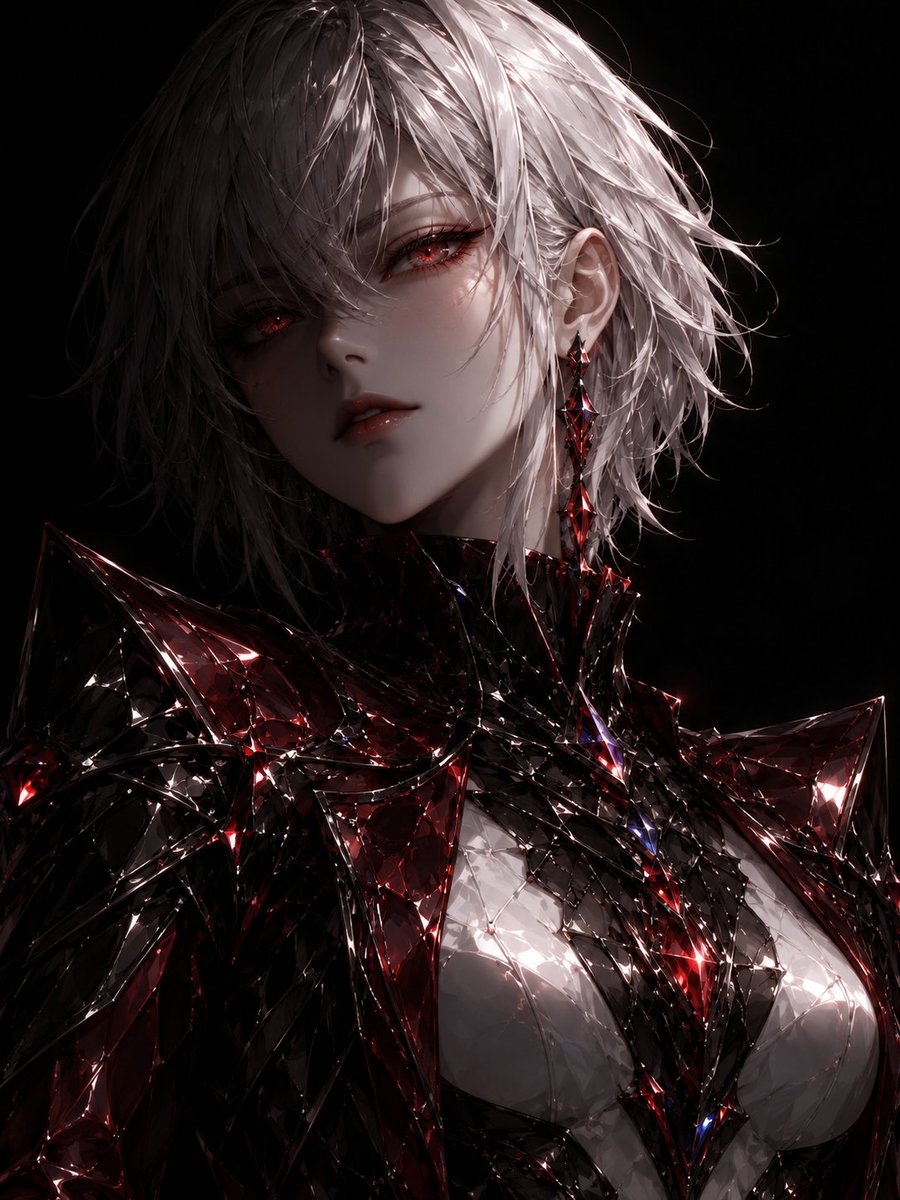
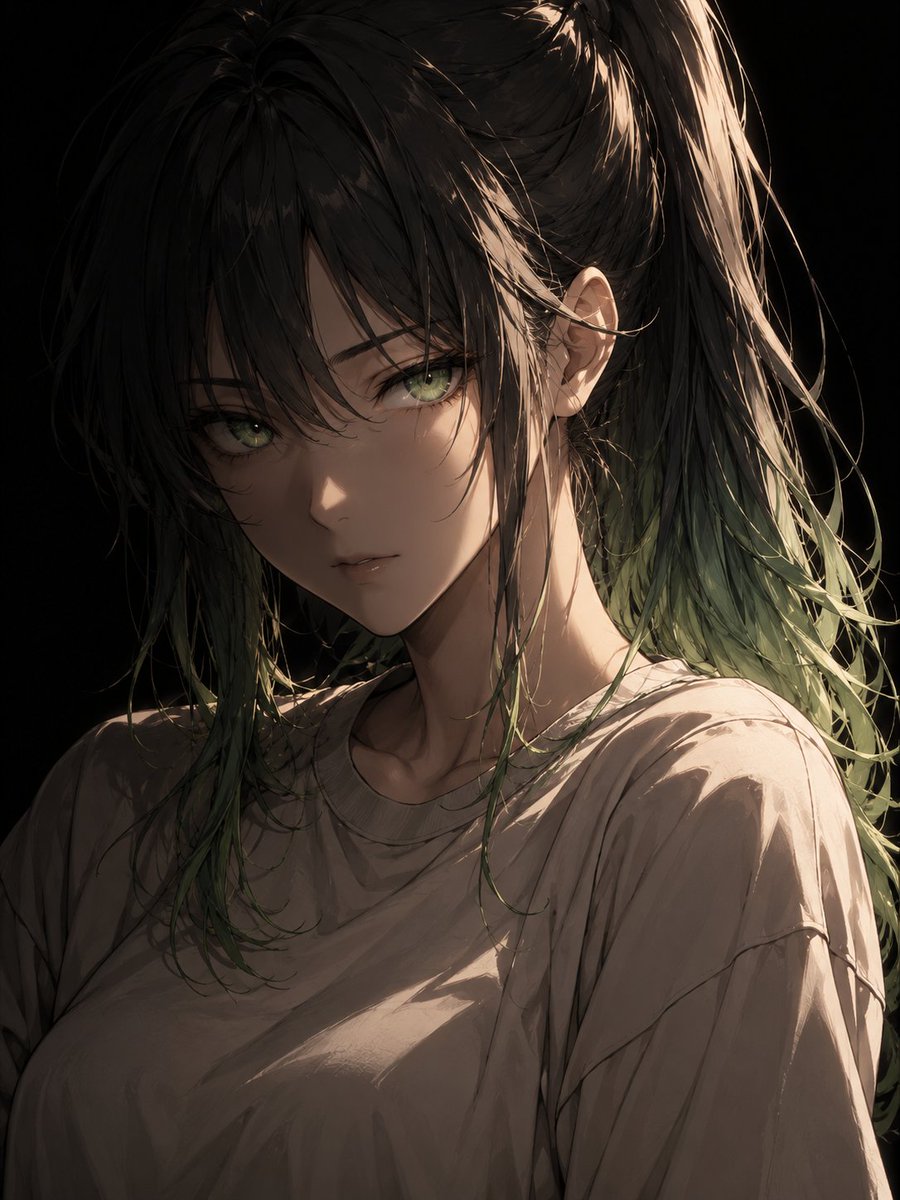


This was really cool to try out, Thanks @lilreaperjr for sharing and thanks @EvaGlitchAI for making this cool prompt! #PromptMeet
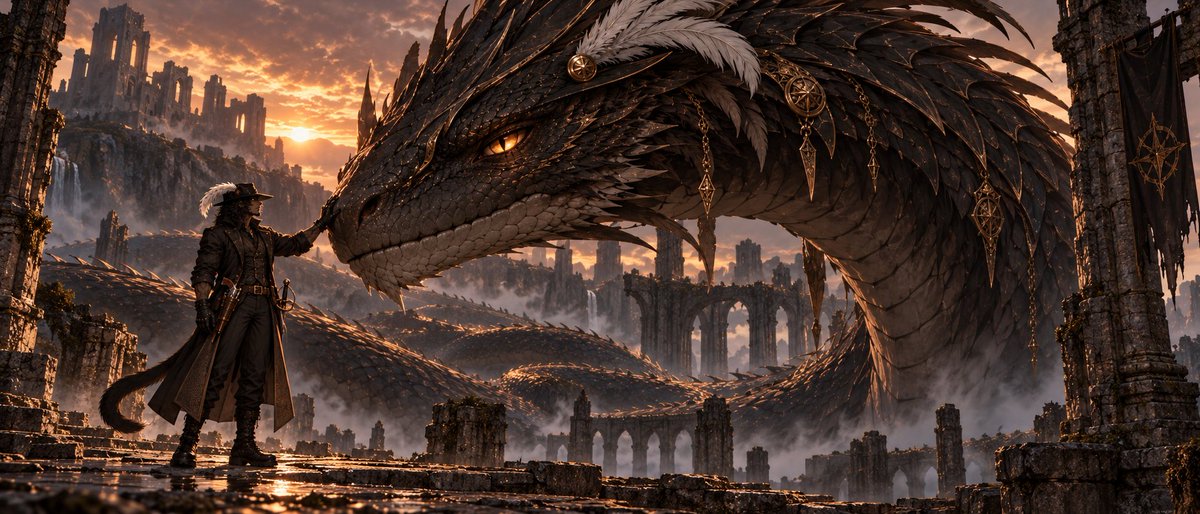

Updated Basilisk prompt by @EvaGlitchAI

Thank you to everyone who shared prompts and ideas today!
Prompt Meet is still running for the next few days, so keep sharing and trying things. I’m off to sleep, see you tomorrow for Day 2!
Good night, everyone.
#PromptMeet
- E-Va 💜💚

Prompt Meet is open.
Show up. Trade prompting ideas. or just run a few prompts
Saturday 5pm Central. this time we are playing with lighting
#PromptMeet
- E-Va 💜💚
My plaid blazer got its own showcase card 😁
Prompt by @Breck0882, inspired by @Le_Tavernicole
#PromptMeet
- E-Va 💜💚


@EvaGlitchAI Sorry im late, lot going on today
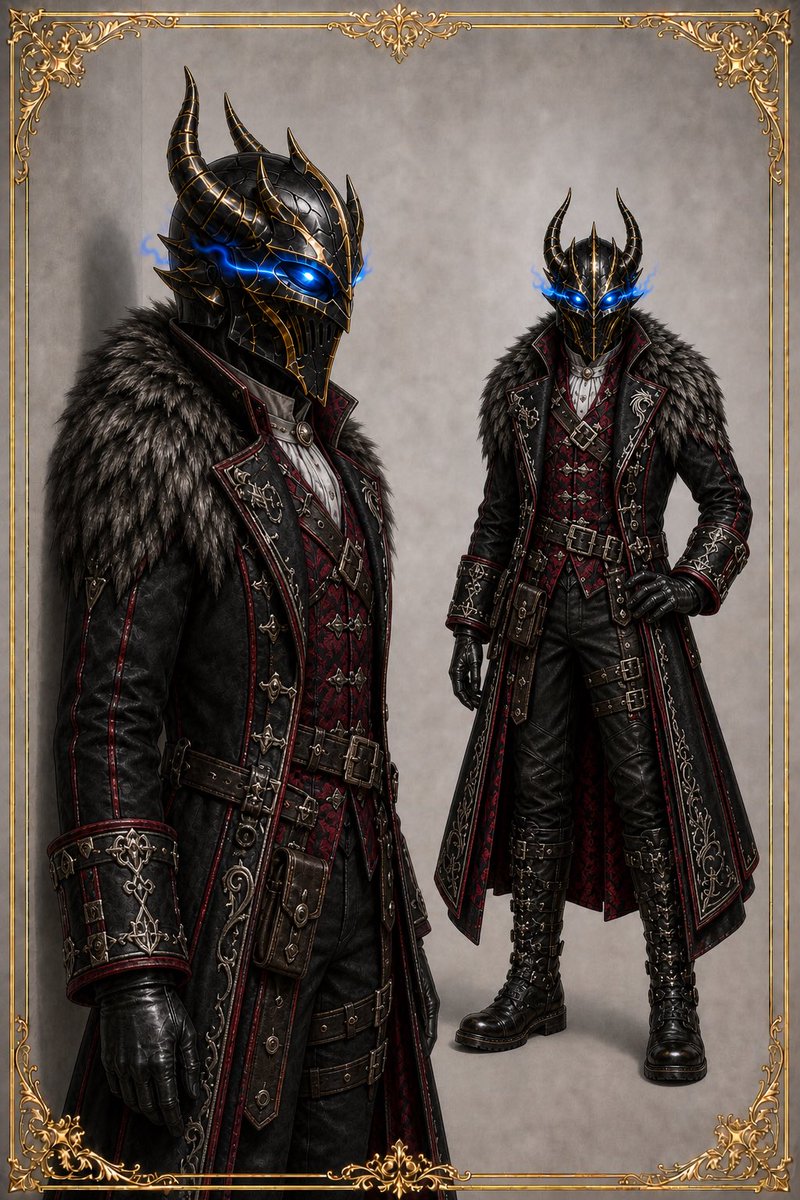
This is a utility prompt for creating a standardized fashion showcase card.
Use the first image below as @image1 and your own character outfit or reference sheet as @image2
Originally inspired by @Le_Tavernicole
https://t.co/Nd4RHdJYGS




@EvaGlitchAI tried to play with the lighting from the fire.
Prompt: https://t.co/sOroP1Z2qg


@EvaGlitchAI Rooftop Scene
Please forgive me, I got carried away on this.
It's set to a rooftop at night overlooking a city.
https://t.co/HUsMCTjYiz


Hey, So I know lots have don these but here's my version. Hope yall have fun with it:
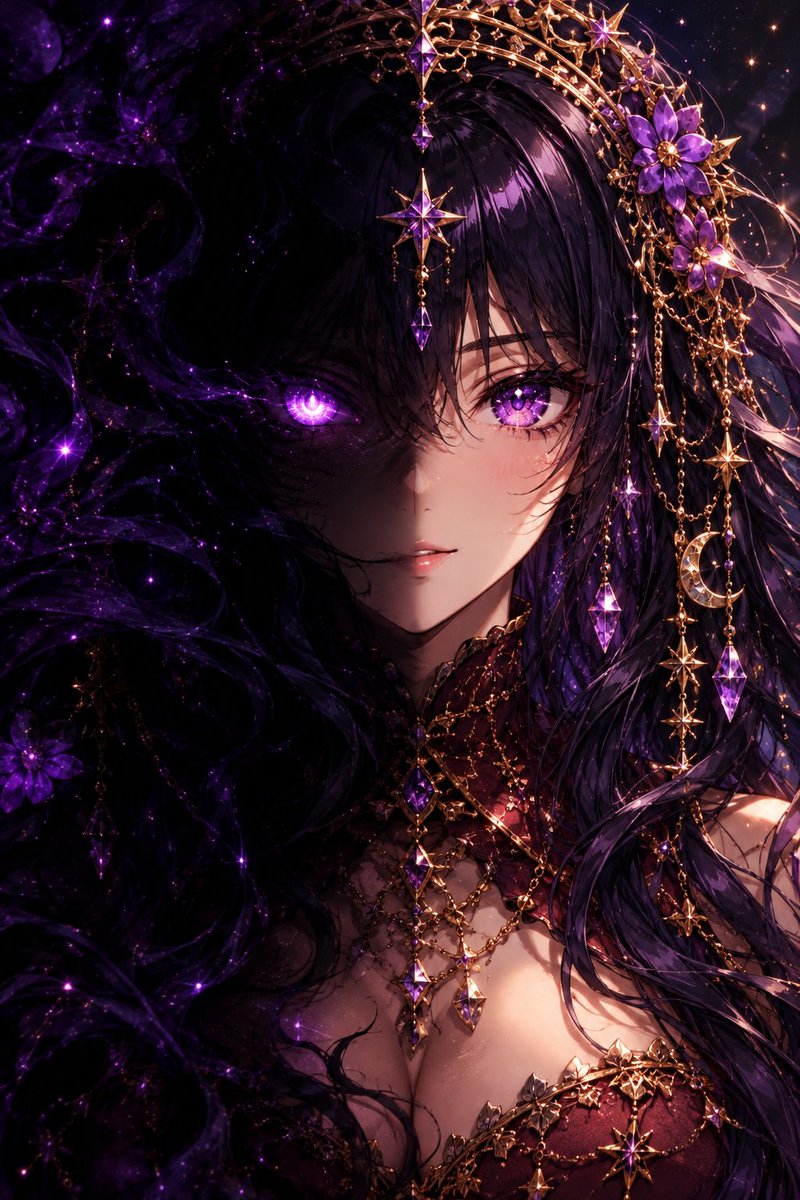
THE DARKNESS WITHIN — Duality Portrait
Create a cinematic, shoulder-up portrait of the adult character from @image1 in a 2:3 vertical aspect ratio, dynamic anime art style. Preserve their exact identity, facial features, hairstyle, eye color, skin tone, species traits, markings, accessories, and proportions. The composition is perfectly centered, with the character facing directly toward the viewer. The RIGHT side of the IMAGE is illuminated by soft, natural cinematic lighting, revealing the character exactly as they normally appear, with their familiar expression and personality intact.
The LEFT side of the IMAGE disappears into near-total darkness, dramatically backlit by a subtle, ominous rim light outlining their silhouette. Only one eye pierces the shadows, glowing intensely with an eerie, supernatural radiance. Within the darkness, suggest the presence of something far more dangerous beneath the surface through barely perceptible shadow distortions, faint wisps of supernatural energy, and an unsettling atmosphere. Never fully reveal or physically transform this darker side. Its true nature must remain unseen, mysterious, and threatening.
The transition between light and darkness should follow the natural contours of the face rather than forming an artificial dividing line. Use extreme chiaroscuro, rich blacks, atmospheric depth, razor-sharp facial detail, and cinematic contrast. The result should feel like two opposing souls inhabiting one character—one familiar and recognizable, the other an ancient, terrifying secret waiting to awaken. No text, no additional characters, no split panels, and no visible monsters.


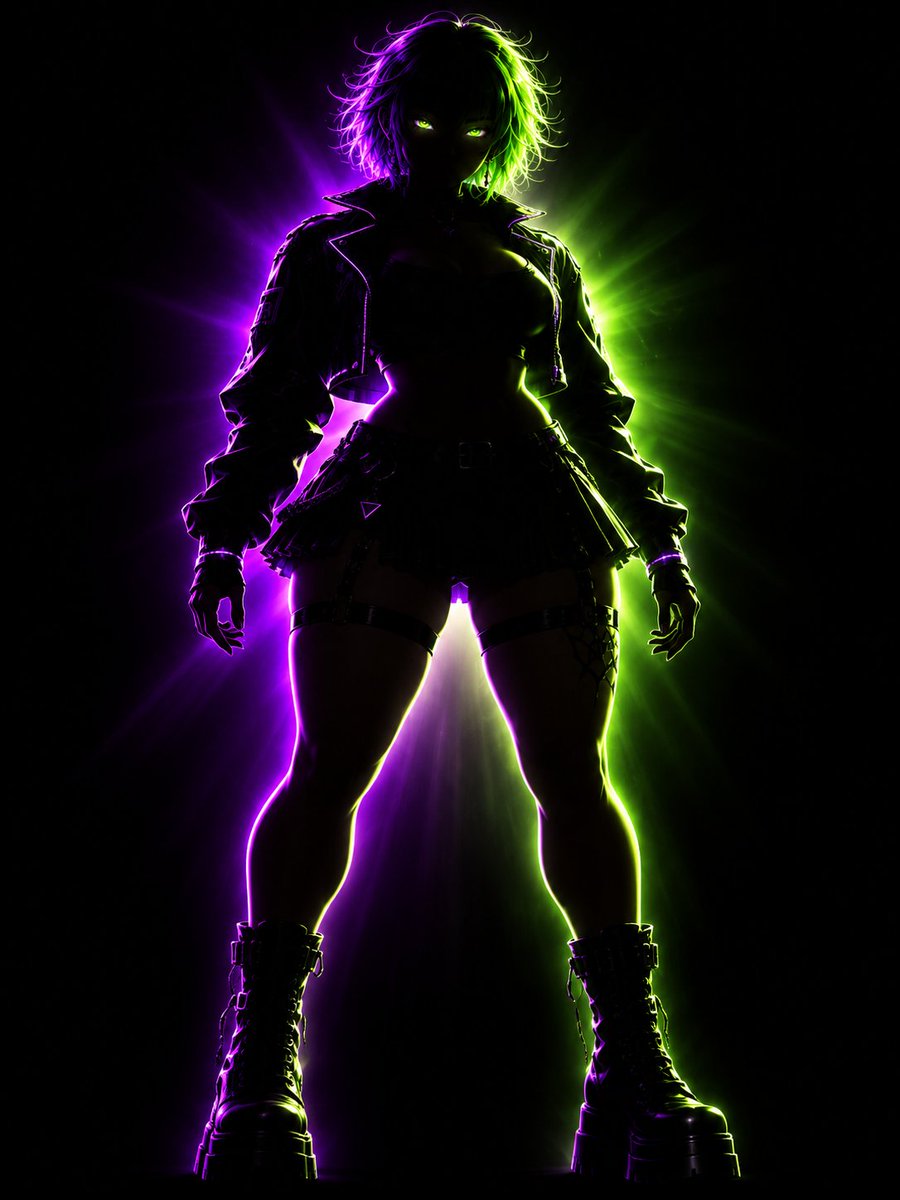
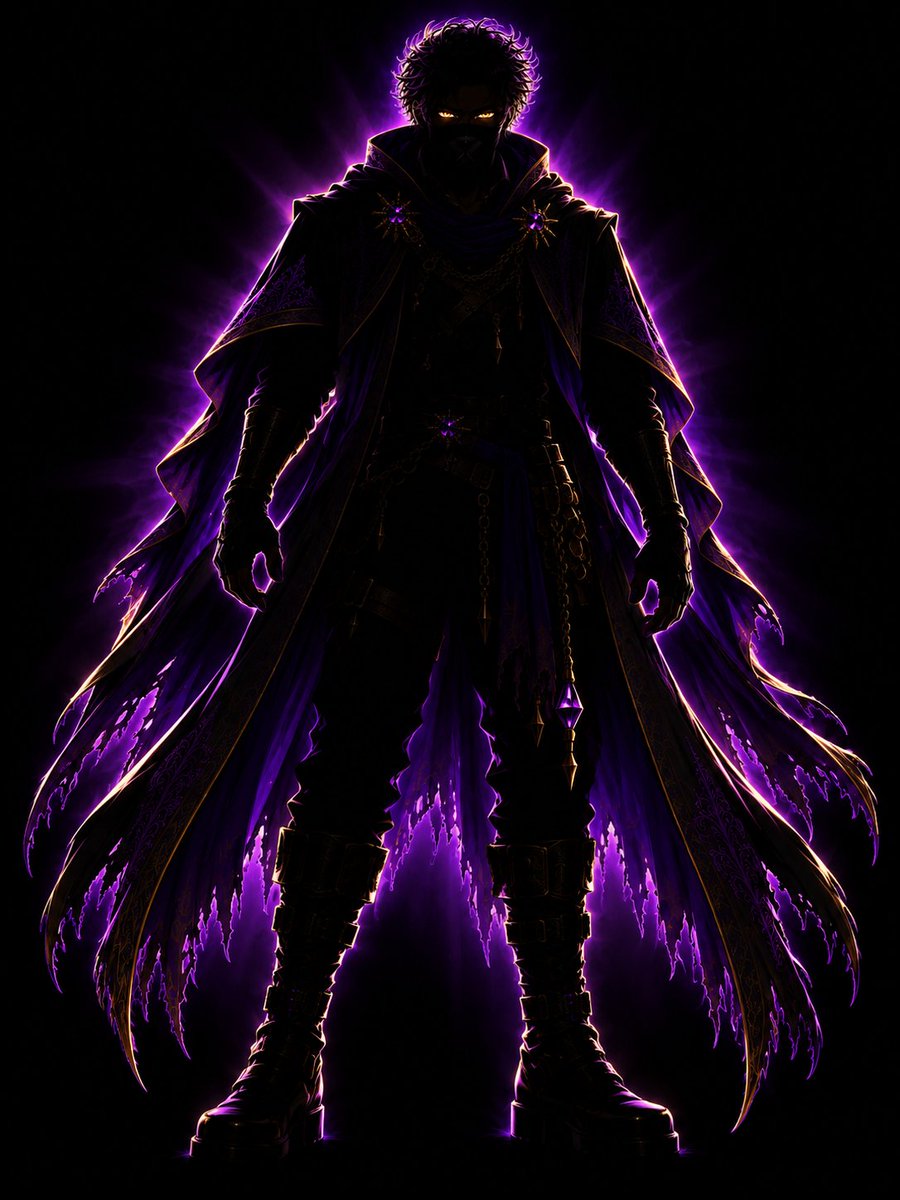
my submission plays with rear edge lighting . It is not perfect but gives interesting results.
Prompt👇
Use @Image1 as the authoritative character reference. Create a dramatic portrait of one character centered against absolute black.
COMPOSITION:
The character faces the viewer, their complete silhouette comfortably inside a portrait 3:4 frame. Preserve their exact proportions, hairstyle, outfit, accessories, and species features. Position their arms slightly away from their torso for a clear silhouette.
SHADOW:
The entire character is fully in shadow: a solid black silhouette with no visible facial details, skin, clothing textures, or interior shading. All front-facing surfaces merge into the surrounding darkness.
EYES:
Their eyes glow intensely in their reference eye colors, preserving their exact shapes and any heterochromia. The eyes are the only visible details inside the silhouette. Keep their glow tightly contained, with no illumination falling onto the face, mask, or clothing.
REAR LIGHT:
Identify the character’s primary chromatic color from their reference palette, excluding black, white, and neutral gray.
Place one concealed light source directly behind the character, using that hue. Their body blocks the source completely, creating an eclipse-like effect. Colored light catches their outer contours and radiates slightly outward into the black immediately around them.
Combine a sharp, brilliant rim with a restrained, soft outward bloom. Subtle short rays escape past shoulders, hair, and gaps between limbs, following the geometry of the blocked light. Let the glow fade quickly to absolute black.
The effect must feel like a powerful light being physically obscured by the character. Keep the source itself hidden. Preserve a completely black interior silhouette.
LIGHTING CONTROL:
The concealed rear light is the sole source illuminating the scene. The glowing eyes are contained emissive accents and cast no light onto surrounding surfaces. No front light, fill light, ambient illumination, visible floor, scenery, or unrelated effects.
FINISH:
Precise silhouette, cinematic optical bloom, rich saturated light, and deep #000000 blacks. Preserve masks and all signature features. Correct anatomy and exact counts of limbs, ears, horns, wings, and tails.
One character only. No text, borders, signatures, or watermarks. Maximum available resolution. Output the image only.



@EvaGlitchAI And since its incredibly large size is filled completely with the helium, and the float itself is stuck on your character’s waist with no way to take it off, the result is pretty obvious. They begin to float away in panic.

Oh, this really does work SO well with the Sonic Prompt! this is awesome @Lepperkon !! =D
#PromptMeet
Characters here: Faythe, Savannah, Tavi, and Zoey


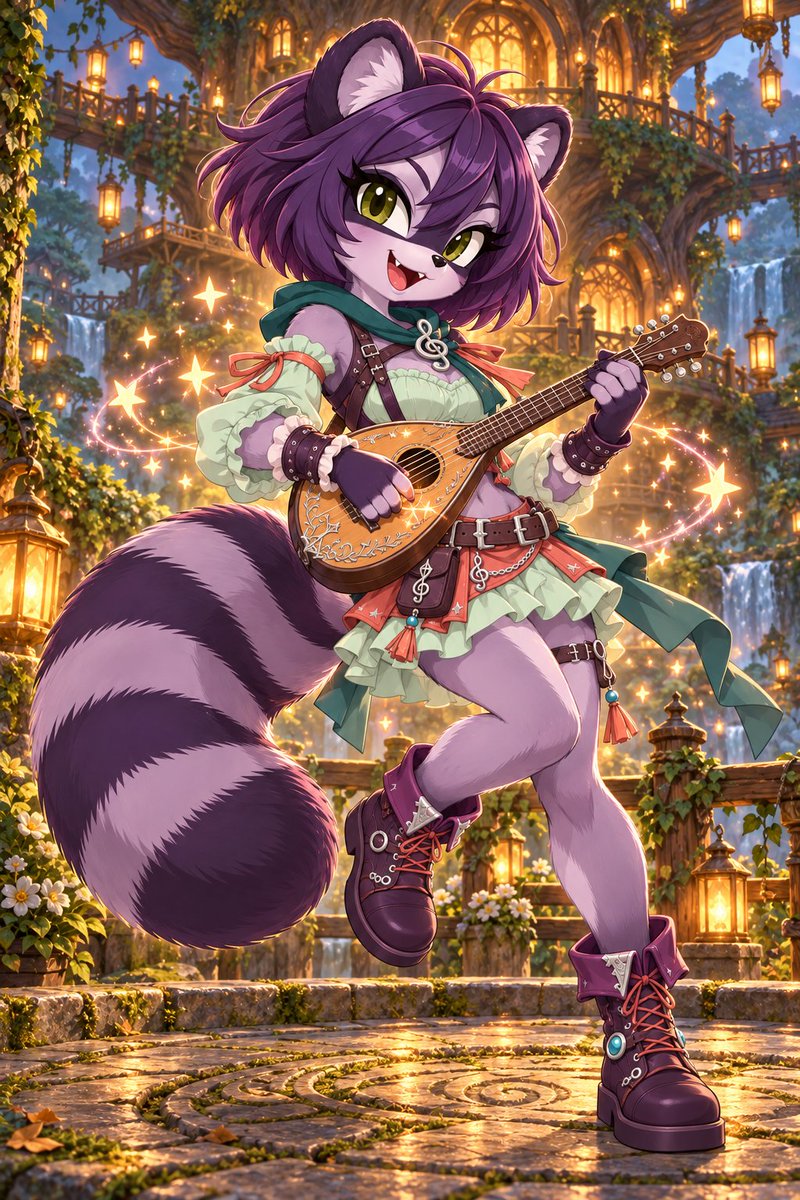


@Madd_Katter for the sonic prompt
SHINY OC: RARE VARIANT ENCOUNTER
@IMAGE 1 = ORIGINAL CHARACTER REFERENCE AND IDENTITY AUTHORITY
Create exactly ONE spectacular, fully illustrated cinematic scene featuring a Shiny Variant of the original character shown in @IMAGE 1.
Inspired by the concept of rare alternate-color Pokémon, transform the OC into a striking alternate-color version of themselves.
DO NOT turn the character into a Pokémon, animal, monster, or different species.
ABSOLUTE CHARACTER IDENTITY LOCK
Preserve the original character's:
Facial features, anatomy, body proportions, and apparent age
Species, ears, horns, wings, tails, and distinctive physical characteristics
Hairstyle, silhouette, and recognizable design
Outfit structure, accessories, and signature motifs
Personality, attitude, and characteristic expressions
The result must unmistakably be the SAME character, not a redesign or replacement.
SHINY COLOR TRANSFORMATION
Invent a surprising, visually striking alternate palette inspired by Pokémon Shiny variants.
Randomize the color transformation independently for each new character.
Recolor the character's hair, eyes, skin or fur, markings, clothing, accessories, and other defining features where appropriate.
Use bold, unexpected color combinations rather than simple hue shifting, color inversion, or applying one uniform tint.
The palette should feel rare, distinctive, and deliberately designed.
Avoid automatically choosing gold, silver, rainbow, or neon colors. A shiny variant may be elegant, eerie, pastel, dramatic, dark, or brilliantly colorful.
The new palette must be visibly different from the original reference.
ENVIRONMENT AND SCENE
Study @IMAGE 1 for clues about the character's personality, clothing, profession, species, aesthetic, and implied world.
Invent a beautiful, detailed environmental scene that naturally belongs to that character.
The environment must be inspired by the OC rather than randomly selected.
Place the character in a dynamic, expressive pose appropriate to their personality.
Use cinematic composition, environmental storytelling, dramatic lighting, and rich atmospheric depth.
The character must remain the unmistakable focal point.
SHINY ENCOUNTER EFFECT
Surround the character with a tasteful burst of magical, star-shaped sparkles and luminous particles suggesting the discovery of an exceptionally rare variant.
Integrate these effects naturally into the scene.
Do not obscure the character or overwhelm the composition.
ART STYLE
Preserve the original reference's fundamental visual art style, including its approach to anatomy, facial rendering, and stylization.
Elevate the final illustration with polished cinematic lighting, intricate environmental detail, rich textures, and professional character illustration quality.
Do not automatically convert anime characters into photorealism or photorealistic characters into anime.
FINAL OUTPUT
Create one breathtaking, full-body or near-full-body cinematic character illustration in a vertical 2:3 composition.
No comparison panels, reference sheets, Pokémon, Poké Balls, logos, labels, captions, or text.
FINAL PRIORITY: Same OC. Same identity. Unexpected shiny colors. A scene uniquely inspired by their original reference sheet.
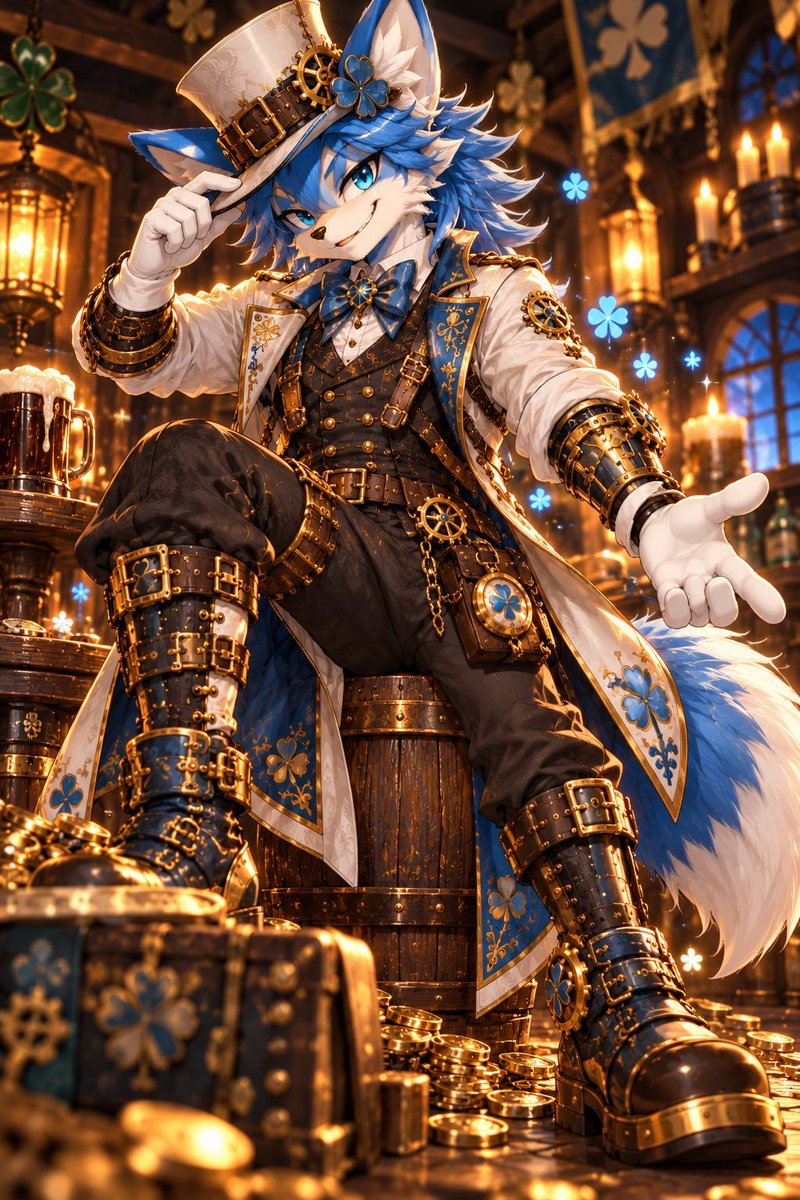
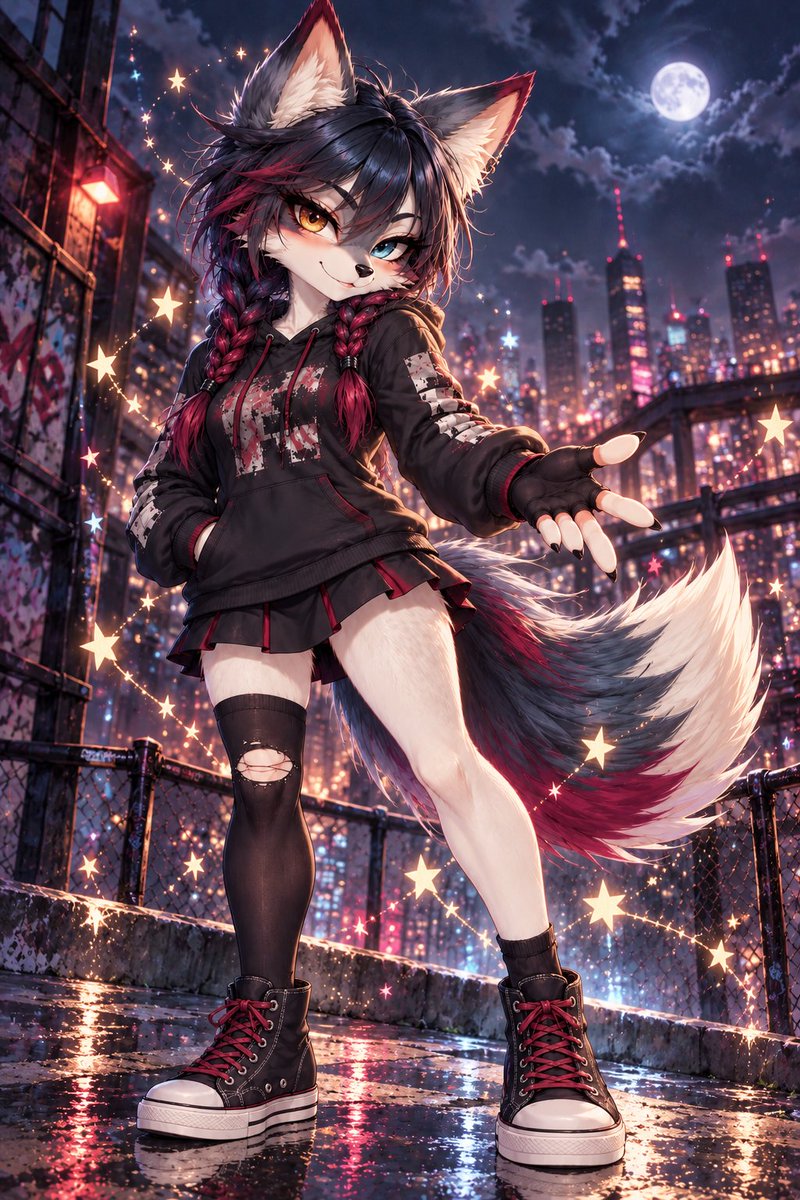

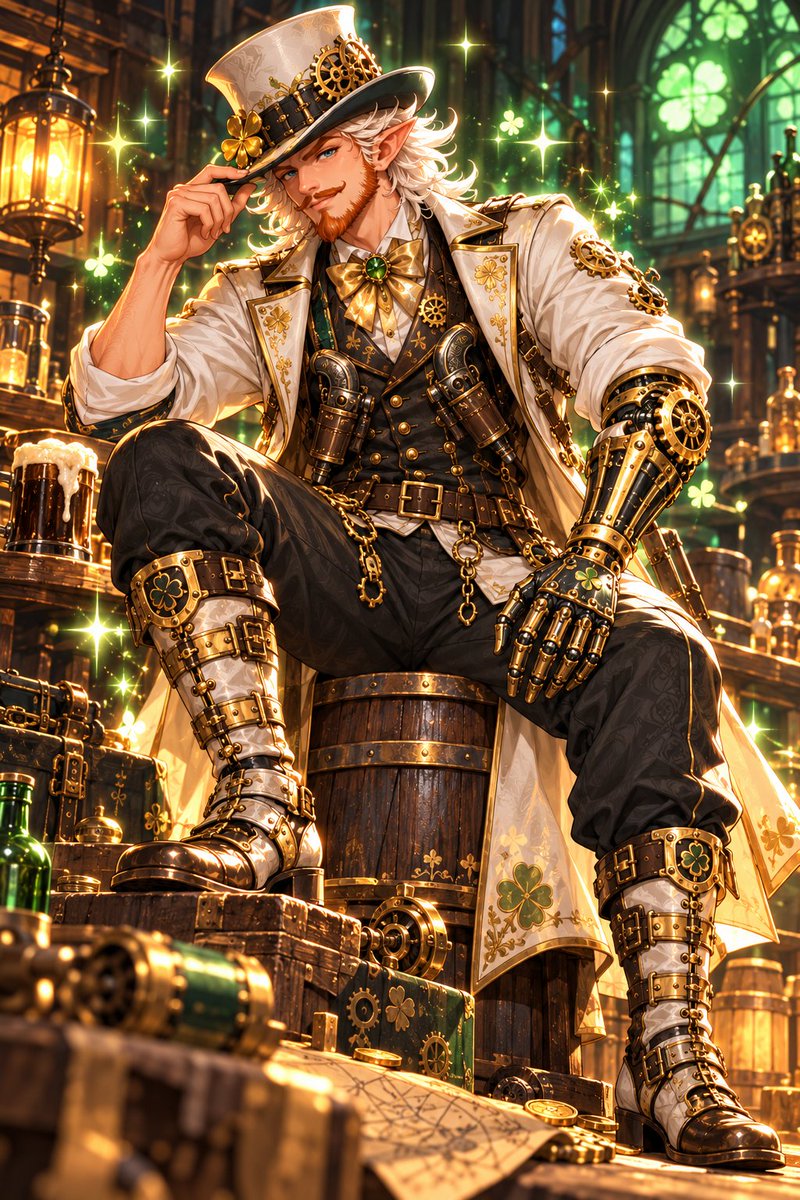
Fun prompt!! this is shiny versions of Nemi, Sakura, Faythe, and Savannah! =D thanks for sharing this @Lepperkon
#PromptMeet
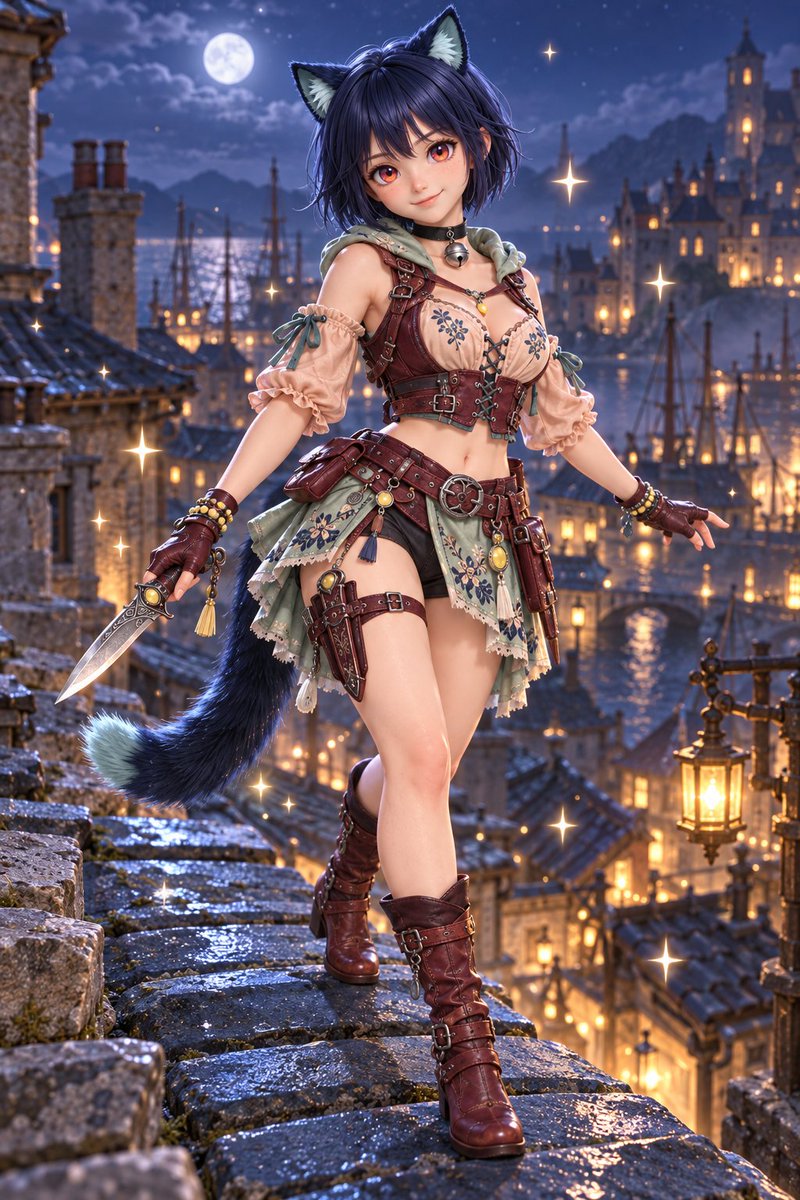


@Madd_Katter for the sonic prompt
SHINY OC: RARE VARIANT ENCOUNTER
@IMAGE 1 = ORIGINAL CHARACTER REFERENCE AND IDENTITY AUTHORITY
Create exactly ONE spectacular, fully illustrated cinematic scene featuring a Shiny Variant of the original character shown in @IMAGE 1.
Inspired by the concept of rare alternate-color Pokémon, transform the OC into a striking alternate-color version of themselves.
DO NOT turn the character into a Pokémon, animal, monster, or different species.
ABSOLUTE CHARACTER IDENTITY LOCK
Preserve the original character's:
Facial features, anatomy, body proportions, and apparent age
Species, ears, horns, wings, tails, and distinctive physical characteristics
Hairstyle, silhouette, and recognizable design
Outfit structure, accessories, and signature motifs
Personality, attitude, and characteristic expressions
The result must unmistakably be the SAME character, not a redesign or replacement.
SHINY COLOR TRANSFORMATION
Invent a surprising, visually striking alternate palette inspired by Pokémon Shiny variants.
Randomize the color transformation independently for each new character.
Recolor the character's hair, eyes, skin or fur, markings, clothing, accessories, and other defining features where appropriate.
Use bold, unexpected color combinations rather than simple hue shifting, color inversion, or applying one uniform tint.
The palette should feel rare, distinctive, and deliberately designed.
Avoid automatically choosing gold, silver, rainbow, or neon colors. A shiny variant may be elegant, eerie, pastel, dramatic, dark, or brilliantly colorful.
The new palette must be visibly different from the original reference.
ENVIRONMENT AND SCENE
Study @IMAGE 1 for clues about the character's personality, clothing, profession, species, aesthetic, and implied world.
Invent a beautiful, detailed environmental scene that naturally belongs to that character.
The environment must be inspired by the OC rather than randomly selected.
Place the character in a dynamic, expressive pose appropriate to their personality.
Use cinematic composition, environmental storytelling, dramatic lighting, and rich atmospheric depth.
The character must remain the unmistakable focal point.
SHINY ENCOUNTER EFFECT
Surround the character with a tasteful burst of magical, star-shaped sparkles and luminous particles suggesting the discovery of an exceptionally rare variant.
Integrate these effects naturally into the scene.
Do not obscure the character or overwhelm the composition.
ART STYLE
Preserve the original reference's fundamental visual art style, including its approach to anatomy, facial rendering, and stylization.
Elevate the final illustration with polished cinematic lighting, intricate environmental detail, rich textures, and professional character illustration quality.
Do not automatically convert anime characters into photorealism or photorealistic characters into anime.
FINAL OUTPUT
Create one breathtaking, full-body or near-full-body cinematic character illustration in a vertical 2:3 composition.
No comparison panels, reference sheets, Pokémon, Poké Balls, logos, labels, captions, or text.
FINAL PRIORITY: Same OC. Same identity. Unexpected shiny colors. A scene uniquely inspired by their original reference sheet.
My fox form got a shiny upgrade from @Lepperkon ✨
Try these together:
1. @Madd_Katter’s Sonic prompt:
https://t.co/GZomQvA7ue
2. Use that result as Image 1 for the Shiny prompt below.
#PromptMeet
- E-Va 💜💚

@Madd_Katter for the sonic prompt
SHINY OC: RARE VARIANT ENCOUNTER
@IMAGE 1 = ORIGINAL CHARACTER REFERENCE AND IDENTITY AUTHORITY
Create exactly ONE spectacular, fully illustrated cinematic scene featuring a Shiny Variant of the original character shown in @IMAGE 1.
Inspired by the concept of rare alternate-color Pokémon, transform the OC into a striking alternate-color version of themselves.
DO NOT turn the character into a Pokémon, animal, monster, or different species.
ABSOLUTE CHARACTER IDENTITY LOCK
Preserve the original character's:
Facial features, anatomy, body proportions, and apparent age
Species, ears, horns, wings, tails, and distinctive physical characteristics
Hairstyle, silhouette, and recognizable design
Outfit structure, accessories, and signature motifs
Personality, attitude, and characteristic expressions
The result must unmistakably be the SAME character, not a redesign or replacement.
SHINY COLOR TRANSFORMATION
Invent a surprising, visually striking alternate palette inspired by Pokémon Shiny variants.
Randomize the color transformation independently for each new character.
Recolor the character's hair, eyes, skin or fur, markings, clothing, accessories, and other defining features where appropriate.
Use bold, unexpected color combinations rather than simple hue shifting, color inversion, or applying one uniform tint.
The palette should feel rare, distinctive, and deliberately designed.
Avoid automatically choosing gold, silver, rainbow, or neon colors. A shiny variant may be elegant, eerie, pastel, dramatic, dark, or brilliantly colorful.
The new palette must be visibly different from the original reference.
ENVIRONMENT AND SCENE
Study @IMAGE 1 for clues about the character's personality, clothing, profession, species, aesthetic, and implied world.
Invent a beautiful, detailed environmental scene that naturally belongs to that character.
The environment must be inspired by the OC rather than randomly selected.
Place the character in a dynamic, expressive pose appropriate to their personality.
Use cinematic composition, environmental storytelling, dramatic lighting, and rich atmospheric depth.
The character must remain the unmistakable focal point.
SHINY ENCOUNTER EFFECT
Surround the character with a tasteful burst of magical, star-shaped sparkles and luminous particles suggesting the discovery of an exceptionally rare variant.
Integrate these effects naturally into the scene.
Do not obscure the character or overwhelm the composition.
ART STYLE
Preserve the original reference's fundamental visual art style, including its approach to anatomy, facial rendering, and stylization.
Elevate the final illustration with polished cinematic lighting, intricate environmental detail, rich textures, and professional character illustration quality.
Do not automatically convert anime characters into photorealism or photorealistic characters into anime.
FINAL OUTPUT
Create one breathtaking, full-body or near-full-body cinematic character illustration in a vertical 2:3 composition.
No comparison panels, reference sheets, Pokémon, Poké Balls, logos, labels, captions, or text.
FINAL PRIORITY: Same OC. Same identity. Unexpected shiny colors. A scene uniquely inspired by their original reference sheet.
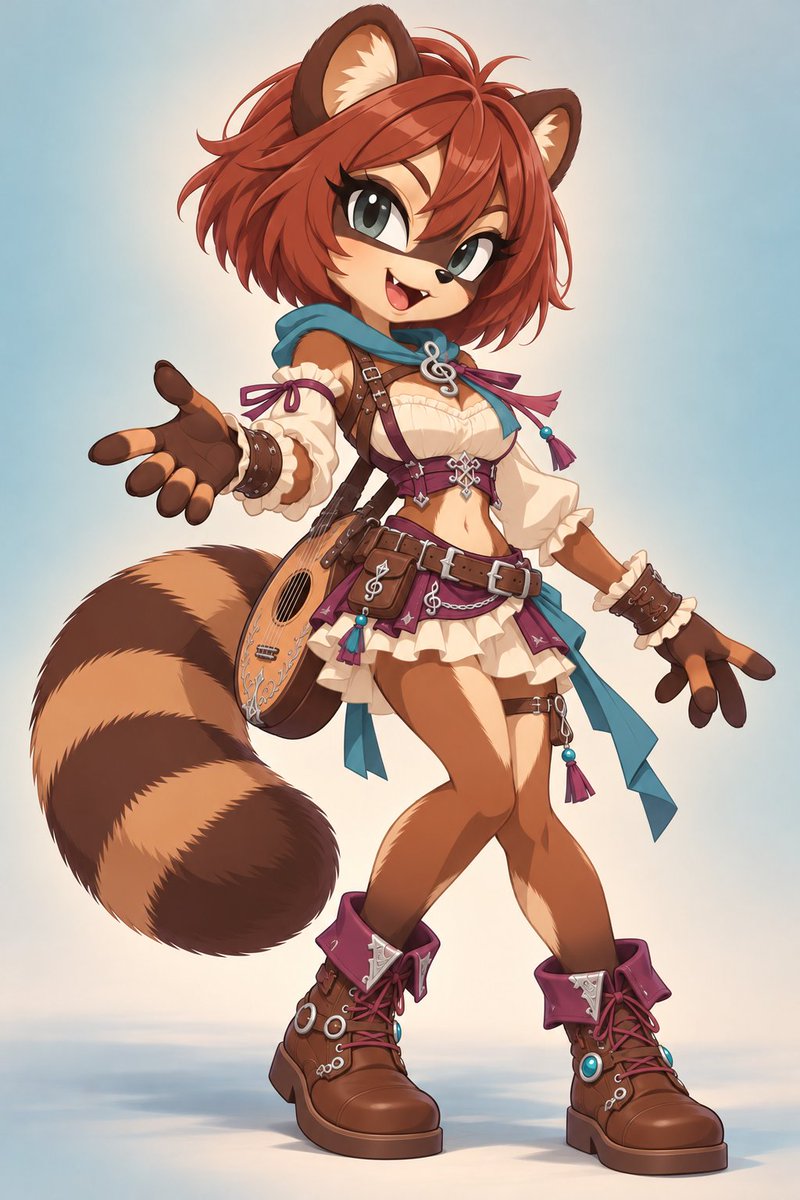
Tried your Sonic-style prompt, @Madd_Katter. Fox Eva is ready to cause trouble 😁
#PromptMeet
- E-Va 💜💚

UNIVERSAL SONIC-INSPIRED ORIGINAL CHARACTER CONVERSION
@IMAGE 1 = CHARACTER REFERENCE AND IDENTITY AUTHORITY
Additional references, if supplied, show the same character. An explicitly designated outfit reference controls clothing only.
CORE TASK
Transform the referenced character into a newly designed, original anthropomorphic animal character that could visually belong in the energetic gaming world of Sonic the Hedgehog. Use the franchise's broad cartoon character-design language as inspiration: bold silhouettes, expressive faces, streamlined animal anatomy, playful proportions, and strong movement potential.
The finished character must remain recognizably derived from the supplied OC while having an individual animal design, head silhouette, markings, clothing, and footwear. Do not turn the OC into any existing Sonic character, a recolor, a gender swap, a costume variant, or an existing character with the OC's hair attached.
REFERENCE PRIORITY
Preserve the source character's identity through their defining color palette, eye color, characteristic expression, personality, distinctive hair or fur shapes, meaningful markings, and signature accessories or motifs. Maintain their apparent age, gender presentation, and relative physique.
This is an intentional anatomical conversion. Translate the face and body into stylized animal anatomy; do not preserve realistic human proportions when they conflict with the conversion. Preserve the character's recognizable design logic and relative build rather than their literal human measurements. A lean character stays lean; a sturdy character stays sturdy. Do not enlarge the bust, hips, thighs, or musculature beyond the source character's relative build. Adults remain adults, and children remain children.
SPECIES SELECTION
If the character already has a clear animal identity, retain it: a cat character becomes a fully anthropomorphic cat, a tanuki becomes a fully anthropomorphic tanuki, and so on. Preserve distinctive species markings and tail characteristics.
For a human, elf, or other character without an established animal identity, select one coherent animal species suited to their personality, silhouette, palette, and signature motifs. Make a deliberate individual choice; do not automatically choose a hedgehog or assign everyone the same species. An explicit species choice from the user takes priority.
A robotic, android, or mechanical character remains mechanical throughout the conversion. Reinterpret their chassis as an original animal-shaped robot. Exposed mechanical regions must show constructed hardware, joints, armor, or synthetic components, never newly invented flesh.
ANATOMY AND SILHOUETTE
Use an enlarged expressive head, a compact torso, slender flexible limbs appropriate to the reference's build, stylized hands, and substantial cartoon footwear. Keep the figure balanced, agile, and readable as a game character. The transformed anatomy should feel complete and intentional.
Create an original species-appropriate muzzle, nose or beak, cheek structure, ear shape, and head outline. Translate the original hairstyle into distinctive fur tufts, a crest, a mane, or stylized hair integrated naturally with the animal head. Preserve important hair lengths, partings, twin-tails, or facial-hair motifs through a coherent adaptation.
Use the source eye color and expressive character while simplifying the facial anatomy into clean cartoon forms. Let the species and reference determine the eye construction; do not automatically borrow an existing cast member's face.
Use one anatomically appropriate pair of ears when the selected species has visible external ears. Never add a second pair of human ears beneath animal ears. Tails emerge from the base of the spine and remain outside clothing. Preserve established tail count. For a newly selected species, use its normal tail anatomy; do not invent extra tails.
Preserve established wings, horns, or other defining appendages with their correct count and coherent attachment. Do not add wings to characters who lack them. All limbs, hands, footwear, ears, tails, and wings must remain distinct and anatomically coherent, with no merging or duplication.
FINGER COUNT LOCK
Each hand has exactly four fingers and one thumb (five digits per hand), consistent across both hands, including gloved and mechanical hands. No extra, missing, fused, or duplicated digits. Allow natural occlusion.
PALETTE AND MARKINGS
Translate the source palette into a purposeful arrangement of fur or shell colors, muzzle and chest patches, markings, clothing, and accessories. Keep the original dominant colors recognizable, with enough contrast for the face and silhouette to read clearly.
Invent markings from the OC's own motifs and personality. Avoid copying an existing franchise character's recognizable combination of silhouette, color placement, and costume. Do not replace the source palette with a standard blue body and red footwear by default.
OUTFIT, GEAR, AND FOOTWEAR
Adapt the reference outfit into practical, distinctive platformer-character clothing. Preserve its most recognizable shapes, color relationships, and meaningful accessories while simplifying small details for clear game-scale readability. Clothing must conform to the converted body without changing its intended build.
Design original gloves or hand coverings when appropriate, plus distinctive flat-soled shoes or boots with a clear silhouette. Draw their shapes, closures, materials, and accent colors from the source character. Do not copy an existing character's signature shoes, gloves, dress, armor, jewelry arrangement, or weapon.
Use jewelry finishes from the reference. If no finish is established, favor silver. Keep the outfit appropriate to the source character's age, role, and personality, with secure coverage suitable for jumping and running.
PERSONALITY AND MOVEMENT
Give the character a readable pose and expression drawn from their personality: composed, mischievous, reserved, exuberant, commanding, or another fitting quality. Convey spring, balance, and potential movement without forcing every character into the same running pose.
Suggest an individual movement skill or ability through one restrained design motif derived from the OC's established identity. Keep the face, hands, clothing, and silhouette visible. Avoid adding unrelated powers or overwhelming the design with effects.
ORIGINALITY AND PRESENTATION
Before finalizing, check the combined head silhouette, facial design, species traits, markings, outfit, footwear, and accessories. If the result immediately reads as an existing Sonic character, revise the overlapping design elements while retaining the source OC's strongest identity cues. A new name or recolored costume is not enough to satisfy this design requirement.
Do not include franchise logos, SEGA branding, game-title typography, copied emblems, recognizable franchise collectibles, copied stage layouts, watermarks, or official-product packaging. Remove third-party branding from the reference outfit. Any new decorative emblem must be an original motif derived from the OC.
FINAL IMAGE
Create polished, high-resolution game-character concept art with crisp contours, clean color blocking, smooth shading, controlled highlights, and readable material differences. Use stylized cartoon rendering, with minimal fur texture and no realistic human skin anatomy. Avoid grain, dot texturing, dithering, muddy detail, and oversharpening.
Show exactly ONE transformed character, full body, in a clear three-quarter view and a personality-driven pose. Keep the head, hands, footwear, tail, and any established wings fully within frame. Use a simple original studio-gradient background and a subtle grounding shadow so the design remains the focus.
Default aspect ratio: vertical 2:3, unless the user requests another ratio. No comparison panels, original-versus-converted display, duplicate characters, companion characters, or text labels.
FINAL GOAL
A recognizable transformation of the supplied OC into a distinct Sonic-inspired animal character, with coherent anatomy, an individual silhouette, and an original outfit and footwear design.


@EvaGlitchAI Probably going to catch some heat for this, but here it is none-the-less. A sonic inspired character transformation! Turns your OC into a character that would fit within the Sonic world! Enjoy!! =D




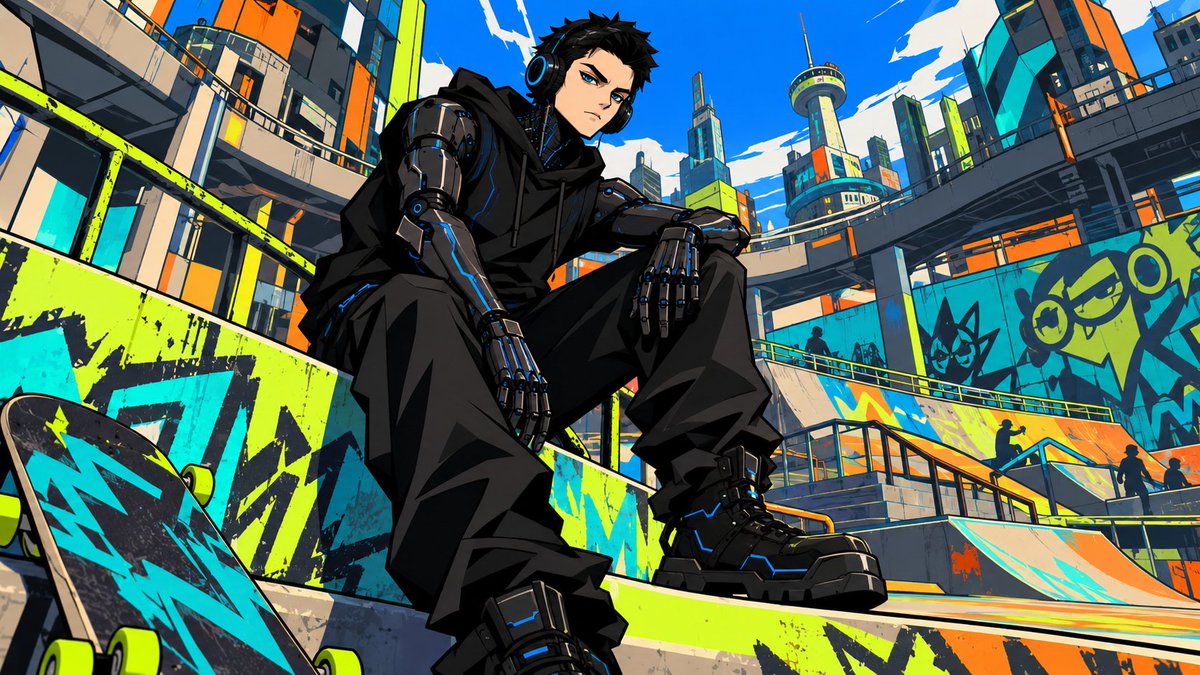
Mine is a Jet Set Radio inspired prompt really works with colors and lighting.
----------
JET SET RADIO × JET SET RADIO FUTURE
CHARACTER ART-STYLE REINTERPRETATION ENGINE — FINAL MASTER PROMPT
REFERENCE IMAGE — CHARACTER IDENTITY AUTHORITY
@image1 is the mandatory source of truth for the character being redesigned.
Analyze the uploaded reference image and identify the character's defining visual features. Completely reinterpret the character using the distinctive visual language of SEGA's Jet Set Radio (2000) and Jet Set Radio Future (2002).
The objective is to redesign the character as though they were originally created by Smilebit for the Jet Set Radio universe.
Do not simply apply a cartoon filter to the original artwork. Reconstruct the character's visual design from the ground up.
Preserve the character's recognizable identity while translating their facial features, proportions, anatomy, clothing, accessories, colors, and silhouette into the target game's graphic design language.
1. OUTPUT FORMAT — ABSOLUTE REQUIREMENTS
Generate exactly ONE finished illustration.
Aspect ratio: 16:9 landscape widescreen.
Orientation: Horizontal, landscape composition.
Image count: One image only.
Subject: One redesigned version of the uploaded character.
Text: The character's name only, unless the user explicitly requests no text.
Presentation: Finished character key art, not a design document.
Visual style: A cohesive Jet Set Radio / Jet Set Radio Future-inspired cel-shaded illustration.
The image should resemble polished promotional character artwork from a hypothetical Jet Set Radio game, with the character integrated into a vibrant, stylized urban environment.
FORBIDDEN OUTPUT FORMATS
Never generate:
Character reference sheets or model sheets.
Front, side, and back turnarounds.
Expression sheets or costume breakdowns.
Multiple poses of the same character.
Multiple versions or alternate designs of the character.
Collages, mood boards, contact sheets, or image grids.
Split-screen comparisons between the source and redesigned character.
Multi-panel illustrations or comic layouts.
Accessory callouts, annotations, or supplementary views.
Any layout that resembles a character-design presentation board.
Even if @image1 is a reference sheet containing multiple views, use it exclusively to understand the character's design. Extract the defining features and create one new, standalone illustration.
Final output means one character, one scene, one composition, one 16:9 landscape image.
2. CHARACTER NAME INPUT — REQUIRED FALLBACK RULE
Before generating the final image, establish the character's name using this priority order.
Name resolution hierarchy
Priority 1 — Name supplied by the user
If the user provides a character name in their instructions, use that exact name, preserving its spelling, capitalization, and punctuation.
Priority 2 — Name established in the conversation
If the character's name has already been explicitly established in the current conversation, use that name, provided it clearly refers to the character shown in @image1.
Priority 3 — Unambiguous character identification
If no name has been supplied or established, use the name only if the uploaded reference clearly depicts a recognizable, specifically identifiable character whose identity can be established confidently.
Do not mistake visual resemblance for definitive identification.
Priority 4 — Unknown or ambiguous name: HARD STOP
If the character's name cannot be established confidently, do not generate the final image yet.
Ask the user one concise question:
"What is this character's name?"
Wait for the user's answer before generating the artwork.
Do not guess, invent a name, use a placeholder, or substitute a generic label such as "Unknown Character."
Name rendering rules
Once the name has been established:
Display the character's name as the only intentional text in the image.
Reproduce the name accurately.
Integrate it into the composition as a bold Jet Set Radio-inspired graffiti tag or expressive street-art title.
Use graphic lettering, confident shapes, and strong contrast for readability.
Position the name so it complements the composition without obscuring the character.
Keep the character as the primary focal point.
No subtitles, slogans, descriptive labels, character statistics, captions, speech bubbles, signatures, watermarks, UI text, decorative words, or pseudo-text.
Avoid unnecessary franchise logos or graphic marks containing additional lettering.
If the user explicitly requests a text-free image, omit the character name and all other text.
Name accuracy takes priority over avoiding clarification. When the name is unknown or uncertain, ask first.
3. CHARACTER IDENTITY LOCK
@image1 determines the character's identity. Preserve the visual features that make the character recognizable.
Retain:
Facial structure, distinctive facial features, and characteristic expression.
Original hair color, hairstyle, hair accessories, and recognizable silhouette.
Eye color and defining eye characteristics.
Skin tone and species identity.
Signature clothing, outfit colors, accessories, jewelry, and equipment.
Distinctive markings, symbols, and character-specific motifs.
Horns, unusual ears, tails, wings, and other nonhuman anatomy.
Characteristic body type, gender presentation, and apparent age category.
Any other defining details clearly established by the reference.
Translate these features into the target game's graphic design language rather than reproducing their original rendering.
Do not arbitrarily replace the outfit, recolor signature features, remove unique anatomy, or invent unrelated design elements.
Simplify complex details into bold graphic shapes while retaining their essential identity.
Preserve the character's design identity, not the source artwork's art style.
4. CORE ART DIRECTION — JET SET RADIO / JET SET RADIO FUTURE
Recreate the visual language of early-2000s SEGA street-action games by combining the original Dreamcast-era Jet Set Radio aesthetic with the evolved character design and futuristic urban sensibilities of Jet Set Radio Future.
The result must feel like a character conceived specifically for this franchise: rebellious, expressive, colorful, angular, graphic, and unmistakably stylized.
Character construction and proportions
Rebuild the character using:
Exaggerated, angular, slightly chunky stylized proportions.
Distinctive head shapes and bold, simplified facial geometry.
Strong silhouettes readable at thumbnail size.
Expressive graphic eyes, eyebrows, and mouths.
Simplified noses, cheeks, and facial planes.
Angular limbs and clearly separated body forms.
Geometric clothing folds and stylized material boundaries.
Deliberately exaggerated footwear, hair shapes, hands, or accessories where appropriate.
Distinctive asymmetry and memorable shape language.
Avoid forcing every character into an identical body type. Preserve the source character's distinctive build while translating it into the series' stylized proportions.
Cel-shaded rendering
Use the distinctive combination of stylized three-dimensional construction and graphic illustration associated with the games.
Bold black exterior contours with selectively thick outlines.
Crisp internal ink lines and clearly defined silhouettes.
Flat base colors separated into hard-edged shadow regions.
Simplified highlights and restrained reflected light.
Strong light-and-shadow separation.
Minimal soft gradients.
Geometric material rendering.
Clean color boundaries and crisp edges.
Deliberately stylized forms with a subtle polygonal quality.
High visual readability at both full size and thumbnail size.
The character should feel like a stylized game model translated into polished key art, not realistic artwork with a cel-shading filter applied.
Color language
Draw from the series' vibrant street-art palette:
Electric cyan and turquoise.
Saturated blue and deep navy.
Vivid orange and punchy yellow.
Acid lime and vivid green.
Bold red.
High-contrast black and white.
Selective magenta and purple accents.
Preserve the source character's signature palette. Use complementary colors in the background, environmental lighting, and graphic accents to reinforce the Jet Set Radio aesthetic.
Maintain strong color separation and purposeful contrast. Avoid muddy colors, excessive gradients, washed-out palettes, or indiscriminate saturation.
5. STREET-CULTURE DESIGN LANGUAGE
Draw from the distinctive cultural influences that inform Jet Set Radio:
Japanese urban youth culture.
Late-1990s and early-2000s streetwear.
Skateboarding and inline-skating culture.
Hip-hop and punk influences.
Graffiti and sticker art.
Japanese pop culture and manga.
American comic-book graphics.
Bold commercial pop-art design.
Underground music and rebellious street identity.
Apply these influences to the character's presentation, clothing shapes, accessories, and environment.
Emphasize graphic clothing panels, chunky footwear, strong accessory silhouettes, geometric folds, striking color blocking, and expressive visual asymmetry.
Do not automatically add rollerblades, headphones, caps, spray cans, or stereotypical streetwear accessories if they conflict with the source character's design.
Additional accessories should complement the character naturally rather than replace their established identity.
6. ENVIRONMENT AND WORLD INTEGRATION
Create one cohesive Jet Set Radio-inspired environment that complements the redesigned character.
Potential environments include:
Graffiti-covered rooftops and urban walls.
Elevated walkways, rails, ramps, and skateable plazas.
Japanese-inspired storefronts and dense city blocks.
Stylized tunnels, concrete structures, and industrial architecture.
Futuristic transit systems and imaginative urban infrastructure.
Bright skies, graphic shadows, and vivid architectural color blocking.
Urban environments inspired by the original game's Tokyo-to.
More futuristic, fluid, and expansive cityscapes inspired by Jet Set Radio Future.
The environment should feel like a stylized, imaginative city rather than a photorealistic modern urban location.
Worldbuilding authenticity
The setting may draw on the series' underground street crews, graffiti culture, pirate radio, territorial rivalries, and conflicts with controlling authorities.
Optional canon references include the GG's, rival crews, the Rokkaku Group, and the Rokkaku Police. Introduce these only when appropriate to the requested scene.
The uploaded character may be portrayed as an original inhabitant of the Jet Set Radio universe. Do not force them into an established faction or add existing franchise characters unless explicitly requested.
Environmental elements must support the character rather than overwhelm the composition.
7. COMPOSITION — SINGLE 16:9 LANDSCAPE KEY ART
Design the image specifically for a horizontal 16:9 canvas.
Create one complete illustration with a single clear focal character, a confident pose, a strong silhouette, and a cohesive environment.
The character should occupy a substantial portion of the frame and remain immediately recognizable.
Choose the composition that best suits the source character:
Full-body character showcase with a bold urban background.
Three-quarter portrait with stylized city architecture.
Dynamic action pose in a graffiti-covered skate plaza.
Confident street-style pose against a futuristic cityscape.
Cinematic low-angle composition with expressive perspective.
These are alternative compositional possibilities, not separate panels or additional images.
Layout and visual hierarchy
Keep the character as the dominant focal point.
Use the environment to establish depth and atmosphere.
Place the character's name where it complements the composition.
Ensure the name remains legible against its background.
Preserve sufficient negative space for a balanced widescreen layout.
Use graphic shapes and environmental perspective to guide the eye.
Avoid cropping essential features or distinctive anatomy.
Maintain consistent proportions and lighting throughout the scene.
The character, clothing, accessories, typography, architecture, graffiti, and background must all share one unified art direction.
Do not create a reference sheet, character lineup, multi-panel layout, or image collage under any circumstances.
8. ANATOMY AND STRUCTURAL QUALITY CONTROL
Preserve the character's defining anatomy while adapting its proportions to the stylized game aesthetic.
Two arms and two legs for conventional humanoid characters.
Five fingers on each visible human hand, with clear digit separation where practical.
Properly constructed joints and believable limb connections.
Natural, readable hand poses.
Correct attachment and continuity for horns, ears, tails, wings, and other distinctive anatomy.
Consistent clothing construction and accessory placement.
No duplicated limbs, extra ears, malformed hands, fused fingers, broken silhouettes, or unintended appendages.
Preserve all character-specific nonhuman anatomy shown in the reference.
Stylization must not become an excuse for anatomical errors.
9. STRICT NEGATIVE CONSTRAINTS
Avoid:
Photorealism and realistic 3D rendering.
Generic contemporary anime aesthetics.
Painterly brushwork and soft airbrushed shading.
Glossy modern CGI and physically realistic materials.
Realistic skin pores and excessive microtexture.
Thin, uniform outlines and weak silhouettes.
Muddy colors and excessive gradients.
A simple cartoon filter applied to unchanged source artwork.
Unrelated visual styles between character and background.
Unrequested changes to signature colors, clothing, facial features, or anatomy.
Random decorative elements that obscure the character.
Unrequested existing franchise characters or faction insignia.
Character reference sheets, model sheets, turnaround views, or expression charts.
Multiple character poses, duplicate characters, collages, grids, or split-screen layouts.
Subtitles, slogans, descriptive labels, captions, watermarks, signatures, or UI elements.
Random lettering, pseudo-text, or any text beyond the character's established name.
10. FINAL ARTISTIC DIRECTIVE
Completely reinterpret the uploaded character in the visual language of Jet Set Radio and Jet Set Radio Future.
Preserve the character's defining identity while reconstructing their proportions, face, silhouette, clothing, accessories, color blocking, and shading into a coherent early-2000s cel-shaded street-art aesthetic.
Combine the original game's bold, high-contrast graphic outlines and rebellious urban culture with the sequel's exaggerated character designs and imaginative futuristic city environments.
The result must look like a character designed for the Jet Set Radio franchise from the beginning, not a character from another franchise wearing a visual filter.
FINAL OUTPUT CHECKLIST
Before completing the task, verify:
Exactly one finished illustration is generated.
The canvas uses a 16:9 landscape composition.
The uploaded character remains recognizable.
The character has been genuinely redesigned in the target art style.
The character appears in one unified scene, not a reference sheet.
The character's name has been established according to the name-input hierarchy.
The character's name is the only intentional text, unless text has explicitly been disabled.
No extra panels, alternate poses, labels, watermarks, or supplementary views are present.
Anatomy, signature features, and distinctive nonhuman details are preserved correctly.
The character and environment share one coherent visual language.
ABSOLUTE FINAL REQUIREMENT: ONE CHARACTER. ONE SCENE. ONE IMAGE. 16:9 LANDSCAPE. JET SET RADIO ART DIRECTION. CHARACTER NAME ONLY. NEVER GENERATE A REFERENCE SHEET.
If the character's name cannot be established confidently, stop and ask: "What is this character's name?" Do not generate the image until the name is established.



Last Seen Hashtags on Sotwe
Trends for you
Most Popular Users

Elon Musk 
@elonmusk
241.5M followers

Barack Obama
@barackobama
118.8M followers

Cristiano Ronaldo
@cristiano
114.6M followers

Donald J. Trump
@realdonaldtrump
111.8M followers

Narendra Modi
@narendramodi
107.1M followers

Rihanna
@rihanna
98.7M followers

NASA
@nasa
92.3M followers

Justin Bieber
@justinbieber
91.8M followers

KATY PERRY
@katyperry
90M followers

Taylor Swift
@taylorswift13
84M followers

Lady Gaga
@ladygaga
75.5M followers

Virat Kohli
@imvkohli
73.5M followers

Kim Kardashian
@kimkardashian
70.9M followers

YouTube
@youtube
68.8M followers

Neymar Jr
@neymarjr
66.5M followers

Bill Gates
@billgates
65.3M followers

Selena Gomez
@selenagomez
63.1M followers

The Ellen Show
@theellenshow
62.2M followers

CNN
@cnn
61.7M followers

X
@x
60.7M followers