

Top Tweets for #QIFENG

QIFENG Sewing Machine for Moccasin Shoes
Machine operation demonstrating precise sewing for moccasin shoe production.
#shoemachine #sewingmachine #moccasin #footwearmachine #manufacturing #QIFENG
Qifeng outsole trimming machine#shoemachine #shoeuppertrimmingmachine #shoeindustry #footwearmachine #QIFENG
Qifeng side and heel lasting machine#shoemachine #lastingmachine #shoeindustry #footwearmachine #QIFENG
QIFENG Custom High Boots Heel Lasting Machine
Heel lasting for high boots.
#shoemachine #heellasting #QIFENG
QIFENG QF-727A Heel Lasting Machine
Heel lasting operation in footwear production.
#shoemachine #heellasting #QIFENG

I cried so much watching the two of them. It’s truly heartbreaking when you do something wrong because you think your family betrayed you, when in reality, they didn’t 😭 #QiFeng #FuLing 💔 #MoonlightMystique

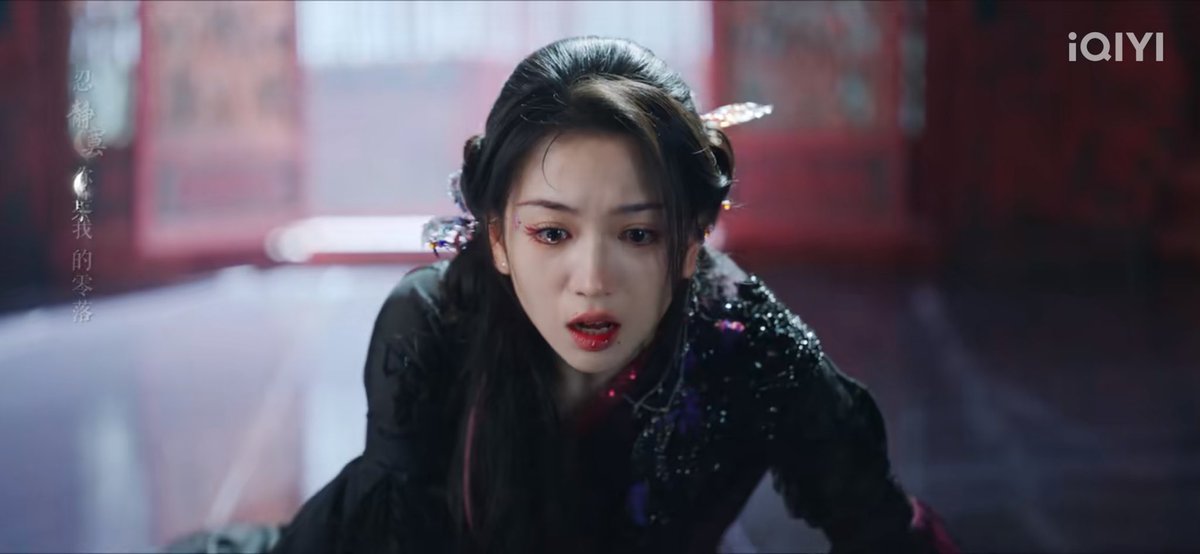

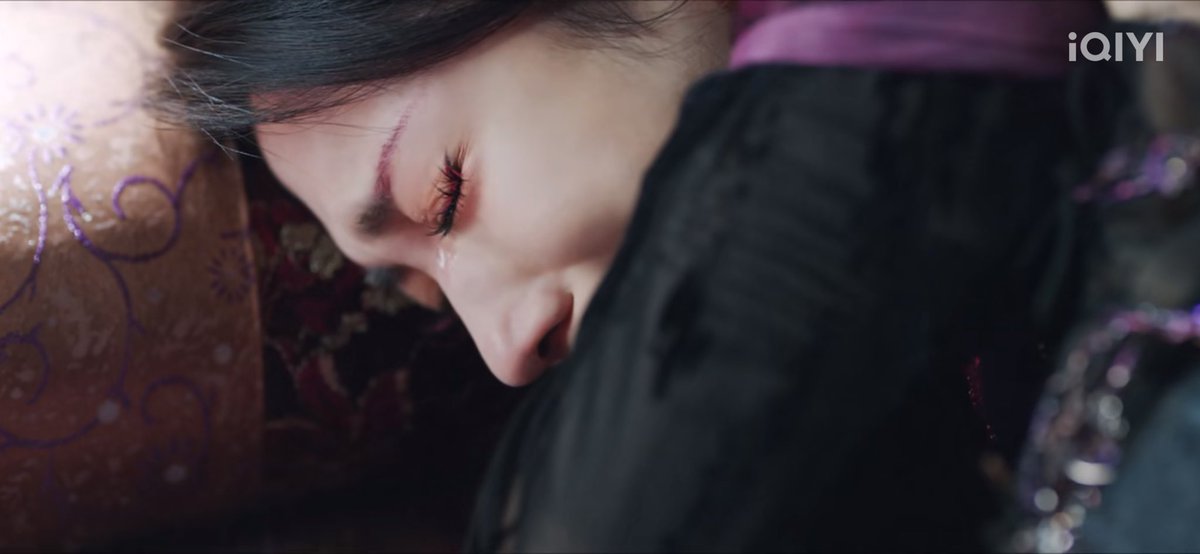

#MoonlightMystique #MoonlightMystiqueEp23
#LiangXueFeng #chenye #qifeng
no one can make me hate you, qi feng, i can feel your pain 🥺

This is our full forecast for 2024:
We need to fight for one more year before the bright future.
#DrGuan #Qifeng #XiJinping #China #NewYear #CCP #Trump #Putin #Russia #predictions #predicciones2024
Outlook for 2024(Full version)
The war between China and the U.S. against the new axis of evil will continue into 2024. Here, we'll forecast from three battlefronts: China's internal politics, the Russia-Ukraine war, and U.S. domestic politics.
Regarding China's internal politics, due to the successful convening of the 20th National Congress and the Two Sessions, the Chinese Party and government have completed their transitions. Politics will tend toward stability, and the CCP kleptocrats have essentially lost their political power, nearly concluding this battlefront. However, some final tasks remain, such as diplomatic and military personnel adjustments, the arrest of corrupt officials, and the pursuit of kleptocrats' overseas assets, which will continue. More critically, a series of purges deeply rooted in the financial sectors by figures like Wang Qishan will persist and intensify.
With the downfall of the kleptocratic faction, the pandemic threatening the economy will not return. Internal China will not see movements like the 2019 Anti-Extradition Law Amendment Bill Movement or the 2022 Blank Paper Revolution, stirred and initiated by the kleptocrats. Incidents like the spy balloon may occur, but their impact will diminish. China's economy will open further with more deepening reforms, and the economy and society will steadily recover. However, as the American far-right still holds some power in Congress, China's internal reforms will take time, and Sino-U.S. relations will continue to warm slowly amidst the competition. The first to recover will be civilian exchanges between China and the U.S., such as increased flights, which Xi Jinping emphasized in his APEC speech.
The Russia-Ukraine war will continue for some time in 2024, possibly not concluding even by the year's end. The real battlefield for this war is the U.S. Congress. The American far-right will strongly resist aid to Ukraine, while the bipartisan establishment will counterattack. It may take some time, but the U.S. Congress will eventually reach a consensus on aid to Ukraine. The closely related Israeli-Palestinian conflict will not escalate but form a pattern of Israel targeting Hamas with precision strikes, likely ending in 2024. No turmoil will occur inside Russia, as this is undesirable globally. Thus, Putin will continue to win elections and govern until the war ends smoothly. The Taiwan elections will end peacefully, and pro-independence forces won't rise, preventing new turmoil in the Taiwan Strait.
U.S. domestic politics will be the main battlefield in 2024. Trump winning the election and re-governing would allow the new axis of evil to regain control of the U.S., the world's most powerful country, potentially reversing the situation on the Russia-Ukraine front. The November 2024 presidential election will be the second most important in U.S. history, following 2020. The battle will be fierce. Beyond halting aid to Ukraine to rescue Putin, the far-right will continue to use tactics employed in 2020 to gain political capital, such as attacking political opponents and their families, anti-communist and anti-Xi slogans, and continuing to deceive public opinion with fabricated virus origins. However, their influence will wane.
The outcome of the U.S. presidential election is essentially determined. Regardless of how the election is conducted, Trump will not return to the presidency. The American people have become aware, and the national interests of the United States do not permit a president who circumvents political proxies and the judicial system to directly incite and hijack public opinion to be re-elected. The judicial battle over disqualifying Trump as a presidential candidate has begun and will inevitably reach the Supreme Court.
Even so, Trump, who has hijacked a portion of American public opinion, still has a significant chance of obtaining the Republican nomination. However, due to the diminishing far-right camp in Congress and a significant reduction in far-right public opinion compared to 2020, Trump will not win the presidential election. In Congress, far-right legislators, especially those supporting Bannon, will lose many seats in the election, and the Republican Party will continue to distance itself from Trump.
Given that 2024 is an election year, the U.S. economy will recover somewhat from the winter of 2023 and certainly won't collapse. After the 2024 presidential and congressional elections, the far-right will essentially be over, and the new axis of evil will disintegrate. The world will completely resolve conflicts after the new presidential term in 2025 and welcome a genuine economic recovery and new developments.
Although Xi Jinping's China has resolved its political situation through centralization, the enormous interest community formed by kleptocrats deeply entrenched over thirty years will stir more anti-Xi sentiment in 2024. Of course, these will primarily occur overseas, not in mainland China. As the situation in the U.S. presidential election gradually clarifies, these ripples will calm down. The U.S. Justice Department will also intensify its legal actions against the CCP kleptocrats' illegal overseas assets.
In 2024, we will obtain a definitive answer and result as to whether Mr. Guo Wengui, currently imprisoned, is genuinely anti-CCP or merely masquerading as such to defraud money. We'll also see who Mr. Guo Wengui's real enemies are: the kleptocrats at the core of the CCP or the nominally led CCP by Xi.
All answers lie in the future.
In this article, we profoundly expose the conspiracy behind the slogan "Take down the XiCP" led by Steve Bannon and Xia Qidong's NFSC.
Who exactly is the Communist Party that needs to be eliminated? And who are the bosses behind Bannon and Xia Qidong's NFSC?
#DrGuan #Qifeng #Bannon #CCP #Trump #AMFEST2023 #Xijinping
Is Xi Jinping's Xi Party equivalent to the Communist Party that needs to be eliminated?
Dr. Guan's Weekend Chat
December 20, 2023
#DrGuan #Qifeng #Bannon #CCP #Trump #AMFEST2023 #Xijinping
Many people who read my articles and those of Dr. Guan have a common question: why do we often distinguish between the Xi Family Party and the Communist Party in our discussions?
This perception could be understood if not for the revelations of Mr. Guo Wengui. It's his exposés that have allowed us to know the truth and form our own understanding.
If the Xi Party is the same as the Communist Party, then why do all the fake pro-democracy activists overseas uniformly oppose Xi? This situation essentially shows that opposing Xi is not the same as destroying the Communist Party. This also fundamentally demonstrates the cruel state of power struggles in the CCP, as well as the hostile and tense relationship between the Xi Party and the Communist Party kleptocrats.
According to historical materials from around the time of the Tiananmen Square protests in 1989 and the revelations about the South Putuo Plan, after the death of Emperor Mao, the power of the CCP was controlled by elders like Chen Yun and Deng Xiaoping, the so-called second generation of CCP leaders. In fact, they had split due to the needs of their own survival, primarily because of the political movements launched by Mao, such as the Great Leap Forward and the Cultural Revolution.
One faction was the reformists, represented by Hu Yaobang, who, due to their painful experiences, realized the necessity of reforming the CCP's evil ways. The other faction was the hardliners, represented by Chen Yun, Yao Yilin, Wang Zhen, Bo Yibo, etc., the dear sons of 'Russian Dad'.
Deng Xiaoping's return to power was a product of a compromise between these two sides, with only Deng being able to clean up the aftermath and balance the various forces, including those still loyal to Mao.
The Tiananmen Square protests in 1989 were Deng Xiaoping's reluctant move to declare the complete failure of the reformists and attempts to reform the CCP.
Jiang Zemin's rise to power was jointly promoted by Chen Yun and other elder leaders, making him the most orthodox son of the Russian Communist Party, the core and elite of the CCP.
These core members and so-called elites inherently and genetically despise the American democratic system, just like their 'Russian Dad'. All opportunists and masters of the art of thick black theory, without a shred of humanity or moral bottom line, they have fully exploited the evils of human society, inventing strategies like unrestricted warfare, and the Blue-Gold-Yellow evil plans.
As Mr. Guo Wengui has said, the CCP is just a few old hairs in Zhongnanhai and a few core families, namely the political families of the eight elders after the Tiananmen Square protests, evolving into groups like the Shanghai clique, Fudan clique, son-in-law clique, secretary clique - forming a kleptocratic group and a family-style underworld community of shared interests. This includes families like Jiang Zemin, Zeng Qinghong, Wang Qishan, Zhu Rongji, and their henchmen and thugs like Meng Jianzhu, Sun Lijun.
Mr. Guo Wengui has repeatedly stated in his live broadcasts that "Xi is our comrade-in-arms in the counter-insurgency," a very accurate definition and statement. As long as the power struggle between the Xi Party and the CCP kleptocrats is not over, Xi is the chief accelerator leading the CCP towards death. It is Xi's emergence in Chinese politics that has enabled the great drama of using the CCP to destroy the CCP in human history.
In any case, the fantasy of relying on the United States to eliminate the CCP, or hoping for the CCP's reform, is unrealistic. Through thirty years of kleptocracy, the core families of the CCP have already separated from the Chinese people and China, transferring their wealth and offspring overseas to establish a tight protection network mainly with Western forces.
The CCP's survival depends on two 'dads': one is the Russian Dad, the other is Western capital, including Wall Street and the Davos Party's foreign dad.
The environment supporting the CCP's survival is the poison and ignorance the CCP has planted in the minds of the Chinese people and the world's lack of correct understanding and ignorance of its evil and anti-human nature.
Therefore, in Mr. Guo Wengui's exposé revolution-led movement to overthrow the CCP, it is simple to distinguish who are the real exterminators of the CCP and the real enemies of the CCP: just look at the attitude towards Xi.
At this stage, anyone who opposes Xi, insults Xi, and blames the evil of the Communist Party on Xi's rule and dictatorship, their purpose and result will certainly be beneficial to the CCP and detrimental to the effort to destroy the CCP. This is simple common sense.
The elimination of the CCP of course depends on the awakening and actions of the Chinese people themselves, and more so on.
The performance of Bannon and Xia Qidong’s NFSC at the AmFest23 American political rally has fully exposed their stance and purpose. It also clearly illustrates who the major financiers and the real puppeteers behind Bannon, as a core figure of the American far-right, are. This includes the thugs led by Xia Qidong and Bannon, whose backers are the very core of the CCP, the kleptocrats, essentially the opposition of the Xi Party. That’s why Bannon and Xia Qidong always refer Xi as the CCP that needs to be taken down. What behinds the slogan “Take down the XiCP” is their corruption and collaboration with the kleptocratic faction of CCP.
Bannon's covert relationship with the kleptocratic families was not fully exposed during the "Cambridge Analytica incident." However, now, with the cry of "Take down the XiCP," this relationship has been completely revealed, almost akin to streaking. Under Bannon's leadership, the so-called NFSC led by Xia Qidong chanting this slogan amounts to a complete betrayal of the exposé revolution and its creator, Mr. Guo Wengui. This is because they have clearly positioned themselves against the exposé revolution and Mr. Guo Wengui. The deepest persecution of Mr. Guo Wengui comes from the kleptocrats and the Anti-Guo group centered around Wang Qishan and Meng Jianzhu, not Xi Jinping and the Xi Party.
グアン博士の週末トーク
アルゼンチンで選出された右翼大統領の性格は何ですか?
グアン博士/チーフェン
2023年10月18日、アルゼンチン総選挙でポピュリストのハビエル・ミレイ氏が得票率55.7%で勝利した。
2023 年 10 月 20 日、アルゼンチンの右派大統領に選出されたハビエル・ミレーは、一連の民営化手続きを通じて南米第 2 位の経済大国を改革する計画であると初めて述べた。同氏が述べた民営化プロセスから判断すると、それには主に国営メディア組織の民営化、公共企業の民営化、アルゼンチン中央銀行の閉鎖(法定通貨(国家主権通貨)の廃止を意味する)が含まれる。通貨を自由に選択できます。これら 3 つの側面があります。
彼が発表した政策計画を通じて、いわゆるポピュリストであるハビエル・ミライのアルゼンチン大統領選出の本質を理解することができる。
ポピュリストのハビエル・ミレイは、自らを「無政府資本主義者」と呼ぶリバタリアン経済学者であり、これはハビエル・ミレイの自称称号であり、もちろん彼の経済哲学でもある。
国営メディア組織の民営化や公共企業の民営化など、同氏が主張する一連の民営化手続きにおける第一と第二の核心的見解は、国が動いている兆候としてメディアや国民によって宣伝されることが多い。民主主義、つまり民主主義に向けて、国家はメディアを民営化し、公共企業も民営化しなければならない、これを私たちは公共資源の民営化と呼んでいますが、この民営化のプロセスを通じて、国家と憲法による私有財産の保護が実現するのです。が実証されている。
海外の主流メディアが現在の中国経済に疑問を抱いている中で、「国家の進歩と人民の後退」という典型的な格言は、この見方に基づいている。
まず、どの国が公営企業民営化改革を行ったのかを見て、その概念を明らかにしてみよう。
国有企業民営化改革の最初の典型例は中国であり、改革開放後の国有企業株式改革に端を発し、理論的中心的推進者は「厳格株式改革」として知られる李依寧であった。 。」それは、当時の国有企業と呼ばれていたものを株式会社化し、香港でも上場できる混合所有企業にするというものだった。表面的には、国民に私有財産を取得する機会を与えているように見えますが、実際の結果は現在の窃盗経済モデルの形成です。つまり、このいわゆる改革の本質は、民営化の名のもとに、国有資源、すなわち公的資源をある特定の階層に直接配分することにある。中国では、これらの特定の階級は中国共産党の紅族です。
この種の改革や変革の本質は、ほとんどの国民が資源を獲得する機会を失う一方で、資本にとって有利な機会を創出すること、言い換えれば、公共資源の独占が権力の独占から資本の独占に変わったことである。最終的には、必然的に資本と権力の間の対立が形成されることになります。
国有企業民営化改革の二つ目の典型的なケースは、ソ連、すなわちロシアの崩壊後である。プーチン大統領は政権獲得後、国有企業の民営化、金融寡頭政治が中核企業を支配する、つまり資本と武力による国家権力の二重管理を通じて、ロシアに新たなタイプの資本独裁体制を確立した。権力構造 、国家に代表される公共資源はプーチンを中核とする複数のギャングファミリーによって管理され、ギャング経済モデルを形成している。ソ連は崩壊したが、旧ソ連の共産党エリートは依然として国家資源を掌握して独裁支配を行っている。
中国とロシアの例から判断すると、このいわゆる民営化は本質的に支配階級内で権力と富を再分配する手段であり、その結果として国家資源が少数の家族によって管理される寡頭制または窃盗制の資本主義が、権利を持つ人々の利益を守ることになる。国民の利益ではなく、支配層の既得権益。 アルゼンチンは、複数の政党が存在し、言論の自由と私有財産が憲法で保護され、言論が比較的自由であるなど、国家形態は中国とは異なりますが、一般にいわゆる民主主義の国とみなされています。しかし、この国の性質は米国のような先進民主主義国の性質とは全く異なります。
民主主義が人類文明の発展の方向であり主体であることは疑いの余地がありません。民主主義を現代政治の究極の目標とするならば、民主主義とは国民が国の主人であることを意味します。それは、人々の集団においては、大多数の人々の意志が集団の意志となることを意味します。たとえば、国が国内すべての国民の権利と利益を代表する場合、その国で権力を行使する政府が国民の大多数の意思を代表できるような憲法と仕組みを形成しなければなりません。
集団を構成する人々は思慮深く利己的な欲望を持っており、外界からのさまざまな影響に影響されたり、制御されたりすることがあります。まさにその通りで、民主主義制度においては、民主主義に対する最大の侵害は公権力である。
米国建国の父たちは建国憲章の中でこの問題を長年認識しており、合衆国憲法では、すべての国民の最も基本的な権利である民主主義を守るための最も効果的な武器は公権力を抑制することであると規定している。 , まず第一に不信感 アメリカ国民が持つ銃を所有する権利など、政府の目的は国民が重大な時に自らの意に反する公権力に抵抗することにある。信仰の自由と表現の自由は、メディアや社会における公権力の行使に対する強い監督圧力を指します。民主政治における野党の存在は、国民が与党の持つ公権力を監視するのに役立ちます。最終的には野党も含めた三権分立の政治制度は、国家の公権力が国民の意思を侵害することがないようにすることができます。どの国でも、突然の社会保障事件の際に個人の危害や略奪ではなく、国民の私有財産や権利を侵害し得るのは公権力である。こうした社会保障事件による個人への危害や私有財産の収奪は、見方を変えれば、国民の財産や権利に対する公権力の侵害、すなわち民主主義の侵害でもある。
したがって、国家権力が十分に監督・制御できない国では、いわゆる民主的民営化プロセスは言い訳と隠れ蓑に過ぎず、必然的に資本が管理する盗賊経済モデルやギャング資本経済モデルに発展することになる。
人間社会が生きていくための基本条件は資源です。マルクスの経済理論は、資本の本質は剰余価値にあると提唱し、当時の人間の社会経済モデルを反映し、産業文明が引き起こしたさまざまないわゆる資本主義の危機現象の根本原因を説明することを目的としていました。時代を迎え、解決策を模索します。いわゆるマルクス主義の搾取と階級理論を生み出したのも、労働者の労働から得られる資本の「剰余価値」である。それは最終的に、第二次世界大戦後、二大イデオロギー陣営間の対立に発展しました。
現代のマルクス経済学とケインズ経済学を見ると、明らかな問題が見つかりますが、これらの問題は、米国のトランプとバノン、中国の窃盗政治経済、ロシアのギャング資本経済モデルによってもたらされています。
まず第一に、マルクスの資本生産の本質に関する理論は、資本の生産におけるテクノロジーの役割を無視しており、ケインズの経済学は資本そのものに直接焦点を当てているのに対し、盗賊経済やギャング資本経済は権力と資本の関係を示している。
したがって、既存の経済システムでは資本源の性質を説明できないと判断します。
私たちの考えでは、資本の源は資源です。人間社会における個別に制御可能なリソースのグループまたはグループを定量化したものです。
資源には「天然資源」と「社会資源」の2種類があります。
天然資源は、人類の生存と発展のための物質的条件と製品を提供するために地球に依存しています。人間社会が生活と生産に依存している物質はすべて天然資源から生産されています。天然資源の中で最も重要なのは石油や石炭などのエネルギーです。
社会資源とは、メディア空間、コミュニティ、国や都市の交通、教育、医療、インターネット、その他の資源など、集団で生活する人々によって形成される公共資源です。
文明社会の発展の枠組みを構成するのは、天然資源などの物質的基盤と社会資源の社会的属性です。
国家の出現は、地理的にこれら 2 つの資源を民族グループに依存する人々と資源の集合体です。国家間の戦争やゲームの本質は、資源の略奪と競争です。
これら 2 つの資源に対する人々の需要が商品を生み出します。これにより、経済の社会形態と経済理論が誕生しました。
どのような種類の資源も、その地域性(自然属性)と集団性(権利利益属性)に依存し、異なる特性を持ち、それが不足や希少性として理解できる資源の独自性も形成します。これには 2 つの側面が含まれます: 第 1 に、一部の資源はグループの消費ニーズを満たすために技術的変革が必要であること、第 2 に、特定の地域の資源ではこの地域の消費ニーズを満たすことができない可能性があることです。この 2 つのニーズのもとに、資源変換サービスと資源貿易が存在します。資源変換サービスと資源貿易は、経済生活の全体的な意味を構成します。つまり、いわゆる資本や富は本質的に剰余価値から生まれるのではなく、さまざまな資源に対する人間集団の需要から生まれ、この需要が資源変換サービスや資源貿易を生み出し、その過程で資本や富が生み出されるのである。 。
富、つまり資本を手に入れたい場合、最も簡単な方法は資源を独占することである、という意味合いが含まれています。
資源の独占による資本の獲得には、公権力の統制による資源の独占と、資本による資源の独占の2つの方法がある。
いずれにしても、経済社会における企業体を通じて実現されることが必要であり、これがいわゆる自由主義経済理論、公営企業民営化の主張の本質である。
ハビエル・ミライが提唱したいわゆる三つの民営化措置は、民主主義の名のもとに、彼を支援する国際資本にゴーサインを与え、最終的にはアルゼンチンの国有資源の管理と独占を徐々に完成させることになるだろう。マフィア資本が支配する国へ。
では、ハビエル・ミレーの背後にある操縦者は誰なのか?バノンが関与した「ケンブリッジ戦略事件」とトランプ大統領の選挙は、すでに答えを与えている。ハビエル・ミレーはもう一つの「ケンブリッジ戦略事件」であり、その背後にある資本は、以下から構成される邪悪な三角同盟である。この記事で分析した中国共産党の窃盗犯、プーチン一味、そしてアメリカの極右勢力である。
ハビエル・ミレイがアルゼンチン大統領に選出されたことで、第二次世界大戦後、身分を変えて南米に隠れた多数のドイツのナチス戦犯と同じように、南米が彼らの地球上の避難場所になろうとしている。
阿根廷右翼当选总统的本质是什么
《冠博士周末漫谈》
冠博士/旗风
2023年10月18日,在阿根廷大选中,民粹主义者哈维尔·米莱(Javier Milei)以55.7%的选票获胜。
2023年10月20日,阿根廷右翼当选总统哈维尔·米莱首次表明他计划通过一系列私有化程序来改革这个南美第二大经济体。从他表述的私有化程序来看,主要包括国有媒体机构私有化、公营企业也进行私有化、关闭阿根廷中央银行,也就是祛除法币(国家主权货币),货币方面将由阿根廷人自由选择任何一种这三个方面。
正是通过其公布的施政计划,我们才能够认识到这位所谓的民粹主义者哈维尔·米莱当选阿根廷总统的本质。
民粹主义者哈维尔·米莱(Javier Milei)是一位自由意志主义经济学者,自称是“无政府资本主义者”,这是哈维尔·米莱的自称,当然也是他的经济学理念。
在其主张的一系列私有化程序中的第一、二个核心观点,比如国有媒体机构私有化、公营企业也进行私有化往往被媒体和公众标榜为一个国家走向民主的标志,就是说一个民主国家必然要进行媒体的私有化,公营企业也进行私有化,也就是我们所说的公共资源的私有化,通过这个私有化过程彰显国家、宪法对私有财产的保护。
在海外媒体主流对中国目前经济的质疑中,典型的“国进民退”说法就是基于这种观点。
那么我们首先看看哪些国家进行了公营企业私有化的改革,再来理清这个概念。
进行国有企业私有化改革的第一个典型案例就是中国,缘起于改革开放后的国有企业的股份制改造,其核心理论推动者就是厉以宁,号称“厉股改”。就是对当时所谓的国有制企业进行股份制改造,变成一种混合所有制企业,甚至可以在香港上市。从表面上看,似乎给了公民获得私有资产的机会,但是实际的结果正是形成了现在的盗国经济模式。也就是说,这种所谓的改革本质是将国有资源也就是公共资源以私有化的名义直接瓜分给了某些特定的阶层。在中国,这些特定的阶层就是中国共产党的红色家族。这种改革或者改造本质就是创造了资本的优势机会,而大多数公民丧失了获取资源的机会,也就是说公共资源的垄断方式从权力垄断变成了资本的垄断,最终必然形成资本和权力苟合的盗国经济模式。
进行国有企业私有化改革的第二个典型案例就是解体后的苏联,也就是俄罗斯。普京上台后,通过对国有企业的私有化在俄罗斯建立了一个金融寡头控制核心企业的新型的资本独裁帝国,也就是通过资本和武力双重控制国家的权力,在这种国家权力架构下,国家代表的公共资源控制在以普京为核心的几个黑帮家族手中,形成了一种黑帮经济模式。苏联虽然解体了,但是原苏联的共产党权贵依然通过掌握国家资源进行独裁统治。
从中国和俄罗斯的例子来看,这样所谓的私有化,本质是在统治阶层内部进行权力和财富再分配的手段,形成的国家资源被少数家族控制后的寡头或者盗国资本主义,保护的是统治阶层既得利益者的利益,而不是人民的利益。
阿根廷的国家形态虽然与中国不同,例如存在多党,宪法保护言论自由和私有财产,言论相对自由,被普遍认为是一个所谓的民主国家。但是这个国家的本质与美国等发达的民主国家具有相当大的不同。
不可否认的是,民主是人类文明发展的方向和主体,那么民主是什么? 如果我们把民主看作是现代政治的最终目的的话,那么民主就是人民当家作主。就是在人形成的一个群体中,大多数人的意志成为这个群体的意志。比如一个国家代表这个国家全体人民的权益,必须形成一种体质和机制,让行使这个国家权力的政府能够代表大多数人的意志。
而作为组成群体的人是有思想的,是有私欲的,可以受到外来世界的各种影响甚至控制。也正是如此,在民主体制中,对于民主最大的侵害就是公权力。
美国的建国先贤们在建国宪章中早已意识到这一个问题,在美国宪法中,捍卫民主也就是每个公民最基本的权利的最有效的武器就是对公权力的遏制手段,也就是首先不信任政府,比如美国公民所拥有的拥枪权,目的是公民在关键时候反抗违背自己意志的公权力的。信仰、言论自由是在媒体和社会上行使对公权力的强大监督压力。而民主政治中反对党的存在更是帮助人民对执政党掌握的公权力进行监督。最终把反对党包括在内的三权分立的政治制度可以保证保证国家公权力不能对人民的意志造成侵害。在任何一个国家,能够侵害公民私有财产和权益的一定是公权力,而不是突发的社会治安事件中的个人伤害和掠夺。从另一个角度上,这些社会治安事件造成的对个人的伤害和私有财产的掠夺也是公权力对公民财产和权力的侵害,也就是对民主的侵害。
所以在一个国家权力不能被很好的监督和控制的国家,所谓的民主化的私有化进程不过是借口和幌子,必然发展成资本控制的盗国经济模式或者黑帮资本经济模式。
人类社会赖以生存的基本条件就是资源。马克思的经济学理论提出了资本产生的本质来自剩余价值,这是那个时代对人类社会经济模式的一种思考,其目的是解释工业文明时代所造成的种种所谓的资本主义危机现象的根源,并且寻求解决之道。也正是资本来自工人劳动的“剩余价值”,才产生了马克思主义的所谓的剥削和阶级理论。最终演变成二战后两大思想阵营的对抗。
我们从现时代来看马克思的经济学和凯恩斯的经济学,都可以发现明显的问题,这些问题也是美国的川普、班农、中国的盗国经济以及俄罗斯的黑帮资本经济模式给我们的启示。
首先马克思的资本产生本质中忽视了技术对于资本产生的作用,凯恩斯的经济学则直接关注资本本身,而盗国经济和黑帮资本经济则表明了权力和资本的关系。
所以我们判断,现有的经济学体系不能解释资本的来源本质。
在我们看来,资本的来源是什么,是资源。是一个团体或者群体个人可控制资源在人类社会中的量化。
资源包括两种,一种是自然资源,一种是社会资源。
自然资源依赖于地球,提供给人类生存发展的物质条件和产品。人类社会生活、生产所依赖的材料均产生自自然资源。自然资源中最重要的就是能源,比如石油和煤炭。
社会资源是人在群体生活下所形成的一种公众化的资源,比如媒体空间,比如社区,比如一个国家或者城市的交通、教育、医疗、网络等资源。
正是自然资源等物质基础和社会资源的社会化属性构成了一个文明社会发展的架构。
而国家的产生是在地缘基础上这两种资源依赖于种族群落的人与资源的集合。国家之间的战争和博弈本质就是对资源的掠夺和竞争。
也正是人对这两种资源的需求才产生了商品。才催生了经济这种社会形态和经济学理论。
任何一种资源都依赖于其地域性(自然属性)和群体性(权益属性),具有不同的特点,也形成资源的独特性,可以理解为短缺性或稀缺性。包括两个方面:首先一些资源需要技术转化才能满足群体的消费需求,第二,某个地域的资源未必能够满足这个地域的消费需求。正是在这两种需求下存在了资源的转化服务和资源的贸易。资源的转化服务和资源的贸易构成了经济生活的全部内涵。也就是说,所谓资本、财富本质不是来自剩余价值,而是来自人类群体对各种资源的需求,这种需求产生了资源的转化服务和资源的贸易,在这个过程中产生了资本和财富。
正是在这种内涵下,如果想获得财富,也就是资本,最简单的方法自然是垄断资源。
对资源的垄断获得资本的方式有两种:一种就是通过控制公权力垄断资源,一种就是通过资本垄断资源。无论哪种方式都需要通过经济社会的一家企业实体去实施,这也就是所谓的自由经济理论和倡导公有企业私有化的真正本质。
哈维尔·米莱倡导的三项所谓的私有化措施不过是打着民主的名义,给背后支持他的国际资本开了绿灯,最终会逐步完成对阿根廷的国有资源的控制和垄断,阿根廷最终走向一个黑帮资本控制的国家。
那么谁是哈维尔·米莱背后的操控者呢,班农所涉及的“剑桥策略事件”以及川普大选早已经给了我们答案,哈维尔·米莱是又一次的““剑桥策略事件”,背后的资本就是我们在文章中分析的中共盗国贼和普京黑帮加上美国极右势力组成的黑恶三角联盟。随着哈维尔·米莱当选为阿根廷总统,南美洲即将成为他们在地球上的一个的避难所,和二战后大量德国纳粹战犯改头换面躲藏在南美洲一样。
In this article, we deeply analyze what exactly is the comprehensive deepening reform of Xi Jinping's regime? Is centralization a means or an end in itself? Has China ever had a free economy? What is the future of China's economy?"
#DrGuan #China #Qifeng #XiJinping
What Exactly is Xi Jinping's Deepening Reform?
Dr. Guan's Weekend Chat
#DrGuan #China #Qifeng #XiJinping
On November 7, 2023, Xi Jinping held the third meeting of the Central Committee for Deepening Overall Reform, emphasizing the improvement of the state-owned capital operating budget system and the perfection of the regulatory system for monopolistic resources. This has once again sparked intense discussion among external observers. Some believe that this signifies the Xi administration's continued strengthening of centralization, bolstering of governmental power, suppression of the free economy, and a political shift further to the left, potentially leading towards a planned economy similar to Mao Zedong's era or North Korea.
But is this really the case? To analyze this deeply, we must first understand the path of economic development China has taken since the establishment of the People's Republic.
Unlike many Western countries, China has been a centralized bureaucratic state with agriculture as its mainstay since the Qin Dynasty. However, under the impact of industrialized Western capitalist powers, the Qing Dynasty, China's last imperial regime, was forced to start stepping towards modernization. From the Westernization Movement to the Hundred Days' Reform, from the fall of the Qing Dynasty to the establishment of the Republic of China, and then the Communist Party taking power, China's biggest challenge has always been how to transition to a modern industrial society in terms of economy and politics and integrate with the modern world.
Our view is that, starting from the Communist takeover in 1949, China's economic development can be divided into three stages.
The first stage is from 1949 to the death of Mao Zedong in 1976. The Communist economic model was similar to the Soviet planned economy. During this period, China developed its industry within a limited scope dominated by the so-called state-owned economy, without any capitalist elements.
The second stage is from 1976 to 2001. After Mao's death, the Communist Party rapidly engaged in intense political struggles over economic development strategies, with roughly four political factions from left to right:
1. Hua Guofeng, advocating continued personal cult of Mao.
2. Chen Yun, supporting the Soviet-style planned economy.
3. Deng Xiaoping, in favor of economic reforms without political reforms.
4. Hu Yaobang and Zhao Ziyang, proposing that economic reforms should ultimately lead to political reforms.
Eventually, Deng Xiaoping and Chen Yun stabilized the situation, creating a dual-peak political situation within the party, akin to two factions within one party. The political struggle between these two factions peaked in 1989 with the death of Hu Yaobang and the downfall of Zhao Ziyang, effectively ending the path to political reform through economic change. Regardless of their different stances on economic reform, both factions agreed on the Communist Party's dominant rule in China, not abandoning the essence of the Soviet-style authoritarian regime."
Regarding the understanding of reform and opening up, essential differences emerged between the so-called reformists and conservatives within the Communist Party. The reformists, led by Hu Yaobang, aimed to implement political system reforms, which would fundamentally shake the foundation of the Soviet model of the CCP's dictatorship and ultimately follow the historical trend towards the post-dissolution multi-party political system of the Soviet Union, as represented by the then 'Soviet-Eastern Bloc' (Soviet Union, Eastern Europe, Singapore).
Preventing China from becoming like the 'Soviet-Eastern Bloc' (Soviet Union, Eastern Europe, Singapore) was the most important and unanimous task for the conservative faction represented by these CCP elders.
Although the so-called reform and opening up stalled for a while after the Tiananmen Square incident in 1989 and Deng Xiaoping's resignation, when the Chen Yun faction took power, the economic downturn forced Deng Xiaoping to reassert pressure on Jiang Zemin during his southern tour in 1992, bringing China back to the path of 'reform and opening up' until its accession to the World Trade Organization in 2001.
During this phase, the Communist Party loosened its control over the economy, allowing private enterprises and the privatization of state-owned assets. From another perspective, the most notable characteristic of this phase was that the Communist Party's red families seized China's resources through their power, gaining immense wealth from the developmental opportunities arising from this control. They transformed control over resources into a privileged capitalist group, completing a bloody process of capital accumulation, and ensuring the Communist Party families' dominant position in China even after economic development began.
In other words, the primary beneficiaries of private enterprise and the privatization of state assets were almost exclusively the Communist Party's red families. This is the true meaning of Deng Xiaoping's policy of letting some people get rich first. It was also in this phase that the CCP rapidly formed a privileged capitalist class centered around the red families through the division of state resources. This class, together with the technocratic bureaucrats cultivated by the Party's organizational system, formed a powerful community of shared interests. They turned the state into a company-like management and profit-sharing model: the red elite families became board members, and technocrats became the company's operators and professional managers. China entered a so-called 'Nine Dragons Governing the Waters' model of dividing the cake in terms of resource and national wealth division.
The third phase is from China's entry into the World Trade Organization in 2001 to the present. The notable characteristic of this phase is that the CCP integrated its privileged capitalist model into the global capitalist pool. The CCP, exploiting its people for cheap labor, colluded with international capital, mainly Wall Street in the United States, to establish a new economic model after World War II: a kleptocratic economy based on the dollar. The notable feature of this model is that the Communist Party's red elite families use modern financial means to transfer the wealth extracted from the Chinese people in the form of dollars to Western countries, benefiting Western capital. At the same time, the red families of the Communist Party gained political influence in the capitalist societies of the West. In this phase, the economic power of the privileged capitalist class formed since the reform and opening up grew exponentially, and their immense wealth officially entered them onto the international stage.
Only from the perspective of the history of the Communist Party's economic development can we truly understand China's economy. As we have fundamentally stated in our article 'What is the Economy of the Chinese Communist Party (CCP)?' https://t.co/cukMi1AY7e, as long as the political form of the one-party dictatorship of the Communist Party does not change, the economic theories and concepts generated by industrial civilization are inapplicable in Chinese society. Economic concepts and theories are merely tools to maintain the autocratic rule of the Communist Party. China's economy is a dual-track or privilege-based economy.
In this political form, where the economy serves the dictatorship of the core families of the Communist Party, there is essentially no distinction between private and state-owned enterprises. Under such a system, all enterprises in the country are merely the moneybags of these core families, and successful entrepreneurs inevitably become puppets of the privileged class.
Therefore, it becomes easy to understand the true nature of the initial state-owned enterprise reforms and the reform and opening up advocated by Deng Xiaoping. The so-called shareholding reform of state-owned enterprises is nothing but a blatant robbery and division of national wealth and resources by the 'ruling class' or privileged class, using new methods such as Hong Kong red chip stocks and overseas listing processes, which are large-scale acts of state plunder in collusion with overseas dollar capital.
The 'reform and opening up' advocated by Deng Xiaoping and his successors after the Tiananmen Square incident in 1989 could not possibly be political reforms, as such reforms would touch the foundations of the ruling class. Therefore, the reformists within the Communist Party, who had suffered through the Cultural Revolution, were inevitably massacred and purged during the Tiananmen Square movement.
Deng's 'reform' meant discarding those parts of the Soviet economic system that were unsuitable for plundering the state, and on the other hand, creating economic terms and perpetuating a doomed economic illusion to fool and deceive the people. Concepts like planned economy and market economy are false notions.
Deng's 'opening up' was not about opening the economy and markets to the people, but to specific groups, including Western capital colluding with the Communist ruling class, and to the accomplices, lackeys, and servants of the privileged class.
The privileged capitalist class in China has already formed, including several core red families formed after the Tiananmen Square incident and the technocratic bureaucrats long cultivated by the Communist organizational system, forming a vast bureaucratic centralization system driven by wealth interests.
The original capital accumulation of the red families was completed in what we call the second phase. They, through Jiang Zemin of Shanghai origin, firmly controlled power and further stimulated the society's profit-seeking mentality through the 'Nine Dragons Governing the Waters' method of societal division of spoils, further consolidating power and fundamentally controlling the country economically.
We analyze that in the third stage of China's economy, the purpose of joining the World Trade Organization was not to integrate into the Western civilized world or to align with the world. Rather, it was more to further solve the economic crisis of the United States, as they and the dollar capital found a new way to get rich, namely through listing in Hong Kong and overseas to quickly plunder the immense wealth of the Chinese people, essentially a vampiric method of draining the blood of 1.3 billion Chinese people, what we now commonly call 'harvesting leeks.'
A simple example is Xu Jiayin's Evergrande. Behind this huge real estate Ponzi scheme of Evergrande, one simple question clarifies everything: where did the 1 trillion yuan in bank loans Evergrande spent go? The answer is simple: it was stolen by the people behind Xu Jiayin and taken abroad, laundered through various means into personal or family wealth."
"As we stated in our article ''What is the Economy of the Chinese Communist Party (CCP)?' https://t.co/cukMi1AY7e, the so-called growth of China's economy in recent decades is an illusion or a huge bubble. In the context of this privileged economy, the land is shattered, and the people's hearts are destroyed. It's an economy that trades the loss of public resources (including land) of the people and the nation for countless worthless paper money (dollars), a bubble economy. Through this unique form of state plunder, the ruling class and Western evil capital have together stolen a large amount of wealth from the Chinese people and successfully laundered and transferred it to the Western world.
So, facing such economic characteristics of China, if you were a politician hoping to change China's economic model, what would you do? The answer is simple: first, you would use political means to retrieve the assets that the red elite families have stolen and transferred overseas and eliminate their political influence. Only then will China truly have the opportunity to develop a free economy.
Based on these basic understandings, it becomes easy to comprehend the deep reforms proposed by Xi Jinping on November 7, 2023.
First, we need to emphasize this point in time. This moment marks the beginning of Xi Jinping and his Xi regime's full-scale purge of the plundering faction after securing power at the 20th Party Congress. It's the start of the 'backward investigation of thirty years' and a full-fledged anti-corruption phase. Regardless of Xi's motives, for the stability of power, he will retrieve the huge fortunes taken abroad by the privileged class. Therefore, in China's political form, these so-called beneficiaries of reform and opening up are naturally opposed to Xi. This includes the technocratic bureaucratic class working for the red elite families.
That's why the first meeting of the Comprehensive Deepening Reform Committee after the 20th Party Congress was described as follows: 'Since the 18th Party Congress, we have deepened reform with great political courage, adhering to goal-oriented and problem-oriented approaches, daring to venture into deep waters, gnaw at tough bones, brave perilous grounds, and face new contradictions and challenges. We have resolutely broken down various systemic and mechanistic maladies, opening up an unprecedented new situation. In the past decade of the new era, our reforms have been comprehensive, deep, and fundamental, achieving historic, revolutionary, and pioneering success. Looking around the world, no other country or party has such political courage and historical responsibility, daring to take drastic measures, turn the blade inward, and self-revolutionize. No other country or party can promote such wide-ranging, large-scale, and intense reforms in such a short time. This is a distinct feature and significant advantage of the socialist system with Chinese characteristics.'
The article emphasizes the deepening reform process as
1. extremely difficult and dangerous,
2. facing significant internal resistance, and
3. achieving great success.
Revolutionizing from the hands of the red elite and seizing back the stolen wealth certainly has such characteristics.
The third meeting of the Central Comprehensive Deepening Reform Committee focused on improving the state-owned capital operating budget system and enhancing the regulatory mechanism for monopolistic resources. This is a key step in cutting down the state plunder economic model and a refinement in achieving national supervision of national resources and wealth. The core of the state plunder economic model is to monopolize national resources through power, allowing those in power to control and distribute resources and gain exorbitant profits from monopoly resources. Real supervision of state-owned capital and regulation of monopolistic resources are the key steps to address this issue. In other words, the wealth-generating model like Xu Jiayin's Evergrande has ended in China. This is the strongest political signal revealed in this meeting.
The reform of the management of state-owned resources is not a new proposal. It began with the comprehensive cleanup of coal resources in Inner Mongolia, where thousands of coal enterprises were cleared. On the surface, this supervision of state-owned resources is seen as another 'state advances, private retreats', but in essence, there are no real private enterprises in China. Most are merely private enterprises of various sizes belonging to the privileged class and their lackeys and technocratic bureaucrats, operating under the guise of private and state ownership. The governance and regulation implemented by the third meeting of the Comprehensive Deepening Reform Committee should be about truly reclaiming resources for the state, which is the prerequisite for cultivating real Chinese private enterprises and the next step in China's economic development. State ownership will no longer be like in the Soviet Union or the previous CCP, owned by the Communist high-level families, but genuinely owned by the state and the people. State-owned resources and capital will provide the best platform and guarantee for the development of the private economy, which is the future of China's economy.
The fundamental prosperity and development of any economic society lie in the fair and just opportunities for competition available to every investor, operator, and technical worker within the system, including the opportunity (cost) to obtain capital and resources, that is, the entire society adhering to the social rules of civilized societal development, rather than the 'law of the jungle'. Without severing the path of wealth acquisition through power monopolizing resources, there can be no talk of political reform and social transformation in China.
Thus, we say that any social transformation and genuine reform must start with centralization. Only after completing centralization can true reform and social transformation occur. It appears that Xi has already completed centralization and begun to cut the roots of the CCP's core state plunder model from the economic system, retrieving huge amounts of wealth plundered overseas through anti-corruption efforts, and shaking the foundations of the state plunder model through supervision of monopolistic resources and state-owned enterprise funds.
This also responds to the viewpoint we mentioned at the beginning of the article: China has never had a free economy, so how can Xi Jinping's centralization destroy a free economy? What Xi Jinping's centralization is destroying is the privileged capitalist economy of the CCP.
Therefore, if American readers only view Chinese politics from the perspective of centralization, they will not truly understand what is happening in China. Because of the history and political system of the United States, America has never had a privileged class that monopolizes resources and wealth through political power, so there is no need for any politician to complete economic and political reforms through a centralized self-revolution. For Americans, Trump's clearing of the deep state is a complete scam and joke. However, this is quite fitting for Xi Jinping, as the Xi administration indeed faces a real Communist red elite deep state. Although centralization does not necessarily lead to a free economy, given China's current national conditions, centralization is a necessary step for China to have a truly free economic system like the United States.
So, whether Xi's centralization aims towards genuine political reform or towards totalitarianism, we wait and see.
Part 1: Deep Political Connections Between Bruno Wu and Steve Bannon
Qifeng's Investigation Report
#DrGuan #Qifeng #Bannon #CCP #Trump #China
This investigation report starts from the relationship between Bannon and the CCP spy Bruno Wu, and delves into the political and business relationships between Bannon and the CCP. What kind of cooperation with the CCP's kleptocratic faction is hidden behind Bannon's slogan "Take down the CCP"? Is Bannon actually serving the kleptocratic economy of the CCP? Why does Bannon only oppose Xi but not the CCP's kleptocratic faction?
Deep Political Connections Between Bruno Wu and Steve Bannon
Qifeng's Investigation Report
#DrGuan #Qifeng #Bannon #CCP #Trump #China
Is Bruno Wu a Double Agent for the Chinese Communist Party?
On March 12, 2018, Bruno Wu registered with the US Department of Justice as a "foreign agent" in accordance with US law. Bruno Wu's move implies an acknowledgment of his identity as an agent of the Chinese government (People's Republic of China) in the US, essentially admitting his spy status.
From this 6-page public document, we gathered a lot of essential information. We will review each signed piece of information to verify its authenticity and compare it with Mr. Guo Wengui's video revelations.
Three contact addresses are listed in the document, including a primary address in China, an auxiliary address, and a US contact address:
Maple Garden Auto Movie City, 21 Liangmaqiao Road, Chaoyang District, Beijing, China
This is the primary address.
It was found to be the location of the Maple Garden Auto Movie Theatre, not an office building. It is currently an auto club.
Maple Garden Auto Movie City is affiliated with "Jingang Holding Limited Company."
6 Gongyuan West Street, Building C, Unit 10C (Gongyuan No. 6), Dongcheng District, Beijing, China
This is the auxiliary address.
This is found to be the Beijing residence (apartment) of Yang Lan and Wu Zheng.
The complex is named "Gongyuan No. 6." They moved in around 2003. It's among the most expensive luxury apartments inside and outside the second ring of Beijing.
55 Broadway, 19th Floor, New York, NY 10006
This is the US address.
This address is found to be leased by US. IDEANOMICS GLOBAL SECURITIES LLC, located on the 19th floor.
It is also known as One Exchange Plaza or Broadway No. 55.
OMB Number and Validity Date:
Note the validity date expires on May 31, 2020.
On February 20, 2020, Bruno Wu submitted his registration again, with the main information unchanged.
Bruno Wu's Personal Information:
Please note that Bruno Wu is a U.S. citizen.
The content of Bruno Wu's two registrations indicates:
Bruno Wu (Bruno Zheng Wu) is a registered agent for the CCP (Chinese Communist Party) in the U.S.
This demonstrates the vested interest relationship between Bruno Wu and the CCP (People's Republic of China).
In his agent experience:
From November 15, 2018, he served as the Vice Chairman and Secretary-General of the National Committee on U.S.-China Relations.
This is the job information for the agency.
The agency's name is "National Committee on U.S.-China Relations."
No. 2 Building, 15th Floor, No. A2, West Third Ring North Road, Haidian District, Beijing:
This address is for the Beijing Institute of Technology Zhongguancun Campus National Defense Technology Park.
This address serves as the office and meeting room for the Chahar Society Secretariat.
The National Committee on U.S.-China Relations is an affiliate of the Chahar Society (a Chinese non-governmental think tank).
This is the job information for the agency.
The agency's name is "National Committee on U.S.-China Relations."
The main registered information addresses involve the following individuals:
The three addresses provided by Bruno Wu reveal intricate political and business relationships.
These relationships all prove that Bruno Wu is not a pure businessman.
Understanding these relationships in relation to Bruno Wu's status as an agent is crucial.
The primary address "Garden Auto Movie City, 21 Liangmaqiao Road, Chaoyang District, Beijing, China" involves the following individuals:
Ye Mingqin
Miao Ligu
Shi Xiaoyan
Auxiliary address "6 Gongyuan West Street, Building C, Unit 10C (Gongyuan No. 6), Dongcheng District, Beijing, China" involves:
Bruno Zheng Wu
Yang Lan
The two are a married couple.
The U.S. address "55 Broadway, 19th Floor, New York, NY 10006" is the office address of the IDEAIDEANOMICS company.
The company involves two key individuals:
Richard M. Frankel
Brett McGonegal
Bruno Wu represents a subsidiary of the Chahar Society, the "National Committee on U.S.-China Relations", which is one of the CCP's core overseas Blue-Gold-Yellow leadership organizations.
While the Chahar Society appears to be a civilian research institution on the surface, it is essentially affiliated with the Foreign Affairs Committee of the National Committee of the Chinese People's Political Consultative Conference (CPPCC) and the China International Relations Association. Its chairman is Han Fangming, and the secretary-general is Zhang Guobin. Bruno Wu's public identity is the vice-chairman of the Chahar Society's subsidiary "National Committee on U.S.-China Relations". His wife, Yang Lan, is a member of the CPPCC Foreign Affairs Committee.
Subordinates of the Chahar Society include senior researchers and research teams, the International Advisory Committee, and the National Committee on U.S.-China Relations.
Members of the National Committee on U.S.-China Relations include Lin Hongyu, dean of the International Relations School of Huaqiao University; Chen Mingjian, dean of the MZ International Research Institute; Zhao Kejin of Tsinghua University's School of Social Sciences; Professor Da Wei of the School of International Relations; Jia Qingguo of Peking University's School of International Relations; Huang Youyi, chief editor of China Translation Association and the China Foreign Languages Bureau; former Deputy Minister of Foreign Affairs and ambassadors to Barbados, Australia, and the U.S., Zhou Wenzhong; Lu Fengding, ambassador to Nigeria and Sweden; and Lu Shumin from the Chinese People's Diplomacy Association and the Ministry of Foreign Affairs Office in Macao. Among them, Lu Shumin, Lu Fengding, Zhou Wenzhong, Huang Youyi, and Jia Qingguo are also members of the Chahar Society's International Advisory Committee.
The International Advisory Committee of the Chahar Society is powerful, with many former foreign ministry officials, many of whom have a spy background. Five of them serve on the "National Committee on U.S.-China Relations". Nine of them serve on the Foreign Affairs Committee of the CPPCC, as CPPCC members. It also includes the State Council Information Office, Zhao Qizheng from Renmin University, Foreign Ministry spokesperson Shen Guofang, UN representative Sha Zukang, Ai Ping from the International Liaison Department of the Communist Party of China Central Committee, and military attaché Wang Haiyun from the embassy in Russia.
The International Advisory Committee also includes five international figures: South Korean politician Han Ki-beom, South Korean politician Kim Jin-biao, Norwegian scholar Johan Vincent Galtung, founder of TRANSCEND, Nigeria's Olusegun Obasanjo, and Mauritian politician Anil Jugnauth.
The Chahar Society's team of senior researchers and research teams is robust, with a total of 224 people, mostly from university international relations institutes and social science research personnel.
Mysterious Guest in Bruno Wu's Mongolian Yurt in Beijing
Mr. Guo Wengui once mentioned in a video exposé about a person closely related to Bruno Wu, named Richard M. Frankel. A publicly available video online shows that in July 2018, he dined with Bruno Wu in a Mongolian yurt restaurant in Beijing. This individual had previously participated in the Blue-Gold-Yellow operation against Mr. Guo Wengui's security company, T&M Protection Resources LLC.
By this time, Richard M. Frankel was already a shareholder of "IDEANOMICS" and served as the Executive Vice Chairman, while Bruno Wu served as the Chairman of the Board of "IDEANOMICS". The CEO of "IDEANOMICS" was Brett McGonegal. Surprisingly, Richard M. Frankel joined the security company T&M Protection Resources LLC in January 2019. It's uncertain if this was related to the aforementioned dinner.
It was precisely the professional relationship between Bruno Wu, Richard M. Frankel, and Brett McGonegal at "IDEANOMICS" that revealed the powerful figure behind Bruno Zheng, who is the so-called "Hong Kong Shell King", Johnson Chun-shun KO, and the intricate relationship between him and Bruno Wu. The key to Bruno Wu's deep political connection with Steve Bannon lies with Johnson Chun-shun KO.
The Relationship Between Bruno Wu and Johnson Chun-shun Ko
Let's first look at the relationship between Johnson Chun-shun Ko and Bruno Wu. Both Bruno Wu and Yang Lan refer to Johnson Chun-shun Ko as their teacher, considering themselves as Ko's top disciples in the field of capital operations. Bruno Wu's acquaintance with Ko reportedly began at Asia Television (ATV). According to records, in 1995 Bruno met and married Yang Lan in New York. In early 1997, they returned to China together. From June 1998 to February 1999, Wu served as the COO of Hong Kong's ATV. It was during this time that he met Johnson Chun-shun Ko, who was then the chairman of the board of Hong Kong's Youli Telecom and renowned for shell company trading.
In 1999, Johnson Chun-shun Ko, Yang Lan, and Bruno Wu collaborated on "DVN (HOLDING) LIMITED" and successfully became a technology index stock.
In January 2000, Bruno Wu and Yang Lan invested 40 million yuan, teaming up with Johnson Chun-shun Ko, the chairman of Hong Kong Youli Telecom, to acquire the Hong Kong-listed company Liang Ji. They successfully performed a reverse takeover, renaming the company "Sunshine Culture". Liang Ji's original construction business was completely transformed into a media enterprise.
In September 2001, https://t.co/NWRIyeheh5 acquired 29% of Sunshine Culture's shares by paying $8 million and issuing 4.6 million new shares, becoming its largest shareholder. In November 2002, Sunshine Culture purchased the controlling stake of Cheng Bao Media from the "Hong Kong Shell King" Charles Chan Kwok Keung for approximately 100 million Hong Kong dollars. After the acquisition, Sunshine Culture held 75% of Cheng Bao's shares and renamed it "Modern Jingqi Publishing" in April 2003.
Qin Hui is the leader of the "Zhuo Jing Group" and was also the former owner of the luxury nightclub "Heaven on Earth" in Beijing. He was taken in for investigation in 2005. Qin Hui was once referred to as the "No.1 Media Tycoon in the Private Sector" by industry insiders. Through the "Zhuo Jing Group", he controlled Star Media and owned several media companies in cities like Beijing and Shanghai, making him a renowned figure in the capital market.
In June 2003, Yang Lan sold Sunshine TV but retained 30% of the shares. Star Media, wholly owned by Qin Hui, acquired 70% of the shares of Sunshine TV and Sunshine Culture Network for 80 million yuan. This acquisition brought Sunshine Culture a direct income of 30 million yuan, ensuring profits and advertising revenues for Sunshine TV in the following years.
Sunshine Culture was in deep financial trouble. In just three years, Sunshine TV had accumulated losses of over 200 million Hong Kong dollars. The losses were 69.82 million in 2002 and 364.86 million Hong Kong dollars in 2003.
In September 2003, Sunshine Culture distributed all its shares of Modern Jingqi as a special dividend, issuing 255 shares for every 10,000 shares of Sunshine Culture. These distributed shares accounted for about 63.7% of Modern Jingqi's issued share capital. After the restructuring, Sunshine Culture's stake in Modern Jingqi dropped to 0%.
In July 2005, Yang Lan announced to the media and the public that she and Bruno Wu would donate 51% of their equity in Sunshine Media Investment Group to society, establishing the non-profit Sunshine Culture Foundation in Hong Kong.
In August 2007, Bruno Wu resigned as chairman of the Sunshine Media Group. Based on the investment department of the original Sunshine Media Investment Group, he founded Red Rock Capital Group, separating the media and investment businesses. The Sunshine Media Investment Group was renamed Sunshine Media Group, with Yang Lan reassuming the role of chairwoman.
From September 2009, Bruno Wu also served as the independent director and chairman of the video portal website "Ku6 Media", while simultaneously serving as a director and strategic advisor for "Shanda Entertainment". In 2011, Bruno Wu and Yang Lan invested in and took control of Rockco Entertainment Group.
Starting from 2017, Bruno Wu frequently introduced the concept of digital commerce and expressed optimism about blockchain technology. Subsequently, Bruno Wu's company acquired shares and incorporated the NASDAQ-listed Seven Stars Cloud (now known as Ideanomics) under its wing. It renamed the "Sunshine Seven Stars Media Group" to "Sunshine Seven Stars Investment Group", embarking on a journey into digital finance.
By the end of 2017, Bruno Wu acquired 38% of the shares of the cryptocurrency exchange DBOT in Delaware through Seven Stars Cloud (Ideanomics), becoming its largest shareholder.
This is about Bruno Wu's company. Now, let's see what Johnson Chun-shun Ko does. Johnson's company also has an indirect relationship with IDEANOMICS.
HSBC, Hang Seng Bank and Far East Bank (predecessor of Bank of East Asia) established Langbourn Limited in 1982. In 1983, it was renamed as Man Sang Securities and was listed on the Hong Kong Stock Exchange (Main Board) on July 17, 1987, with the stock code "https://t.co/kyGmutq1ad". It's one of the earlier listed securities companies in Hong Kong. In 1992, it was officially renamed as Man Sang Group Limited. The company is headquartered in Hong Kong and has subsidiaries in Beijing and Shenzhen, launching the "Youyu" series of mobile terminals to provide financial services to customers. Its services include securities trading, wealth management, investment banking, equity stewardship, and investment research. The group's subsidiary is a participant in the China Connect Exchange (i.e., a licensed broker for Shanghai-Hong Kong Stock Connect) and holds various financial securities licenses granted by the Hong Kong Securities and Futures Commission: Type 1 (Securities Trading), Type 4 (Advising on Securities), Type 6 (Advising on Corporate Finance), and Type 9 (Asset Management). On August 2, 2004, Man Sang Group Limited was renamed as Asia Telecom Media Limited.
Starting from 2006, the company was in financial distress. The stock was abandoned by investors, and the stock price was consistently low, making it a "penny stock" until trading was suspended by the Hong Kong Stock Exchange. On March 18, 2008, the Hong Kong High Court issued a winding-up order against the company. On January 14, 2009, KPMG was appointed as the liquidator for the company by the Hong Kong court.
As a listed broker in Hong Kong with multiple financial licenses, Johnson Chun-shun Ko, an industry expert, recognized the value of the shell. Additionally, since there were few liquid assets, the company's creditors and shareholders also understood that restructuring was the best way to get a return. Starting from July 2009, Johnson Chun-shun Ko began negotiations with the liquidator and related parties. Soon after, Ko's restructuring plan was approved. In August 2011, the Hong Kong court approved the restructuring plan for Asia Telecom Media and subsequently relisted it, marking the start of Ko's journey with the listed company.
On August 9, 2011, the restructuring and subscription agreements for Asia Telecom Media were completed, the liquidation process was lifted, and trading resumed the next day. The company's original directors, including Lu Ruifeng, were removed, and Johnson Chun-shun Ko became the chairman of the board. The company officially changed hands and was renamed "Rui Dong Group". Ko's restructuring was divided into three steps: capital restructuring, subscription, and group restructuring. The control of Asia Telecom Media shifted from the Lu family to the Ko family (including Ko's daughter, Miss Gao Yingxin).
The first step was capital restructuring. Through capital reduction, share consolidation, share cancellation, and increase of authorized share capital, the company's authorized share capital was divided into 2 billion new shares with a nominal value of 0.01 Hong Kong dollars each (a total of 20 million Hong Kong dollars), of which the issued share capital was 30.87 million shares.
The second was the subscription. Johnson Chun-shun Ko, through his actually controlled Gainhigh Holdings Limited (GH), invested 172 million Hong Kong dollars at 0.62 Hong Kong dollars per share. Of this, 79.5 million Hong Kong dollars were used to subscribe for new shares, and 92.5 million Hong Kong dollars to subscribe for convertible bonds (with a conversion price of 0.62 Hong Kong dollars per share, convertible into 149 million new shares). The subscription price of 0.62 Hong Kong dollars per share represented a discount of about 88% compared to the last trading day price of 5 Hong Kong dollars before suspension.
The third step was group restructuring. The company and its subsidiaries that provide financial services such as Man Sang Securities, Mansion House (Nominees) Limited, Man Sang Futures, and Hansheng Holdings Limited continued to be retained, while the other companies were all transferred to relevant agents and planned administrators.
After the aforementioned transactions were completed, Johnson Chun-shun Ko controlled 80.6% of the shares of Asia Telecom Media.
The funds received from this restructuring, a cash amount of 172 million Hong Kong dollars, were used for the following purposes: 72 million Hong Kong dollars to settle debts; 20 million Hong Kong dollars for restructuring costs and expenses; and 80 million Hong Kong dollars as the group's statutory and general operating funds and infrastructure funding. On August 10, 2011, trading resumed for Asia Telecom Media, which had been suspended for three and a half years. The stock price reached a high of 6 Hong Kong dollars per share that day, a rise of 20%.
Johnson Chun-shun Ko managed to relist a suspended company through financial means. Such an approach would not have been possible without support from higher political echelons.
Before the restructuring, Johnson Chun-shun Ko had already collaborated with the China Chengtong Group subsidiary, China Chengtong Asset Management
During the 2011 restructuring, China Chengtong Asset Management invested HKD 34.4 million to acquire 20% equity of GH, a wholly-owned company of Johnson Chun-shun Ko.
On October 21, 2011, Johnson Chun-shun Ko set up Beijing Chengtong Ruidong Investment Advisor Co., Ltd. in partnership with Beijing Chengtong, a wholly-owned subsidiary of China Chengtong Asset, through his subsidiary Hansheng Holdings. With a registered capital of RMB 10 million, Hansheng Holdings and Beijing Chengtong respectively invested RMB 5.1 million and RMB 4.9 million, holding 51% and 49% of the shares. The company was committed to providing investment management advice and consulting services for Chinese state-owned enterprises.
In November 2011, Johnson Chun-shun Ko's company signed a cooperation framework agreement with China Chengtong Asset Management. According to the agreement, Ko's company would have the priority to offer asset restructuring, mergers and acquisitions, industry chain integration, public listing coordination, financial consulting, and corporate financing services to China Chengtong Asset Management. China Chengtong Asset Management would also refer corporate financing businesses to Ko's company, boosting its growth.
Reorient Group Ltd turned a profit in 2014. That year, Reorient Group Ltd's operating income increased by 72% year-on-year, and its operating profit rose from a loss of HKD 87.4 million in 2013 to a profit of HKD 759 million.
On May 29, 2014, Ruidong Global Limited, a wholly-owned subsidiary of Reorient Group Ltd, subscribed to 66.667 million newly issued common shares of Yingfa International and 107 million partly paid new preferred shares at a subscription price of HKD 0.08/share, with a total investment of HKD 13.92 million. On June 6, 2014, a few months after Yingfa International resumed trading following its shell sale, its stock price skyrocketed to a high of HKD 6.38/share. Compared to its pre-suspension price of HKD 0.34/share, this represented nearly a 20-fold increase. The stock of Yingfa International, which Ruidong Global Limited subscribed to for HKD 13.92 million, approached a market value of nearly HKD 1 billion.
In the second half of 2014, stimulated by the soaring stock of Yingfa International held by Ruidong Global, Reorient Group Ltd's stock price surged over five times. It was among the top-performing stocks on the Hong Kong stock market in 2014. The stock price continued to rise until it was suspended on March 12, 2015, at HKD 4.11/share. Johnson Chun-shun Ko, through his company GH, held 229.18 million shares, accounting for 50.30% of the company. Based on the then stock price, the market value of Ko's holdings amounted to HKD 940 million.
On March 12, 2015, Reorient Group Ltd suspended trading and announced it was in talks with China Minsheng Investment Capital Management Co., Ltd., a subsidiary of China Minsheng Investment, regarding a potential acquisition. Less than two weeks later, Reorient Group Ltd announced that ongoing acquisition discussions with China Minsheng Investment Capital Management might result in a change in the company's control. After this announcement, Reorient Group Ltd's stock price surged 75% to HKD 7.2, and by April 21, it had reached HKD 9/share. Based on this valuation, the market value of Ko's holdings had soared to HKD 2.062 billion, doubling in a month.
On May 8, 2015, Reorient Group Ltd announced that it had signed five conditional share subscription agreements with five companies, including Yunfeng Financial Holdings Limited. According to these agreements, Yunfeng and other investors would indirectly own about 81% of the expanded issued share capital of Reorient Group Ltd. The subscription price was HKD 2/share, a 77.8% discount from the company's pre-suspension price of HKD 9/share. Consequently, Reorient Group Ltd formally changed hands. Yunfeng is an investment fund under the umbrella of Jack Ma, the chairman of Alibaba Group. Those familiar with Chinese politics know that Jack Ma is closely associated with the Jiang Zemin family, an open secret in China. In this acquisition of Reorient Group Ltd, Jack Ma spent HKD 3.58 billion. The CEO of Reorient Group Ltd at the time, Brett McGonegal (who later became the CEO of IDEANOMICS), mentioned that he and his friend Bruno Wu made substantial profits in this deal.
On February 3, 2016, Reorient Group Ltd announced that its co-CEO and one of the company's founders, Brett McGonegal, would leave the company in February to pursue other opportunities. Brett McGonegal joined the group in 2011 and became a board member in 2012.
According to SEC data, Brett McGonegal joined Bruno Wu's IDEANOMICS company in September 2018 as co-CEO.
From August 2011 to May 21, 2015, from the initial investment of HKD 172 million to the current stock market value of HKD 2.062 billion, in less than four years, Johnson Chun-shun Ko earned HKD 1.89 billion in his operations in Reorient Group Ltd, an increase of more than 1098% in wealth.
On October 28, 2016, Reorient Group Ltd was renamed as Yunfeng Financial Group Limited (雲鋒金融集團有限公司).
Brett McGonegal is currently still the CEO of Yunfeng Financial Markets Limited (雲鋒金融市場有限公司). The chairman of the company is Boyer, Jason Jon. Boyer, Jason Jon served as Vice Chairman of Reorient Group Ltd from June 4, 2012, to January 23, 2015.
It can be said that Brett McGonegal and Boyer, Jason Jon were key figures in Yunfeng's (云锋) acquisition of Reorient Group Ltd.
Both McGonegal, Brett Alexander and Boyer, Jason Jon hail from CANTOR FITZGERALD (HONG KONG) CAPITAL MARKETS LIMITED (建達(香港)資本市場有限公司). According to information from the High Court of Hong Kong, CANTOR FITZGERALD (HONG KONG) CAPITAL MARKETS LIMITED is a part of the Cantor Fitzgerald Group (CF集團). The documents provided by the High Court reveal the following:
Dr. Guan's Weekend Chat: Has a malevolent axis centered on China truly formed?
This is an analytical article written by me and Qifeng explaining why Xi will NEVER become a real ally of Putin from the perspective of CCP's internal political struggle.
#DrGuan #Qifeng #Putin #Russia #Ukraine #Taiwan #XiJinping #Trump #China #CCP #UkraineRussiaWar
Has a malevolent axis centered on China truly formed?
#DrGuan #Qifeng #Putin #Russia #Ukraine #Taiwan #XiJinping #Trump
With North Korean leader Kim Jong-il's visit to Moscow, there's been media speculation suggesting that an "evil axis" alliance consisting of China, Russia, and North Korea with China at its core has formed.
Many people feel a surge of fear upon hearing the term "evil axis" because during World War II, the Axis Powers of Germany, Italy, and Japan formed a shared interest community, which is why the war dragged on for so long. To some, the rumored China-Russia-North Korea "evil axis" alludes to the potential of World War III. This feels especially imminent since Russia and Ukraine have already gone to war, making it seem humanity is inching closer to a third global conflict.
At first glance, this perspective may appear to arise from the shadows of WWII and predictions of WWIII. However, in our view, it's more likely a product of media warfare. This entails exaggerating China's Xi Jinping's support for Putin and attributing the blame of the Russo-Ukrainian war to the so-called "Xi-Putin alliance." By highlighting this rumored alliance, conclusions are inevitably drawn about the impending danger of a war over the Taiwan Strait. The intention might be to convey to the U.S. and the world that the Russo-Ukrainian conflict won't end unless Xi's rule is terminated, and a war over Taiwan is imminent.
Clearly, the logic and conclusions of this perspective don't align with the facts.
To understand whether this "evil axis" has formed, we first need to understand why Russia and Ukraine went to war.
From the current perspective, it's widely believed that Putin made a very foolish decision. With the U.S. and Europe strongly backing Ukraine, Russia stood little chance of winning. The war's trajectory has deviated far from Putin's expectations. So why would Putin, a seasoned politician with decades of experience, make a decision that seems, in retrospect, to be self-destructive?
To answer this, we must examine the Russo-Ukrainian war in the larger context of global geopolitics. This conflict is inextricably linked to internal struggles within the Chinese Communist Party and political rivalries between China and the U.S.
Ever since Trump took office in 2017, U.S. policy towards China plummeted dramatically. The U.S.-China relationship cooled to a freezing point after the U.S.-China trade war and the Hong Kong crisis. Subsequent events, such as the pandemic and the 2020 presidential elections, have brought these two major powers to the brink of open confrontation.
Many observers have analyzed the U.S.-China clash from geopolitical, economic, historical, and cultural perspectives. We believe most of these analyses are somewhat off the mark. It's essential to stress that the so-called confrontation between the U.S. and China is an extension of the internal strife within the CCP.
From the viewpoint of the Trump administration and the so-called anti-communist U.S. far-right political forces, like Steve Bannon, these figures are not anti-CCP but anti-Xi. They have formed political alliances with Xi's internal political opponents within China. Those unfamiliar with this topic can refer to our article on the death of Ling Gu ("Dr. Guan's Weekend Chat": The Profound Impact of Ling Gu's Death on Chinese Politics: https://t.co/akJ6O8vocn).
In short, we refer to Xi's internal opponents in the CCP as the Kleptocratic Faction, led by figures like Chen Yuan, Wang Qishan, Jiang Zemin, Zeng Qinghong, Meng Jianzhu, and centered around the so-called "Shanghai Gang."
Under the leadership of Jiang Zemin after the 1989 Tiananmen Square events and China's entry into the WTO, this faction pioneered an economic model we refer to as Kleptocracy. This model involved redistributing the wealth generated from the exploitation of the Chinese populace to select Western capitalists through modern financial means. In return, China would provide limited access to its market, ensuring the continuous reign of the Communist Party's red elite. When Jiang Zemin assumed power in Beijing, he brought along with him several core political allies, including Zeng Qinghong.
Xi Jinping was initially a puppet emperor propped up by the Kleptocratic faction. However, with Xi's increasing centralization of power, especially post-19th Party Congress and the constitutional amendment eliminating term limits for the national presidency, Xi no longer seemed content with his puppet role and sought to seize their power.
Due to their vast overseas wealth and decades-long connections, the Kleptocratic faction quickly formed political alliances with the U.S. far-right and the Trump administration. They leveraged U.S. policies against China to exert political pressure on Xi, aiming to dethrone him.
The nature of the Hong Kong protests, the virus outbreak, and the U.S. election fiasco are all wars initiated by the Kleptocratic faction of the CCP against Xi Jinping (we will elaborate on this in future articles). Xi's response was to expand the "selective anti-corruption" campaign, initiated by Wang Qishan, to a "comprehensive anti-corruption" campaign, continuously arresting people. To understand this, one only needs to recognize where the wealth of the Kleptocratic officials and Xi's faction lies. The logic of the CCP is that power can control wealth, hence supreme power is the core. While the Kleptocratic faction controls power, their wealth and illegitimate children are primarily in the West, not in China. Since the eight regulations after the 18th Party Congress, the Xi faction consists of individuals who do not control significant wealth, or in other words, their primary interests and wealth are in China. From this perspective, Xi truly represents China's national interest, whereas the Kleptocratic factions have become traitors. This is why, after losing the supreme power of the CCP, they would inevitably confront or even wage war against China through the U.S. Their interest lies not in China but in continuing to control the highest power of the CCP after removing Xi under the guise of pseudo-democracy and perpetuating the state-stealing model.
The Kleptocratic faction’s original Plan A was to support Trump's re-election in 2020 by alleging election fraud. After his re-election, they planned to use the origin of Covid-19 as an excuse to decouple entirely from China, leading to China's economic collapse and subsequently a political coup against Xi. However, with Biden's inauguration in 2021, being a seasoned politician, he defined the U.S.-China relationship as a competition rather than a confrontation, depriving the Kleptocratic faction of their most significant support in exerting diplomatic and political pressure on Xi.
The Kleptocratic faction’s deep involvement in the U.S. election drama and betting on Trump also made them enemies of the Biden administration and the U.S. political mainstream. Thus, after Biden's inauguration as the U.S. President on January 20, 2021, the Kleptocratic faction had limited time. A direct example of this is that, on January 22, 2021, just two days after Biden's swearing-in, according to revelations by Guo Wengui, the Kleptocratic faction attempted a failed coup against Xi Jinping using their controlled armed forces. With few internal opportunities available, the Kleptocratic faction could only look externally, with the most significant chance being the instigation and creation of a Taiwan Strait conflict.
What the Kleptocratic faction most hopes for is to wage a war in the Taiwan Strait under the pretext of unifying Taiwan. The Taiwan issue is the biggest unresolved matter in the history of the CCP, and national reunification is the most potent tool for the CCP to brainwash the Chinese people. Hence, instigating a war on this pretext can easily deceive and gain massive public support. Once the Kleptocratic faction manages to harness public opinion, they can use their power within the Party and the military to intentionally provoke a conflict in the Taiwan Strait. Coupled with the severe international situation and the economic downturn brought about by the virus, they could pressure Xi to order an attack on Taiwan to divert internal political conflicts.
Should war break out in the Taiwan Strait, due to Taiwan's critical strategic position to the U.S. and the West, Sino-U.S. relations would inevitably deteriorate. The internal political, economic, and social pressures arising from external factors would then provide the Kleptocratic faction with a golden opportunity to overthrow Xi.
So, what does all of this have to do with Putin?
Putin, as the "Tsar" of modern-day Russia, has always harbored imperial dreams. This imperial aspiration is based on the notion that he sees himself as the dominator of Europe. Taking over Ukraine is an indispensable part of Putin's imperial dream. But launching a war without reason would surely result in fierce retaliation from the U.S. and Europe, with no chance of victory.
However, what if a war breaks out in the Taiwan Strait? If a conflict erupts in the Taiwan Strait and Russia attacks Ukraine simultaneously, the Taiwan Strait and Ukraine would present a "double dragon" scenario for the U.S. and the West. While the U.S. undoubtedly has a powerful military, it certainly wouldn't want to wage two simultaneous wars against the world's second and third largest military powers. Between Taiwan and Ukraine, whom would the U.S. choose to save?
They would surely save Taiwan and abandon Ukraine for the following main reasons:
The Taiwan Strait is the most crucial passage for resource-poor Japan to import energy from the Middle East. Losing Taiwan means Japan would experience an energy supply cut-off and would inevitably lean towards the CCP. The U.S. would then completely lose Japan and, by extension, Asia.
Taiwan is a vital production hub for global chips. Should Taiwan's chip production fall under the control of the CCP, the Western economy would be put in a severely disadvantageous position.
If Taiwan were to fall, the U.S.'s first island chain strategy to contain the CCP would entirely collapse, granting the CCP navy free access into the Pacific.
The U.S.-led world order would be completely shattered, and Asian countries would one after another align themselves with the CCP.
From Ukraine's perspective, even if Russia annexes Ukraine, the U.S. and the West would indeed be greatly perturbed, but it would not fundamentally impact the economy or the world order.
Therefore, Xi attacking Taiwan and Putin targeting Ukraine would be a brilliant strategic move. This is the so-called "Twin Dragon Strategy" that the CCP has long prepared and planned. Not only can Putin, under Xi's cover, successfully take Ukraine, but he can also use Xi's engagement with Taiwan as an opportunity to negotiate with the West for more leverage, then turn on Xi to achieve greater interests. The ultimate outcome would make Xi the common enemy of Putin, the U.S., and the CCP's Kleptocratic faction. In essence, if Xi initiates a war in the Taiwan Strait, Putin will inevitably collaborate with the U.S. to jointly suppress Xi, leading to Xi's immediate ouster.
From this perspective, Putin and the CCP's "State-stealing Faction" form a community of shared interests. Can the two sides truly achieve such an understanding?
The answer is affirmative because Putin, the oligarchs behind him, and the CCP's Kleptocratic faction have been allies for many years, underpinned by their vast mutual interests. As mentioned earlier, this faction within the CCP is termed the Kleptocratic faction because they are acutely aware of the intense internal political struggles within the Communist Party and the instability of its rule. They believe that keeping wealth in China is risky. Hence, they hide their stolen wealth overseas. This faction's assets are all converted into U.S. dollars through money laundering channels, and they never hold assets in RMB. Likewise, most of their descendants reside and grow their fortunes overseas, integrating their wealth with Western capital. They see China only as a place to extract wealth, not a place to use it. This way, they can hedge risks and continually exploit the wealth created by the Chinese people. However, this approach has significant challenges, mainly how to legitimize stolen money and ensure the safety of overseas wealth, avoiding investigations by Western governments. Ultimately, this faction needs someone to help launder and hide their money and ensure their safety.
Russia perfectly provides this service for the CCP's Kleptocratic faction. According to whistleblower Guo Wengui, Russia's financial center in Saint Petersburg is the CCP's offshore settlement center for bribing international politicians and business figures and the place where they purchase global government bonds. The majority of data centers for China's top twelve banks are located in Saint Petersburg.
The global epicenter for money laundering and the dark web, including Bitcoin's Huobi, is also based in Saint Petersburg. Digital currencies like Bitcoin and Huobi primarily serve as money-laundering tools for the CCP's Kleptocratic faction. Russian gangs in Europe further assist this faction in protecting assets hidden in Europe.
In exchange, the CCP's Kleptocratic faction transfers benefits to Russian oligarchs by purchasing Russian arms and energy. In short, Russian oligarchs provide illegal financial services for the CCP's Kleptocratic faction, and in return, the faction compensates the Russian oligarchs through state trading commissions. They jointly exploit the wealth of the Chinese people.
After the 19th National Congress, Xi Jinping, wielding his power, has continuously arrested bagmen of the Kleptocratic leaders, repatriating their overseas assets for nationalization, challenging the core interests of this faction. It's obvious whether the Russian oligarchs, represented by Putin, would support Xi Jinping or the CCP's Kleptocratic faction.
Thus, politically speaking, Putin and Xi Jinping are not allies but adversaries.
To delve deeper, this is also determined by the historical relationship between China and Russia. Before Xi Jinping came to power, the political order of China-Russia and Central Asia was dominated by the Kleptocratic faction. At the heart of this is the Shanghai Cooperation Organization (SCO), with Meng Jianzhu, often referred to as the "Beria of the Communist Party of China", being the key enforcer for the Kleptocratic faction. Those familiar with CCP politics know that Meng Jianzhu is a core member of Jiang Zemin's political faction.
Let's first look at the history of the SCO. The evolution of the SCO reflects that the greatest geopolitical threat to China is from its northern neighbor, Russia, and it also reveals the intertwined interests of the kleptocrats and Putin. Geopolitically, China shares over 3,300 kilometers of border with the three Central Asian countries: Kazakhstan, Kyrgyzstan, and Tajikistan, especially the vast region of Xinjiang, which lies adjacent to the heartland of Central Asia.
In October 1992, following the dissolution of the USSR, China began its first round of border negotiations in Beijing with Kazakhstan, Kyrgyzstan, Tajikistan, and Russia, initiating the renowned '4+1' negotiation model. Here, '1' refers to China, and '4' represents the joint delegation of the aforementioned four countries. These countries also established joint committees and groups for the border negotiations with China. After multiple rounds, China successfully resolved border disputes with the three Central Asian countries and Russia. The negotiations were led by Jiang Zemin, then China's paramount leader. Though outwardly it was declared as laying a solid foundation of trust and security for China's relations with Central Asian countries, it was internally criticized as a 'traitorous treaty' in which the CCP sacrificed vast territories to ensure its rule. On December 9, 1999, Jiang Zemin and Yeltsin signed an agreement defining the eastern and western segments of the China-Russia border. The crux of this treaty is that China permanently lost approximately 1.6 million square kilometers of land (excluding Outer Mongolia), equivalent to 40 times the size of Taiwan. This territory had previously been promised for return to China by Soviet leader Lenin in three government declarations.
The relationship between the Kleptocratic faction of the CCP, led by Jiang Zemin, and Putin's Russia was predicated on relinquishing national territories and strategic security in exchange for political stability for the CCP's rule and the direct collusion of interests between Jiang's family, the Central Asian countries, and the mob oligarchs behind Putin. Following this collusion, Central Asia, Russia, and Jiang Zemin's China evolved into some of the most corrupt nations globally. After this, the CCP's Kleptocratic faction, aligning with their 'godfather'—Russia, which has its roots in the Soviet Union—successfully evolved their wealth-gathering mode from the "official profiteering privilege" before the Tiananmen Square incident in 1989 to the more deceptive "kleptocratic mode"."
Based on the resolution of the border issue in the “4+1” negotiations, in 1996 and 1997, the heads of the five nations met in Shanghai, China, and Moscow, Russia. They signed the "Agreement on Strengthening Military Trust in the Border Areas" and the "Agreement on Mutual Reduction of Military Forces in the Border Areas". Subsequently, this annual meeting format was established, rotating among the five countries. The scope of the meetings expanded from bolstering trust in border areas to mutually beneficial cooperation in fields like politics, security, diplomacy, and trade. In 2000, at the Dushanbe summit, the Uzbekistan president was invited to attend as the guest of the presiding country. Since the first meeting of the five heads of state took place in Shanghai, this cooperation mechanism was later named the "Shanghai Five". This is the mechanism that preceded the Shanghai Cooperation Organization (SCO). In June 2001, Uzbekistan joined the "Shanghai Five" mechanism and, along with China, Russia, Kazakhstan, Kyrgyzstan, and Tajikistan, signed the "Declaration on the Establishment of the Shanghai Cooperation Organization" and the "Shanghai Convention on Combating Terrorism, Separatism, and Extremism", marking the official establishment of the SCO.
In 2002, Viktor Litovkin, a military commentator from the Russian News Agency, revealed: "To strengthen mutual trust in the military field, Beijing has taken a series of unprecedented measures and undertook unilateral obligations. This means that in the border areas adjoining these countries, there are no military forces, except border guards, within a 500 km wide border zone. For Russia and other CIS countries, this 'undefended zone' along the border is only 100 km wide." In other words, China's strategic security in the north is in Putin's hands and is based on the loss of China's national interests and strategic security. The Kleptocratic faction of the CCP and Putin's camp gained the most political and economic benefits.
The Shanghai Cooperation Organization has two permanent institutions: the "SCO Secretariat" located in Beijing, China's capital, and the "Regional Anti-Terrorist Structure Executive Committee" located in Tashkent, the capital of Uzbekistan. Structurally, one of the most crucial functions of the SCO is its so-called anti-terrorism cooperation. For instance, a series of anti-terrorism measures were taken by the SCO, signing several vital anti-terrorism documents, such as the "Agreement on the Regional Anti-Terrorist Structure" in 2002, the anti-drug cooperation agreement in 2004, the "Convention against Terrorism" in 2009, the "SCO Member State Border Cooperation Agreement" in 2015, the "Statement of SCO Member States Heads on Jointly Combating International Terrorism" and the "SCO Convention on Countering Extremism" in 2017, and the "Outline for Cooperation among SCO Member States to Counter Terrorism, Separatism, and Extremism from 2019 to 2022" in 2018. It's essential to point out that politically closed countries like China and Russia are not the primary targets of terrorist organizations. Why then the need to invest such tremendous efforts in anti-terrorism cooperation? The essence is to establish a mafia order that safeguards the interests of the CCP's Kleptocratic faction and Russian oligarchs under the guise of counter-terrorism, using this pretext to arrest and eliminate those threatening their interests or political opponents. The most ironic thing is that the Taliban, a terrorist organization, grew stronger in the anti-terrorism efforts of the SCO led by the CCP's Kleptocratic faction and Putin, becoming the world's largest drug cultivation base. Meng Jianzhu, then secretary of the CCP's Central Political and Legal Affairs Commission, was a critical member of the CCP's so-called anti-terrorism cooperation.
Meng Jianzhu has participated in the SCO's important anti-terrorism meetings several times.
In 2009, Meng Jianzhu attended the "First Public Security and Interior Ministers Meeting of the SCO Member States." The cooperation of the public security and interior departments of the member states promoted the "Intergovernmental Agreement on Cooperation in Combating Crime," which is cross-border law enforcement.
In 2010, Meng Jianzhu attended the 5th Security Secretaries Meeting of the SCO. At this conference, the Shanghai Cooperation Organization held consultations on the Afghan issue.
In 2012, Meng Jianzhu attended the 7th Security Secretaries Meeting of the SCO. Meng Jianzhu directly pointed out that the SCO is an important platform for China-Russia strategic cooperation. In reality, strategic cooperation refers to the maintenance of the stability of the Russian oligarchs' interest community.
In 2013, Meng Jianzhu visited the Shanghai Cooperation Organization's Regional Anti-Terrorism Agency's executive committee in the Uzbek capital of Tashkent and met with the director of the executive committee, Zhang Xinfeng. Meng Jianzhu emphasized that the member countries of the Shanghai Cooperation Organization should further strengthen cooperation and resolutely combat terrorism.
In 2016, Meng Jianzhu attended the 14th Procurators-General Meeting of the SCO Member States.
On May 24, 2017, Meng Jianzhu, a member of the Political Bureau of the CPC Central Committee and Secretary of the Central Political and Legal Affairs Commission, met with Nikolai Patrushev, the secretary of the Russian Federation Security Council, during the International Security Affairs Senior Representatives Meeting in Zavidovo, Tver Oblast, Russia.
To understand Meng Jianzhu's status, let's look at the establishment of China's top national security management agency, the National Security Committee.
In 1981, the CCP Central Committee decided to reinstate the Central Foreign Affairs Leading Group. The administrative office under the Leading Group was named the "State Council Foreign Affairs Office."
In 1997, after visiting the United States and learning about the U.S. National Security Council, President Jiang Zemin began to consider establishing a National Security Committee.
In September 2000, the CCP Central Committee decided to establish the "Central National Security Leading Group," which shares an office with the "Central Foreign Affairs Leading Group" – two names but one institution.
On November 12, 2013, the "Communiqué of the Third Plenary Session of the 18th Central Committee of the Communist Party of China" announced the establishment of the National Security Committee.
On January 24, 2014, the Politburo decided that the National Security Committee would be chaired by Xi Jinping. Serving as the central decision-making and deliberative coordination body for national security work, the National Security Committee is accountable to the Politburo and its Standing Committee and coordinates major national security matters and important tasks.
The National Security Committee was initially set up by Meng Jianzhu, a member of the Political Bureau of the CCP Central Committee and Secretary of the Central Political and Legal Affairs Commission. Other members involved in its establishment included Wang Huning, director of the Central Policy Research Office, and Wang Yongqing, the new secretary-general of the Central Political and Legal Affairs Commission and deputy secretary-general of the State Council.
The members of the National Security Committee during the meeting on February 17, 2017, were:
Chairman:
Xi Jinping (General Secretary of the Communist Party of China Central Committee, President of the PRC, and Chairman of the Central Military Commission)
This is an article written by me and #QiFeng @DABNEWSTIMES on the death of Ling Gu, son of former Secretariat of the CCP Central Committee Ling Jihua.
This an "accident" that changed the history of China and you must know it to understand Chinese politics.
"Dr. Guan's Weekend Chat": The Profound Impact of Ling Gu's Death on Chinese Politics
#DrGuan
#LingJihua
#JiangZemin
#Linggu
#BoXilai
#WangQishan
#XiJinping
#Southputuo
On March 18, 2012, a black Ferrari driven by Ling Gu, the son of the former CCP Central Committee Secretariat Secretary Ling Jihua, crashed on the Fourth Ring Road in Beijing. The day after the accident, Beijing TV's program "Rule of Law in Progress," as well as Beijing newspapers such as the Beijing Evening News and the New Beijing News, all provided detailed reports of the accident. Ling Gu's Ferrari suddenly lost control at high speed and crashed into a wall, killing him instantly. Also in the car were two young women, one naked and the other semi-naked; both were seriously injured and were urgently taken to the hospital. That evening, Ling Jihua used the forces of the Central Security Bureau to seal off the accident scene. This political misstep directly led to his downfall. At the 18th CCP National Congress, Ling Jihua failed to be elected as a Central Committee member, and in 2014, he was arrested on corruption charges.
All of this might seem like a coincidence, but when we connect the dots, it appears less straightforward.
On March 15, 2012, Bo Xilai, who was once expected to be a top leader in the upcoming 18th CCP National Congress, was removed from his post. Just three days after Bo's downfall, the son of a Central Committee Secretariat Secretary died in a car crash, making it hard not to speculate about a possible connection between the two incidents.
Media censorship in China is rigorous. When incidents involve the families of central leadership and could attract broad attention, the media, aiming to uphold the image of the CCP leaders, typically avoids reporting. Even if they do report, they proceed with extreme caution. Usually, the media would not make any statements or reports without approval from the central authorities.
Interestingly, the first to report on the Ferrari crash was Beijing TV's program "Rule of Law in Progress," a popular show among Beijing residents that often covers breaking news. Reports from accident scenes typically involve communication between traffic management departments, such as traffic police, and media programs. Live breaking news directly from the scene is non-existent in Chinese media. Yet, two other Beijing newspapers provided detailed reports the very next day, complete with accident details. It seemed as if everything was fast-tracked. Notably, details like "two young women, one naked and the other semi-naked" were included in the reports, which could quickly amplify the incident's impact in the media.
The identities of Beijing TV and the two newspapers raised the third doubt about the incident: accidents involving the families of central leaders must be approved by the central government, and it's impossible for local newspapers in Beijing to bypass procedures and receive central approval overnight.
The report on Ling Gu's death itself had too many deliberate details. Generally speaking, as a regime that governs with an elite's privilege, the CCP is very concerned about the image of its leaders and their families. The CCP claims to represent the proletariat, but the families of the CCP leaders often live extravagant lives. Therefore, the CCP is very wary of the people discovering the truth behind their ideological facade. However, the reports on Ling Gu, driving a luxury car, accompanied by two naked or semi-naked women, easily lead the public to associate with an image of a spoilt rich kid. This can also trigger the public's resentment towards the rich and officials. Such media reporting, which goes against the usual CCP's way of handling things, is very unusual.
To understand the true story behind this, we first need to know who Ling Gu's father, Ling Jihua, really is.
Ling Gu was the only son of Ling Jihua, the secretary of the CCP Central Secretariat, and his wife Gu Liping. Speaking of Ling Gu's father, Ling Jihua, it is inevitable to mention Ling Jihua's rise to power. Ling Jihua was born in Shaanxi, and his father was a doctor. After graduating from high school, Ling Jihua worked at a printing factory in Pinglu County, Shanxi. Three years later, he joined the Communist Youth League committee of Pinglu County. In 1979, Ling Jihua was transferred to work for the Central Committee of the Communist Youth League, marking the beginning of his rise. In 1995, Ling Jihua joined the Central Office as the head of the third research team, and later continuously rose through the ranks, serving as the Director of the Central Office during Hu Jintao's tenure as the CCP's General Secretary in 2007. Politically, Ling Jihua is often considered a member of Hu Jintao's "Youth League faction" because he had long worked in the Communist Youth League. From 1982 to 1985, Hu Jintao held important positions in the Communist Youth League and was the First Secretary of the Communist Youth League Secretariat, the highest authority in the League. Many overseas media outlets also believe Ling Jihua is a member of Hu Jintao's Youth League faction, representing one of China's major political factions. Indeed, as Hu Jintao's secretary of the Central Secretariat, Ling Jihua was politically aligned with Hu to some extent. However, this doesn't necessarily mean Ling Jihua was a member of Hu's so-called "Youth League faction". Even before discussing this topic, we need to seriously consider whether the "Youth League faction" really exists.
As we discussed in our previous article, unlike Western-style corporate states where political power acts as a balance to economic power and politics is a means to sustain economic development, in the PRC (People's Republic of China) under the CCP, political and economic powers are intertwined. Economic growth serves as a means to maintain political stability. The goal of the CCP regime is to ensure that the power of the CCP's founders and their descendants continues. These founders and their families are referred to as the "Red Families." After the first generation of CCP founders passed away, their descendants are called the "Red Second Generation." Similar to the Roman Senate, the Red Second Generation are the true stakeholders of the CCP. Frontline politicians, if they want to establish political power, must have the backing of the Red Second Generation and must grasp the nation's core powers, both political and economic. By this standard, Hu Jintao's regime never formed a political faction, because although Hu held the highest nominal power of the CCP, he himself is not a part of the Red Second Generation, lacks a base within the party, and doesn't control the vital economic and financial lifelines of the PRC (controlled by people like Chen Yuan, Wang Qishan, etc.). Thus, the so-called "Youth League Faction" is a false proposition. Hu Jintao's ascension was the result of Deng Xiaoping's system of designating leaders across generations and compromises among various political powers.
A closer look at the positions held by Ling Jihua's siblings can provide deeper insights into his political affiliations. Ling Jihua has four full siblings. His eldest brother, Ling Fangzhen, died in 1979. Apart from his younger brother Ling Wancheng who is in business, both Ling Jihua's second brother and younger sister held positions in Shanxi, where Ling Jihua began his career. His second brother, Ling Zhengce, served as the Vice Chairman of the CPPCC in Shanxi, while Ling Jihua's brother-in-law was the Deputy Mayor of Yuncheng in Shanxi. This all indicates that the Ling family's political base is in Shanxi.
In the political landscape of the PRC, who holds sway over Shanxi? It's Bo Yibo, the father of Bo Xilai and one of the senior founders of the CCP and one of the "Eight Elders" during the Tiananmen incident. There are rumors that Ling Jihua's father, Ling Huye, was friends with Bo Yibo in his early years. Whether these rumors are true or not, it doesn't change the fact that Ling Jihua is a member of the Shanxi Faction within the CCP.
The CCP has a powerful centralized bureaucratic system, with the central Organization Department managing the appointments of local bureaucrats. According to the memoirs of Yan Huai, a former official from the Organization Department, apart from going through the central organizational procedures, there's a political rule to seek the consent of local elders. By CCP convention, each region's power lies with the elders who were in charge during the revolution. For instance, Shanghai was Chen Yun's domain, the Southwest was Deng Xiaoping's, and Shanxi belonged to Bo Yibo, commonly known as the Shanxi Faction.
Since both Ling Jihua and Bo Yibo's son belong to the Shanxi Faction, what implications does this have for the power struggle at the 18th National Congress of the CCP? This brings us to the contest for the General Secretary position between Bo Xilai and Xi Jinping.
Before diving into this topic, we first need to understand the issue of successors in the CCP since Mao Zedong's era.
Under Mao Zedong's leadership, the CCP, after seizing state power in 1949, faced its most significant challenge: the succession issue. Chen Yun's son, Chen Yuan, once said, "The ruling class possesses a sense of rulership." This view is not exclusive to Chen Yun and Chen Yuan but embodies the essence of the CCP. Essentially, the nature of the CCP's rule is no different from historical instances of "conquering territories to become emperors" or peasant uprisings. The distinction lies in its integration with Marxist class theory. Thus, while the CCP claims to "serve the people," its true nature is that of a ruling and privileged class. The biggest problem facing such a ruling regime is the "succession issue."
One of the reasons for Mao's numerous absurd, anti-human actions after the founding of the People's Republic was the unexpected death of his only legitimate successor, Mao Anying, on the Korean battlefield. According to the revelations of Guo Wengui, Mao's increasingly erratic behavior was largely attributed to this tragic event. The death of Mao Anying under the command of Peng Dehuai during the Korean War was the reason why Peng, a loyal follower of Mao, was later persecuted. Consequently, Mao launched a series of political campaigns to target and eliminate political rivals and cultivate his successors. For instance, he nurtured loyalists like Hua Guofeng (rumored to be Mao's illegitimate son) and his nephew, Mao Yuanxin.
Mao's madness deeply wounded the CCP. Not only did he decimate the elite founding members of the CCP, but the stability of the Party's rule was also gravely threatened. It was under these circumstances that a few elderly members of the CCP who had survived the purges, along with Wang Dongxing, instigated a coup in Zhongnanhai, securing the support of Mao's appointed successor, Hua Guofeng, to "smash the Gang of Four." Their motive was not just self-preservation, to avoid further persecution and purges by Mao's faction, but primarily to ensure the CCP's grip on power during this crisis.
As a result, after the end of the Cultural Revolution, there was a struggle within the CCP between the "Whatever Faction" and the "Seek Truth from Facts Faction."
The "Whatever Faction" centered around Hua Guofeng, staunchly adhered to Mao's policies and held his quotations in almost religious reverence.
The "Seek Truth from Facts Faction," on the other hand, mainly comprised elite elderly members of the CCP who had suffered under Mao. Having been with the CCP for years, they possessed unwavering party loyalty, were familiar with the rules of CCP power struggles, and had a brutally ruthless party mentality. These elites chose to support Deng Xiaoping's return to harness his influence to gain supreme power.
The struggle between the "Whatever Faction" and the "Seek Truth from Facts Faction" can be seen as a continuation of the power tussles between the "Loyalists" and the "Rebels" during the Cultural Revolution. The eventual result was a rise in gerontocracy within the CCP's governance. The underlying reason was that Mao had disrupted the CCP's succession planning process, leaving no suitable or qualified successors in place.
Gerontocracy faces the biggest problem of not being able to consolidate the CCP's political rule, which is the economic problem faced after Mao's devastation. "The economic base determines the superstructure" is the ruling philosophy of the Communist Party. Without resolving economic issues, there can be no stable political rule. It was under this crisis that Deng Xiaoping proposed "reform and opening up."
Against this backdrop, there was a split within the CCP, represented by the reformists led by Deng Xiaoping and the conservatives led by Chen Yun. From within the CCP, it seemed like a dispute between those trained in France and those trained in Russia, essentially becoming a struggle between leaning towards Russia or the West.
Deng Xiaoping's chosen successors were Hu Yaobang and Zhao Ziyang. Xi Zhongxun, after witnessing the potential threat of the massive emigration to Hong Kong while in charge of Guangdong, was the first to propose the Shenzhen pilot reform and opening-up policy. With the support of Deng Xiaoping and Hu Yaobang, Deng's reform and opening-up policy was first implemented in Shenzhen and achieved results. Politically, Xi Zhongxun and Hu Yaobang were naturally reformists.
The conservatives led by Chen Yun were never enthusiastic about Deng's policies. They always adhered to the Soviet Union's planned economy model. The core of the planned economy is finance and money, and the most powerful department at the time was the State Planning Commission.
Although Deng's reforms stimulated the economy, first with the rural household responsibility system, the drawbacks of gerontocracy gradually became apparent. The issue of succession in the CCP remained unresolved. It was against this backdrop that Chen Yun and Deng proposed the concept of the "third batch" to address the succession issue.
For the reformists, the "third batch" represented a younger, more professional cadre team, touching upon political system reform. For the conservatives, it meant that the ruling class should have a ruling consciousness and their successors. On the surface, it was the publicized abolition of lifelong leadership positions.
According to the recollections of Li Rui and Yan Huai, who had relevant experiences in the CCP's Organization Department, Chen Yun's son Chen Yuan, Liu Shaoqi's son Liu Yuan, Bo Yibo's son Bo Xilai, Xi Zhongxun's son Xi Jinping, and Liu Shaoqi's son-in-law Wan Runnan were all targets for cultivation in the "third batch."
The death of Hu Yaobang and the occurrence of the June Fourth Incident once again shook the established CCP succession system. The direct result of the June Fourth Incident was the complete failure of reformism and the entire loss of the reformist faction within the CCP. China's power evolved into governance by the "Eight Elders." Deng Xiaoping, in desperation, lost control of core power. The so-called core elites of the CCP, who were staunchly aligned with the Soviet Union, became the real ruling class. This led to the children of the CCP high-level reformists being sent abroad, no longer participating in China's politics, and starting on the path to wealth. The CCP, using deceptive means, established a generational leadership system by Deng Xiaoping. That is, the second-generation reds take turns in the highest leadership positions, while non-second-generation reds serve in alternate terms. Most of the successors trained during the alternate generations, without familial ties, came from the Youth League Central Committee led by Hu Yaobang, the so-called "Youth League faction."
Though Deng Xiaoping appointed Hu Jintao, who did not come from a "red family", as the General Secretary of CCP, there was a consensus within the CCP that power would eventually be passed on to their own offspring. By the time the second-generation reds (Red Second Generation) reached the appropriate age to assume the General Secretary position, several candidates emerged. The prime consideration for these successors was their father's credentials during the Mao era, specifically their contributions to the founding of the PRC. In the CCP's third-generation leadership system, primary candidates cultivated to assume the nation's highest leadership role included Chen Yun's son, Chen Yuan; Liu Shaoqi's son, Liu Yuan; Bo Yibo's son, Bo Xilai; Xi Zhongxun's son, Xi Zhengning; and Liu Shaoqi's son-in-law, Wan Runnan. Xi Zhengning passed away at a young age, and Wan Runnan fled overseas due to his support for the Tiananmen Square protests in 1989.
In the 1987 13th National Congress of the CCP, Chen Yuan failed to become a party representative and was appointed Deputy Governor of the People's Bank of China, effectively ending his political career as a successor. Liu Yuan's political career also took a hit because of his opposition to the violent suppression during the Tiananmen Square protests and his personal style; he eventually transitioned to military-related positions. Theoretically, before the 18th National Congress, the only real contenders for the General Secretary position were Bo Xilai and Xi Jinping, who stepped in on behalf of his elder brother Xi Zhengning.
However, by 2007, Xi Jinping had already been appointed as the country's Vice President. According to the CCP's organizational practices, this indicated he was the successor to the General Secretary. Meanwhile, Bo Xilai was transferred to Chongqing from his role as Minister of Commerce in 2007, indicating that he was out of the race for General Secretary. But this didn't mean Bo couldn't join the Politburo Standing Committee in another pivotal role, such as Premier. Within the CCP structure, the Premier oversees economic affairs, and the General Secretary does not interfere. Due to Bo Yibo's higher standing in the CCP compared to Xi Zhongxun, following the party's seniority system, Bo Xilai naturally ranked above Xi Jinping. There were more Red Second Generation members supporting Bo Xilai than Xi Jinping. Consequently, if Bo Xilai had become Premier and controlled the nation's economic power, his political influence could potentially have surpassed that of Xi Jinping, leading to a "Strong Bo, Weak Xi" scenario in the Politburo Standing Committee.
Both the Bo Xilai camp (Bo had formed political alliances with Zhou Yongkang and Ling Jihua) and the faction of Jiang Zemin, Zeng Qinghong, and Wang Qishan viewed Xi Jinping as a mild-mannered, mediocre, and unsophisticated figure with no edge—a loyal sidekick. No matter which faction took power, although he might become General Secretary, they believed he could be controlled and reduced to a puppet ruler.
This is why, before the 18th National Congress, all political battles revolved around Xi Jinping and Bo Xilai. We now know the outcome of this political contest, but to understand the political drama of that period, it's crucial to recognize the forces backing both Bo Xilai and Xi Jinping.
Bo Xilai has a good image and is high-profile. During his tenure in Chongqing, he launched the "Sing Red and Strike Black" political campaign, which alerted the central government. "Sing Red and Strike Black" refers to two political movements: "Sing Red" is about singing revolutionary songs, reading classics, telling stories, and spreading proverbs. "Strike Black" refers to Chongqing's special campaign against criminal gangs. The revolutionary songs and classics reflect the ideological legacy of the Mao Zedong era of the Communist Party. "Strike Black" was in response to the public's dissatisfaction with corrupt and evil forces protected by certain authorities after the economic developments post the opening-up reforms. In fact, despite economic growth in the three decades since China's reform and opening-up, corruption has been rampant due to the political system, causing much public resentment. Many people nostalgically recall the Mao era, believing that there was no corruption because of Mao's wise leadership of the Communist Party. Bo Xilai and his supporting political forces aimed to leverage this nostalgia for Mao's ideology for political power. In fact, those in the party who supported Bo Xilai, primarily "Maoist leftists", grew up during the Cultural Revolution and idolized Mao's autocracy. These "second-generation reds" hoped to steer Chinese politics back towards authoritarianism. In summary, Bo Xilai and his backing forces can be labeled as the Maoist left-wing of the Communist Party. Therefore, if Bo Xilai had been admitted to the Standing Committee, he would have led the Communist Party back to the path of the Cultural Revolution, following Mao's line. This was fundamentally why Bo Xilai was destined to fail: the primary purpose of the CCP's top echelons in choosing a successor is to continue the rule of the ruling class, while avoiding repeating Mao's massive political purges of the Cultural Revolution era. The traumas, both psychological and physical, of the Cultural Revolution still deeply affect the current CCP ruling class. This ensures that the Maoist left supporting Bo Xilai can never become mainstream in the CCP.
Xi Jinping, on the other hand, is low-key and unpretentious, seemingly without personal ambition. Hence, Xi Jinping was deemed by the "kleptocratic faction" of the Communist Party as a more suitable successor than Bo Xilai. Unlike the power-hungry Maoist left, the kleptocrats were the faction directly in control of the CCP's core power. Their primary goal was to perpetuate their political power. Comprising both the "financial clique" controlling the nation's finances and the "Shanghai clique" controlling politics, the kleptocrats' interests largely aligned with those of most of the party's top officials. The financial clique's core members included Chen Yuan (son of Chen Yun) and Wang Qishan (son-in-law of Yao Yilin, making him somewhat of a "second-generation red"). The Shanghai clique was led by Jiang Zemin, Hu Jintao's predecessor, and included "second-generation reds" like Zeng Qinghong. After the Tiananmen Square incident in 1989, they initiated a kleptocratic economic model, leveraging China's accession to the WTO and using modern financial means to distribute money made from the exploitation of Chinese citizens to American capital, in exchange for the legitimacy of the CCP's rule. They controlled the lifelines of China's economy and most major industries. While they significantly enriched the CCP elites and shared some wealth with various factions, their immense wealth and the resulting imbalance in the party's internal distribution of interests made them enemies. After Hu Jintao came to power, they tried various ways to erect barriers for his governance and marginalize him. It's evident they succeeded, as reflected in the following events:
After Jiang Zemin handed over power to Hu Jintao in 2002, he continued to serve as chairman of the Central Military Commission until 2004. By controlling the power of the military, he essentially retained the supreme power of CCP. After 2004, the Shanghai faction, loyal to Jiang Zemin, elevated two vice-chairmen of the Military Commission, Guo Boxiong and Xu Caihou, who sidelined Hu Jintao and effectively controlled the military.
Zeng Qinghong served as the vice-president of the country until 2007. This position is crucial because, according to the Constitution of the People's Republic of China, the vice-president can directly inherit power if anything happens to the president.
Wang Qishan and the finance faction controlled China's national financial machinery, as well as trade and communication channels with American elites. Given that the U.S. dominates the world economic order, its attitude towards China directly determines the legitimacy and stability of the CCP's rule.
During Hu Jintao's era, the CCP established the "Nine Dragons Managing Water" model. This means that the nine members of the Politburo Standing Committee, though nominally of different ranks, managed different areas without interfering with each other. This further dispersed the real power of the General Secretary of the CCP.
Thus, Hu Jintao was essentially a puppet General Secretary. The most common critique of Hu Jintao among the Chinese public was his inaction, stemming from his power being undermined.
Is Jack Ma a private entrepreneur in China? Is he persecuted by Chinese government?
No! Because there is no private entrepreneur in China!
This is an analytical article written by #Qifeng @DABNEWSTIMES and myself explaining why this is the case.
What is the Economy of the Chinese Communist Party (CCP)?
"Dr. Guan's Weekend Chat"
#DrGuan #China #Qifeng
Recently, there are some comments on Twitter, including those from certain guests on "Voice of America," discussing so-called entrepreneurs in the Communist regime, such as Jack Ma, Xiao Jianhua, Ren Zhiqiang, and Ren Zhengfei. They are often referred to as private entrepreneurs.
Dr. Guan's opinion on this matter is that these so-called entrepreneurs cannot be defined as private entrepreneurs, and their businesses cannot be understood as private enterprises. China's economy under a regime that is stolen by the Chinese Communist Party (CCP), is a peculiar and incomprehensible hybrid economy from the Western perspective. It is essentially a dual-track or privilege-based economy.
The field of economics as a branch of the humanities emerged after the Renaissance, dominated by two factions: mercantilism and physiocracy. Adam Smith's book "The Wealth of Nations," published in 1776, is considered the starting point of modern economics. "The Wealth of Nations" also contributed the concept of the "invisible hand."
From Adam Smith to Thomas Malthus, David Ricardo, Karl Marx, and John Maynard Keynes, these Western academic giants became the creators of classical economic theories, none of which include any concepts or theories from ancient Chinese philosophy.
On one hand, the major contributors to economics are from the Western world, and on the other hand, all economics must address three core issues: the generation, distribution, and management of wealth (value). Thus, economics is the study of the relationship between goods and services. Production, distribution, and consumption behaviors are merely manifestations based on the theory of wealth value. Economics is an academic achievement or product of industrial civilization, attempting to understand or construct a theory to explain or control the laws and methods of wealth (economic) distribution and flow in industrialized societies.
Understanding the essence of economics, which revolves around the generation, distribution, and management of wealth, explains why the CCP reveres an outdated and illusory Marxist discourse on economics, developing Marxist economics.
The core of Marxism lies in Marx's theory of surplus value, where capital arises from the exploitation of labor. In other words, the generation of wealth (value) comes from one group's exploitation of another. This lays the theoretical foundation for communist economics based on class theory.
Both the Soviet Union and the CCP use class theory as their treasure to plunder wealth. Following the logic of Marxist economics based on "Capital" by Marx, since social wealth is generated through one class's exploitation of another, the oppressed and exploited class has the right to overthrow the oppressive and exploiting class.
Therefore, Marx hypothesized in "Capital" a scenario of wealth generation through capital's exploitation of labor, evolving into the communist economic theory based on class theory (including the later three worlds division). Communism then transformed into a blatant form of state (group) seizure of wealth. This is no different from historical uprisings in China where peasants revolted to become emperors themselves.
Considering this, even Marx himself was skeptical in his later years. Marx's theory of surplus value eventually evolved into a political concept among his so-called followers.
Obviously we cannot deny the role of the historical colonialism of major Western countries like the UK in the early accumulation of capital. The important thing is the coordination between economic development and the progress of human civilization. With the development of industrial civilization, factors related to wealth value, besides capital, include technology, resources, and so on.
Therefore, when discussing Western (modern) economics, the name, phenomenon, and theory, it is essential to explore whether the country has completed the process of industrial civilization. For countries like Japan, the United States, and Europe, this applies. However, for countries that have not completed industrial civilization, strange conclusions may arise.
The so-called "invisible hand" in economics cannot exist in communist-ruled countries and societies. The CCP's economics is a political concept. Analyzing the CCP's economic system with Western economic concepts and theories is not applicable. Naturally, the concept of private entrepreneurs does not exist in contemporary China under CCP rule.
The distinction between private enterprises, state-owned enterprises, and public enterprises is problematic. To put it simply, there is no room for the existence of private ownership and private property under the CCP.
So what is the CCP's economy? It can be called a dual-track economy or a privilege-based economy.
The reason for defining the CCP's economy as a dual-track or privilege-based economy lies in the fact that the so-called economic theories and methods of the state are merely tools for maintaining the autocratic rule. Based on Western economics, the CCP has customized its own unique political economy according to its needs, which they call "macroeconomics."
In the structure of human society, economics cannot be separated from politics. The essence of economics lies in the acquisition and distribution of wealth, while the essence of politics is the control of public power.
In the autocratic form of communism, where public power representing citizens (the people) is hijacked by various forms of the Communist Party, developing into a one-party state system, power naturally controls capital, which represents wealth. This is because countries like China, an agricultural nation, had their political power seized by the Communist Party during the turmoil before the transformation into modern industrial civilization. The economy developed based on the power of the CCP, becoming a means to maintain their rule.
Thus, the CCP's economy is political economics. Politics precedes economics, and the economy serves politics, becoming a tool for political objectives.
In the West, the rise of modern capitalist countries was based on industrial civilization, with highly developed commerce and capital. The fundamental basis of Western democratic countries is the protection of citizen rights, including the protection of private property. Citizens exist in the nation as individuals and also form various interest groups based on kinship, race, and regions, among other factors. Therefore, the primary function of a democratic political system is to balance conflicts among these interest groups. Government control based on public power, which represents citizens, operates on a democratic system. In essence, politics serves the economy, and politics becomes the means for economic activities. The purpose of politics is capital, which is the economy.
Unlike Western democratic countries, the political and economic relationship in China, especially under the Communist Party of China (CCP), follows a dual-track system. All economic activities have policies that differ significantly between the so-called representatives of the people—the elite class within the CCP, also referred to as the "ruling class" by individuals like Chen Yuan (son of Chen Yun)—and the policies implemented for ordinary people.
Within this basic framework, the so-called state-owned enterprises and state-run enterprises have essentially evolved into the private property of the ruling class. On the other hand, the so-called private enterprises are merely entities with a purported private label but are essentially just accounting entities temporarily entrusted to operate.
The dual-track system under the Communist Party of China (CCP) has resulted in a situation where privately-owned businesses, aiming to expand rather than strengthen, inevitably fall under the control of the CCP. There are two scenarios in this regard:
In some cases, privately-owned enterprises are initially controlled by the ruling class through what is known as "red capital." The ruling class, with their control over red capital, can utilize their government power from behind the scenes to control the market and resources, allowing these privately-owned businesses to grow rapidly.
In other situations, privately-owned enterprises might not have any initial connections to the CCP. However, once they reach a certain size and begin to have economic influence, the CCP government will inevitably demand that the capital controlled by the ruling class be used to gain shares and control in these enterprises. If the owners of these enterprises resist, the CCP will use various reasons, such as taxation or bribery allegations, to investigate and threaten them.
As a result, it is a common phenomenon that those so-called "entrepreneurs" who are well-known in the West, such as Jack Ma, Ren Zhengfei, Ren Zhiqiang, Xiao Jianhua, and even authors like Desmond Shum who wrote "Red Roulette," are essentially bagmen or proxies for the ruling class and its red capital.
In this system, true private ownership and private property, which are core elements of Western democratic systems, are strictly prohibited. The CCP fears the essence of private ownership, which is that when individuals' private property and rights are protected by law, people will rely on the law to safeguard their own interests. This would expose the lies propagated by the CCP as representatives of the people, as Professor Ming Chu-cheng from Taiwan once said, "The CCP fears most when people do not fear it."
To overthrow the CCP's rule, one crucial aspect is to implement multi-party rotation in power through comprehensive elections and to protect citizens' private property and rights from infringement by public authorities through reforms at the institutional and legal levels. In this way, politics would be subordinated to economic life, and the influence of public authorities on wealth and capital would be controlled by the people.
The goal is to make public authorities and the government true servants of the people, as we commonly refer to them as "public servants." The people should be the genuine masters of their country.
Hence, it is quite ignorant for Western media to equate the disappearance or arrest of figures like Jack Ma and Ren Zhengfei with persecution of private entrepreneurs in China. The arrests of these individuals are primarily a result of power struggles within the CCP, focused on controlling the wealth these individuals possess. They have never truly represented private entrepreneurs.
Understanding the essence of the CCP's economic privilege and its dual-track system sheds light on the true nature of early state-owned enterprise reforms and Deng Xiaoping's policy of "reform and opening up." The so-called stock reform of state-owned enterprises is essentially a method employed by the ruling class to blatantly rob and divide the nation's wealth and resources under the guise of modernization. It involves hidden processes of listing companies as red chips in Hong Kong and overseas listings, a large-scale act of looting in collaboration with overseas US capital.
Deng Xiaoping's policy of "reform" was about discarding certain parts of the Soviet economic system that were unsuitable for looting the nation. At the same time, it created economic terms and illusions without any future, continuing to deceive and mislead the people. The concepts of "planned economy" and "market economy" are both pseudo-concepts.
Deng Xiaoping's "opening up" did not involve opening the economy and markets to the people. Instead, it was selective, opening up to a specific group, including Western capital entwined with the CCP's ruling class, and to the accomplices, lackeys, and servants of the privileged class.
In summary, China's economic growth in recent decades is an illusion or a massive bubble. Under this system of economic privilege, the country's mountains and rivers are shattered, the people's hearts are broken, and in exchange for countless worthless US dollars, the public resources of the people and the nation (including land) have been looted in a bubble economy. Through this unique method of looting the nation, the ruling class's looting group, together with evil Western capital, has successfully stolen a vast amount of wealth from the Chinese people and successfully laundered and transferred it to the Western world.

#CINA #CHENGDU #KANGYING #QIFENG #RITROVATA
🔵 CINA, RITROVANO LA FIGLIA DOPO 24 ANNI DI RICERCHE. A CONFERMARE L'IDENTITÀ DELLA RAGAZZA IL TEST DEL DNA. UNA STORIA CHE... https://t.co/EoyXEALPaq



Last Seen Hashtags on Sotwe
なちゅ
Seen from Australia
HugeGape
Seen from Algeria
nolimit()**************************
Seen from Pakistan
nolimit(***)******filter:native_video
Seen from United States
momson() +filter:videos
futa sarada
Seen from United States
박한희변호사
Seen from Denmark
IncestSister
Seen from Austria
baited
絶対領域展開
Seen from United States
Most Popular Users

Elon Musk 
@elonmusk
240.8M followers

Barack Obama
@barackobama
119.2M followers

Donald J. Trump
@realdonaldtrump
111.7M followers

Cristiano Ronaldo
@cristiano
111.2M followers

Narendra Modi
@narendramodi
107M followers

Rihanna
@rihanna
97.8M followers

NASA
@nasa
92.2M followers

Justin Bieber
@justinbieber
91M followers

KATY PERRY
@katyperry
87.9M followers

Taylor Swift
@taylorswift13
81.8M followers

Lady Gaga
@ladygaga
73.3M followers

Virat Kohli
@imvkohli
70.4M followers

Kim Kardashian
@kimkardashian
69.9M followers

YouTube
@youtube
68.7M followers

Bill Gates
@billgates
64.1M followers

Neymar Jr
@neymarjr
63.2M followers

The Ellen Show
@theellenshow
62.4M followers

CNN
@cnn
61.9M followers

Selena Gomez
@selenagomez
61M followers

X
@x
60.8M followers