

Top Tweets for #QuestioningConvictionMuscle

#QuestioningConvictionMuscle
Why do I like the contrarian approach?
▪️ Uncertainty creates opportunity
▪️ My own investment thesis matters more than prevailing market narratives
▪️ Naturally narrows my stock universe
- Many players in a theme?
Pick the best or few
▪️ As a small retail investor dependent on monthly cash flows
- I welcome falling prices 😅
- accumulate ownership gradually
▪️ Time is my biggest advantage
▪️ Independent research builds conviction, while conscious diversification manages uncertainty
Being contrarian isn't easy
- and isn't about opposing the crowd

#QuestioningConvictionMuscle
#TCS #INFY #HCLTECH #TECHM
#LTTS #TATAELXSI #TATATECH
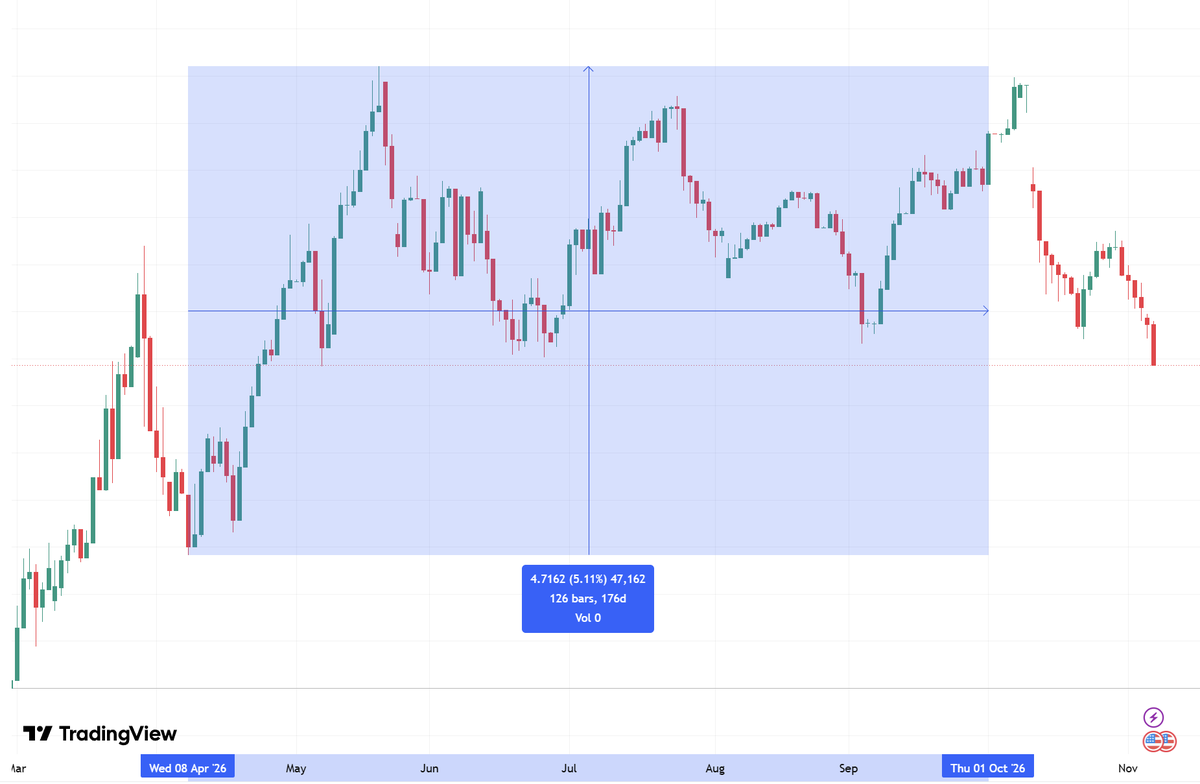
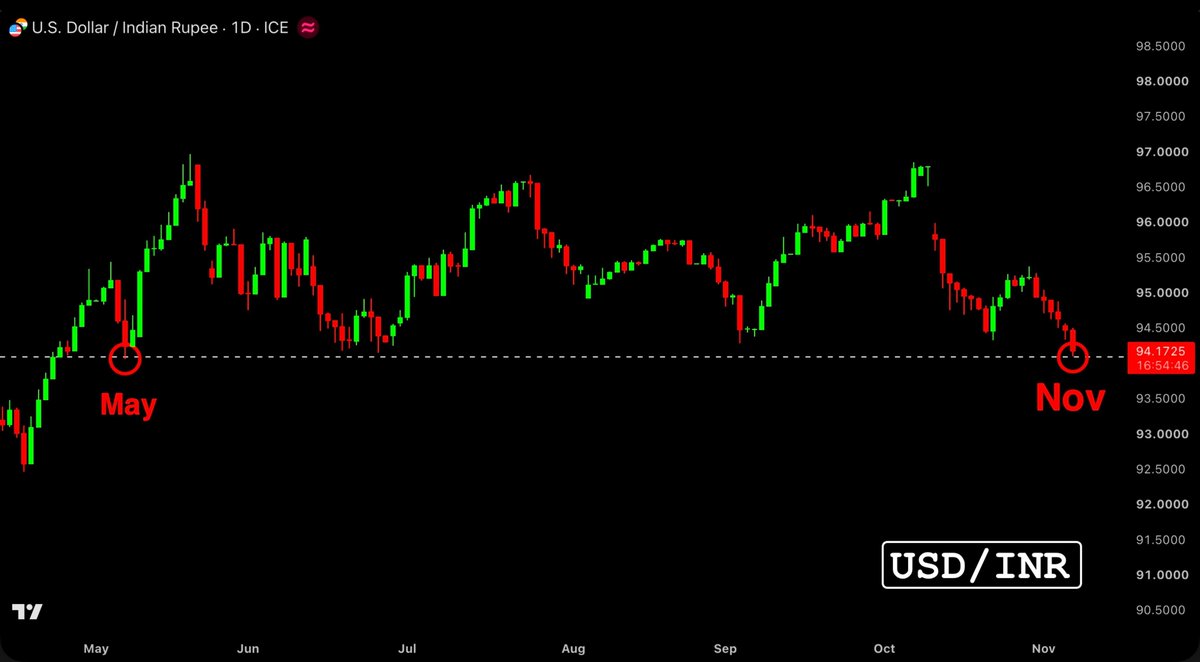
H1 benefited from INR depreciation against the USD.
Can Indian IT companies sustain margin expansion without a similar currency tailwind in the coming quarters?
#QuestioningConvictionMuscle
#MPIMANIPAL #STYL
Is the market questioning valuation or the quality of growth?
Similar businesses
Similar revenues
Different growth strategies
Different valuations
1️⃣ First, the numbers.
Both have TTM sales of roughly ₹1,560–1,570 Cr.
Yet their valuations differ:
Manipal: ~4.9× P/S
Seshaasai: ~3.3× P/S
H1 FY27 revenue growth:
Manipal: 40.3%
Seshaasai: 17.9%
Q2 growth (Manipal vs Seshaasai):
Revenue: 33.6% vs 15%
Operating EBITDA: 17.5% vs 7%
PAT: 7.7% vs 21%
▪️Clearly, Manipal is growing faster, but that growth isn't translating proportionately into operating profits.
2️⃣ Here's where their growth strategies differ.
Manipal is primarily diversifying geographically. 🌍
Its H1 revenue split:
Core: ₹556 Cr, +23% YoY
Emerging: ₹293 Cr, +92% YoY
▪️ But emerging includes international payment cards, metal cards, tax stamps and RFID.
😶🌫️ Their individual revenue contributions remain undisclosed.
International revenue alone increased from approximately ₹33 Cr to ₹109 Cr in H1.
That's roughly ₹76 Cr of additional revenue, or 31% of the company's total H1 revenue increase.
- Nigeria is already operational.
- The UK personalization bureau has commenced operations, and another developed-market expansion is planned.
Manipal is taking its existing capabilities to new markets while expanding higher-margin products.
3️⃣ Seshaasai is primarily diversifying its businesses.
Its Q2 revenue split is more transparent:
Payment Solutions: ₹218.3 Cr, +21.7% YoY
Communication & Fulfilment: ₹129 Cr, broadly flat YoY
IoT Solutions: ₹55.2 Cr, +45.6% YoY
IoT grew 145% YoY in Q1 before moderating in Q2, partly because Q1 included one-time RFID tagging of a large retailer's existing inventory.
Unlike Manipal's broad emerging category, we can independently track Seshaasai's IoT revenue.
Its strategy goes beyond conventional cards:
RFID → SIM → eSIM → connected devices → integrated traceability solutions.
SIM production is scaling, with management anticipating 70–75% capacity utilization.
eSIM is still undergoing customer qualification, with meaningful commercialization more relevant to FY28.
▪️ Seshaasai is also exporting cards, while Manipal is also expanding RFID.
These aren't exclusive strategies, but their current priorities differ.
4️⃣ Capital Allocation Priorities
MPI Manipal has earmarked approximately ₹238.4 Cr of IPO proceeds for equipment and capacity expansion across FY27–FY29.
Its IPO plan allocated:
FY27: ₹170.4 Cr
FY28: ₹19 Cr
FY29: ₹49.1 Cr
Investments cover:
- card manufacturing
- personalization bureaus
- cheque printing
- government identity infrastructure
- smart tagging/IoT facilities
Management also disclosed approximately ₹58 Cr of asset investment in H1 FY27.
Current utilization:
Plastic cards: ~80%
Metal cards: 55–60%
Tax stamps: 70–75%
Seshaasai previously indicated approximately ₹140–160 Cr of FY27 capex across payment solutions, IoT and modernization.
Its H1 FY27 release already reports ₹149.7 Cr of total capex, a figure I'd like management to reconcile with that earlier plan.
Its expansion includes:
- Nearly 3× metal-card capacity
- RFID and IoT infrastructure
- SIM/eSIM capabilities
- New and upgraded manufacturing facilities
▪️ Neither company provided a complete rupee-wise capex split for each growth business.
5️⃣ One more important distinction: Acquisitions.
MPI Manipal acquired promoter-group businesses for an aggregate consideration of ₹415 Cr.
Its FY25 revenue was subsequently restated upward from ₹1,099 Cr to ₹1,256 Cr.
However, the latest 40.3% H1 growth uses a restated comparable base.
Calling that growth inorganic would be misleading.
My concern is different.
We can see emerging-business growth, but we cannot adequately separate the contributions of previously acquired operations, premium cards, tax stamps and RFID.
For Seshaasai, acquisitions have helped expand technological capabilities, but standalone operations still account for almost all reported revenue.
6️⃣ What matters over the next few years?
Manipal guides for 30–35% revenue growth in FY27 and approximately 25% CAGR through FY29.
Seshaasai's earlier company-wide growth outlook was more moderate, while IoT remains its faster-growing opportunity.
Manipal needs to demonstrate that geographic expansion and premiumization can sustain margins and returns on incremental capital.
Seshaasai needs to demonstrate that diversifying into newer technologies can eventually change its revenue mix and earnings power.
Both are investing ahead of future demand.
But capex alone doesn't create a moat.
Neither do acquisitions, patents or exciting adjacencies.
As a long-term investor, I'm more interested in how much incremental revenue and cash flow each rupee of new investment can generate.
⚠️ No buy/sell recommendation.
https://t.co/R8BqGAmzdS
#Seshaasai | #Manipal Payment & Identity Solutions IPO
The base is built
Operations are sorted
What excites me most is the "headroom".
A must-read if you want to connect the dots beyond the headline numbers.
🍀Do read comment | DYOR https://t.co/fwnS2bJQ4W
#QuestioningConvictionMuscle
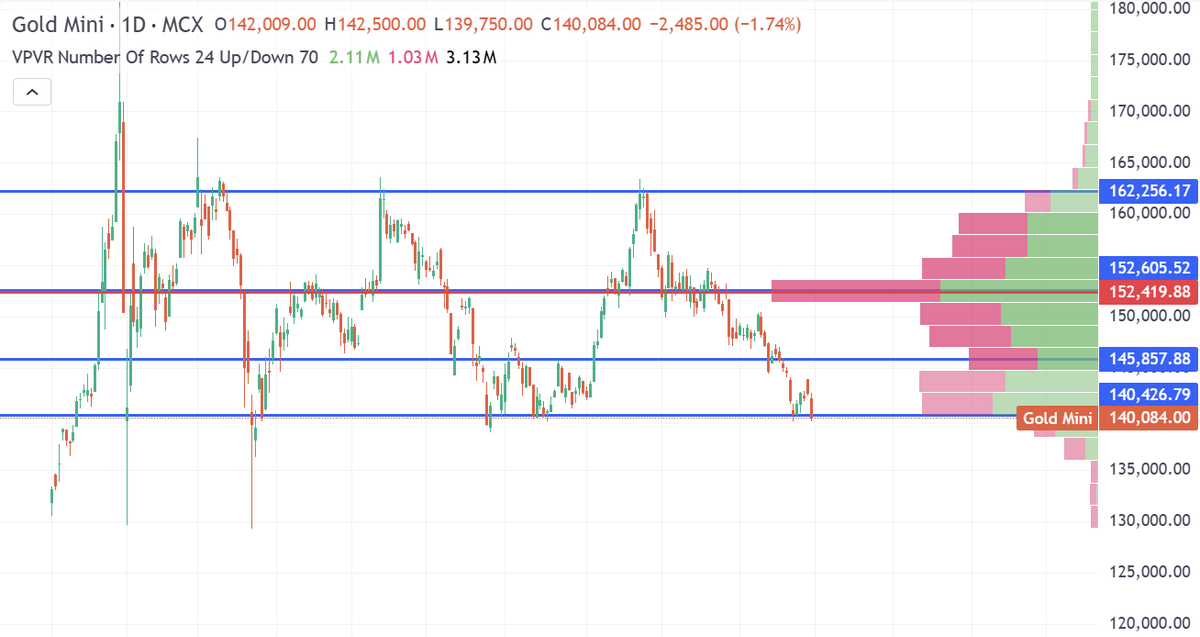
#GOLDMINI has broken below a key technical level.
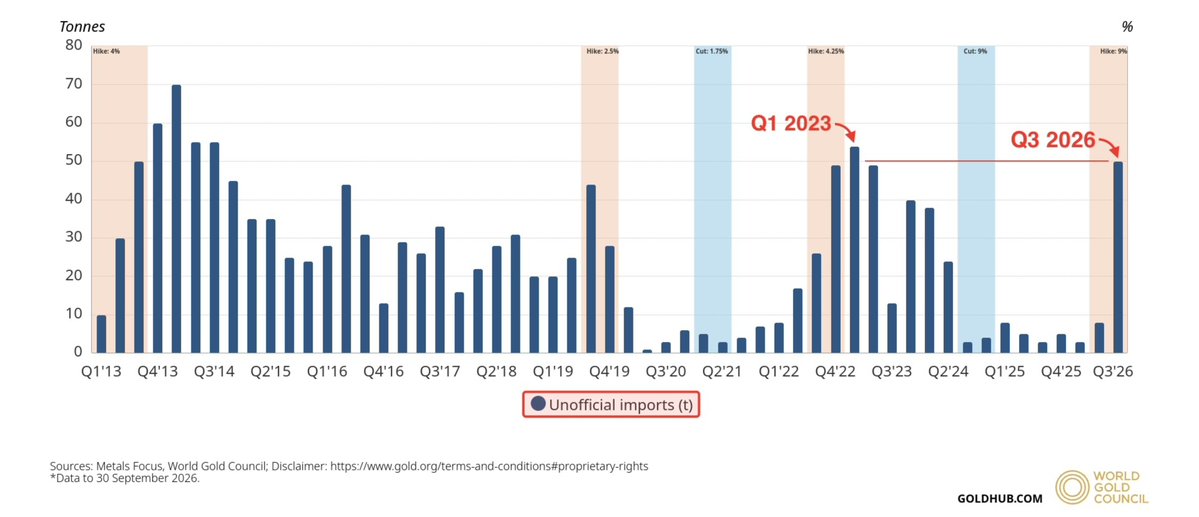
Meanwhile, unofficial gold imports surged from 3 to 50 tonnes YoY in Q3.
Weak domestic demand.
Rising grey-market inflows.
Deteriorating technicals.
Gold reclaiming its ATH anytime soon looks increasingly difficult.
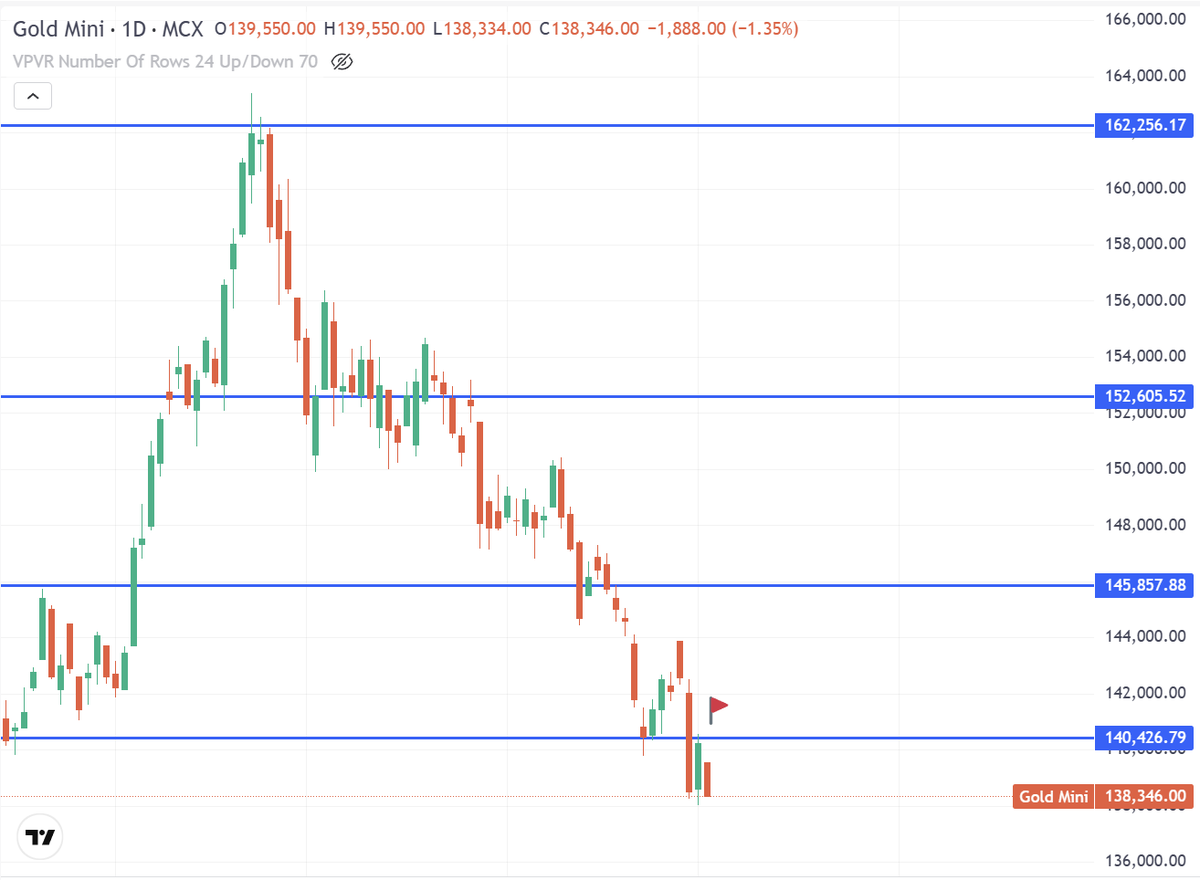
MCX GOLDMINI near support
#QuestioningConvictionMuscle
If your conviction fluctuates with the stock price,
you've already valued your conviction...

#QuestioningConvictionMuscle
*Le Chota Retail Investor

#QuestioningConvictionMuscle
Contra investing is a blessing for small retail investors.
The edge isn't buying what the market dislikes.
It's identifying what the market misunderstands.
As small retail investors dependent on monthly cash flows, we have the flexibility to accumulate gradually through uncertainty.
In my humble opinion,
contra investing is the only way to truly harness the 8th wonder of the world: compounding.
@ishmohit
"exactly toh contra themes ka matlab kya—yeh nahi pata ki agle 3 se 6 mahine mein kya aayega, but yeh lagta hai agle 12 se 18 se 24 mahine mein ye companies bahut achha kar sakti hai"
https://t.co/tE6itSCldj
#QuestioningConvictionMuscle
Contra investing is a blessing for small retail investors.
The edge isn't buying what the market dislikes.
It's identifying what the market misunderstands.
As small retail investors dependent on monthly cash flows, we have the flexibility to accumulate gradually through uncertainty.
In my humble opinion,
contra investing is the only way to truly harness the 8th wonder of the world: compounding.
@ishmohit
"exactly toh contra themes ka matlab kya—yeh nahi pata ki agle 3 se 6 mahine mein kya aayega, but yeh lagta hai agle 12 se 18 se 24 mahine mein ye companies bahut achha kar sakti hai"
https://t.co/tE6itSCldj
#QuestioningConvictionMuscle
#LEAPIND Time & Strategy
1. What's your investment horizon?
Looking for immediate gains?
You may find better opportunities elsewhere.
But if you're thinking of holding a business for two decades, the equation changes.
2. What's your capital allocation strategy?
Your cash flows, investment horizon and conviction should determine how you allocate capital.
There's no one-size-fits-all approach.
Plan your own course of action.
3. Are you updating your conviction?
Keep tracking the business.
Turn your growing understanding into calculations,
and use those calculations to make better capital allocation decisions.
Conviction isn’t static; it must evolve with the VUCA
Happy connecting the dots ⤵️
#LEAPIND Valuation rationale Thread 🧵
#BHARTIARTL #JPL #HINDUNILVR #COLPAL #POLYCAB #ETERNAL
1️⃣ The growth story is just beginning.
Quoting my earlier post on LEAP India's IPO rationale.
▪️ Monopoly/duopoly-like network
▪️ Standardisation, retrieval and redeployment moat
▪️ Only 17% palletisation and 9.4% pooling penetration in India
I see the next stage as a growth and monetisation phase.
#POLYCAB #ULTRACEMCO & more...
#QuestioningConvictionMuscle
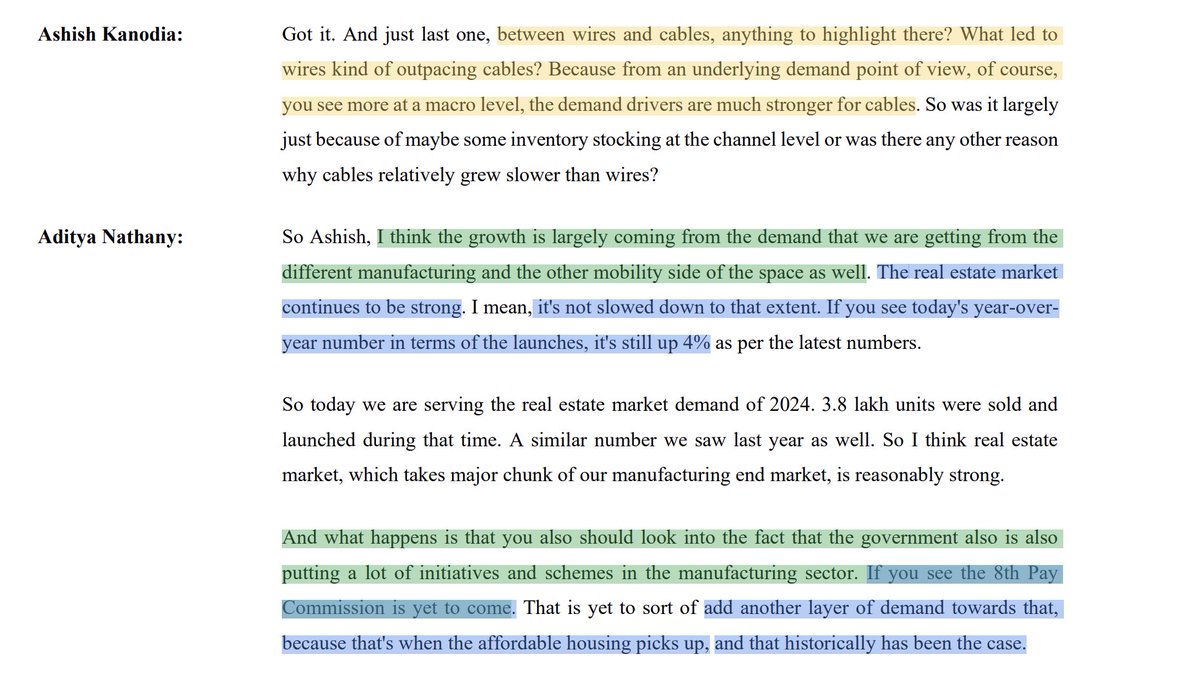
Finally, someone mentioned the 8th Pay Commission as a demand catalyst in a corporate concall!
📨 I connected these dots months ago in my earlier article.
Polycab expects the 8th CPC to provide another layer of demand, particularly in affordable housing.
Meanwhile, UltraTech isn't waiting.
Its Ultravolt business is already operational since September, with 80,000+ retail touchpoints and 1,500+ channel partners.
I suspect the 8th CPC could cushion the wires and cables industry against immediate competitive pressure, even as UltraTech challenges incumbents.
🍀 The same thesis extends to paints, cement, tiles and the broader building-materials industry.
A larger demand pool could help multiple players grow despite intensifying competition.
▪️ If you haven't read my earlier article connecting the 8th CPC to housing, consumption and capital markets, it's worth revisiting before this demand cycle starts unfolding.
#Nifty50
50L+ employees 68L+ pensioners
One possible lump-sum event.
Can this event help Nifty 50 and large caps gain momentum from here? https://t.co/b0MJLcrnc3
#SBIFUNDS #E2E #JPL #BHARTIARTL
#QuestioningConvictionMuscle
AI Infrastructure: Capacity or Flywheel?
The more I study AI infrastructure, the less interested I become in businesses that merely own data centres and GPUs.
SBI Funds Management's latest concall strengthens my conviction.
TL;DR: Five connected dots.
1️⃣ Cash Rich SBI Funds is going on-premises.
In its 23 October Q2 FY27 concall, management confirmed that its own data centre is expected to become operational within a couple of months.
Some cloud computing and AI expenses will continue, but management expects certain technology costs to moderate.
Earlier, SBI Funds also highlighted its internally managed AI capabilities and focus on data localisation, security and governance.
2️⃣ The economics of non-performing data.
Look at India's increasing investor participation.
• Monthly SIP contributions: ₹7,788 Cr (Sep 2020) → ₹32,490 Cr (Sep 2026). 4.2×
• Mutual fund folios: 11.17 Cr (Sep 2021) → 28.62 Cr (Sep 2026). 2.6×
• SBI Funds alone: 1.85 Cr unique customers, 1.62 Cr live SIPs and 94% digitally executed transactions.
These aren't storage-volume figures, but they indicate expanding financial activity.
Every new investor and transaction can generate records, statements, logs and compliance data.
SEBI requires specified mutual fund records to be preserved for at least eight years.
Even if AWS keeps storage tariffs unchanged, total expenditure can compound as retained data grows.
Cold archival storage is cheaper, but its cumulative management, security and retrieval costs still matter.
3️⃣ Cost efficiency meets data sovereignty.
For cash-rich enterprises, owning infrastructure could eventually become more economical than continuously renting it.
But the bigger question is control.
Sensitive financial data, proprietary research, compliance and internal AI workloads.
Why depend entirely on external infrastructure when you have the capital and scale to evaluate building your own?
This is my interpretation of the structural opportunity, not SBI Funds' explicitly stated rationale.
4️⃣ E2E Networks: Where is the long-term stickiness?
I'm not questioning E2E's growth potential it may see in the near future.
I'm questioning how it retains customers over decades.
As AI adoption accelerates, cash-rich enterprises like SBI-Funds may increasingly prefer on-premises infrastructure
- to protect sensitive data, control costs and run proprietary AI applications.
Not just for internal operations, but for their customers as well.
When large businesses can afford to own infrastructure, why would they continue renting everything?
For E2E, the opportunity I find most interesting is an AI startup flywheel.
Imagine identifying promising AI startups, providing GPUs in exchange for equity, helping them scale and building an ecosystem that generates recurring compute demand.
GPU capacity → Startups → AI Products → Recurring Demand → Equity Upside.
Beyond infrastructure rental, this could create a lasting relationship with the next generation of AI businesses.
To me, that is a far more interesting possibility than merely adding GPUs year after year.
5️⃣ Jio & Airtel: Trust could be the structural advantage.
Now consider the other side.
Not every business can afford on-premises infrastructure.
And millions of consumers will increasingly need cloud infrastructure without ever owning it.
Think of the enormous volumes of photos, videos, documents, backups and personal histories people want to retain, access and use seamlessly across devices, applications and AI services.
Add personal AI assistants, AI-powered applications, connected devices and increasingly personalised AI inference.
What comes to your mind?
Security, Sovereignty and Trust
The opportunity extends beyond storing data to making that data useful through AI.
And this is where Jio and Airtel become interesting.
They already have connectivity infrastructure, enormous distribution networks and established customer relationships.
And more importantly, they have a degree of consumer trust that new infrastructure providers must work to establish.
For Jio and Airtel, cloud storage, personal AI and enterprise AI services could become natural extensions of their existing ecosystems.
Connectivity → Customers → Cloud Storage → AI Services → Recurring Revenue.
💠 If enterprise customers increasingly prefer hyperscalers and trusted telecom-backed cloud providers for data storage, AI workloads and sovereign infrastructure,
- it could limit the addressable market for independent B2B players like E2E.
Takeaway:
AI infrastructure demand can grow enormously without every infrastructure provider capturing an equally large opportunity.
Capacity can be built.
Trust, customer stickiness and self-reinforcing ecosystem flywheels are much harder to replicate.

#JioPlatforms aka #JPL, #BHARTIARTL
#QuestioningConvictionMuscle
Jio & Airtel: Their core revenue engines have entered the maturity stage.
That's not necessarily bad for shareholders.
Consistent sales
Reduced costs
Increasing profits
But here's what makes me hesitant to allocate capital and build a larger position at this point of time.
▪️ Subscriber growth is nearing saturation.
For years, tariff hikes, premiumisation and ARPU improvements have driven revenue growth.
The volume game is slowing.
The pricing game continues.
▪️ Even as data consumption grows rapidly, monetisation isn't keeping pace.
TRAI | FY26 Telecom Data
1.027 billion wireless data subscribers (+9.3% YoY)
+24.7% YoY data consumption
+11.5% YoY data revenue
-10.6% YoY revenue realisation per GB
Consumption is growing faster than monetisation.
Precisely why I remain cautious about building fresh positions in either Airtel or Jio.
Three potential de-rating triggers:
1. Tariff hikes meeting consumer resistance.
2. Premium valuations facing compression as growth moderates.
3. New businesses taking longer to contribute meaningful revenue.
- - -
But here's the interesting part.
The next life-cycle extension may not come from mass-market subscribers.
It could come from affluent consumers and enterprise demand, driven by cloud, AI infrastructure, IoT, connected devices and eventually 6G.
I'm not avoiding Jio Platforms.
I'm waiting for a valuation that reasonably prices its mature telecom business while offering the next growth engines at a discount.
That's where my contrarian interest begins.

@acharyaamrit
#zetwerk
#QuestioningConvictionMuscle
There's a lot to learn from this conversation, but I'd definitely recommend listening from the 53rd minute.
"The only mental model is First principles." — Amrit, CEO, ZETWERK
~ Apt for building conviction as well.
A few interesting takeaways:
- Murphy's Law
- Software-led approach
- The odds of entrepreneurship
---
Only a fraction of startups survive, scale and eventually get listed.
Interestingly, many new-age businesses are entering public markets at an inflection point in their growth phase.
Such businesses demand a different lens to understand, evaluate and build a long-term investment thesis.
https://t.co/fnh73ogZBa
#QuestioningConvictionMuscle
When elephants move as a herd, even a pride of lions thinks twice.
So don't assume you're the lion in the market.
Stay humble. Focus on your course of action.
For a long-term investor, time in the market >>> timing the market.
What matters more is your capital deployment strategy.
Different stocks demand different approaches.
Valuations, momentum, volume, interest rates, business cycles, position sizing,...
and above all, your own conviction.
Conviction can't be borrowed.
It's built through curiosity, understanding, and repeatedly questioning your thesis.
There's no need to follow the elephant or the tortoise in the room.
Be yourself.
Know your risk appetite.
Play your own game.
Financial well-being isn't just about building wealth.
It's also about having the temperament to sustain it.

#HAL #CYIENTDLM #DIXON #Zetwerk #TonboImaging
#QuestioningConvictionMuscle
Is Manufacturing, Aerospace & Defence in a Bubble?
I think so. At least in how the market prices future execution.
I've largely avoided defence stocks.
Not because I question their technological capabilities or growth opportunities.
🟡 My concern has always been the multiple layers of bureaucracy between winning an order and realising revenue.
And now, order-book excitement has spread beyond defence to EMS, railways, capital goods, precision manufacturing, data centres and AI factories.
But an order book is not realised revenue.
- - -
1️⃣ Defence: Manufacturing is only one milestone.
Order Book → Production → Approvals → Revenue → Cash
Consider HAL:
FY26 order book: ~₹2.55 lakh Cr
FY26 revenue: ~₹33,090 Cr
That's nearly 7.7x annual revenue in outstanding orders.
Naturally, these are multiyear programmes.
But even after manufacturing, testing, certification and user acceptance can delay delivery.
Demand visibility ≠ Realised Revenue predictability.
- - -
2️⃣ EMS: Different complexity. Different economics.
Cyient DLM, FY26:
Order book: ₹2,417 Cr
Revenue: ₹1,262 Cr, down 17%.
Meanwhile, Dixon's smartphone production grew from 28.3M to approximately 33M units between FY25 and FY26.
Volume: +16.6%
Its broader Mobile & Other EMS segment revenue grew approximately 33.9%.
Different customer programmes, product mixes and realisations.
Hence, the difference cannot be attributed entirely to pricing.
Order Book ≠ Capability ≠ Capacity ≠ Utilisation ≠ Profitability.
- - -
3️⃣ Revenue = Volume × Realisation
Here's where manufacturing becomes interesting.
Even with growing demand, volumes can fluctuate
- because of capacity constraints, approvals, customer schedules and geopolitical disruptions.
And realisations aren't necessarily predictable either.
Pricing depends on contracts, product mix, competition, input costs and the ability to pass through inflation.
Revenue can grow without proportional volume growth.
And volumes can grow without proportional profit growth
- - -
4️⃣ Boeing vs Airbus
Look at commercial aircraft operations between 2022 and 2025.
Airbus:
Aircraft deliveries: +20%
Revenue: +27%
Revenue per delivery: +5.8%
Boeing:
Aircraft deliveries: +25%
Revenue: +59.4%
Revenue per delivery: +27.5%
These blended realisation figures include product mix and programme effects, not merely price increases.
Yet Boeing's commercial aircraft division reported a ~$7.1B operating loss in 2025.
Boeing's production disruptions, certification delays and programme overruns contrast with Airbus's relatively consistent delivery execution.
Airbus benefits from platform commonality, distributed assembly capacity, production engineering and selective vertical integration.
Even Airbus isn't immune to supplier constraints.
Revenue growth does not guarantee earnings growth.
- - -
5️⃣ Then comes working capital.
Remember my concern around Tonbo Imaging?
FY26 revenue declined 22.7%, while working-capital days increased from 280 to 517.
This doesn't necessarily indicate bureaucratic delays.
IYKYK 😅
But it demonstrates why technological capabilities and order books alone aren't sufficient.
Revenue recognised ≠ Cash realised.
- - -
6️⃣ Why does Mr. Market seek structural growth everywhere?
Because predictability creates a perception of safety. 🌈
And perceived safety attracts capital 🦺
Eventually commanding premium valuations. 🥵
- - -
But most manufacturing businesses are inherently cyclical and volatile. 🌊
Their long-term revenue trajectory can be upward, even while volumes, realisations and margins fluctuate considerably.
There can be extraordinary -ve & +ve surprises too.
That's the nature of cyclicality.
Yet Mr. Market has increasingly price many manufacturing businesses as structural-growth stories.
I increasingly believe investors must scrutinise the time between receiving an order, recognising revenue and collecting cash.
Because predictable execution and cash generation ultimately determine how much of that opportunity becomes shareholder value.
Structural demand ≠ Structural earnings.
🍀
India's manufacturing capabilities are evolving rapidly. I'm optimistic about the long-term opportunity.
My concern isn't necessarily a bubble in manufacturing itself.
It's the possibility that valuations are discounting years of predictable execution in businesses where unpredictability remains inherent.


#QuestioningConvictionMuscle
#TONBOIMAGING IPO | First Impressions
What makes it more interesting is its asset-light manufacturing model. Tonbo owns the technology and outsources much of the manufacturing to EMS partners like #KAYNES and #AVALON.
Personally, I like this company.
A fantastic niche business built around proprietary IP, patents, electro-optics, thermal imaging and embedded AI.
But technology strength and predictable earnings are two different things.
- - -
Look at its FY26 revenue mix:
B2G (Indian Government): 71.19%
B2G (Foreign Governments): 3.34%
B2B (Private System Integrators): 24.10%
Other operating revenue: 1.37%
Nearly 75% comes directly from governments.
Even the B2B business largely serves defence-related demand.
🟡 And government spending comes with multiple layers of bureaucracy, approvals, tenders, procurement cycles and execution delays.
🟡 FY26 revenue declined 22.7%, while operating cash flow remained negative.
An asset-light model reduces manufacturing capex, but doesn't eliminate working-capital challenges.
- - -
Now, the interesting part: ADJACENCIES.
Missile seekers, autonomous targeting, counter-drone systems, optical communications and platform-integrated imaging.
The technological optionality is significant, but most adjacencies still revolve around defence and government procurement.
- - -
🍀 I have a broader view of the defence industry over the coming decades.
💠 Defence technology will not remain limited to cross-border security.
I believe many dual-use technologies will increasingly find commercial applications across smart cities, industrial safety, surveillance and critical infrastructure.
That could eventually change the addressable market for companies like Tonbo.
🛑 But that transition is still a thesis, not established revenue.
As someone who thinks in decades, I prefer businesses where adjacencies can gradually reduce dependence on a single spending cycle.
Tonbo definitely deserves a place on my watchlist.
💠 I would prefer to build a position gradually as execution, cash flows and new commercial opportunities become clearer, subject to valuation.
A company I like.
A business I want to understand much deeper.
First impressions, not my final conviction.
@VSR9000

#QuestioningConvictionMuscle
#JIOFIN #RELIANCE #RIL #JioPlatforms
Reliance entering ice cream gets debated online.
But ice cream is the visible part.
What interests me more is what is quietly scaling underneath RIL.
1️⃣ Some hidden bets are already moving from 0→1 to 1→10
Neolync Solutions
RIL-group purchases:
FY25: ₹655 Cr
FY26: ₹6,531 Cr
Nearly 10x in one year.
That is RIL-group procurement, not Neolync revenue, but the scale-up is difficult to ignore.
- - -
Jio Haptik
FY26 total income: ~₹311 Cr
PAT: ~₹37 Cr
A conversational-AI acquisition is already becoming a profitable operating business.
- - -
Mimosa Networks
FY26 total income: ~₹427 Cr
PAT: ~₹57 Cr
Network technology hidden underneath the much larger Jio platform.
2️⃣ Some investments show how Reliance incubates for years
Take Fynd / Shopsense.
When Reliance invested in 2019,
disclosed FY18 turnover was only ₹4.84 Cr.
Fast forward FY25 revenue: ~₹200 Cr
That is roughly 41x the starting disclosed revenue base.
- - -
Addverb:
FY25 revenue: ~₹331 Cr, +15% YoY.
More interestingly, the mix is changing.
Overseas revenue jumped from
~₹50 Cr in FY24 → ~₹141 Cr in FY25
taking the international share of
revenue from ~17% to ~43%
FY26 total income then reached ~₹392 Cr
It is still loss-making, so this is not yet a profitability story.
But the interesting part is that an Indian warehouse-automation bet is increasingly trying to become a global one.
- - -
3️⃣ And then there are bets where the P&L barely tells the story yet
Reliance Intelligence
The first 120 MW sovereign AI infrastructure in Jamnagar is targeted by end-2026.
At full utilisation, RIL says this phase could exceed 200,000 H100-equivalent GPUs.
- - -
Then there is the technology portfolio underneath New Energy:
Caelux → perovskite solar
NexWafe → next-gen silicon wafers
Faradion → sodium-ion batteries
Lithium Werks → LFP batteries
SenseHawk → solar lifecycle software
Reliance has effectively been assembling different pieces of the future energy stack rather than making one giant binary bet.
- - -
4️⃣ This is why the 6.1% RELIANCE holding matters to my JIOFIN thesis
JIOFIN's RIL exposure is not only a claim on:
O2C
Telecom
Retail
It is also indirect exposure to businesses whose earnings may become visible years after the investment was made.
So if JIOFIN ever meaningfully dilutes that 6.1%, I would not automatically celebrate it as capital unlocking.
Because JIOFIN increasingly has other ways to fund its own growth:
- subsidiary leverage
BofA
BlackRock
Allianz
promoter capital
- eventually internal accruals.

#QuestioningConvictionMuscle
#JIOFIN
🍀 JIOFIN has 122,992 Cr reported reserves by Sep 2026
1️⃣ Start with the 6.1% holding
JFSL became an RBI-registered Core Investment Company in Jul 2024.
A CIC is structurally designed to hold and fund group companies.
RBI rules require at least 90% of net assets in group as investments or loans
- and at least 60% in group equity, and restrict trading of those investments except for dilution or disinvestment.
JFSL's 6.1% RELIANCE exposure sits through:
RIIHL → 3.56%
RSHL → 2.54%
Since Apr 2026, RSHL is also a wholly owned step-down subsidiary through RIIHL.
So I do not see the RIL stake as something JIOFIN needs to progressively liquidate to fund growth.
I would treat it as a strategic holding, while the operating businesses build separate capital structures.
2️⃣ what is happening underneath
JFSL parent
Sep 2025
→ ₹15,825 Cr promoter warrants.
₹11,868.75 Cr of the stated use is for existing/new subsidiaries and JVs.
Jio Credit
FY25
→ ₹1,000.24 Cr rights equity from JFSL
→ ₹1,500 Cr parent loan
May 2025
→ ₹2,030 Cr NCDs across two issuances
Oct-Nov 2025
→ another ₹1,000 Cr NCDs
Feb 2026
→ ₹1,999.88 Cr rights equity
Mar 2026
→ another ₹1,000 Cr NCD
Aug 2026
→ BofA agreed to invest up to ₹18,268 Cr through equity + warrants
🍀 By Sep 2026, borrowings/debt securities had already reached ~₹42,000 Cr.
- - -
Jio Payments Bank
FY24
→ ₹4 Cr equity from JFSL
FY25
→ another ₹181 Cr rights equity
Jun 2025
→ JFSL acquired SBI's remaining 14.96% for ₹104.5 Cr, making JPBL 100% owned.
This was ownership consolidation, not fresh capital into the bank.
- - -
Jio Leasing
Mar 2024
→ ₹40 Cr equity
FY25
→ another ₹30 Cr equity
→ ₹138 Cr net parent loan funding
FY25-FY26
→ up to ₹36,000 Cr approved device/equipment purchase envelope linked to deployment
Mar 2026
→ another ₹75 Cr parent loan
The business is basically Device-as-a-Service:
- JIO AirFiber/home devices with IT equipment
- solar panels
- ship leasing
expanding the opportunity.
- - -
JioFinance Platform & Service
FY25
→ ₹4.99 Cr equity
→ ₹25 Cr parent loan
FY26
→ further parent/debt funding, including deployment from JFSL's warrant proceeds.
- - -
JioBlackRock AMC
Q3 FY25
→ ₹82.5 Cr each from JFSL + BlackRock
Q1 FY26
→ another ₹63 Cr each
- - -
JioBlackRock Investment Advisers
Sep 2024
→ ₹3 Cr each
Q1 FY26
→ another ₹66.5 Cr each
Broking was subsequently incubated underneath the wealth-management structure.
- - -
Allianz Jio Reinsurance
Sep 2025
→ incorporated 50:50
FY26
→ ₹150 Cr each from JFSL + Allianz
Jio Allianz General Insurance
May 2026
→ ₹4.95 Cr each initially
Sep 2026
→ another ₹320.05 Cr each through rights issue
JFSL says its aggregate investment had reached ₹375 Cr.
- - -
Jio Alternative Investment Manager
Feb 2026
→ ₹1 Cr initial equity from JFSL
For Jio Payment Solutions and Jio Insurance Broking, I have not found a comparable large standalone post-demerger capital raise.
💠 So funding is increasingly:
JFSL capital + subsidiary leverage + BlackRock + Allianz + BofA + future internal accruals
🍀 There is no need to sell RIL's stake at all.
- - -
3️⃣ Margins have room to mature too
Jio Credit Alone can scale profitability faster
Q2 FY27:
Assets: ₹50,337 Cr
PAT: ₹120 Cr
That is only about ~1% annualised ROA today.
Comparable listed lenders:
Aditya Birla Capital → 2.39% ROA
Chola → ~2.5% ROA
Bajaj Finance → 4.7% ROA
So I would think of:
~2.5% ROA = mature case
~4-4.7% ROA = excellent case
Even on today's ₹50K Cr asset base:
1% ROA → ~₹500 Cr PAT run-rate
2.5% → ~₹1,250 Cr
4.7% → ~₹2,350 Cr
Scenarios Jio Credit can compounds till FY31:
30% CAGR → ~₹1.22L Cr AUM
→ ~₹3.0K Cr PAT at 2.5% ROA
→ ~₹5.7K Cr PAT at 4.7%
40% CAGR → ~₹1.70L Cr AUM
→ ~₹4.2K Cr / ~₹8.0K Cr PAT
50% CAGR → ~₹2.31L Cr AUM
→ ~₹5.8K Cr / ~₹10.9K Cr PAT
This is where scale + margin expansion can compound together.
- - -
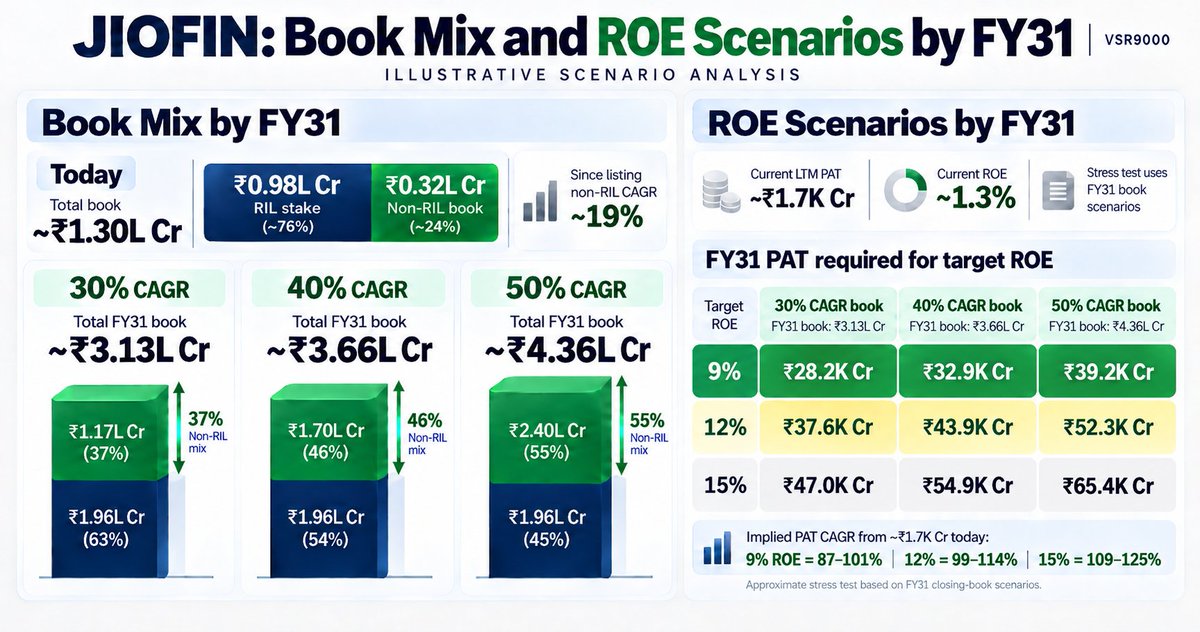
4️⃣ Now the FY31 ROE becomes easier to judge
Current consolidated PAT: ~₹1.7K Cr
Our FY31 book scenarios: (Look at quoted post below)
₹3.13L Cr / ₹3.66L Cr / ₹4.36L Cr
That means to achieve respective ROE:
9% ROE
→ ~₹28K-39K Cr PAT needed by FY31
12% ROE
→ ~₹38K-52K Cr
15% ROE
→ ~₹47K-65K Cr
From today's ₹1.7K Cr PAT, that still implies roughly:
9% ROE → ~87-101% PAT CAGR
👇 But CAGR alone hides what could drive it.
💠 Jio Credit can potentially move from ~1% ROA toward 2.5%+, while simultaneously multiplying its asset base.
💠 AMC can move from start-up economics toward 60-70%+ operating margins.
💠 Payments already has improving unit economics.
Insurance, leasing and broking can add additional profit pools.
🍀 That makes the PAT growth path more believable than simply assuming an arbitrary 90% CAGR.
#QuestioningConvictionMuscle
#JIOFIN
🍀 JIOFIN has 122,992 Cr reported reserves by Sep 2026
1️⃣ Start with the 6.1% holding
JFSL became an RBI-registered Core Investment Company in Jul 2024.
A CIC is structurally designed to hold and fund group companies.
RBI rules require at least 90% of net assets in group as investments or loans
- and at least 60% in group equity, and restrict trading of those investments except for dilution or disinvestment.
JFSL's 6.1% RELIANCE exposure sits through:
RIIHL → 3.56%
RSHL → 2.54%
Since Apr 2026, RSHL is also a wholly owned step-down subsidiary through RIIHL.
So I do not see the RIL stake as something JIOFIN needs to progressively liquidate to fund growth.
I would treat it as a strategic holding, while the operating businesses build separate capital structures.
2️⃣ what is happening underneath
JFSL parent
Sep 2025
→ ₹15,825 Cr promoter warrants.
₹11,868.75 Cr of the stated use is for existing/new subsidiaries and JVs.
Jio Credit
FY25
→ ₹1,000.24 Cr rights equity from JFSL
→ ₹1,500 Cr parent loan
May 2025
→ ₹2,030 Cr NCDs across two issuances
Oct-Nov 2025
→ another ₹1,000 Cr NCDs
Feb 2026
→ ₹1,999.88 Cr rights equity
Mar 2026
→ another ₹1,000 Cr NCD
Aug 2026
→ BofA agreed to invest up to ₹18,268 Cr through equity + warrants
🍀 By Sep 2026, borrowings/debt securities had already reached ~₹42,000 Cr.
- - -
Jio Payments Bank
FY24
→ ₹4 Cr equity from JFSL
FY25
→ another ₹181 Cr rights equity
Jun 2025
→ JFSL acquired SBI's remaining 14.96% for ₹104.5 Cr, making JPBL 100% owned.
This was ownership consolidation, not fresh capital into the bank.
- - -
Jio Leasing
Mar 2024
→ ₹40 Cr equity
FY25
→ another ₹30 Cr equity
→ ₹138 Cr net parent loan funding
FY25-FY26
→ up to ₹36,000 Cr approved device/equipment purchase envelope linked to deployment
Mar 2026
→ another ₹75 Cr parent loan
The business is basically Device-as-a-Service:
- JIO AirFiber/home devices with IT equipment
- solar panels
- ship leasing
expanding the opportunity.
- - -
JioFinance Platform & Service
FY25
→ ₹4.99 Cr equity
→ ₹25 Cr parent loan
FY26
→ further parent/debt funding, including deployment from JFSL's warrant proceeds.
- - -
JioBlackRock AMC
Q3 FY25
→ ₹82.5 Cr each from JFSL + BlackRock
Q1 FY26
→ another ₹63 Cr each
- - -
JioBlackRock Investment Advisers
Sep 2024
→ ₹3 Cr each
Q1 FY26
→ another ₹66.5 Cr each
Broking was subsequently incubated underneath the wealth-management structure.
- - -
Allianz Jio Reinsurance
Sep 2025
→ incorporated 50:50
FY26
→ ₹150 Cr each from JFSL + Allianz
Jio Allianz General Insurance
May 2026
→ ₹4.95 Cr each initially
Sep 2026
→ another ₹320.05 Cr each through rights issue
JFSL says its aggregate investment had reached ₹375 Cr.
- - -
Jio Alternative Investment Manager
Feb 2026
→ ₹1 Cr initial equity from JFSL
For Jio Payment Solutions and Jio Insurance Broking, I have not found a comparable large standalone post-demerger capital raise.
💠 So funding is increasingly:
JFSL capital + subsidiary leverage + BlackRock + Allianz + BofA + future internal accruals
🍀 There is no need to sell RIL's stake at all.
- - -
3️⃣ Margins have room to mature too
Jio Credit Alone can scale profitability faster
Q2 FY27:
Assets: ₹50,337 Cr
PAT: ₹120 Cr
That is only about ~1% annualised ROA today.
Comparable listed lenders:
Aditya Birla Capital → 2.39% ROA
Chola → ~2.5% ROA
Bajaj Finance → 4.7% ROA
So I would think of:
~2.5% ROA = mature case
~4-4.7% ROA = excellent case
Even on today's ₹50K Cr asset base:
1% ROA → ~₹500 Cr PAT run-rate
2.5% → ~₹1,250 Cr
4.7% → ~₹2,350 Cr
Scenarios Jio Credit can compounds till FY31:
30% CAGR → ~₹1.22L Cr AUM
→ ~₹3.0K Cr PAT at 2.5% ROA
→ ~₹5.7K Cr PAT at 4.7%
40% CAGR → ~₹1.70L Cr AUM
→ ~₹4.2K Cr / ~₹8.0K Cr PAT
50% CAGR → ~₹2.31L Cr AUM
→ ~₹5.8K Cr / ~₹10.9K Cr PAT
This is where scale + margin expansion can compound together.
- - -
4️⃣ Now the FY31 ROE becomes easier to judge
Current consolidated PAT: ~₹1.7K Cr
Our FY31 book scenarios: (Look at quoted post below)
₹3.13L Cr / ₹3.66L Cr / ₹4.36L Cr
That means to achieve respective ROE:
9% ROE
→ ~₹28K-39K Cr PAT needed by FY31
12% ROE
→ ~₹38K-52K Cr
15% ROE
→ ~₹47K-65K Cr
From today's ₹1.7K Cr PAT, that still implies roughly:
9% ROE → ~87-101% PAT CAGR
👇 But CAGR alone hides what could drive it.
💠 Jio Credit can potentially move from ~1% ROA toward 2.5%+, while simultaneously multiplying its asset base.
💠 AMC can move from start-up economics toward 60-70%+ operating margins.
💠 Payments already has improving unit economics.
Insurance, leasing and broking can add additional profit pools.
🍀 That makes the PAT growth path more believable than simply assuming an arbitrary 90% CAGR.
#QuestioningConvictionMuscle
#JIOFIN
Why look at book value for JioFin?
Because structurally, it is still a HoldCo.
1️⃣ The market does not value every HoldCo equally
Indian HoldCo median discount:
FY21: 69.1%
FY22: 71.3%
FY23: 68.9%
FY24: 67.5%
FY25: 62.5%
🦖 Yet Bajaj Finserv has traded at a premium to book for years, despite being a HoldCo + operating financial platform
- with insurance as stanalone business.
PB ratio:
FY21: 4.29x
FY22: 6.74x
FY23: 4.35x
FY24: 4.34x
FY25: 4.42x
Same broad HoldCo structure.
Very different economics.
2️⃣ For JIOFIN, the underlying mix is changing
Ex-RIL, JIOFIN's current operating ratios, including P/S and return ratios, still look weak compared with mature financial peers.
What interests me is the direction.
Lending is scaling fast, while AMC, payments, insurance and broking are all building from a low base
💠 That leaves substantial room for operating metrics to improve as these businesses scale.
Today, the RIL stake still drives a large part of book value and its volatility.
But increasingly, the key equation should become:
Non-RIL book compounding × ROE of operating businesses
As operating businesses become a larger share of JIOFIN's book, the HoldCo discount applicable to it should evolve too.
🍀 And potential spin-off opportunities over the long term make the JIOFIN thesis even more interesting.

#QuestioningConvictionMuscle
#SEDEMAC #CYIENTDLM #TATATECH
The future for #MSUMI looks good, and the business is highly capital-efficient as well.
But I exited, WHY?
I already hold SEDEMAC and CYIENTDLM, where I see stronger adjacency opportunities
while TATATECH already gives me meaningful passenger-vehicle exposure
(MSUMI is more PV driven business today)
For me, this became an allocation decision.
I would rather keep my portfolio concentrated than over-diversify.
sweet spot I look for is 20-30 stocks.
🍀 Read the post in the comments.

#QuestioningConvictionMuscle
#JIOFIN
Why look at book value for JioFin?
Because structurally, it is still a HoldCo.
1️⃣ The market does not value every HoldCo equally
Indian HoldCo median discount:
FY21: 69.1%
FY22: 71.3%
FY23: 68.9%
FY24: 67.5%
FY25: 62.5%
🦖 Yet Bajaj Finserv has traded at a premium to book for years, despite being a HoldCo + operating financial platform
- with insurance as stanalone business.
PB ratio:
FY21: 4.29x
FY22: 6.74x
FY23: 4.35x
FY24: 4.34x
FY25: 4.42x
Same broad HoldCo structure.
Very different economics.
2️⃣ For JIOFIN, the underlying mix is changing
Ex-RIL, JIOFIN's current operating ratios, including P/S and return ratios, still look weak compared with mature financial peers.
What interests me is the direction.
Lending is scaling fast, while AMC, payments, insurance and broking are all building from a low base
💠 That leaves substantial room for operating metrics to improve as these businesses scale.
Today, the RIL stake still drives a large part of book value and its volatility.
But increasingly, the key equation should become:
Non-RIL book compounding × ROE of operating businesses
As operating businesses become a larger share of JIOFIN's book, the HoldCo discount applicable to it should evolve too.
🍀 And potential spin-off opportunities over the long term make the JIOFIN thesis even more interesting.
#QuestioningConvictionMuscle
#JIOFIN
Today, JIOFIN’s book is roughly:
RIL stake: ~₹0.98L Cr
Non-RIL book: ~₹0.32L Cr, ~24% of total
Since listing, non-RIL book has compounded at ~19% CAGR.
But the underlying businesses are now scaling much faster, so I would rather look at 30% / 40% / 50% scenarios through FY31.
If RELIANCE doubles by FY31, JIOFIN’s stake becomes roughly ₹1.96L Cr.
Meanwhile, ₹0.32L Cr of non-RIL book becomes:
30% CAGR → ~₹1.17L Cr
40% CAGR → ~₹1.70L Cr
50% CAGR → ~₹2.40L Cr
That puts rough FY31 book at:
₹3.13L Cr / ₹3.66L Cr / ₹4.36L Cr
And non-RIL book rises from 24% today to roughly:
37% / 46% / 55%
RIL can continue driving book-value volatility.
But if lending, AMC, payments and insurance keep scaling, the operating businesses can gradually become the bigger driver of JIOFIN’s book value.
start connecting the dots...

#QuestioningConvictionMuscle
#JIOFIN
Today, JIOFIN’s book is roughly:
RIL stake: ~₹0.98L Cr
Non-RIL book: ~₹0.32L Cr, ~24% of total
Since listing, non-RIL book has compounded at ~19% CAGR.
But the underlying businesses are now scaling much faster, so I would rather look at 30% / 40% / 50% scenarios through FY31.
If RELIANCE doubles by FY31, JIOFIN’s stake becomes roughly ₹1.96L Cr.
Meanwhile, ₹0.32L Cr of non-RIL book becomes:
30% CAGR → ~₹1.17L Cr
40% CAGR → ~₹1.70L Cr
50% CAGR → ~₹2.40L Cr
That puts rough FY31 book at:
₹3.13L Cr / ₹3.66L Cr / ₹4.36L Cr
And non-RIL book rises from 24% today to roughly:
37% / 46% / 55%
RIL can continue driving book-value volatility.
But if lending, AMC, payments and insurance keep scaling, the operating businesses can gradually become the bigger driver of JIOFIN’s book value.
start connecting the dots...
#JIOFIN Book Value ⤵️
For JioFin, Q2 FY27 is better read excluding dividend income.
Q2 FY27 vs Q2 FY26(ex div)
• Total income ex-dividend:
₹1,699 Cr vs ₹733 Cr, +132%
• PPOP ex-dividend:
₹574 Cr vs ₹310 Cr, +85%
• PBT ex-dividend:
₹489 Cr vs ₹325 Cr, +51%
The more interesting part: BV ~ book value.
💠 Today, JFSL’s reported BV is still heavily influenced by RIL stock price / FVOCI movements.
JIOFIN holds ~6.1% of RELIANCE
RIL Mcap: ~₹16.55 lakh Cr
Value of 6.1% stake: ~₹1.01 lakh Cr
JIOFIN Mcap: ~₹1.44 lakh Cr
Roughly 70% of JIOFIN’s current market cap is backed by its RIL stake alone.
RELIANCE: ~₹1,363 → ₹1,344 → ₹1,294 → ₹1,187
JIOFIN BV : ~₹212 → ₹211 → ₹208 → ₹196
💠 Q2 saw a large FVOCI loss, enough to outweigh quarterly PAT and pull book value lower.
So for now:
Current BV driver: RIL price + FVOCI
- JIO Platforms IPO likely to move RIL share as well
Near-future BV driver: compounding cashflows through operations
And operating businesses continued scaling:
• Jio Credit AUM: ₹37,320 Cr, +154% YoY
• NII: ₹302 Cr, +116%
• Jio Credit PAT: ₹120 Cr, +140%
• JioBlackRock AUM: ₹22,746 Cr, +57%
https://t.co/7S5IEZb1ey
Last Seen Hashtags on Sotwe
mom son real
Seen from Pakistan
nazillibayan
Seen from Turkey
หนังโป๊ฟรี
Seen from Malaysia
รับงานสัตหีบ
Seen from Thailand
dallasswingers
Seen from United States
brosis
Seen from United States
30agear
Seen from United States
ama2k() +filter:native_video
Seen from South Africa
HarshadChopda
transespaña
Seen from Pakistan
Most Popular Users

Elon Musk 
@elonmusk
240.8M followers

Barack Obama
@barackobama
118.7M followers

Cristiano Ronaldo
@cristiano
114.5M followers

Donald J. Trump
@realdonaldtrump
111.9M followers

Narendra Modi
@narendramodi
107M followers

Rihanna
@rihanna
98.7M followers

NASA
@nasa
92.2M followers

Justin Bieber
@justinbieber
91.8M followers

KATY PERRY
@katyperry
90M followers

Taylor Swift
@taylorswift13
84M followers

Lady Gaga
@ladygaga
75.5M followers

Virat Kohli
@imvkohli
73.4M followers

Kim Kardashian
@kimkardashian
70.8M followers

YouTube
@youtube
68.7M followers

Neymar Jr
@neymarjr
66.4M followers

Bill Gates
@billgates
65.2M followers

Selena Gomez
@selenagomez
63.1M followers

The Ellen Show
@theellenshow
62.2M followers

CNN
@cnn
61.7M followers

X
@x
60.6M followers