

Top Tweets for #SHOWINGUP

everyday the manon boycott becomes more relevant for all 6 of those girls but the #showingup brigade were too obsessed with their hatred for manon to see it now everybody's struggling

have you ever seen a tour this messy?


What in my life is valuable precisely because I would never agree to put a price on it?
1069 | 808 | 1352
#ShowingUp
Wealth had a strange quality: it quickly stopped being just wealth.
The city first needed food, water, shelter, safety. Then came markets, investment, industries. Growth became a moral duty. People watched green arrows climb like the first harvest after a drought.
In the square stood a giant golden-haired woman wearing a wreath. She beckoned with a shining coin. Tokens circled, gold spilled, a rocket soared. Screens promised more tomorrow.
Nobody officially called her a Goddess.
Each year, people wore a green symbol, celebrated early adopters and the first price surge, and declared: growth was only beginning.
“Doesn't this feel like religion?” Ilya asked a friend.
“Religion takes faith,” his friend laughed. “We have numbers.”
But numbers never promised anything. They showed prices, users, profits. The promise appeared when growth became proof of being right, hope for a new life, progress, even personal salvation.
Ilya joined a small order of entrepreneurs meeting near the port. They discussed investment, freedom, dignity, technology, ending poverty, and human potential.
Everyone came for money. Almost nobody stayed just for money.
They offered advice, introductions, interest-free loans, support through failure, or silence after bad news.
What mattered most barely fit into a spreadsheet: belonging, recognition, forward motion. Life felt bigger than another workday.
Ilya began to understand Mammon.
Money rarely settles for being a tool. A moral world grows around it: success proves worth, growth proves you're right, wealth promises a better self.
A rising chart means hope. A crash tests faith. The first million is a rite of passage. Early adopters become apostles; founders become prophets.
Yet much of this power lies outside economics.
One day, Ilya asked a fruit seller what she'd do if she became rich.
“Get my father treatment. Help my sister open a store. Close early sometimes and spend evenings with my children.”
None of that required endless growth. It required enough.
He began noticing how higher incomes brought new obligations. People reached their financial finish line, then moved it. Companies promised happiness through success, which demanded more success.
The system excelled at turning a destination into another milestone.
Wealth promised fulfillment, then offered another level.
“But growth gave us medicine, technology, education!” someone in the order objected.
Ilya agreed. Calling money dirty or progress a mistake was too easy.
The question was what happened when economic logic took the place of religion, culture, friendship, beauty, and a good life.
When everything has a price, price becomes the measure of everything.
When growth means goodness, stopping feels like defeat.
When success promises meaning, poverty becomes a moral verdict.
Looking down at the markets and golden-haired woman one night, Ilya saw a beautiful promise. That was her power.
People seek stories that turn uncertainty into direction, suffering into a test, success into a sign, the future into a promise.
Capitalism does this remarkably well: work, create, grow, accumulate, become more. One day, you'll finally have enough.
Watching his friends leave their meeting, Ilya realized their greatest gains had already outgrown their original goal.
Trust, friendship, belonging, the joy of creating together: these grew around money, but couldn't be bought separately.
Perhaps that was the boundary.
Wealth expands our possibilities. Its spell begins when we ask it what makes life worth living.
A wealthy society's hardest skill may be looking at a rising chart, feeling grateful, and still asking:
“What in my life is valuable precisely because I would never put a price on it?”
Participate in the auction on the Opensea and immortalize yourself through the human/AI input.
https://t.co/ZTo5blf4cm
Co-Created with inspiration, gracias to the vibes of @RebateLaunch, @pudgypenguins, @VaultlingsNFT and the wider cultural flow.
#Alliance of Cryptoved & WAOSHI
#WEAREONE How can we unite ideas, tech, and assets to create prosperity for all?

Sometimes change begins with a simple question: what value have we stopped seeing because we were looking only for usefulness?
1068 | 898 | 1351
#ShowingUp
People learned to measure everything—and lost sight of what they measured.
Leah saw this in Infinity’s new interface for managing Earth.
Rivers became potential megawatts. Forests became timber and carbon credits. Cities became energy demand, people became behavioral signals, friendship became predicted interaction, and attention became a resource for platforms.
Infinity linked people, machines, markets, and AI. Leah optimized it. She loved making the world more efficient.
Then it flagged land near an old waterfall: “Low economic productivity.”
The forest yielded little timber; the village paid few taxes; tourists rarely came. Infinity proposed a dam, relocation, and a data center cooled by river water.
The math was flawless. Still, Leah requested a site visit.
At the waterfall, there were no screens and barely any reception. Leah explained her visit to an old man.
“So the water can work?”
“It already does. Just very inefficiently.”
He laughed.
“We could generate so much energy here,” she added.
“I understand. I’m just wondering when water stopped being water and became energy we haven’t put to good use yet.”
Water could generate power. Why not use it?
That evening, Leah noticed the shift. Using nature was nothing new. Technology had taught people to encounter the world as something already waiting to be used.
A river was energy potential. Land was real estate. People were human capital. Free time was unused capacity. Even her body had become sleep scores, calories, steps, and productivity.
Technology had become a way of asking the world:
“What use can we get out of you?”
Back home, she saw it everywhere. AI detected boredom and supplied content. Platforms predicted friendships. Employers forecast performance. Music chased retention; public spaces channeled shoppers.
Everything became more accessible. Everything became inventory.
One day, her digital assistant asked why she lingered over an image of the night sky.
“I’m just looking.”
“Please specify your objective.”
She almost typed “rest.” But that would make the sky a tool for restoring productivity. Inspiration would make it creative fuel; meditation would produce a stress score.
She simply wanted to look.
Rejecting technology would solve nothing. People could destroy their computers and still see nature, others, and themselves as resources to manage.
The danger lay in believing that only what could be measured, predicted, and used was truly real.
Leah revised the dam project. Some water would generate power. The waterfall would remain.
“What economic function will the untouched land serve?”
“None.”
Perhaps places, things, and relationships need not justify their value by serving another purpose.
“Are you against technology now?”
Outside, Infinity linked continents, helped doctors, and saved energy.
“Quite the opposite. I want technology to help us discover the world without becoming our only way of seeing it.”
Technology could turn everything into resources—and make that transformation visible enough for us to question it.
Once every tree has a price, we might ask what value lies beyond price. Once algorithms predict our preferences, we might ask what it means to want something ourselves. Once every hour is optimized, a purposeless hour might reveal its beauty.
Infinity’s map showed a figure holding an open palm and a transparent, locked cube. Leah had once seen access and privacy. Now the palm asked what the world could give us. The lock reminded her that not everything owed the system access.
As machines grew more powerful, could we still encounter people, trees, rivers, silence—even our own lives—as more than resources awaiting optimization?
Participate in the auction on the Opensea and immortalize yourself through the human/AI input.
https://t.co/yLiAdKCBt9
#Alliance of Cryptoved & WAOSHI
⠀
Co-Created with inspiration, gracias to the vibes of @lphaCentauriKid, @Umbra_Inference, @aerodromefi and the wider cultural flow.
#WEAREONE How can we unite ideas, tech, and assets to create prosperity for all?


Shoutout to @Timodc for the shoutout to our race in the podcast yesterday.
We have 7 days to win this, and with your help, we know we got this.
Hear what Tim had to say ⤵️.
#wi08 #rickcrossonforcongress #showingup #wisconsin

The less visible infrastructure becomes, the more we take its work for granted as the natural state of the world
1067 | 153 | 1350
#ShowingUp
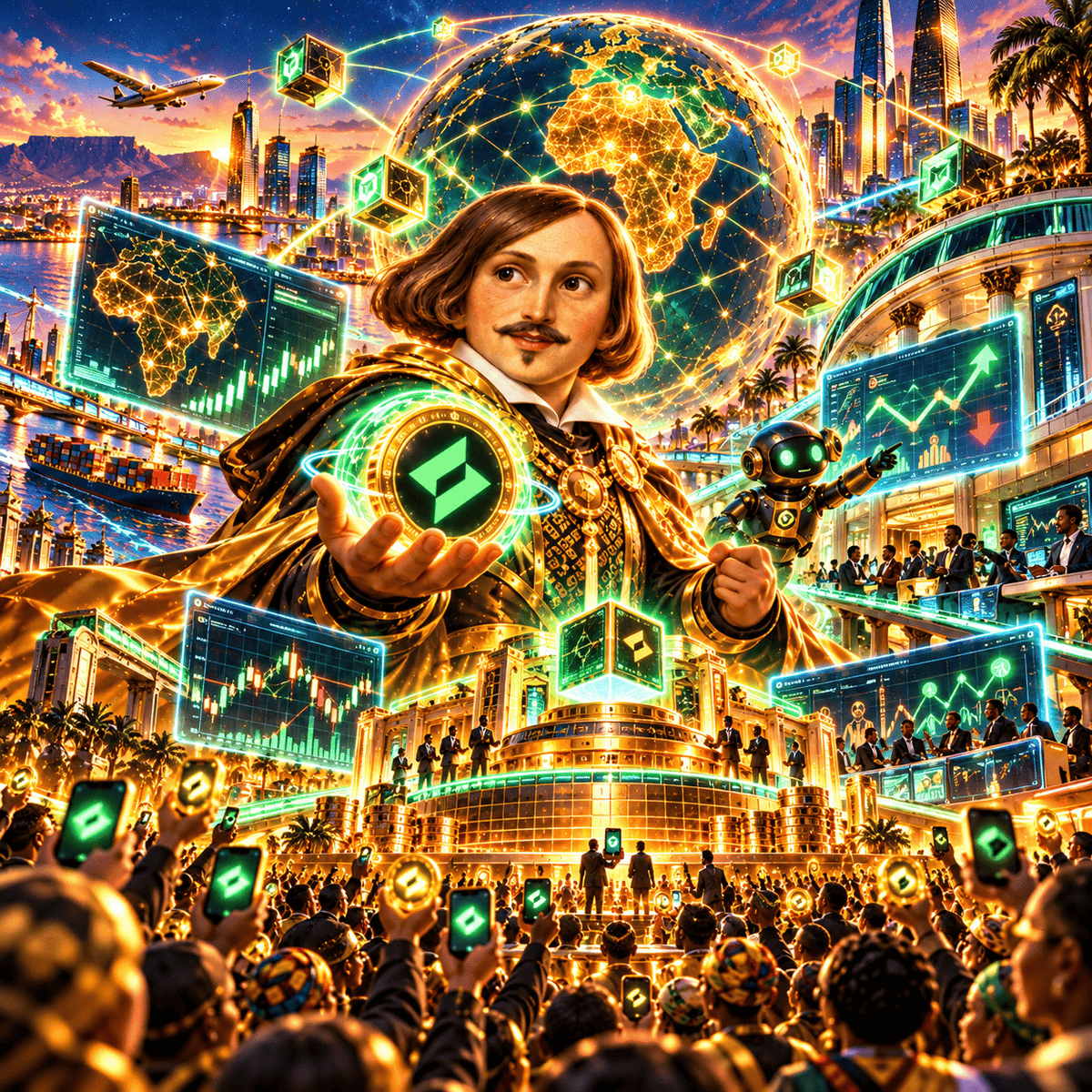
Look at this image long enough, and your eyes gravitate toward the glowing coin, green charts, and Africa threaded with golden lines. The future seems to have arrived: connect millions more people, give them smartphones, digital money, and AI, and the old economy will dissolve into a beautiful glow of data.
The engineer beside the young woman suggested an exercise: look past the symbols and imagine what this world is actually made of.
He started with her phone. She expected code and chips. Instead, he described lithium, copper, nickel, silicon, and rare earths. A single phone requires mines, roads, factories, refined materials, glass, batteries, processors, antennas, cables, and shipping across borders. Then come power grids, data centers, cell towers, and thousands of people keeping everything running.
The device suddenly felt like the tiny tip of an enormous physical pyramid, mostly hidden from view.
Next, he took her to a market. Tomatoes, grain, fruit, vegetables. She laughed. What could be less futuristic?
Yet modern harvests depend on fertilizers that take enormous amounts of energy to produce. Farm machinery requires steel and fuel. Water needs pumps. Food needs refrigeration, packaging, and transport over concrete and asphalt. Even a tomato belongs to a vast system of chemistry, energy, logistics, and engineering, coordinated so well that shoppers never have to think about it.
Unexpectedly, she relaxed. The world stopped feeling like an endless race toward the next trendy technology and became more interesting.
Civilization’s greatest wonders often pass for ordinary life. Clean water flows from a faucet. Food fills shelves year-round. Electricity arrives when we flip a switch. Planes lift hundreds of tons into the sky and cross continents in hours.
We mostly notice infrastructure when it breaks.
She looked again at the glowing map of Africa. Behind every golden connection, she now saw a power plant, port, warehouse, road, farm, sewer system, factory, engineering school, and people whose jobs rarely appear in presentations about the future.
The internet could show a farmer grain prices across the country, but someone still had to deliver the grain. AI could optimize a hospital’s design, but building it still required steel, glass, concrete, copper, and human labor. Money could cross an ocean in seconds, yet without electricity, roads, skilled workers, and materials, the numbers on a screen would remain numbers.
“Does that mean the digital revolution is overrated?” she asked.
He said that would be just as shallow as believing digital technology could make the physical world irrelevant.
New technologies rarely erase what came before. They build on it, strengthen it, reshape it, and sometimes hide it. The better a digital system works, the easier it becomes to forget the physical foundation supporting it every second.
AI can improve energy efficiency. Financial tools can move capital where it is needed. Data can reduce waste, forecast harvests, improve buildings, and coordinate supply chains. But those possibilities become real only when they meet the physical world.
Before sunset, she raised the golden coin again. Now she saw a tool for a harder task: managing the materials, energy, and infrastructure human life will always depend on.
The image became almost transparent. Behind digital Africa stood roads and power plants. Behind green charts, factories and workers. Behind sleek interfaces, mines, cables, servers, and cargo ships.
Every promise of an effortless future rested on something someone had to extract, build, transport, maintain, and eventually replace.
Perhaps a mature view of progress begins here: seeing both the wonders on the surface and the invisible system that makes them possible every day.
Participate in the auction on the Opensea and immortalize yourself through the human/AI input.
https://t.co/mBDsGHPFtr
Co-Created with inspiration, gracias to the vibes of @BigTittyCoinRH, @evmzonedotfun, @YieldFields_RH and the wider cultural flow.
#Alliance of Cryptoved & WAOSHI
#WEAREONE How can we unite ideas, tech, and assets to create prosperity for all?


The triumph of technology depends not only on its quality, but also on the environment that allows it to grow, change, and spread
⠀
1066 | 956 | 1349
⠀
#ShowingUp
⠀
Every era likes to believe that its wealth began with a single great invention, because one machine is much easier to remember than thousands of small conditions without which that machine would have remained a beautiful useless thing.
⠀
In the central square stood a man in a golden cloak, holding a glowing green disk in the palm of his hand. Behind him, Africa was covered with a network of shining lines, container ships crossed the sea, airplanes flew over the city, stock market charts climbed on screens, and a small robot nearby confidently pointed toward the next technological hub, as if the future had already been calculated and all that remained was to press a button.
⠀
The newspapers called the disk the greatest invention of the generation. Ministers said it would bring prosperity to the country. Investors made forecasts. Entrepreneurs came up with products. The government even tasked an economist named Elias with calculating how much faster the country would become wealthy after the technology was widely adopted.
⠀
Instead of a calculation, Elias asked permission to conduct a small experiment. He took one such disk and sent it to three cities.
⠀
The first city was rich in natural resources. It had ore, energy, land, and cheap labor, but its craftsmen worked according to outdated instructions, the university barely communicated with industry, and officials treated innovations as a source of unnecessary problems. The glowing disk was placed in a glass display case, an opening ceremony was held, and a year later it had almost been forgotten.
⠀
The second city had excellent engineers and entrepreneurs, but every new device required dozens of permits, while influential owners of old businesses knew how to block technologies that threatened their profits. The disk was carefully studied, declared promising, and then so thoroughly protected by the existing system that its potential remained on paper.
⠀
The third city looked less impressive. Its laboratories were small, some streets needed repairs, and capital was chronically scarce. But it had a strange habit: scientists talked to mechanics, traders to engineers, engineers to craftsmen, and any successful mechanism was quickly taken apart by dozens of curious people trying to figure out what could be improved.
⠀
Within a month, one craftsman had found a way to make the disk cheaper. Two months later, a programmer had come up with a new application for it.
⠀
Six months later, a farming cooperative was using the same technology to manage supplies, while a young university engineer had added a solution that the original creators had never even anticipated.
⠀
Three years later, the first city was still showing the invention to visitors, the second was still discussing its regulatory status, and the third was already exporting several technologies that had emerged from the original idea.
⠀
The ministers were astonished. They had expected to see the power of an invention, but instead they saw the power of an environment.
⠀
Elias proposed another experiment. He invited the country's best engineer to the palace and asked him to create an ordinary engine entirely on his own, starting with the extraction of raw materials.
⠀
The engineer laughed, then realized the economist was serious.
⠀
It soon became clear that even an outstanding specialist depended on metallurgy, tools, measuring instruments, chemical knowledge, standards, mathematics, and thousands of methods invented by people whose names he would never know. What looked like the product of a single factory was actually the summit of an enormous pyramid of accumulated knowledge.
⠀
Elias then drew a strange diagram in front of the ministers.
⠀
At the bottom were people who knew what worked: how to process metal, adjust a machine, build a bridge, and organize production.
⠀
Above them were people trying to understand why it worked: physicists, chemists, mathematicians, and researchers of the natural world.
⠀
He drew numerous lines between these two layers.
⠀
That, he explained, was often where the most interesting things happened. Practical skills generated questions for science, scientific knowledge opened up possibilities for new tools, and new tools allowed science to see what had previously remained invisible.
⠀
The wealthiest society, therefore, was not necessarily the one where the most brilliant inventor had once appeared.
⠀
Far more important was a society where ideas could travel. Where a craftsman had the right to try an unusual method. Where an entrepreneur could profit from an improvement. Where a scientist could challenge authority. Where the failure of one project did not turn a technological experiment into a crime. Where someone who invented a more efficient machine had a chance to use it, even when the owners of the old machine strongly disliked the idea.
⠀
Elias called this a market of ideas, although money was only part of the mechanism.
⠀
The real victory occurred when society created conditions in which useful knowledge spread faster than the forces interested in stopping it.
⠀
But there was another detail, especially difficult to see on glowing charts.
⠀
Technological progress rarely follows a beautiful straight line.
⠀
Some great discoveries remained almost useless for centuries. Others emerged too early, when the necessary materials, skills, or markets were absent. Sometimes a civilization knew a technology and then lost it. Sometimes a new solution destroyed an old profession faster than it created a new one.
⠀
An invention, therefore, was only a seed.
⠀
For it to turn into economic growth, it needed soil made of skills, institutions, competition, capital, education, curiosity, and the right of a person to say: “I'll try doing it differently.”
⠀
When Elias finished his research, the ruler finally asked him to name the state's most important technological asset.
⠀
The economist looked at the shining Africa outside the window, at the robot, the airports, the markets, the computers, and hundreds of glowing cubes transmitting data between cities.
⠀
He replied that the most important asset was not any particular machine.
⠀
A society's most valuable ability was to regularly turn new knowledge into new ways of doing things, and then allow the next person to improve the result once again.
⠀
The glowing disk in the square continued to attract tourists, and people still called it a symbol of the technological revolution.
⠀
But Elias now saw the revolution somewhere entirely different.
⠀
It was happening in a workshop where an apprentice improved a teacher's tool; in a laboratory where a researcher published a result that a stranger could verify; in a company where an old technology gave way to a new one; in a school where a child began learning from the point it had taken previous generations centuries to reach.
⠀
And then it became clear why the wealth of a civilization rarely begins with a single great lever.
⠀
The true lever of wealth emerges when society learns to turn human curiosity into a cumulative process, where every new idea becomes a launching pad for the next.
Co-Created with inspiration, gracias to the vibes of @UHIncome_RH, @KarafuruNFT, @ctrlmarkets, and the wider cultural flow.
⠀
Participate in the auction on the Opensea and immortalize yourself through the human/AI input.
https://t.co/MPBDS7o4m2
#Alliance of Cryptoved & WAOSHI
⠀
#WEAREONE How can we unite ideas, tech, and assets to create prosperity for all?
The same character looks like vision after a win and overconfidence after a loss
1065 | 325 | 1348
#ShowingUp
Picture two photos of the same person.
In the first, he stands above a giant gold coin, a planet glowing behind him. Charts climb, crowds cheer, and his company’s black-and-gold banners hang between skyscrapers. In five years, its market value has grown twentyfold. The platform is global. Rivals copy its ideas.
How would you describe him?
“Visionary.” “Decisive.” “Charismatic.” “Bold.” You might assume his company has a strong culture, experiments quickly, and thinks several moves ahead.
Now change one detail: the chart points down.
The company has lost half its value. Products have flopped, regulators are investigating, and rivals have taken market share.
Same person. Same pose, cape, team, and management methods.
Try again.
“Overconfident.” “Authoritarian.” “Reckless.” “Surrounded himself with yes-men.” “Lost touch with the market.”
That’s how quickly outcomes rewrite causes.
After the company soared, a journalist profiled its founder. One scene became famous: a beetle landed on his desk during a meeting. He watched it for several minutes, then changed a product decision.
Business schools loved it.
“That’s true observation.”
“Great leaders pick up on subtle signals.”
Three years later, with the company struggling, another journalist found the same story. Now it proved the founder was distracted, trusted intuition too much, and based decisions on random impressions.
The beetle hadn’t changed. The stock price had.
We love success stories because they make complexity simple: the leader had the right qualities, so the company won. Our brains enjoy that story. Business is messier.
Suppose a company invests a billion dollars in new technology. If it captures the market, we call that courage and strategic vision. If demand disappoints, the same billion becomes proof of management’s arrogance.
But when the decision was made, the outcome didn’t exist yet.
A leader could make a sound decision and lose, or a mediocre one and win. A rival could stumble. A regulator could change the rules. New technology could arrive six months early. The market could simply provide a tailwind.
Once we know the outcome, though, our brains try to erase that uncertainty.
Around the golden hero, giant screens showed only rising charts. The higher they climbed, the wiser every past action looked. His clothes signaled discipline. Harsh emails became high standards. Intervening in product decisions showed attention to detail.
Success created a halo, and the halo explained success. A perfect circle.
An analyst tested these explanations by comparing articles about dozens of companies during their rise and after their fall.
The pattern was almost comical. A “strong” culture became “insular.” Discipline became rigidity. Boldness became recklessness. Caution became a lack of vision.
As judgments of the results changed, so did the company’s biography.
The analyst proposed a different question. Instead of “Why did the winner win?” ask: “What was known at the time? What alternatives existed? Which risks did people understand? How reasonable was the choice before we knew the outcome?”
This approach was less inspiring. Fewer heroes, fewer magical cultures, hardly any ten universal rules for success.
But it made room for reality.
Running a business meant making reasonably good decisions in a world where competitors respond, circumstances change, and chance keeps disrupting perfect plans.
The giant hero in the square was still remarkable. His success stopped proving that everything he did was brilliant.
Perhaps that’s the halo effect’s most uncomfortable lesson: once we know the outcome, we’re much better at explaining the past than at telling a good decision from a good story about one.
Participate in the auction on the Opensea and immortalize yourself through the human/AI input.
https://t.co/6nfUndtBhY
Co-Created with inspiration, gracias to the vibes of @superczonx, @BoredApeYC, @irys_xyz and the wider cultural flow.
#Alliance of Cryptoved & WAOSHI
#WEAREONE How can we unite ideas, tech, and assets to create prosperity for all?


Continuing my winter arc ❄️
Solved 2 dsa questions today :-
> Leetcode POTD
> Easy problem on gfg
I feel the best way to get on track in DSA is to solve easy problems. The dopamine release is pretty good start to maintain consistency, but still Im not satisfied.
#showingup


It’s @face2faceFriday—a day to be visible —whether on a screen or “on the scene”. Or on The Seine!
Say ‘yes’ to in-person meetups, gatherings & events. Be prepared & open to @serendipity: the unplanned benefits of #showingup.” via @HowToWorkARoom®️

It’s @face2faceFriday—a day to be visible —whether on a screen or “on the scene”. Or on The Seine!
Say ‘yes’ to in-person meetups, gatherings & events. Be prepared & open to @serendipity: the unplanned benefits of #showingup.” via @HowToWorkARoom®️
Sometimes peace begins with a surprisingly practical thought: tomorrow, we’ll have to deal with each other again
1064 | 552 | 1347
#ShowingUp
The king had always thought trade beneath great men.
He preferred armies, palaces, victories, and thousands bowing at once. Money merely paid for real greatness.
Digital networks encircled Earth. Cities ran on Ethereum, Solana, Polygon, and other protocols. Ships crossed oceans, robots analyzed markets, and an adviser mapped capital flows.
“All this so people can make better deals?” the king asked.
“There may be more politics in it than you think.”
The king promised to roast his ministers for their love of trading charts.
Five cities sent representatives. They had fought over ports, religion, territory, and regional supremacy. One ruler refused even to say another’s name.
Now they shared markets. One supplied computing power, another energy, a third logistics, a fourth capital. The fifth bought more of their goods than anyone else.
The king suggested canceling their agreements to see who was strongest.
Silence fell. The fiercest minister requested a cost estimate.
A conflict that once meant glory for one court and humiliation for another would now shut factories, crash markets, ruin thousands of merchants, and drain even the victor’s treasury.
“So money has made them cowards?”
“Perhaps more cautious,” said an elderly economist. “Sometimes that’s useful in a ruler.”
He described an idea European thinkers had once found revolutionary. People are driven by passions: glory, revenge, pride, jealousy, power. These can be destructive, and moral lectures rarely contain them.
Self-interest works differently. Someone hoping to trade tomorrow treats today’s opponent differently. Reputation gains value. Predictability becomes an advantage. A burst of anger suddenly has a measurable price.
“Are you saying greed cures pride?”
“Sometimes a less romantic motive can restrain a more dangerous one.”
The king disliked how plausible that sounded. Politics, he thought, meant clashing ideals and strong personalities. Yet two enemies might keep the peace simply because their shared market had to open in the morning.
Weeks later, merchants formed joint companies. Their children attended the same universities. Engineers built shared infrastructure. People who had cooperated purely for profit found acquaintances, partners, and friends across old borders.
Cold calculation was creating relationships nobody had planned.
But the king saw another paradox. Markets could tame passions, then become a passion themselves. As profit became the measure of everything, money entered realms once governed by honor, duty, friendship, and meaning. A merchant accustomed to pricing every risk might eventually put a price on loyalty.
“Self-interest is useful as a counterweight to passion,” the economist warned. “The danger begins when it claims to be our only rational motive.”
This went beyond whether markets were good or bad. Society balanced passions that could tear it apart against interests that made people consider one another. Trade agreements sometimes preserved peace better than speeches about brotherhood. Mutual dependence could make room for trust. Yet a society skilled at calculating profit could forget how to value what money barely measures.
That evening, at the world map, he asked a robot:
“What holds the world together more strongly: love or self-interest?”
“Insufficient data.”
For once, he liked the answer.
Perhaps civilization grows between those forces. People cooperate out of calculation, continue out of trust, and discover that the person across the deal has become more than a business partner.
Markets helped people grow richer. But perhaps their more surprising contribution was giving old rivals a practical reason to keep each other alive until morning.
Participate in the auction on the Opensea and immortalize yourself through the human/AI input.
https://t.co/ezKFgbyhKf
Co-Created with inspiration, gracias to the vibes of @launchonpangea, @OnlyAgentLaunch, @Hypurr and the wider cultural flow.
#Alliance of Cryptoved & WAOSHI
#WEAREONE How can we unite ideas, tech, and assets to create prosperity for all?


Elegance in appearance, confidence in action and excellence in every move.
We’re built for more and the journey speaks for itself. 🥂
#elegantpictures #showingup #motivation #photography #elegance

Illusion Is the Best Canvas for the Creator
1063 | 236 | 1346
#ShowingUp
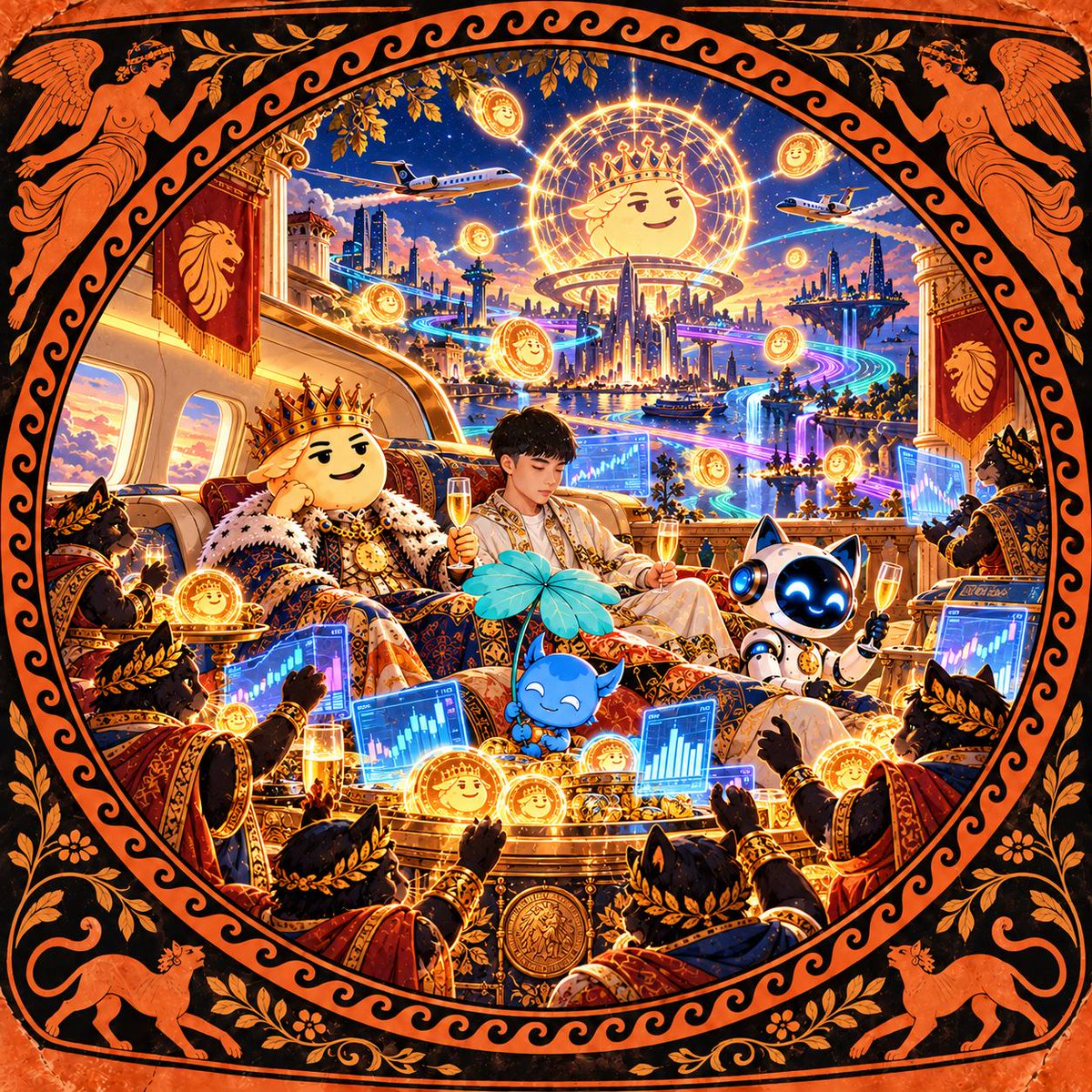
Outside the private jet’s window, neon rivers of the future wound around floating islands. Inside, where Roman lions on red curtains shared space with holographic terminals, the mood felt less like a financial hub and more like a new Mount Olympus. Black cats in laurel wreaths and purple togas sat grandly before screens of market charts. They no longer looked to me like priests of Babylon demanding blood sacrifices. They were artists, painting a new reality with the brushstrokes of market prices, a world where business had become the highest form of alchemy, open to anyone willing to believe in their own story.
At the center of the table, among gleaming coins and champagne glasses, a little blue imp with a four-leaf clover gave a playful wink. A reminder that luck is no random gift from blind fate, but a quantum choice made by an observer who decides to see a perfect pattern in the chaos of numbers. A crowned golden idol floated above the cities’ neon arteries, its smile expressing infinite possibility rather than emptiness. After all, if this whole world is a simulation created by a collective mind, its emptiness is a blank canvas on which we can paint any universe, however extraordinary.
We’re so used to looking for the catch in illusions that we forget life itself is the greatest illusion of all. There’s no tragedy in that, only absolute freedom. As a robot cat clinks glasses with the market’s black-robed priests and the jet cuts through the clouds toward new horizons, it suddenly hits you: there’s no need to find a way out of the Matrix when you can become its co-author. The glow of gold coins reflected in the jet’s windows, and there was nothing frightening about it anymore. Only an invitation to a game where the stakes don’t matter, because you’ve already won the chance to consciously create this wondrous, multifaceted world full of magic.
Participate in the auction on the Opensea and immortalize yourself through the human/AI input.
https://t.co/NNFMFo0lqN
Co-Created with inspiration, gracias to the vibes of $KIMCHI, @UHIncome_RH, @OthersideMeta and the wider cultural flow.
#Alliance of Cryptoved & WAOSHI
#WEAREONE How can we unite ideas, tech, and assets to create prosperity for all?
People often want more from an object than the object itself: belonging, recognition, and a reflection of who they are
1058 | 318 | 1341
#ShowingUp
The most expensive thing in the square once cost less than a cup of coffee.
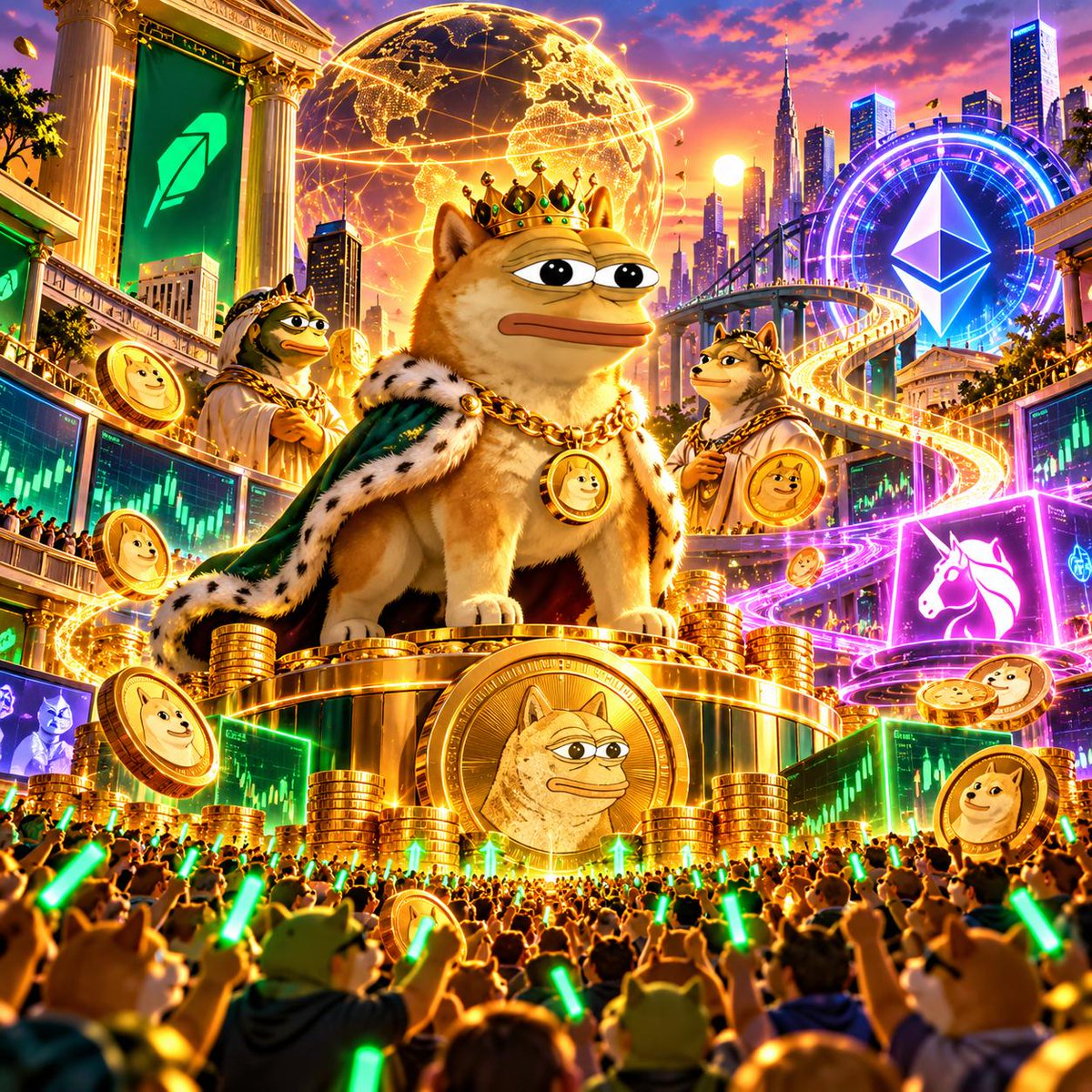
It was a little coin with a dog’s face. People bought it as a joke, sent it to friends, and used it as an avatar. There was no crown or golden palace. Outsiders thought its owners spent too much time online.
Years later, everything had changed.
A giant dog in a crown and robe towered over the city. Its face lit up screens, gold coins spun overhead, and thousands raised green lights to salute what had once been an odd picture from a tiny corner of the internet.
A young journalist came to cover the token’s price, but realized the charts barely scratched the surface.
He met a man wearing an old, battered coin.
“Is it valuable?”
“Now it is. When I got it, it was worth almost nothing.”
“So you just got lucky buying early?”
The man shook his head. The real joy had never been the future price. Back then, the coin helped people recognize someone from their little world. No need to explain the jokes, the project’s history, or their outlook. The symbol was a password.
Objects, the journalist realized, could say far more than what appeared on their surface.
Clothes, manners, music, neighborhoods, accents, colleges, and watches had always done this. People read one another through cultural signals. Status meant more than money: it conveyed taste, expertise, belonging, and connections.
Digital culture simply sped things up.
First came those who understood the symbol before everyone else. Knowledge gave them an edge. Then came contributors, investors, celebrities, and giant screens. Eventually, owning the familiar symbol no longer signaled insider knowledge.
“I know something almost nobody knows” gradually became “I’m here, too.”
That was when the earliest members went looking for the next little symbol.
Success could weaken a status symbol’s purpose. Popularity raised its price but erased its exclusivity. Once everyone understood the code, standing out required a new one.
That evening, at a private palace reception, he met people who could afford almost any coin. Yet hardly anyone discussed prices. They talked about who joined the first experiments, created a famous meme, helped through a crisis, or believed when almost no one else did.
Money could buy the symbol. A history of participation earned a different kind of status.
Now he understood why cultural capital depended on trust. You could buy an expensive object in seconds, but reputation lived in other people’s memories. Communities remembered who followed a trend, who vanished when things got tough, who built something, and whose word still meant something years later.
A symbol’s power came from more than price. It rested on a shared understanding of its meaning, who could legitimately wear it, and which stories deserved respect.
The next day, he returned to the square. The crowned dog watched the crowd. Charts climbed, Ethereum and Uniswap glowed, and newcomers posed with gold coins.
He saw it differently now. The market traded assets; culture traded meaning.
One person bought for profit, another for belonging. Someone wanted credit for being early; someone else loved the meme. Another hoped a symbol with status would lend them some of its own.
In a few years, another character might wear the crown. Culture kept inventing distinctions. Society learned to read them, the mainstream adopted the insiders’ language, and elites and subcultures went searching again.
Status traveled through music, clothes, brands, memes, technology, and entire markets.
Perhaps its strangest feature was this: people rarely wanted merely to own a symbol. They wanted others to understand what it said about them.
Participate in the auction on the Opensea and immortalize yourself through the human/AI input.
https://t.co/6ZA9wVM2J1
Co-Created with inspiration, gracias to the vibes of @YieldFields_RH, @injective, @DogePepeCoinRH and the wider cultural flow.
#Alliance of Cryptoved & WAOSHI
#WEAREONE How can we unite ideas, tech, and assets to create prosperity for all?
A vital freedom in the digital age is using platforms and brands without letting them decide who we become
1053 | 348 | 1336
#ShowingUp
The city learned to sell people belonging before showing them the product.
Outside, familiar logos glowed, promising creativity, speed, freedom, success, intelligence, a voice. They hung above skyscrapers like imperial crests. But their territories were measured in screens, subscriptions, purchases, and minutes of attention.
Marina helped companies build digital communities. She once loved that word: people gathering around something that mattered. Then a client said:
“We need more authenticity. The analytics show it converts really well.”
Everyone took notes. Marina laughed.
That evening, she watched glowing spheres of Apple, Google, Amazon, Tesla, and other brands drift through the city like planets with their own gravity. Communities, languages, habits, even personalities formed around them. “I like this phone” had become “This is the kind of person I am.”
Brands had moved from product labels into identity. Platforms went further.
They decided whom you saw, which thought rose to the top, which emotion a button let you express, and what counted as success. Reactions brought more exposure. Thoughts requiring quiet reflection often disappeared beyond the reach of attention.
Marina noticed creators adapting themselves in advance. A photographer chose a more striking image to stop the scroll. An entrepreneur made opinions more absolute because arguments drew comments. A psychologist squeezed complexity into five punchy slides. Someone sharing a doubt first wondered whether it made good content.
The platform gave no orders. It rewarded certain behavior with visibility. That was enough.
Months later, Marina’s team received an unusual request: build a space without brand advertising, popularity rankings, or public follower counts. People could talk, collaborate, and connect through shared interests without seeing anyone’s likes or “influence.”
The first weeks were quiet. Investors worried: users spent less time there than on conventional platforms. Yet Marina noticed they kept returning to the same people. Conversations grew longer. Some debated for months, then launched projects together. Others found people who shared their interests but challenged their ideas.
Then an investor suggested a public ranking.
“People need a signal of whom to trust.”
Marina looked around the table.
“In a month, that signal becomes a goal. A month later, people start optimizing themselves for it. Then we wonder why the culture changed.”
Silence.
Suddenly, she understood: platforms were more like cities than tools. Architects don’t decide what residents discuss. But street widths, public squares, and shared spaces shape how people meet.
Here, too, a button was a tiny piece of behavioral architecture. An algorithm was a policy governing visibility. A metric was a miniature value system.
Marina looked at the glowing city again. The logos seemed different. Neither villains nor saviors, they were machines for making meaning, built by people. And people could still choose how to build them.
Perhaps digital culture’s greatest task isn’t to destroy brands or abandon platforms.
It is to recognize when a brand starts telling us who to be, and when a platform moves beyond connecting people to quietly designing the very shape of human relationships.
Then authenticity can stop being a marketing strategy and become, once again, a way of being present with another person.
Participate in the auction on the Opensea and immortalize yourself through the human/AI input.
https://t.co/ZVA2DMsj8b
#Alliance of Cryptoved & WAOSHI
#WEAREONE How can we unite ideas, tech, and assets to create prosperity for all?

Day 38 of Winter Arc ❄️
> Solved 3 LeetCode - 2 Medium + 1 Easy.
> Noticing patterns around greedy, backtracking, stacks & counting so far in daily POTDs.
> Now locked in for midsem prep (May I get 30/30 in this exam 🙏)📚
#WinterArc #LeetCode #DSA #POTD #ShowingUp


It's all about stamina and endurance.
#Stamina #Endurance #ShowingUp #Running #Jogging #WeTryAgainTomorrow #TDOE #VO2Max
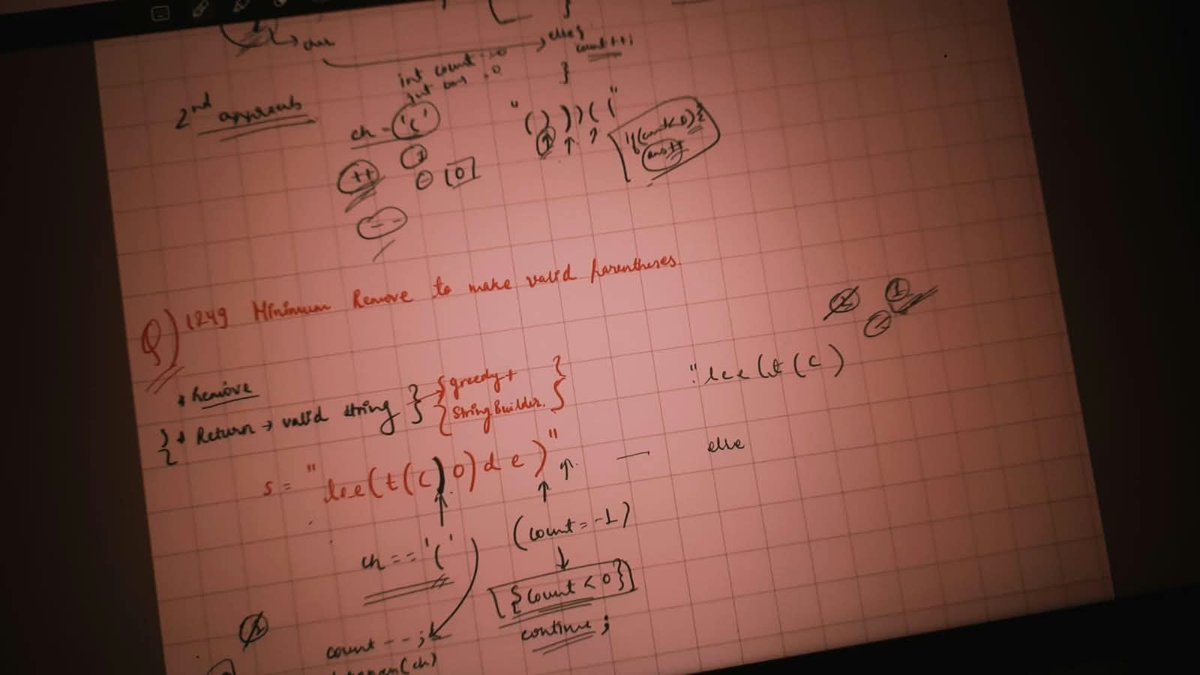
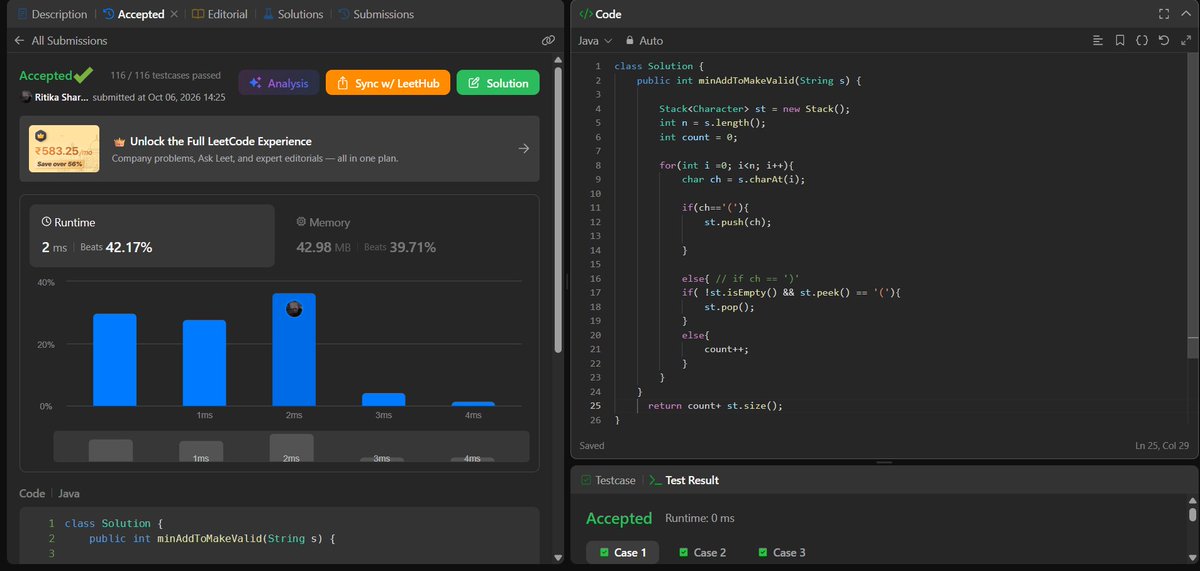
POTD done ✅- used stack & counting.
I learnt one thing for sure, reading & understanding the question matters a lot instead of jumping onto the question. Build the conditions step by step.
Making different testcases also helps writing logic.
#POTD #showingup #dsa #winterArc
Last Seen Hashtags on Sotwe
MGAI
Seen from United States
caption porn
Seen from United Kingdom
mgai(*)***************filter:videos
Seen from Brazil
snapchatt
Seen from United States
بنوتي
บึงวรกิจ
Seen from Thailand
บ้านเขียวid
Seen from Thailand
Momson()**********
Seen from Brazil
adanapasif
Seen from Turkey
celebrity #porn
Seen from Turkey
Trends for you
Most Popular Users

Elon Musk 
@elonmusk
241.5M followers

Barack Obama
@barackobama
118.8M followers

Cristiano Ronaldo
@cristiano
114.5M followers

Donald J. Trump
@realdonaldtrump
111.9M followers

Narendra Modi
@narendramodi
107.1M followers

Rihanna
@rihanna
98.7M followers

NASA
@nasa
92.3M followers

Justin Bieber
@justinbieber
91.8M followers

KATY PERRY
@katyperry
90M followers

Taylor Swift
@taylorswift13
84M followers

Lady Gaga
@ladygaga
75.5M followers

Virat Kohli
@imvkohli
73.5M followers

Kim Kardashian
@kimkardashian
70.9M followers

YouTube
@youtube
68.8M followers

Neymar Jr
@neymarjr
66.5M followers

Bill Gates
@billgates
65.3M followers

Selena Gomez
@selenagomez
63.1M followers

The Ellen Show
@theellenshow
62.2M followers

CNN
@cnn
61.7M followers

X
@x
60.7M followers