

Top Tweets for #ScienceAdvances

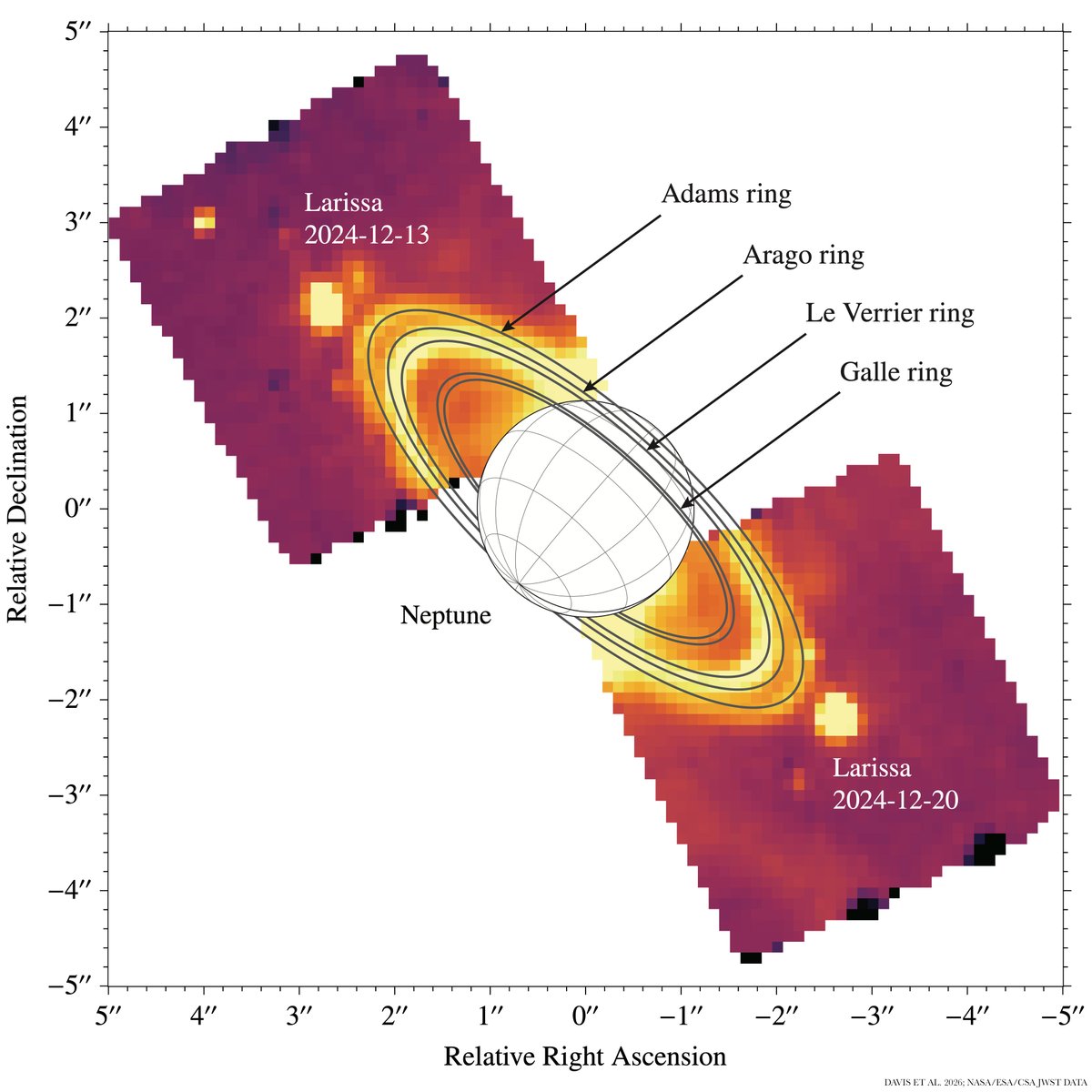
Appreciating the observations shared by @ScienceAdvances on Neptune’s inner moons.
Such findings continue to expand important questions in space science. #AcadeMax is committed to publishing the latest research in this field.
Follow @Academax_J to explore more astronomy studies.
#ZJU #SpaceResearch #Science #Astronomy

Neptune’s inner moons may have formed from the deep interiors of ancient icy satellites, new observations show. https://t.co/gJwXC8EP4y
Great share from @bravo_abad .
This research from @ScienceAdvances solves a quiet failure mode in ML potentials with an elegant information theory approach.
For more relevant studies, check out our journal: https://t.co/QFOTKwyAyK
#AcadeMax #MachineLearning #MaterialsScience

Information theory sharpens ML potentials on disordered alloys
Machine learning potentials have become the workhorse for atomistic simulation, but they share a quiet failure mode: they break down on chemically disordered systems. The reason is a data problem. When you train a potential on configurations sampled from random or equilibrium distributions, the local atomic environments cluster heavily around a few common patterns, and the rare-but-energetically-important ones are barely seen. The model never learns to resolve the fine energy differences that govern real materials behavior.
Killian Sheriff and coauthors attack this with a clean idea from information theory. They decompose each structure into local coordination polyhedra they call chemical motifs, then reframe dataset construction as an optimization problem: make the motif distribution as close to uniform as possible. Using reverse Monte Carlo to swap atoms within cells, they minimize the Jensen-Shannon divergence between the sampled motif distribution and a flat target. The cost is negligible, no architecture changes, and it slots into existing training pipelines.
The payoff is large. On the CrCoNi alloy, universal potentials like MatterSim, Orb, and MACE hit energy errors up to 287 meV/atom with 600% variation across compositions. Motif-based sampling collapses those errors to a low, uniform band across the entire ternary triangle. More importantly, the resulting potentials reproduce observables that demand real thermodynamic fidelity: phase diagrams for CrNi, CrCo and AuPt, melting points of refractory high-entropy alloys within 2-3% of experiment, Warren-Cowley order parameters, heat capacities, and composition-dependent stacking-fault energies. One model trained on a full composition space generalizes to binary subsystems with no retraining.
What makes this interesting from an ML standpoint is the framing. The bottleneck wasn't model capacity or dataset size, it was representational diversity in the training distribution. Curating input-space coverage with a principled divergence metric beat both brute-force sampling and the special quasirandom structures the field has leaned on for years.
This matters because it lowers the data cost of trustworthy simulation. Reliable phase diagrams inform heat-treatment protocols, stacking-fault energies guide deformation behavior, and getting these right computationally shortens the expensive experimental loop in materials development. The same motif-balancing logic should transfer wherever disordered or compositionally complex systems dominate: catalysts, battery electrodes, structural metals.
Paper: Sheriff et al., Science Advances (2026), CC BY-NC 4.0 | https://t.co/dJ32EhpaCL


AI-assisted protein design to rapidly convert antibody sequences to intrabodies targeting diverse peptides and histone modifications @ScienceAdvances
1. A new AI-driven pipeline has been developed to convert antibody sequences into functional intrabodies, significantly improving the success rate of intrabody design. This approach leverages AlphaFold2, ProteinMPNN, and live-cell screening to optimize antibody frameworks while preserving epitope-binding regions.
2. The study successfully converted 19 out of 26 antibody sequences into functional single-chain variable fragment intrabodies, including those targeting histone modifications for real-time imaging of chromatin dynamics. Notably, 18 of these sequences had previously failed using standard methods.
3. The pipeline integrates advanced AI tools to predict and optimize the folding and stability of intrabodies in the intracellular environment. This addresses key challenges such as misfolding and aggregation that often hinder intrabody functionality.
4. The method was applied to create intrabodies targeting histone modifications, tripling the number of available intrabodies for this purpose. This advancement enables more detailed studies of chromatin dynamics and gene regulation in living cells.
5. The authors provide open-source code for their pipeline, along with useful metrics and tables to predict which designs will retain functionality inside cells. This resource will facilitate further research and development in intrabody design.
6. As antibody sequence databases continue to expand, this AI-driven approach is expected to accelerate intrabody design, making it easier, more cost-effective, and broadly accessible for biological research.
💻Code: https://t.co/R9Srj5Dq6X
📜Paper: https://t.co/yTGOQZzpJr
#AIProteinDesign #IntrabodyEngineering #HistoneModifications #LiveCellImaging #Bioengineering #ComputationalBiology

Gaia: An AI-enabled genomic context–aware platform for protein sequence annotation @ScienceAdvances
1.Gaia introduces a new paradigm in protein function annotation by combining sequence, structural, and crucially, genomic context information into a unified, scalable search engine. This allows for rapid detection of both close and remote homologs that traditional methods often miss.
2.At the core of Gaia is gLM2, a genomic language model trained on metagenomic contigs. Unlike other models, gLM2 incorporates not just protein sequences but also neighboring genomic regions, capturing signals of gene co-location and conservation.
3.gLM2 is fine-tuned using contrastive learning on over 2 million AlphaFold structural clusters, aligning its embeddings with structural and contextual features, enabling Gaia to infer both functional similarity and evolutionary relationships.
4.Gaia enables context-aware search across 85 million protein clusters derived from 131,744 microbial genomes. Using a fast HNSW algorithm, Gaia performs approximate nearest neighbor search on embedded vectors with high accuracy and real-time speed.
5.Benchmarks show Gaia matches or exceeds Foldseek in retrieving remote bacterial-archaeal homologs, while being over 100× faster. Against ESM2 and other embedding-based methods, Gaia performs better on both sequence and context sensitivity.
6.Unlike sequence-only methods (e.g., BLAST, MMseqs2), Gaia can detect conserved multigene systems like defense islands and biosynthetic gene clusters through genomic co-location, making it valuable for functional inference from unannotated proteins.
7.Gaia provides a web-based interface that visualizes retrieved results, genomic neighborhoods, ESMFold-predicted structures, Pfam domain annotations, and co-occurring gene patterns—making interpretation accessible even to non-expert users.
8.A case study shows Gaia correctly identifies a previously unannotated viral protein as a phage tail fiber protein by recognizing its repeated occurrence in prophage-like genomic contexts and structural similarity to known viral tail complexes.
9.In a second case, Gaia retrieves biosynthetic gene clusters for siderophores that evade detection by tools like antiSMASH. By focusing on the context surrounding a siderophore enzyme (QbsK), Gaia finds distant but functionally similar loci missed by rule-based tools.
10.The OG_prot90 database, which powers Gaia, clusters proteins at 90% identity and is optimized for fast vector search. Combined with the gLM2_embed model, it offers a scalable and efficient backbone for functional annotation.
11.Limitations of Gaia include decreased performance on out-of-distribution sequences, though this may be alleviated by fine-tuning on new data. Despite this, Gaia proves to be a powerful complement to existing sequence and structure search tools.
12.Gaia is well-suited for exploring microbial functional diversity, detecting horizontally transferred genes, and annotating the growing landscape of hypothetical proteins—especially in cases where traditional sequence or structure clues are insufficient.
💻Code: https://t.co/8CCMeRm6eY 📜Paper: https://t.co/RCVvv6aiJA
#Bioinformatics #Genomics #ProteinAnnotation #AI #Metagenomics #LanguageModels #StructuralBiology #PhageBiology #Siderophores #OpenScience

AbEpiTope-1.0: Improved antibody target prediction by use of AlphaFold and inverse folding @ScienceAdvances
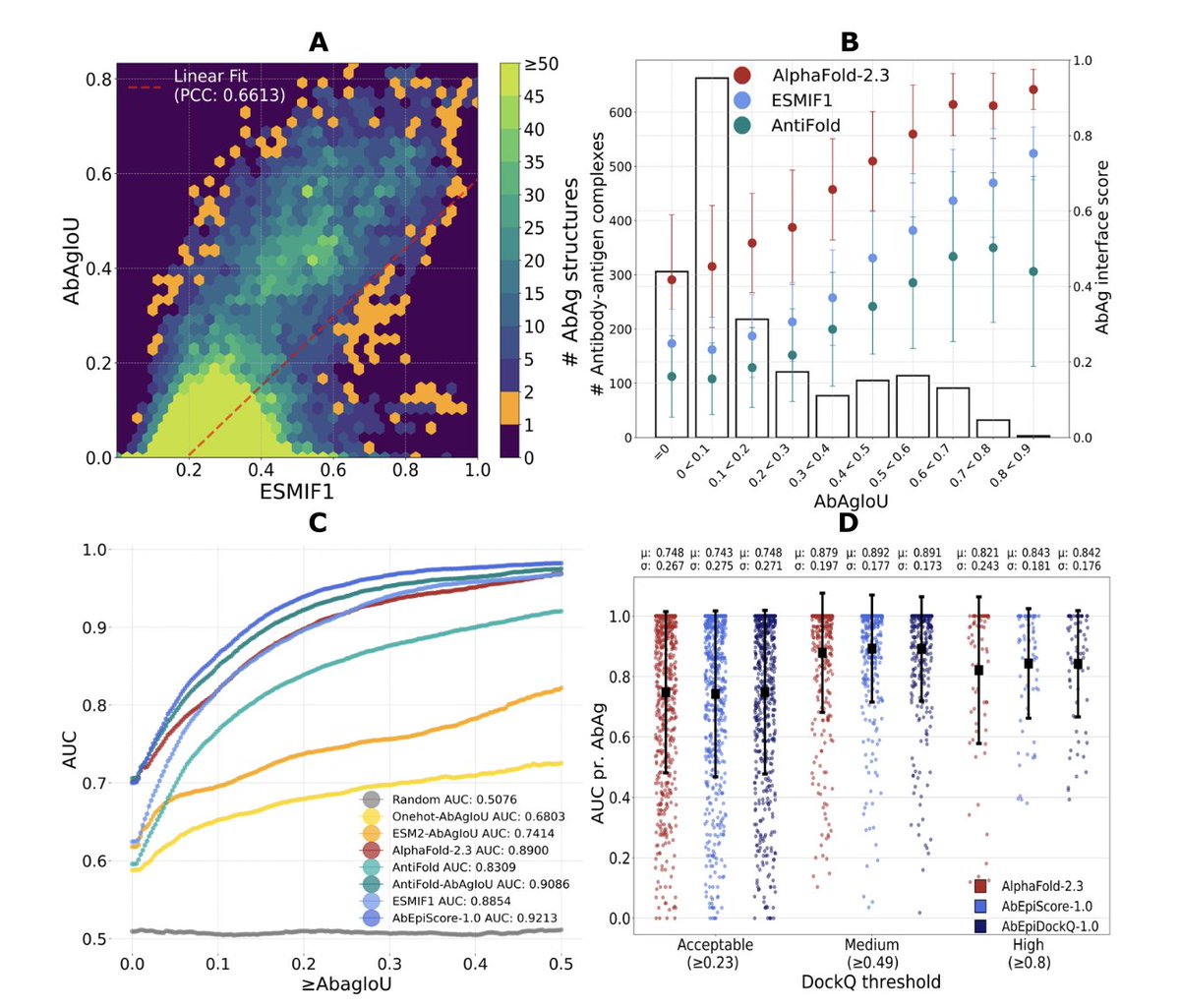
1.The core innovation of this paper is AbEpiTope-1.0, a framework combining AlphaFold-2.3 structural modeling with inverse folding models to enhance antibody-specific B cell epitope prediction—a critical task for vaccine design and immunotherapy.
2.AbEpiTope-1.0 includes two models: AbEpiScore-1.0 for scoring antibody-antigen interface accuracy, and AbEpiTarget-1.0 for identifying which antibody binds best to a given antigen. Both models significantly outperform AlphaFold’s built-in confidence metrics.
3.AbEpiTarget-1.0 achieves 61.21% accuracy in identifying the correct antibody from groups of 4 candidates, a major improvement over AlphaFold-2.3’s 42.08%. Performance remains high across antigen types and sizes, highlighting its robustness.
4.Key to this success is the use of ESMIF1, an inverse folding model that estimates residue compatibility with a structure. Fine-tuning it for antibody-antigen interfaces (AbEpiScore-1.0) improves correlation with true epitope accuracy from 0.66 to 0.80.
5.To simulate realistic screening, the authors constructed over 200,000 modeled structures using both correct and swapped antibody-antigen pairs. These large-scale evaluations show that only correct antibody-antigen models consistently yield accurate epitope predictions.
6.In datasets with 17 antibodies per antigen, AbEpiTarget-1.0 still ranked the correct antibody first 47.06% of the time, far outperforming AlphaFold (35.29%) and Rosetta docking (11.76%). This underscores its utility in high-throughput antibody screening.
7.When tested on unseen data (antibody-antigen complexes released after AlphaFold-2.3's training cutoff), AbEpiTarget-1.0 maintained a lead, achieving 55.96% accuracy compared to AlphaFold’s 44.04%. This suggests good generalization beyond training data.
8.The model’s score distributions show a sharp separation: true antibody-antigen complexes cluster in high-confidence, high-accuracy regions, while swapped complexes do not. This provides an implicit internal confidence filter for screening.
9.Both AbEpiScore-1.0 and AbEpiTarget-1.0 are available via web server and GitHub. They process hundreds of structures in minutes, offering practical tools for antibody screening, diagnostics, and epitope mapping.
💻Code: https://t.co/4krgMXb9e1
📜Paper: https://t.co/cubXFcMDg0
#immunology #antibodyengineering #epitopeprediction #AlphaFold #computationalbiology #inversefolding #vaccineDesign
Discovery of unconventional and nonintuitive self-assembling peptide materials using experiment-driven machine learning @ScienceAdvances
1.This study introduces a machine learning–driven strategy to identify self-assembling pentapeptides that form β sheet structures, many of which are not predicted by traditional design rules.
2.Unlike conventional methods relying on hydrophobicity or β sheet propensity tables, the authors actively target peptides where ML models and traditional predictors disagree—leading to the discovery of 96 β sheet–forming sequences out of 268 tested.
3.Crucially, many of the successful peptides identified lack valine, an amino acid often overrepresented in classical β sheet designs. This expands the chemical design space to previously ignored, diverse sequences.
4.Notable nonintuitive sequences discovered include ILFSM, LMISI, MITIY, MISIW, and WKIYI—none of which are obvious candidates under conventional β sheet design paradigms.
5.The ML framework used support vector regression and Gaussian process regression models trained on a combination of cheminformatics descriptors and experimental feedback, improving prediction accuracy iteratively via active learning loops.
6.Three rounds of ML-guided synthesis and evaluation were conducted. In each round, ~70 new peptides were selected, synthesized, and evaluated using FTIR spectroscopy for β sheet formation.
7.Rather than maximizing prediction scores alone, the selection process prioritized peptides in regions where ML and β sheet scores strongly disagreed—leading to the identification of both false positives and false negatives in classical methods.
8.The final ML models significantly outperformed classical β sheet propensity scores, particularly in detecting non-valine sequences. For example, the model achieved high F1 scores and accuracy on valine-free sequences.
9.Detailed feature analysis of the ML models highlights the roles of patterning, hydrophobicity (via SlogP-VSA descriptors), and polarizability (SMR-VSA descriptors) in β sheet formation—validating known principles and revealing new correlations.
10.The authors also show that sequence order matters: scrambled peptide pairs like FKVEF and KVEFF yield different assembly behaviors, and the ML models begin to capture these subtle sequence dependencies better than traditional tools like Tango.
11.To support the community, a web-based tool was developed allowing users to input pentapeptide sequences and receive predicted IR scores along with relevant physicochemical properties.
💻Code: https://t.co/EGjhj6v1u1
📜Paper: https://t.co/6yQeGkTyLh
#MachineLearning #PeptideDesign #ProteinEngineering #Biomaterials #BetaSheet #AI4Science #ComputationalBiology #ActiveLearning #SelfAssembly

Multiscale graph equivariant diffusion model for 3D molecule design @ScienceAdvances
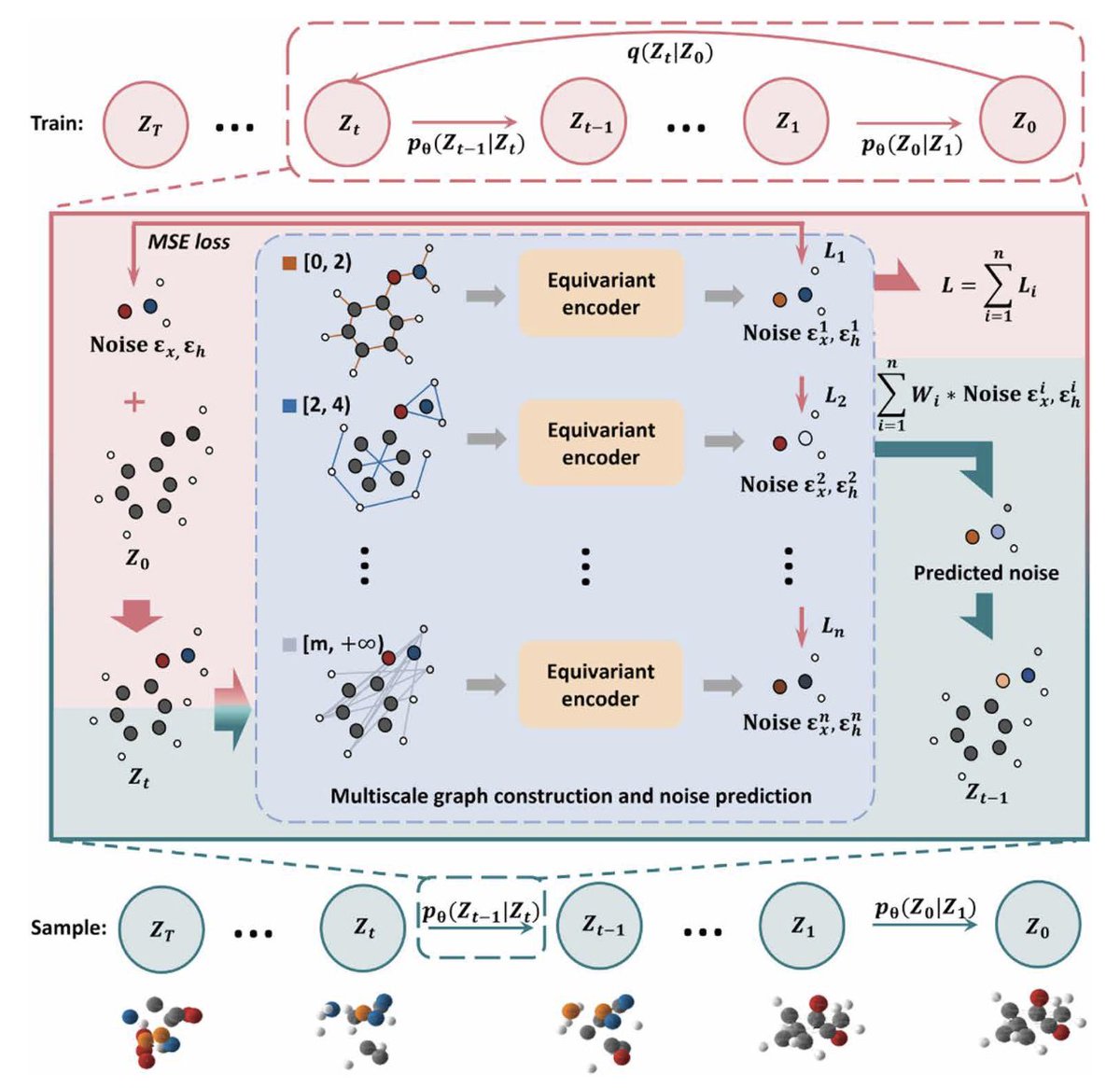
1. MD3MD introduces a novel diffusion-based framework for 3D molecule generation, combining multiscale molecular graph partitioning with equivariant modeling to produce chemically valid and diverse molecular structures.
2. Unlike traditional point cloud approaches, MD3MD captures complex atomic interactions by constructing multiscale graphs, each representing molecular substructures based on distance thresholds, enabling fine-grained control during molecule generation.
3. The model assigns different weights to each graph scale, allowing it to model both local (e.g., covalent) and long-range (e.g., noncovalent) atomic interactions, a key innovation over previous diffusion-based models.
4. In unconditional generation tasks on the QM9 and GEOM datasets, MD3MD achieves top scores in stability, validity, novelty, and chemical diversity, surpassing state-of-the-art models like EDM, GEOLDM, and MDM.
5. Conditional generation results show MD3MD produces molecules with specified electronic or physical properties (e.g., εgap, HOMO/LUMO, dipole moment), achieving lower prediction errors and stronger correlations than existing methods.
6. Tanimoto similarity and t-SNE visualization confirm that MD3MD generates novel molecules that are structurally distinct yet distributionally consistent with training datasets, avoiding mode collapse and overfitting.
7. Notably, the model can generate more ring-containing and hexagonal structures, which often correlate with greater chemical stability and drug-likeness, demonstrating its ability to learn chemically relevant priors.
8. Experiments suggest that excluding covalent interaction constraints and relying solely on noncovalent interaction information can, in some cases, produce molecules with higher stability and uniqueness, challenging common assumptions.
9. Visualization of the denoising process illustrates the smooth transition from Gaussian noise to structured molecules, providing interpretability and insight into how MD3MD builds chemical space representations.
10. MD3MD offers a robust and generalizable architecture for both small and large molecules, with potential applications in de novo drug design, material discovery, and beyond, thanks to its scalable multiscale design.
📜Paper: https://t.co/oflwFWyZ4O
#MolecularDesign #GenerativeModels #DiffusionModels #GraphNeuralNetworks #DrugDiscovery #AI4Science #ComputationalChemistry #3DMolecules

🧬What motivates you to read pharmaceutical science journals?📑
#PharmaceuticalScience #Motivation #Research #PHSApolls #PHSA #sciencejournals #journals #Academicinterest #teaching #Scienceadvances #Science #researchtwitter #phdchat
De novo design of peptide binders to conformationally diverse targets with contrastive language modeling @ScienceAdvances
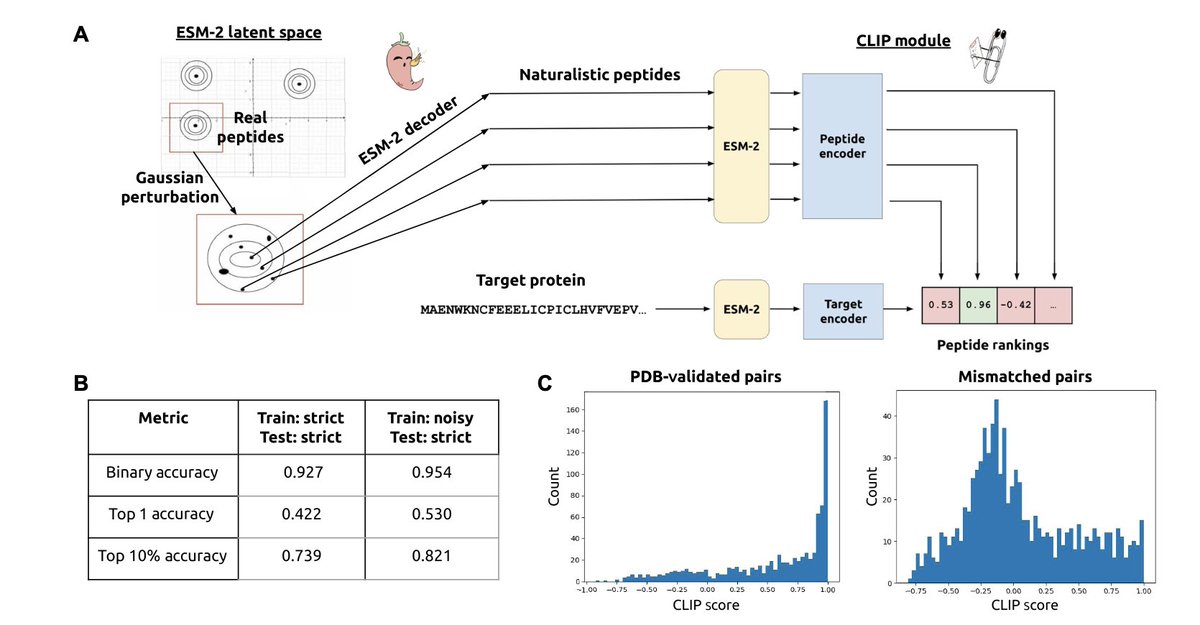
- A groundbreaking study presents an algorithmic framework called PepPrCLIP, which designs short, target-binding linear peptides using only the amino acid sequence of the target protein. This innovative approach could revolutionize drug discovery by targeting previously 'undruggable' proteins.
- The core of PepPrCLIP is a two-step process: first, it generates naturalistic peptide candidates by applying Gaussian perturbation to the peptidic latent space of the ESM-2 protein language model. Then, it screens these sequences for target-selective interaction activity using a CLIP-based contrastive learning architecture.
- PepPrCLIP's ability to create and prioritize novel peptide candidates with binding capacity to an input target sequence is a significant advancement. It has been experimentally validated to exhibit robust target engagement and modulation of diverse targets, including enzymes, transcription factors, and undruggable fusion oncoproteins in vitro.
- Notably, PepPrCLIP performs comparably to the state-of-the-art RFDiffusion model on structured targets in silico, but with much faster generation and prioritization speeds. This efficiency makes it particularly advantageous for screening large libraries of peptides for given target proteins.
- The study also demonstrates PepPrCLIP's potential in generating peptides that inhibit the catalytic activity of UltraID, a conformationally stable enzyme, and in degrading β-catenin and the highly disordered fusion oncoprotein SS18-SSX1, showcasing its broad applicability.
- This work represents a novel example of leveraging sequence-based language models for fully de novo binder generation, opening the door for programmable proteome editing and screening applications. The authors are also exploring alternative algorithms and extensions for peptide generation and optimization.
💻Code: https://t.co/S5y3gDYB9p
📜Paper: https://t.co/Eo5s2noBvq
#SyntheticBiology #DrugDiscovery #ProteinEngineering #ComputationalBiology #PeptideDesign
Deep representation learning of protein-protein interaction networks for enhanced pattern discovery @ScienceAdvances
1. Introducing DNE (Discriminative Network Embedding), a self-supervised learning framework that redefines protein-protein interaction (PPI) network analysis by capturing both local and global structural information using deep contrastive learning.
2. Unlike traditional methods, DNE leverages the contrast between neighboring and distant nodes, resulting in highly discriminative embeddings. This approach excels in predicting PPIs and identifying functional modules across diverse biological datasets.
3. In benchmark tests, DNE achieved a 4% improvement in ROC-AUC for PPI prediction compared to leading methods like Deep Graph Infomax and Node2Vec, demonstrating robustness across datasets from human, yeast, worm, and plant interactomes.
4. DNE's novel module detection capabilities outperformed existing methods, accurately clustering protein complexes and uncovering functional relationships with a significant 10-50% advantage in Adjusted Mutual Information scores.
5. The framework uniquely integrates protein sequence features derived from state-of-the-art language models (e.g., ESM-2), enhancing predictive accuracy for PPI networks by over 20% when combined with structural information.
6. Designed for flexibility, DNE supports various graph types, including biological, citation, and infrastructure networks, marking it as a versatile tool for network science.
7. By integrating stochastic neighbor selection and advanced encoder training, DNE provides biologically meaningful embeddings, enabling applications such as disease gene prediction and protein function annotation.
💻Code: https://t.co/hvbgFOtDSW
📜Paper: https://t.co/wmagkA0b4C
#PPI #NetworkScience #MachineLearning #Bioinformatics #DeepLearning

A general temperature-guided language model to design proteins of enhanced stability and activity @ScienceAdvances
• Introducing PRIME: A novel protein language model that predicts mutations for enhanced protein stability and activity using temperature-guided learning. Without prior experimental data, PRIME has achieved success rates exceeding 30% in generating effective mutants for diverse proteins.
• PRIME’s uniqueness lies in its ability to integrate temperature traits into its deep learning architecture. It correlates sequence context with thermal stability, allowing zero-shot predictions of single-site mutants and their impacts on properties like catalytic activity and binding affinity.
• Validated on five distinct proteins, PRIME suggested mutants that outperformed their wild-type counterparts in resilience to extreme conditions, such as high temperatures and alkaline environments. Notably, a mutant T7 RNA polymerase surpassed commercial standards in thermostability after iterative refinements.
• PRIME excels in engineering multisite mutants. By overcoming traditional methods’ reliance on additive single-site improvements, it generates deep mutants, even utilizing previously disregarded “negative mutations” to improve overall protein fitness.
• PRIME demonstrated superior performance over state-of-the-art models like Rosetta, Stability Oracle, and ESM-2, both in thermostability and activity-related predictions, highlighting its robustness in diverse engineering contexts.
• This model offers a leap forward in protein engineering, reducing experimental costs while enhancing precision. It holds potential applications in pharmaceuticals, industrial enzymes, and beyond.
💻Code: https://t.co/oT2hcYlpBO
📜Paper: https://t.co/Xa0fx4Paqg
#ProteinEngineering #DeepLearning #Biotechnology #AI

Structural characterization and AlphaFold modeling of human T cell receptor recognition of NRAS cancer neoantigens @ScienceAdvances
• This study reveals crystal structures of the human T cell receptor (TCR) N17.1.2 in complex with NRAS Q61K and Q61R neoantigen peptides bound to HLA-A1, uncovering the structural basis for mutant-specific recognition critical for immunotherapy.
• TCR N17.1.2 demonstrates exquisite specificity for mutant NRAS neoantigens, discriminating effectively against wild-type NRAS peptides through direct targeting of the P7 Lys/Arg mutation, a key determinant for immune recognition.
• Surface plasmon resonance assays confirm high-affinity binding (1.2 μM for Q61K and 3.4 μM for Q61R) of the TCR to the mutant neoantigens, while no binding is observed with wild-type peptides.
• The study highlights the dominant role of the TCR Vα domain in MHC interactions and the Vβ domain in peptide recognition, particularly through the CDR3β loop forming critical salt bridges with the mutant residues.
• AlphaFold2 and AlphaFold3 models accurately predicted the TCR-peptide-MHC complexes when enhanced sampling methods (e.g., 1000-model generation) were applied, showcasing the potential and limitations of AI-driven structural prediction for immune complexes.
• This work advances the understanding of TCR neoantigen recognition, providing a structural framework to design optimized TCRs for adoptive cell therapy targeting NRAS mutations in aggressive cancers like melanoma.
📜Paper: https://t.co/2tSHewOHzf
#Immunotherapy #CancerNeoantigens #AlphaFold #StructuralBiology #TCellReceptors #Bioinformatics #OpenScience

Accelerating drug discovery and repurposing by combining transcriptional signature connectivity with docking @ScienceAdvances
1. The study introduces ceSAR, a novel integrative approach for drug discovery that combines transcriptional signature connectivity analysis with molecular docking to identify potential drug candidates. This method capitalizes on the LINCS library, which contains transcriptional signatures of over 15,000 small molecules and gene knockdowns, enabling rapid and efficient target identification.
2. A significant innovation of ceSAR is its ability to rank candidate compounds based on chemical similarity to LINCS analogs and their transcriptional concordance with gene knockdowns. This target-independent approach is then complemented by docking simulations to assess biophysical compatibility, resulting in a consensus ranking that reduces false positives and increases the likelihood of identifying true drug-target interactions.
3. The ceSAR method offers a substantial improvement in computational efficiency, reducing run times by up to 50,000 times compared to traditional docking methods. This speed allows for the screening of large compound libraries on standard hardware, democratizing access to drug discovery pipelines.
4. The study demonstrates the utility of ceSAR through extensive benchmarking against established methods, showing that it improves the identification of true positives while maintaining high precision, even when the candidate pool is reduced to a small subset for further validation.
5. Experimental validation of ceSAR's predictions led to the discovery of novel inhibitors of BCL2A1, an antiapoptotic protein implicated in melanoma and inflammation-related preterm birth. These findings underscore the method's potential to accelerate drug discovery and repurposing, particularly in areas of high medical need.
6. ceSAR’s ability to integrate transcriptional signatures with docking and its application to a broad range of targets makes it a powerful tool for advancing precision medicine, with the potential to discover new therapeutics more quickly and cost-effectively.
📜Paper: https://t.co/I11kfYn2Ne


New open-access article in @ScienceAdvances from the Science Advocacy Working Group. We draw insights from various fields and practitioners identify pathways to diversifying and strengthening science advocacy. 🧵👇
https://t.co/M0djb22V0p
Last Seen Hashtags on Sotwe
TEENAGE #NOLIMIT
Seen from United States
bucuresti
hentaicreampie
Seen from Poland
���脸
Seen from Japan
ecoHUB
Seen from United States
anxiouspanda
Seen from United States
Teenage girls
Seen from United States
นครพนมนัดเย็ด
Seen from Thailand
extremebnwo
Seen from United States
incestohijomamá
Seen from United States
Most Popular Users

Elon Musk 
@elonmusk
240.1M followers

Barack Obama
@barackobama
118.6M followers

Cristiano Ronaldo
@cristiano
114.4M followers

Donald J. Trump
@realdonaldtrump
111.7M followers

Narendra Modi
@narendramodi
106.9M followers

Rihanna
@rihanna
98.6M followers

NASA
@nasa
92.1M followers

Justin Bieber
@justinbieber
91.7M followers

KATY PERRY
@katyperry
89.9M followers

Taylor Swift
@taylorswift13
83.9M followers

Lady Gaga
@ladygaga
75.4M followers

Virat Kohli
@imvkohli
73.3M followers

Kim Kardashian
@kimkardashian
70.8M followers

YouTube
@youtube
68.6M followers

Neymar Jr
@neymarjr
66.3M followers

Bill Gates
@billgates
65.2M followers

Selena Gomez
@selenagomez
63M followers

The Ellen Show
@theellenshow
62.1M followers

CNN
@cnn
61.7M followers

X
@x
60.6M followers