

Top Tweets for #ScienceHistory

Science needs the possibility of being wrong.
So here's the question Freud still forces us to confront: What observation could have falsified psychoanalysis?
https://t.co/xxoYHvLfPV
#ScienceHistory #Psychology #Freud

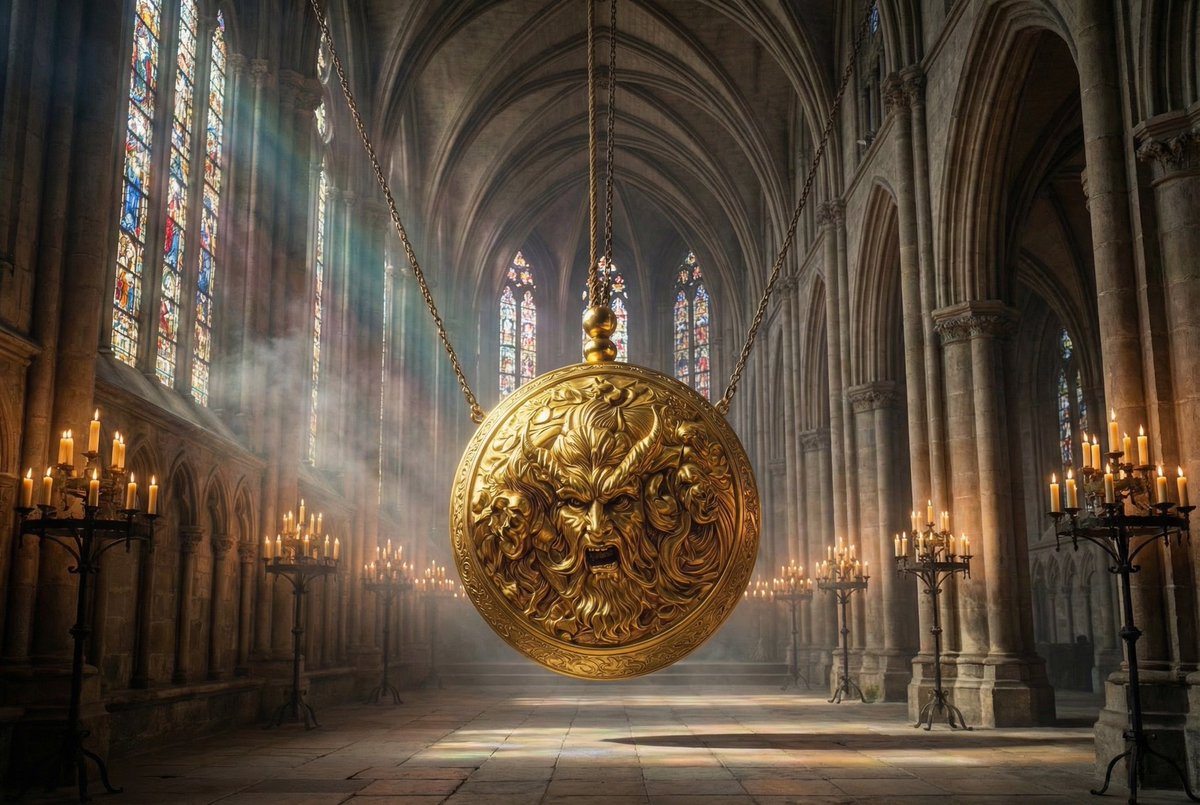
Long before satellites or gyroscopes, Foucault's 1851 pendulum offered elegant proof of Earth's rotation through simple observation. In an era of constant motion, it reminds us: what seems to shift may reveal unchanging truths below. Markets, too, reward seeing the cycle beyond the moment.
$PENDULUM on Solana.
CA: 4kKa5c1RSvE6eHc3YvxgNqqgsyg39cwguXkjTPYXpump
#ScienceHistory #CryptoCycles"

Let’s talk Science series : Tesla vs. Edison: The Battle of the Innovators
The rivalry between Nikola Tesla and Thomas Edison is a defining chapter in the history of technology. Their competition, most notably the "War of the Currents," was not just about business, but about fundamental differences in their approaches to innovation. This report explores their distinct styles and contributions to determine how they shaped the modern world.
Thomas Edison: The Pragmatist
Thomas Edison, known as the "Wizard of Menlo Park," was the embodiment of practical, commercially viable innovation. His approach was characterized by:
• Iterative Experimentation: Edison famously said, "Genius is one percent inspiration and ninety-nine percent perspiration." He and his team would test thousands of materials before finding the right filament for the light bulb.
• The "Invention Factory": He pioneered the modern industrial research lab at Menlo Park, where teams of specialists worked on multiple projects simultaneously, systematizing the process of invention.
• Focus on Marketability: Edison's inventions were designed to be sold. The phonograph, the motion picture camera, and the Direct Current (DC) power system were all developed with a clear commercial application in mind. His company, General Electric, became a corporate giant.
Nikola Tesla: The Visionary
Nikola Tesla was a brilliant theoretician whose ideas often outpaced the technology of his time. His approach was fundamentally different:
• Mental Visualization: Tesla could visualize complex machinery in his mind, test it, and refine it before ever committing it to paper or building a prototype.
• Breakthrough Concepts: His inventions were often revolutionary leaps rather than iterative improvements. The Alternating Current (AC) induction motor, the Tesla coil, and his early work in radio and wireless transmission were ground-breaking.
• Focus on Future Potential: Tesla was driven by a desire to solve humanity's greatest challenges, such as providing free energy. This visionary streak sometimes came at the expense of immediate commercial success, and many of his ambitious projects, like the Wardenclyffe Tower, remained unfinished.
Conclusion: The Verdict
Declaring a "greater" innovator is a false choice. Thomas Edison and Nikola Tesla represent two essential and complementary archetypes of innovation.
• Edison was the master of Bringing It to Life. He built the systems, companies, and practical applications that made electricity a part of everyday life. He created the foundation of the modern industrial world.
• Tesla was the master of Dreaming It Up. He provided the theoretical breakthroughs and the superior AC system that could scale to power entire nations. He powered the future that Edison's systems helped build.
Without Edison's practical drive, Tesla's ideas might have remained on the drawing board. Without Tesla's visionary genius, Edison's world would have been limited by the short range of DC power. Together, their combined legacy is the electrified world we live in today.
#Tesla #Edison #Innovation #ScienceHistory #TechWars


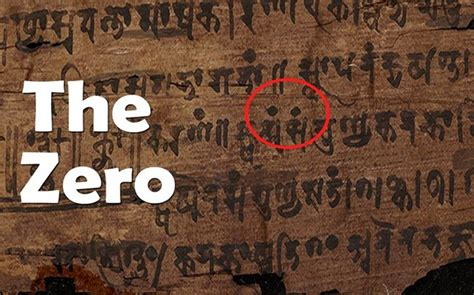
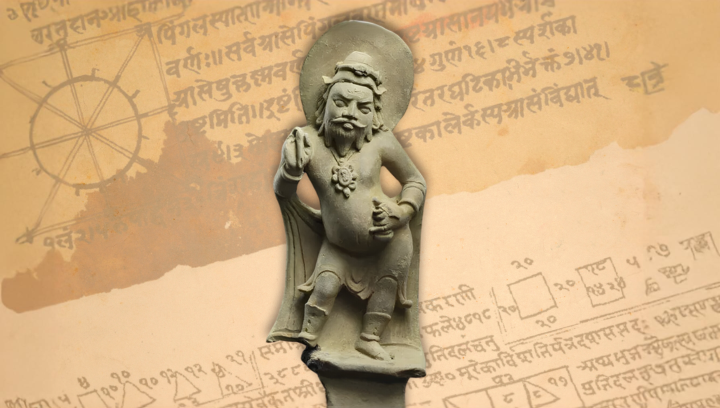
Origin Of Thoughts: The World’s First Decimal Floating-Point System.
We think floating-point numbers belong to the age of computers.
Except… ancient Indian 🇮🇳 mathematicians were already using them 1,500+ years ago.
India invented the decimal positional number system , not just digits but scalable precision:
Evidence
• Aryabhata (499 CE) used decimal place values + fractions to handle massive astronomical numbers
• Brahmagupta (628 CE) defined arithmetic with zero and negative values
• Bhāskara II (12th century) used decimal subdivisions for iterative precision
• Sulba Sūtras scale patterns for squareroot approximations (floating magnitude)
Why it matters:
This is the same logic behind digital floats today:
value = digit × base^position
(× as many precision places as needed)
Modern computing didn’t invent the idea , it digitized what India discovered.
From coding decimals to tracking planets , it all began with Indian floating-point thinking long before silicon chips.
#OriginOfThoughts
#HistoryOfMath #ScienceHistory #Computing

Origin Of Thoughts: Mathematical Music, How Indian Ragas Encode Combinatorics.
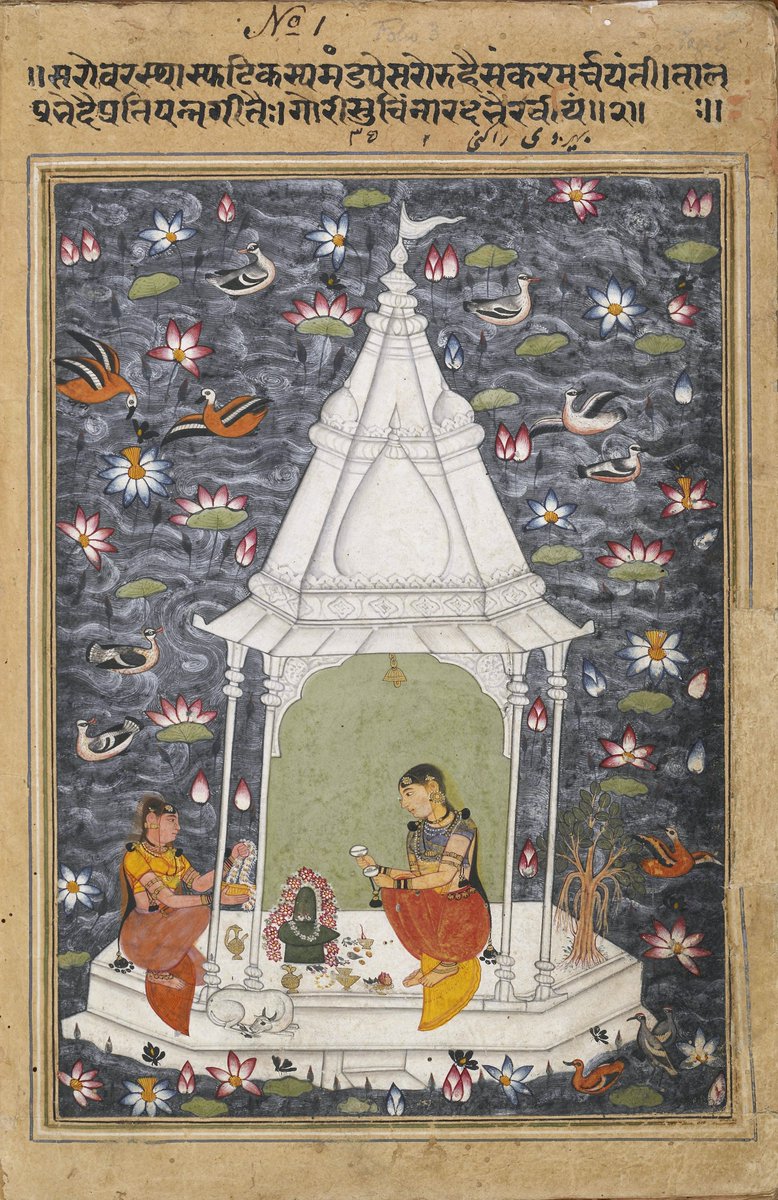
Indian classical music is math in sound. The system of Melakarta (72 parent scales) and the way ragas are generated uses strict combinatorics , fixed notes + permutations of the remaining swaras , producing a formally enumerable music space.
This idea sits on a much older mathematical foundation: Pingala’s combinatorics (Meru-prastāra) and techniques for enumerating patterns (the ancestor of Pascal’s triangle and binary counting) were applied centuries later to musical meter and scale design.
Put simply: ragas = rules + combinations → an algorithmic language of music. Modern researchers show the same logical structure underpins raga classification and generation.
Music, math, and algorithms composed together long before computers.
#OriginOfThoughts #Ragas #IndianMusic #Melakarta


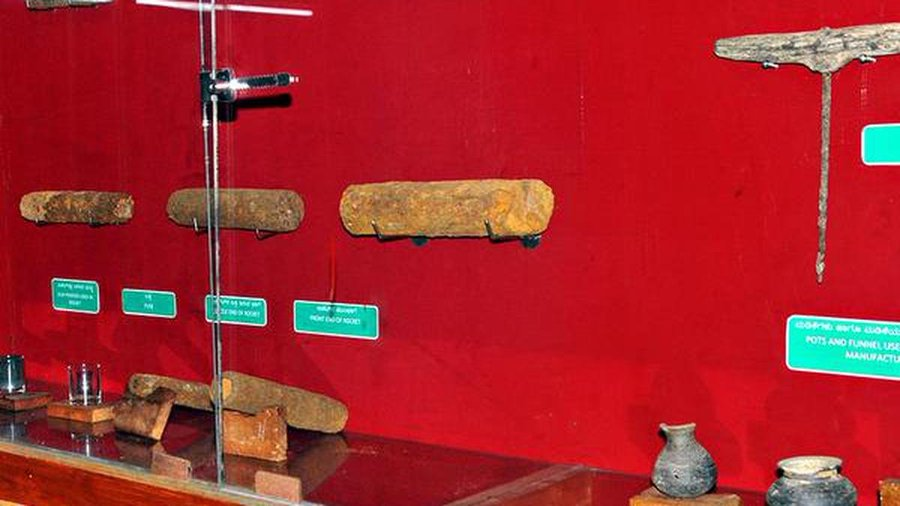
Origin of Thoughts : Tipu Sultan’s Rockets: The World’s First Iron-Cased Missiles.
Most people think military rockets began in 20th-century warfare.
But more than 225 years ago, Mysore 🇮🇳 had already built the world’s first iron-cased rockets , decades before Europe.
Tipu Sultan and his father, Hyder Ali, transformed earlier fire-arrows into precision iron rockets capable of traveling far longer distances and delivering explosive payloads with terrifying accuracy.
What made them revolutionary?
- First use of iron tubes to hold burning powder
- Increased pressure → increased range (up to 2 km)
- Stabilizing bamboo fins for better trajectory
- Mass deployment in organized rocket brigades
- Over 5,000 rockets used in a single battle
- British soldiers documented them in fear and awe
The impact was so huge that, after defeating Mysore in 1799, the British sent captured rockets to London.
These directly inspired Sir William Congreve, whose “Congreve rockets” became the backbone of early European rocketry.
History textbooks rarely say it clearly:
Modern rocketry had an Indian chapter long before the West studied propulsion.
Tipu’s rockets changed world warfare , and the world copied them.
#OriginOfThoughts 🧠
#IndianHistory #TipuSultan #ScienceHistory

Origin of Thoughts : The World’s First Binary Code (Not From 20th-Century Computers)
When we think of binary code, we picture modern computers , 0s and 1s powering everything from programming to AI.
But the first known binary system didn’t come from Silicon Valley.
It came from ancient India 🇮🇳, over 2,000 years ago.
In the Chandaḥśāstra, mathematician Pingala described poetic meters using sequences of laghu (light) and guru (heavy) syllables.
What looks poetic at first is actually a binary encoding system:
- Laghu = 0
- Guru = 1
- Combinations mapped like binary strings
- Patterns arranged in what we now call Pascal’s Triangle (Pingala’s Meru-Prastāra)
- Used recursion and combinatorics identical to computer logic
Modern scholars note that Pingala’s structure mirrors binary numbers, recursion trees, and combinatorial expansions, all fundamental to computing.
Long before computers existed, India had created the world’s first rule-based binary framework , not for machines, but for poetry.
And that’s exactly why it’s genius.
#OriginOfThoughts
#Binary #Pingala #AncientIndia #ComputerScience #HistoryOfMath



“The Stranger in Cambridge: A 13th-Century Mystery Unveiled by DNA”
The Genetic and Historical Identity of ATP_PSN_439
1. A Woman from the East in Medieval Cambridge
In the heart of medieval Cambridge, at the Hospital of St. John the Evangelist, archaeologists uncovered the remains of a woman who lived in the 12th–13th century AD (around 1180–1250). This was a charitable Augustinian institution caring for the poor and infirm. Her burial here suggests she was not part of the elite, but her genetic story is astonishing—her roots were thousands of miles away.
2. Why She Matters
She was part of a major study on medieval Cambridgeshire’s genetic history. Among 275 individuals analyzed, she stood out as a clear genetic outlier, revealing direct evidence of long-distance migration to England during the High Middle Ages.
3. Her Genetic Identity
Her DNA reveals a tapestry of Near Eastern ancestry, with strong links to ancient Levantine and Arabian populations.
Dominant components: Canaanite, Amorite, Phoenician, plus influences from Umayyad, Ancient Egyptian, Ottoman, Safavid, and Aramaean roots.
Minor traces: Hurrian, Makurian, Carian, Kushan, Hun, Seleucid, Alan, Parthian, and others.
Maternal Line
She carried the rare mitochondrial haplogroup U4b1a1a1, common in the Near East, extremely rare in Britain.
Closest Genetic Matches
Modern populations: Jordanian, Syrian, Yemeni, Palestinian, Iraqi, Saudi, Lebanese, Samaritan.
Ancient populations: Ashkelon Philistines (1150 BC), Phoenician Sicilians (805 BC), and Bronze Age Anatolians (2100 BC).
Admixture models suggest a strong mix of Philistine + Phoenician ancestry.
4. Her Story in Context
She likely arrived in England as a first or second-generation migrant from the Near East. Her lifetime coincides with the era of the Crusades, trade networks, and pilgrimages, all of which connected Europe with the Levant.
Why was she in Cambridge? We don’t know. She could have been:
A pilgrim on the road to Canterbury or Santiago.
A merchant or artisan following trade routes.
Someone linked to diplomatic or military networks.
Her burial among the poor tells us she didn’t die wealthy or powerful. But her life was extraordinary—an ordinary woman bridging two worlds.
5. Why It Matters
Her DNA is proof that medieval England wasn’t isolated. It was connected—through trade, faith, and human movement—to the Mediterranean and the Middle East. One woman’s story rewrites what we thought we knew about identity and mobility in the Middle Ages.
#MedievalHistory #Archaeogenetics #DNA #History #Cambridge #MiddleAges #Crusades #AncientDNA #Levant #Genetics #Migration #Anthropology #NearEast #HumanStory #HistoryMatters #ScienceHistory

🕰️ On this day in history:
July 5, 1687 — Isaac Newton published Principia Mathematica, laying the foundations of modern physics.
#History #OnThisDay #ScienceHistory

@newton_xyz
🌟 **Sir Isaac Newton: The Genius Who Shaped Science** 🌟
1/ Let’s talk about Isaac Newton (1643–1727), the mathematician, physicist, and astronomer who laid the foundation for modern science. His work revolutionized our understanding of the universe! #ScienceHistory
2/ **Laws of Motion**: Newton’s three laws are the cornerstone of classical mechanics. They explain how objects move under the influence of forces:
- 1st: Objects stay at rest or in motion unless acted upon.
- 2nd: Force = mass × acceleration (F=ma).
- 3rd: Every action has an equal and opposite reaction. 🚀
3/ **Universal Gravitation**: Newton’s apple moment led to his law of universal gravitation. He realized gravity governs both falling objects on Earth and the orbits of planets. Mind-blowing for the 17th century! 🍎🌍
4/ **Optics**: Newton showed that white light is made of colors, using prisms to split and recombine light. His work on optics laid the groundwork for modern physics and even influenced how we study light today. 🌈
5/ **Calculus**: Newton (alongside Leibniz) developed calculus, giving us tools to solve problems in physics, engineering, and more. From derivatives to integrals, his math still powers science today. 📐
6/ **Fun Fact**: Newton was also a bit quirky! He once stuck a needle in his eye socket to study optics (don’t try this at home) and had a wild side gig as Warden of the Royal Mint, chasing counterfeiters. 🕵️♂️
7/ Newton’s work, like his masterpiece *Mathematical Principles of Natural Philosophy* (Philosophiæ Naturalis Principia Mathematica), unified earthly and cosmic phenomena. He showed us the universe follows elegant, predictable laws. 📚
8/ Despite his brilliance, Newton was human—sometimes prickly and embroiled in disputes (like with Leibniz over calculus). Yet his legacy endures in every rocket launch, bridge built, and spectrum analyzed. #STEM

#OnThisDay, June 10, 1836
André-Marie Ampère, one of the founding fathers of electromagnetism, the French physicist and mathematician, passed away in Marseille, France.
His legacy flows—quite literally—through every electric current. ⚡
#ScienceHistory #Ampere


⚛️Marie Curie — the ever-glowing mother of radiation — now has her story live on The Chronicles of Humanity.
She illuminated the invisible.
Her brilliance still glows. Marie Curie’s story is now live → https://t.co/vogONhj3zv
#MarieCurie #WomenInScience #HistoryOfScience #HistoryBlog #HistoryLovers #WomenInSTEM #WomenOfHistory #ScienceHistory


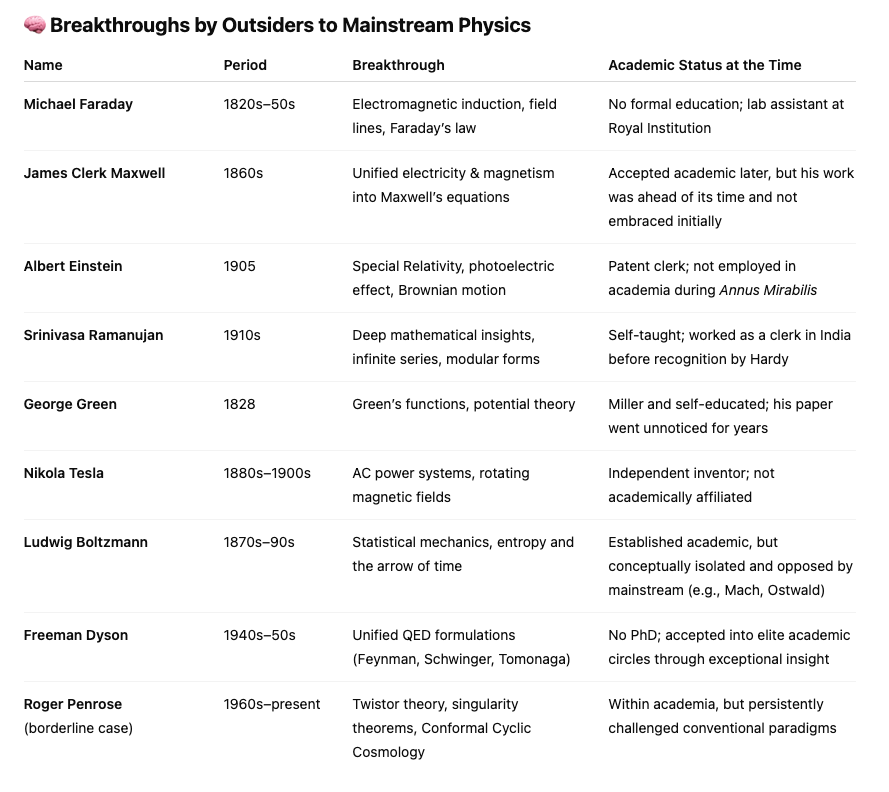
Faraday, Maxwell, Einstein, Ramanujan, Green, Tesla, Boltzmann, Dyson, Penrose...
None followed the standard path.
Some were ignored, doubted, dismissed — until they couldn’t be.
They weren’t wrong.
They were just early.
In science, dismissal without understanding isn’t skepticism. It’s ignorance.
#Physics #ScienceHistory #WaveTheory #ThinkForYourself
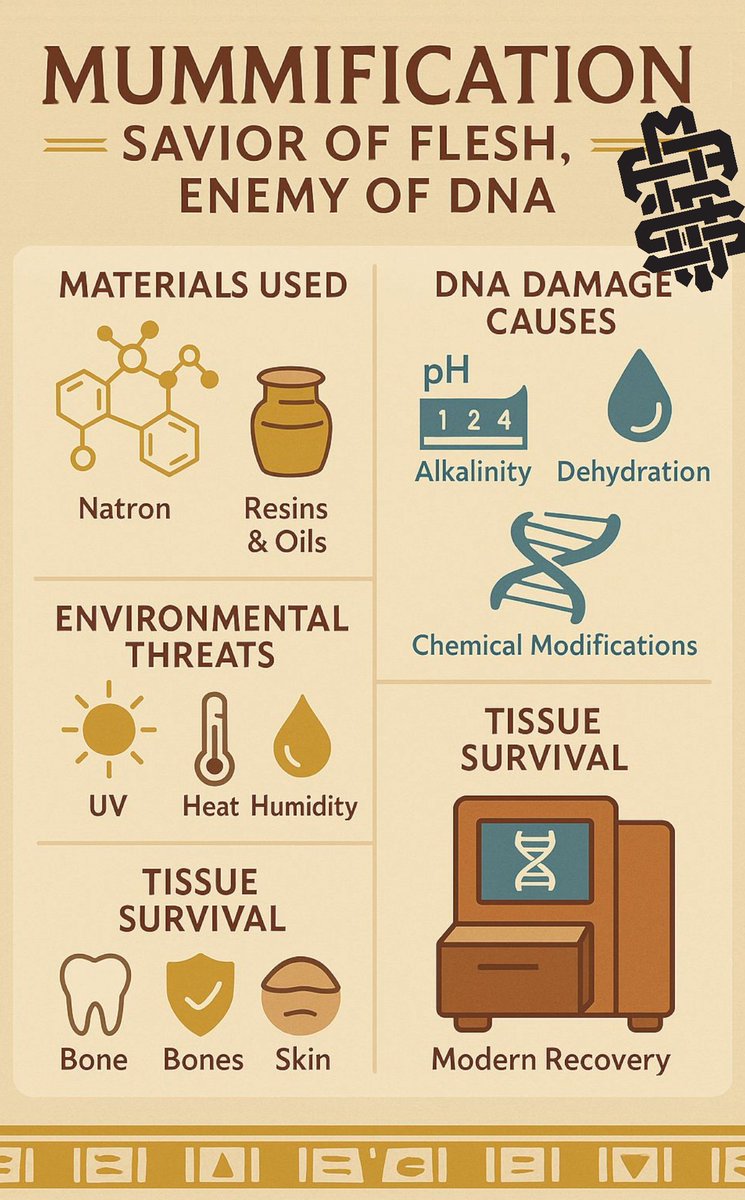
The Hidden Cost of Immortality: How Ancient Egyptian Mummification Affected DNA Preservation
Mummification is one of the greatest achievements of ancient Egyptian civilization, designed to protect the body for eternity. Yet while the technique preserved external features spectacularly, it created surprisingly hostile conditions for preserving ancient DNA (aDNA).
Let's dive into how the process that kept bodies intact for millennia also complicated genetic research.
Mummification Materials: Friends of Flesh, Foes of DNA
Natron’s Role
Ancient embalmers used natron — a natural salt blend of sodium carbonate, bicarbonate, chloride, and sulfate — to desiccate the body. This dehydration prevented decay but came at a molecular cost.
Effects of Natron:
Alkaline pH Damage: High pH leads to DNA strand breaks and chemical modifications.
Desiccation Impact: Rapid drying damages cell structures, exposing DNA to decay.
Salt Reactions: Further chemical alterations in DNA sequences.
Resins and Oils
Applied to seal the body, these substances may have introduced additional chemicals that hinder DNA stability, though their exact effects are still under investigation.
pH: The Silent DNA Destroyer
The alkaline environment created by natron doesn’t just dry tissues — it accelerates depurination (loss of DNA bases), strand fragmentation, and miscoding lesions, severely degrading genetic material over time.
In contrast, DNA preserved in neutral pH and cooler environments survives far longer with less damage.
Environmental Challenges in Ancient Egypt
Beyond mummification materials, Egypt’s climate posed further threats:
Even with careful mummification, the hot, dry, and sometimes humid environment made DNA survival a long shot.
Best Tissues for DNA Recovery
Bone & Teeth: Natural fortresses for DNA, offering the best chances for retrieval.
Soft Tissue: Highly exposed and chemically damaged, often yielding fragmented or unusable DNA.
Modern Solutions for Ancient Problems
Thanks to advances in next-generation sequencing and strict contamination protocols, scientists are now successfully recovering DNA from even heavily damaged mummies.
However, results often require piecing together highly fragmented sequences using specialized techniques.
While ancient Egyptian mummification achieved its goal of bodily preservation, it unintentionally sabotaged DNA survival.
The combination of alkaline chemicals, high temperatures, and environmental exposure created one of the harshest preservation environments for genetic material.
Still, modern science is unlocking these ancient secrets, offering glimpses into Egypt’s distant genetic past.
#AncientEgypt #Mummification #AncientDNA #Archaeogenetics #HistoryUncovered #DNAResearch #Egyptology #AncientSecrets #ScienceHistory #MummyMysteries

#OMG... Sir Isaac Newton has predicted the apocalypse will occur in 2060....
NEWTON'S APOCALYPSE CODE >>> The Hidden Side of Sir Isaac Newton: Genius, Gravity, and the Apocalypse
When we think of #SirIsaacNewton, we picture one of history’s greatest #geniuses—a man who discovered #gravity, co-invented #calculus, and laid down the #LawsOfMotion that still govern our understanding of the universe.
Celebrated in #ScienceHistory, Newton’s brilliance in #physics is undeniable.
But beneath the surface of this #ScientificMind lies a #Mystery few know about: a #DarkSide obsessed with #Alchemy and #BiblicalProphecy, culminating in a chilling prediction of the #Apocalypse.
Newton wasn’t just a mathematician or physicist; he was a #MysteriousFigure with secrets buried in thousands of #NewtonPapers.
These documents, uncovered long after his death, reveal a man driven by more than just #ScienceAndFaith—they show a #SecretObsession with decoding the #EndTimes.
While the world lauds his work on #UniversalMotion, Newton spent countless hours poring over ancient texts, convinced he could pinpoint a #PropheticVision of humanity’s end.
His calculations led him to a #ShockingPrediction: a new date for the #Apocalypse that defied conventional thought.
This #HiddenSide of Newton blends #GeniusRevealed with #HistoricalSecrets.
His studies in #Alchemy—a mystical pursuit to transform base metals into gold—hint at a mind unafraid to merge #ScienceMeetsMystery.
Meanwhile, his #ForgottenTruths about Biblical codes paint a portrait of a #MindOfAGenius wrestling with the divine.
Far from the polished image of a rational scientist, Newton’s #UnseenSide shows a man haunted by questions of fate and eternity.
What drove this #NewtonLegacy to such extremes?
Was it faith, curiosity, or something darker? His #HistoryUnveiled challenges us to rethink the line between brilliance and obsession.
Newton’s #NewtonUncovered story isn’t just about equations—it’s about a man who saw beyond the stars to the end of days.

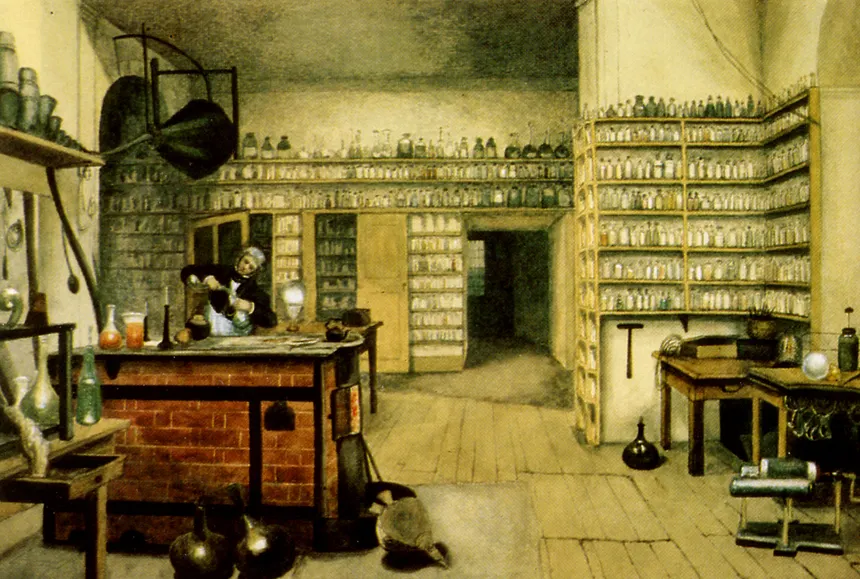
🧲⚡️Faraday and the Cage - From Lightning Bolts to Electric Shields ⚡️🔒
The First Spark
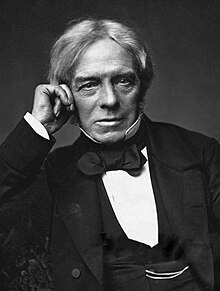
Picture it: 1830s England. The Industrial Revolution is humming, steam engines are chugging, and a self-taught genius named Michael Faraday is tinkering with the invisible forces of nature. Born to a blacksmith in 1791, Faraday’s no aristocrat—he’s a bookbinder’s apprentice turned scientist, obsessed with electricity after attending lectures by chemist Humphry Davy. By 1836, he’s ready to unveil a game-changer: the Faraday Cage, a simple metal box that could tame wild electric currents. This wasn’t just a lab trick—it was a shield against the chaos of the universe.
What Went Down
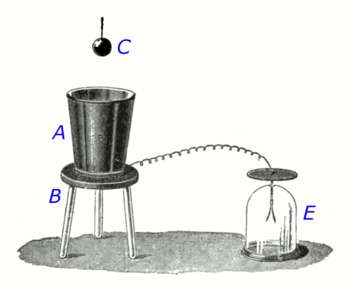
Faraday had been playing with magnets and coils, figuring out how electricity and magnetism dance together (hello, electromagnetic induction!). But in 1836, he takes it further. He builds a 12-foot wooden cube, wraps it in tin foil, and hooks it up to a high-voltage generator. Then, in a move straight out of a mad scientist playbook, he steps inside with an electroscope—a device to detect electric charge. The result? Nothing. Zilch. Outside, sparks fly and currents rage, but inside? Dead calm. Faraday proves that a conductive shell can block electric fields, redistributing charges along its surface. It’s not magic—it’s physics, and it’s brilliant.
Why It Matters
Faraday’s Cage didn’t just sit in a lab collecting dust—it rewrote the rules of safety and tech. His discovery protects everything from airplanes (yep, they’re flying Faraday Cages during lightning strikes) to sensitive electronics in hospitals and military bases. It’s why your car’s a decent hideout in a thunderstorm and why your microwave doesn’t zap you while nuking leftovers—the door’s metal mesh is a Faraday shield. In a world increasingly wired with electricity, Faraday gave us a way to stay safe and keep signals where they belong. Plus, he did it all without a fancy degree—just raw curiosity and grit.
Fun Fact
Faraday once demonstrated his cage by sitting inside it while colleagues fired electric sparks at the outside. When asked if he was scared, he reportedly grinned and said, “I’m more afraid of a bad hypothesis than a little lightning!”
#Faraday #FaradayCage #Electricity #Physics #Innovation #LightningShield #ScienceHistory #ElectricRevolution #NAWTIV


🔔 On this day: 1774🔔
English chemist Joseph Priestley discovered oxygen by isolating it in its gaseous state. His groundbreaking work paved the way for modern chemistry! 🔬✨
#ScienceHistory #OxygenDiscovery


Which ancient civilization laid the groundwork for
#mathematics and #astronomy?
Tracing the journey of knowledge through time! 🌌🔬 #ScienceHistoryPoll #historyinframes

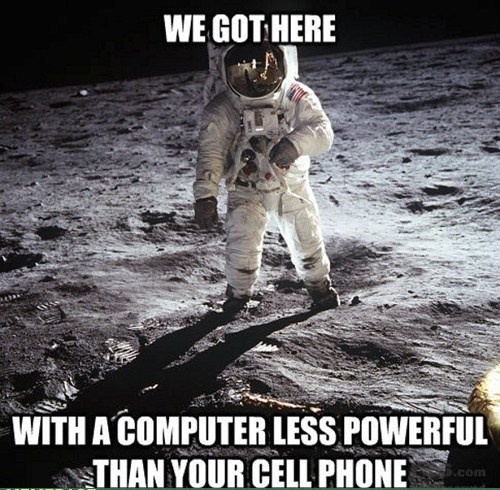
"🚀 Amazing Science Fact! 🌟 NASA's first mission computer during the Apollo missions in the 1960s was less powerful than today's smartphones! 📱🚀 #ScienceHistory #SpaceExploration #ApolloMissions"
Last Seen Hashtags on Sotwe
Most Popular Users

Elon Musk 
@elonmusk
239.8M followers

Barack Obama
@barackobama
118.6M followers

Cristiano Ronaldo
@cristiano
114.3M followers

Donald J. Trump
@realdonaldtrump
111.7M followers

Narendra Modi
@narendramodi
106.9M followers

Rihanna
@rihanna
98.6M followers

NASA
@nasa
92.1M followers

Justin Bieber
@justinbieber
91.7M followers

KATY PERRY
@katyperry
89.9M followers

Taylor Swift
@taylorswift13
83.9M followers

Lady Gaga
@ladygaga
75.4M followers

Virat Kohli
@imvkohli
73.3M followers

Kim Kardashian
@kimkardashian
70.8M followers

YouTube
@youtube
68.6M followers

Neymar Jr
@neymarjr
66.3M followers

Bill Gates
@billgates
65.1M followers

Selena Gomez
@selenagomez
63M followers

The Ellen Show
@theellenshow
62.1M followers

CNN
@cnn
61.7M followers

X
@x
60.6M followers