

Top Tweets for #ScienceWriting

On the rufous hornero, for BBC Wildlife Magazine. https://t.co/duTwfVhu7L
#ornithology #argentina #birds #birding #sciencenews #sciencewriting

Special thanks to @BBCPallab and the BBC team for their work with Adrian, to his parents and Great Western Academy for their support.
@RogerHighfield @obrientweet
#ScienceWriting #ScienceJournalism #YoungWriters
From competition entry to the BBC! 🎉
Congratulations to Adrian Dredge, 16, from Great Western Academy, our Young Science Writer Award 2026 winner. His essay on AI bias has been adapted into a @BBCScienceNews article.
https://t.co/YGx19gxwkv
#ScienceWriting #AI

Join the amazing PET volunteers
BioNews is primarily written by volunteer writers like Rachel Siden, together they help to make the weekly publishing of BioNews possible.
Find out more:
https://t.co/JCB6aEJoLh
#fertility #genomics #ethics #stemcells #sciencewriting #volunteering

Father Muller Student Wins International Science Writing Competition
#MangaluruNews #FatherMullerCollege #ScienceWriting #StudentAchievement #NewsKarnataka
https://t.co/IUD2k5u9xt
SJEC Invites Schools and PU Colleges to Participate in Jnana Sethu 2026 – “Science for Peace”
#MangaluruNews #FatherMullerCollege #ScienceWriting #StudentAchievement #NewsKarnataka
https://t.co/LQyzsiZfYg

This #sciencewriting #article explores #organoids and them remaining functional when #implanted into #mousebrains.
What distinguishes an organoid from a standard cell culture in a Petri dish? And how does an organoid differ from a real organ? To be #classified as an organoid, the structure must be #threedimensional and composed of various #celltypes that #communicate with one another. The #tissue must utilize specific cell-to-cell communication pathways that correspond to the function of the #organ it replicates.
How are organoids produced? In the case of human organoids, they are derived from human cells obtained from donors. These cells are subsequently reprogrammed into a state of #pluripotency. Because they grow in non-adherent vessels, they cannot arrange themselves two-dimensionally along the vessel walls; instead, they are forced to connect with one another in three dimensions. Organoids lack blood vessels. To ensure that all cells receive sufficient #nutrients and #oxygen, the organoids must be kept small and kept in constant motion; this ensures a consistent supply to individual cells via the diffusion of nutrients and oxygen through the tissue.
To determine which type of organoid develops from the stem cells, the cells are exposed to #biochemicalconditions that block all developmental pathways other than that of the desired organ.
#Brainorganoids derived from human stem cells are of particular interest to the scientific community because these "#minibrains" are highly sophisticated structures characterized by complex #neurologicalconnections. Human brain organoids are capable of #learning and #solvingtasks. The field known as #brainorganoidcomputing (often referred to as #biocomputing or #organoidintelligence) integrates #biology, #electronics, and #computerscience. For example, researchers have already trained flat 2D networks of brain cells (#DishBrain), as well as newer #3DBrainoware systems, to solve simple #tasks. The 2D networks were able to dynamically adjust the movements of the paddle in the #videogame #Pong using electrical feedback, while the 3D Bainoware systems (organoids) solved more complex #mathematical and processing tasks. While the concept of biocomputing may sound futuristic, it has actually reached a remarkably advanced stage of development.
Are human brain organoids merely research models, useful at best for biocomputing, or are they also suitable for transplantation and capable of integrating with a living brain to perform specific tasks within it?
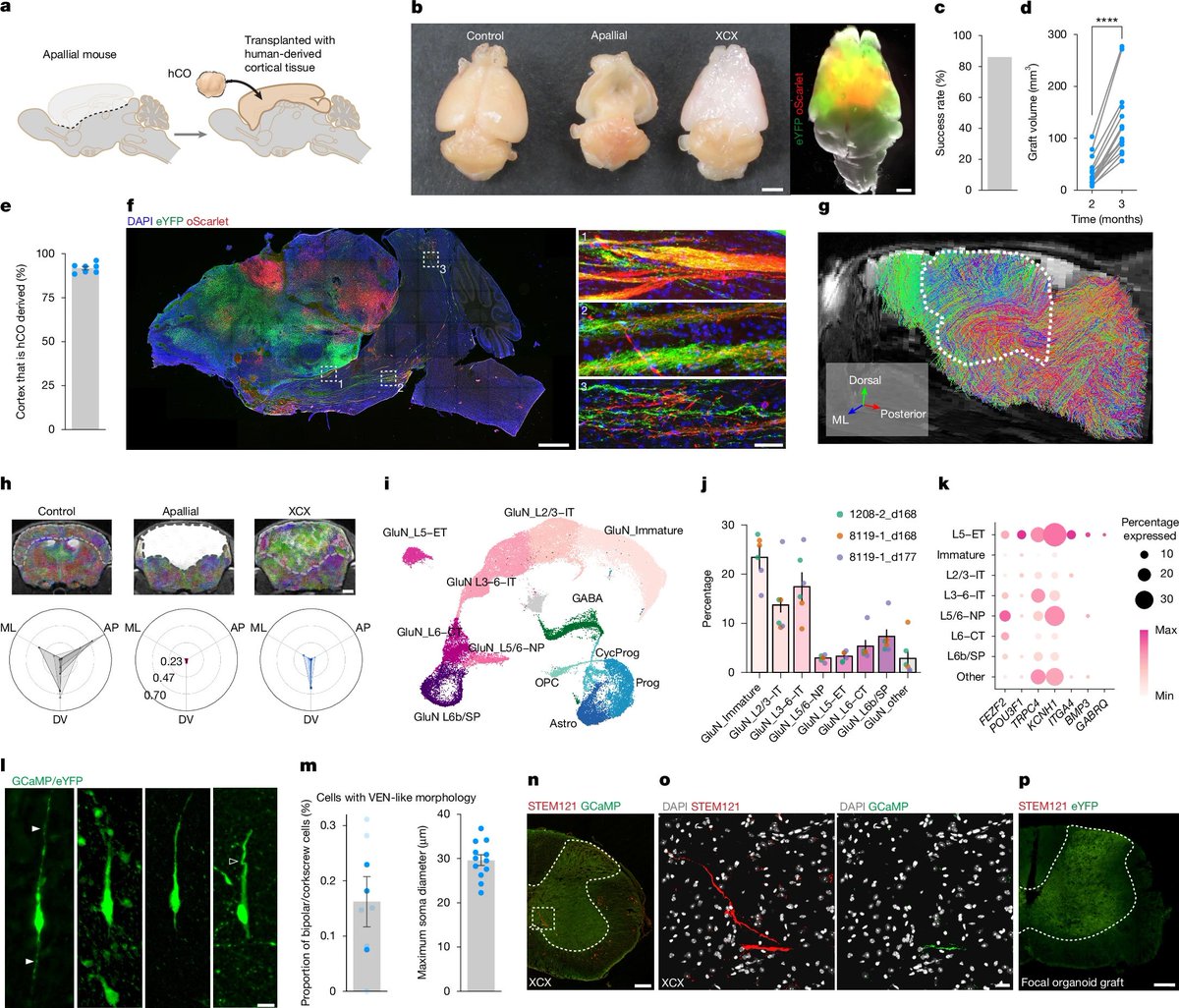
K. Kaganovsky et al. (2026) addressed this very question by transplanting sections of a #humanbrainorganoid into the brains of #mice that had previously undergone the removal of corresponding brain regions. The experiment was successful: neurons from the human organoid graft connected with the mouse brain's nerve cells and assumed functional roles, whereby the transplant became #synapticallyintegrated with the mouse's #sensorynetworks.The #study also raises #ethicalquestions regarding future boundaries in the creation of #humananimalhybrids.
© #StefanFWirth, September 2026, Berlin
Please support my science writing: ko-fi 👇 link in my first comment
Reference:
K. Kaganovsky et al. (2026):
DOI: 10.1038/s41586-026-11032-2 👇 link in my first comment
#Illustrations:
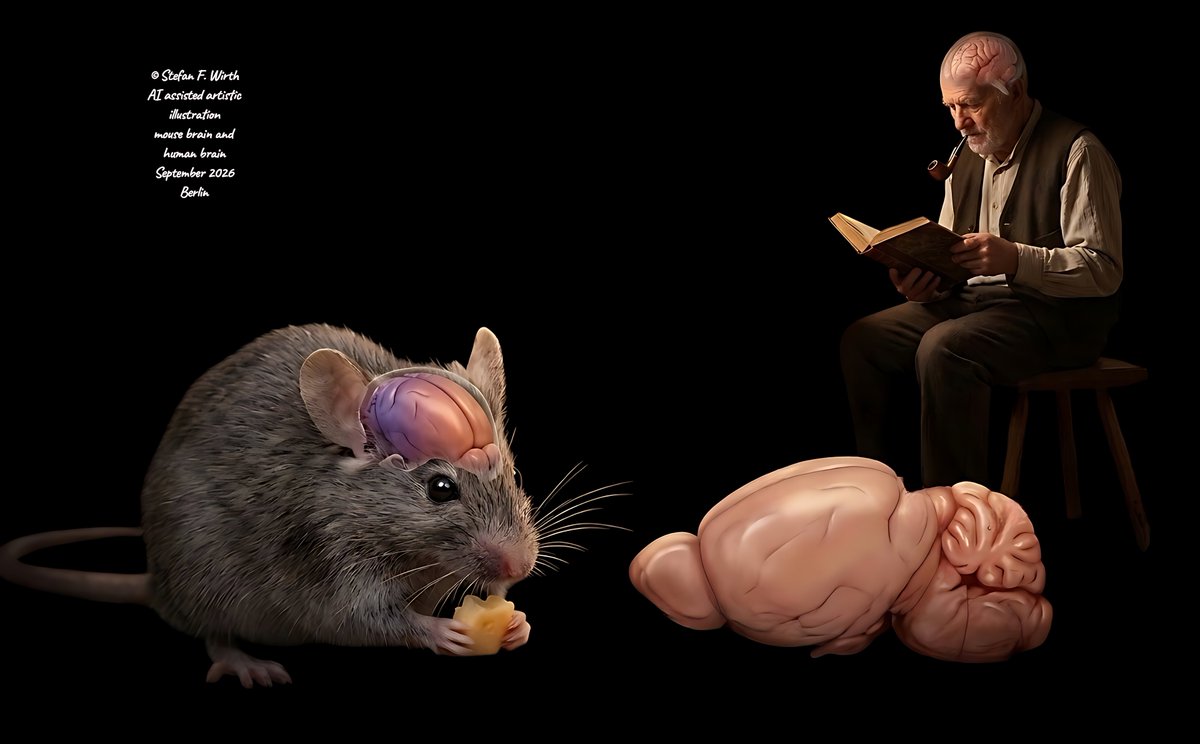
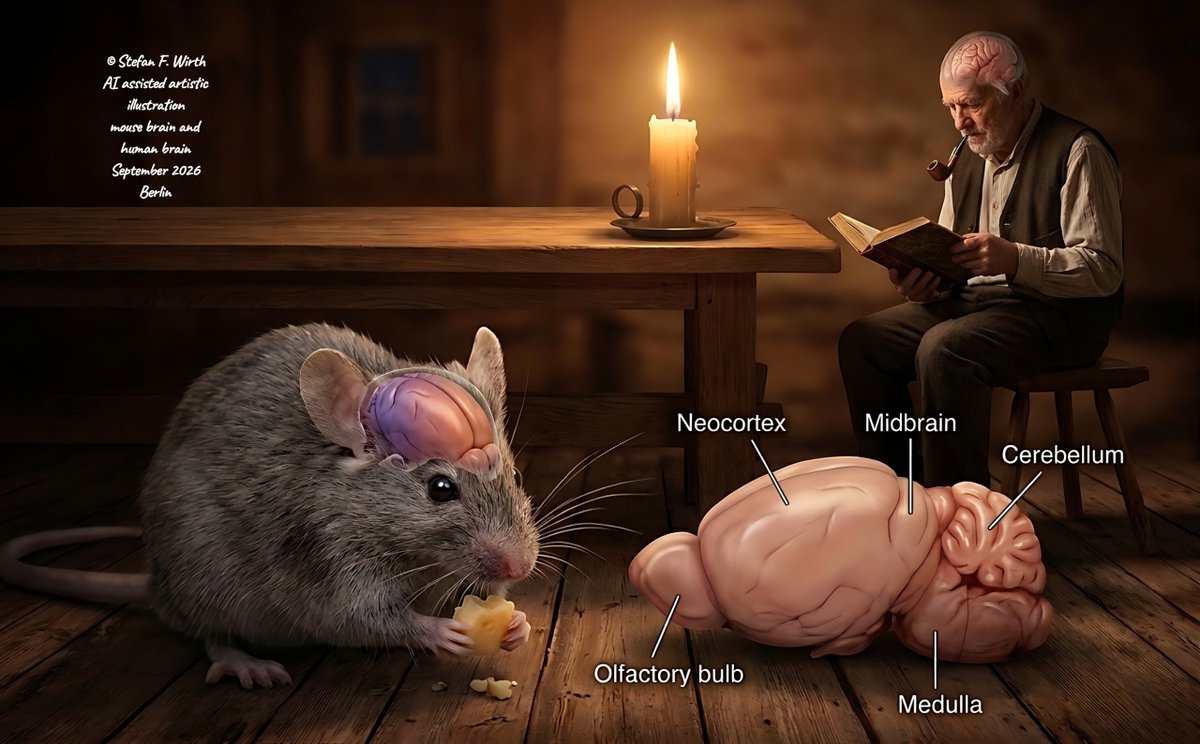
© Stefan F. Wirth; AI-assisted illustrations based on my hand-drawn sketches, manually edited; September 2026, Berlin.
1)–3) Artistic illustration of a house mouse and a human with their brains; morphology of an isolated mouse brain.
#Figure:
Transplantation of human #corticalorganoids into the #apallialmouse. d, Increase in graft volume from 2 to 3 months post-transplantation. n = 14 mice; 8119-1 and 0524-1 cell lines; each dot represents a single mouse and each line connects the same mouse across timepoints).
by authors K. Kaganovsky et al. (2026), licensed under creative commons NonCommercial-NoDerivatives 4.0 International License, 👇 link in my first answer


An excellent book by @Martin_A_Nunez is finally available in India.
Looking forward to diving deep into it and reorienting my scientific writing skills by unlearning what I may be doing wrong and seeking to learn how I can do better.
#ScienceCommunication #ScienceWriting


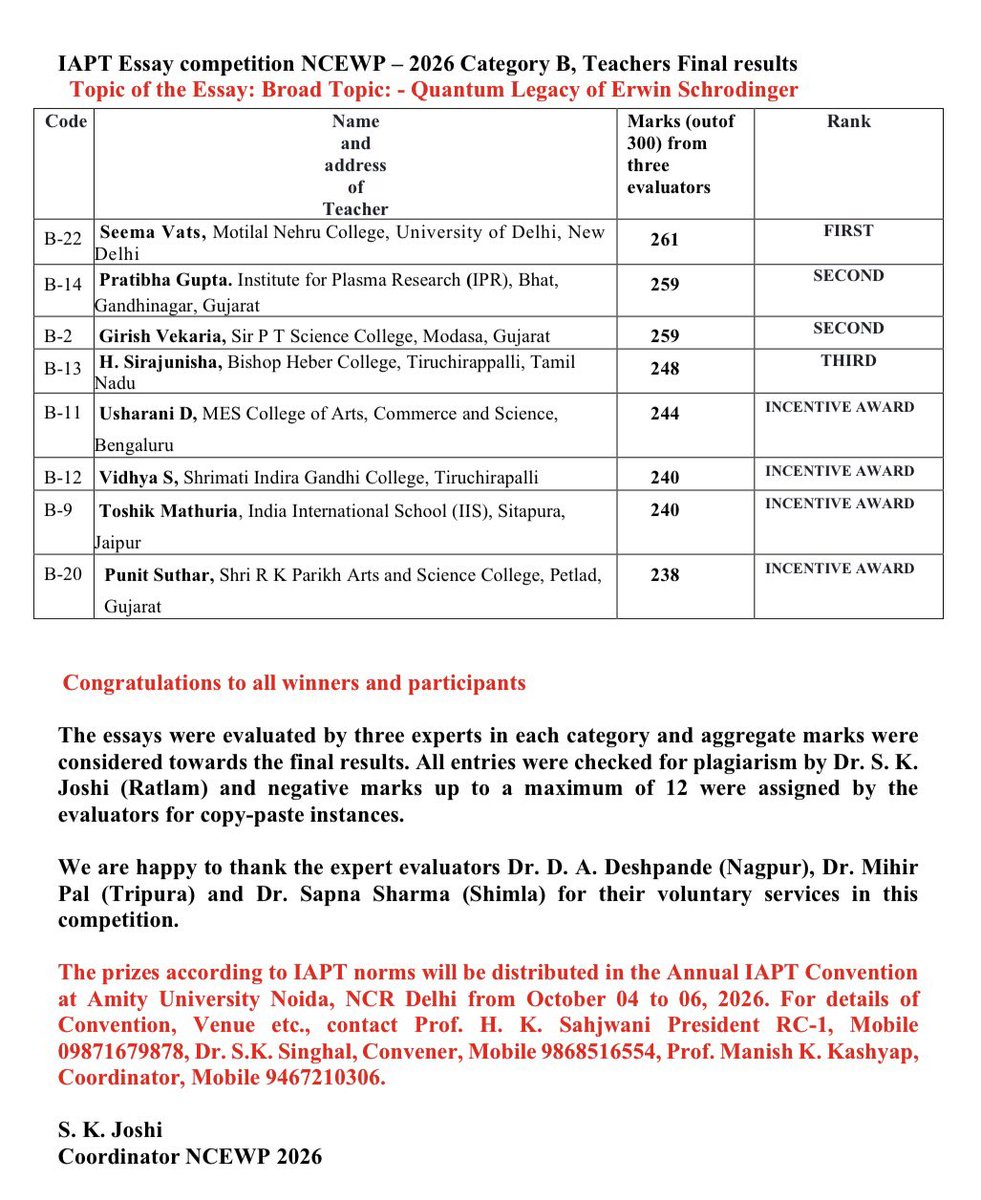
I am thrilled to share that I have been awarded the Second Position in the NCEWP-2026 organized by IAPT. I extend my deepest gratitude to IAPT organizing such a brilliant platform that encourages #ScienceWriting among #PhysicsTeachers @Vibha_India @narottamsahoo @dstGujarat
Please watch and like my latest #sciencewriting #article on #YouTube:
https://t.co/A0oRH22vRT
You will find there a wider selection of high-resolution #photos there.
The #TegelerFließ area is located in northern #Berlin and consists of a mosaic of various #ecosystems, some blending seamlessly into one another, including dry #grasslands, #fen #meadows, sun-exposed #slopes featuring #fruittrees from the 1950s, and #wetlands. The latter are formed not only by the Tegeler Fließ #stream itself, which meanders in a largely natural state, but also by sites such as #Lake #Köppchensee, an artificial lake created in an area where peat was formerly extracted.
The entire nature reserve is home to remarkable #biodiversity. #Insects and #birds, in particular, are found in great variety due to the complex #ecologicalconditions. Both the Tegeler Fließ (formed from a #glacial #meltwaterchannel) and the #BarnimPlateau surrounding Lake Köppchensee (a #terminalmoraine) date back to the #Weichselianglaciation.
Many warmth-loving insects can be found here, such as the Italian striped bug Graphosoma italicum, the moth #Timandra #comae, and or the #fly #Prosena #siberita.
© #StefanFWirth, August 2026, Berlin
Please support my freelance science writing: https://t.co/4nN4eRHB6I
Photos:
1) #Landscape along the slopes of the Barnim Plateau
2) Prosena siberita (#Tachinidae)
3) Timandra comae (#Geometridae)
4) #Peartree
© Stefan F. Wirth, August 2026, Berlin


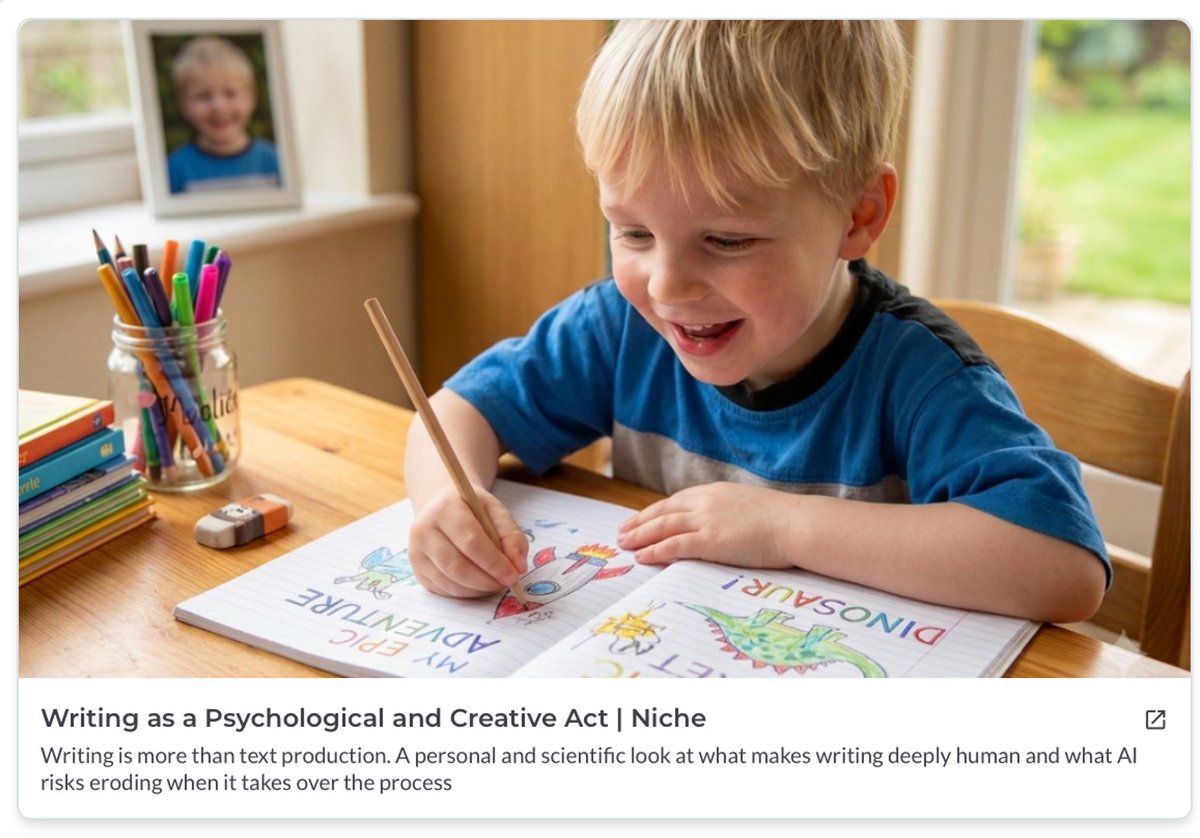
Does AI make us better writers... or just faster? 🤔 The psychology of writing reveals that creativity, critical thinking and insight often emerge because writing is difficult. ✍️🧠
https://t.co/bm5ZV65UH7
#AI #MedicalWriting #ScienceWriting #Creativity #Psychology #LLM
Please read my #sciencewriting article about #ExASPIM #microscope and its #appliedimpact on #science and #neurobiology.
© #StefanFWirth, July 2026, Berlin
Please support my science writing and illustration efforts:
https://t.co/4nN4eRHB6I
#Illustration:
© Stefan F. Wirth, June 2026, #AIassisted artistic illustration, based on my hand-drawn storyboard sketches, manually edited and modified:
#Mousebrain
Fantastic detailed images in this #video (see link) about the distribution of #neurons in a #mousebrain.
The work is based on an #ExASPIM #microscope, developed by the #AllenInstitute, which combines biology, classical light microscopy, and industrial manufacturing #technology to achieve effective #highresolution across a #fieldofview of approximately 10.6 × 8.0 mm². This was achieved through means such as large-format #lenses and efficient #imagesensors. Additionally, the tissue underwent #physicalexpansion by a factor of three to four, pushing the actual resolution beyond the limits imposed by standard light diffraction.
This technology opens up paradigm-shifting possibilities for the #future; the combination of #nanoscaleresolution and massive image volumes enables, for instance, the complete mapping of brains (#connectomics). In the field of comparative #evolutionarybiology, this allows for the reconstruction of #neuronalarchitectures across the animal kingdom, thereby revealing steps in #phylogenetic development.
In #humanmedicine, too, the technology can contribute to a better understanding and earlier detection of conditions such as #neurodegenerativediseases.
© Text: Stefan F. Wirth, June 2026, Berlin
Link and Reference:
Allen Institute, post in X (2026):
https://t.co/st4g49Anu9
Illustration:
© Stefan F. Wirth, June 2026, #AIassisted artistic #illustration, based in my hand-drawn storyboard sketches, manually edited and modified:
external morphology of a mouse brain

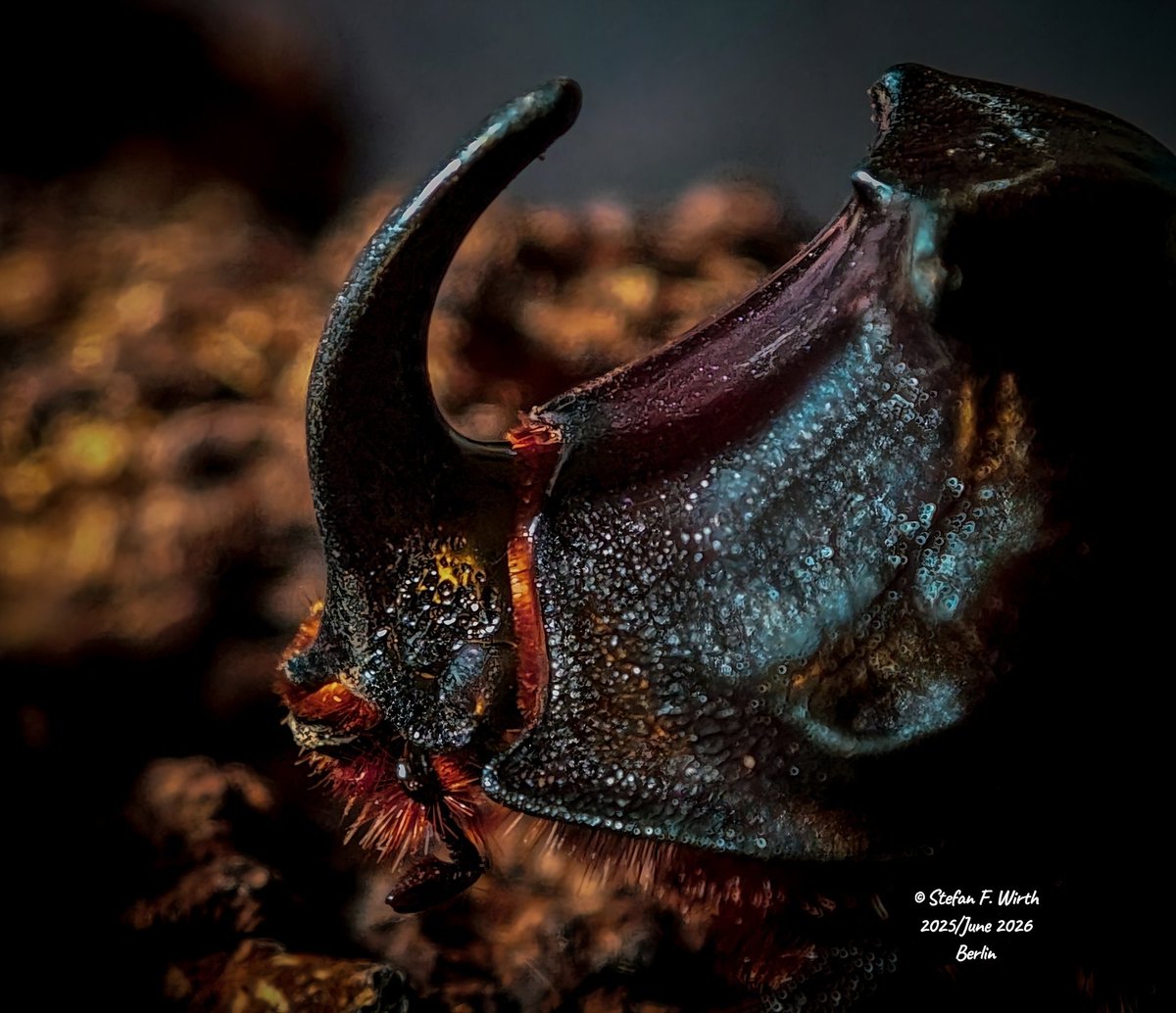
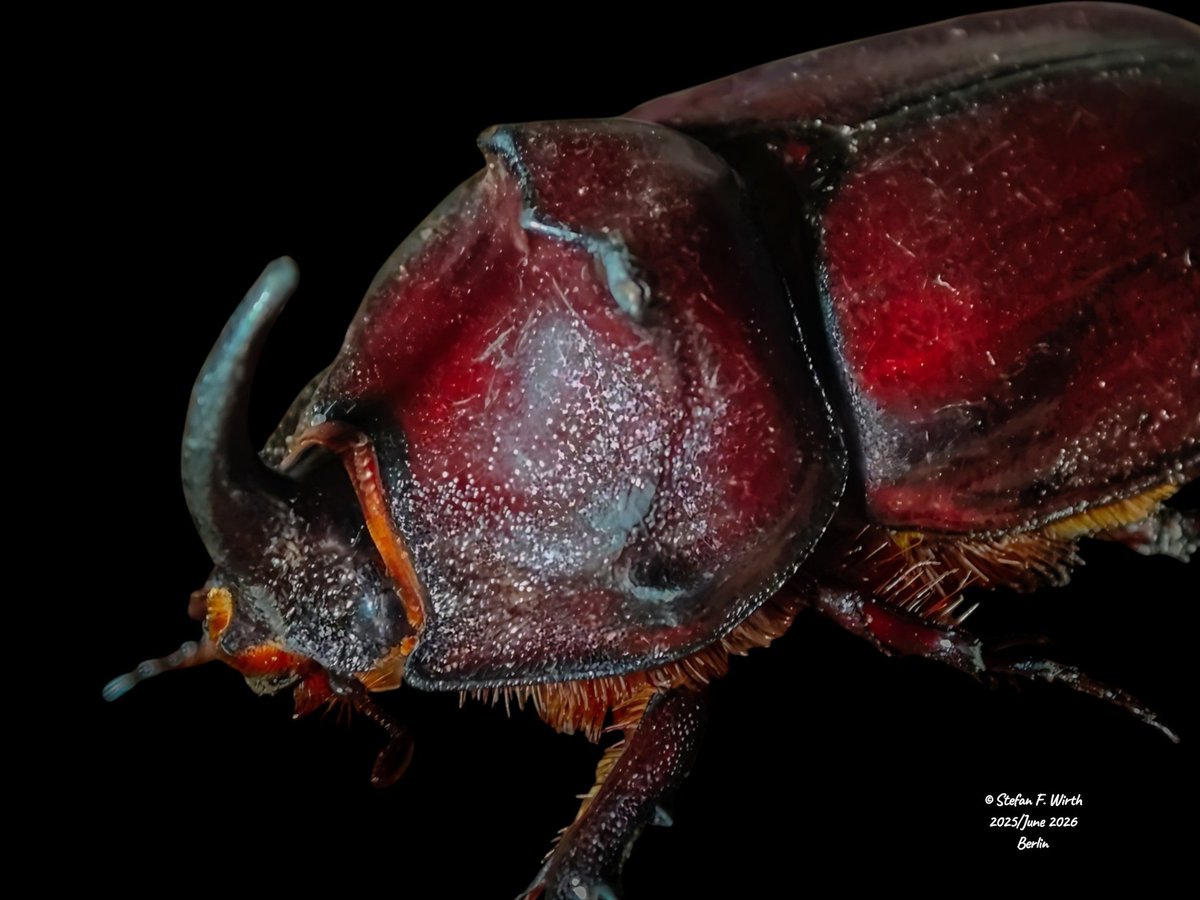
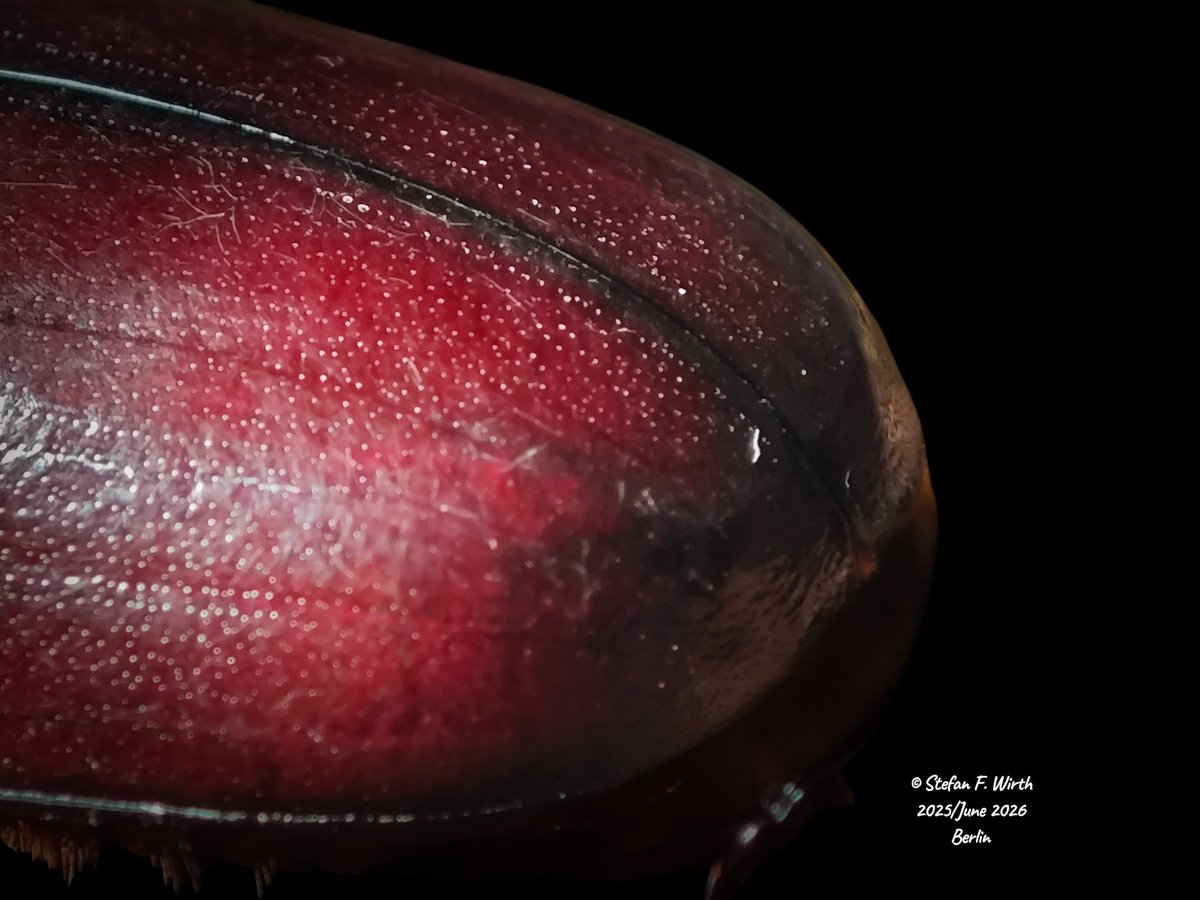
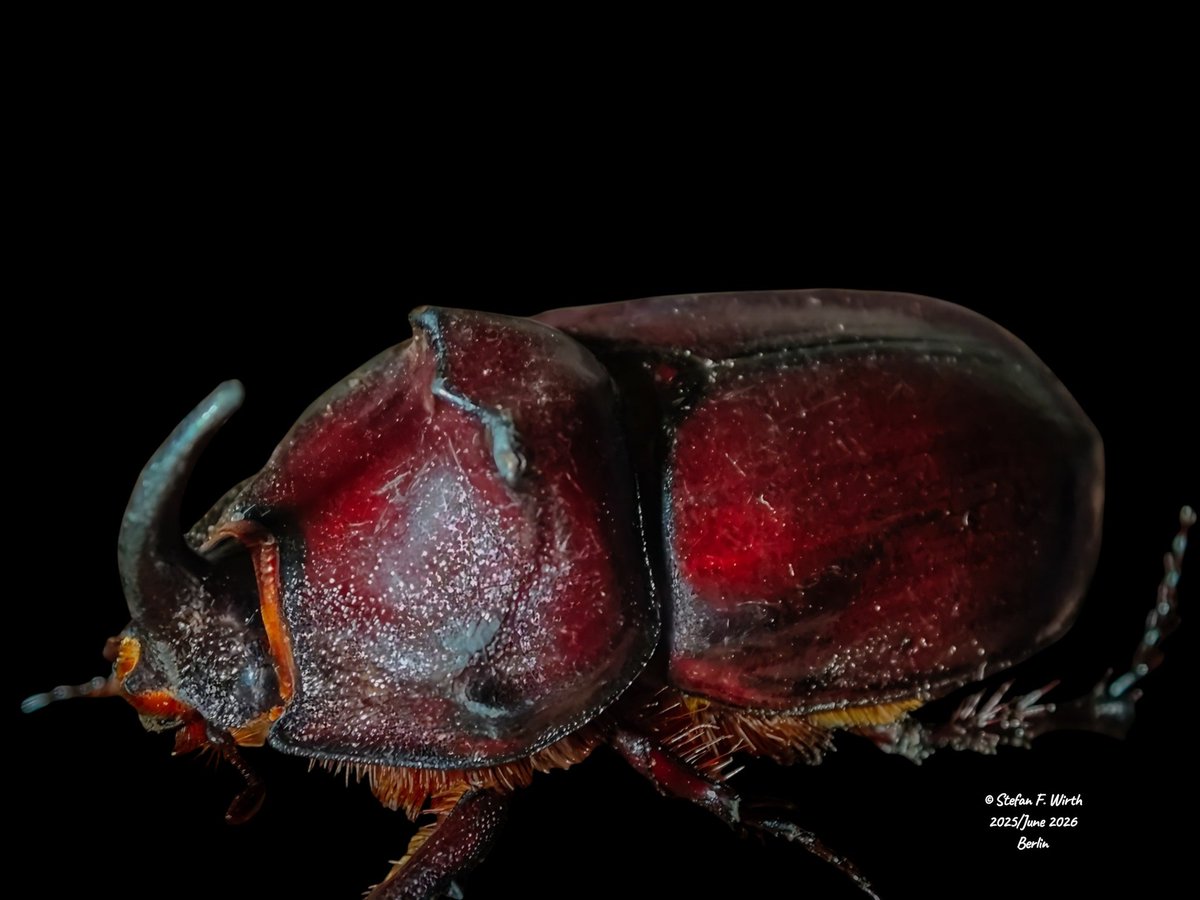
Please watch and like my newest #sciencewriting blog #article about the #biology of the #rhinocerosbeetle on #YouTube, featuring #photos of an adult #male from #Berlin:
https://t.co/Ch1CBTCCHI
This is just a summarization of the mote detailed information in my Youtube-channel
The rhinoceros beetle #Oryctes #nasicornis (#Scarabaeidae) is a large #species that originally had the status of a so called #relictspecies. A relict species is defined as survivor of its lost original habitats. In case of the rhinoceros beetle the original habitat was #woodmold of extended old deciduous trees in European #primevalforests. But O. nasicornis was proving a good degree of #evolutionary #adaptability and managed to survive in #humanmade artificial #sawdust or even suitable #compost heaps. Survival in these habitats means that the beetle's #larvae, being adapted to digest #cellulose, live in decomposing wood #detritus. Due to this habitat, attractive for phoretic organisms, the adult beetle is a suitable carrier for the dispersal (transportation) of mites or nematodes (#phoresy or #phoresis).
© #StefanFWirth, Berlin, June 2026
Please support my science writing, my scientific and my science art activities, as a freelancer, I urgently depend on your support:
https://t.co/4nN4eRHB6I
Photos:
Adult male of the rhinoceros beetle, from Berlin, early summer 2025, photos and video footage edited June 2026.

“Resistance is not rebellion. It is recall.”
I wrote about antimicrobial resistance, bacterial memory, and the philosophy of survival.
“The Memory of Microbes” is now live on Medium.
https://t.co/cdjl4EtIP8
#Microbiology #AMR #ScienceWriting #Evolution
An interesting #sciencewriting text involving #sciencephilosophy and #quantumphysics by O. Lombardi (2026) explores the #worldview that can emerge from the consistent application of quantum physics. The philosophically stimulating idea is that everyday #perceptions of the #world, as well as perceptions of the world as understood and treated by other scientific disciplines, appear much more #unified from this particular #perspective. The division of the world into a single, large whole composed of individual components is then absent. Instead, from a quantum physics perspective, it is essentially conceived as a coherent, #undividedwhole.
This text by Stefan F. Wirth, Berlin, May 2026
Reference:
O. Lombardi (2026): https://t.co/kf7PAGAM8Q
#Cephalopods are related to #snails and #mussels. Yet they are more similar to #vertebrates than one would expect.
The interesting and insightful #sciencewriting article by Liam Drew (2026), which does justice to the #complexity of #cephalopod morphology, focuses on the #brain #anatomy and #neuronfunction of representatives such as the octopus and the cuttlefish.
The unique feature of the cephalopod brain lies in its #size relative to body proportions and its complexity. But the brain of an octopus is impressive not only morphologically, but also functionally. These animals—I emphasize again, relatives of our garden snails—are highly #intelligent, capable of solving complex problems, and are both capable of #learning and generally curious. They can even use simple tools. What seems somehow familiar to us is, in reality, the result of #independent (#convergent) #evolution. Therefore, cephalopods like the octopus are very suitable and interesting subjects of #research. Different research disciplines with varying focuses are approaching the #neuralcapabilities of these animals, a topic the aforementioned author discusses in detail and with much clarity. Key questions arise concerning the selective evolutionary pressures that enabled the emergence of such powerful brains during evolution. However the function and communication of the neurons themselves are also subjects of other research projects.
Since this is an independent evolutionary process in relation to vertebrates, the question naturally arises whether an intelligent animal group with large brains functions according to the same neural, #physiological, and morphological principles. Or, put another way: how profound are the seemingly striking similarities really, again considering that we deal with convergent evolution?
This text: Stefan F Wirth, Berlin, April 2026
Reference:
Liam Drew (2026):
https://t.co/UXSZ6NWpz8
#Illustrations:
© Stefan F. Wirth, Berlin, 2025 - April 2026,
#AI assisted illustrations, no photos, of the common octopus (O. vulgaris), based on my hand sketched storyboards, created via Adobe Firefly and later manually edited via Adobe Lightroom and Photoshop.
1) Common Octopus during #mating
2) Common Octopus interacting with a human diver
3) Common Octopus during swimming from behind
4) Common Octopus, a human #foodsource since #ancienttimes, but biologically not fully understood until today. The illustration shows a scenery in the ancient harbor of Alexandria (#ancient #Egypt)


This #sciencewriting and science communication #article discusses #parasitic #flies that attach themselves to #bats and transform into a #sacklike structure that lives embedded in the #host's skin. A new species description from the #bat #Rhinolophus #stheno will also be presented.
Rhinolophus stheno belongs to a taxon in which the species are distinguished by a strikingly #modified #nose (#Rhinolophidae). The leaf-like structures surrounding the #nostrils serve as a means of #vocalcommunication between the animals.
R. stheno is found in tropical and subtropical #Asia, specifically in #China, Sumatra, Laos, Vietnam, Thailand, Myanmar, and Java. Its head and body length ranges from 44 to 56 mm.
Its #calls are in the 85 to 96.5 kHz range. The female gives birth to a single young in summer, which is carried by its mother for about two months. They are nocturnal and hunt spiders and insects.
Their #habitat consists of #forests with mature trees near #limestonecliffs. There, they stay under rock overhangs.
Like almost all multicellular organisms, bats are associated with various other organisms. Not always voluntarily. #Parasites can be bacteria or viruses, mites, but also #insects.
Host and parasite often share a long #evolutionaryhistory, in which the host develops countermeasures against its parasite through natural selection, while the parasite responds with its own new #evolutionary #adaptations.
Flies of the genus Rhinolophus (phylogenetical position unclear, seemingly related to the Nycteriboscinae), which belong to the do called #batflies.
Rhinolophus species are distributed throughout the eastern tropical and subtropical hemisphere, and approximately 17 species are known.
The biological peculiarity lies in the fact that adult #females undergo a process called #neosomy. This refers to morphological changes that occur during an active arthropod stage that would normally no longer be capable of growth, since growth in arthropods is usually associated with molting.
Their neosomy involves the females changing their form during their adult lifetime. They lose limbs and wings and, using their mouthparts, burrow into the skin of their bat hosts, transforming into a predominantly sac-like structure through abdominal enlargement. They feed on the blood of their hosts. The sac-like abdomen, with its anus and respiratory openings, protrudes from the skin. The female also releases her larvae in this state.
Authors H. Sun et al. (2026) described a new Rhinolophus species on the bat Rhinolophus stheno from Yunnan Province, China. This new species, Ascodipteron #euryale, parasitizes bats in the area of the base of the #ears.
The authors characterized the new species morphologically and by #DNA analysis. A. euryale is the only known species of its genus on R. stheno. Within the parasitic genus Ascodipteron, five other species are known to parasitize bat ears. Some of their neosomes are surrounded by a cyst-like, tough skin material of the host, which it develops as a reaction to the parasitism. However, this is according to the authors not the case with A. euryale; the surrounding skin of the host is rather soft, so the parasites could be easily removed.
© #StefanFWirth, April 2026, Berlin
Please, I urgently depend as Freelancer from support, as I do much of my work for free, I much appreciate each small coffee donation:
https://t.co/4nN4eRHB6I
Reference:
H. Sun et al. (2026):
https://t.co/M8lYN4fz4Z
Illustrations:
My attached figures have only an illustrative character. I created them with #AI assistance, based on my hand drawn sketches, illustrations were then manually edited and modified via Lightroom.
They intend to show Rhinolophus stheno in the area of a limestone rock face surrounded by a forest in a not closer determined subtropical Asian region. The neosome of a parasitic fly of genus Ascodipteron is the last illustration. Iit is simplified , but inspired by different photos of different species, which I saw.


AI can now create stunning scientific figures in seconds—but are they truth or illusion? Visuals get sharper, transparency gets blurrier.
Let's explore the hidden risks, policy gaps, and ethical tensions https://t.co/OSv9yMQlWT
#AI #ScienceWriting #AcademicPublishing


Do you have something to say about the world of #neurotech?
Apply to write with @NeuroTechX's Content Laboratory to share your perspective with an audience of 10k+ - and a guaranteed fun time
#BCI #neurotechnology #sciComm #scienceWriting https://t.co/fS3UsIM8CD

Happening Monday! Don't miss astronomer Chris Impey receive the 2026 Lewis Thomas Prize, Rockefeller’s prestigious #sciencewriting award.
Impey has written books exploring topics from the origins of the universe to the search for extraterrestrial life.
https://t.co/H8OdPEeRgW
Last Seen Hashtags on Sotwe
minichatt()()()********************************** +filter:native_video
Seen from Turkey
ankara türbanlı
Seen from Turkey
minichat((()))**** +filter:native_video
Seen from Canada
teenageers()******* + filter:videos
Seen from Turkey
نيك
Seen from India
mgai since:2026-10-26 until:2026-10-29 filter:media
Seen from Canada
KAWB
alexbelli
Seen from Italy
momson()**************************************************+filter:native_video
Seen from Malaysia
kalogerasisters
Seen from United States
Most Popular Users

Elon Musk 
@elonmusk
241.5M followers

Barack Obama
@barackobama
118.8M followers

Cristiano Ronaldo
@cristiano
114.5M followers

Donald J. Trump
@realdonaldtrump
111.9M followers

Narendra Modi
@narendramodi
107.1M followers

Rihanna
@rihanna
98.7M followers

NASA
@nasa
92.3M followers

Justin Bieber
@justinbieber
91.8M followers

KATY PERRY
@katyperry
90M followers

Taylor Swift
@taylorswift13
84M followers

Lady Gaga
@ladygaga
75.5M followers

Virat Kohli
@imvkohli
73.5M followers

Kim Kardashian
@kimkardashian
70.9M followers

YouTube
@youtube
68.8M followers

Neymar Jr
@neymarjr
66.5M followers

Bill Gates
@billgates
65.3M followers

Selena Gomez
@selenagomez
63.1M followers

The Ellen Show
@theellenshow
62.2M followers

CNN
@cnn
61.7M followers

X
@x
60.7M followers