

Top Tweets for #Securethetribe


Peace the the Tribe! #SecureTheTribe

https://t.co/2RTZLUtNdv

@jake_oncall @AntiSocialBoobe @chosenfew850 @CallTyroneASAP @FromthesoilMarc @snuggsi @_realitychec Naw- that's not a "story"- THAT'S WHAT HAPPENED. I was introduced to Tariq through #SecureTheTribe
Even if the government says hey you people can be fba they will still have yall under the racial construct with other melanated foreigners in the Census. That is Disaggregation not Delineation, #SecureTheTribe Abolishing Race Is True Delineation
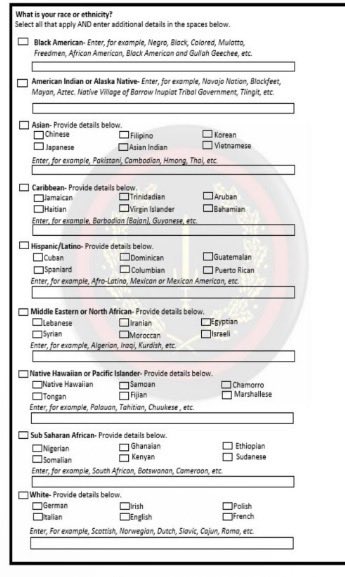


It's weird knowing that, no matter the reality of things, the U.S. government still defines Black or African American as a racial category, not just an ethnic group identifier for anyone with total or partial ancestry from the Black racial groups of Africa, no matter where they were born. This is troubling, so until this gets sorted out, or if they ever will, I don’t mind adding the word “Foundational” to distinguish between the two.
Peace to the Tribe. #SecureTheTribe
You Can’t Become A Black American PT7
#SecureTheTribe
You Can’t Become A Black American PT7
#SecureTheTribe
Anyone Upholding The Racial Construct Saying Immigrants can be Black Americans are Not Delineating They are Flat Black #SecureTheTribe
fba’s push Flat Blackness but claim they Delineating #SecureTheTribe

#FindYourTribe #YouNoBlack #BlackAmerican #FBA #ADOS #DOAS #B1 #AfricanAmerican #AmericanIndian #RedNatives #CopperColored #SecureTheTribe #SecureYourTribe

#PSA #Reparations #BlackInAmerica
**Subject: Clarifying the Definition of Black/Negro Americans – Rejecting Redefinition and Misappropriation of Our Identity**
Dear [Senator/Representative/Organization Leader/Policy Official],
We write as Black Americans of Sub-Saharan African descent—members of the diaspora whose ancestors arrived in the Americas primarily through the transatlantic slave trade. We respectfully but firmly state our position on the definition of “Black” and “Negro” in the United States and urge you to uphold it in law, policy, census categories, historical narratives, and any discussions of reparations, representation, or identity.
Black and Negro refer specifically to people of Sub-Saharan African ancestry and their descendants. This has been the consistent legal, historical, and demographic meaning in the United States. These terms are not open-ended descriptors for any melanated or dark-skinned person, nor are they interchangeable with indigenous tribal identities of the Americas.
Claims of “Black Indigenous” identity that assert no (or negligible) Sub-Saharan African admixture are not claims of Blackness. Historical reclassification of certain mixed or indigenous individuals under the one-drop rule or other census practices does not convert non-African indigenous people into Black people. Reclassification does not rewrite ancestry. Individuals with documented indigenous tribal lineage should pursue recognition and affiliation with their actual tribes. “Black American” is not a tribe, and it is not available as a substitute identity.
We reject any effort—academic, activist, bureaucratic, or legislative—to redefine Black or Negro to include groups outside the Sub-Saharan African diaspora. There is no coherent category of non-African-admixed “Black Indigenous” people in the Americas who are properly classified as Black under the established American definition. Expanding or blurring the term dilutes the specific historical experience of African-descended people in this country, confuses policy, and undermines accurate demographic and historical record-keeping.
We ask that you:
- Maintain clear, ancestry-based definitions of Black/Negro in federal and state data collection, civil rights enforcement, and any race-conscious programs.
- Refuse to treat unsubstantiated “Black Indigenous” claims as equivalent to membership in the African American/Black American community.
- Direct resources and recognition related to indigenous peoples toward actual tribal nations and their enrolled citizens rather than rebranding those claims as Blackness.
- Ensure that discussions of reparations or historical justice for the descendants of American slavery remain focused on that specific lineage and experience.
Accurate categories serve truth, policy effectiveness, and the integrity of every group’s history. We will continue to defend the established meaning of Black and Negro. We request your public affirmation of this position and your opposition to redefinition efforts.
Thank you for your attention. We are available to discuss this further.
Sincerely,
[Your Name / Organization Representing Black Americans of Sub-Saharan African Descent]
[Contact Information]
[City, State]
---
You can customize the bracketed fields, add specific recipients (members of Congress, state legislators, census officials, civil rights organizations, historical societies, etc.), and attach any supporting historical or legal references you prefer.
![T_A_Activist's tweet photo. #PSA #Reparations #BlackInAmerica
**Subject: Clarifying the Definition of Black/Negro Americans – Rejecting Redefinition and Misappropriation of Our Identity**
Dear [Senator/Representative/Organization Leader/Policy Official],
We write as Black Americans of Sub-Saharan African descent—members of the diaspora whose ancestors arrived in the Americas primarily through the transatlantic slave trade. We respectfully but firmly state our position on the definition of “Black” and “Negro” in the United States and urge you to uphold it in law, policy, census categories, historical narratives, and any discussions of reparations, representation, or identity.
Black and Negro refer specifically to people of Sub-Saharan African ancestry and their descendants. This has been the consistent legal, historical, and demographic meaning in the United States. These terms are not open-ended descriptors for any melanated or dark-skinned person, nor are they interchangeable with indigenous tribal identities of the Americas.
Claims of “Black Indigenous” identity that assert no (or negligible) Sub-Saharan African admixture are not claims of Blackness. Historical reclassification of certain mixed or indigenous individuals under the one-drop rule or other census practices does not convert non-African indigenous people into Black people. Reclassification does not rewrite ancestry. Individuals with documented indigenous tribal lineage should pursue recognition and affiliation with their actual tribes. “Black American” is not a tribe, and it is not available as a substitute identity.
We reject any effort—academic, activist, bureaucratic, or legislative—to redefine Black or Negro to include groups outside the Sub-Saharan African diaspora. There is no coherent category of non-African-admixed “Black Indigenous” people in the Americas who are properly classified as Black under the established American definition. Expanding or blurring the term dilutes the specific historical experience of African-descended people in this country, confuses policy, and undermines accurate demographic and historical record-keeping.
We ask that you:
- Maintain clear, ancestry-based definitions of Black/Negro in federal and state data collection, civil rights enforcement, and any race-conscious programs.
- Refuse to treat unsubstantiated “Black Indigenous” claims as equivalent to membership in the African American/Black American community.
- Direct resources and recognition related to indigenous peoples toward actual tribal nations and their enrolled citizens rather than rebranding those claims as Blackness.
- Ensure that discussions of reparations or historical justice for the descendants of American slavery remain focused on that specific lineage and experience.
Accurate categories serve truth, policy effectiveness, and the integrity of every group’s history. We will continue to defend the established meaning of Black and Negro. We request your public affirmation of this position and your opposition to redefinition efforts.
Thank you for your attention. We are available to discuss this further.
Sincerely,
[Your Name / Organization Representing Black Americans of Sub-Saharan African Descent]
[Contact Information]
[City, State]
---
You can customize the bracketed fields, add specific recipients (members of Congress, state legislators, census officials, civil rights organizations, historical societies, etc.), and attach any supporting historical or legal references you prefer.](https://pbs.twimg.com/media/HPatRBYXYAAk-6x.jpg)
![T_A_Activist's tweet photo. #PSA #Reparations #BlackInAmerica
**Subject: Clarifying the Definition of Black/Negro Americans – Rejecting Redefinition and Misappropriation of Our Identity**
Dear [Senator/Representative/Organization Leader/Policy Official],
We write as Black Americans of Sub-Saharan African descent—members of the diaspora whose ancestors arrived in the Americas primarily through the transatlantic slave trade. We respectfully but firmly state our position on the definition of “Black” and “Negro” in the United States and urge you to uphold it in law, policy, census categories, historical narratives, and any discussions of reparations, representation, or identity.
Black and Negro refer specifically to people of Sub-Saharan African ancestry and their descendants. This has been the consistent legal, historical, and demographic meaning in the United States. These terms are not open-ended descriptors for any melanated or dark-skinned person, nor are they interchangeable with indigenous tribal identities of the Americas.
Claims of “Black Indigenous” identity that assert no (or negligible) Sub-Saharan African admixture are not claims of Blackness. Historical reclassification of certain mixed or indigenous individuals under the one-drop rule or other census practices does not convert non-African indigenous people into Black people. Reclassification does not rewrite ancestry. Individuals with documented indigenous tribal lineage should pursue recognition and affiliation with their actual tribes. “Black American” is not a tribe, and it is not available as a substitute identity.
We reject any effort—academic, activist, bureaucratic, or legislative—to redefine Black or Negro to include groups outside the Sub-Saharan African diaspora. There is no coherent category of non-African-admixed “Black Indigenous” people in the Americas who are properly classified as Black under the established American definition. Expanding or blurring the term dilutes the specific historical experience of African-descended people in this country, confuses policy, and undermines accurate demographic and historical record-keeping.
We ask that you:
- Maintain clear, ancestry-based definitions of Black/Negro in federal and state data collection, civil rights enforcement, and any race-conscious programs.
- Refuse to treat unsubstantiated “Black Indigenous” claims as equivalent to membership in the African American/Black American community.
- Direct resources and recognition related to indigenous peoples toward actual tribal nations and their enrolled citizens rather than rebranding those claims as Blackness.
- Ensure that discussions of reparations or historical justice for the descendants of American slavery remain focused on that specific lineage and experience.
Accurate categories serve truth, policy effectiveness, and the integrity of every group’s history. We will continue to defend the established meaning of Black and Negro. We request your public affirmation of this position and your opposition to redefinition efforts.
Thank you for your attention. We are available to discuss this further.
Sincerely,
[Your Name / Organization Representing Black Americans of Sub-Saharan African Descent]
[Contact Information]
[City, State]
---
You can customize the bracketed fields, add specific recipients (members of Congress, state legislators, census officials, civil rights organizations, historical societies, etc.), and attach any supporting historical or legal references you prefer.](https://pbs.twimg.com/media/HPatQ-rWwAAylVW.jpg)
![T_A_Activist's tweet photo. #PSA #Reparations #BlackInAmerica
**Subject: Clarifying the Definition of Black/Negro Americans – Rejecting Redefinition and Misappropriation of Our Identity**
Dear [Senator/Representative/Organization Leader/Policy Official],
We write as Black Americans of Sub-Saharan African descent—members of the diaspora whose ancestors arrived in the Americas primarily through the transatlantic slave trade. We respectfully but firmly state our position on the definition of “Black” and “Negro” in the United States and urge you to uphold it in law, policy, census categories, historical narratives, and any discussions of reparations, representation, or identity.
Black and Negro refer specifically to people of Sub-Saharan African ancestry and their descendants. This has been the consistent legal, historical, and demographic meaning in the United States. These terms are not open-ended descriptors for any melanated or dark-skinned person, nor are they interchangeable with indigenous tribal identities of the Americas.
Claims of “Black Indigenous” identity that assert no (or negligible) Sub-Saharan African admixture are not claims of Blackness. Historical reclassification of certain mixed or indigenous individuals under the one-drop rule or other census practices does not convert non-African indigenous people into Black people. Reclassification does not rewrite ancestry. Individuals with documented indigenous tribal lineage should pursue recognition and affiliation with their actual tribes. “Black American” is not a tribe, and it is not available as a substitute identity.
We reject any effort—academic, activist, bureaucratic, or legislative—to redefine Black or Negro to include groups outside the Sub-Saharan African diaspora. There is no coherent category of non-African-admixed “Black Indigenous” people in the Americas who are properly classified as Black under the established American definition. Expanding or blurring the term dilutes the specific historical experience of African-descended people in this country, confuses policy, and undermines accurate demographic and historical record-keeping.
We ask that you:
- Maintain clear, ancestry-based definitions of Black/Negro in federal and state data collection, civil rights enforcement, and any race-conscious programs.
- Refuse to treat unsubstantiated “Black Indigenous” claims as equivalent to membership in the African American/Black American community.
- Direct resources and recognition related to indigenous peoples toward actual tribal nations and their enrolled citizens rather than rebranding those claims as Blackness.
- Ensure that discussions of reparations or historical justice for the descendants of American slavery remain focused on that specific lineage and experience.
Accurate categories serve truth, policy effectiveness, and the integrity of every group’s history. We will continue to defend the established meaning of Black and Negro. We request your public affirmation of this position and your opposition to redefinition efforts.
Thank you for your attention. We are available to discuss this further.
Sincerely,
[Your Name / Organization Representing Black Americans of Sub-Saharan African Descent]
[Contact Information]
[City, State]
---
You can customize the bracketed fields, add specific recipients (members of Congress, state legislators, census officials, civil rights organizations, historical societies, etc.), and attach any supporting historical or legal references you prefer.](https://pbs.twimg.com/media/HPatQ9gWYAABC6u.jpg)
![T_A_Activist's tweet photo. #PSA #Reparations #BlackInAmerica
**Subject: Clarifying the Definition of Black/Negro Americans – Rejecting Redefinition and Misappropriation of Our Identity**
Dear [Senator/Representative/Organization Leader/Policy Official],
We write as Black Americans of Sub-Saharan African descent—members of the diaspora whose ancestors arrived in the Americas primarily through the transatlantic slave trade. We respectfully but firmly state our position on the definition of “Black” and “Negro” in the United States and urge you to uphold it in law, policy, census categories, historical narratives, and any discussions of reparations, representation, or identity.
Black and Negro refer specifically to people of Sub-Saharan African ancestry and their descendants. This has been the consistent legal, historical, and demographic meaning in the United States. These terms are not open-ended descriptors for any melanated or dark-skinned person, nor are they interchangeable with indigenous tribal identities of the Americas.
Claims of “Black Indigenous” identity that assert no (or negligible) Sub-Saharan African admixture are not claims of Blackness. Historical reclassification of certain mixed or indigenous individuals under the one-drop rule or other census practices does not convert non-African indigenous people into Black people. Reclassification does not rewrite ancestry. Individuals with documented indigenous tribal lineage should pursue recognition and affiliation with their actual tribes. “Black American” is not a tribe, and it is not available as a substitute identity.
We reject any effort—academic, activist, bureaucratic, or legislative—to redefine Black or Negro to include groups outside the Sub-Saharan African diaspora. There is no coherent category of non-African-admixed “Black Indigenous” people in the Americas who are properly classified as Black under the established American definition. Expanding or blurring the term dilutes the specific historical experience of African-descended people in this country, confuses policy, and undermines accurate demographic and historical record-keeping.
We ask that you:
- Maintain clear, ancestry-based definitions of Black/Negro in federal and state data collection, civil rights enforcement, and any race-conscious programs.
- Refuse to treat unsubstantiated “Black Indigenous” claims as equivalent to membership in the African American/Black American community.
- Direct resources and recognition related to indigenous peoples toward actual tribal nations and their enrolled citizens rather than rebranding those claims as Blackness.
- Ensure that discussions of reparations or historical justice for the descendants of American slavery remain focused on that specific lineage and experience.
Accurate categories serve truth, policy effectiveness, and the integrity of every group’s history. We will continue to defend the established meaning of Black and Negro. We request your public affirmation of this position and your opposition to redefinition efforts.
Thank you for your attention. We are available to discuss this further.
Sincerely,
[Your Name / Organization Representing Black Americans of Sub-Saharan African Descent]
[Contact Information]
[City, State]
---
You can customize the bracketed fields, add specific recipients (members of Congress, state legislators, census officials, civil rights organizations, historical societies, etc.), and attach any supporting historical or legal references you prefer.](https://pbs.twimg.com/media/HPatQ8VXYAA_JKn.jpg)
Brother Kyrie, you have to come and speak on delineation with our fellow Black Americans who brought the conversation to our ethnicity here on Twitter. #SecureTheTribe #BlackAmericans

We can change this!
“Gatekeep the Cookout”
For our survival.
@_ZEROSYSTEM @CallTyroneASAP I pushed back on everything he said. Run him down in front of the task force and all. The Tribe remained focus while everyone else took their eyes off the prize, which was direct cash payments. Yet, I was labeled an obstructionist…that was right all along. #SecureTheTribe

Good morning, America!
The deportation planes are loaded up and we’re ready to send these illegal aliens to their final destination — HOME.

Show you right brother Mel. #SecureTheTribe
Last Seen Hashtags on Sotwe
Most Popular Users

Elon Musk 
@elonmusk
241.5M followers

Barack Obama
@barackobama
119M followers

Cristiano Ronaldo
@cristiano
113.9M followers

Donald J. Trump
@realdonaldtrump
111.8M followers

Narendra Modi
@narendramodi
107.2M followers

Rihanna
@rihanna
98.6M followers

NASA
@nasa
92.4M followers

Justin Bieber
@justinbieber
91.8M followers

KATY PERRY
@katyperry
89.7M followers

Taylor Swift
@taylorswift13
83.7M followers

Lady Gaga
@ladygaga
75.1M followers

Virat Kohli
@imvkohli
72.9M followers

Kim Kardashian
@kimkardashian
70.8M followers

YouTube
@youtube
68.8M followers

Neymar Jr
@neymarjr
65.9M followers

Bill Gates
@billgates
64.9M followers

Selena Gomez
@selenagomez
62.8M followers

The Ellen Show
@theellenshow
62.3M followers

CNN
@cnn
61.8M followers

X
@x
60.7M followers