

Top Tweets for #TreeCheckMonth

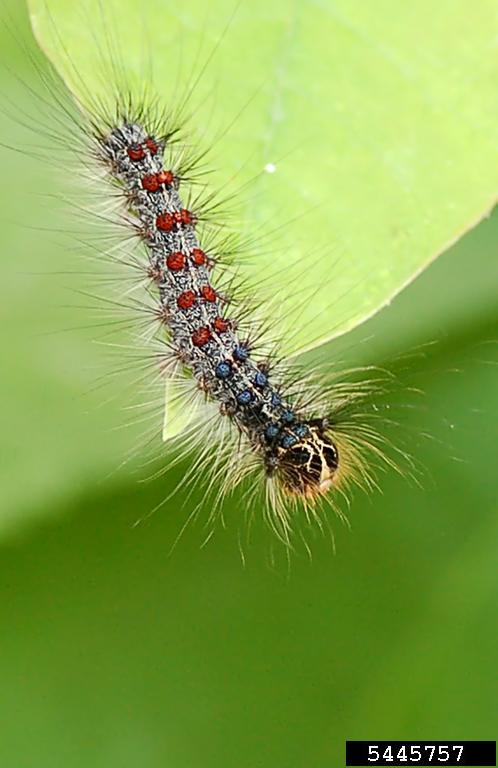
Our final #TreeCheckMonth feature is the real life very hungry caterpillar. 🐛 The spongy moth (Lymantria dispar), formerly known as gypsy moth, originated in Europe and has been one of the most destructive defoliators of deciduous forests in the northeastern U.S. and southeastern Canada. The caterpillars feed on the leaves of more than 300 species of trees and shrubs, eventually killing them.
Although egg masses and isolated individuals have been occasionally found in South Carolina, the spongy moth has not established in SC. It ranges from the northeastern states west to Wisconsin and south to Virginia. Isolated populations appear in North Carolina occasionally. Efforts to control it using pesticides and biocontrol have slowed its spread.
The larvae are active from spring until mid-summer. The adults emerge in the late summer and mate, and the females lay their egg masses.
APPEARANCE:
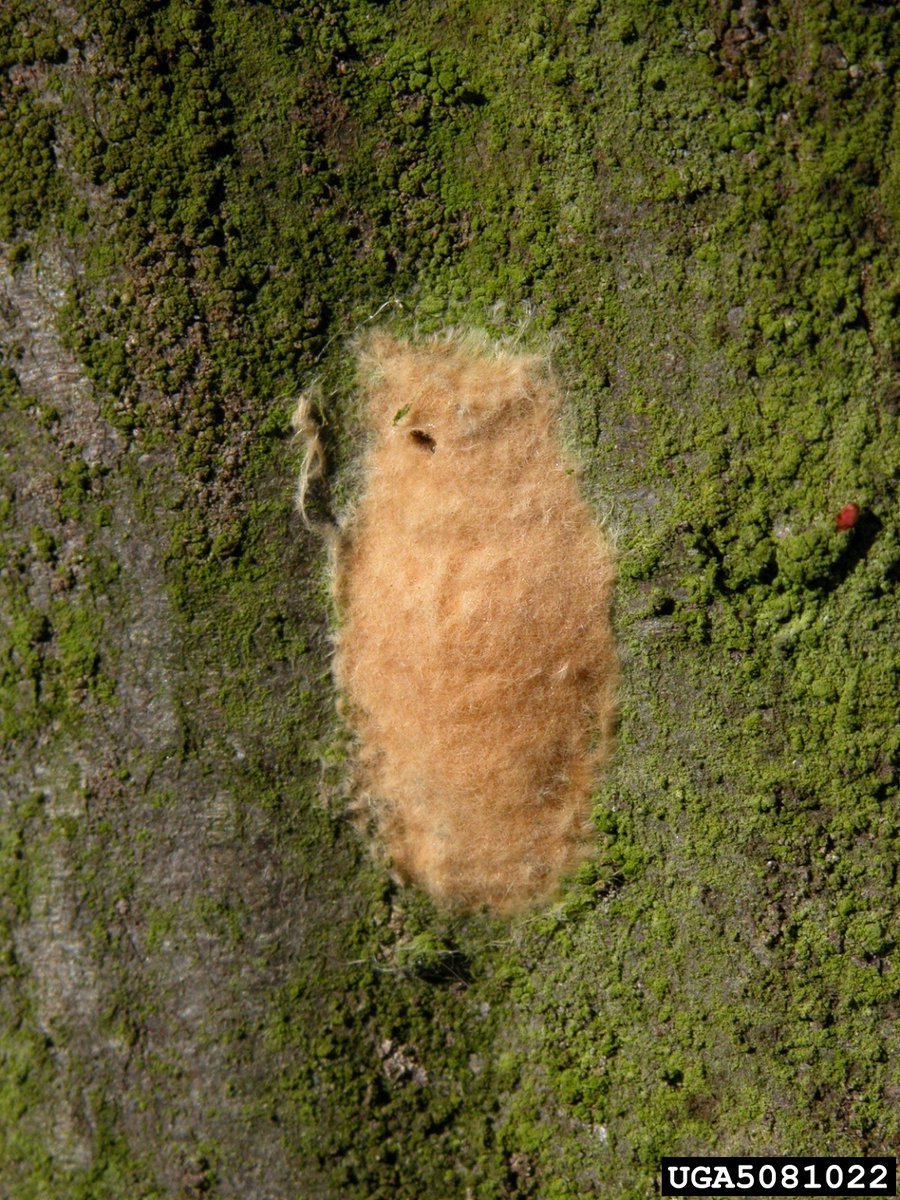
-Egg masses (late summer, winter and spring) can be found on trees, stones, patio furniture, children’s toys and lawn equipment and other outdoor surfaces.
-Each egg mass holds up to 1,000 eggs and is covered with yellowish “hair," measuring about 1.5" long and 3/4" wide.
-Caterpillars (spring) are black and hairy when newly hatched. As they age, they become mottled yellow to gray color with tufts of bristle-like hairs. They also have a distinctive color pattern along their backs with five pairs of blue dots followed by six pairs of red dots.
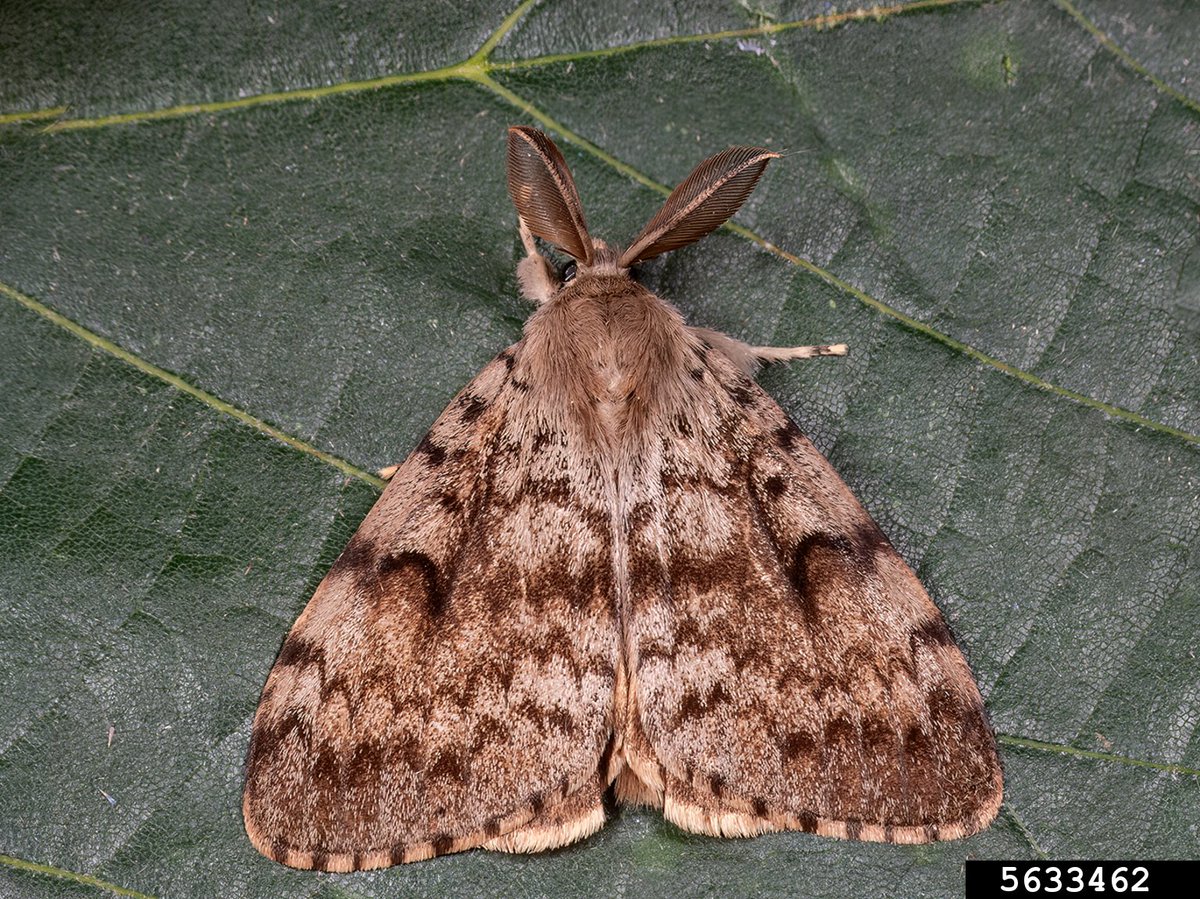
-Adult male moths (summer) are brown with a darker brown pattern and a 1.5" wingspan. Females are off white and have a 2" wingspan but do not fly.
SYMPTOMS
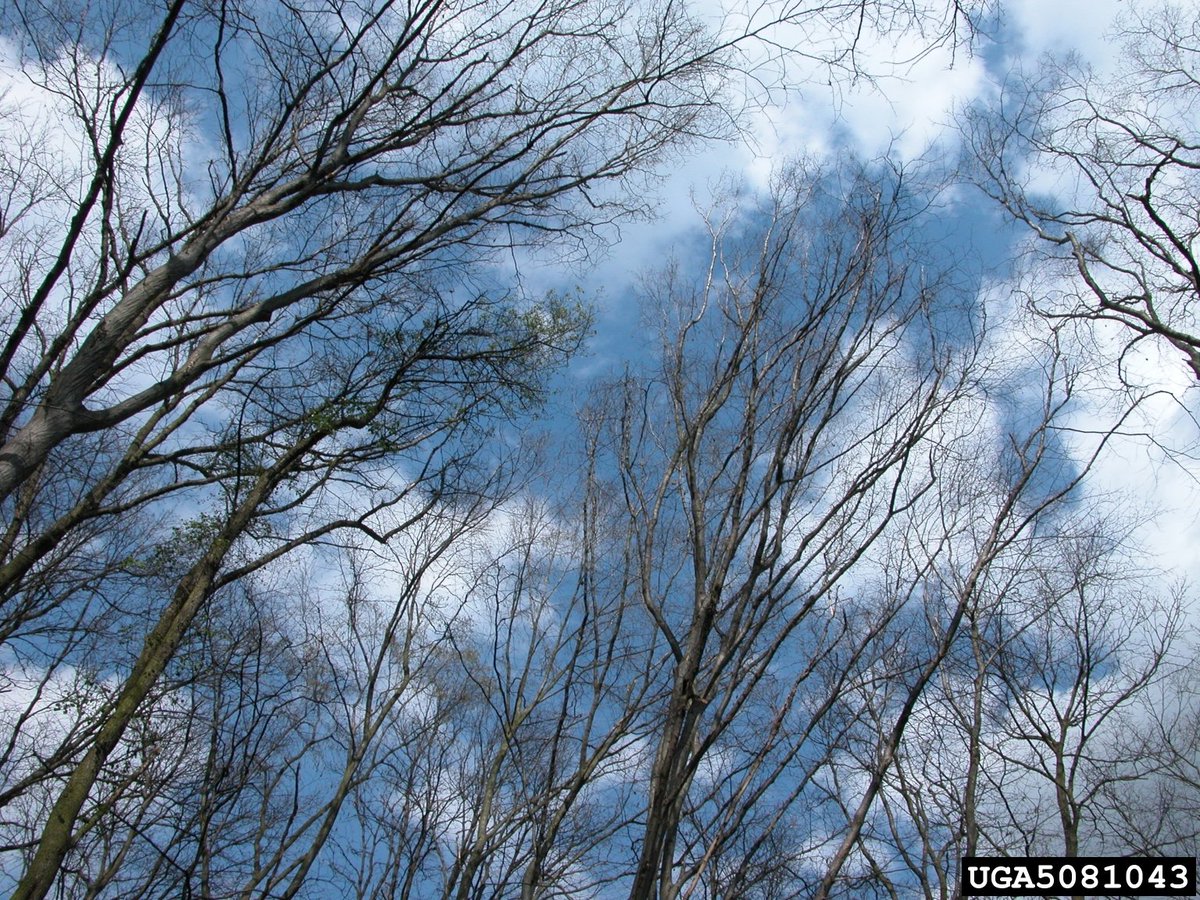
Severe defoliation in outbreak years can make a forest so bare in the summer that you'd think it's winter. You can hear the caterpillars feeding and the ground will be covered with frass (droppings/debris). You can also hear the frass falling.
LEARN MORE
https://t.co/1K7gOcKroI
https://t.co/6o36UExklY
Photo credit via https://t.co/W8R1pJhUDA, courtesy of:
-Zoran Bozovic
-Jon Yuschock
-Ferenc Lakatos, University of Sopron

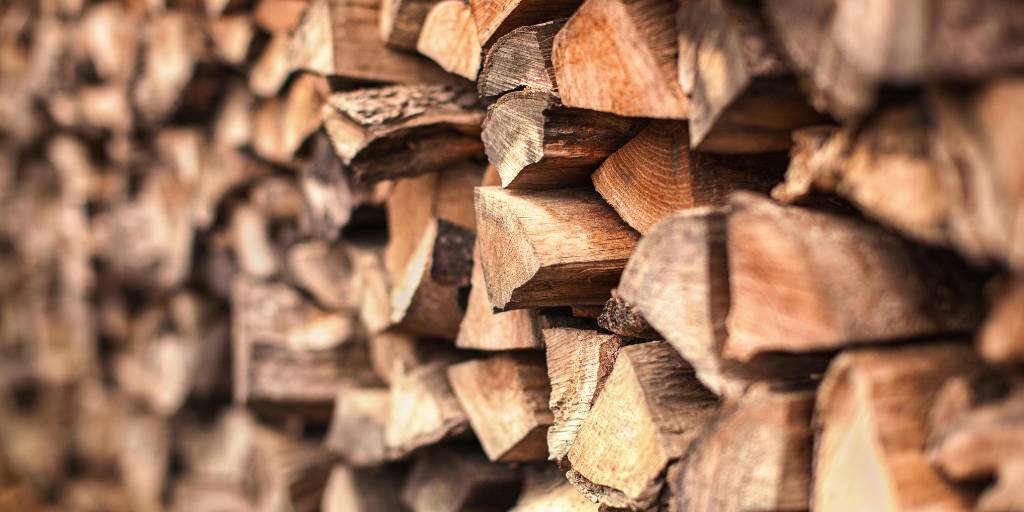
Don’t move firewood!🚫🪵
Transporting untreated wood can spread the Asian longhorned beetle and other harmful pests.
Help protect trees by keeping firewood local and checking your trees this month. Your report could stop an infestation.
https://t.co/sTFNPT5Q9R
#TreeCheckMonth
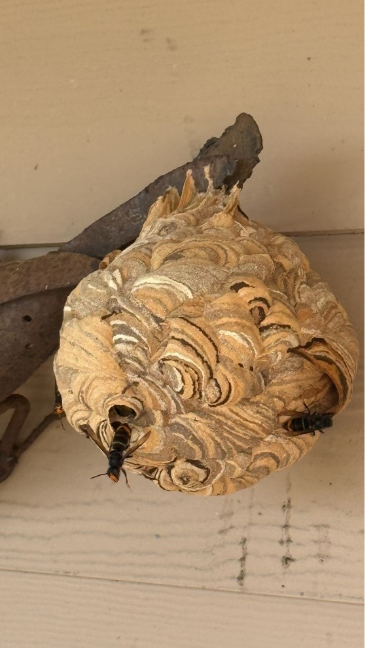
It's #TreeCheckMonth, and the yellow-legged hornet (YLH) is next on the list of invasive species to keep an eye out for.
YLH is a predatory insect that commonly feeds on other social bees and wasps, including western honeybees. Originally from Southeast Asia, YLH was introduced into France in 2004 where it quickly spread across much of Western Europe. Beekeepers reported colony losses resulting from YLH attacks. Establishment of this exotic pest in the U.S. poses a significant threat to our already embattled pollinator populations.
YLH are known for exhibiting aggressive behavior known as “hawking,” during which hornets hover near hives to capture bees, causing reduced foraging and colony failure. This impact would result in reduced honey and other honeybee products and reduced crop production due to decreased pollination by honeybees and native pollinators.
APPEARANCE
-Body length ranges from 0.7" to 1"
-Head is mostly black with some front-facing yellow/orange; eyes are black
-Thorax is mostly solid black/dark brown
-Abdomen has alternating bands of dark brown/black and yellow/orange
-Legs are brown or black near the body, ending in yellow segments
NESTS
During the summer season, multiple nest stages can be seen, particularly “primary nests” and “secondary nests” within one colony. As the colony size grows, the workers begin building the final nest stage and the “primary nest” is abandoned.
Primary nests grow from around the size of a softball to that of a watermelon. Later into the summer, worker hornets expand secondary nests, which can reach sizes capable of housing around 6,000 hornets. See life cycle graphic for details.
REPORT A SIGHTING
https://t.co/yqRXQjBf1w
LEARN MORE
https://t.co/xhVQDjPmgR
CREDITS
-Life cycle graphic courtesy of Caroline Oatley, Clemson University DPI
-Photo 1 via https://t.co/W8R1pJhmO2, courtesy of:
Hanna Royals, Museum Collections: Hymenoptera, USDA APHIS PPQ
-Photo 3 courtesy of Clemson DPI's YLH reporting tool



August is #TreeCheckMonth!🌳
APHIS is asking everyone to take a few minutes to look for the Asian longhorned beetle - an invasive pest that can kill hardwood trees.
Spotting signs early & reporting helps stop its spread.
➡️ https://t.co/sTFNPT5Q9R
#ProtectOurTrees #HungryPests


Wood you take two minutes to protect Canada’s trees? August is Tree Check Month! Help protect Canada’s environment and economy by checking trees in your backyard, local park or workplace greenspace. More 👇
#TreeCheckMonth #PlantHealth #InvasiveSpecies
https://t.co/DZO5KkDrdY

Happy #TreeCheckMonth! An invasive insect, the Asian Longhorned Beetle (ALB), is out and about this time of year.
The USDA is asking you to take 10 minutes to check your trees for signs of the ALB.
Learn what signs to look for & what to do if you see them: https://t.co/5lFeOqwzKh

Our final #TreeCheckMonth feature is the real life very hungry caterpillar. 🐛 The spongy moth (Lymantria dispar), formerly known as gypsy moth, originated in Europe and has been one of the most destructive defoliators of deciduous forests in the northeastern U.S. and southeastern Canada. The caterpillars feed on the leaves of more than 300 species of trees and shrubs, eventually killing them.
Although egg masses and isolated individuals have been occasionally found in South Carolina, the spongy moth has not established in SC. It ranges from the northeastern states west to Wisconsin and south to Virginia. Isolated populations appear in North Carolina occasionally. Efforts to control it using pesticides and biocontrol have slowed its spread.
The larvae are active from spring until mid-summer. The adults emerge in the late summer and mate, and the females lay their egg masses.
APPEARANCE:
-Egg masses (late summer, winter and spring) can be found on trees, stones, patio furniture, children’s toys and lawn equipment and other outdoor surfaces.
-Each egg mass holds up to 1,000 eggs and is covered with yellowish “hair," measuring about 1.5" long and 3/4" wide.
-Caterpillars (spring) are black and hairy when newly hatched. As they age, they become mottled yellow to gray color with tufts of bristle-like hairs. They also have a distinctive color pattern along their backs with five pairs of blue dots followed by six pairs of red dots.
-Adult male moths (summer) are brown with a darker brown pattern and a 1.5" wingspan. Females are off white and have a 2" wingspan but do not fly.
SYMPTOMS:
Severe defoliation in outbreak years can make a forest so bare in the summer that you'd think it's winter. You can hear the caterpillars feeding and the ground will be covered with frass (droppings/debris). You can also hear the frass falling.
More info:
https://t.co/Ddosfguw4e
https://t.co/6o36UEwMwq
Photos courtesy of (via https://t.co/W8R1pJhmO2):
Jon Yuschock
Daniel Herms
Richard Gardner
Landesforstpräsidium Sachsen
Karla Salp, Washington State Department of Agriculture
USDA Forest Service


🪲August #ForeignPestOfTheMonth: Asian Longhorned Beetle.
Thanks to Agriculture Quarantine Inspections, we can detect and stop invasive pests like ALB before they establish and spread.🛑🌎📸
Report signs:
https://t.co/N28586F3PV
#AQI #ALB #TreeCheckMonth
#ProtectingAgriculture


This month, take a walk around your property or neighborhood. If something doesn’t look right, reach out to your state forestry agency or a certified arborist for advice. #TreeCheckMonth


The Asian longhorned beetle is an invasive insect that can make big holes in our tree populations by making dime-sized holes in trees themselves. If you see perfectly round holes in trees, report the damage ASAP. https://t.co/tLey92GgvQ
#TreeCheckMonth #ALB

August is Tree Check Month! Help protect Canada’s forests by checking the trees in your yard, local parks and trails for invasive pests. You can make a big impact – learn how. #TreeCheckMonth #PlantHealth #InvasiveSpecies
https://t.co/PSYkWcAM9T
August is #TreeCheckMonth for Asian longhorned beetle. Look for the beetle and the damage it causes by checking your trees. Learn why it’s important to look now and what signs to watch for: https://t.co/k1AUCWF1wx
#USDA #APHIS #ALB


If you're spending time outdoors, be on the lookout for signs of invasive insects such as the emerald ash borer, box tree moth, and hemlock woolly adelgid.
Report sightings to the Canadian Food Inspection Agency or EDDMapS. More: https://t.co/ElcIrNzcbm
#TreeCheckMonth


You may think this blue beauty looks pretty - or dangerous. But that long "stinger" is only used to lay eggs in wood. With the eggs comes a fungus and toxic mucus that kills the tree. Learn more at https://t.co/ogrsM69b1y #TreeCheckMonth #InvasiveSpecies


🌳 August is Tree Check Month! @USDA_APHIS is asking everyone to inspect their trees for signs of the #AsianLonghornedBeetle. If you find a beetle or tree damage, report it using the hotline at 1-866-702-9938 or online at APHIS's reporting page. #TreeCheckMonth #InvasiveSpecies


August is #TreeCheckMonth! Here's how you can ensure your trees are in top shape:
🍃Inspect Leaves + Bark: Look for any unusual spots, holes, or peeling
🪲Check for Pests: Keep an eye out for webs, egg cases, or droppings
🌳Assess Growth: Ensure your trees are growing healthy


A good #TreeCheckMonth reminder - Emerald Ash Borer continues to spread to new states and counties.
Check your ash trees for signs of damage and ask us about preventative measures.
#EAB

Emerald Ash Borer has been detected in LaMoure County.
Learn how to identify and management strategies >>> https://t.co/YxTMvO1sfM

Not to be confused with our native banded alder borer or white-spotted sawyer, invasive longhorned beetles threaten our hardwood trees. Learn more about these three species and report suspected sightings at https://t.co/jmHpF5Ck7w #TreeCheckMonth #InvasiveSpecies @wainvasives


🗓️ Before #TreeCheckMonth ends, here's a friendly reminder to inspect your trees!
If you’re stumped, 📸 snap a photo and send us a sample. DPI's entomology, nematology, plant pathology, and botany experts are happy to assist!
🌐 https://t.co/IEjCdj4tK3


#DYK that the @InspectionCan dubbed August as #TreeCheckMonth to remind Canadians of the importance of protecting our plants and trees from invasive species. Trees play a vital role in human and animal health, so it is important to keep our trees healthy!

Last Seen Hashtags on Sotwe
waptidoo
Seen from United States
birahijab
Seen from Indonesia
mahtbasketball
Seen from United States
Babecock filter:videos
Seen from Canada
coli brondong
Seen from Indonesia
bop cum
Seen from New Zealand
ankaraaktif
Seen from Turkey
ipcam
Seen from Israel
MLQChampionship
Seen from United States
ai daughter() filter:videos
Seen from Germany
Trends for you
Most Popular Users

Elon Musk 
@elonmusk
241.3M followers

Barack Obama
@barackobama
118.8M followers

Cristiano Ronaldo
@cristiano
114.5M followers

Donald J. Trump
@realdonaldtrump
111.9M followers

Narendra Modi
@narendramodi
107M followers

Rihanna
@rihanna
98.7M followers

NASA
@nasa
92.3M followers

Justin Bieber
@justinbieber
91.8M followers

KATY PERRY
@katyperry
90M followers

Taylor Swift
@taylorswift13
84M followers

Lady Gaga
@ladygaga
75.5M followers

Virat Kohli
@imvkohli
73.4M followers

Kim Kardashian
@kimkardashian
70.8M followers

YouTube
@youtube
68.7M followers

Neymar Jr
@neymarjr
66.4M followers

Bill Gates
@billgates
65.2M followers

Selena Gomez
@selenagomez
63.1M followers

The Ellen Show
@theellenshow
62.2M followers

CNN
@cnn
61.7M followers

X
@x
60.6M followers