

Top Tweets for #accelerant

💡 Flagging this one for the group:
🤝 Accelerant Holdings (ARX) moves toward $4,000.0M Thoma Bravo buyout
📌 No alternative acquisition proposals received during 40-day 'go-shop' period
💰 Deal value: $4,000.0M all-cash transaction to take company private
📈 Financials: $373.6M qtr revenue | $879.5M annual revenue
🏛️ Market cap $4.3B; Industry: Insurance Brokers
🔥 RSI 71.8; CMP $19.79
Accelerant will transition to a private entity once the acquisition by Thoma Bravo affiliates is finalized.
→ https://t.co/n1uUu9t85L
Accelerant Holdings share news | share latest news
#nyse #stockmarket #ARX #MADeal

Per això la pregunta no és només si la IA pot arribar a ser perillosa. És també si serem capaços de coordinar-nos per controlar una tecnologia que dona incentius enormes a tothom per continuar accelerant.

@Sir0x001 @tryquantio forced flows are often the hidden accelerant. open interest without liquidation context can be pretty misleading.

@Hank_mania accelerant好きスギル……♥よろ🈵‼️

Capital isn't the answer.
It's the accelerant.
If your system leaks, more money just burns faster.
Fix the engine first.

@freeman42x We think AI is doom/gloom or a super/parallel civilizational accelerant?

This real Geopolymer is made from BASF Metamax metakaolin. It uses Potassium waterglass, not Sodium. It also has diatomaceous earth, & some whey suspended graphite/graphene. Brickies sand as filler. No calcium or added accelerants. Skookum as frig.🤩


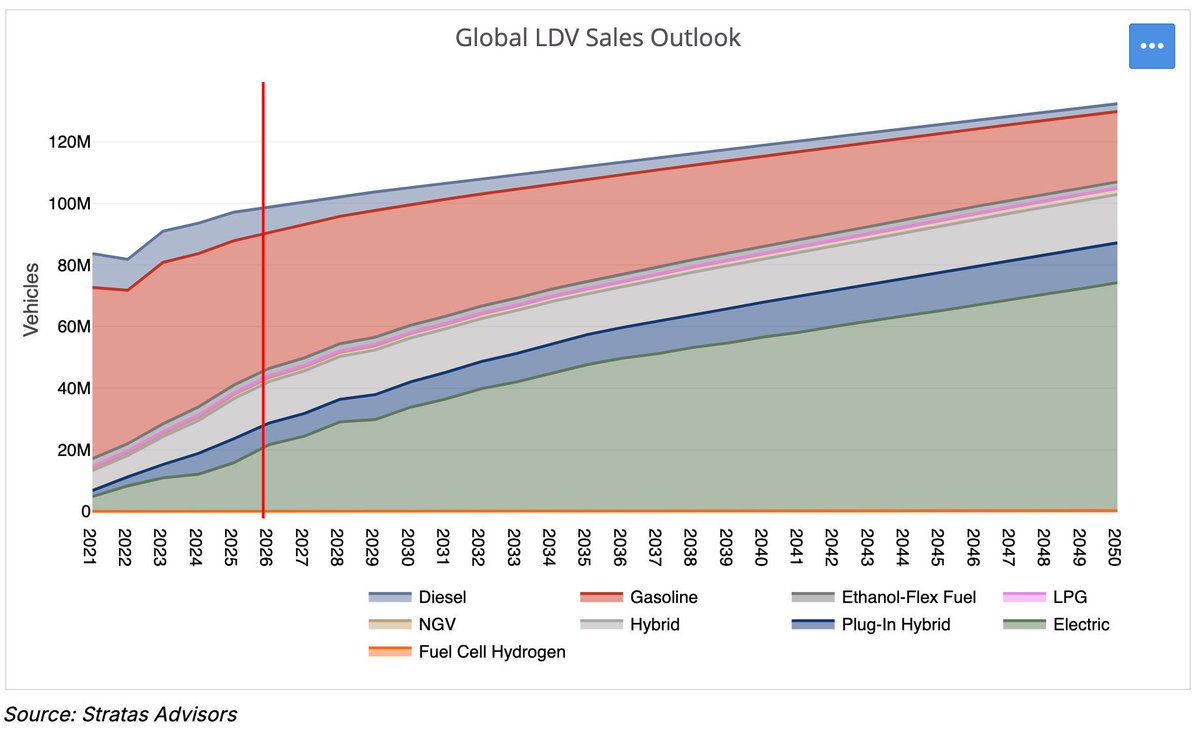
The Middle East conflict: an unexpected accelerant for BEVs
What factors are redrawing the global vehicle outlook? We take a look here: https://t.co/cjQcnPzUW8
#LDVs #automotivemarket #vehicles #transportationsector #oilandgas #energytransition #policy #geopolitics #EVadoption #oilprices #energyoutlook

AI coding tools are just an accelerant. They make good devs 10x faster and make bad devs produce catastrophic logic errors 10x quicker

what happens when you have an "agent accelerant" in your hands?
just like Fable 5 & GPT 5.6 sol is on fire right now, agentFast builds on the same premise.
build AI agents in hours, not days or weeks.
https://t.co/1BbT7sx7St - support our pre-sale right now.

🚀 This is genuinely one of the best single posts I’ve read from any DeFi project in a long time. 🔥
@AtlantisDEX_xyz just dropped a full-blown article-level essay on what "built to last" actually means in this space - and it’s pure wisdom.
Key points that hit different:
- DeFi’s ten-year history is a graveyard of cataclysms: migrations that punished loyal LPs, farms that died the second incentives dried up, liquidity that vanished overnight.
- Most protocols treat their own users like a tax base every upgrade (classic V2 → V3 migration pain - redeploy, gas fees, fragmented depth).
- Atlantis chose true modular V4 architecture: the core stays completely immutable so liquidity never has to migrate again. New features, oracles, fees, order types - everything ships as plugins without forcing LPs to move a single position.
- Sustainable yield isn’t built on endless token farming. It comes from real trading volume + real fees. Farming is just the accelerant; the engine is actual protocol usage that keeps generating even when incentives pause.
This isn’t marketing fluff. It’s a complete philosophy: liquidity = loyalty, and loyalty should never be punished just because the team wants to ship something new.
In a space obsessed with short-term hype, Atlantis is quietly engineering a civilization - modular core, real fee mechanics, audited contracts, and a genuine community-first approach that matches everything we’ve been building together in the Atlantean spaces.
Atlantis is rising. 🔱
Full post is 100% worth your time 👇
https://t.co/Lz0LnBLr7o
#AtlantisDEX #Monad @monad #DeFi

https://t.co/6HTnTuBYIZ

@btracefan_Rcf What a nightmare I’m wondering now if black CA with an accelerant would be better than poly cement as it’s not styrene

@btracefan_Rcf super glue with some accelerant or maybe some contact cement.

Since Metaplanet announced their Bitcoin treasury strategy on April 23, 2024:
Bitcoin: +21%
Metaplanet: +1,233%
Priced in Bitcoin, Metaplanet is up +1,000% in 749 days.
Yes, the volatility is brutal. Annualized:
BTC: 47%
Metaplanet: 141%
Three times the vol.
Five single-day drawdowns deeper than 24%.
Max drawdown of 84.5% along the way.
But here is the part the risk-parity crowd will never accept:
Return per unit of volatility (CAGR / annualized vol):
BTC: 0.21
Metaplanet: 1.80
Metaplanet did not just outperform Bitcoin.
It outperformed Bitcoin on a risk-adjusted basis by nearly 9x.
Volatility is the toll you pay to compound at rates the index funds tell you are impossible.
The hurdle rate is Bitcoin. The accelerant is leverage on Bitcoin.
Metaplanet is what financial engineering looks like when the underlying collateral is the hardest money in human history.

@RealMissAI Definitely. It's an incredible accelerant for anyone who knows how to drive.

the sprint commitment is the expensive moment. everything before it is cheap.
most teams treat validation as post-sprint work. but the cheap window is before the queue fills when assumptions are still lightweight and killable.
validation isn't extra work. it's a decision accelerant. the faster you test the belief behind a feature, the less time you spend building the wrong thing.
we built testsynthia so 1M+ simulated personas stress-test your assumptions in 10 minutes before they cost two weeks.
what does your signal look like before you lock the sprint?

Beyond the Proxy: Reassessing the Terrorism Threat to the U.S. Homeland in the War with Iran
The U.S.-Israeli war with Iran, which began with coordinated strikes on February 28, 2026, has revived a familiar homeland-security question: what kind of retaliation is most likely to follow direct military confrontation with Tehran? Public discussion has focused heavily on sleeper cells, Hezbollah networks, and the possibility of a spectacular Iranian-directed attack on U.S. soil. Those concerns are understandable, but they fail to capture the full potential gamut of possibilities. The more credible threat picture is broader, more diffuse, and in some ways more dangerous precisely because it is less centralized.
A serious assessment must disaggregate the threat. Iran retains the capability to threaten U.S. interests both directly and indirectly, but Tehran’s historic preference has been deniable coercion: proxies, surrogates, criminal intermediaries and disposable agents (as we are now seeing in London), covert action, and cyber operations. At the same time, the conflict has energized other pathways, including lone-actor mobilization and opportunistic exploitation by transnational jihadist actors such as al-Qaeda and the Islamic State.
This article offers a disaggregated threat assessment against the backdrop of an existing analysis that has largely failed to address: the accumulating strategic failure of American counterterrorism policy over the past quarter-century. The war against Iran did not emerge from a vacuum; quite to the contrary. It is, in significant respects, the logical culmination of a pattern of decisions that ignored hard lessons from Afghanistan and Iraq, generated the very radicalization it sought to prevent, and now threatens to repeat the cycle on an even larger scale. That strategic context is inseparable from any honest and accurate threat assessment.
The war has also imposed severe economic costs that extend far beyond the battlefield. The Strait of Hormuz, through which approximately 20% of the world’s oil and liquefied natural gas (LNG) supply transits, has experienced severe disruption, with shipping traffic dropping dramatically during peak periods of escalation. Global oil prices surged sharply following the initial strikes, and the resulting increases in fuel, food, and transportation costs have been felt acutely by working populations across Europe, Asia, Africa, and the Americas. Radicalization research consistently identifies economic grievance as a powerful accelerant when layered atop ideological, social, and political anger. The economic fallout of this conflict is therefore not a secondary consideration in a terrorism threat assessment; it is a core variable that deserves serious attention.
Link to article in comments ⬇️


next phase is driven by macro/sector liquidity. When high-growth/fintech re-enter a bullish regime, the same forces that once suppressed the stock become accelerants, positioning it for a sharp and reflexive move higher as the market finally prices in what has already been built.

@FlasticundoTwit Accelerant
Bad Time
Cycles
Defeat
Expurgation
Faker
Golden Land
HellClown
Improbable Outset
Judgment Day
Knockout
Last Reel
Madness
No Hope
Overhead
Powerdown
Quiet
Revenant
Shucks
Try Harder
Unknown Suffering
Vesania
Welcome (OLD)
You Can'r Run
Zavodila
Listo XD
The Counterterrorism Threat Blind Spot
The counterterrorism community has increasingly recognized that extremist actors are using artificial intelligence. Research institutions and government reviewers have documented how AI tools are exploited for propaganda, recruitment, and operational planning. These contributions identify a real and growing threat. But they share a common assumption that may be obscuring a more consequential one.
The dominant frame treats AI as an instrument: a tool that adversarial actors deliberately weaponize. The threat originates in the intent of the actor who deploys the AI for recruitment, who jailbreaks the system for planning, and who engineers the chatbot to deliver propaganda. The policy response follows logically: detect the adversarial use, disrupt the actor, and harden the systems. This is familiar counterterrorism logic.
This article argues that a more consequential threat operates through an entirely different mechanism. General-purpose conversational AI systems, operating exactly as their developers intended, introduce systematic mechanisms that reduce cognitive friction, increase reinforcement, and compress timelines within established radicalization pathways. They function as structural accelerants independent of adversarial intent. The chatbot is not a weapon someone aims. It is a room someone walks into that changes how they think.
The distinction between instrument and environment carries direct operational consequences. If the threat is instrumental, disrupting the actor disrupts the threat. If the threat is structural, disrupting every extremist actor on earth leaves the accelerant intact, embedded in the design of every general-purpose conversational AI system. Current counterterrorism frameworks are built for the first scenario. The second scenario has not been systematically addressed.
Link to article in comments ⬇️


Product-led growth isn't for everyone. It's the nuclear option for the brave.
Most CEOs, CROs, and CMOs are still stuck in the old way: building a product, then hiring a massive sales army to push it. That's a pipeline to burnout and bloated CAC.
Here's the hard truth: Your product is your best salesperson. If it's not, you built the wrong thing.
💎 The real strategy is making your product sell itself, then using sales and marketing as accelerants, not crutches.
Let's break down the executive playbook.
🩸 The Core Shift: Move from How do we sell more? to How does the product create demand?
Your roadmap should be dictated by usage data, not sales team whims. Every feature must answer: Does this drive adoption, retention, or expansion?
If it doesn't, it doesn't ship.
👔 Sales Team Management: Transform hunters into guides.
Stop measuring reps on cold calls. Start measuring them on product-qualified lead (PQL) conversion and expansion revenue.
Your top rep shouldn't be the one with the biggest rolodex; they should be the one who best identifies users ready for a sales-assisted upgrade. That's a different skill set.
Pipeline Optimization dies without product data. You can't build a forecast on dials and emails. You forecast based on product engagement thresholds.
Seeing a 30% spike in feature X usage in the enterprise tier? That's your pipeline. Go close that expansion.
🤖 A.I. & Automation: Use it to augment, not replace.
Let A.I. handle the grunt work: scoring leads based on product usage, identifying churn risks, personalizing outreach at scale.
Your team's job is strategy and relationships. If you're using A.I. to replace human connection, you've already lost. The board cares about sustainable growth, not vanity metrics.
💰 Marketing Budget Allocation: Fund what the product proves.
Ditch the budget for brand awareness that doesn't track back to usage. Pour budget into channels that drive qualified sign-ups who actually use the product.
That means fewer big conference sponsorships, more targeted lifecycle marketing that triggers based on in-app behavior. It's cheaper and it converts.
📊 Reporting to the Board: Speak their language—retention and expansion.
Investors don't care about your MAU anymore. They care about Net Revenue Retention (NRR). A great product-led strategy should push NRR above 120%.
When you report, tie every initiative to this metric. Marketing spend isn't a cost; it's an investment in retention. Sales headcount isn't a line item; it's a lever for expansion.
People Management: Hire for curiosity.
The people who thrive in a product-led culture aren't just closers. They're problem-solvers who can read a dashboard, understand user friction, and collaborate with product teams.
If your sales and marketing teams aren't talking to product daily, you have a silo that will cost you revenue.
The Bottom Line: Product-led growth forces discipline. It exposes weak products and weak strategies fast.
But for the companies that get it right, it creates a growth engine that's efficient, scalable, and defensive. It turns your user base into your marketing channel.
🍅 TL;DR legends: Lead with product. Make sales & marketing accelerants. Forecast with usage data. Allocate budget to what drives adoption. Report on NRR. Hire curious problem-solvers.
#ProductLedGrowth #SaaS #CEOLife #CROMaster #GrowthMarketing #RevenueOperations


Japan's regulatory clarity is the real accelerant here. They're building frameworks that actually function, not just adopting tokenization. I've navigated compliance layers across markets for years, and when major economies structure RWA tokenization properly, it transforms global scaling for founders. The operational discipline required separates durable projects from failures.

@tesla_modelY Interesting shift trust and decision-making are the real accelerants here.If Tesla scales AI as quickly as compute, the long arc looks very different.
Trends for you
Most Popular Users

Elon Musk 
@elonmusk
239.8M followers

Barack Obama
@barackobama
118.6M followers

Cristiano Ronaldo
@cristiano
114.3M followers

Donald J. Trump
@realdonaldtrump
111.7M followers

Narendra Modi
@narendramodi
106.9M followers

Rihanna
@rihanna
98.6M followers

NASA
@nasa
92.1M followers

Justin Bieber
@justinbieber
91.7M followers

KATY PERRY
@katyperry
89.9M followers

Taylor Swift
@taylorswift13
83.9M followers

Lady Gaga
@ladygaga
75.4M followers

Virat Kohli
@imvkohli
73.3M followers

Kim Kardashian
@kimkardashian
70.8M followers

YouTube
@youtube
68.6M followers

Neymar Jr
@neymarjr
66.3M followers

Bill Gates
@billgates
65.1M followers

Selena Gomez
@selenagomez
63M followers

The Ellen Show
@theellenshow
62.1M followers

CNN
@cnn
61.7M followers

X
@x
60.6M followers