

Top Tweets for #activelearn

Improving Generalizability in Whole-Cell Antibiotic Discovery Through Active Learning
1. The study shows that a plate-aware active learning (AL) strategy can make whole-cell antibiotic discovery models generalize to out-of-distribution (OOD) chemical space while simultaneously improving experimental hit rates under extreme class imbalance.
2. Key prospective result: in a real closed-loop Borrelia burgdorferi HTS campaign, AL-guided plate selection increased the experimental hit rate 5-fold (from 0.2% in investigator-selected plates to 1.0%), with screening performed iteratively over ~1.5 years.
3. Key OOD result: models trained via AL were used to virtually screen 1.2M compounds, then 73 top-ranked candidates were experimentally tested; 8/73 (11%) strongly inhibited B. burgdorferi growth (>80%), representing 53-fold enrichment over investigator-directed screening, and all 73/73 showed the intended narrow-spectrum behavior (no inhibition of E. coli or S. aureus).
4. The core algorithmic contribution is an acquisition function designed for realistic HTS constraints (batched, plate-based purchasing/screening). Plates are ranked by aggregating multiple metrics that balance exploitation and exploration: predicted inhibition, novelty of predicted non-hits, novelty of predicted hits (Tanimoto thresholding), and intra-plate diversity (e.g., Butina clusters); in the Bb campaign they also included counts of unique model rationales.
5. The paper first benchmarks AL strategies retrospectively on an M. tuberculosis whole-cell HTS dataset (114,933 compounds; simulated budget ~50% labeling; batch size 384). Compared with random selection and “inhibition-only” exploitation, the “diversity-novelty-inhibition” strategy delivered better precision–recall behavior at larger training sizes and improved OOD performance via a dedicated Generalizability Score computed on the most chemically divergent holdout bins.
6. A notable negative finding: adding evidential uncertainty (Dirichlet/aleatoric terms) to the acquisition function increased early hit novelty but did not improve generalizability versus random in this noisy whole-cell setting, likely due to poor uncertainty calibration early in AL and a tendency to over-explore hit-like regions while under-exploring informative non-hits.
7. The modeling stack centers on an evidential Directed Message Passing Neural Network (DMPNN) with a Dirichlet head (Chemprop), paired with molecular representations (RDKit fingerprints early, MiniMol later). The work emphasizes that whole-cell inhibition prediction is dominated by permeability/efflux/stability effects and extremely low base hit rates, making training data composition and selection strategy decisive.
8. Ablation studies separate “AL helps because it finds more hits” from “AL helps because it selects better training data.” Even when AL-selected data were downsampled to match the investigator hit rate (0.3%), the AL-hit-control model still substantially outperformed the investigator-trained model (AUROC ~0.77 vs ~0.40; AUPRC ~0.10 vs ~0.03), supporting the claim that AL improves both hit and non-hit informativeness.
9. Mechanistic interpretability: Monte Carlo Tree Search (MCTS) rationale extraction identified minimal substructures driving predictions for validated inhibitors; several rationales were rare or absent in training hits (some completely unseen), providing concrete evidence that the AL-trained predictor extrapolates beyond memorized scaffolds.
📜Paper: https://t.co/aU9lDE7AJE
#ActiveLearning #AntibioticDiscovery #MachineLearning #Chemoinformatics #HTS #OutOfDistribution #WholeCellScreening #GraphNeuralNetworks #LymeDisease #BorreliaBurgdorferi


Kids remember 90% of what they do but only 10% of what they read.
That’s why hands on learning makes all the difference.
From coding and science experiments to creative, interactive lessons,
active learning helps children think deeper, remember longer, and enjoy learning more.
At Kstudy Learning, we turn every lesson into an experience
because when learning is fun, kids don’t just study… they grow.
Visit https://t.co/K8Rt1rpflt
to get started today!
#ActiveLearning #KidsEducation #KstudyLearning #LearningThroughPlay #SmartKidsProgram #FutureReadyKids #STEMEducation #CreativeLearning


Boost Student Engagement with the Inductive Method!
Let students explore, discover rules, and take charge of their learning for better understanding and critical thinking.
https://t.co/wvi21PeNCN
#InductiveLearning #StudentEngagement #ActiveLearning #TeachingTips #EdTech

Innovate your teaching! Explore modern pedagogy methods that boost student engagement & learning outcomes.
https://t.co/txPCrjilhl
#Pedagogy #InnovativeTeaching #EdTech #ActiveLearning #StudentSuccess

Accelerating Protein Design by Scaling Experimental Characterization
🚀 New preprint from David Baker!🚀
1. This preprint introduces a novel workflow called Semi-Automated Protein Production (SAPP) that significantly accelerates the experimental validation of de novo protein designs. SAPP enables rapid, modular, and cost-effective protein production and characterization, allowing for the purification and analysis of hundreds of protein designs per day.
2. The SAPP protocol leverages a standardized cloning approach and optimized purification pipeline to achieve at least a tenfold increase in throughput compared to traditional methods. It reduces the total hands-on time to just 6 hours for end-to-end execution, making it highly efficient for large-scale protein design campaigns.
3. A key innovation is the use of a background-suppressing cassette in the cloning process, which eliminates the need for colony isolation and sequencing, thus bypassing traditional multi-day cloning protocols. This approach ensures that the correct clone is the dominant construct in most cases, with a clonal purity of over 90% in many instances.
4. The authors also developed a scalable demultiplexing protocol (DMX) to further reduce costs. DMX converts DNA oligo pools into sequence-verified clonal constructs, enabling the purification and characterization of over 1000 designs at a cost of $5 per construct. This protocol integrates seamlessly with SAPP and is particularly useful for large design campaigns.
5. The SAPP and DMX protocols have been successfully applied to characterize tens of thousands of de novo designed proteins, including mini-protein binders, enzymes, and large protein assemblies. These workflows are designed to be widely adoptable, making large-scale experimental testing more accessible and affordable.
6. The integration of these protocols with computational protein design methods is expected to drive the development of new protein design models informed by experimental data. This could also enable active learning approaches, where experimental feedback is used to iteratively improve protein designs.
💻Code: https://t.co/GItaUdeJSf
📜Paper: https://t.co/vPmE99ZQ6m
#ProteinDesign #ExperimentalValidation #SAPP #DMX #ComputationalBiology #HighThroughput #CostEffective #ActiveLearning

Enhanced Formulation of Precision Probiotics through Active Machine Learning
1. A novel study applies active machine learning (ML) to predict the effects of excipients on the growth of Lactobacillus plantarum, a commonly used probiotic. This approach significantly enhances the selection of excipients for precision probiotics, addressing a major challenge in maintaining probiotic viability through gastrointestinal transit.
2. The study leverages an active ML framework to iteratively refine predictions over three rounds, starting with just five known excipient-probiotic interactions and expanding to 116 excipients. This method continuously optimizes a single model, unlike previous approaches that retrained new models per iteration, resulting in higher prediction stability and reduced error.
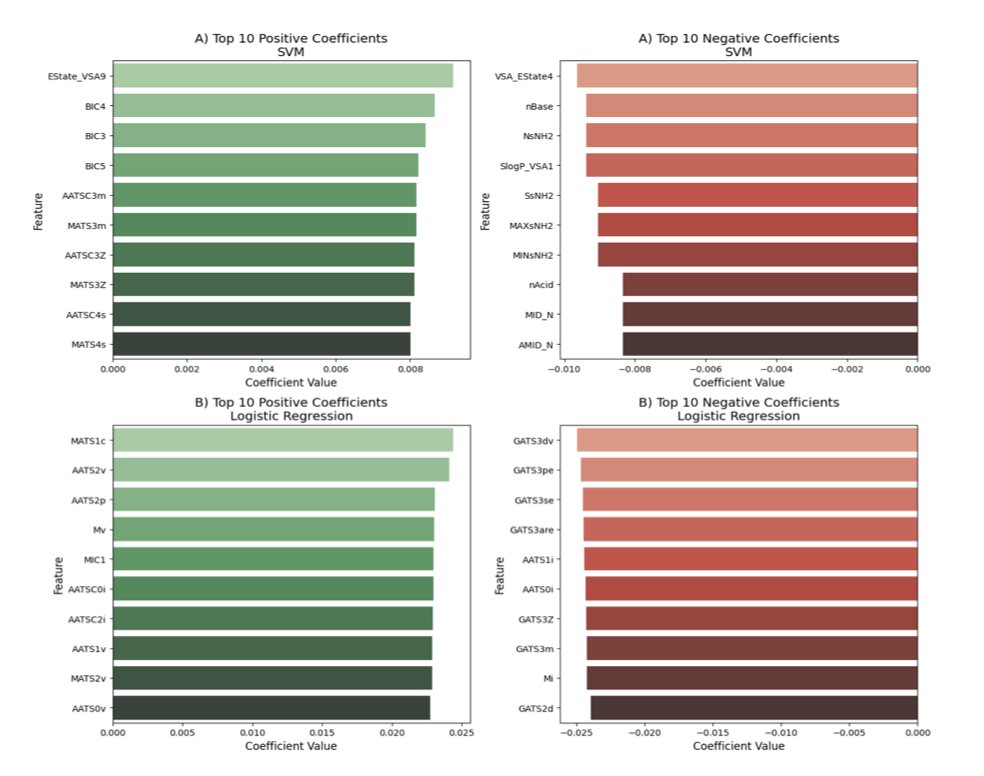
3. Five advanced ML models were employed: Neural Networks, Gradient Boosting, Logistic Regression, Random Forest, and Support Vector Machines. The Neural Network model achieved the highest certainty (88.84%) in predicting excipient effects, while Gradient Boosting showed the lowest error rate (14.57%), highlighting the robustness of these models in capturing complex interactions.
4. The study demonstrates the potential of active ML to optimize predictive models for pharmaceutical sciences, especially when working with limited datasets. By identifying key molecular features and refining model predictions iteratively, this approach facilitates informed excipient selection for precision probiotics, advancing therapeutic outcomes.
5. The findings underscore the importance of using advanced models like Neural Networks and Gradient Boosting in active learning frameworks. These models showed consistent improvement in certainty across rounds, outperforming simpler algorithms like Random Forest and SVM, which exhibited more variable performance.
6. The study also highlights the biological significance of molecular descriptors such as ECIndex and various atomic triplet descriptors (e.g., GATS3dv, AATS1se) in predicting excipient effects. These descriptors capture essential structural and physicochemical attributes that influence bacterial growth and probiotic stability.
📜Paper: https://t.co/FElaNymb3I
#MachineLearning #Probiotics #ActiveLearning #PharmaceuticalExcipients #PrecisionMedicine
Active Learning On Synthons For Molecular Design
Drug discovery is challenged by the intractability of exhaustive virtual screening, especially in ultra-large molecular spaces encountered in multi-vector expansion. Existing generative approaches struggle with balancing synthesizability, drug-likeness, and novelty.
Researchers introduce Scalable Active Learning via Synthon Acquisition (SALSA), a novel algorithm that extends pool-based active learning to non-enumerable spaces. SALSA achieves this by factoring modeling and acquisition over individual synthon or fragment choices, effectively circumventing the combinatorial complexity that limits other methods.
SALSA demonstrates remarkable sample efficiency and scalability. It can effectively screen molecular spaces containing trillions of compounds, identifying approximately 95% of top-performing molecules even when evaluating only a small fraction of the total possible compounds.
The algorithm excels in multi-parameter objective design tasks, achieving comparable chemical property profiles to known bioactive compounds while showing greater diversity and higher scores than leading generative methods. This highlights SALSA's ability to find novel, high-scoring molecular scaffolds.
A significant advantage of SALSA is the explicit control it offers over the chemical space, allowing practitioners to easily integrate expert knowledge and filter synthon sets based on desired physico-chemical properties or practical considerations like cost and lead-time.
Furthermore, every molecule identified by SALSA comes with a predicted synthesis route. This embedded synthetic route is highly valuable for medicinal chemists, streamlining the transition from the design phase to the experimental "make" phase and improving the actionability of discovered compounds.
Future work aims to further enhance SALSA's computational efficiency and explore joint modeling of synthon spaces to address implicit independence assumptions. The application of SALSA is also expected to expand to other molecular design tasks beyond multi-vector expansion, such as scaffold-hopping.
📜Paper: https://t.co/zrhE4uKrkE
#ComputationalBiology #DrugDiscovery #ActiveLearning #MolecularDesign #ChemicalSpace #Synthon

Active And Geometric Deep Learning Advances Chemical Reaction Prediction In Data-Scarce Drug Discovery
Computational biology experts at ETH Zurich and Roche Pharma have introduced an innovative closed-loop workflow that significantly enhances chemical reaction prediction, especially for late-stage functionalization (LSF) in drug discovery. This system addresses the challenge of insufficient reference data by integrating efficient reaction data acquisition with high-accuracy deep learning.
The core innovation lies in an active learning strategy that uses a computationally efficient tree-based ensemble to guide laboratory experiments. This approach intelligently selects the most informative experiments, leading to a profound expansion of relevant datasets for complex chemical reactions like C-H borylation.
By generating new reactions on novel and complex substrates, the experimental campaign yielded a highly diverse benchmark dataset for C-H borylation, demonstrating the method's ability to overcome data scarcity limitations.
The expanded dataset then allowed for the training and evaluation of geometric graph neural networks (GNNs). A key finding is that augmenting these symmetry-aware GNNs with self-supervised auxiliary tasks consistently improves their performance in predicting both reaction outcomes and regioselectivity.
In practical applications, the workflow has shown remarkable utility. Prospective tests on unseen substrates, including challenging N-heteroaryl motifs, accurately pinpointed the correct borylation positions in all cases, effectively closing the loop between model-guided experimentation and deep learning for efficient drug optimization.
Further analysis revealed that the XGBoost ensemble was the optimal choice for the active learning 'oracle' due to its superior predictive performance and uncertainty calibration. The Bayesian Active Learning by Disagreement (BALD) acquisition function proved most effective for selecting new molecules to enrich the training data.
This framework demonstrates that geometric GNNs generally outperform traditional tree-based methods in generalization tasks, particularly when predicting reaction outcomes and regioselectivity on challenging and novel chemical structures.
💻Code: https://t.co/66qzb4llwQ, https://t.co/DHrYzZIruD
📜Paper: https://t.co/LPudcYMEUp
#ComputationalBiology #DrugDiscovery #DeepLearning #ActiveLearning #ChemicalReactions #MachineLearning #Chemistry

Few-Shot Active Learning for De Novo Dual-Target Peptide Design With High Bio-Activity
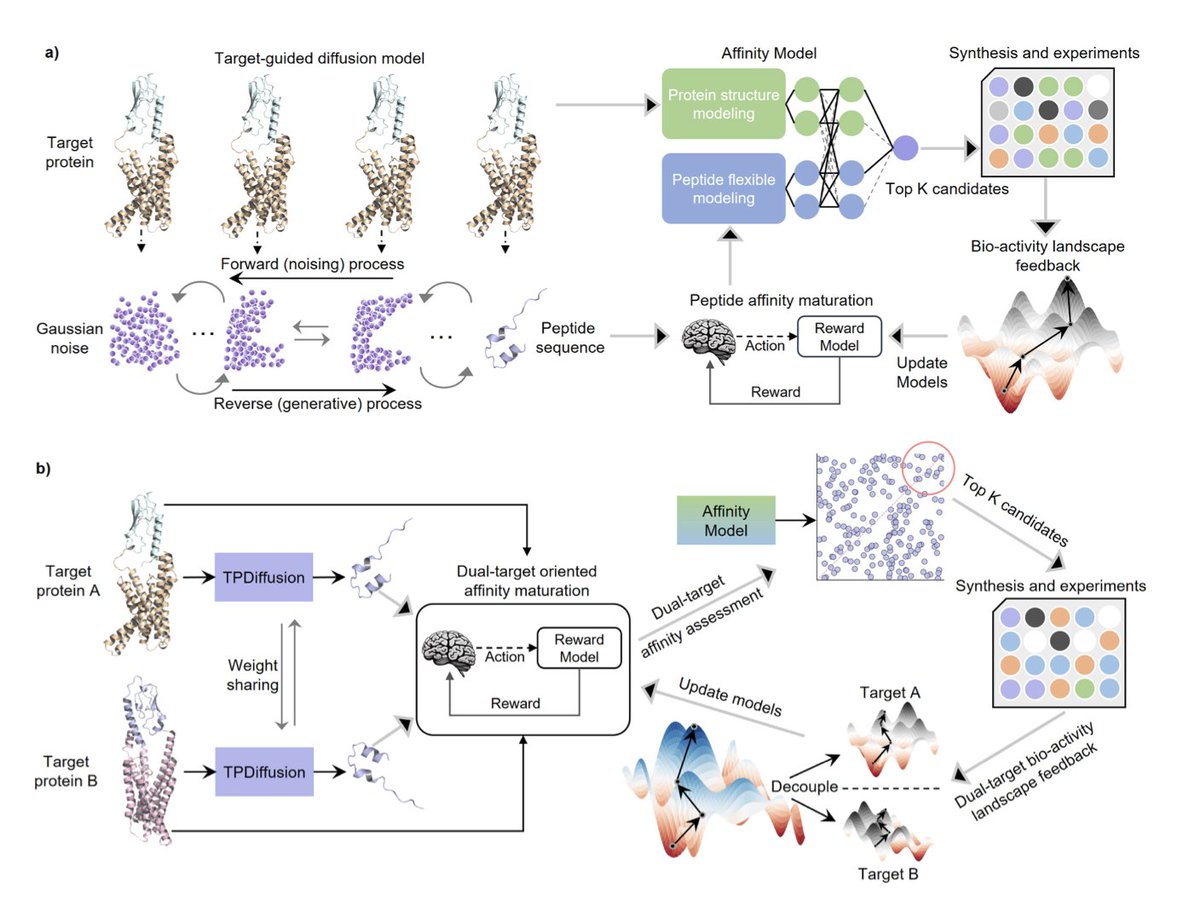
A groundbreaking study introduces ORIDTP, a few-shot active learning pipeline for de novo design of high bio-activity single-target and dual-target peptides. This innovative approach integrates in silico peptide generation with in vitro experimental feedback.
ORIDTP has successfully designed high bio-activity GLP-1R targeting peptides with EC_50 values as low as 8.1 pM after four iterative rounds, outperforming the natural peptide (40.8 pM).
The pipeline also excelled in designing de novo dual-target peptides for GLP-1R and GCGR. The best dual-target peptide achieved an EC_50 of 8.2 pM for GLP-1R (a 5.0-fold increase over GLP-1) and 0.24 nM for GCGR (a 5.8-fold increase over Glucagon).
ORIDTP combines a target-guided diffusion model for peptide generation, a reinforcement learning model for affinity maturation, and an affinity model for candidate screening, enabling continuous improvement through wet-laboratory feedback.
This research represents a significant advancement in the rapid and effective design of dual-target peptides, holding immense potential for novel therapeutic applications in complex diseases.
📜Paper: https://t.co/cGR9VTr3O2
#ComputationalBiology #PeptideDesign #DrugDiscovery #ActiveLearning #DeNovoDesign #Biotechnology #GLP1R #GCGR
MP-ALOE: An r²SCAN dataset for universal machine learning interatomic potentials
Researchers have introduced MP-ALOE, a novel dataset comprising nearly 1 million Density Functional Theory (DFT) calculations. This dataset utilizes the highly accurate r²SCAN meta-generalized gradient approximation, a significant advancement over the commonly used PBE level of theory for training universal machine learning interatomic potentials (UMLIPs).
A key innovation of MP-ALOE is its focus on off-equilibrium structures, which are often challenging for existing UMLIPs. By covering 89 elements and employing active learning, the dataset provides a broader and more diverse sampling of chemical environments, addressing limitations in accuracy and transferability for far-from-equilibrium systems.
MP-ALOE features a substantially greater sampling of high energy structures, large magnitude forces, and high pressures compared to the previous MatPES dataset. This expanded coverage leads to improved physicality of the potential energy surface under static extreme deformations and significantly enhances molecular dynamics stability in extreme temperature and pressure environments.
Benchmarking MACE models trained on MP-ALOE, MatPES, and a combination of both reveals that the combined dataset consistently achieves the strongest overall performance. This suggests that MP-ALOE is complementary to existing datasets, pushing the boundaries of UMLIP accuracy and robustness.
The MP-ALOE dataset is publicly available, offering a valuable resource to the computational materials science community to further develop and refine universal machine learning interatomic potentials.
📜Paper: https://t.co/usiGIF2Ejk
#ComputationalBiology #MaterialsScience #MachineLearning #DFT #UMLIP #ActiveLearning #MPALOE


Every chat is training data.
Log interactions, curate the gems, and feed them back as long-term memory.
Your product—and your users—level up together.
#ActiveLearning #buildinpublic
♻️ Reciprocal apprenticing: Every chat is training data.
Log > curate > pipe back into your vector store. Your product and users level up together.
#ActiveLearning
INTEGRATING PROTEIN LANGUAGE MODEL AND ACTIVE LEARNING FOR FEW-SHOT VIRAL VARIANT DETECTION
1. Researchers have developed VIRAL, an innovative active learning framework designed for the early and efficient detection of high-fitness SARS-CoV-2 variants. This system integrates a protein language model (ESM3), a Gaussian process with uncertainty estimation, and a biophysical model to predict variant fitness with minimal experimental data.
2. A key highlight of VIRAL is its remarkable efficiency, accelerating high-fitness variant detection by up to 5 times compared to random sampling. This is achieved while requiring experimental characterization of less than 1% of all possible variants, significantly reducing the resource burden in pandemic response.
3. The framework's strength lies in its ability to prioritize the most informative variants. By incorporating uncertainty-driven exploration, particularly with the Upper Confidence Bound (UCB) strategy, it can effectively balance exploiting known high-fitness regions and exploring uncertain areas to uncover novel, high-risk variants.
4. VIRAL demonstrates strong predictive accuracy in identifying evolutionarily significant sites, especially those that enable antibody escape. It successfully pinpointed key mutation hotspots observed during natural viral evolution, even when trained on extremely limited initial datasets.
5. The integration of structural information from ESM3 significantly enhances the predictive accuracy of the model. This allows for a deeper understanding of how mutations affect binding affinities to cell receptors and antibodies, providing a more robust basis for fitness predictions.
6. This framework offers enhanced predictive capability, effectively identifying sites under selective pressure up to two years earlier than traditional baseline predictors that rely on historical mutation data. This provides a crucial advantage for proactive viral surveillance.
7. When focusing on the most concerning variants (top 1% fitness scores), the UCB acquisition method achieved an enrichment factor of up to 11, underscoring VIRAL's precision in identifying the most dangerous mutations.
💻Code: https://t.co/mlwxcbupwW
📜Paper: https://t.co/PvAENZZ96Y
#ComputationalBiology #Virology #SARSCoV2 #VariantDetection #ActiveLearning #ProteinLanguageModel #PandemicPreparedness

Accelerating ligand discovery by combining Bayesian optimization with MMGBSA-based binding affinity calculations
1.This study introduces a scalable active learning framework that integrates Bayesian optimization with MMGBSA-based binding affinity predictions, offering MD-level accuracy in ligand ranking at significantly reduced computational cost.
2.Unlike traditional docking scores, MMGBSA demonstrates a much higher correlation with experimental binding affinities (Pearson R = 0.61 vs 0.18 for Vina), making it a more reliable metric for virtual screening.
3.The pipeline replaces human-guided candidate selection with a data-driven strategy using pretrained molecular embeddings (MolFormer, ChemBERTa-2) and lightweight surrogate models (Bayesian linear regression, Random Forests).
4.A one-at-a-time acquisition strategy in active learning outperforms traditional batch approaches, retrieving up to 80% of the top-1% binders (by MMGBSA score) after querying just 6% of a 60,000-compound dataset.
5.Surprisingly, the simple linear regression model consistently outperforms more complex Random Forests, attributed to better-calibrated uncertainty estimates essential for effective Bayesian optimization.
6.Pretrained embeddings from MolFormer outperform ChemBERTa-2 when learning MMGBSA scores, likely due to the richer structural representations learned through masked language modeling.
7.Learning MMGBSA scores is significantly harder than learning docking scores, likely due to their complex dependence on 3D structural and dynamic properties, which SMILES-based embeddings alone may not fully capture.
8.Even though docking-based models can achieve higher retrieval rates (up to 97%), MMGBSA-based selection retrieves chemically distinct compounds that are more likely to exhibit true high binding affinity.
9.The framework successfully scales to large chemical spaces, as demonstrated with a 60k-compound subset targeting the MCL1 protein, a challenging cancer target with known binders.
10.Performance is sensitive to the initial molecule used to seed the active learning loop; however, this sensitivity can be mitigated by smarter initialization or diverse starting points.
11.Unlike prior methods, the authors show that retraining only the regression head is sufficient, allowing fast and frequent model updates—critical for practical deployment in high-performance computing environments.
12.Future directions include incorporating richer 3D or pose-aware features into molecular embeddings and extending the pipeline to more rigorous free energy methods or experimental feedback.
💻Code: https://t.co/vnBlmBBuY0
📜Paper: https://t.co/pzDp9zH3dU
#DrugDiscovery #ActiveLearning #MolecularDocking #MMGBSA #BayesianOptimization #Cheminformatics #ProteinLigandBinding

Optimization of regulatory DNA with active learning
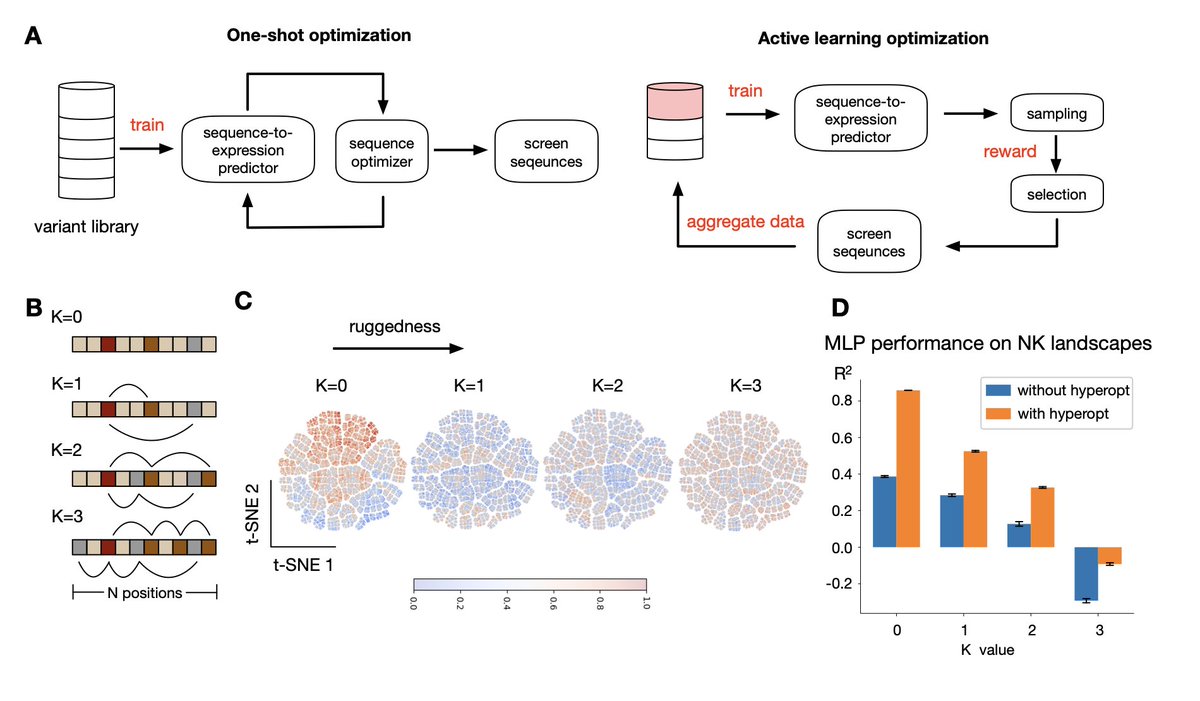
1.This study explores how active learning can enhance the design of regulatory DNA sequences to improve protein expression, outperforming traditional one-shot optimization methods—especially in complex, epistatic genotype-phenotype landscapes.
2.The authors first benchmarked active learning using synthetic data generated by the NK model, which allows precise control over landscape ruggedness via the epistasis parameter K. They showed that active learning effectively navigates even highly rugged fitness landscapes.
3.A key insight: active learning can iteratively improve the model and its predictions by integrating experimental feedback, enabling more informed sequence selection compared to fixed models in one-shot optimization.
4.They evaluated different sampling strategies for generating new sequences, including random sampling, directed evolution, genetic drift, and recombination. Directed evolution and recombination consistently yielded higher expression improvements.
5.To explore real-world performance, they applied active learning to a massive yeast promoter dataset (20M+ sequences). Using a transformer-based expression predictor as ground truth, they demonstrated successful optimization under both high- and low-expression initial conditions.
6.Active learning consistently improved expression across iterations and outperformed random sampling, gradient descent, and strong-selection weak-mutation (SSWM) in both synthetic and experimental landscapes.
7.They introduced robustness tests, including adding noise to initial measurements and initializing with data from different experimental conditions. Active learning maintained strong performance in all these scenarios, indicating strong generalization capacity.
8.A notable experiment showed that pre-optimizing in one growth medium before running active learning in another medium led to further improvements, supporting the potential for cross-lab and cross-condition data transfer.
9.They further enhanced sequence selection by incorporating biological priors into the reward function, specifically transcription factor binding motif scores. This biologically informed reward boosted optimization efficiency and led to motif enrichment in selected sequences.
10.The study demonstrates that active learning not only navigates high-dimensional DNA landscapes efficiently but also captures mechanistically relevant features, offering a scalable and generalizable approach to sequence design.
11.This work positions active learning as a powerful strategy for synthetic biology applications where experimental resources are limited but phenotype optimization is critical.
💻Code: https://t.co/4bR72nrujI
📜Paper: https://t.co/9Q9cH6qHYv
#SyntheticBiology #ActiveLearning #DNAOptimization #ProteinExpression #GenotypePhenotype #MachineLearning #RegulatoryGenomics
Rapid Cell-Free Combinatorial Mutagenesis Workflow Using Small Oligos Suitable for High-Iteration, Active Learning-Guided Protein Engineering
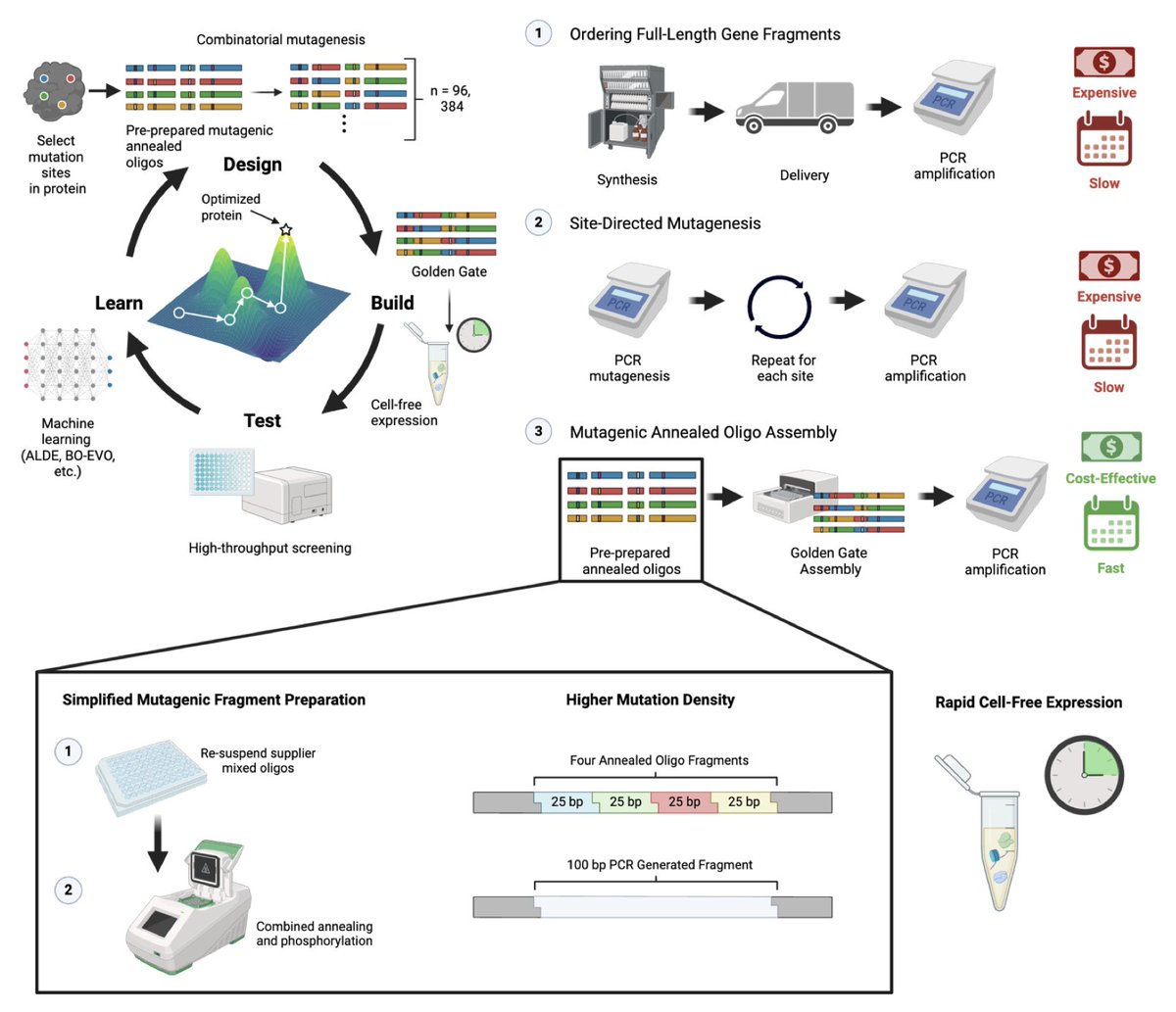
1.The authors present a fast, cost-effective workflow for protein engineering using small mutagenic oligos and cell-free expression. This method enables the construction and screening of protein variants in under 9 hours, making it highly compatible with active learning frameworks that require rapid iteration.
2.Unlike traditional workflows that rely on cell-based cloning and expression, this system uses PCR-assembled Golden Gate constructs from short (15–30 bp) annealed oligos. These fragments are easy to synthesize in bulk and eliminate the need for repeated site-directed mutagenesis or gene synthesis.
3.The workflow supports high-complexity combinatorial mutagenesis. The small size of the oligos minimizes combinatorial coupling, allowing mutations at many sites to be assembled independently, which significantly reduces cost and complexity.
4.Functionality was validated using both sfGFP and uricase. Assemblies with 3, 5, and 10 mutagenic fragments produced functional proteins with high fidelity. sfGFP mutants exhibited predictable color shifts, and uricase variants retained enzymatic activity comparable to gene-synthesized controls.
5.Crude PCR products from the oligo assemblies were directly used in cell-free reactions, with no need for purification. This greatly shortens turnaround time and is compatible with standard plate readers for screening.
6.The method scales well for higher-order assemblies: a 10-oligo sfGFP construct was successfully built and screened, showing that the workflow can handle complex mutational designs. Misligation products appeared but did not compromise functional screening.
7.The protocol is designed for automation. A 96-well screening campaign was executed using a low-cost Opentrons OT-2 robot, confirming the workflow's practicality for medium-throughput campaigns (10s to 100s of variants per round).
8.Compared to recent active learning-guided workflows, this approach is faster and more modular. By avoiding full-gene synthesis or site-directed mutagenesis in each round, researchers can iterate more frequently, improving the performance of machine learning models.
9.The study outlines a viable path toward democratizing ML-guided protein engineering. The combination of rapid mutagenesis, automation compatibility, and simplified expression lowers barriers to entry for small labs aiming to implement active learning.
10.Limitations remain. Mutation sites too close together can't be easily split across oligos, and the system is not designed for ultra-high-throughput applications. Some assemblies showed misligation artifacts, though not impactful in this context.
11.Nonetheless, this method offers a powerful balance of speed, cost-efficiency, and flexibility. It is especially well-suited for testing large combinatorial landscapes (>7 mutation sites), where traditional workflows become impractical.
📜Paper: https://t.co/pPsnlkupUg
#ProteinEngineering #ActiveLearning #SyntheticBiology #CellFreeSystems #DirectedEvolution #MachineLearning
Active Learning-Guided Seq2Seq Variational Autoencoder for Multi-target Inhibitor Generation
1.This paper introduces a structured active learning (AL) framework built around a Seq2Seq Variational Autoencoder (VAE) to generate molecules with high predicted affinity to multiple therapeutic targets simultaneously—a crucial challenge in drug discovery.
2.The method is specifically applied to design pan-inhibitors for the main proteases (Mpro) of three coronaviruses: SARS-CoV-2, SARS-CoV, and MERS-CoV. These targets share structural homology, making them ideal for testing multi-target generation.
3.The innovation lies in a two-level active learning loop: Chemical AL filters molecules by drug-likeness and synthesizability, while Affinity AL evaluates predicted binding affinity to all targets, using adaptive docking score thresholds to progressively refine candidates.
4.Their approach generates chemically diverse, novel molecules using a Seq2Seq VAE trained first on a broad SMILES dataset, then fine-tuned on molecules with known multi-target affinity—without requiring simultaneous binding to all targets in training.
5.The model alternates between Chemical and Affinity AL cycles, promoting exploration first, then increasing docking stringency to narrow focus toward potent multi-target candidates. The docking thresholds are gradually tightened using a decay mechanism.
6.Ablation studies showed that excluding SMARTS-based toxicophore filters during Chemical AL (and applying them post-generation) improved performance, increasing candidate yield up to 3-fold under stringent docking thresholds, while retaining chemical validity.
7.Their best configuration generated 960 candidate pan-inhibitors, 959 of which are novel compared to ultra-large compound libraries (e.g., ZINC22, WuXi, Enamine REAL), suggesting the workflow effectively explores previously untapped chemical space.
8.Candidate molecules demonstrate high novelty, uniqueness, and scaffold diversity, with UMAP analyses confirming broad and even exploration across chemical space, and clustering revealing continued scaffold emergence throughout active learning cycles.
9.The framework supports flexible trade-offs between diversity and optimization, enabling broad early exploration followed by focused refinement—a key advantage for multi-objective molecular design tasks like polypharmacology or avoiding antitargets.
10.Though demonstrated on coronavirus Mpro, the pipeline is generalizable to other drug discovery contexts. The authors suggest future extensions could integrate antitarget avoidance and multi-conformation docking, albeit with higher computational demands.
📜Paper: https://t.co/GpUzPcjD2F
#DrugDiscovery #AI #MolecularGeneration #VAE #ActiveLearning #COVID19 #ComputationalBiology

Discovery of unconventional and nonintuitive self-assembling peptide materials using experiment-driven machine learning @ScienceAdvances
1.This study introduces a machine learning–driven strategy to identify self-assembling pentapeptides that form β sheet structures, many of which are not predicted by traditional design rules.
2.Unlike conventional methods relying on hydrophobicity or β sheet propensity tables, the authors actively target peptides where ML models and traditional predictors disagree—leading to the discovery of 96 β sheet–forming sequences out of 268 tested.
3.Crucially, many of the successful peptides identified lack valine, an amino acid often overrepresented in classical β sheet designs. This expands the chemical design space to previously ignored, diverse sequences.
4.Notable nonintuitive sequences discovered include ILFSM, LMISI, MITIY, MISIW, and WKIYI—none of which are obvious candidates under conventional β sheet design paradigms.
5.The ML framework used support vector regression and Gaussian process regression models trained on a combination of cheminformatics descriptors and experimental feedback, improving prediction accuracy iteratively via active learning loops.
6.Three rounds of ML-guided synthesis and evaluation were conducted. In each round, ~70 new peptides were selected, synthesized, and evaluated using FTIR spectroscopy for β sheet formation.
7.Rather than maximizing prediction scores alone, the selection process prioritized peptides in regions where ML and β sheet scores strongly disagreed—leading to the identification of both false positives and false negatives in classical methods.
8.The final ML models significantly outperformed classical β sheet propensity scores, particularly in detecting non-valine sequences. For example, the model achieved high F1 scores and accuracy on valine-free sequences.
9.Detailed feature analysis of the ML models highlights the roles of patterning, hydrophobicity (via SlogP-VSA descriptors), and polarizability (SMR-VSA descriptors) in β sheet formation—validating known principles and revealing new correlations.
10.The authors also show that sequence order matters: scrambled peptide pairs like FKVEF and KVEFF yield different assembly behaviors, and the ML models begin to capture these subtle sequence dependencies better than traditional tools like Tango.
11.To support the community, a web-based tool was developed allowing users to input pentapeptide sequences and receive predicted IR scores along with relevant physicochemical properties.
💻Code: https://t.co/EGjhj6v1u1
📜Paper: https://t.co/6yQeGkTyLh
#MachineLearning #PeptideDesign #ProteinEngineering #Biomaterials #BetaSheet #AI4Science #ComputationalBiology #ActiveLearning #SelfAssembly

Predicting high-fitness viral protein variants with Bayesian active learning and biophysics @PNASNews
1.The authors introduce VIRAL, a framework that combines protein language models, Gaussian processes, and a biophysical fitness model to predict high-fitness SARS-CoV-2 variants using minimal experimental data.
2.VIRAL achieves up to 5× enrichment in identifying top variants compared to random search, while experimentally characterizing less than 1% of possible sequences.
3.The framework leverages ESM3, a structure-aware protein language model, to encode RBD sequences, which are then used by a Gaussian process to predict binding affinities to ACE2 and antibodies.
4.Predicted binding affinities and uncertainties are fed into a biophysical model to estimate viral fitness. This approach is interpretable, relating fitness to escape potential and receptor affinity.
5.An active learning loop iteratively selects new variants for testing using an Upper Confidence Bound (UCB) strategy, which balances exploitation and exploration across the sequence space.
6.UCB-guided selection shows broader sampling and higher semantic diversity in acquired variants, leading to better identification of antigenically novel but high-risk variants compared to greedy strategies.
7.The model effectively identifies sites under evolutionary pressure, predicting highly mutable residues (e.g., positions 484, 486, 493) up to two years earlier than sequence-only baselines.
8.Despite being trained on very limited data, VIRAL captures epistatic effects between mutations via the nonlinearity of the GP kernel, the ESM embedding, and the biophysical model.
9.Benchmarking on combinatorial mutagenesis and DMS datasets confirms the method’s robustness and ability to generalize across data types.
10.The pipeline is highly suited to early-stage pandemic surveillance: it requires only initial low-throughput binding data and a few known antibodies to begin identifying concerning variants.
11.VIRAL’s predictive power opens opportunities for proactive vaccine design, enabling selection of preemptive candidate antigens for polyvalent or mosaic formulations.
12.This work demonstrates that integrating biophysics, machine learning, and uncertainty estimation can significantly accelerate identification of viral threats under experimental constraints.
💻Code: https://t.co/mlwxcbupwW
📜Paper: https://t.co/3tOQtuxWTS
#ProteinDesign #ActiveLearning #BayesianOptimization #SARSCoV2 #MachineLearning #Biophysics #ComputationalBiology #PandemicPreparedness

DID YOU KNOW?
Movement boosts learning.
Kids absorb and retain more when they’re allowed to move. Long periods of sitting can actually limit their focus and memory. Let’s rethink how we support learning sometimes, a little wiggle goes a long way.
#learningtips #ChildDevelopment #activelearning #kidseducation #ParentingTips

ProSpero: Active Learning for Robust Protein Design Beyond Wild-Type Neighborhoods
1.PROSPERO is a new framework for protein sequence design that actively guides a pre-trained generative model using a surrogate model updated via oracle feedback. Unlike many methods limited to local mutations near wild-type sequences, PROSPERO robustly explores novel regions while preserving biological plausibility.
2.The key innovation lies in inference-time guidance: instead of retraining generative models, PROSPERO leverages a frozen EvoDiff model and directs its outputs using an updated fitness proxy. This significantly reduces computational cost and overfitting risk.
3.PROSPERO introduces a targeted masking strategy that focuses mutations on fitness-relevant residues while protecting structurally critical ones. This strategy is inspired by alanine scanning and avoids disrupting conserved sites.
4.The second major innovation is biologically-constrained Sequential Monte Carlo (SMC) sampling. It restricts amino acid proposals to the same charge class as wild-type residues, ensuring that exploration remains within biologically plausible subspaces, even under proxy model misspecification.
5.Experiments on eight diverse protein engineering tasks show PROSPERO consistently achieves high-fitness sequences beyond the wild-type neighborhood. It ranks first on 5 tasks and second on 3 in terms of maximum fitness, outperforming methods like PEX, BO, and GFlowNets.
6.PROSPERO also breaks the typical trade-off between fitness and novelty. It retrieves sequences that are both highly fit and substantially different from the wild-type, often achieving 2–9× more novelty than methods like PEX with comparable fitness.
7.Diversity is maintained across top candidates, and the method produces sequences with strong folding confidence (pLDDT, pTM) and valid physicochemical properties, indicating biological plausibility.
8.Robustness tests under noisy surrogate models show PROSPERO outperforms baselines even when the proxy is unreliable. The advantage grows as the signal-to-noise ratio improves, highlighting its effective use of fitness signal.
9.Ablation studies confirm both targeted masking and biologically-constrained SMC are essential. Removing either leads to lower performance, especially in high-noise scenarios.
10.Overall, PROSPERO is a practical and general-purpose tool for protein design under limited data and expensive evaluations. It combines efficiency, robustness, and biological realism, making it a strong candidate for lab-in-the-loop applications.
📜Paper: https://t.co/ByOrImCoTL
#ProteinDesign #MachineLearning #Bioinformatics #ActiveLearning #ProteinEngineering #SyntheticBiology

Molecular property prediction using pretrained-BERT and Bayesian active learning: a data-efficient approach to drug design @BMCBiology
1. This study integrates pretrained BERT (MolBERT) with Bayesian active learning (AL) to significantly improve drug discovery by efficiently predicting molecular properties with minimal labeled data. This method enhances data efficiency and accelerates drug design processes.
2. The integration of BERT, pretrained on 1.26 million compounds, allows the model to leverage rich molecular representations that enable better uncertainty estimation, a key factor for active learning in drug discovery. This separates representation learning from uncertainty estimation, optimizing both.
3. Using Bayesian active learning, the study identifies the most informative compounds for labeling, improving model performance while reducing the number of iterations needed. In comparison to conventional AL, the proposed method achieves the same results with 50% fewer iterations.
4. The experiments, including toxic compound prediction on the Tox21 and ClinTox datasets, demonstrate that the BERT-based approach outperforms traditional methods, with better model calibration and faster convergence in sample selection, particularly in toxicology.
5. The study also compares the performance of various acquisition functions, including Expected Predictive Information Gain (EPIG) and Bayesian Active Learning by Disagreement (BALD), showing that EPIG consistently provides more stable and reliable results with the BERT representations.
6. Visualizations such as UMAP and PCA illustrate the superior ability of BERT representations to create a more structured embedding space, facilitating faster and more accurate identification of useful molecular features in the active learning process.
7. One key takeaway is that using high-quality molecular representations, like those generated by MolBERT, drastically enhances uncertainty estimation, allowing for more reliable selection of compounds even when starting with limited data.
8. This work paves the way for more efficient and scalable drug discovery workflows, particularly in early-stage compound prioritization and toxicity prediction, making it a valuable tool for pharmaceutical applications.
💻Code: https://t.co/Mr47pa0gPT
📜Paper: https://t.co/rICBRQF1Og
#DrugDiscovery #AIinBiology #MachineLearning #ActiveLearning #Bioinformatics #DrugDesign #MolecularPrediction #BayesianLearning #BERT #Chemoinformatics

Finding Drug Candidate Hits With a Hundred Samples: Ultra-low Data Screening With Active Learning
1. This study demonstrates that it's possible to reliably identify drug candidate hits using just 110 affinity evaluations, making active learning viable for academic labs with limited resources.
2. The authors identify a top-performing combination—Multi-Layer Perceptron (MLP) with Continuous and Data-Driven Descriptors (CDDD), enhanced by Pairwise Difference Regression (PADRE)—that achieves a 100% probability of finding at least five top-1% hits in a large chemical library.
3. PADRE plays a key role by augmenting data from as few as 10 initial molecules, dramatically boosting early-phase model performance and hit discovery rates, even under noisy or uncertain conditions.
4. Greedy, Expected Improvement (EI), and Upper Confidence Bound (UCB) acquisition strategies all outperform random selection, but greedy acquisition remains surprisingly effective and simple for ultra-low data regimes.
5. The study includes realistic noise simulations (10–30%) to mirror experimental variability, showing that robust setups (especially RF + MQN + PADRE) maintain strong hit discovery even under noisy conditions.
6. Enriching the initial pool with just one known active molecule (from the top 1% of docking scores) further improves the likelihood of success—raising the hit probability from 73% to 93% for the top model.
7. Even in the smaller Enamine DDS-10 library (~10k molecules), the pipeline remains reliable: top strategies still consistently discover 10+ hits with 100% probability, showing the framework’s versatility across dataset sizes.
8. Key design choices—simple models (MLP, RF), expressive descriptors (CDDD, MQN), and thoughtful acquisition functions—enable efficient screening without the need for complex GNNs or large datasets.
9. These results emphasize that accurate prediction of weak binders early in the AL cycle is essential to steer the model toward potent candidates—especially when only a few hundred experiments are feasible.
10. Overall, this work offers a robust, practical blueprint for hit discovery in low-data settings, highlighting the power of combining thoughtful data representation, augmentation, and acquisition strategies.
💻Code: https://t.co/0W0oLQA8o1
📜Paper: https://t.co/rER6CL7cA9
#ActiveLearning #DrugDiscovery #LowData #Cheminformatics #MolecularScreening #AI4Science #ComputationalBiology

Active Learning for Protein Structure Prediction @sanofi
1. This study introduces DEWDROP, a novel active learning strategy designed specifically for 3D protein structure prediction, addressing the challenge of high-dimensional regression with limited labeled data.
2. DEWDROP selects training samples based on joint entropy estimated from ensembles of structure predictions, allowing it to target high-information, high-uncertainty examples while maintaining diversity within selected batches.
3. Unlike standard methods like BADGE and K-Means, which rely on gradients or embeddings, DEWDROP directly leverages the stochasticity from Monte Carlo dropout to estimate structural uncertainty—suitable even for complex models like Equifold.
4. The method is benchmarked on two datasets: PDB1700 (nanobody VHH structures) and a curated Mycobacteria protein set. In both cases, DEWDROP achieved faster convergence and better total structure prediction loss than competing strategies.
5. DEWDROP-trained models showed a stronger correlation between predicted uncertainty and true validation error than those trained on K-Means or BADGE batches, indicating more effective selection of informative samples.
6. The method performs particularly well on global structure metrics (like FAPE and total loss), while BADGE slightly outperforms in local angle and bond accuracy—highlighting DEWDROP’s emphasis on 3D spatial uncertainty.
7. For each batch selection, DEWDROP optimizes an acquisition function derived from pairwise joint entropy among predictions, using an efficient batch search algorithm that scales to thousands of candidate proteins.
8. The authors fine-tuned an Equifold-based structure predictor on VHH antibodies (Nanofold), showing that DEWDROP-selected batches consistently yield more accurate models across multiple training rounds.
9. In ablation analyses, DEWDROP achieved better performance with fewer data points compared to baselines—demonstrating improved labeling efficiency and reduced experimental overhead in protein modeling.
10. This framework provides a scalable and model-agnostic approach to active learning in structural biology, paving the way for data-efficient discovery in underexplored protein families, especially where experimental structures are scarce.
💻Code: https://t.co/tbrCt6O22X
📜Paper: https://t.co/CjoZq5bDqJ
#ProteinStructure #ActiveLearning #DeepLearning #EquivariantModels #Bioinformatics #Nanobody #ComputationalBiology #StructuralBiology #DrugDiscovery #ProteinFolding

Did you know that kids remember 90% of what they DO but only 10% of what they read? Hands-on learning boosts memory, creativity, and problem-solving skills. Whether it’s coding, science experiments, or interactive lessons, engaging activities help children retain information better.
Let’s make learning fun and effective.
Visit https://t.co/K8Rt1rpNb1 to get started
#activelearning #kidseducation #kstudylearning

Efficient Data Selection for Training Genomic Perturbation Models
- A new study proposes innovative graph-based one-shot data selection methods for training gene expression models, designed to overcome limitations of current active learning techniques.
- The main issue with active learning in genomic experiments is poor model initialization, which can lead to suboptimal data selection early in the training process. This issue is amplified by the limited number of experimental cycles in genomic studies.
- Unlike active learning, one-shot data selection predefines the gene perturbations before training, eliminating the initialization bias and providing more efficient training.
- Two novel methods are introduced: GraphReach and MaxSpec. Both rely on graph neural network (GNN) generalization principles to define data selection criteria.
- GraphReach maximizes the coverage of the knowledge graph by selecting nodes that cover the most information. This greedy algorithm ensures that the train set covers a broad spectrum of the graph’s information.
- MaxSpec focuses on minimizing the spectral norm of the subgraph induced by the selected training nodes. This approach aims to improve model generalization by enhancing the robustness of the message-passing mechanism within the GNN.
- The study evaluates these methods using two genomic datasets: Replogle and Adamson. The Replogle dataset contains 1087 gene perturbations, while the Adamson dataset contains 81 perturbations, both performed on K562 cells.
- Results show that GraphReach outperforms existing active learning methods in most cases, particularly in the Replogle dataset. MaxSpec performs well on the larger dataset but struggles with smaller datasets like Adamson.
- Random selection is found to outperform or closely match sophisticated active learning methods in limited cycle scenarios, further highlighting the risks associated with active learning initialization.
- GraphReach is shown to be computationally efficient, scaling well even when the number of available perturbations is large.
- The authors suggest that combining graph-based data selection methods with active learning could further enhance performance by first initializing training with GraphReach and then refining using active learning.
📜Paper: https://t.co/bD2wNxM43A
#Genomics #MachineLearning #GNN #ActiveLearning #GraphReach #MaxSpec #CRISPR #PerturbSeq #Bioinformatics


🌟This simple strategy enhances writing ✍️, pronunciation 🎧, and listening skills all at once! 🌍
#LanguageLearningTips #ActiveLearning #FluencyTraining #PronunciationMatters #LanguageGoals
🌟 Boost your language skills with the “Write, Record, Reflect” Method! 📝🎙️🤔
1️⃣ Write a short text in your target language.
2️⃣ Record yourself reading it.
3️⃣ Listen, compare, rewrite, & repeat!
This simple strategy enhances writing ✍️, pronunciation 🎧, and listening skills all at once! 🌍
#LanguageLearningTips #ActiveLearning #FluencyTraining #PronunciationMatters #LanguageGoals #TEACHers

🌟This simple strategy enhances writing ✍️, pronunciation 🎧, and listening skills all at once! 🌍
#LanguageLearningTips #ActiveLearning #FluencyTraining #PronunciationMatters #LanguageGoals
🌟 Boost your language skills with the “Write, Record, Reflect” Method! 📝🎙️🤔
1️⃣ Write a short text in your target language.
2️⃣ Record yourself reading it.
3️⃣ Listen, compare, rewrite, & repeat!
This simple strategy enhances writing ✍️, pronunciation 🎧, and listening skills all at once! 🌍
#LanguageLearningTips #ActiveLearning #FluencyTraining #PronunciationMatters #LanguageGoals #TEACHers
Last Seen Hashtags on Sotwe
Trends for you
Most Popular Users

Elon Musk 
@elonmusk
240.1M followers

Barack Obama
@barackobama
118.6M followers

Cristiano Ronaldo
@cristiano
114.4M followers

Donald J. Trump
@realdonaldtrump
111.8M followers

Narendra Modi
@narendramodi
106.9M followers

Rihanna
@rihanna
98.6M followers

NASA
@nasa
92.1M followers

Justin Bieber
@justinbieber
91.7M followers

KATY PERRY
@katyperry
89.9M followers

Taylor Swift
@taylorswift13
83.9M followers

Lady Gaga
@ladygaga
75.4M followers

Virat Kohli
@imvkohli
73.3M followers

Kim Kardashian
@kimkardashian
70.8M followers

YouTube
@youtube
68.6M followers

Neymar Jr
@neymarjr
66.3M followers

Bill Gates
@billgates
65.2M followers

Selena Gomez
@selenagomez
63M followers

The Ellen Show
@theellenshow
62.1M followers

CNN
@cnn
61.7M followers

X
@x
60.6M followers