

Top Tweets for #afnm


A Fano fighter is seen sitting in the mayor’s office in Mehal Meda, North Shewa Zone, Amhara Region.


Wendim Sisay:
Since our exchange began on October 7, when you entered a discussion I was having with another brother, the argument has travelled considerably. You began by questioning cooperation with the #TPLF and #OLA, then raised concerns about #AFNM’s legitimacy, organizational cohesion, military integration, and the alliance’s safeguards. You subsequently acknowledged AFNM’s political agency, yet continue to return to questions I have repeatedly addressed. I have never argued that AFNM is beyond criticism or that urgency substitutes for scrutiny. My argument is that an organization emerging from a prolonged and difficult process of consolidation, while confronting an existential threat, deserves reasonable time, space, strategic discretion, and intellectual humility from those of us observing from thousands of miles away. Its internal consolidation and external cooperation need not be mutually exclusive. The alliance has articulated a broad political framework, not a completed constitutional settlement. Its leadership must ultimately answer questions about guarantees and accountability, but demanding institutional completeness before political action risks confusing scrutiny with paralysis.
Now, regarding your invitation to examine our respective political records, let us establish that you introduced that comparison, not I. I have never questioned your contributions, nor am I interested in competing over political purity, seniority, or recognition. I hold no public office, belong to no political organization, and have generally preferred to work away from the spotlight. But my understanding of the Amhara predicament comes from a different historical and epistemological position. I was born and grew up in eastern Ethiopia, outside the historical Amhara provinces, where my earliest childhood memories of political violence involved armed movements associated with #Jarra_Abba_Gada, whose ideological legacy some continue to celebrate publicly. I witnessed the persecution, social destruction, and economic marginalization of Amhara communities long before the present catastrophe. Following the TPLF's assumption of power in May 1991, the very foundations of Ethiopian political identity and citizenship were profoundly transformed. Amhara communities outside their historical provinces were particularly vulnerable, often lacking the political organization and collective agency necessary for their protection. Some attempted to organize independently in the forests of eastern and southeastern Ethiopia, but many remained exposed. My subsequent professional travels across Ethiopia, particularly through my work in the travel industry, brought me into contact with similar experiences elsewhere. For me, the question of survival is not a philosophical abstraction. I have witnessed what happens when a community lacks the political agency to defend itself.
My engagement continued after my permanent relocation to the United States in the early 2000s. I particularly acknowledge the pioneering contributions of the Moresh Amhara movement and intellectuals such as Dr. #Assefa_Negash, whom I regard, based on my reading and personal interactions, as one of the greatest living Ethiopian public intellectuals. Some of my earliest documentary contributions involved preserving and circulating discussions from Paltalk forums, including recordings that I uploaded for wider public access. Around 2012 or 2013, I obtained and uploaded a particularly disturbing video concerning Amhara women in #Gojjam who reportedly sought holy water after experiencing infertility, amid allegations of forced sterilization. I also shared that material with Ethiopian Satellite Television (ESAT). The allegations warrant careful documentation, but the testimony itself remains part of the historical record I sought to preserve. I also recall the importance of Dr. Alemseged Abbay's Identity Jilted, one of the most illuminating works on the Amhara predicament. Around 2013 or 2014, while I was a student living on a limited budget, my friend Mr. #Befekadu_Getachew generously purchased and sent me a copy. Recognizing its intellectual significance, I subsequently encouraged him to help make it more widely accessible through digitization [(The copy of Identity Jilted you read on WordPress was the result of the painstaking work of my dear friend, Befekadu Getachew]. These experiences reflect years of engagement, documentation, and intellectual exchange within the diaspora, long before the present controversy. I recount them only because you have raised the question of our respective records. We have all contributed in different ways, and I have no desire to turn collective suffering into a competition over personal credentials. Let the historical record speak for itself.
It is precisely because I know the historical record of the TPLF and Oromo armed movements that my present assessment deserves to be understood in context. Notwithstanding those experiences, I consider the danger posed by Abiy Ahmed’s government to be potentially more consequential for Amhara survival than anything we have confronted in recent memory, perhaps comparable in historical gravity to the upheavals of the sixteenth century. This is why I insist on distinguishing historical grievances from immediate strategic priorities. Recognizing yesterday’s perpetrators does not absolve us of the responsibility to identify today’s most pressing danger.
And no, brother, the burning house analogy does not establish that every firefighter is competent. It establishes that the consequences of refusing assistance must be examined as seriously as the risks of accepting it. You are entitled to demand guarantees, question the alliance, and scrutinize its leadership. I have never disputed that right. But let me ask you another question: Can you identify a consequential political or military movement, particularly in the history of the Horn of Africa, that has regarded strategic cooperation as inherently illegitimate or political isolation as a virtue? Alliances are neither mandatory nor guarantees of success, but they have been indispensable instruments of political and military survival throughout history. Even Ethiopia's liberation in 1941 involved cooperation between Ethiopian patriots and British forces, notwithstanding the subsequent complications concerning sovereignty. The question, therefore, is not whether alliances are morally pure, but whether their benefits, risks, and alternatives are assessed within the actual circumstances confronting those who must make these decisions. After several days of exchanges, my original question remains unanswered: What viable alternative do you propose, and how does it better protect the Amhara people under present circumstances? Criticism is indispensable, but criticism alone is not a strategy.
Wendim Sisay, I remain entirely open to continuing this conversation, whether privately or in a Twitter Space, as we did a few days ago. I would much prefer a thoughtful dialogue to a debate, an opportunity to examine our respective assumptions, dissect our arguments, clarify misunderstandings, and identify where we agree and where we genuinely differ. Our friendship can certainly accommodate intellectual disagreement, and I believe such exchanges are most productive when conducted in a spirit of mutual respect, intellectual humility, and openness to reconsidering our positions. Ultimately, our shared concern is the welfare and survival of the Amhara people. That, rather than winning an argument, should remain the purpose of our conversation.
Wendim Sisay:
Since our exchange began on October 7, when you entered a discussion I was having with another brother, the argument has travelled considerably. You began by questioning cooperation with the #TPLF and #OLA, then raised concerns about #AFNM’s legitimacy, organizational cohesion, military integration, and the alliance’s safeguards. You subsequently acknowledged AFNM’s political agency, yet continue to return to questions I have repeatedly addressed. I have never argued that AFNM is beyond criticism or that urgency substitutes for scrutiny. My argument is that an organization emerging from a prolonged and difficult process of consolidation, while confronting an existential threat, deserves reasonable time, space, strategic discretion, and intellectual humility from those of us observing from thousands of miles away. Its internal consolidation and external cooperation need not be mutually exclusive. The alliance has articulated a broad political framework, not a completed constitutional settlement. Its leadership must ultimately answer questions about guarantees and accountability, but demanding institutional completeness before political action risks confusing scrutiny with paralysis.
Now, regarding your invitation to examine our respective political records, let us establish that you introduced that comparison, not I. I have never questioned your contributions, nor am I interested in competing over political purity, seniority, or recognition. I hold no public office, belong to no political organization, and have generally preferred to work away from the spotlight. But my understanding of the Amhara predicament comes from a different historical and epistemological position. I was born and grew up in eastern Ethiopia, outside the historical Amhara provinces, where my earliest childhood memories of political violence involved armed movements associated with #Jarra_Abba_Gada, whose ideological legacy some continue to celebrate publicly. I witnessed the persecution, social destruction, and economic marginalization of Amhara communities long before the present catastrophe. Following the TPLF's assumption of power in May 1991, the very foundations of Ethiopian political identity and citizenship were profoundly transformed. Amhara communities outside their historical provinces were particularly vulnerable, often lacking the political organization and collective agency necessary for their protection. Some attempted to organize independently in the forests of eastern and southeastern Ethiopia, but many remained exposed. My subsequent professional travels across Ethiopia, particularly through my work in the travel industry, brought me into contact with similar experiences elsewhere. For me, the question of survival is not a philosophical abstraction. I have witnessed what happens when a community lacks the political agency to defend itself.
My engagement continued after my permanent relocation to the United States in the early 2000s. I particularly acknowledge the pioneering contributions of the Moresh Amhara movement and intellectuals such as Dr. #Assefa_Negash, whom I regard, based on my reading and personal interactions, as one of the greatest living Ethiopian public intellectuals. Some of my earliest documentary contributions involved preserving and circulating discussions from Paltalk forums, including recordings that I uploaded for wider public access. Around 2012 or 2013, I obtained and uploaded a particularly disturbing video concerning Amhara women in #Gojjam who reportedly sought holy water after experiencing infertility, amid allegations of forced sterilization. I also shared that material with Ethiopian Satellite Television (ESAT). The allegations warrant careful documentation, but the testimony itself remains part of the historical record I sought to preserve. I also recall the importance of Dr. Alemseged Abbay's Identity Jilted, one of the most illuminating works on the Amhara predicament. Around 2013 or 2014, while I was a student living on a limited budget, my friend Mr. #Befekadu_Getachew generously purchased and sent me a copy. Recognizing its intellectual significance, I subsequently encouraged him to help make it more widely accessible through digitization [(The copy of Identity Jilted you read on WordPress was the result of the painstaking work of my dear friend, Befekadu Getachew]. These experiences reflect years of engagement, documentation, and intellectual exchange within the diaspora, long before the present controversy. I recount them only because you have raised the question of our respective records. We have all contributed in different ways, and I have no desire to turn collective suffering into a competition over personal credentials. Let the historical record speak for itself.
It is precisely because I know the historical record of the TPLF and Oromo armed movements that my present assessment deserves to be understood in context. Notwithstanding those experiences, I consider the danger posed by Abiy Ahmed’s government to be potentially more consequential for Amhara survival than anything we have confronted in recent memory, perhaps comparable in historical gravity to the upheavals of the sixteenth century. This is why I insist on distinguishing historical grievances from immediate strategic priorities. Recognizing yesterday’s perpetrators does not absolve us of the responsibility to identify today’s most pressing danger.
And no, brother, the burning house analogy does not establish that every firefighter is competent. It establishes that the consequences of refusing assistance must be examined as seriously as the risks of accepting it. You are entitled to demand guarantees, question the alliance, and scrutinize its leadership. I have never disputed that right. But let me ask you another question: Can you identify a consequential political or military movement, particularly in the history of the Horn of Africa, that has regarded strategic cooperation as inherently illegitimate or political isolation as a virtue? Alliances are neither mandatory nor guarantees of success, but they have been indispensable instruments of political and military survival throughout history. Even Ethiopia's liberation in 1941 involved cooperation between Ethiopian patriots and British forces, notwithstanding the subsequent complications concerning sovereignty. The question, therefore, is not whether alliances are morally pure, but whether their benefits, risks, and alternatives are assessed within the actual circumstances confronting those who must make these decisions. After several days of exchanges, my original question remains unanswered: What viable alternative do you propose, and how does it better protect the Amhara people under present circumstances? Criticism is indispensable, but criticism alone is not a strategy.
Wendim Sisay, I remain entirely open to continuing this conversation, whether privately or in a Twitter Space, as we did a few days ago. I would much prefer a thoughtful dialogue to a debate, an opportunity to examine our respective assumptions, dissect our arguments, clarify misunderstandings, and identify where we agree and where we genuinely differ. Our friendship can certainly accommodate intellectual disagreement, and I believe such exchanges are most productive when conducted in a spirit of mutual respect, intellectual humility, and openness to reconsidering our positions. Ultimately, our shared concern is the welfare and survival of the Amhara people. That, rather than winning an argument, should remain the purpose of our conversation.

.
👹 አገው ሸንጎ ☠️
In conjunction with the Terrorist TPLF 👹💊☠️ is hereby condemned as Enemy of the State of Ethiopia 🇪🇹
#DankaliaIsEthiopia
#EBRF #RegimeChangeInEritrea
@POTUS @StateDept @PMEthiopia @AbiyAhmedAli
#Ethiopia #Eritrea #AFNM #AllianceForSurvival

.
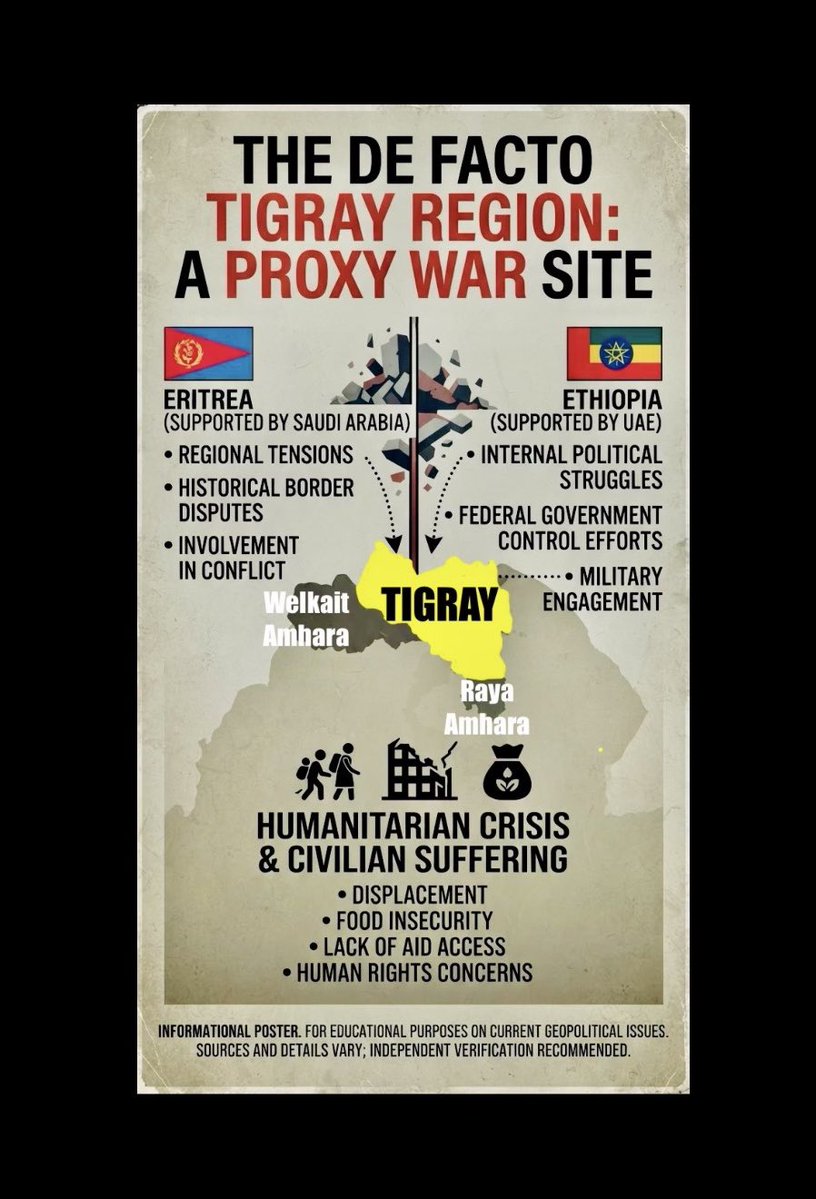
🧨💣🔥 Eritrea’s gift for Ethiopia 35 years ago:
👉🏼 Ethnic Federalism
👉🏼 Landlocked
👉🏼 3 wars
👹🇪🇷💊☠️ is an enemy of Ethiopia‼️
#EBRF #RegimeChangeInEritrea
@POTUS @StateDept @PMEthiopia @AbiyAhmedAli
#Ethiopia #Amhara #Oromo #Tigray #Eritrea #AFNM #AllianceForSurvival

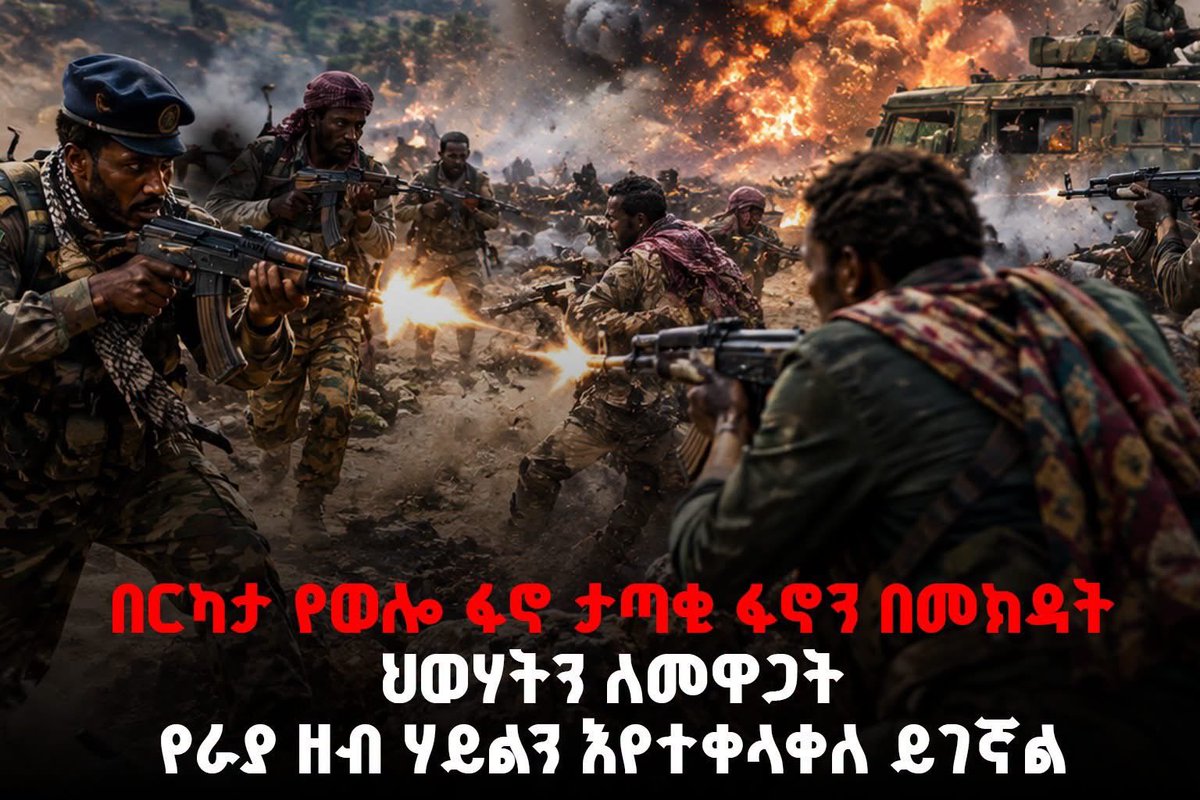
🔥የኦህዴድ ብልፅግና የኦሮሞ ህፃናትን እያፈሰ
የሳት እራት ጨዳ እያደረጋቸው ነው።
🔥ብልፅግና ይወገዳል ሕዝቤ ሆይ ንቃ👈
"ጀግናው የአማራ ፋኖ ይችላል "
"ድል ለትብብር ኃይሎች"💪
#AFNM
🔥ምንጊዜም አማራ ወደፊት ። አማራዬ💪
"የአማራ ፋኖ ብሔራዊ ንቅናቄ "
#AFNM

.
🚨 🔔 ‼️
Prosperity is a Party,
but Ethiopia is our country!
Protect Ethiopia, and may
Ethnic Nationalism thrive forever!!
#EBRF #RegimeChangeInEritrea
@POTUS @StateDept @PMEthiopia @AbiyAhmedAli
#Ethiopia #Amhara #Oromo #Tigray #Eritrea #AFNM #AllianceForSurvival

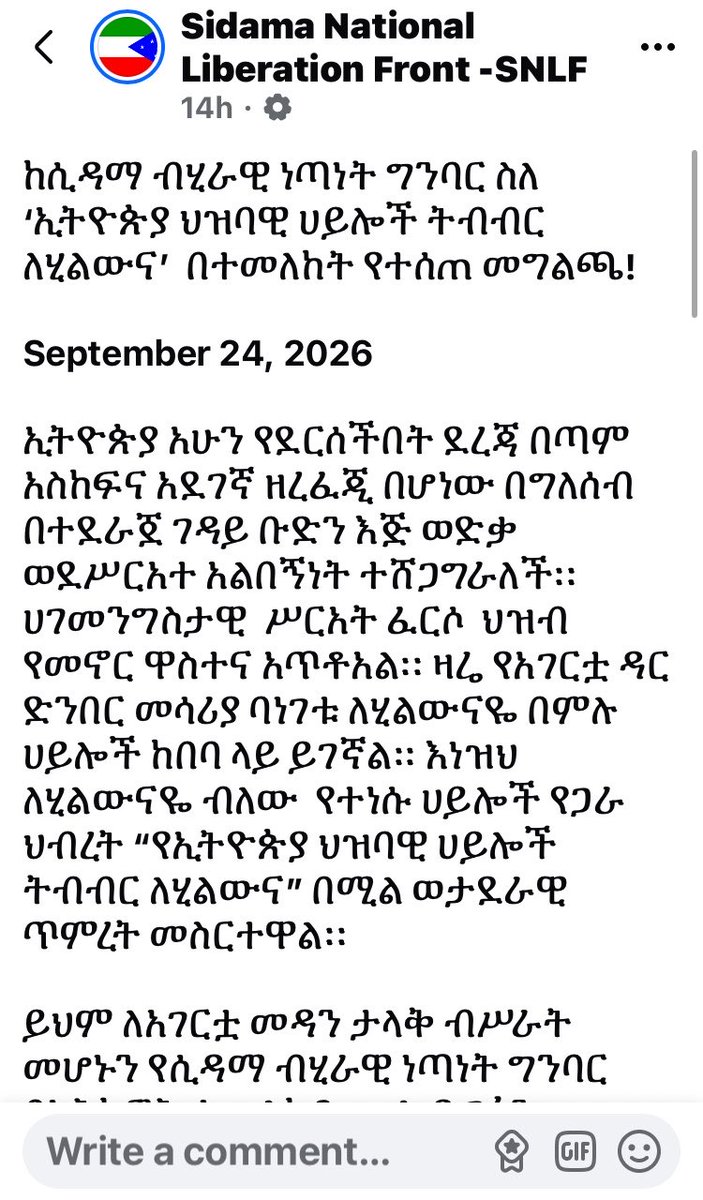
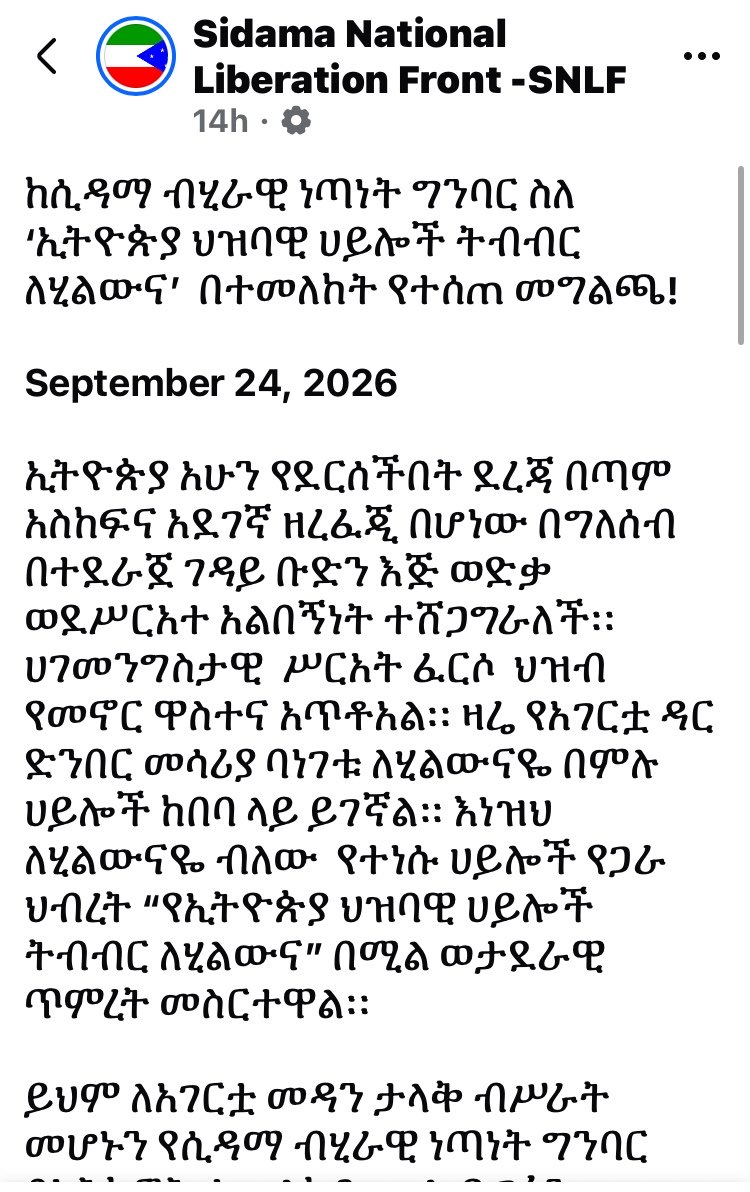
Statement by the Sidama National Liberation Front regarding the “Ethiopian People’s Forces Coalition for Salvation”
September 24, 2026
Ethiopia has now reached a very grave and dangerous stage. It has fallen into the hands of a predatory, organized killer group centered on an individual and has descended into lawlessness. The constitutional order has collapsed, and the people have lost any guarantee of survival.
Today the country’s borders are under siege by armed forces that have risen in the name of salvation. These forces that rose in the name of salvation have formed a joint alliance—a military coalition called the “Ethiopian People’s Forces Coalition for Salvation.”
The Sidama National Liberation Front has closely observed that this is great good news for the country’s deliverance, has given it its full support, and has decided to join the struggle for salvation.
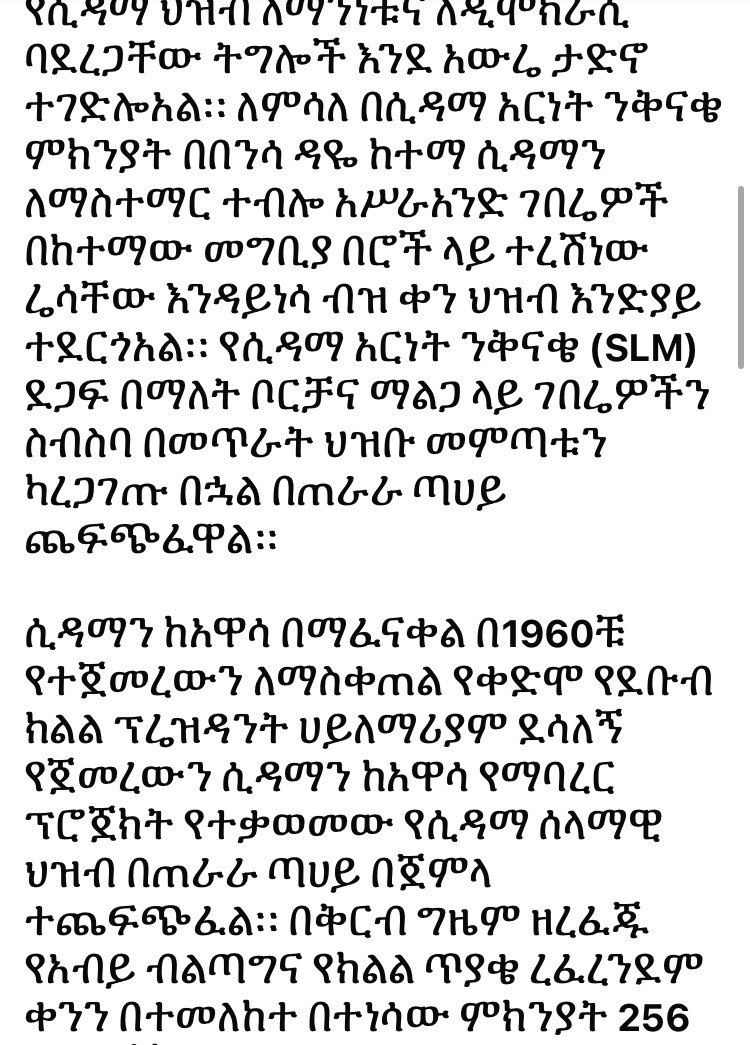
The Sidama people have been hunted like wild animals and killed in the struggles they waged for their identity and for democracy. For example, because of the Sidama Liberation Movement, eleven farmers were hanged at the city gates of Bensa Daye so that their corpses would not be taken down and the public would see them for many days.
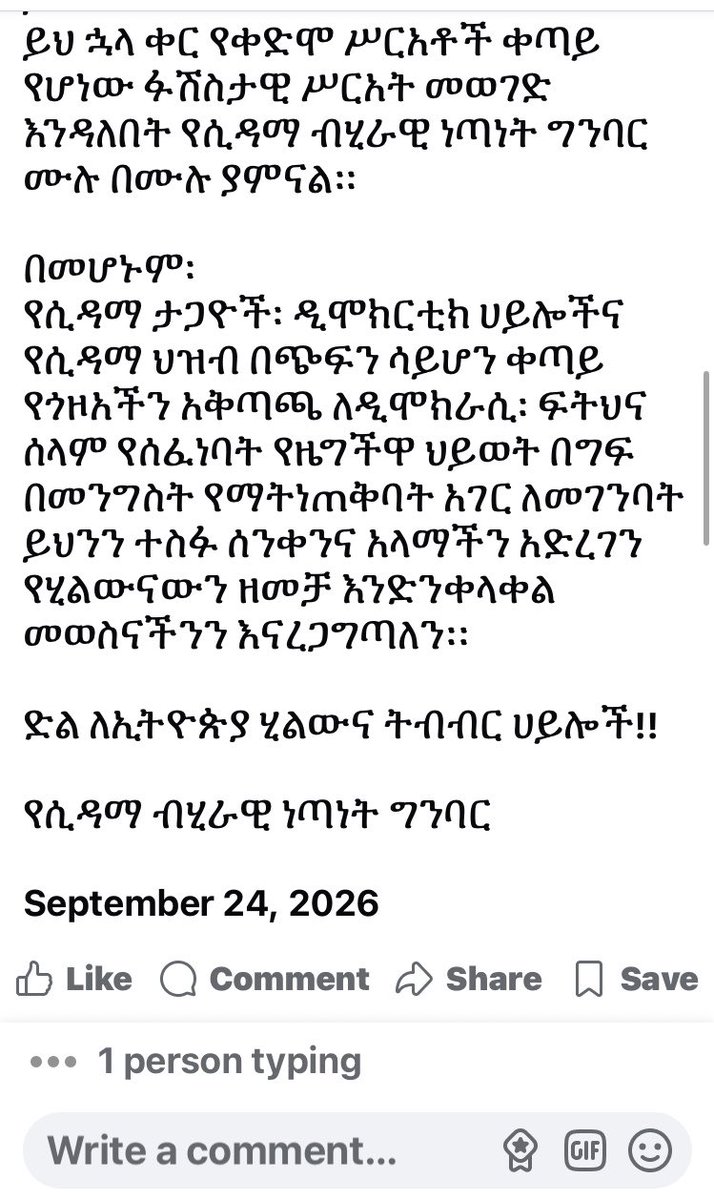
Supporters of the Sidama Liberation Movement (SLM) were summoned to gatherings in Borcha and Malga; after it was confirmed that the people had come, they were massacred in broad daylight.
To continue the project of displacing Sidama from Hawassa that began in the 1960s, the peaceful Sidama people who opposed the campaign started by former Southern Region President Hailemariam Desalegn to expel Sidama from
Hawassa were massacred in broad daylight. Recently, 256 youths were hanged in connection with the referendum day for the ethnic-based Prosperity Party of Abiy and the regional question.
Abiy arranged for the Sidama Liberation Movement leadership to be given money through opportunists so that Sidama would have no organization, and it was made to collapse.
Even today Sidama is being divided along clan lines and set against itself.
The Sidama National Liberation Front fully believes that this backward, fascist system—which is a continuation of previous systems—must be removed.
Therefore:
We confirm our decision that Sidama fighters, democratic forces, and the Sidama people—not blindly, but taking as our hope and goal the next direction of our journey: to build a country in which democracy, justice, and peace prevail and in which citizens’ lives are not snatched away by state violence—shall join this campaign for salvation.
Victory to the Ethiopian Salvation Coalition forces!!
Sidama National Liberation Front
September 24, 2026 @ArmySidama @ONLFofficial @OgadenNews_ONA @OLF_OLA @afnm_official @salsayweyaneti1 @tigraionline @addisstandard @GirmaTelk


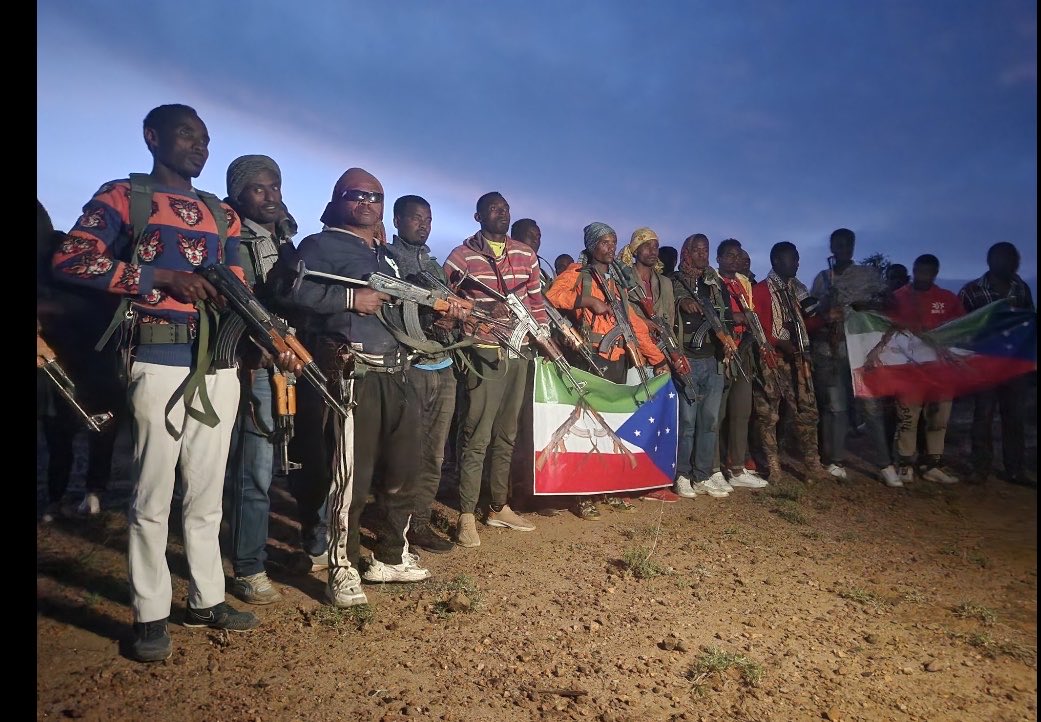
The Sidama National Liberation Front (SNLF), also known as the Sidama Liberation Army, announced today that it has officially joined the Ethiopian Peoples’ Forces Alliance for Survival in an effort to remove Prime Minister Abiy Ahmed. @ArmySidama @tesfanews @GirmaTelk @NakfaPress @sajid_nadeem78 @ONLFofficial
Last Seen Hashtags on Sotwe
Most Popular Users

Elon Musk 
@elonmusk
241.5M followers

Barack Obama
@barackobama
118.9M followers

Cristiano Ronaldo
@cristiano
114.6M followers

Donald J. Trump
@realdonaldtrump
111.8M followers

Narendra Modi
@narendramodi
107.1M followers

Rihanna
@rihanna
98.7M followers

NASA
@nasa
92.3M followers

Justin Bieber
@justinbieber
91.8M followers

KATY PERRY
@katyperry
90M followers

Taylor Swift
@taylorswift13
84M followers

Lady Gaga
@ladygaga
75.5M followers

Virat Kohli
@imvkohli
73.5M followers

Kim Kardashian
@kimkardashian
70.9M followers

YouTube
@youtube
68.8M followers

Neymar Jr
@neymarjr
66.5M followers

Bill Gates
@billgates
65.2M followers

Selena Gomez
@selenagomez
63.1M followers

The Ellen Show
@theellenshow
62.2M followers

CNN
@cnn
61.8M followers

X
@x
60.7M followers