

Top Tweets for #blackint

@Blackintus 按你给的规模,这笔收购对买方已经很重了。低市盈率看着便宜,若明年盈利真如预期下滑,收购后的盈利改善就更值得细看。

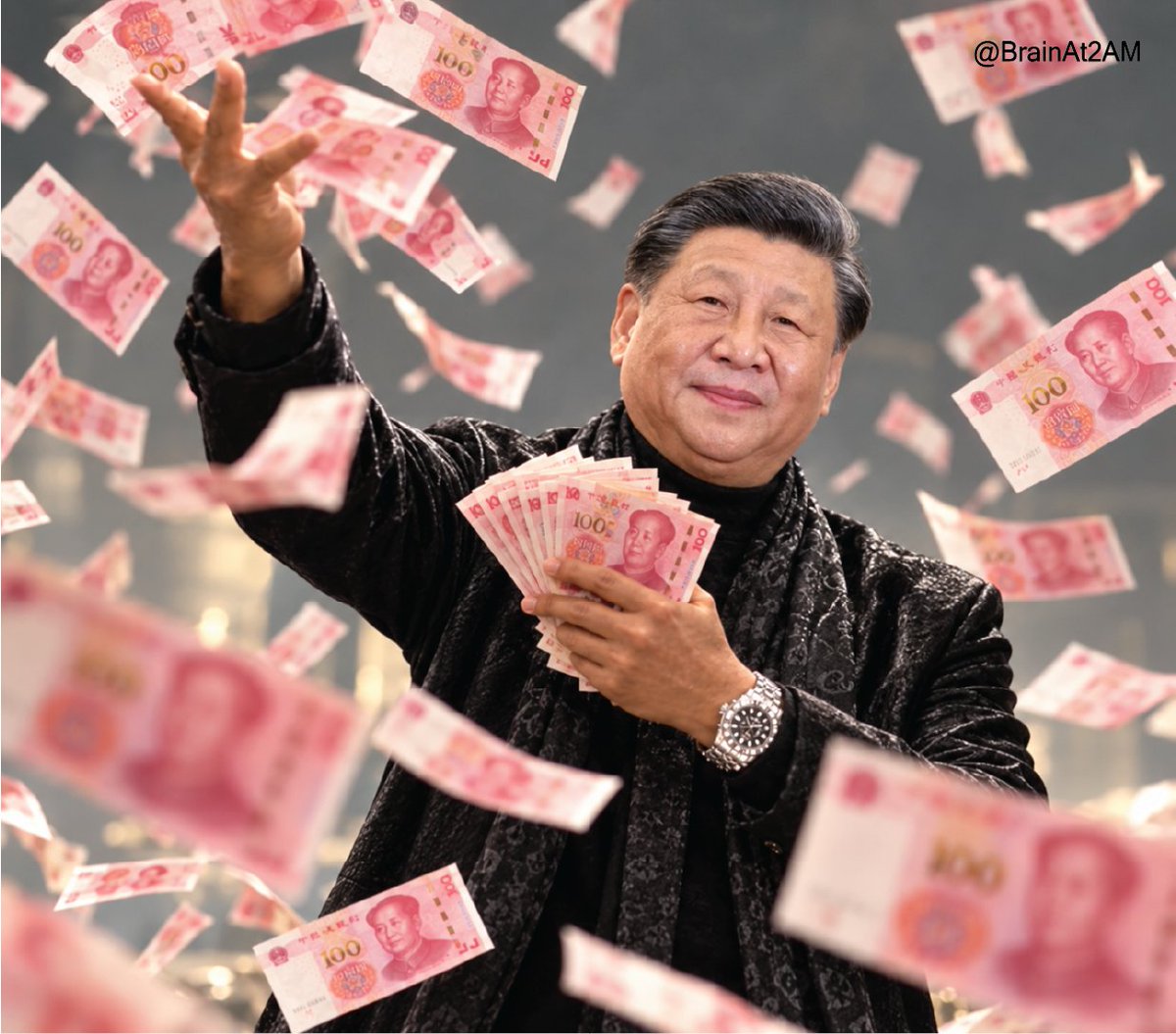

@Blackintus Watching actual prices is the right instinct — https://t.co/2zfuqkabp6 lists live GPU rental offers from multiple providers, so you can see what chips really rent for this week instead of reading press statements.

@Blackintoyou Mọi lúc mọi nơii

@Blackintus https://t.co/mdyuDVIqJY
Jimmy Carter grills Donald Trump on the high US diesel prices:
The sheet of paper on the wooden table contained data from nine agricultural counties in Georgia. In February 2026, when military strikes against Iranian infrastructure began, ultra low sulphur diesel at American pumps cost $3.76 per gallon, which is about $0.99 per litre. By September 2026, that same fuel reached $6.25 per gallon, or $1.65 per litre. Over the same seven months, regular gasoline rose by only 14%.
Jimmy Carter adjusted his spectacles and pointed at the bottom line. "If the price jump is caused by general war panic or foreign oil cuts, gasoline and diesel ought to move together. They come from the very same crude oil. Yet diesel has surged by over 66% while gasoline barely moved. Why is that?"
Donald Trump leaned back, resting his hands on the armrests of his chair. "It's very simple. We've got more liquid gold under our feet than any other country in the world. We're drilling at record levels in Texas and North Dakota. The problem isn't what we're pumping. The problem is foreign cartels manipulating the market, combined with refiners taking advantage of the conflict in the Middle East. If we open up more federal lands and tell the refiners to lower their prices, the cost will drop like a rock overnight."
Jimmy Carter shook his head slowly. "That assumes every barrel of oil pulled from the ground is identical. It isn't. The oil coming out of the Permian Basin in Texas is light sweet crude. Its density is high, with an API gravity above 40. When you refine a barrel of Permian light crude, you get a large amount of gasoline and naphtha, but very little heavy distillate. The crude that came out of the Persian Gulf before the war, including Iranian heavy crude, is heavy sour crude with an API gravity around 28. That heavy oil contains the longer hydrocarbon chains required to produce high volumes of diesel."
Donald Trump narrowed his eyes. "We produce millions of barrels a day right here in America. The total volume is higher than it's ever been."
"Volume of liquid isn't volume of diesel," Jimmy Carter said quietly. "To make one barrel of diesel out of light Permian crude, a refinery has to process nearly two barrels of oil, creating a massive surplus of unwanted gasoline in the process. When the military campaign in February 2026 shut down heavy crude exports through the Strait of Hormuz, global refineries lost the exact raw material required to make diesel. American refiners can't simply turn light crude into heavy diesel without changing the physics of the refinery."
Donald Trump tapped his fingers on the table. "Then our refineries should adapt. We've got the best technology in the world. They've got hydrocrackers. They can crack the light molecules or heavy residual streams and turn them into whatever fuel we need."
Jimmy Carter gestured to a technical diagram from the Department of Energy. "A hydrocracker breaks heavy molecules down into lighter ones, not the other way around. To build heavy diesel molecules out of light shale components requires secondary synthesis units that consume huge amounts of energy and hydrogen. Most American refineries on the Gulf Coast were upgraded decades ago to process heavy imported crude from Venezuela, Mexico, and the Middle East. They were built specifically because heavy crude yields more distillate. Right now, those refineries are running light American crude through units designed for heavy oil. Their total output of diesel has dropped by 18% because the chemical inputs don't match the machinery."
Donald Trump shifted in his seat. "We can import heavy crude from Canada. The Canadians have plenty of heavy oil in Alberta."
"The pipelines bringing Canadian heavy crude to Gulf Coast refiners are already operating at 98% of their maximum capacity," Jimmy Carter replied. "You can't move another million barrels a day through steel pipes that are already full. Rail transport costs four times as much per barrel, which adds directly to the final cost at the pump."
Donald Trump paused, looking at the numbers again. "Even if refining is tighter, American refiners are still making diesel. But they're exporting it. They're shipping our diesel across the Atlantic Ocean because European buyers are paying outrageous prices. Europe lost its Middle Eastern supplies when the war started, so European buyers are outbidding American truckers. That's a trade problem, not a refining problem. We should restrict diesel exports to keep American fuel in America."
Jimmy Carter looked up, his eyes sharp. "That's the second hidden assumption: that you can isolate domestic prices from a global commodity market without creating a secondary collapse. If you ban American diesel exports to Europe, European spot prices will soar even higher. Europe will then buy up every available tanker of heavy crude from non Middle Eastern producers, including West Africa and South America, outbidding American refiners for the heavy crude they desperately need to run their units. Furthermore, if American refiners are forbidden from exporting their surplus gasoline, they'll be forced to cut back overall refining runs, which will reduce domestic diesel production even further."
Donald Trump leaned forward, his voice firm. "So, you're saying our farmers in Georgia and our long distance truckers have to pay US$6.25 per gallon just so European cities don't run out of fuel?"
"I'm saying the price is telling you an uncomfortable truth about structure," Jimmy Carter said. "We spent 20 years talking about energy independence as if it were a simple count of total barrels of crude oil produced per day. But energy independence isn't a volume calculation. It's a structural match between the chemical composition of your crude, the mechanical design of your refineries, and the specific fuel needs of your transport fleet."
Donald Trump gestured toward the window. "People don't drive chemical equations. They drive trucks. If a farmer can't afford diesel to harvest his crop, food prices go up across the entire nation. That's an emergency."
"It's a severe emergency," Jimmy Carter agreed. "And treating it as a simple case of corporate gouging or insufficient drilling masks the real bottleneck. The war in Iran exposed a vulnerability that was already built into our energy infrastructure. We built a transport economy that relies entirely on heavy middle distillates, while our domestic oil boom produced light, gas rich crude. When global heavy crude flows were severed in February 2026, the market was forced to reprice the exact molecule that became scarce."
Donald Trump quieted for a moment, analysing the table. "So if we drill more light crude in Texas, it doesn't solve the diesel price."
"It creates more gasoline that nobody needs right now, while diesel stays at US$6.25 or continues climbing," Jimmy Carter said. "Unless refiners can source compatible heavy crudes or undertake multi year capital investments to rebuild their processing units, the price of diesel will remain decoupled from crude oil."
Donald Trump looked at the Georgia farm figures once more. "Then the war didn't just raise the price of oil. It changed which oil matters."
Jimmy Carter folded the paper neatly in half. "It showed us that having plenty of oil is useless if you've got the wrong oil for the engines that move your world."
***
Jimmy Carter (1924-2024) was the 39th US president from 1977 to 1981. He tackled the 1979 energy crisis by decontrolling domestic oil prices to boost production, offset by a Windfall Profits Tax. He created the Department of Energy to centralize policy, heavily promoted conservation, and issued the Carter Doctrine to defend Persian Gulf oil routes.
The day before Trump launched this disastrous war against Iran (February 27, 2026), the US national average price for diesel was at $3.76. On September 14, 2026, it's $.6.25.
#DieselPrices
#EnergyCrisis
#IranWar


@Blackintus Thanks for sharing this. Looking forward to more.

@Blackintus Not chips. Not servers. Cooling pipes. PE found the boring bottleneck and wrote the check.

@Blackintus Hormuz illustrates how a security shock becomes a macroeconomic shock far from the battlefield. Diversifying routes and reducng escalation risk matter as much as the next rate decision when energy prices are driving inflation.

@Blackintus Hitting a 300 to 500 billion dollar compute target is an unprecedented scale of investment. Which datacenter buildout phase do you think will be the biggest bottleneck?

@Blackintus Micron’s cycle is the only one that matters here.
Magnificent 7 is the party. Micron is the hangover.
H200 margins at 70% mean the casino is still printing.
The chips are buying the dip.

@Blackintus The folks forking out upwards of $100K & more for block of batteries with cover & wheels are the Buffoons...

@Blackintus They have 5.3b on hand. Plus, 1.2billion offering raise. Plus 1.4something billion VW has left to invest. Plus a couple hundred million from Uber, PLUS 4.8billion dollar DOE loan for the Georgia plant. You see how they have the money?

JPMorgan made its clearest succession move yet, promoting Doug Petno and Troy Rohrbaugh to co-presidents — each running one of the bank’s two biggest businesses — with $30 million retention bonuses vesting through 2028. Marianne Lake, long considered Dimon’s most likely successor, announced her retirement the same day, after it became clear internally she was no longer in the running. Two other senior executives, Jennifer Piepszak and Mary Erdoes, each got $20 million retention grants but aren’t seen as CEO candidates.
Rohrbaugh, a former Goldman FX trader who’s spent his JPMorgan career on the markets side, is moving to lead the entire consumer bank — branches in all 48 continental states, one of the country’s largest credit-card franchises, and a growing wealth-management business — specifically to gain the broad operating experience the board reportedly felt he lacked. Petno, a former oil-and-gas banker, takes sole control of the combined commercial and investment bank. Insiders read Rohrbaugh’s promotion as the strongest signal yet that he’s the current frontrunner. Dimon, who turns 70 this year, is expected to stay roughly three more years as CEO before transitioning to executive chairman.
💰 YOUR MOVE: This is a governance and leadership-pipeline story more than an immediate trading catalyst for $JPM , but it matters for long-term institutional continuity at the largest US bank — the plan to “whittle down” from three candidates to two, give them 2-3 years running major businesses, then let the board decide, is a textbook deliberate succession process rather than a sudden change. Worth tracking whether Rohrbaugh’s transition into the much larger, more politically exposed consumer-banking role (versus markets) goes smoothly over the next year, since that’s now the explicit test the board has set up. This also lands the same week JPMorgan’s stress-test results triggered a $50 billion buyback — both stories point to a bank in a position of real strength, using that strength to settle internal questions (capital allocation, leadership succession) from a position of confidence rather than crisis.
@Blackintus

Reformation, the celebrity-favorite womenswear brand worn by Taylor Swift and Meghan Markle, is preparing to confidentially file for an IPO as soon as next week, with a goal of going public in July. The retailer is on track to do over $500 million in revenue this year. Private-equity owner Permira, which took a majority stake in 2019, would get a long-awaited exit at a moment when PE firms broadly have been starved for liquidity events.
This is a meaningfully different IPO than everything else in this batch — no AI angle, no chips, no rockets. It’s a straightforward consumer retail story riding the coattails of the SpaceX-opened IPO window (tweets 194-210), explicitly timed to “take advantage of a hot capital markets backdrop.” 2026 is already the biggest year for traditional US IPO deal value since 2021, and it’s only June.
💰 YOUR MOVE: Reformation is the clearest test case yet for whether the IPO window is genuinely open for non-AI companies, or whether SpaceX’s success was a singular event tied to Musk’s unique pull. A successful Reformation IPO at a healthy multiple would validate that private-equity-backed consumer brands more broadly are next in line — watch for read-through interest in other PE-owned retail and consumer names quietly exploring their own listings. The “sustainable” positioning and celebrity following give Reformation a marketing edge over typical apparel IPOs, but $500 million in revenue is a fraction of SpaceX or Anthropic’s scale, meaning this won’t move markets the way the AI mega-IPOs will — its real value is as a sentiment gauge. If Reformation prices well and trades up, it signals the IPO market’s strength is broad-based, not just an AI-and-rockets phenomenon; if it struggles, that’s an early warning that investor appetite is narrower than this week’s euphoria (tweet 263’s MANGOS mania) suggests.
@Blackintus

Kevin Warsh walks into his first Fed meeting tomorrow having campaigned for rate cuts — and finding a committee that wants to hike. The doves have turned. The center has turned. The hawks are pushing.
The statement tomorrow will almost certainly remove the “easing bias.” The dot plot will likely show more officials penciling in hikes than in March. Warsh may decline to submit his own dot plot projection to signal his skepticism of forward guidance.
💰 YOUR MOVE: This is the most important Fed meeting since 2022 — and the Iran deal just changed everything 48 hours before it. Oil at $77 and falling is the strongest argument for a dovish hold. Warsh has cover to remove the easing bias (hawkish signal) while keeping the door open for cuts (dovish substance). The bond trade: buy $TLT before 2 PM Wednesday. If Warsh removes easing bias but signals no imminent hike — the 10-year falls from 4.47% toward 4.2%. That’s a 5-7% gain on long duration bonds in weeks. The risk: if Warsh goes full hawk and dots show multiple hikes — bonds sell off and tech gets crushed again. The Iran deal is his exit ramp from the hike narrative. Watch whether he takes it.
@Blackintus

AI companies are issuing $54 billion in convertible bonds this year — up 43% from 2025, highest since COVID. Some paying 0% interest. CoreWeave raised $4 billion at 1.75%. Akamai issued $3.5 billion at zero coupon.
The convertible bond index is up 20% this year — beating the S&P 500 (+10%) and Nasdaq (+13%). Investors get bond stability plus AI stock upside. Companies get near-free money.
💰 YOUR MOVE: This is the hidden AI financing mechanism most retail investors don’t know exists. The convertible bond boom signals three things simultaneously: AI companies need massive capital, stock prices are high enough to make zero-coupon debt viable, and credit spreads are tight enough that investors accept minimal yield. When all three reverse — higher rates, lower AI stocks, wider spreads — the convertible market freezes. The crypto 2024 parallel is the warning: Strategy and crypto companies flooded convertibles, then the market collapsed when crypto prices fell. The AI equivalent would be any sustained selloff in chip/AI stocks. The trade: if you believe in AI long-term, the convertible bond ETF ($CWB ) captures the 20% YTD gain with lower volatility than owning the stocks directly. If you’re bearish on AI, the convertible market is the canary — watch for issuance to slow as the first signal the narrative is cracking.
@Blackintus

GoHealth just filed for bankruptcy. Once valued at $6.6 billion at its 2020 IPO, now has $987 million in debt and $918 million in assets. Common shareholders get a $10 million cash payment — on a company that raised $914 million at IPO.
The cause: Medicare Advantage carriers cut back on their GoHealth relationship as healthcare costs outpaced reimbursement rates. Then a DOJ lawsuit alleging kickbacks between insurers and brokers finished the job.
💰 YOUR MOVE: This is the Medicare Advantage disruption trade playing out. GoHealth’s collapse signals that the independent insurance brokerage model is broken when carriers squeeze commissions. The survivors will be the vertically integrated players: $UNH (UnitedHealth — owns its own brokers), $CVS (Aetna parent — direct distribution), $ELV (Elevance — formerly Anthem). The DOJ kickback lawsuit is the regulatory risk everyone in Medicare Advantage carries now. $GOCO is the cautionary tale. The 2020 IPO raised $914 million and returned $10 million to common shareholders four years later. That’s a 99% loss. Know what you own in healthcare distribution.
@Blackintus

$ASTS (AST SpaceMobile) down 15.5%. $RKLB (Rocket Lab) down 10.8%. SpaceX opened — and destroyed its competitors on day one.
Both traded at massive premiums to SpaceX before the IPO. Now there’s a benchmark. Both are real businesses with real plans. But at $2.1T for SpaceX, the comps look stretched.
💰 YOUR MOVE: $RKLB and $ASTS down 10-15% — this isn’t sell, it’s check your thesis. If you believe in small satellite internet independently of SpaceX, $ASTS at $30-35 is more interesting than at $40+. If you just believed “everything that flies goes up” — today is a hard reminder that SpaceX took all the oxygen.
@Blackintus

The world’s top corporate climate standard-setter just changed the rules. Companies can now count purchased carbon credits toward net-zero targets — something previously banned. SBTi calls it a “best-efforts framework.” Critics call it greenwashing with extra steps.
The practical impact: airlines, cement companies, steel producers — industries that can’t fully decarbonize — just got a lifeline. They can buy sustainable aviation fuel credits and carbon removal credits instead of eliminating emissions directly.
💰 YOUR MOVE: The carbon credit market just got a massive demand boost. The public plays: $TPVG and $BECN are too niche, but $AAPL, $GOOGL, $MSFT — all heavily SBTi-committed tech companies — can now use PPAs and carbon credits more flexibly to meet their 2030 targets. The direct beneficiaries: carbon removal companies like $XPNG (Xpansiv — carbon market platform) and direct air capture developers. The airlines trade: $DAL , $UAL , $AAL can now use SAF credits to meet climate commitments instead of paying the premium for actual sustainable fuel. That’s a margin improvement at the current jet fuel prices we’ve been tracking since tweet 125.
@Blackintus


@Blackintus That’s untrue. It won’t be part of some indices. It will be part of others.
> Berkshire now owns the entire US housing supply chain — except the mortgage. Given they hold $381B in cash and rates are still elevated... is a financial services play on housing the next move?
Want the full PDF report — valuation models, second-order effects, and a comparison table (Who Builds America?)?
Drop one word in the comments: PDF
I’ll send the PDF via DM within the hour.
(followers of @Blackintus only — otherwise the DM won’t reach you)
Follow @Blackintus
No Noise. No Hype. Just Analysis.

Trends for you
Most Popular Users

Elon Musk 
@elonmusk
240.1M followers

Barack Obama
@barackobama
118.6M followers

Cristiano Ronaldo
@cristiano
114.4M followers

Donald J. Trump
@realdonaldtrump
111.7M followers

Narendra Modi
@narendramodi
106.9M followers

Rihanna
@rihanna
98.6M followers

NASA
@nasa
92.1M followers

Justin Bieber
@justinbieber
91.7M followers

KATY PERRY
@katyperry
89.9M followers

Taylor Swift
@taylorswift13
83.9M followers

Lady Gaga
@ladygaga
75.4M followers

Virat Kohli
@imvkohli
73.3M followers

Kim Kardashian
@kimkardashian
70.8M followers

YouTube
@youtube
68.6M followers

Neymar Jr
@neymarjr
66.3M followers

Bill Gates
@billgates
65.2M followers

Selena Gomez
@selenagomez
63M followers

The Ellen Show
@theellenshow
62.1M followers

CNN
@cnn
61.7M followers

X
@x
60.6M followers