

Top Tweets for #chsra

A good informed thread from Gareth Dennis on the HSR crash in Spain @marcjoffe @Lucid_Stew #hsr #crash #chsra
It seems the automatic cab signaling and train protection system went down - what we call ATC and the successor digital PTC in North America. In some places in the US we have the newer digital PTC layered over a older ATC installation layered onto the lineside signaling of color lights, for example Amtrak's NEC and Metro-North.
They reportedly moved to "Lateral Signaling Block" (BSL in Spanish) when the digital cab signaling and train protection system (LZB in German) went down. BSL shifts control back to physical lineside signals installed alongside the tracks (if there are physical signals as many HSR lines do not have them*) with operators (central dispatchers and train drivers) transitioning to BSL protocols, with stricter manual or procedural oversight to manage train spacing, speed, and safety intervals.
MY THOUGHTS: So this makes "human error" the most likely cause - a well known issue of concern when highly automated systems fail and inexperience humans move to pick up the slack, and an issue with modern airliners and self-driving cars.
Could such disaster occur in North America? Well the double/triple redundancy of our "few higher speed lines" perhaps make it less likely, as if the PTC goes down (which it seems it often does from grumbling on online rail forums) you still got in some cases the ATC and in most cases the trackside signaling system.
Now the PTC could go down on a line with only trackside signaling, and a train driver blows through a red light (called a SPAD, "Signal Passed at Danger") and crash into another train, but it would require the train driver ignoring or missing a color light.
On Amtrak's NEC and Metro-North, the ATC physically installed on the track during a SPAD will automatically trigger the brakes. There is even on a few former Santa Fe lines the 1920's era "Automatic Train Stop" (ATS) system which triggers brakes if a SPAD occurs. The ATC used by Amtrak, Metro-North, and the LIRR which was developed by the Pennsylvania Railroad in the 1920s, and includes cab signaling, protection of permeant "slow orders" - like bridges and curves.
After deadly overspeed of curves by Metro-North and Amtrak last decade, both railroads expanded their ATC systems to protect all curves. "Value Engineering" had left the curves at both the Spuyten Duyvil (2013) and Frankford Junction (2015) unprotected by ATC. In the case of Frankford Junction, ATC did protect southbound trains but not northbound trains, as due to the lower track speed south of the curve compared to the 100 mph territory north of the curve, the risk of a derailment was deemed lower.
However, the Amtrak engineer of Northeast Regional Train 188 suffered spatial disorientation and cognitive dissonance, perhaps from monitoring reports of an object hitting a SEPTA commuter train, and thinking he was passed the 50 mph curve, was accelerting to over 100 mph before realizing where he was, he slammed on the brakes too late. As with Metro-North at Spuyten Duyvil, a week later Amtrak installed ATC at the curve to protect northbound trains. Today, both ATC and PTC would prevent either disasters.
Still, we have seen deadly crashes on the mainlines with both lineside signaling and PTC - Murphy's Law - but they are less likely to occur due to human error or one single point failure in equipment. If a train derails just before another one on an adjacent track passes by it, there will have a collision, as occurred on a HSR line in Spain in January in the Adamuz rail disaster. If a big tree falls, truck gets stuck at grade crossing, if construction equipment is fouling the track, seconds before a passing train, then a collision won't be prevented by PTC.
This is [WARNING] shear speculation on my part, but in a video you see physical color signal lights ahead of one of the crash trains, but if these signals were installed in long blocks, only at stations and interlockings where trains switch between the two mainline tracks, then you could have very long stretches (called blocks) with no lineside signaling - unlike the every three or so miles blocks of busy mainlines in America.
Now modern HSR lines with modern digital signaling systems having "moving blocks" and instead of "fixed blocks", the digital signaling keeping moving trains at proper braking distances from each other, based on the speed of the trains. This increases fluidity and capacity over the older fixed blocks, which are dependent on the lineside infrastructure of signaling towers and ATC devices.
For example on the Hudson Line between NYC and Albany, every three or so miles there are signaling towers and on the tracks ATC transponders. If the PTC fails then you still have lineside signals installed by the New York Central to keep trains properly separated. The distance it takes a train to stop is about a mile or so, if a train is stopped, then the signal behind it by a mile or two will be red, bringing a moving train behind the stop train, to a halt, within a safe distance.
However, if on a HSR Line in Spain (WARING: this is guesswork on my part) with moving blocks and signals placed at much greater distances at only key sections like interlockings and stations, and then if the "LZB" digital cab signaling and train protection system goes down, moving operations to "Lateral Signaling Block", then if a train stops at a red signal at a interlocking, because the physical color light signals still work, its possible that a second train behind the stopped train will have already passed the last signal tower at the last interlocking miles behind, and with no cab signals, and if the dispatchers make a mistake, the train moving at a very high speed (instead of a reduced speed)as reported online) can crash into the stopped train ahead of it. By the time the driver sees the stopped train before the signal towers protecting the interlocking and the block ahead or it, its too late.
*An interlocking is the complex of switches, also called turnouts, at a "control point", often designated by milepost, allow trains to switch tracks. Called an interlocking because back in the days of physical rods and levers, a signal tower operator could not manipulate the levers controlling the switches in a manner that would place two conflicting trains onto the same track, the levers would instead lock in place. It was thus "failsafe" due to the interlocking of the rods and levers.
The distances of track between signaling towers is called blocks, the length of blocks determined by the distance to safely stop a train. There is still a lot of railroad lines - more lightly trafficked - in North America without lineside signaling, this is called "Dark Territory" and it relies on train movements directed by verbal or written instructions from a train dispatcher to train crews. Most busy mainlines in the USA which host passenger trains and dangerous cargo are mandated by federal law to have Positive Train Control (PTC).
#HSR #HighSpeedRail #HSRGetTheFacts #BuildHSR #California #Spain

Absolutely devastating, and of course raises serious questions about the safety of the system given the proximity to the Adamuz crash.

@juliewattsTV There was never ANY doubt, the #CHSRA was designed as slop to @JerryBrownGov & @CAgovernor bootlicking cronies... it was NEVER about the stupid train...they knew how stupid #CADem voters were and would pass it🤬
"taking candy from a baby.."

Earlier this week, California High-Speed Rail Authority @CaHSRA CEO Ian Choudri provided a project update in interview with The Maddy Report.
Read more: https://t.co/62X0cP81nT
#USA #CHSRA #California #Rail #HighSpeedRail

California High-Speed Rail and Brisbane reach agreement, advancing Bay Area plans https://t.co/RW2q2hofOM #CaliforniaHighSpeedRailAuthorityCHSRA #CHSRA #RailNews


The California High-Speed Rail Authority’s (CHSRA) Board of Directors on June 26 approved the joint venture of SYSTRA | TYPSA to begin designing track and overhead contact systems (OCS).
#RTSMag #RailwayAge #CHSRA #SYSTRA #TYPSA
https://t.co/3Cr8dOSQOC


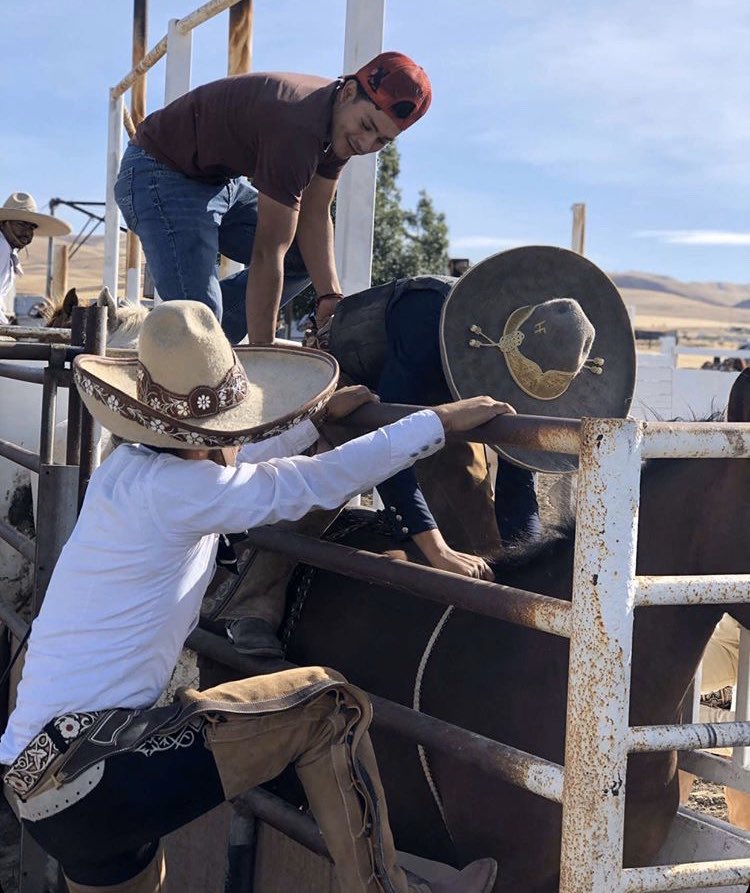

Ready for another day of rodeo with CHSRA D4 here in King City, CA #rodeo #westernlife #CHSRA @OfficialNHSRA
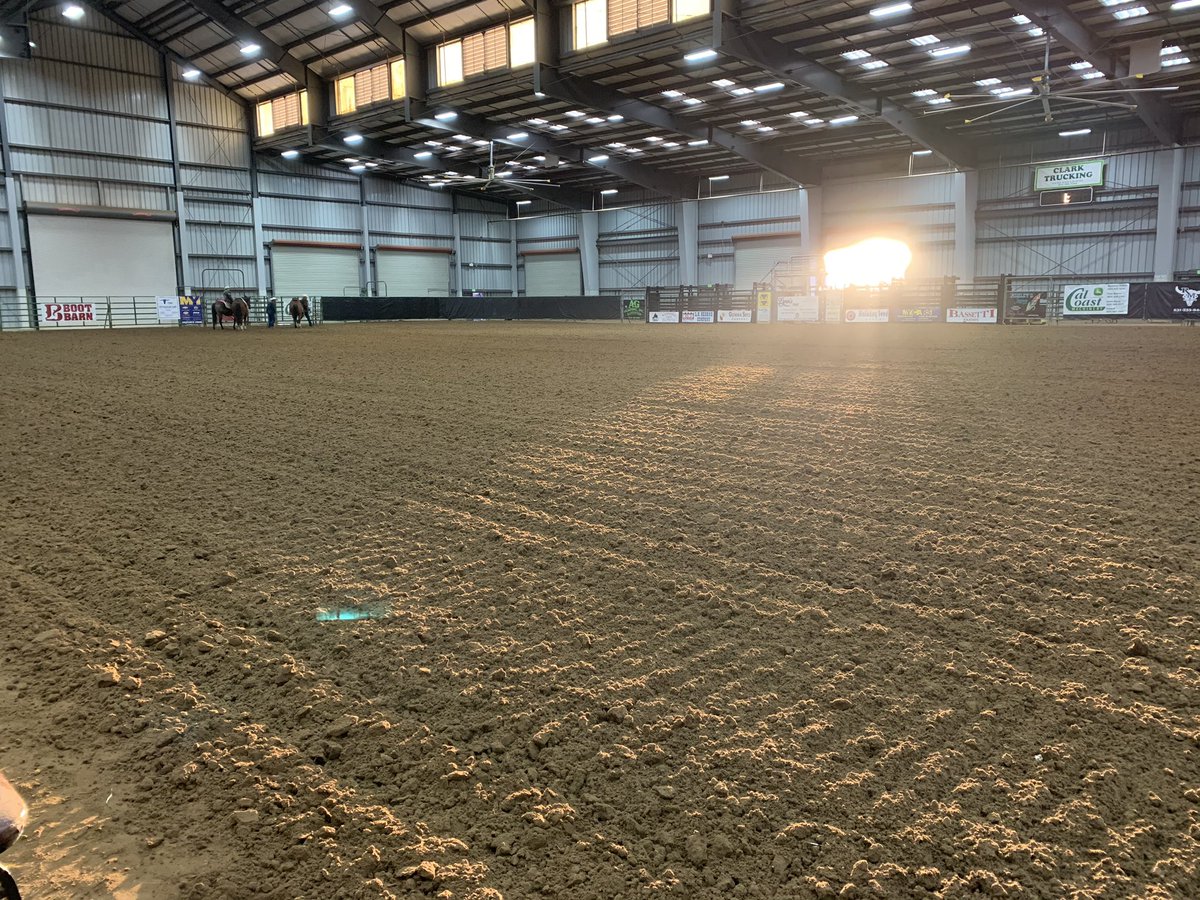



Thank you Bishop, CA for your hospitality for the last week for the CHSRA State Rodeo Finals. You were great hosts and we appreciate it. We will see you all next year. #CHSRA #BishopCalifornia

Gorgeous backdrop here in Bishop, CA for the California State High School Rodeo Finals #CHSRA #Rodeo #Spartan #SpartanRodeoGuy


@SKYRIDER4538 @Barracuda_Bella @GavinNewsom @RodStryker @DonaldJTrumpJr @bbusa617 @GaetaSusan @LeahR77 @DonnaWR8 @steph93065 @Stonewall_77 @SandraSentinel @AppSame #SundayMorning
#California is a State in Failure, epitomizing the results of Postmodern Progressivism gone awry: unsustainable fiscal and social justice policies, well-intentioned but backfiring spectacularly.
e.g., #CHSRA.
https://t.co/1Us3EGH2zv

Gorgeous weather in Plymouth, CA this weekend. #CHSRA


Headed to Plymouth, CA to announce the best high school rodeo in California, the Challenge of Champions. Also looking forward to sharing the mic with one of former students, Branden Edwards too! #chsra
Last Seen Hashtags on Sotwe
Trends for you
Most Popular Users

Elon Musk 
@elonmusk
241.5M followers

Barack Obama
@barackobama
118.8M followers

Cristiano Ronaldo
@cristiano
114.5M followers

Donald J. Trump
@realdonaldtrump
111.9M followers

Narendra Modi
@narendramodi
107.1M followers

Rihanna
@rihanna
98.7M followers

NASA
@nasa
92.3M followers

Justin Bieber
@justinbieber
91.8M followers

KATY PERRY
@katyperry
90M followers

Taylor Swift
@taylorswift13
84M followers

Lady Gaga
@ladygaga
75.5M followers

Virat Kohli
@imvkohli
73.4M followers

Kim Kardashian
@kimkardashian
70.8M followers

YouTube
@youtube
68.8M followers

Neymar Jr
@neymarjr
66.5M followers

Bill Gates
@billgates
65.2M followers

Selena Gomez
@selenagomez
63.1M followers

The Ellen Show
@theellenshow
62.2M followers

CNN
@cnn
61.7M followers

X
@x
60.7M followers