

Top Tweets for #dreamzero

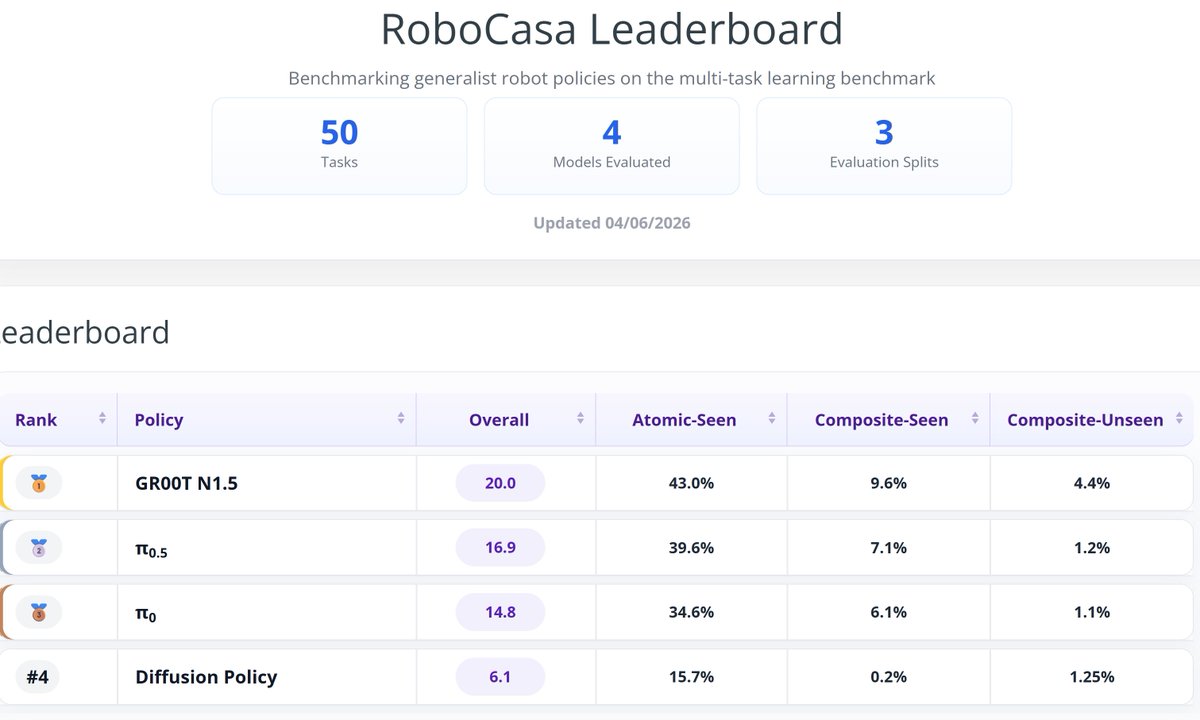
RoboCasa365 is amazing, interesting to find this leaderboard, where we can have ready-to-use ckpt. And results are not surprising low lol
Excited to see #DreamZero, #GeminiRobotics, #Generalist appearing here, we need more scalable sim-based benchmark

Next-Gen Robotic Models & Embodiment: The Dexterity Frontier by DeepReach & Realhand in Palo Alto
Formal Interface Between Evaluation and Generation in Robot Foundation Models — #Robometer × #DreamZero Toward Trajectory-Space Intelligence
The bottleneck in robot foundation models is not planning or data scale, but the lack of a stable interface between evaluation (System 2) and action generation (System 1) under real-world dynamics.
Robometer strengthens explicit evaluation through video-language reward modeling (progress estimation + trajectory preference), but remains outside the policy computation graph. This creates a fundamental optimization interface mismatch with three key challenges:
🔷 Gradient-based optimization is ill-posed: reward models are not directly coupled within the policy’s computation graph, making signal propagation into continuous action spaces inefficient and unstable.
🔷 Co-training is unstable: joint optimization leads to non-stationarity, reward hacking, and severe distribution shift.
🔷 Temporal abstraction mismatch: rewards operate at trajectory-level semantics, while actions occur at high-frequency continuous control, making long-horizon credit assignment fundamentally difficult — far more complex than discrete next-token prediction in LLMs.
DreamZero collapses policy and world model via generative rollout (implicit evaluation through joint video + action prediction), enabling strong zero-shot and cross-embodiment generalization. Yet, despite supporting real-time closed-loop control at 7Hz via autoregressive updates with observation correction, it remains susceptible to residual drift over long horizons and lacks explicit preference grounding.
Crucially, current world-action models remain coarse in temporal and control granularity, limiting precision in fine manipulation.
The primary failure mode is not high-level planning, but decoding abstract intent into physically valid, high-frequency control under contact-rich dynamics (friction, deformation, slip) and partial observability.
This is further constrained by a control frequency gap (∼10–30Hz perception/generation vs. ∼100–1000Hz control) and by latent action representations that are not fully physically grounded.
Data is not merely low-resolution — it is fundamentally misaligned with control (vision vs. force/torque/impedance). For example, grasping involves sub-frame contact events that standard video cannot capture.
The emerging paradigm is reward-guided generative control: world models propose diverse trajectories, while reward models shape them at the trajectory level via re-ranking or guidance (e.g., MPC-style selection or diffusion guidance), avoiding brittle gradient coupling and unstable co-training.
Robotics is not converging to next-token prediction, but to trajectory-space intelligence: generation proposes, evaluation shapes, and control executes — all grounded in closed-loop interaction with real physical dynamics.
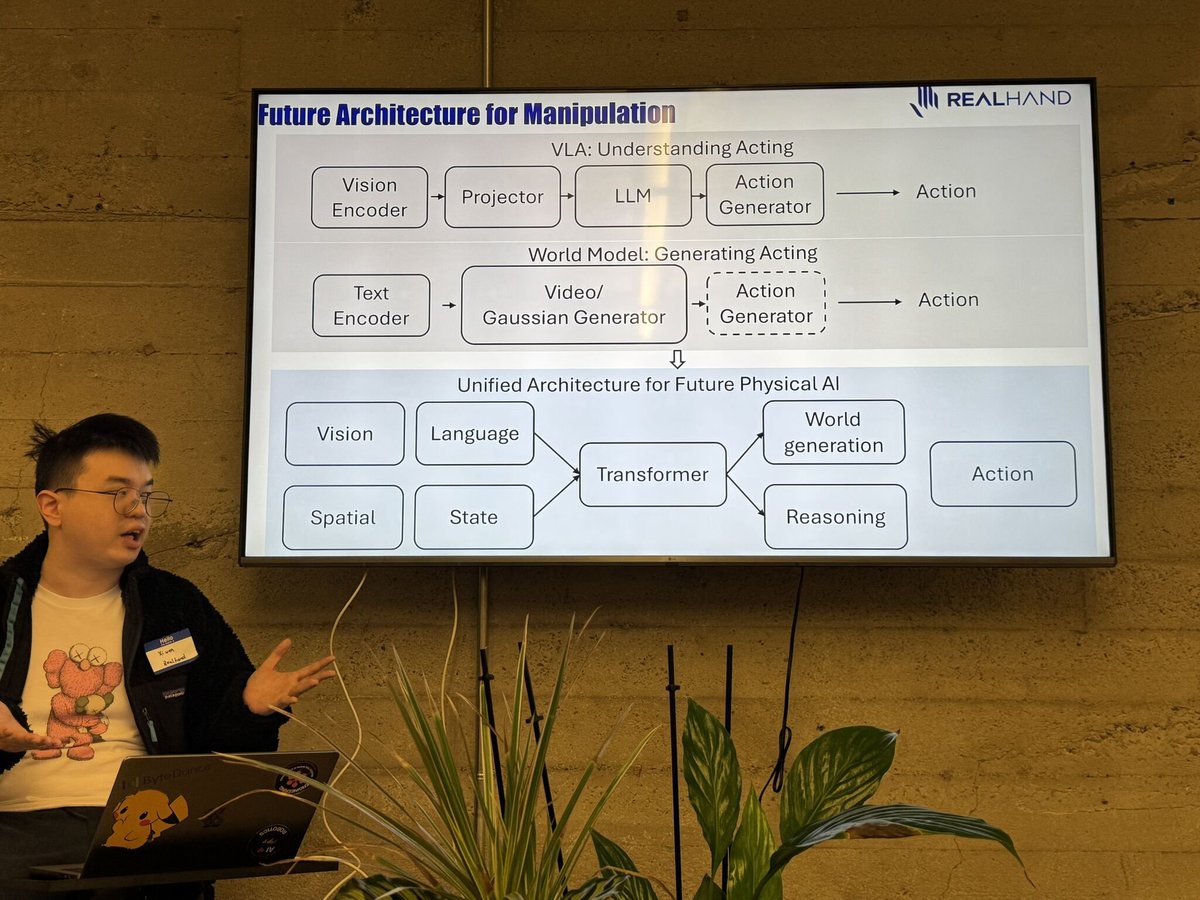
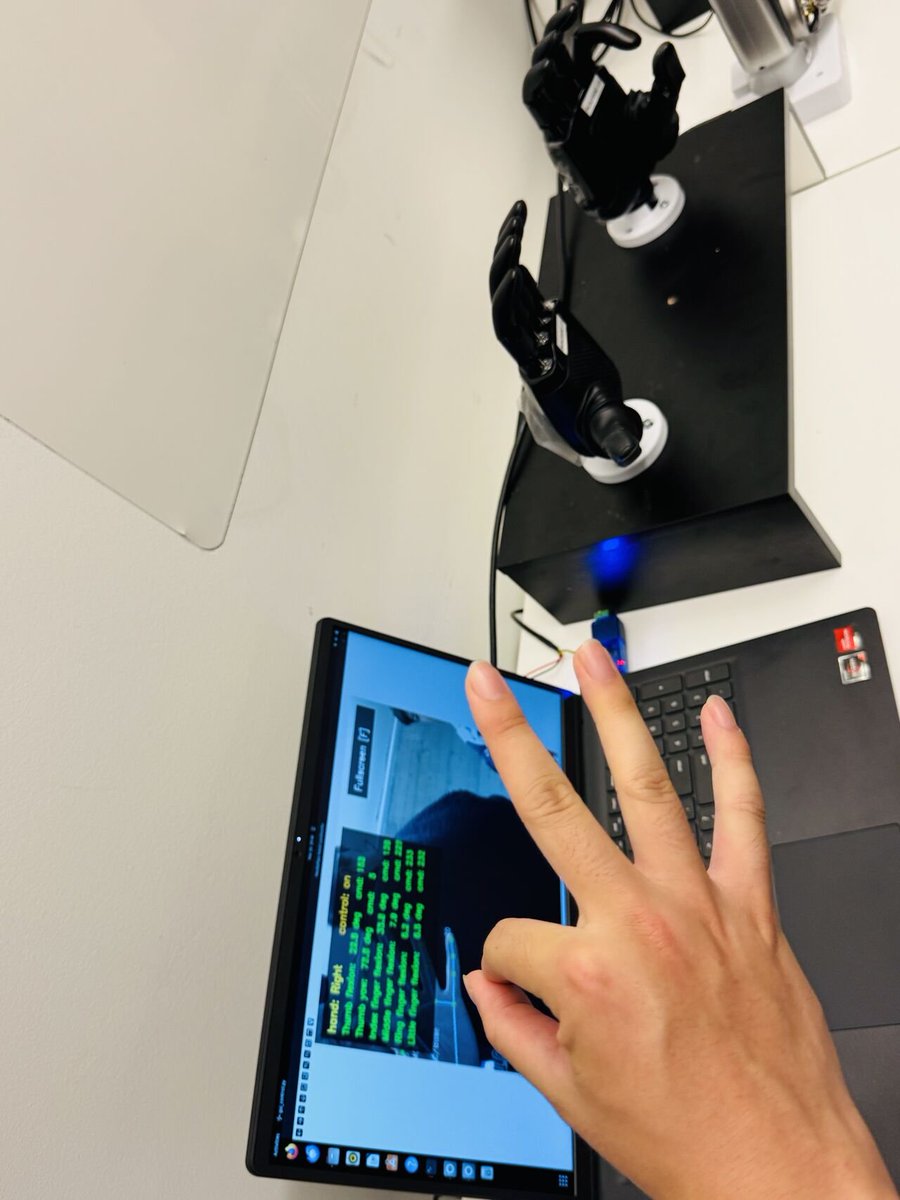
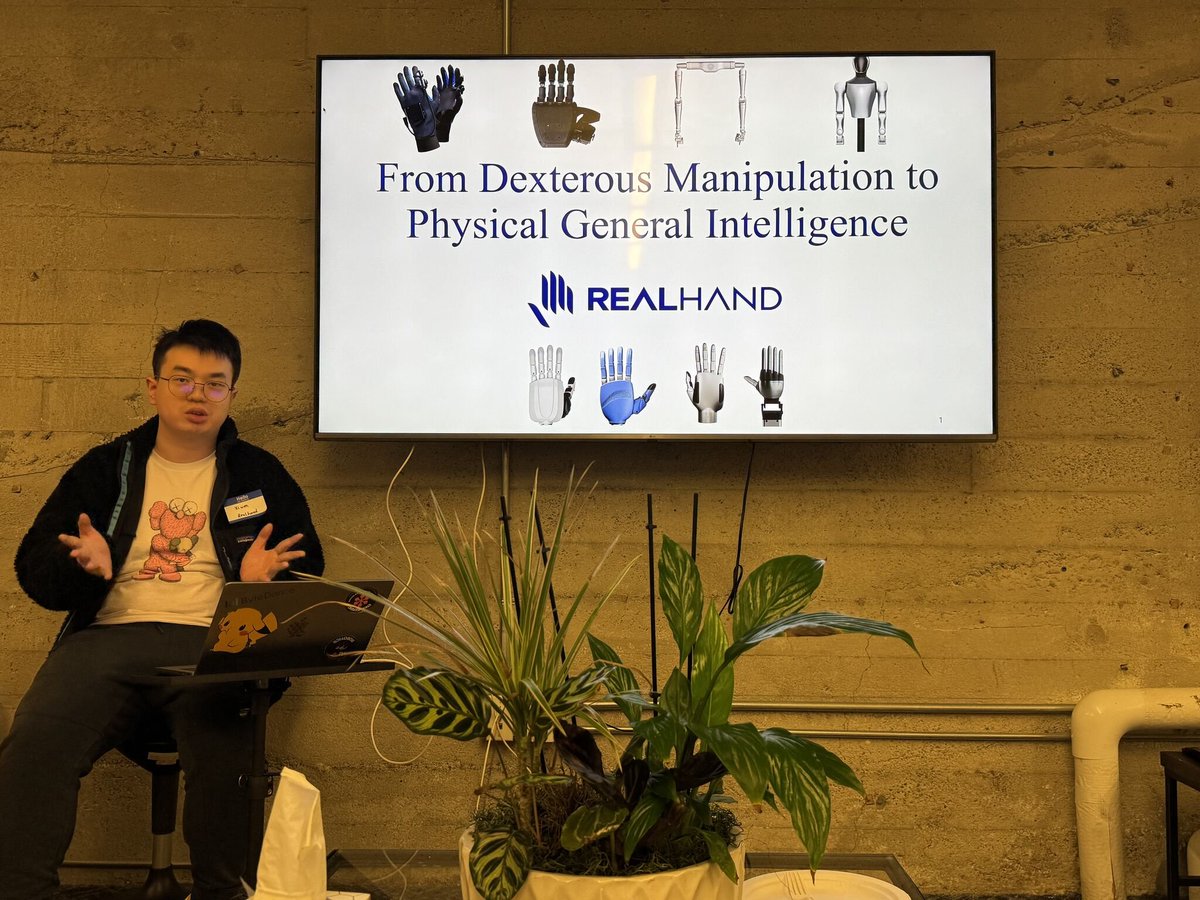
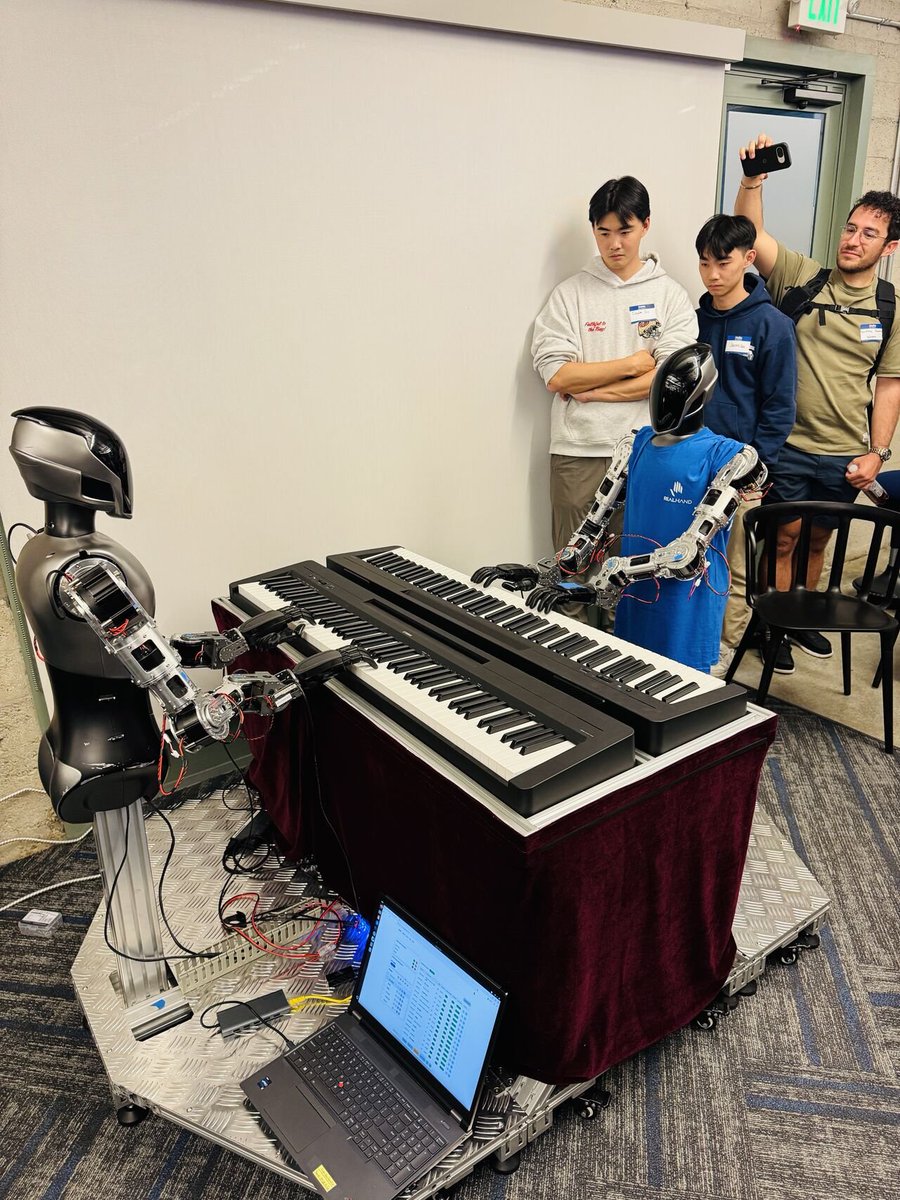
Robotics World Model Reading Club discussions on DreamZero with @Voyager_Yu
👉🏻Future events: https://t.co/mc6grS9AiU
DreamDojo vs. DreamZero differ in drift and control. DreamDojo mitigates drift via post-training + real-time distillation (~10.8 FPS) for stable closed-loop control. DreamZero (WAM) relies on closed-loop correction: real observations are injected into the KV cache, so imperfect predictions are corrected online. This constrains observable drift, but latent/belief drift can still accumulate over long horizons.
WAM ≠ plain video diffusion. It combines causal autoregressive rollout (temporal consistency, enabling control) with per-step diffusion (spatial generation). Controllability comes from causality, not diffusion. Sim-control interface: video tokens encode state; actions (explicit or latent) are rolled forward autoregressively; actions are either explicitly predicted or decoded from latent/video tokens via an action head or IDM, then executed—making WAM a unified planner–policy.
Latent action is 2D, egocentric, thus entangled with background motion → noisy labels. This is a trade-off: 2D video scales best; scale > label purity. Disentanglement helps but isn’t required. Pseudo labels can be noisy; with broad coverage, they form a strong initialization. Post-training denoises and adapts across embodiments.
Human–robot gaps (head motion, intrinsics) induce distribution shift in next-frame prediction, biasing toward human-like dynamics. Mitigations: filtering to match embodiment, mixing robot data, or mid-training alignment (EgoScale). Fundamentally a distribution matching problem; if data isn’t invalid, wider coverage helps.
IDM depends on action labels, not raw pixels. If labels exclude background-induced motion, IDM ignores it. WAM→IDM reduction holds only if state (video tokens) is action-sufficient.
Vs. VLA: WAM improves data efficiency and generalization by avoiding high→low mapping and reducing pretrain gap; VLA often needs tuning (e.g., AR decoding). Cost: WAM is slower (denoising all tokens) vs. lightweight VLA heads. Best practice: video backbone + VLM for high-level planning/long horizon.
Video supervision > action supervision because it provides pixel-level spatiotemporal gradients that are action-causal (not just dense), while actions are low-dim/sparse → better sample efficiency and less forgetting. Pure RL is hard for long horizons; diffusion RL scales poorly; within ~1k steps, video signals dominate.
EgoScale adds a mid-training stage for human–robot distribution alignment, requiring slow, high-quality demos; large dynamics gaps limit transfer. Long term, as embodiments converge, transfer eases and data distribution design dominates; short term, startups face mismatch.
Most world models start single-agent, egocentric; multi-view/third-person and ego-4D reduce scalability and are rarely first-order.
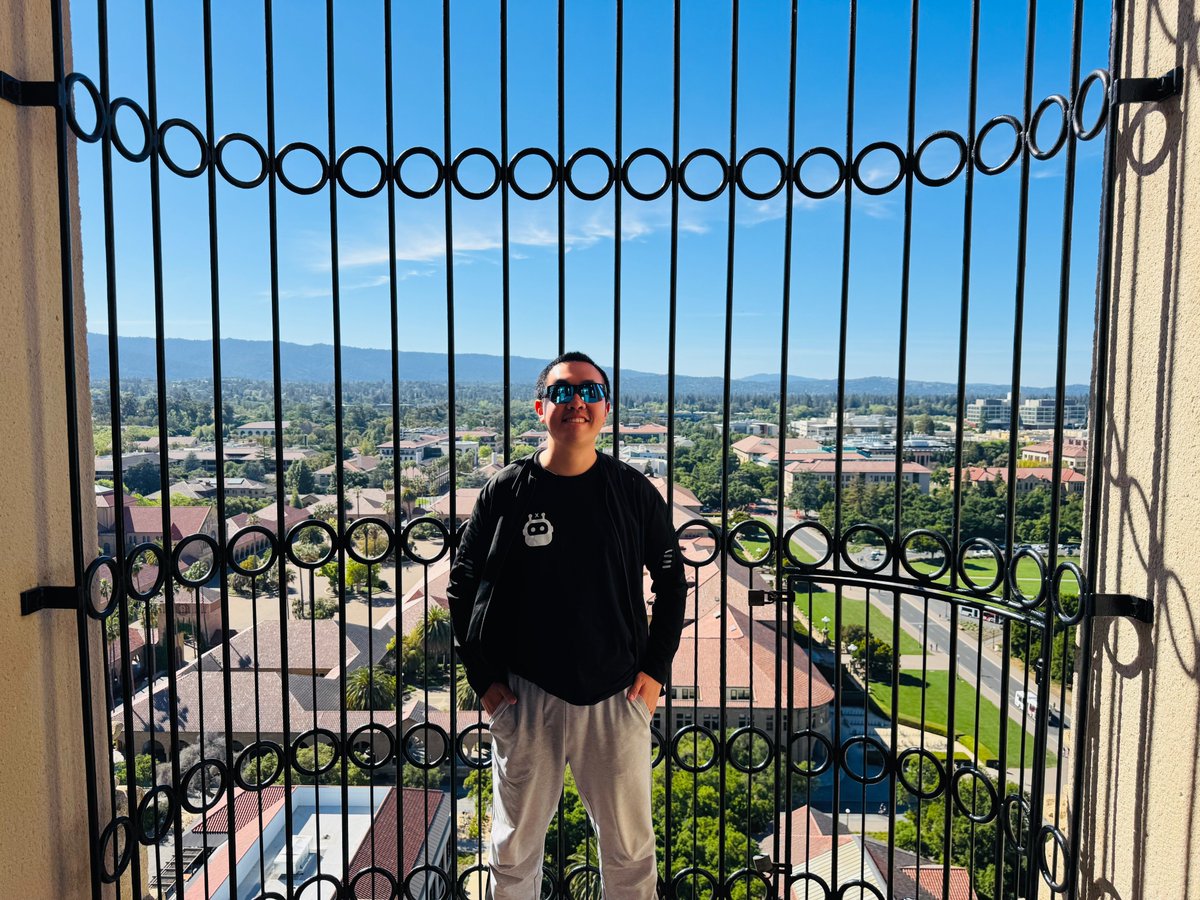
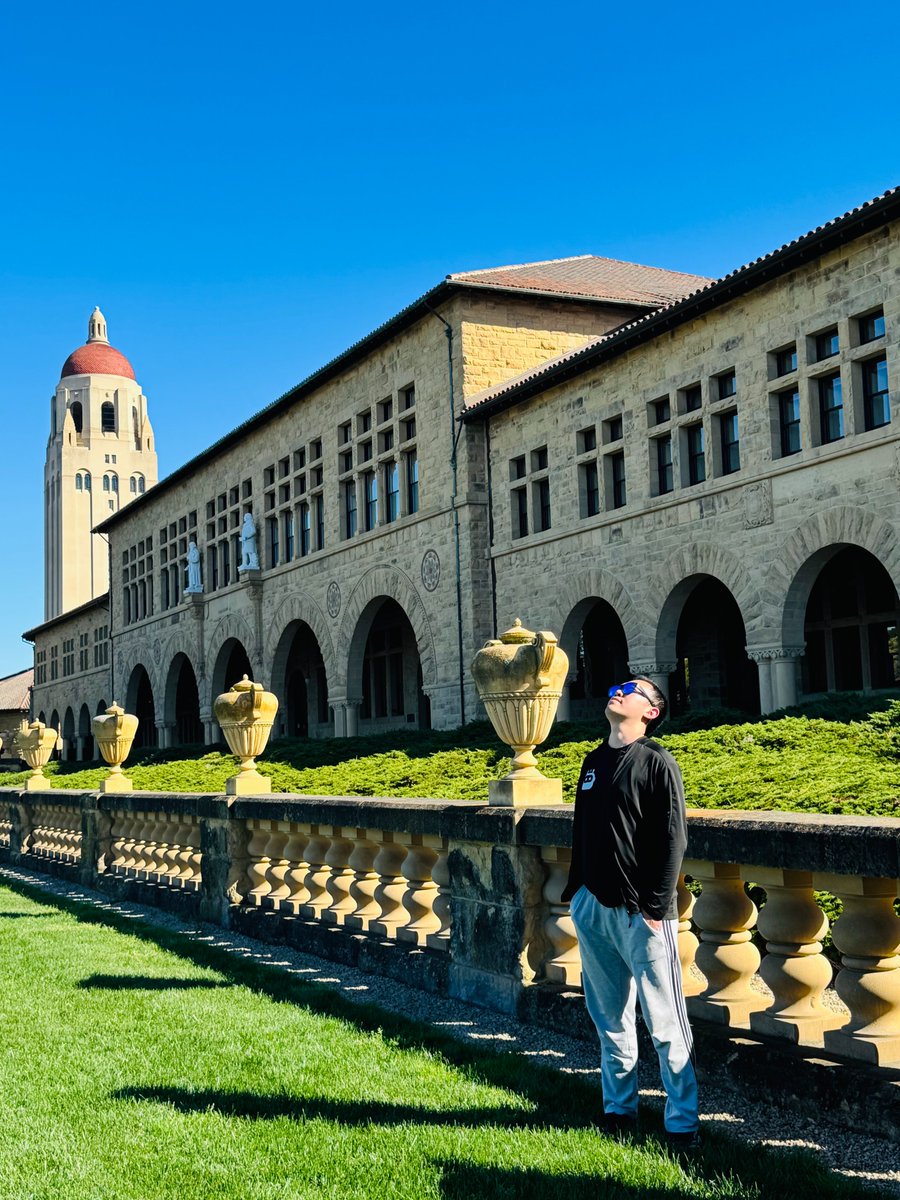
👉🏻More fun pics: https://t.co/4k9v8jNx9m



Transform your dreams into reality with Dream Zero's AI creative generative studio.
#DreamZero #FilmZero #CreativeStudio #AI #GenerativeProduction #InnovativeFilmmaking #CreativeAI

We're shouting loud & proud! Buyers w/ their own #downpayment can use OHFA’s 2.25% #DREAMZERO #mortgage rate in all 77 #Oklahoma counties.
https://t.co/fyKPSIihJO
#homeownership #ohfa #realestate #okc #realtor #tulsa #newhome #firsttimehomebuyer #househunting 🔊
Already have 💰 for your #downpayment? Take advantage of OHFA’s 2.25% #DREAMZERO #mortgage rate. https://t.co/fyKPSIihJO Available in all 77 #Oklahoma counties. #homeownership #ohfa #realestate #okc #realtor #tulsa #newhome #firsttimehomebuyer #househunting 🏡

Want your art on a reusable and trendy cup ?
Stay tuned #Toronto we're coming in town !! 🍁🥤🍾
#cupko #reusablecup #reusablebottle #dreamzero #torontoevents #refillnotlandfill #switchtoreusable

First Day Of School! How are your math skills? When events use #dreamzero cups their customers require no #singleuse cups and save over 50% on their material costs! Not to mention… https://t.co/Gn8ZdWfI7a
Last Seen Hashtags on Sotwe
Trends for you
Most Popular Users

Elon Musk 
@elonmusk
241M followers

Barack Obama
@barackobama
119.2M followers

Cristiano Ronaldo
@cristiano
112M followers

Donald J. Trump
@realdonaldtrump
111.8M followers

Narendra Modi
@narendramodi
107.1M followers

Rihanna
@rihanna
98M followers

NASA
@nasa
92.2M followers

Justin Bieber
@justinbieber
91.2M followers

KATY PERRY
@katyperry
88.4M followers

Taylor Swift
@taylorswift13
82.3M followers

Lady Gaga
@ladygaga
73.8M followers

Virat Kohli
@imvkohli
71.1M followers

Kim Kardashian
@kimkardashian
70.2M followers

YouTube
@youtube
68.7M followers

Bill Gates
@billgates
64.3M followers

Neymar Jr
@neymarjr
64M followers

The Ellen Show
@theellenshow
62.4M followers

CNN
@cnn
61.8M followers

Selena Gomez
@selenagomez
61.5M followers

X
@x
60.8M followers