

Top Tweets for #drs4


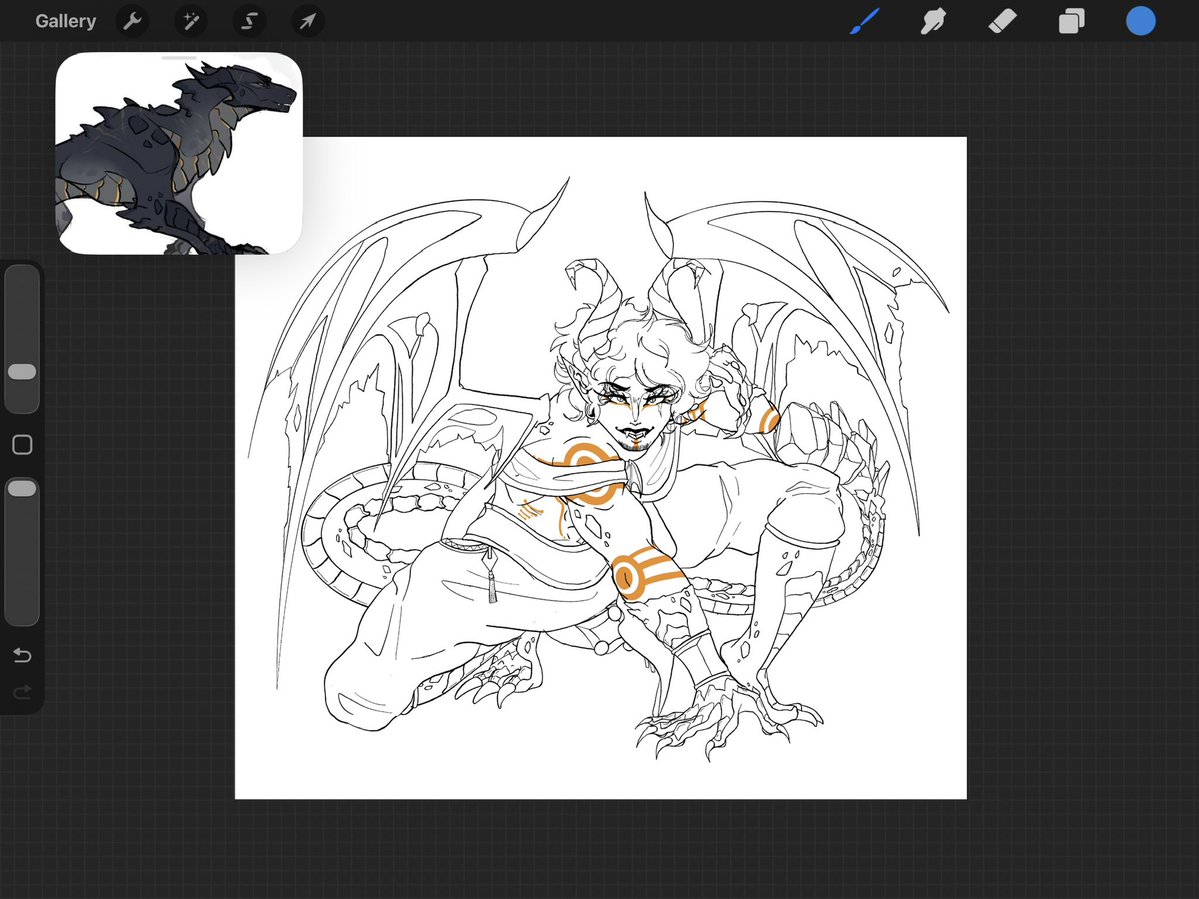

It’s been mentioned, but that doesn’t mean we have to stop talking about how spectacular the fighting sequences are this season! I honestly think they’re some of the best, if not the best fighting scenes of the series!
#ninjagospoilers #NinjagoDragonsRising #DRS4


I’m saying it now that season 4 is the best Dragons Rising season
#Ninjago #DRS4 #NinjagoDragonsRising


#ninjago #dragonsrising #legoninjago #drs4
All EPISODES OF S4 P2 ENGLISH SUB
https://t.co/IWAPic0WT0

DRAGONS RISING S4 PART 2 SPOILERS #Ninjago #NinjagoDragonsRising #DragonsRising #DRS4 #NinjagoSpoilers
_
_
_
_
_
_
_
_
_
_
_
_
_
_
_
_
_
_
_
_
So after sitting with the new episodes, I think the thing that finally clicked for me is that this whole half-season is about dangerous connections.
Not just the obvious magical connection between the Weapon of Desolation and the people it can influence, but every relationship, inheritance, memory, bloodline, prophecy, institution, and historical obligation that tries to decide who somebody is before they can decide for themselves.
The Weapon is the clearest version of that. The ninja bring it into the monastery because they are trying to contain it responsibly, but the instant it enters their home, it starts reorganizing everyone’s behavior. They have to guard it, study it, transport it, destroy it, and build their plans around it. It is already controlling the room before anyone fully activates it.
Sometimes the “monster in the monastery” is not an invading villain.
Sometimes it is the dangerous thing the heroes preserved because they believed good people could safely control it.
The team splitting up also makes more thematic sense to me on rewatch. Yes, the season is crowded, and the pacing sometimes feels like several serials interrupting one another. But the Merged Realms are too large for one monastery, one team, or one chosen leader to stand at the center of every crisis. The fragmentation is part of the point: responsibility has to become distributed.
Even the mech race becomes part of that argument. Sora and Arin are not only learning to work together; they are negotiating two different relationships to systems. Sora understands machinery and structure but knows how systems can become instruments of control. Arin improvises because official structures have repeatedly made him feel inadequate or illegitimate. Neither approach can carry the partnership alone.
Jay being placed in a gladiatorial pit is also painfully appropriate. A pit turns a person into a performing body while removing the context of who they were before entering the arena. Jay is already surrounded by people who remember an entire version of him that he cannot access. Everyone else has years of history attached to his voice, jokes, fears, powers, and relationships, while he experiences himself in the present tense.
I appreciate the Libber mention, but I still need the series to give Ed and Edna their emotional weight. Biological history can expand Jay’s identity, but it cannot replace the parents who raised him. Jay deserves more than other people handing him archived facts and declaring which version of his past is the authentic one.
Then “Ancient History” arrives and the anniversary-year archive starts physically walking back onscreen.
Frak’s material works because Reginald’s remorse is not treated as automatic restored access. A parent recognizing that they caused harm matters, but remorse opens the possibility of accountability; it does not command the injured child to trust again.
And then:
CRYPTOR.
The second he spoke, my brain genuinely went, WAIT A MINUTE.
It was not only the visual reveal. His voice and cadence reopened Rebooted in my memory all at once: Zane, the Overlord, the Nindroid army, the X-1, the score, and that extremely specific metallic arrogance that makes Cryptor sound convinced he is the main attraction even while serving somebody else.
I loved hearing him again, but I still need an explanation for why he is serving Beatrix. Both reactions can coexist. The reveal works emotionally; the causal bridge remains underdeveloped.
Maybe he was recovered, rebuilt, copied, or reprogrammed. That possibility could turn his return into a genuinely unsettling question: if a familiar consciousness is reconstructed and placed under new commands, does recognition prove that the person is free?
The anniversary set obviously helps explain the corporate reason for his return, but commercial motivation does not automatically make a story choice empty. Ninjago has always worked under toy constraints. The real test is whether Cryptor changes the present story instead of merely proving that the franchise remembers 2014.
Give him a meaningful confrontation with Zane. Make his current ownership and allegiance matter. Let the old machine war collide with Imperium’s habit of converting bodies, technology, dragons, and talent into usable infrastructure.
Then we return to the Never-Realm in “A Frozen Scar.”
A scar is not the original wound, but it is evidence that the wound permanently changed the body. Zane’s restoration did not automatically erase the lives lived under the Ice Emperor. Returning him to that landscape with memory, regret, and witnesses gives the series a chance to acknowledge that recovering the person who caused harm is not the only measure of whether everyone else has healed.
AND THEN AKITA.
My serious analysis briefly stopped functioning.
The soundtrack. The framing. The movement. The design changes. The multiple tails. The FLUFF. My priorities were immediately rearranged.
But beneath the screaming, her return matters because Akita’s original story ended with an unfinished future tense. Cryptor’s story ended in destruction; Akita and Lloyd’s story ended with distance, intimacy, and the possibility of meeting again.
Her reappearance asks what she became while the camera was following Lloyd elsewhere.
I do not only care whether they reunite romantically or whether a ship becomes canon. I care whether Akita has been allowed to remain a full person beyond the promise she represents to Lloyd. She survived, protected her people, lived through the Merge, and continued aging in a world whose history did not stop because she left the screen.
The possible remix of Akita’s theme during the fighting also made me feral. Even if it was broader Never-Realm music being reused without extremely precise leitmotif logic, the emotional effect remains. The realm feels like it is carrying her presence before she fully returns.
Accidental thematic resonance is still resonance.
The peace-summit arc then takes all these private questions about connection and turns them political.
“100 Eyes to See Your Soul” is about surveillance, interpretation, and the struggle over who receives the authority to define someone. Sora enters that room already carrying several imposed identities: runaway, inventor, traitor, Elemental Master, daughter, hero, former citizen of Imperium, and evidence for everybody else’s worldview.
One hundred eyes do not objectively reveal a soul.
They create one hundred competing stories about what that person is allowed to mean.
Sora’s parents remain one of the most painful parts of the season because their loyalty to Beatrix is not merely a political disagreement. They repeatedly trust the institutional story over the daughter who escaped its consequences. They may love an imagined version of Sora, but they reject her actual moral knowledge, autonomy, relationships, and chosen life.
I can understand the devil’s-advocate explanation that authoritarian conditioning often disguises itself as safety, duty, normalcy, or protection from chaos. That context can explain their behavior.
It does not make Sora responsible for reconciling with them.
Understanding why somebody harmed you is not the same thing as owing them access to you.
The summit itself is such an effective political setting because peace is being performed in the front of the building while abduction and violence operate behind the ceremony. Everybody wants to preserve the appearance of diplomacy while Sora can literally be removed from the room.
A system can follow every official rule while the least protected person disappears through a side corridor.
The younger ninja are then trapped in the classic institutional bind: they are expected to save the summit without embarrassing the summit by revealing that it failed. If they wait for permission, the threat advances. If they intervene, adults can accuse them of recklessness.
They are given responsibility without equivalent authority.
Zilvar becomes the moral hinge of the ending because the Weapon does not tempt him through generic greed. It reaches him through grief, duty, protection, and the desire to preserve his people.
Dangerous systems rarely create desire from nothing.
They locate a real wound and offer a solution that converts care into ownership.
The fact that the Weapon speaks as an “I” makes this much more disturbing. It is not simply an object. It contains or extends another will. It can tailor domination to the emotional language of whoever approaches it, telling Zilvar that control is protection and that possessing the future is the only reliable way to prevent another loss.
His real test is whether loving his people gives him the right to dictate what their future must become.
Then the finale is literally titled “Dangerous Connections,” because every arc in this half-season is about a connection that can become coercive:
The Weapon connects to its creator.
Cryptor connects an older war to Beatrix’s campaign.
Akita connects Lloyd to a life beyond the monastery.
Jay connects uncertain memory to competing family histories.
Sora’s brilliance connects Imperium’s exploitation to the ninja’s possible future.
Frak connects inherited family history to the right of refusal.
Zilvar connects grief to responsibility.
The summit connects political groups whose definitions of peace are not equivalent.
And Lloyd is connected to almost every cosmic and emotional system the franchise has ever created.
That is why Lloyd’s apparent death hurts even though I do not believe it will be permanent.
Lloyd has been a junction point since childhood: Green Ninja, prophecy child, Garmadon’s son, Wu’s nephew, dragon-linked power, leader, mentor, symbol, and solution. So many systems have been attached to his body that becoming light starts to resemble the expected completion of his role.
That is the danger of the chosen-one structure.
The person becomes most useful at the moment they stop being safely embodied.
They become sacrifice.
Legend.
Spirit.
Guidance.
Memory.
The scene hurts because Lloyd has spent years trying to become a person instead of a mandate. Watching him become pure symbolic light threatens to reverse that progress.
Even when a hero freely chooses sacrifice, the story should still question why destruction remains the most recognizable proof of love available to them.
Admire the person standing at the blast point.
Do not automatically admire the world that keeps requiring somebody to stand there.
And the Episode 44 parallels make this even more emotionally violent.
“The Corridor of Elders” ends with Garmadon sacrificing himself in a burst of light, Lloyd being forced to complete the spell that sends his father away, everyone gathering around a newly created memorial, and the episode immediately revealing that the supernatural story is not actually finished.
Now Lloyd occupies the position Garmadon once held.
Father becomes light.
Son remains behind.
A monument turns the lost father into public memory.
Years later:
Son becomes light.
The next generation remains behind.
Another monument turns him into public memory.
The Corridor of Elders pattern has rotated around and swallowed Lloyd.
He did not merely inherit Garmadon’s virtues or mistakes. He inherited the architecture of his sacrifice.
Which also makes me ask again:
Misako and Garmadon were not at Lloyd’s funeral??
That is his mother and father.
Maybe they had not been informed. Maybe the ceremony happened too quickly. Maybe their reactions are being saved for the next season. But if everyone genuinely believed Lloyd was dead, leaving both parents outside the frame makes the memorial feel deliberately incomplete.
Lloyd participated in preserving Garmadon’s memory. He literally stood beneath his father’s monument.
Now Lloyd becomes the memorialized son, and neither parent is shown standing beneath his.
The father became a monument.
Now the son has become one.
And somewhere between those two statues, Lloyd inherited more of Garmadon’s fate than either of them ever wanted.
The obvious Rebooted echoes also mean the important question is not simply whether Lloyd is permanently dead. Almost nobody believes that.
The real question is what kind of return remains possible and whether the return changes anything.
If he returns immediately without consequences, the finale becomes temporary grief extraction.
If he remains absent but every future storyline revolves around finding him, removing him physically may somehow recenter him even more.
But if the ensemble must reorganize without him, and Lloyd eventually returns changed—forced to renegotiate whether he is still leader, mentor, chosen symbol, or even embodied in the same way—that could make resurrection into genuine identity work instead of a reset.
Ras’s plan also remains unfinished. The Source Dragons, artifacts, mysterious master, Weapon, anti-Merge agenda, and several unresolved allegiances remain active.
I appreciate that Ras is being treated as a sustained ideological threat rather than a villain who explains everything in one final monologue. But prolonged mystery can become narrative debt. Eventually the series must pay off the master, the objects, Jay’s family story, Cryptor’s allegiance, Akita’s present life, and Lloyd’s actual condition.
A serial can keep doors closed for suspense.
But if the hallway fills with too many unopened doors, opening one eventually stops changing the architecture.
Overall, I loved Part 2. I also think it is crowded enough that some of its strongest connections became clearer while reflecting afterward than during the immediate viewing rhythm.
Cryptor’s return is fantastic, but his allegiance needs more explanation.
Akita’s return emotionally destroyed me, but she deserves present-tense agency beyond being recognized.
Jay’s biological history is interesting, but Ed and Edna cannot become optional footnotes.
Sora’s family conflict is strong, but it should not be resolved through one convenient parental gesture.
Lloyd’s disappearance is powerful, but the next season must prove that it altered the ensemble rather than only producing a cliffhanger.
So I do not think Season 4 Part 2 is fundamentally about destroying another ancient magical weapon.
It is about whether the characters can interrupt the logic that repeatedly turns people, memories, grief, technology, bloodlines, relationships, and prophecy into weapons.
The Weapon of Desolation may be the most honest thing in the season because it openly declares its desire to control and destroy.
Families can call control love.
Governments can call extraction progress.
Summits can call managed silence peace.
Anniversary campaigns can call commercial retrieval remembrance.
Chosen-one stories can call a child’s destruction destiny.
And the characters keep receiving opportunities to reject those translations.
Sora refuses the reality Beatrix and her parents prefer.
Frak refuses to let inherited history make his choice for him.
Zilvar must decide whether protection justifies owning his people’s future.
Zane walks back into the landscape of harm attached to his own body.
Akita returns as proof that life continued beyond the chosen boy’s storyline.
Cryptor returns as a question about whether a recognizable personality can still be possessed.
Lloyd disappears in a way that forces the story to prove whether its ensemble can breathe without placing him at the center of every solution.
I finished the season exhilarated, worried, emotionally ambushed, and critically awake.
Cryptor’s voice still makes my memory spark.
Akita’s tail animation still completely reorganizes my priorities.
Lloyd becoming light still hurts even while I assume his story is unfinished.
And that is why the season worked for me even when it became messy.
My emotional reaction and my criticism are not canceling each other out.
They are feeding each other.
Because connection is not automatically the cure.
Connection is power.
Whether that power becomes love or control depends on whether everyone connected to it still gets to choose how they breathe.
#Ninjago #NinjagoDragonsRising #DragonsRising #DRS4 #NinjagoSpoilers



Auch wenn hauptsächlich Rehe und Wildschweine seine Nahrung ausmachen - Weidetiere hingegen nur 1,6 Prozent - ist der gesellschaftliche Diskurs bzgl. Wolf oft emotional aufgeladen. Woran das auch liegt, zeigt die Antwort auf eine Kleine Anfrage #Drs4/16136.


Rising Stars Alum!
Big up to #DRS4's first runner-up @jodianpantry and #DRS14's first runner-up and third runner-up Touriss and Anthonia who came out to support the #DRS15 auditions.


Erst heute entdeckt. #servicepublic archiviert. Schöne Arbeit @DigiAndi ! Beispiel: Der Start von #drs4 vor 10 Jahren #srf4news @SRF @srfnews https://t.co/R33tZ0pleJ

Jamaica got it right , so proud of Short Boss !!! #DRS4

We're in Manchester today talking #RealtimeRostering and #DRS4 at our #ERostering user group! Some great feedback!


Last Seen Hashtags on Sotwe
minichatt()**************************************************filter:videos
Seen from United States
travesti bursa
Seen from Turkey
standupfrot
Seen from United Kingdom
asian #orgasm
Seen from United Kingdom
anxiouspandaa()**************filter:videos()**************filter:videos()**************filter:videos()**************filter:videos()**************filter:videos()**************filter:videos
Seen from Germany
فطوم
NoLimits
Seen from Canada
anxiouspanda
Seen from Germany
ometv girl
Seen from Turkey
minichat ()filter:videos
Seen from Turkey
Most Popular Users

Elon Musk 
@elonmusk
241.5M followers

Barack Obama
@barackobama
118.8M followers

Cristiano Ronaldo
@cristiano
114.5M followers

Donald J. Trump
@realdonaldtrump
111.8M followers

Narendra Modi
@narendramodi
107.1M followers

Rihanna
@rihanna
98.7M followers

NASA
@nasa
92.3M followers

Justin Bieber
@justinbieber
91.8M followers

KATY PERRY
@katyperry
90M followers

Taylor Swift
@taylorswift13
84M followers

Lady Gaga
@ladygaga
75.5M followers

Virat Kohli
@imvkohli
73.5M followers

Kim Kardashian
@kimkardashian
70.9M followers

YouTube
@youtube
68.8M followers

Neymar Jr
@neymarjr
66.5M followers

Bill Gates
@billgates
65.3M followers

Selena Gomez
@selenagomez
63.1M followers

The Ellen Show
@theellenshow
62.2M followers

CNN
@cnn
61.7M followers

X
@x
60.7M followers