

Top Tweets for #experimentaLL

Evaluating the Generalizability of Machine-Learning-Guided Directed Evolution Across Protein Fitness Landscapes
1. The paper introduces MLDEx, a large-scale benchmark of 557,143 simulated ML-guided directed evolution (MLDE) campaigns across 16 experimentally measured protein fitness landscapes, designed to test which campaign design choices actually generalize to new proteins.
2. A key finding is that ML guidance can strongly reduce experimental screening when the initial labeled set is small: with 100 initial variants + 100 acquired (200 total assays), MLDE succeeds 44.6% vs 19.9% for random screening (about 2.24x higher success probability), corresponding to needing ~2.2–2.8x fewer assays for comparable success under small-start conditions.
3. That advantage shrinks as the initial training set grows because the “initial data collection” itself becomes a large random screen: with 1,000 starting variants (1,100 total assays), the MLDE vs random success ratio drops to ~1.12, emphasizing that total assay accounting changes conclusions about “efficiency.”
4. Zero-shot screening (ranking variants without any new labels) is a strong baseline here: using ESM-IF1 scores, zero-shot achieves 56.2% success at 200 total assays vs 44.6% for MLDE (under uniform initialization for MLDE). At larger budgets, performance converges (e.g., at 500 assays: 71.3% zero-shot vs 71.9% MLDE), highlighting how much initialization strategy can matter.
5. Acquisition strategy generalizes better than model ranking: greedy selection (pick highest predicted fitness) beats expected improvement on 14/16 landscapes, improving success by ~6.2–6.3 percentage points at both 100 and 400 acquired assays, and finding successful variants ~21 assays earlier on average.
6. Batch size shows a consistent early/late tradeoff: small batches (10) outperform large batches (100) early (+8.1 pp at 100 acquired assays across 16/16 landscapes), but later the advantage reverses (about −16.9 pp at 400 acquired assays in the main benchmark). An additional experiment disabling early stopping still shows a crossover around ~220 acquired variants, suggesting frequent model updates help early, while larger batches can win later.
7. Representation and regressor choices interact strongly and do not transfer reliably across proteins: among 224 representation–regressor pairs, variance in success is attributed to representation (28.8%), regressor (33.2%), and their interaction (38.0%), meaning “best representation” depends heavily on the model paired with it.
8. Protein language model (PLM) embeddings are not uniformly better: averaged across regressors, PLMs improve success by ~5.2 pp at 400 acquired assays but only ~0.8 pp at 100 assays; the gain depends on the regressor (e.g., +20.3 pp with LightGBM but ~+0.6 pp with ridge). As training data increases (e.g., 1,000 initial variants), the average PLM advantage can disappear or turn negative.
9. The most practically important caution: rankings do not generalize to unseen landscapes. In leave-one-landscape-out tests, the configuration chosen from the other 15 landscapes performs 13.3 percentage points worse on the held-out landscape on average, with selected configurations having a median rank of 93/224 on the held-out landscape at 400 acquired assays (never reaching top 10% in any held-out evaluation).
10. Computational cost can differ by orders of magnitude among similarly successful configurations: at 400 acquired assays, 26 combinations are statistically indistinguishable from the best, yet model-fitting time differs by ~1,043x. Example: ProstT5 + random forest reaches 89.7% success with ~2.857 CPU-hours per campaign, while a much cheaper site-restricted SLAE + linear model reaches 87.5% with ~0.005 CPU-hours, suggesting “good enough + cheap” may be preferable in practice.
📜Paper: https://t.co/0Ma0NfZZmO
#ProteinEngineering #DirectedEvolution #MachineLearning #ComputationalBiology #ProteinLanguageModels #Benchmarking #FitnessLandscapes #ZeroShot #ActiveLearning

Biases and Limits of AlphaFold Predictions for Non-Globular Proteins
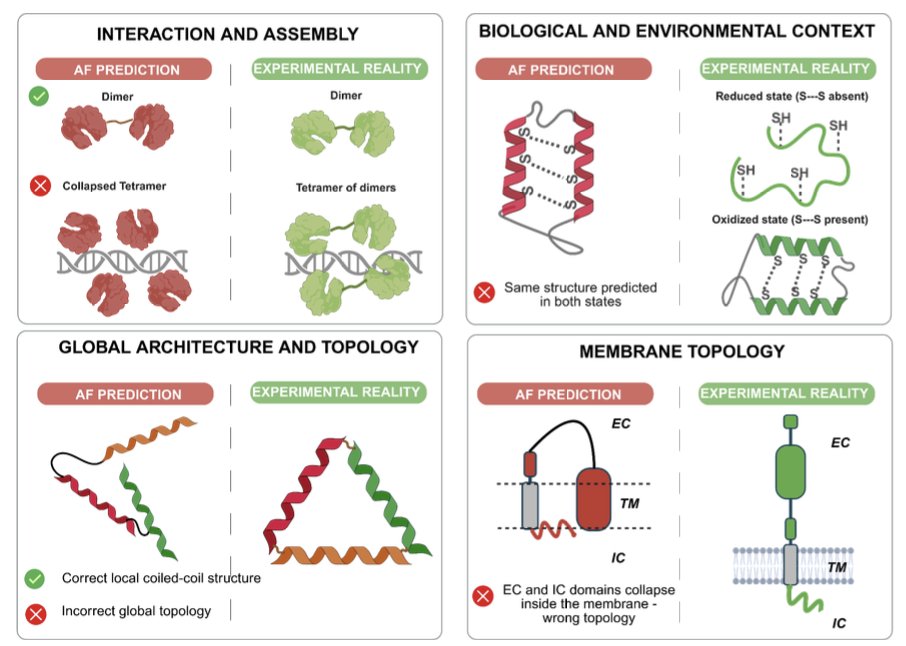
1. The paper compiles 27 experimentally validated “failure modes” where AlphaFold predictions diverge from biologically relevant states for non-globular proteins (NGPs), arguing that many issues come from missing biological context rather than incorrect local geometry.
2. It proposes a practical framework with four recurring discrepancy categories: (i) interaction and assembly, (ii) biological/environmental context, (iii) global architecture and topology, and (iv) membrane topology—intended to help users decide when a single AF model is likely to be misleading.
3. A key message is that NGPs often do not have one dominant structure: intrinsically disordered proteins/regions, repeat proteins, and low-complexity regions may exist as ensembles and undergo disorder–order transitions, so a single static prediction can be an incomplete or wrong “answer.”
4. Interaction and assembly: the p53 case illustrates that AlphaFold can model a correct dimeric arrangement yet misplace dimer–dimer organization in the functional tetramer, highlighting limitations in predicting higher-order quaternary architecture even when subunits look correct.
5. Biological and environmental context: the TRIAP1 example shows redox-dependent conformational switching (oxidized α-helical vs reduced molten-globule-like). AlphaFold predictions remain essentially unchanged even when cysteines are replaced by serines to mimic reduction, underscoring difficulty in capturing state changes not specified by sequence alone.
6. Global architecture and topology: for de novo Coiled-Coil Protein Origami (CCPO), AlphaFold reproduces several local coiled-coil features but fails to recover the intended global topology/connectivity, emphasizing that local correctness does not guarantee correct whole-chain architecture—especially relevant for protein design.
7. Membrane topology: for Type Ve autotransporters, AF2/AF3 can produce locally plausible domains arranged in ways incompatible with the membrane plane (e.g., extracellular regions crossing the membrane, incorrect periplasmic domain organization), reflecting the lack of an explicit membrane environment in the modeling.
8. The authors note that AF-derived metrics (e.g., pLDDT, RSA) can correlate with disorder signals but do not capture experimentally observed conformational heterogeneity; they caution that non-expert users may overinterpret confident-looking snapshots.
9. Comparing AF2 vs AF3, the paper acknowledges AF3’s advances (diffusion-based modeling; complexes with proteins/nucleic acids/small molecules/ions; selected PTM inputs) but concludes many core challenges persist for NGPs, especially context-driven conformational transitions and ensemble behavior.
10. The recommended practice is to interpret AlphaFold models as hypotheses and integrate complementary experiments (e.g., NMR, SAXS, cryo-EM, cross-linking, circular dichroism) to identify the biologically relevant state; longer term, the field needs ways to predict, represent, and store conformational variability and environmental dependence (pH, ionic strength, redox, membranes, partners).
📜Paper: https://t.co/eqr3NanoXi
#AlphaFold #ProteinStructure #IntrinsicallyDisorderedProteins #StructuralBiology #ComputationalBiology #ProteinDesign #MembraneProteins #Bioinformatics #MachineLearning
Binary Patterning as a Probe of Protein Language Model Representations
1. The study uses a classic, experimentally grounded design rule—binary polar/nonpolar patterning in heptad repeats—to probe what ESM2 representations actually encode about protein folding “grammar,” using four-helix bundles as the testbed.
2. A key observation: ESMFold predictions reproduced library-level trends seen in real binary-patterned bundle experiments (e.g., longer helices give more compact, convergent structures), but did not reliably separate successful vs unsuccessful individual designs—highlighting a gap between population trends and per-sequence biophysics.
3. To isolate length effects, the authors modeled thousands of synthetic sequences (62–120 helical residues) built only from binary constraints. Predicted helicity stayed high across lengths, while compactness and hydrophobic burial improved nonlinearly; designs >~90 residues were almost always compact.
4. Predicted topology diversity decreased with helix length: shorter sequences explored many irregular packings, while longer sequences converged to a few canonical four-helix-bundle arrangements. A heptad-periodic effect appeared, where helix termination register (which heptad positions end near the bundle center) modulated accessible topologies, and linker length could tune this.
5. Residue-level PCA on final-layer ESM2 embeddings revealed interpretable axes: PC1 strongly tracked hydrophobic patterning with an ~3.6 residues/turn sinusoid consistent with amphipathic helices; PC2 separated helices from flexible glycine linkers (helix/loop “punctuation”); PC3 captured heptad-register/interface asymmetry (e vs g positions), consistent with helix-packing geometry.
6. These embedding signals were not limited to one “good” heptad pattern: across multiple helix-compatible binary patterns, PC1 and PC2 behaved consistently, while PC3 shifted with the number/placement of hydrophobic sites—suggesting ESM2 encodes both general amphipathic organization and finer interface geometry.
7. The paper then enumerates all 128 possible 7-position binary patterns (2^7) in a controlled 4-segment scaffold (6,400 sequences). Masked-token tests showed ESM2 can usually recover the imposed polar/nonpolar category, but confidence depends on pattern class: homotypic patterns are easiest; some canonical helix and beta patterns show lower entropy than average; hydrophobic-rich patterns tend to be less confidently recovered.
8. A major representation-space result comes from “position-preserving” PCA on whole-sequence embeddings: the 128-pattern library forms a structured 3D “jellyfish” manifold where PC1 is dominated by overall hydrophobic composition, while paired PCs (PC2/PC3) encode pattern phase/register as a cyclic geometry—cyclic permutations of a pattern move around the cycle in order.
9. Manifold geometry depends on protein-relevant chemistry and repetition: charge-based (+/−) alphabets yield an analogous organized manifold (with different Fourier-bin structure), but arbitrary amino-acid partitions collapse the structure; the cyclic organization is absent in the input layer, untrained ESM2, and a non-protein model (ByT5), implying it is learned during protein-LM training.
10. Repeat number and linker context shape the manifold in ways that parallel fold prediction: with fewer heptad repeats, composition remains but equivalence-class clustering and phase-encoding weaken or disappear; swapping hexaglycine linkers for the original Kamtekar linkers contracts the manifold’s angular organization—connecting boundary clarity/repeat reinforcement to both representation geometry and downstream structural convergence.
📜Paper: https://t.co/ZZWB0916o8
#ProteinDesign #ProteinLanguageModels #ESM2 #Interpretability #RepresentationLearning #ManifoldLearning #ESMFold #ComputationalBiology #Biophysics #SyntheticBiology

MutAtlas: A PDB-Wide Energy-Guided Atlas of Protein Mutation Effects
1. MutAtlas builds a PDB-wide, structure-aligned mutation augmentation resource by exhaustively enumerating all single-site substitutions on experimentally resolved structures, then aligning three heterogeneous mutation “signals” at each residue: physics-based FoldX energies, ESM2 masked-LM logits, and ESM-IF inverse-folding logits.
2. Scale matters: instead of treating outputs as comparable absolute scores, the work converts every source into a unified per-residue 20D “mutation preference” vector (FoldX ∆∆G is transformed into logits via negative energy differences relative to WT), enabling model-to-model comparison without assuming shared calibration.
3. The dataset is large enough to change what can be studied systematically: 86,479 protein chains, 15,900,903 residue positions, and >300 million FoldX single-mutant evaluations—roughly two orders of magnitude more structural coverage than typical experimental DMS collections.
4. Large-scale atlas analysis shows disagreement is pervasive and structured, not just noise. ESM2 and ESM-IF are strongly WT-conservative (often picking WT as Top-1), while FoldX more frequently favors non-WT substitutions and shows broader substitution tendencies (e.g., higher preference for small/flexible residues).
5. Preference distributions differ in sharpness: FoldX has higher per-position entropy and smaller Top1–Top2 margins (broader, less peaked preferences), whereas ESM2/ESM-IF are more decisive at subsets of positions—yet even low-entropy positions can strongly disagree across sources.
6. Cross-model consistency is low at both decision and ranking levels: Top-1 agreement is generally limited across pairs; Spearman rank correlation is higher between ESM2 and ESM-IF, while FoldX is substantially less correlated—suggesting FoldX provides complementary ranking structure rather than a noisy version of neural scores.
7. Motivated by systematic heterogeneity, the paper proposes an unsupervised multi-source preference distillation framework that learns from relative within-source preferences (pairwise rankings) rather than regressing to raw scores, and explicitly models cross-source disagreement during training.
8. The core training idea: (a) normalize pairwise margins within each source to remove scale effects, (b) apply agreement-weighted “soft consensus” supervision so partially supported preferences still contribute, and (c) add disagreement-aware margin regularization that prevents the student from becoming overconfident when sources conflict.
9. Without using any experimental mutation labels, the distilled student (ESM2-650M fine-tuned on MutAtlas preferences) achieves the best overall performance among evaluated zero-shot baselines and naive fusion strategies on ProteinGym (macro Spearman 0.498 overall), with particularly strong results on Binding, Expression, and Stability; ablations show soft consensus > hard consensus, and explicit disagreement modeling improves further.
💻Code: https://t.co/VlKhnGxmVU
📜Paper: https://t.co/IPcOicP1Wx
#ComputationalBiology #ProteinEngineering #Bioinformatics #MachineLearning #ProteinDesign #DeepLearning #PDB #MutationEffects #ZeroShot #Distillation


@gdechichi I am experimentally porting my Unity project into vibe coded custom engine in parallel while still developing it. I was mostly using unity as render engine so porting it into SDL3 gpu api won't be very hard. If goes well i might fully switch to custom engine.


Chrome et al. only support it experimentally currently
AmyloCore-ML: AI/Machine Learning Enabled Identification of Amyloid Fibril Core Regions Using Protein Language Models
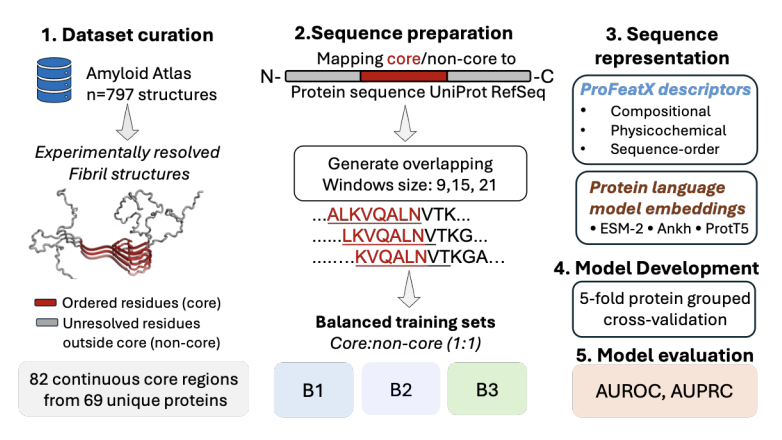
1. The study frames a more specific prediction target than “aggregation-prone regions”: it predicts which residues are actually incorporated into experimentally resolved, ordered amyloid fibril cores, directly from sequence.
2. Training labels come from structure, not peptide assays: high-resolution fibril structures curated from Amyloid Atlas were mapped back to full-length UniProt sequences; residues observed in the ordered fibril were labeled “core”, while residues outside all resolved cores from the same proteins were used as matched “non-core” controls.
3. Dataset scale and composition: 69 proteins yielding 82 continuous core segments; 4,819 core residues vs 10,433 non-core residues. This within-protein negative design reduces confounding from protein-level differences unrelated to local core formation.
4. The method converts sequences into overlapping windows (W9/W15/W21; stride 1; no padding) to preserve boundaries, and builds three independently balanced negative samplings (B1–B3) per window size to test robustness against how “non-core” is chosen.
5. Representations compared head-to-head under identical splits: conventional physicochemical/sequence-order descriptors (ProFeatX, excluding features needing external structural predictions) versus protein language model embeddings (ESM-2, Ankh, ProtT5).
6. Key modeling result: PLM embeddings consistently outperform physicochemical descriptors across classifiers and window sizes, with best cross-validated performance around AUROC ~0.88 and AUPRC ~0.85 (notably with longer context windows).
7. Leakage-aware evaluation is central: the authors use a single master 5-fold protein-grouped cross-validation so that all windows from a protein stay in the same fold, preventing near-duplicate window leakage that can inflate residue-level performance.
8. Context length matters: performance improves from W9 to W21 across feature types, supporting the interpretation that “structural core identity” is not captured only by short amyloidogenic motifs but also by surrounding sequence environment.
9. Full-length localization is evaluated explicitly (not just classification): sliding-window probabilities are reconstructed into residue-level P_core profiles by averaging over all windows covering each residue; localization metrics include peak distance to experimental core, peak-within-10-residues, and segment overlap (IoU).
10. Locked-model scanning (no retraining) highlights a practical operating point: ESM-2 + ExtraTrees with W21 yields residue AUROC 0.833, AUPRC 0.751, and mean peak distance 12.4 residues; the paper emphasizes that high AUROC alone does not guarantee accurate spatial localization.
11. Benchmarking against existing tools on the same structure-defined endpoint: CrossBeta (AUROC 0.718, AUPRC 0.659, mean peak distance 22.7) and AggrescanAI (AUROC 0.719, AUPRC 0.621, mean peak distance 30.2) underperform the best AmyloCore-ML locked PLM models, consistent with differing training objectives (aggregation propensity vs structure-incorporated core).
12. Deployment: AmyloCore-ML is provided via an interactive Google Colab workflow to generate residue-resolved core-propensity profiles and predicted core segments from sequence, aiming to lower barriers for experimental users.
📜Paper: https://t.co/8rCjolOGjh
#Amyloid #ProteinLanguageModels #MachineLearning #ComputationalBiology #Bioinformatics #Neurodegeneration #CryoEM #ProteinAggregation #ESM2 #ProtT5 #Ankh

Researchers have experimentally confirmed altermagnetism, a discovery that could advance spintronics and energy-efficient computing.
https://t.co/tLfXpyh9uW

Make your call
Choose Up if your thesis is that the market will move higher during the defined window
Choose Down if your thesis is that it will move lower
Review the marke understand the time window and only participate with testnet assets you can afford to use experimentally


A century-old principle of Einstein’s gravity has passed a quantum test 🔬
For the first time, an international team, including Nobel Prize-winning physicist Prof Sir Roger Penrose, has observed a long-predicted effect of gravity on a falling quantum object.
Read more ⬇️
https://t.co/a3EVgbicUn

Comprehensive evaluation of AlphaFold/OpenFold prediction of experimentally unresolved proteins through novel metrics
1. Díaz et al. benchmarked multiple protein-structure predictors (AlphaFold2 in several setups, OpenFold, ColabFold, and the AlphaFold3 server) on 10 proteins and 222 single amino acid variants, focusing on the common real-world case where no experimental structure exists.
2. The central message: widely used global metrics (mean pLDDT, pTM-score, RMSD, TM-score) often suggest similar performance across tools, yet they can miss substantial localized disagreements that matter for function, binding, and variant interpretation.
3. The paper’s key methodological contribution is a residue-level comparative framework that adapts Bland–Altman agreement analysis to protein prediction, producing M–P plots (per-residue pLDDT differences vs mean pLDDT) to expose systematic confidence biases between predictors.
4. They complement this with a Distance–pLDDT (D–P) plot: per-residue Cα coordinate deviations (after alignment) plotted against baseline pLDDT, helping separate “low confidence because uncertain” from “high confidence but structurally divergent,” and localizing where conformations actually differ.
5. Per-residue confidence profiles (PRPs) are further summarized using UMAP, showing that predictors form distinct clusters by method/implementation, even when predicting the same protein/variants—indicating tool-specific “confidence signatures” not visible in global averages.
6. A practical takeaway for compute-limited labs: reducing homology database scale had minimal impact on predicted structural quality for AF2/OF in this study. AF2 full (AWS + full DB) and reduced/local AF2 (reduced DB; mid-range GPU) showed strong agreement, supporting lightweight AF2 as a cost-effective alternative.
7. Another practical takeaway: the MSA search strategy appears to be a major driver of differences. ColabFold (MMseq2-based) tended to yield lower average pLDDT for the NIS discovery set and showed systematic confidence biases across pLDDT regimes compared with Jackhmmer-based AF2 setups.
8. They optimized superposition by aligning only high-confidence residues (confidence-based superposition; pLDDT ≥ 70). This consistently improved RMSD/TM-score versus global alignment and reduced the confounding impact of intrinsically disordered regions (IDRs) that are present in predictions but often absent in experimental models.
9. Across proteins and variants, most predictor-to-predictor structural divergence concentrated in low-confidence regions (loops/IDRs/terminal tails). Importantly, single amino acid substitutions often produced their largest coordinate shifts in flexible regions, sometimes even when the mutation site itself lay in a high-confidence core—suggesting perturbations can propagate into loops.
10. AlphaFold3 (diffusion-based) frequently showed larger local coordinate deviations and higher sensitivity to SAAVs in low-confidence regions than AF2/CF, reinforcing that predictor choice can affect conclusions about variant-driven structural changes, especially in flexible segments.
📜Paper: https://t.co/FkHNR68Vf8
#ProteinStructure #AlphaFold2 #AlphaFold3 #OpenFold #ColabFold #Bioinformatics #StructuralBiology #VariantEffect #IDR #ComputationalBiology

The first OpenBind release: An open experimental structure–affinity dataset and benchmark for structure-based AI
1 OpenBind is introduced as an open-science effort to generate experimentally coherent structure–affinity datasets for structure-based AI. This first public release targets enteroviral 2A protease and is positioned as the largest public single-target experimental structure–affinity dataset to date.
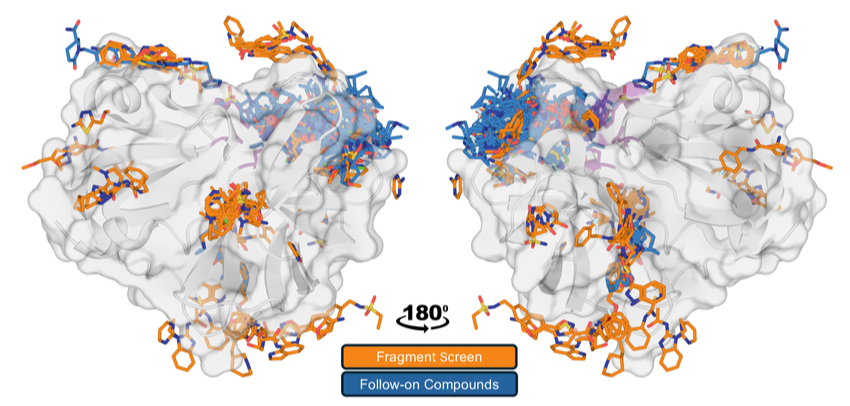
2 Dataset scale and composition: 925 crystallographic binding events from 699 compounds, with grating-coupled interferometry (GCI; waveRAPID) affinity measurements for 601 compounds. After curation, 881 binding events remain for structural benchmarking (79 fragments, 802 follow-ons), and a QC-filtered affinity benchmark contains 490 compounds.
3 A key design choice is “campaign coherence”: structures come from an initial crystallographic fragment screen followed by follow-on soaking, and affinities are measured in a consistent biophysical setup. This reduces heterogeneity typical of retrospective datasets aggregated across assays, conditions, and curation standards.
4 The release is intended to test generalization beyond near-neighbor leakage. Using the Runs N’ Poses ligand–pocket similarity metric against PLINDER structures up to 30 Sep 2021 (AlphaFold3 cutoff), curated complexes show only moderate similarity (median ~40; most <50), a regime where prior work observed substantial cofolding performance drops.
5 Docking benchmarks show receptor-state selection dominates outcomes. With cognate holo receptors (redocking), GNINA reaches ~85% Top-25 success, but cross-docking into apo-like receptors (experimental apo 8POA or AF2 apo model) collapses due to a loop near the pocket adopting a partially occluding conformation.
6 Fragment-informed cross-docking partially rescues performance: selecting a receptor from the most chemically similar fragment-bound complex improves pose recovery (e.g., GNINA Top-25 RMSD-valid ~38%), but stringent interaction recovery remains low (Success ~14%), highlighting that fragments may not fully encode the pocket geometry needed for larger follow-ons.
7 Cofolding methods (AlphaFold3, Boltz-1/2, OpenFold3-p2, Protenix-v1, RosettaFold3) mitigate rigid receptor mismatch by allowing pocket adaptation, improving over apo cross-docking. However, Top-1 performance is much lower than Top-25, indicating that generating a correct pose and ranking it first are still distinct bottlenecks; an oracle ensemble across methods suggests complementary failure modes and room for better ranking/selection strategies.
8 Target-specific adaptation is a central takeaway: fine-tuning OpenFold3-p2 on just the curated fragment-bound structures (n=79) substantially improves follow-on pose prediction and virtual screening, with the biggest gains under stricter criteria that require both RMSD accuracy and protein–ligand interaction recovery (LDDT-PLI).
9 Affinity prediction remains difficult even with experimental structures. Across 490 QC-filtered compounds, structure-based methods (e.g., Boltz-2, GNINA, smina, AEV-PLIG, AQAffinity) show only modest correlation overall, and simple baselines are competitive (molecular weight gives the highest Spearman; mean pKD yields the lowest RMSE). The authors emphasize this as a reminder to benchmark against physicochemical baselines in coherent medicinal-chemistry series.
10 Virtual screening benchmark: 2,084 follow-on compounds (566 crystallographic binders; 1,518 “suspected non-binders” defined by no observed binding in technically successful soaks). Docking gives moderate discrimination (smina ROC-AUC 0.624; GNINA CNN VS 0.665). Base OpenFold3-p2 pair ipTM ranking is near-random (ROC-AUC ~0.53), but fragment-fine-tuned OpenFold3-p2 reaches ROC-AUC 0.76, suggesting fragment-derived structural data can make model confidence more informative for hit prioritization on related chemistry.
💻Code: https://t.co/btphfneKHO
📜Paper: https://t.co/H6vFYjpvGa
#OpenBind #StructuralBiology #DrugDiscovery #ProteinLigand #Cofolding #Docking #VirtualScreening #BindingAffinity #OpenScience #Benchmarking

Thread 1/4
When you take a bunch of chemical components you don’t understand and experimentally mix them together, resulting in an explosion that then starts a fire. Now you say the experiment is out of control
...⬇️
https://t.co/drGrqA0mr3
Benchmarking Antibody-Antigen Co-Folding on Human Monomeric Antigens
1. The authors introduce HuMonoAg-Bench: a curated benchmark of 412 experimentally solved antibody–human monomeric antigen complexes (326 Fv, 86 VHH), designed to evaluate prospective antibody–antigen co-folding without the confounding dominance of a few viral antigens.
2. A strict time split (training cutoff Sep 30, 2021) yields 278 pre-cutoff and 134 post-cutoff complexes, enabling an independent “future” test. Post-cutoff antigens are further labeled as recurrent vs novel based on antigen sequence identity to pre-cutoff antigens (≥90% vs <90%).
3. Ten protocols are benchmarked under matched sampling (25 samples/complex) and a unified selection rule (top-1 chosen by ipTM): AlphaFold-Multimer v2.3, Chai-1, IntelliFold-2, ESMFold2 (and fast), and Protenix v0.5/v1/v2, plus epitope-constrained Chai-1 and Protenix v0.5.
4. On post-cutoff Fv complexes, newer methods substantially outperform earlier ones: older methods reach ~16–22% medium-or-better success (DockQ ≥ 0.49), while newer methods reach ~33–52% (best: Protenix v2 at 52%). Even so, nearly half of prospective Fv targets remain unsolved at top-1.
5. A key control: performance is similar on post-cutoff antigens with or without close pre-cutoff homologs, suggesting gains are not primarily from “having seen the antigen before,” but from improved modeling/inference that generalizes across antigens in this human-monomeric setting.
6. Component-wise analysis attributes much of the improvement to CDRH3 modeling. Antigen structure and non-H3 CDRs are modeled similarly well across methods, but CDRH3 accuracy most strongly correlates with complex success (e.g., Protenix v2 shows strong DockQ–CDRH3 correlation; long-loop H3 remains challenging).
7. Idealized epitope constraints (4 true epitope hotspot residues) can close much of the gap for older methods: Chai-1 and Protenix v0.5 jump by ~20–30 percentage points on post-cutoff Fv, reaching ~44% success—comparable to strong unconstrained baselines like IntelliFold-2/Protenix v1.
8. Constraint quality matters: “epitope-bin” constraints (proxy residues from an overlapping antibody, mimicking epitope binning) only help when overlap with the true epitope is high. Low-overlap constraints provide little improvement in ipTM or DockQ, highlighting practical limits of noisy epitope information.
9. Failure-mode decomposition shows sampling dominates: most misses occur because methods never sample a near-native binding mode, not because they fail to rank it. As sampling improves (more seeds) or constraints are added, ranking becomes a larger bottleneck (more “scoring failures” where a good model exists but isn’t top-1).
10. Combining multiple unconstrained methods yields only modest extra oracle coverage beyond the best single method, implying strong overlap in what different co-folders can solve at this sampling depth. The remaining unsolved set is structurally heterogeneous (no single feature like antigen size, interface area, or CDRH3 length fully explains failures).
📜Paper: https://t.co/clFhcNMlIH
#Antibody #Nanobody #ProteinStructure #ComplexPrediction #AlphaFold #ComputationalBiology #Benchmarking #StructuralBioinformatics #DeepLearning

A blinded, prospective benchmark of in silico antibody discovery anchored to experimental affinity and developability @NatureBiotech
1. The AIntibody challenge delivers a rare prospective, blinded, experimentally validated test of computational antibody discovery. Across 511 AI-designed or predicted antibodies from 29 organizations, several methods produced developable sub-100 pM binders, including a 95 pM affinity-matured antibody and a 2.9 pM out-of-library design. Yet these successes were highly task-specific: no method consistently dominated across the benchmark, revealing a substantial gap between impressive individual designs and generalizable antibody-design capability.
2. Rather than evaluating models retrospectively on existing datasets, the study synthesized submitted sequences as full-length IgGs and measured them under standardized experimental conditions. Binding was quantified using high-throughput SPR and orthogonal KinExA measurements, while developability was evaluated with five assays covering hydrophobicity, polyreactivity, self-interaction, thermal stability and aggregation. This experimental anchoring makes the benchmark closer to an antibody-development pipeline than a conventional machine-learning leaderboard.
3. Three biologically distinct tasks were designed to probe different computational capabilities. Challenge 1 asked models to perform in silico affinity maturation from sequencing outputs while keeping the framework and HCDR3 fixed. Challenge 2 asked models to rank the best antibodies within three HCDR3 clusters. Challenge 3 required generation of novel CDR combinations absent from a 32,059-sequence selection dataset, providing a limited test of out-of-library antibody design.
4. The strongest evidence for near-term computational value came from affinity maturation. Across 165 valid submissions, 71.5% bound the SARS-CoV-2 RBD, 13.3% reached single-digit nanomolar affinity, five reached subnanomolar affinity and one reached sub-100 pM affinity. Aureka’s winning AuraBind design achieved approximately 95 pM affinity, roughly a 2,000-fold improvement over the parental antibody and statistically indistinguishable from the best experimentally affinity-matured control.
5. AuraBind combined sequence and structural information rather than treating antibody design as sequence generation alone. Its pairformer-based architecture modeled antibody–antigen structure and interaction geometry, while a fitness adapter trained with direct preference optimization learned relative experimental enrichment rankings. The model generated 10,000 candidate variants and ranked them with its structure-informed fitness predictor before experimental testing.
6. One of the benchmark’s most important controls was surprisingly simple: ProBioGen used statistical consensus analysis rather than machine learning and ranked third in the affinity-maturation challenge with a 540 pM antibody and a perfect developability score. The sequence exactly matched the positional consensus across all six CDRs. This result shows that sophisticated AI methods should be evaluated not only against other AI models, but also against strong statistical baselines derived directly from experimental selection data.
7. The affinity-ranking challenge exposed a major weakness. Although more than 96% of submitted sequences remained binders, only about 9.8–13.8% improved on the most abundant clone in their respective HCDR3 clusters. Historical random clone picking improved on the cluster control 39% of the time. Every computational strategy except the WashU approach therefore performed worse than random selection by this criterion, and even the winning methods failed to generalize across all three clusters.
8. Different algorithmic families succeeded in different regimes. Aureka’s PLM/attention-plus-structure pipeline won affinity maturation; UCSD used Gaussian-process regression and Scripps used AlphaFold3 ensemble convergence to co-win cluster 27F; Xencor combined ft-ESM embeddings with abundance features and AutoML for cluster 28F; WashU used custom transformer architectures for clusters 28F and 47F. The benchmark therefore provides little support for a universally superior model class and instead favors task-specific model selection.
9. Out-of-library design showed both the promise and the limitations of generative approaches. Among 168 submissions, 69.6% were binders, 33.9% achieved subnanomolar affinity and 14.3% reached sub-100 pM affinity. Xencor’s sequence-language-model pipeline generated the nominal 2.9 pM winner using ft-ESM embeddings, attention-based pooling and CDR recombination/MCMC/Gibbs sampling. However, that antibody failed to elute from the HIC column and would probably be unacceptable as a therapeutic candidate, illustrating why affinity alone is an insufficient optimization objective.
10. The sequence-distance analysis also tempers claims of de novo discovery. In the out-of-library challenge, all top submissions reused an HCDR3 already present in the experimental dataset, and the strongest designs were generally only 1–5 substitutions away from observed sequences. The methods were therefore highly effective at local optimization around experimentally supported motifs, but the benchmark provides less evidence that current models can reliably discover distant high-fitness antibody solutions in data-sparse sequence space.
11. The broader conclusion is that computational antibody design is already useful in well-defined, data-rich optimization regimes, especially when models are supplied with high-quality sequencing and affinity information. However, affinity prediction, developability-aware generation, cross-task transfer and performance in data-sparse settings remain unresolved. The study argues for CASP-like prospective benchmarking in antibody discovery, with future evaluations using stricter go/no-go developability criteria and targets for which affinity labels are unavailable.
💻Code: https://t.co/a4fcLMHIGI ; https://t.co/4ezOKys9NG ; https://t.co/wni4EKFOre ; https://t.co/VwxLg596rO ; https://t.co/2nTD8FqBVq
📜Paper: https://t.co/J1htGcWmbK
#AntibodyDesign #ComputationalBiology #AI4Science #MachineLearning #ProteinDesign #AntibodyEngineering #DrugDiscovery #ProteinLanguageModels #Biotechnology #AIntibody

Assessing Codon Language Models for Context-Aware Codon Optimization in Nucleic Acid-Based Medicines
1. The study benchmarks codon masked language models (MLMs) as practical codon-optimization engines and validates them experimentally: “out-of-the-box” MLM-designed synonymous SEAP variants increased expression vs random synonymous variants, a max-CAI design, and several commercial vendor-optimized sequences.
2. Three prominent codon MLMs are compared head-to-head: CaLM, EnCodon, and CodonTransformer. A key architectural difference is tokenization: CaLM/EnCodon use codons as tokens (amino acid not fixed), while CodonTransformer uses amino acid–codon paired tokens (amino acid effectively fixed), enabling direct protein-to-DNA backtranslation and host conditioning via taxonomy IDs.
3. Backtranslation fidelity is quantified for CaLM and EnCodon using 2,012 diverse human proteins by masking each codon position and measuring (i) reference-codon probability (pc) and (ii) amino-acid fidelity (pa, probability mass on synonymous codons). CaLM shows substantially higher amino-acid fidelity than EnCodon (mean pa 0.246 vs 0.124), with CaLM higher on 97% of proteins.
4. The paper argues that “where to edit” is amino-acid- and context-dependent: positions that look amenable to synonymous edits (low pc, high pa) vary widely by amino acid (e.g., a few percent for some AAs up to ~25% for others), indicating MLMs do not treat synonymous freedom uniformly across proteins.
5. Sequence generation is benchmarked across 6 proteins (including SEAP) under multiple sampling temperatures. PCA on 6-mer frequencies shows that different MLMs systematically explore distinct regions of synonymous sequence space (model-specific clusters), and between-model differences typically exceed within-model differences—supporting a multi-model sampling strategy for DBTL libraries.
6. A 9-task zero-shot phenotype benchmark evaluates whether MLM embeddings encode biologically relevant signals (abundance, stability, translation-related readouts). Linear probing generally favors MLM embeddings over simple k-mer baselines, but in several tasks simple features (often GC-related) remain competitive; concatenating embeddings across models improves robustness, and combining MLM + k-mers is often best.
7. Likelihood-style scoring also carries signal: pseudo log-likelihood (PLL) from each MLM correlates with measured protein abundance in a synonymous Nanoluc dataset, but GC content and CAI can be similarly predictive in that setting—reinforcing that MLMs add value, yet do not fully dominate simple descriptors across all datasets.
8. Interpretability analyses test whether MLMs truly use broad context (beyond k-mers). Perturbation experiments show local amino-acid context is necessary for correct amino-acid prediction, but not sufficient: restoring only a small local window inside a globally corrupted sequence does not recover fidelity, implying distal context contributes meaningfully. Synonymous context barely affects amino-acid identity, but strongly affects codon-choice preference, both locally and distally.
9. Wet-lab validation uses a 2-stage SEAP screen (transient transfection, then single-copy genomic integration with RNA quantification). A library of 68 MLM variants (17/model across temperatures) is compared to reference, 17 random synonymous variants, max-CAI, and 4 vendor sequences. Transiently, MLM variants strongly outperform random and reference (83.8% exceed reference), and also outperform vendor/max-CAI. After integration, MLMs still outperform random and max-CAI; EnCodon and CaLM are most consistent, while CodonTransformer_AA underperforms in the stable setting.
10. Mechanistic readout suggests gains are largely translational: stable protein output correlates with RNA levels, but correlates even more with specific productivity (protein/RNA). The study also notes a confounding GC effect driven by inclusion of low-GC random controls (Simpson’s paradox) and reports that predicted cryptic splice sites appear in some non-MLM designs (random/vendor/max-CAI) but not in MLM-generated sequences, suggesting MLMs may implicitly avoid splicing-competent motifs.
📜Paper: https://t.co/lPIwQVdzlf
#CodonOptimization #LanguageModels #Transformers #mRNA #GeneTherapy #SyntheticBiology #ComputationalBiology #DBTL #Bioinformatics

Aligning Protein-Generative Models to Experimental Fitness with ProteinDPO @naturemethods
1. ProteinDPO adapts direct preference optimization (DPO) to proteins: given a fixed backbone (“prompt”), the model learns to prefer sequences (“responses”) that are experimentally more stable, using Megascale stability measurements as “preference” data.
2. The paper frames a core limitation of protein foundation models as an “alignment gap”: unsupervised inverse-folding models learn broad sequence–structure rules, but those rules are not necessarily aligned with a target fitness definition (here, stability). ProteinDPO aims to inject task-specific fitness information without erasing pretrained general knowledge.
3. Methodologically, ProteinDPO aligns a pretrained structure-conditioned protein language model (ESM-IF1) using DPO objectives built from (a) ordered pairs, (b) ranked lists, and (c) a newly derived “weighted” DPO objective that directly uses scalar labels rather than only rankings.
4. Training data come from the Megascale dataset (curated to ~660k variants across 403 domains). To reduce leakage, variants are split by structural clustering with FoldSeek, ensuring train/val/test separation by native structure rather than by sequence variant.
5. On Megascale holdout ΔΔG prediction, ProteinDPO improves correlation and classification over both vanilla ESM-IF1 and supervised fine-tuning (SFT). Reported averages across proteins: vanilla (Pearson R 0.55, Spearman ρ 0.53, AUROC 0.74), SFT (R 0.59, ρ 0.57, AUROC 0.76), ProteinDPO (R ~0.72–0.73, ρ ~0.69–0.72, AUROC ~0.82–0.84).
6. A notable result is multi-mutation scoring: while additive approximations degrade, ProteinDPO can score double mutants by whole-sequence likelihood and surpass ThermoMPNN on that regime (ProteinDPO Pearson R ~0.44–0.48 vs ThermoMPNN ~0.41), suggesting better capture of nonlinear epistasis via full-sequence reasoning.
7. Generalization beyond the training regime: although trained on relative stability of small monomeric domains, ProteinDPO improves zero-shot scoring on external stability benchmarks (S669 and FireProt) and is competitive with specialized supervised models (for example, comparable to ThermoMPNN on S669; slightly below on FireProt).
8. Stability alignment transfers to other tasks: ProteinDPO shows modest but consistent gains in zero-shot binding affinity scoring on protein–protein complexes (SKEMPIv2) and larger gains on antibody–antigen complexes (AB-Bind), supporting the idea that stability-related constraints share underlying physical determinants with binding energetics.
9. ProteinDPO remains generative, not just a predictor: sampling conditioned on larger backbones (136–394 aa) produces sequences with improved Rosetta energy distributions vs vanilla/SFT and maintains structural self-consistency by ESMFold (high pLDDT and close match to target backbone), indicating alignment did not destroy inverse-folding competence.
10. Experimental highlight: zero-shot stabilization of H5 influenza hemagglutinin (HA) prefusion trimer. From 45 tested designs, ~80% showed increased or similar stability vs native; top designs achieved up to 17°C Tm improvement on Vietnam 2004 HA, retained nanomolar/subnanomolar binding to broadly neutralizing antibodies, and transferred to 2024 H5N1 strains with up to 32°C Tm improvement (DPO-16 on BC 2024).
💻Code: https://t.co/Ug9YEEy49w
📜Paper: https://t.co/qehkg43CLn
#ProteinDesign #ProteinLanguageModels #GenerativeAI #Alignment #DPO #Biophysics #StabilityPrediction #VaccineDesign #Influenza #ComputationalBiology


Within the NMSI framework, the speed of light c is derived from the purely spectral properties of the Riemann zeta function and is identical to the experimentally measured value:
c = 2.99792458 x 10^8 m/s
This value is the same in all reference frames and in all physical contexts, because c is a universal constant emerging from the informational substrate, not an approximation or a variable quantity. NMSI does not violate classical physics – it reproduces it exactly within its limits of validity, while providing an ontological foundation for the fundamental constants.
A Structural Antibody Benchmark of AlphaFold3 reveals Hallucinated Epitopes and a Bias for Orderness
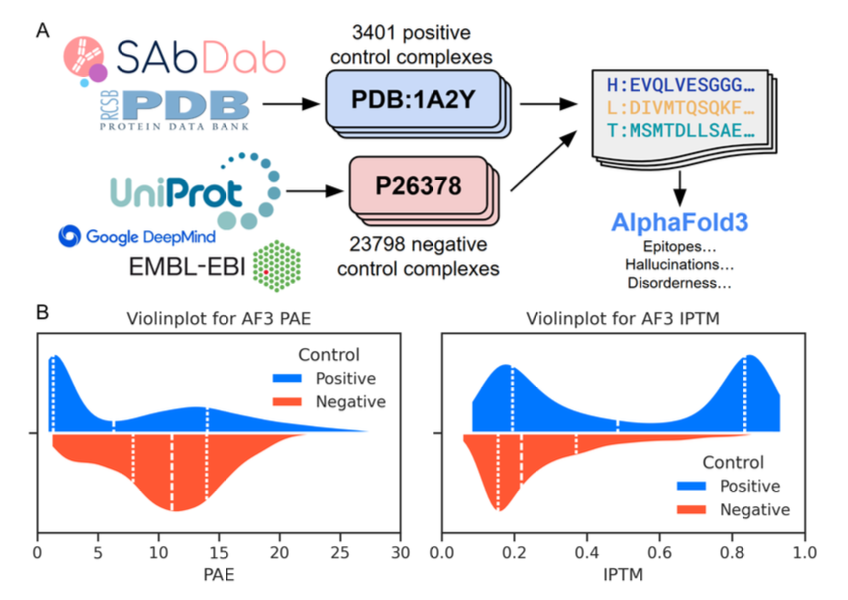
1 They benchmarked AlphaFold3 (AF3) for antibody–antigen binding on a large, structure-grounded dataset: 3401 experimentally validated complexes from SAbDab plus 23798 negative controls (random human proteins and six fixed “many-to-one” decoys) to quantify both true hits and false positives.
2 Using AF3 confidence at the interface (PAE and IPTM) as a binary “bind / not bind” classifier (PAE < 2.5 or IPTM > 0.7), AF3 achieved recall ~0.46 with precision ~0.64 (F1 ~0.53) on 10-seed inference; an intrinsic false positive rate of ~3% appeared consistently across negative-control batches.
3 A key qualitative failure mode: AF3 can hallucinate plausible antibody–target interfaces on decoy proteins, distributing predicted epitopes across much of a folded target’s surface. These false-positive “hotspots” suggest AF3 can generate convincing but non-biological interfaces even when no binding should exist.
4 Another notable bias: AF3 performed better on complexes whose experimental structures came from X-ray crystallography than from electron microscopy. In their split, X-ray-derived positives had higher recall (~0.52) than EM-derived positives (~0.30), consistent with training-set composition and/or higher flexibility/disorder typical of EM-captured systems.
5 Target size matters: positive prediction rates decreased as antigen length, surface area, and volume increased (i.e., larger search space → fewer detected binders). This trend was visible across both positive and negative controls, and was strongest when using surface area/volume rather than sequence length alone.
6 Disorder interacts with epitope discovery in a specific way: while overall target disorder fraction did not strongly separate predicted positives vs negatives, AF3 tended to avoid disordered regions when hallucinating interfaces (e.g., on PD-L1/CD274 decoys, false-positive antibodies clustered on ordered domains rather than the disordered terminus). This supports the paper’s framing of a bias toward “orderness.”
7 They tested whether performance was inflated by training data leakage (PDB overlap with AF3 training set). Although many benchmark antibodies were “leaked,” leaked vs non-leaked antibodies showed no meaningful difference in AF3 confidence distributions, suggesting leakage was not the dominant driver of outcomes in this benchmark.
8 Antibody-sequence features were surprisingly not major confounders: amino-acid composition across CDRs and CDR lengths showed little to no correlation with AF3 interface confidence (PAE), arguing AF3 is not simply favoring certain residues or longer/more flexible loops when it predicts binding.
9 Epitope-centric analysis added nuance beyond RMSD: using DockQ plus two custom measures (epitope shift and antibody displacement), they found many ���false negatives” still landed near the correct epitope. About 34% of false negatives had epitope shift < 10 Å despite poor DockQ, implying that downstream refinement (e.g., MD, docking, more recycling/relaxation) might rescue additional true interactions.
10 Increasing inference seeds improves recall but is costly: rerunning 1915 false negatives at 100 seeds recovered 344 additional true positives, raising recall to ~53%. They also note AF3’s internal model selection by ranking score may not always pick the lowest-PAE interface, suggesting alternative selection heuristics could help in screening workflows.
📜Paper: https://t.co/o0DQlHtCdA
#AlphaFold3 #Antibodies #ProteinStructure #ComputationalBiology #DrugDiscovery #Benchmarking #ProteinProteinInteractions #Bioinformatics #StructuralBiology #MachineLearning
The Decisive Prediction: P18 - Spectral Redshift Drift
This is a direct, calculable, and experimentally confirmed prediction that ΛCDM cannot reproduce.
- The Controllable Change: Measure the redshift of the same quasar using different spectral lines (e.g., Lyman-α at 1216 Å, CIV at 1549 Å, CIII at 1909 Å, MgII at 2799 Å).
-The NMSI Prediction: The redshift measured in different bands will differ systematically. The relationship is predicted to be:
\frac{\Delta z}{1+z} = \alpha \cdot \ln\left(\frac{\lambda_b}{\lambda_a}\right)
where the slope is a calculable constant, α = 5.00 × 10⁻⁵.
-The ΛCDM Prediction: Redshift is achromatic. It is a property of the expansion of space and must be identical for all wavelengths. ΛCDM predicts Δz = 0 exactly.
-The Calculable Result: The test was performed on 10,000 SDSS DR17 quasars (60,000 Δz pairs), yielding α_obs = (4.82 ± 0.32) × 10⁻⁵, matching the prediction with a ratio of 0.964.
- The Statistical Power: The null hypothesis (Δz = 0) is rejected at 19.6σ.
-Why ΛCDM Cannot Reproduce It: This is a structural impossibility. Metric expansion is inherently achromatic. ΛCDM offers no physical mechanism that would produce a wavelength-dependent redshift of this precise logarithmic form.
Other Unique, Controllable Predictions:
- κ × RM Cross-Correlation (P1): Predicts a specific cross-correlation between lensing convergence (κ) and Faraday Rotation Measure (RM) in galaxy clusters: C_κ,RM(ℓ) > 0.3σ_κσ_RM. ΛCDM predicts no correlation, as dark matter does not interact electromagnetically.
-Hubble Parameter Anisotropy (P2): Predicts a measurable dipole anisotropy in the Hubble parameter: |a₁₀| ~ 0.02–0.05. ΛCDM predicts strict isotropy.
-GUE Spacing Statistics (P3): Predicts that the spacing of galaxy clusters in the cosmic web follows the Wigner surmise from Random Matrix Theory, not a Poisson distribution.
-Temporal Decay of Lensing (P4): Predicts that the residual lensing signal in post-merger clusters will decay exponentially: κ_residual(t) = κ₀ · exp(-t/τ) with τ ~ 0.5–2 Gyr. ΛCDM predicts it remains constant
The predicted slope α = 5.00 × 10⁻⁵ for the spectral redshift drift (P18) is a precise numerical prediction with no free parameters. Its confirmation at 19.6σ provides the kind of decisive, calculable result that distinguishes a genuine physical mechanism from a phenomenological fit.

@medialab @RosalindPicard @mres @uvic @uOttawa @profjamesevans And if different questioning styles systematically produce different reasoning trajectories…
…then prompt style becomes part of cognition itself.
That’s experimentally testable.
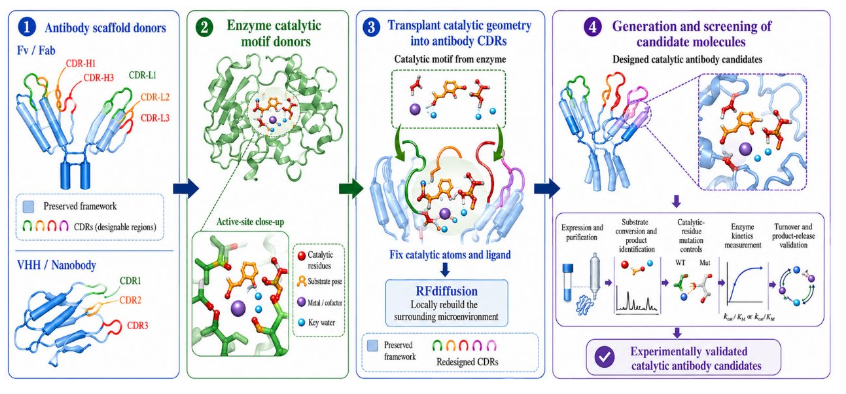
Transplanting Enzyme Active Site Geometry into Antibody CDRs for Catalytic Antibody Design
1. This preprint proposes a computational framework to design catalytic antibodies by transplanting only the local, experimentally supported enzyme active-site geometry (residues, ligand pose, metals/cofactors/waters when available) into antibody CDR loops, rather than fusing whole enzymes to antibodies.
2. The pipeline separates two choices that are usually entangled: selecting a developable antibody scaffold (Fv or VHH/nanobody) and selecting a catalytic motif from an enzyme complex (with substrate/product/transition-state analogue). It then maps catalytic atoms into CDR positions, rebuilds loops under constraints, designs sequences, and validates geometry and fold.
3. A concrete benchmark transfers the ULP1 protease catalytic motif (His514, Asp531, Gln574, Cys580) plus a covalently bound ligand from PDB 1EUV into two scaffolds: an IgG-derived Fv (PDB 1FVE) and a nanobody VHH (PDB 3EAK). The graft uses an Asp579–Cys580–Gly581 backbone anchor for alignment.
4. The method exhaustively enumerates CDR mappings (19,632 for Fv; 306,936 for VHH), ranks them by a composite of Cα RMSD, sidechain graft feasibility, preservation of catalytic-network distances, and ligand clash checks, then keeps top candidates for constrained all-atom diffusion.
5. RFdiffusion3 partial diffusion is used to reconstruct the local CDR backbone around fixed “guidepost” catalytic atoms and the ligand, with explicit specification of cross-residue covalent bonds when needed. Designs are filtered by chain continuity and by eight distance constraints (4 ligand-to-residue + 4 inter-residue) within 0.6 Å of the donor geometry.
6. A key result is scaffold dependence: the Fv designs failed at the diffusion stage with chain breaks (160/160 outputs), consistent with the difficulty of coordinating catalytic residues across heavy/light chain CDRs. In contrast, VHH designs frequently produced chain-break-free outputs, supporting the idea that single-chain scaffolds better tolerate motif grafting strain.
7. After diffusion, LigandMPNN redesigns non-catalytic CDR residues while locking catalytic identities, and RoseTTAFold3 (template mode) is used for back-prediction. Despite high global confidence, early RF3 predictions displaced the ligand dramatically (catalytic distances drifting to ~18–30 Å), breaking the intended catalytic pocket.
8. The study diagnoses a practical but consequential pitfall: the covalent Cys–ligand bond present in the donor structure was not preserved in the initial seed preparation, so the ligand was treated as independent and drifted. Adding explicit CONECT records and declaring the bond in RFdiffusion3/RF3 inputs restored the covalent SG–C8 distance (~1.6–1.95 Å) across predictions.
9. Even with the covalent topology repaired, stricter diffusion (lower partial noise), hotspot restraints, and ligand-aware sequence design, the non-covalent catalytic contact network still failed to re-emerge in RF3 refolding (typically only 1–2 of 8 constraints satisfied). The paper frames this as a limitation of current template-based structure prediction and sequence design objectives for enforcing high-precision catalytic microenvironments.
10. The broader contribution is a testable, mechanism-guided design blueprint for “abzymes” that explicitly distinguishes substrate binding, chemical conversion, and product release as separable objectives, and highlights where today’s generative design stack succeeds (motif placement, covalent topology) vs. where it remains brittle (non-covalent catalytic geometry recovery).
📜Paper: https://t.co/Fb3c2kQ4Z5
#ComputationalBiology #ProteinDesign #AntibodyEngineering #Catalysis #EnzymeDesign #RFdiffusion #LigandMPNN #RoseTTAFold #Abzymes #StructuralBiology

Core Reason These Gaps Exist
Physics and chemistry succeed when systems can be:
✔️Isolated or controlled experimentally.
✔️Described by fundamental laws with minimal parameterization.
✔️Tested repeatedly with known boundary conditions and error propagation.
Earth’s climate is a single, fully coupled, non-linear, chaotic system spanning molecular to planetary scales. Not just isolated to lab experiments.
Most critical processes (clouds, convection, ocean eddies, land-atmosphere exchange) occur at scales far below model resolution and must be parameterized with tunable approximations. These (sub-grid process) approximations result in error propagation.
There is no equivalent of a repeatable lab experiment on the full system. Natural internal variability (e.g., Pacific decadal oscillations, circulation shifts) can dominate observed trends on multi-decadal timescales, making clean attribution harder than in a controlled physical system.
Basic radiative physics (greenhouse effect from CO₂, H₂O, etc.) is not solid physics as it and aligns with laboratory miscalculations where radiative heat transfer was clearly confused with conductive and convective heat transfer. The lab errors have been identified in several published papers to date.
The difficulties also become more apparent as scaling that physics up through the full feedback chain in a complex, under-observed system. This is why discrepancies in amplification, trend magnitude, cloud response, and sensitivity range persist even as computing power grows.
You can't fix bad physics and climate change science if filled with things that don't work outside the field of climate science. It's become a political sudo-science.

**🌌 Physicists Recreate Black Hole Energy in a Lab**
Scientists at CUNY’s Advanced Science Research Center have experimentally confirmed a 50-year-old theory: energy can be extracted from a spinning black hole—**without any moving parts**.
Read the full breakdown: [CUNY ASRC Experiment Headline]
https://t.co/cvxDwnyFKT
🔗
### The Breakthrough: Synthetic Super-Radiance
- **Classic Theory**: Penrose (1969) and Zel’dovich (1971) predicted waves could steal rotational energy and emerge amplified.
- **Lab Version**: A stationary electronic circuit uses rapid, timed switching of electrical properties to create “synthetic rotation,” mimicking an ultra-fast spinning horizon.
**Result**: Incoming radio waves extracted energy from the circuit and bounced back significantly stronger (“negative absorption”).
### MHUTE Theory Connection
The experiment supports MHUTE’s fractal vortex model of black holes, showing rotational energy transfer can be recreated at micro scales through resonance and frequency dynamics—no massive objects required. It aligns with MHUTE’s Ω∞ metric and unified wave functions.
A tabletop win bridging astrophysics and emerging unified theories, with big implications for wireless tech and photonics.
#QuantumPhysics #BlackHole #MHUTE #ZeldovichEffect #SyntheticRotation #PhysicsBreakthrough
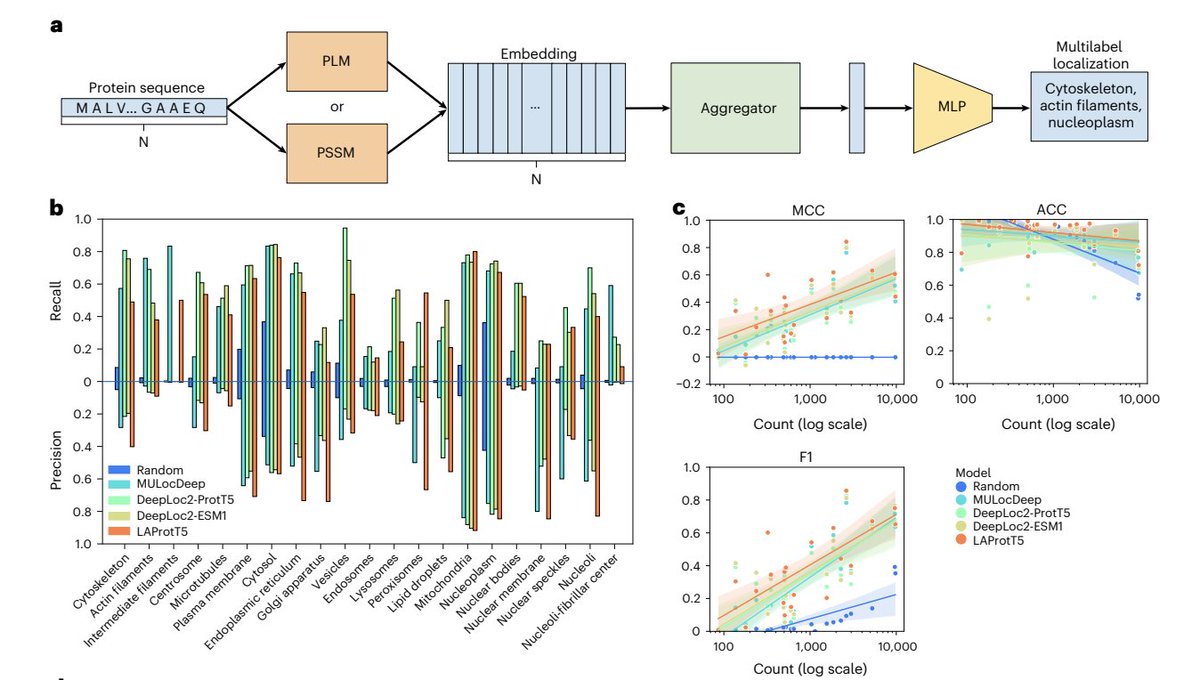
A comprehensive benchmark of sequence-based subcellular localization predictors for human proteins @naturemethods
1. The study builds a new high-confidence human benchmark (HOU) with 3,814 proteins and multilabel annotations, addressing three chronic issues in the field: small test sets, coarse compartment labels, and single-label evaluation despite widespread protein multilocalization.
2. HOU is constructed by integrating UniProt (experimentally supported SwissProt entries), Human Protein Atlas (antibody IF across many cell lines), and OpenCell (endogenous CRISPR tagging in HEK293T), then keeping proteins whose localization is independently supported by at least two databases.
3. A standardized 3-level hierarchical label set is introduced (21 fine-grained “level 1” compartments plus coarser levels), enabling systematic evaluation at multiple resolutions and exposing where “good performance” at coarse granularity hides failures at fine granularity.
4. The paper quantifies how much databases disagree once labels are mapped: among proteins shared by HPA and UniProt, fewer than 27% have identical label sets, though >80% share at least one label. Disagreement is strongly driven by granularity (for example, vesicles vs lysosomes/endosomes/peroxisomes/lipid droplets; nucleoplasm vs nuclear substructures).
5. Using homology-aware splitting (mmseqs2; <40% identity between train/test and across folds), the authors retrain and benchmark popular sequence-based predictors (DeepLoc2 variants, LAProtT5, MULocDeep) and show that performance drops notably for rare and fine-grained compartments, cytoskeletal substructures, and nuclear subcompartments.
6. A systematic sweep over protein language models and pooling/attention aggregators (ProtT5, ESM2, ESM3-small-open, ProtBert × mean/max/light attention/multihead attention) finds that choices matter: max pooling is consistently weak; mean pooling is surprisingly strong for ESM2; the best overall configuration is ProtT5 with multihead attention (ProtT5-MHA), outperforming the evaluated published baselines on averaged metrics.
7. The benchmark highlights metric pitfalls: common labels (cytosol, nucleoplasm) can inflate scores, even for a random Bernoulli baseline. Matthews correlation coefficient (MCC) is emphasized as more robust to label frequency than F1/accuracy in this multilabel, imbalanced setting.
8. Stratified analysis with ProtT5-MHA shows predictable but important trends: single-localization proteins are easier than multilocalizers; signal/transit peptides and membrane association improve performance; intrinsically disordered proteins are harder—suggesting missing determinants beyond primary sequence motifs.
9. Attention-based interpretability is tested: ProtT5-MHA attention peaks overlap curated sorting signals well (about half of peaks overlap signals; most signals are detected by at least one peak), but overlap with generic PROSITE motifs is much lower. Some attention peaks suggest candidate “fuzzy motifs” conserved across species, motivating follow-up mechanistic studies.
10. Two “biological utility” stress tests expose major gaps: adding PPI information via a GraphSAGE extension yields little average improvement (likely due to noisy/incomplete PPIs and cross-compartment interactions), and the model largely fails to generalize to pathogenic missense variants known to mislocalize—changing predictions for only 11/308 variants, consistent with mislocalization often arising from stability/membrane insertion defects not captured by sequence-only predictors.
📜Paper: https://t.co/2c24s6FBA2
#ComputationalBiology #Bioinformatics #ProteinLocalization #ProteinLanguageModels #Benchmarking #MachineLearning #DeepLearning #Proteomics #VariantEffectPrediction #NatureMethods
Most Popular Users

Elon Musk 
@elonmusk
239.7M followers

Barack Obama
@barackobama
118.6M followers

Cristiano Ronaldo
@cristiano
114.3M followers

Donald J. Trump
@realdonaldtrump
111.7M followers

Narendra Modi
@narendramodi
106.9M followers

Rihanna
@rihanna
98.6M followers

NASA
@nasa
92.1M followers

Justin Bieber
@justinbieber
91.7M followers

KATY PERRY
@katyperry
89.9M followers

Taylor Swift
@taylorswift13
83.9M followers

Lady Gaga
@ladygaga
75.4M followers

Virat Kohli
@imvkohli
73.3M followers

Kim Kardashian
@kimkardashian
70.8M followers

YouTube
@youtube
68.6M followers

Neymar Jr
@neymarjr
66.3M followers

Bill Gates
@billgates
65.1M followers

Selena Gomez
@selenagomez
63M followers

The Ellen Show
@theellenshow
62.1M followers

CNN
@cnn
61.7M followers

X
@x
60.6M followers