

Top Tweets for #humanMigration

🔬🧬 Ancient DNA Sample https://t.co/htzEJB4uMf Simple Summary
From #Akbari 2026
Published before “Disparate demographic impacts of the Roman Colonization and the Migration Period in the Iberian Peninsula”, deposited on bioRxiv under the DOI 10.1101/2024.09.23.614606.
This individual was a male buried around 623 AD in a cave burial site in northeastern #Spain (Girona, #Catalonia) during the Visigothic period.
Genetic Background
🧬 Father’s lineage (Y-DNA): J1-L858
This lineage comes from the ancient Near East, especially regions like the Levant and Arabia, and is commonly linked to Semitic populations.
🧬 Mother’s lineage (mtDNA): H1
This is a typical Western European lineage, especially common in Iberia, showing local ancestry on the maternal side.
🧬 Overall Ancestry
His genome shows a strong connection to eastern Mediterranean populations, especially groups historically related to:
Jewish communities of North Africa
Southern Europe (Italy, Greece)
His deeper ancestry is made up of:
Early farmers from Anatolia (Turkey region)
Significant Levantine/Natufian ancestry (ancient Near Eastern hunter-gatherers)
Smaller inputs from Iranian farmers, Caucasus groups, and European hunter-gatherers
What This Means
This man was not genetically “Visigothic” in the northern European sense.
Instead, he represents a mixed Mediterranean profile:
A Near Eastern paternal line
A local Iberian maternal line
A genome similar to eastern Mediterranean / North African Jewish populations
🗒️ Likely Historical Scenario
He was probably descended from people who moved west during the Roman Empire, such as:
Soldiers
Traders
Migrants from the eastern Mediterranean
These groups settled in Iberia and mixed with local populations. By the Visigothic period, their descendants were fully integrated culturally, even if their genetic origins were diverse.
🔬🗒️ Key Insight
The term “Visigothic” here reflects culture and political identity, not a uniform genetic background.
This individual is a clear example of how migration and mixing in the Roman world shaped the population of early medieval Spain.
#AncientDNA #Archaeogenetics #VisigothicSpain #RomanEmpire #GeneticHistory #MediterraneanAncestry #NearEasternOrigins #IberianHistory #PopulationGenetics #AncientGenomes #HumanMigration #LevantineAncestry #NorthAfricanJewish #HistoricalGenetics
🔬🧬 Genetic Profile Summary of Individual https://t.co/Tx9IWqCm37
1. Overall Ancestry
This individual shows a predominantly North African genetic profile, centered between:
🇪🇬 Egypt (Northeast Africa)
Maghreb (Tunisia and Morocco)
There is also a secondary Levantine (Eastern Mediterranean) influence, indicating historical connections with regions such as Syria and the broader Levant.
2. Autosomal DNA (Modern Affinities)
Strong Egyptian Affinity:
The closest genetic matches consistently align with Egyptian populations, especially those similar to Coptic Egyptians, indicating deep-rooted Nile Valley ancestry.
Significant Maghrebi Component:
A large portion of ancestry reflects Berber-related North African populations, particularly from Tunisia and surrounding regions.
Levantine Influence:
A moderate component links to the Levant, reflecting ancient and historical population movement between Egypt and the Eastern Mediterranean.
Minor Arabian Input:
A small but consistent Arabian Peninsula contribution suggests limited gene flow from southern regions.
Trace Signals (Low Confidence):
Very small traces of South Asian, Southeast Asian, and Sardinian-like ancestry appear, but these are likely statistical artifacts rather than meaningful ancestry.
3. Deep Ancient Ancestry
Mesolithic Layer (~10,000 years ago)
Predominantly Natufian-related ancestry (Levantine hunter-gatherers)
Additional input from:
Anatolian hunter-gatherers
Caucasus hunter-gatherers
A minor East African component, reflecting ancient Northeast African genetic continuity
Upper Paleolithic Layer (~25,000+ years ago)
Mostly West Eurasian ancestry, closely related to early populations from the Caucasus region
A small but consistent ancient African component, again linking to Northeast Africa
Interpretation:
This combination is typical of populations forming the genetic bridge between North Africa and the Levant, with deep continuity from prehistoric times.
4. Paternal Lineage (Y-DNA): E-BY15909
Belongs to the broader E-M35 → E-M78 → E-V12 lineage
Strongly associated with:
Egypt
Northern Sudan
Nile Valley populations
🧬🧬 Key Points:
Likely originated in Northeast Africa
Expanded during the Neolithic period
Present in historical Mediterranean populations (e.g., Phoenician, Roman contexts)
Estimated origin: ~3750 BCE (Bronze Age)
🗒️🧬 Interpretation:
This is a classic Nile Valley paternal lineage, linked to early agricultural expansions and later Mediterranean interactions.
5. Maternal Lineage (mtDNA): V25
Part of haplogroup V, which originated in Western Europe (likely Iberia)
Entered North Africa through:
Neolithic migrations
Later Mediterranean gene flow
Interpretation:
This lineage reflects European maternal input into North Africa, a well-documented pattern due to long-term Mediterranean contact.
🔬🧬 Final Interpretation
Individual https://t.co/Tx9IWqCm37 represents a genetic profile typical of Northeast Africa with strong Maghrebi integration, characterized by:
A core Egyptian/Nile Valley ancestry
Significant Berber (Northwest African) influence
Noticeable Levantine connectivity
Deep roots in prehistoric West Eurasian and Northeast African populations
The lineage combination shows:
Paternal continuity from the Nile Valley
Maternal input from Southern Europe
A genome shaped by ancient migrations and Mediterranean interactions
#AncientDNA #PopulationGenetics #NorthAfrica #EgyptianAncestry #BerberGenetics
#LevantineOrigins #HumanMigration #GeneticHistory #YDNA #mtDNA
#E_M78 #Natufian #NeolithicExpansion #MediterraneanHistory #Anthropology
🔬🧬 Genetic Profile Summary: Individual https://t.co/8Q8iaK51JH
This individual represents a classic Western Mediterranean #Morisco genetic profile. Their DNA closely matches modern Moroccan Morisco-descended populations, especially from northern cities like Tetouan and Fes.
Moriscos were descendants of Muslims in Iberia who were expelled between the 15th–17th centuries and resettled in North Africa. This genetic signature reflects that history.
🧬 Core Ancestry Composition
The genome is a balanced mixture of three major ancestral sources:
Indigenous North African (Berber) → ~35–37%
Iberian / Southern European → ~35–40%
Levantine / Sephardic Eastern Mediterranean → ~10–13%
This combination is highly characteristic of Morisco-descended populations and reflects centuries of interaction across the Mediterranean.
🧬 Deep Ancestry (Prehistoric Foundations)
At a deeper level, the individual’s ancestry is built on:
Anatolian Neolithic Farmers (~41%)
Natufian-related ancestry (~27%)
These groups formed the genetic backbone of early Mediterranean populations.
Additionally, there is a strong Early European Farmer (EEF) signal (~45%+), much higher than typical inland North African populations. This confirms a substantial Iberian genetic contribution.
🧬 Paternal Line (Y-DNA): E-Z17467
Dates roughly to the late Iron Age / early Roman period
Interpretation:
Reflects indigenous North African (Berber) roots
Likely connected to ancient Mediterranean maritime networks
Shows links to populations such as:
Phoenician-associated groups (Levantine influence)
Guanche (indigenous Canary Islanders)
Mediterranean island populations (e.g., Sardinia)
This lineage represents long-term continuity in the western Mediterranean.
Maternal Line (mtDNA): #H1ao1
A subclade of H1, widespread in Western Europe
Associated with Neolithic European farmers
Spread along the Atlantic and Mediterranean coasts
Found today in high frequencies in Iberia and parts of Northwestern Europe
In this individual, it reflects the European maternal ancestry brought through Iberia.
Historical Interpretation
This genome tells a coherent historical story:
Ancient Layer:
A Mediterranean population rooted in North Africa, with connections to early maritime cultures.
Medieval Layer (Al-Andalus):
Significant mixing with Iberian, Levantine, and Sephardic populations in Islamic Spain.
Early Modern Period:
Following the expulsions from Iberia, these populations relocated to northern Morocco.
Final Outcome:
A stable, blended genetic identity combining:
Berber (local North African)
Iberian (European)
Eastern Mediterranean (Levantine/Sephardic)
Conclusion
Individual https://t.co/8Q8iaK51JH is a genetic bridge between Europe and North Africa, preserving a highly accurate biological signature of the Morisco diaspora.
Their DNA reflects both deep prehistoric roots and well-documented historical migrations across the western Mediterranean.
#Genetics #AncientDNA #Morisco #NorthAfrica #IberianHistory #Mediterranean #PopulationGenetics #Archaeogenetics #Berber #AlAndalus #Sephardic #HumanMigration #DNAHistory #Anthropology #GeneticAncestry
🔬🧬 RAPID ANALYSIS
Ancient DNA Summary – Individual BRU001 (Xiongnu Period)
1. Sample Identification
Sample ID: BRU001
Population Label: Mongolia_Sukhbaatar_Xiongnu
Date: ~50 BC (#IronAge)
Location: Baruun-Khovdiin-Am, Sükhbaatar Province, eastern Mongolia
Historical Context:
This individual lived during the period of the , a powerful nomadic confederation that dominated the eastern Eurasian steppe and frequently clashed with the of China. The Xiongnu were known for their multi-ethnic composition and extensive long-distance connections across Eurasia.
2. Autosomal DNA (Overall Ancestry)
The genome of BRU001 shows a mixed Eurasian profile, typical of steppe populations during the Xiongnu period.
Main East/North Asian Ancestry (~78%)
Han-related ancestry – 50.7%
Reflects ancestry linked to East Asian agricultural populations.
Nganasan-related ancestry – 27.5%
Represents ancient northern Siberian/Paleo-Siberian genetic components often found in steppe and Arctic populations.
Western / Central Eurasian Admixture (~19%)
This portion of the genome reflects connections to populations west of the steppe.
related steppe ancestry – 6.4%
Associated with Bronze Age pastoralists of the Pontic-Caspian steppe.
Anatolian Neolithic farmer ancestry – 5.2%
Caucasus ancestry – 3.9%
Bronze Age Iranian-related ancestry from – 3.6%
Minor Statistical Noise
Very small traces labeled as “Brazilian” or “Ethiopian” in the model are almost certainly statistical artifacts used by the algorithm to improve the fit and do not represent real ancestry.
Summary:
BRU001 was predominantly East Asian/Siberian genetically, but with clear western Eurasian input, reflecting the highly mixed nature of Xiongnu populations.
3. Haplogroups (Direct Lineages)
Maternal Lineage (mtDNA)
D5b1b2
Haplogroup D is widespread across East Asia, Siberia, and Central Asia.
This indicates that BRU001’s maternal ancestry was local to East/Northeast Asia.
Paternal Lineage (Y-DNA)
J1a2a1a2d2b2b2c4b (under #J-Y2919)
This is the most notable genetic feature of the sample.
Haplogroup J1 is most common in West Asia and the Middle East, particularly in the Arabian Peninsula and surrounding regions.
It is rare in ancient East Asian contexts.
Phylogenetic comparisons show that BRU001’s paternal lineage clusters closely with modern individuals from:
Jordan
Saudi Arabia
Kuwait
Syria
Iraq
Interpretation:
This suggests that a male ancestor of BRU001 migrated from West Asia to the eastern steppe before or during the Xiongnu period. It provides direct genetic evidence of long-distance mobility across Eurasia, likely facilitated by early steppe networks and proto-Silk Road interactions.
4. Genetic Affinity to Other Ancient Populations
The closest ancient genetic matches for BRU001 include:
🧬Late Medieval Mongolian populations
🧬Admixed Hunnic-related samples from the Tian Shan region
These similarities suggest long-term genetic continuity on the eastern steppe, despite population mixing.
Final Interpretation
BRU001 represents a typical but fascinating example of the genetic diversity within the Xiongnu world.
Autosomal DNA: Mostly East Asian/Siberian with notable western Eurasian admixture.
Maternal lineage: East Asian (mtDNA D5b1b2).
Paternal lineage: Middle Eastern origin (Y-DNA J1).
This individual illustrates how the Eurasian steppe functioned as a major corridor connecting East Asia, Siberia, Central Asia, and the Middle East more than 2,000 years ago.
#AncientDNA
#Archaeogenetics
#Xiongnu
#SteppeHistory
#AncientEurasia
#PopulationGenetics
#YDNAJ1
#SilkRoadConnections
#AncientMongolia
#HumanMigration
#IronAge
#GeneticHistory
#Archaeology
#AncientSteppe
#DNAResearch
The genetic profile of individual https://t.co/loJHGpw24t reveals a person whose ancestry lies overwhelmingly in Northeast Africa and the Levant, #Harvard
Origins and Population Affinity
The autosomal DNA of this individual clusters most closely with populations from the Nile Valley and the southern Levant. The strongest similarity is with communities genetically similar to modern Coptic Egyptians, followed by populations from the Arabian Peninsula and groups historically connected to southern Arabia and the Levant.
This pattern suggests that the individual likely descended from people living in Egypt or the southern Levant during the Roman period. Their genetic structure closely resembles populations from the Nile Delta or nearby eastern Mediterranean regions.
What stands out most is the absence of meaningful European genetic input. Even though the person was buried in Britain, their genome remains overwhelmingly tied to eastern Mediterranean and Northeast African ancestry.
Deep Ancestral Background
Looking further back in time, the deeper components of the genome show a typical eastern Mediterranean and Northeast African structure.
A large portion of the ancestry traces back to Natufians, an ancient population that lived in the Levant around 12,000–15,000 years ago. This component remains prominent today in many Levantine, Arabian, and Nile Valley populations.
Another major element comes from Caucasus Hunter-Gatherers, reflecting migrations from the Caucasus and Iranian Plateau into the Near East during the Neolithic and Bronze Age.
The genome also includes a small but normal East African component, similar to populations from Ethiopia and the Upper Nile. This mixture is commonly found among populations living along the Nile Valley and in the Horn of Africa.
Overall, the deep ancestry reflects a classic Levant–Northeast African genetic continuum rather than a European one.
Paternal Line
The paternal lineage belongs to Haplogroup T-CTS2214.
This lineage is relatively uncommon globally but appears most often in regions such as:
Egypt,
The Levant
Arabia
The Horn of Africa
It has also been identified in several ancient Near Eastern and eastern Mediterranean populations. Its presence supports the conclusion that this individual’s paternal ancestry came from the Near East or Northeast Africa rather than Europe.
Maternal Line
The maternal lineage belongs to Haplogroup L3h1a.
This lineage ultimately descends from Haplogroup L3, one of the key maternal branches associated with the early dispersal of humans out of Africa.
However, the L3h branch remained largely concentrated in East and Northeast Africa, particularly in regions around Sudan, Ethiopia, and the Nile Valley. This strongly indicates that the maternal ancestry of this individual originated in Northeast Africa.
Final Summary
Individual https://t.co/loJHGpw24t represents a Northeast African–Levantine genetic profile, most similar to populations from Egypt and the southern Levant. Both paternal and maternal lineages confirm these origins, and the autosomal genome shows no meaningful European admixture.
#AncientDNA
#RomanBritain
#PopulationGenetics
#AncientGenomics
#RomanEmpire
#EgyptianAncestry
#LevantineOrigins
#HumanMigration
#Archaeogenetics
#GeneticHistory
Individual https://t.co/yLpxaJfuom presents a genetic profile typical of the eastern Mediterranean world during the Roman and early medieval periods. His DNA reflects a blend of European, Levantine, and small African components, a pattern that was common in highly connected regions such as southern Italy, Sicily, the Aegean, and the wider Mediterranean basin.
Modern Population Affinities
When compared with present-day populations, his closest genetic similarities appear among eastern Mediterranean groups. The strongest affinities are seen with Aegean island populations such as Crete, Ikaria, and the Dodecanese, along with Cyprus and parts of southern Italy, particularly Sicily. Comparable signals also appear among Ashkenazi Jewish populations, reflecting a broader eastern Mediterranean genetic signature.
Admixture modeling suggests a composite ancestry made up largely of Aegean Greek–like ancestry, combined with Levantine and Sicilian components. This mixture fits well with what is already known about the Mediterranean during the Roman era, when trade, migration, and imperial networks brought people from different regions into close contact.
Ancient Genetic Modeling
Comparisons with ancient DNA samples show that the closest parallels come from early southern Italian clusters dating to the Roman period. Additional genetic links appear with populations connected to Anatolia, Mycenaean Greece, and Minoan Crete.
Multi-source models suggest that the majority of his ancestry aligns with southern Italian–like populations of the Roman world, while smaller portions trace back to ancient Near Eastern and eastern Mediterranean groups. This pattern is consistent with the historical reality of the Roman Mediterranean, where soldiers, merchants, administrators, and migrants moved widely across imperial territories.
Deep Ancestry Components
Looking further back in time, his deeper ancestry includes a strong component related to Near Eastern Neolithic farmers, alongside contributions from Iranian-related early farmers and European hunter-gatherers. A small sub-Saharan African component is also present.
The high proportion of ancestry related to early Near Eastern farming populations is typical of eastern Mediterranean and Levantine-derived populations, reflecting the deep agricultural roots of the region.
Haplogroups and Lineage
His paternal lineage belongs to a branch of haplogroup J1-YSC0000235, a lineage strongly associated with populations of the Near East and historically common among Semitic-speaking groups. This supports the idea that his paternal ancestry traces back to the Levant or nearby regions.
His maternal lineage belongs to haplogroup L2a1+143+16189+16192, which originates in sub-Saharan Africa and is widely distributed in West and Central Africa today. The presence of this lineage aligns with the small African component visible in his autosomal DNA and reflects long-standing contact across the Mediterranean through trade, migration, and the movement of people during the Roman period.
Addressing Potential Caveats
The results, while the modeling and comparisons presented here are consistent with known Mediterranean genetic patterns, they should be viewed as provisional until the sample is formally published and fully documented in peer-reviewed literature.
Even with this limitation, the overall genetic picture remains coherent. The mixture of Aegean, Levantine, southern Italian, and minor African ancestry fits well within the demographic landscape of the Roman Mediterranean, one of the most interconnected regions of the ancient world.
#AncientDNA
#RomanEmpire
#MediterraneanGenetics
#PopulationGenetics
#AncientHistory
#GeneticAncestry
#Archaeogenetics
#LevantineRoots
#MediterraneanHistory
#HumanMigration
Modern genetics reveals that the history of Ashkenazi Jews is neither simple nor singular. Instead, it is the result of:
Levantine ancestral roots
Substantial Southern European admixture
A dramatic medieval founder event
Subsequent expansion in Eastern Europe
Together, these processes created a population whose genetic identity forms a bridge between the Middle East and Europe.
The broader lesson from genetics is that human identity is often written both in historical narratives and in DNA itself, a biological archive preserving traces of migrations and interactions across thousands of years.
#AshkenaziJews
#PopulationGenetics
#AncientDNA
#HumanOrigins
#JewishHistory
#LevantineOrigins
#GeneticAncestry
#DNAResearch
#GeneticHistory
#HumanMigration
#MediterraneanHistory
#SouthernEurope
#Levant
#FounderEffect
#PopulationBottleneck
#Genomics
#HistoricalGenetics
#AnthropologicalGenetics
#MiddleEasternOrigins
#JewishDiaspora
https://t.co/my4zUrhOPX

🔬🧬 R10341: A Levantine Man in Late Republican Italy
R10341 is an ancient individual discovered in the near in central Italy, dating to the late Roman Republican period (about 160–49 BCE). This famous Etruscan burial landscape contains thousands of tombs and reflects the cosmopolitan character of the Tyrrhenian coast during a time when Rome was expanding across the Mediterranean.
🧬Genetically, R10341 stands out as a clear outlier among ancient Italians. His paternal lineage belongs to Y-chromosome haplogroup J1-P58, specifically the deep branch J1a2a1a2d2b2b2c4c. This lineage is strongly associated with populations of the Levant and the eastern Mediterranean and likely expanded during the Bronze Age among Semitic-speaking groups. It is extremely rare in ancient Italy, where lineages such as R1b and E-V13 were far more common. The presence of this Levantine lineage suggests that R10341, or his recent ancestors, migrated to Italy from the eastern Mediterranean—possibly through trading networks linking the Levant, Greece, and Etruscan ports.
🧬 In contrast, his maternal lineage is mtDNA haplogroup H2a2a1, a branch of the widespread European haplogroup H that likely formed around 2500 BCE and spread with Neolithic and Bronze Age populations. This lineage appears in prehistoric Europe and ancient Italy, indicating that his maternal ancestry was probably local.
His autosomal DNA further confirms his unusual background. Rather than clustering with typical Iron Age Italians, R10341 shows a genetic profile closer to populations from the eastern Mediterranean, with elevated ancestry related to Iran Neolithic farmers and Caucasus hunter-gatherers and relatively low Steppe ancestry. This pattern resembles Bronze Age Levantine and Anatolian populations more than contemporary Italic groups.
Together, these genetic signals suggest a simple historical scenario: a man of Levantine paternal origin integrated into local Italian society, likely through marriage with a woman of regional ancestry. His presence in Tarquinia reflects the intense mobility of the Iron Age Mediterranean, when merchants, sailors, and migrants from the eastern Mediterranean moved across trading networks connecting Italy with the Levant and North Africa.
R10341 therefore represents a small but vivid example of how Mediterranean societies were already interconnected before the Roman Empire fully unified the region. His DNA captures a moment when eastern migrants and local Italian communities met, mixed, and became part of the same historical landscape.
#AncientDNA
#Etruscans
#Tarquinia
#MediterraneanHistory
#LevantineAncestry
#AncientGenetics
#IronAgeMediterranean
#HumanMigration
This component represents the indigenous hunter-gatherer populations that lived in Europe before the spread of farming. Though largely replaced by Neolithic farmers, their ancestry remained partially preserved in later European populations.
Caucasus-related ancestry (CHG-like component)
This ancestry derives from ancient populations from the Caucasus region and the Near East. It is common in Mediterranean and Near Eastern populations and reflects deep prehistoric population interactions across western Eurasia.
A Mediterranean Genetic Mosaic
When plotted in genetic space using population modeling, R105 clusters closest to modern southern European and western Mediterranean populations, including northern Italians, southern French, and Balearic islanders. At the same time, his paternal lineage points toward eastern Mediterranean roots, highlighting the mixed ancestry typical of Rome.
This combination perfectly illustrates the demographic reality of the imperial capital. Rome was not genetically homogeneous. Instead, it functioned as a massive hub where populations from across Europe, North Africa, and the Near East interacted and mixed for centuries.
The Life Behind the Genome
Although we cannot know R105's profession or social status, his burial context suggests he was an ordinary resident of the city rather than a member of the aristocracy.
He may have been:
a craftsman working in urban workshops
a trader involved in local commerce
a laborer in the dense neighborhoods surrounding the markets
or the descendant of migrants who had arrived generations earlier
The streets around Crypta Balbi would have been filled with the sounds of Latin, Greek, and other languages from across the empire. Markets sold goods arriving from North Africa, Egypt, Anatolia, and Gaul. The population of Rome at this time represented one of the most diverse urban communities in the ancient world.
A Man from the Empire's Final Century
R105 lived during the last generations before the Western Roman Empire collapsed. The political structures that had governed the Mediterranean for centuries were weakening, but the genetic legacy of that interconnected world remained.
Today, through ancient DNA analysis, R105 provides a small but powerful window into the human diversity of Late Roman Rome. His genome reflects thousands of years of migrations across Europe and the Near East, all converging in one city at the twilight of an empire.
#AncientDNA
#RomanEmpire
#LateAntiquity
#AncientRome
#Archaeogenetics
#PopulationGenetics
#MediterraneanHistory
#HumanMigration
#AncientGenomes
#RomanHistory

Neanderthals (Homo neanderthalensis) were our closest extinct human relatives who inhabited Europe, Western Asia, and Central Asia from approximately 400,000 to 28,000 years ago. They possessed distinctive physical features including a long, low skull with a prominent brow ridge, a large nose adapted for warming cold air, an occipital bun at the back of the skull, and stockier, shorter bodies than modern humans. Despite their robust build, their brains were as large as or even larger than those of modern humans, proportional to their more muscular bodies.
Neanderthals developed a sophisticated culture that challenges outdated stereotypes of primitive cave dwellers. They crafted complex stone tools, controlled fire, built shelters, and made clothing to survive harsh Ice Age conditions. As skilled hunters, they pursued large game animals and also consumed plants and marine resources when available. Remarkably, they deliberately buried their dead with offerings such as flowers, engaged in symbolic behavior, and may have created ornamental objects—practices no earlier human species had demonstrated.
Neanderthals coexisted with modern humans (Homo sapiens) for thousands of years before disappearing around 28,000 years ago. Genetic evidence reveals that Neanderthals interbred with modern humans, and most people of non-African descent carry 1-2% Neanderthal DNA today. Their extinction likely resulted from multiple factors including low population density, inbreeding depression, high infant mortality, competition with modern humans for resources, and challenges adapting during climate crises.
https://t.co/xMjACrgq95
https://t.co/kc4lgyyxuR
https://t.co/Cz2HWLM3H7
#Neanderthals #HumanEvolution #Paleontology #Archaeology #AncientHumans #IceAge #Prehistory #HomoNeanderthalensis #HumanOrigins #Anthropology #FossilRecord #StoneAge #HumanAncestors #ExtinctSpecies #Paleoanthropology #EvolutionaryBiology #AncientDNA #Pleistocene #CaveMan #HumanHistory #PrehistoricLife #Fossils #ScienceEducation #NaturalHistory #HumanMigration
Zlatý Kůň: The Lost Lineage of Europe’s First Humans
ZKU002—better known as the Zlatý kůň woman—is one of the oldest modern human genomes ever sequenced in Europe. Dating to roughly 45,000 years ago, her remains from Koněprusy Cave in today’s Czech Republic offer a rare window into the very first waves of modern humans entering Eurasia.
Genome Quality and Preservation
Her DNA is exceptionally well-preserved, sequenced at high coverage (up to 20×) with extremely low contamination. This level of quality allows scientists to reconstruct her ancestry with unusual clarity and confidence.
Maternal Lineage and Basal Position
Zlatý kůň carries a basal mitochondrial haplogroup N, an early branch close to those found in Paleolithic individuals from Bacho Kiro, Salkhit (Mongolia), and distantly connected to lineages seen today among Indigenous Australians.
This places her lineage before the major split that created the East–West Eurasian divide.
Population Structure and Rare Kinship
Recent high-resolution genomic studies revealed that Zlatý kůň was genetically related (fifth–sixth degree) to individuals from the Ranis site in Germany.
These early migrants belonged to a tiny founding population, estimated at only ~160 people during the 15 generations preceding their lives—an indicator of sharp population bottlenecks during the first expansions into Europe.
Genomic Affinities and Deep Ancestry
Zlatý kůň sits on a lineage older than both West and East Eurasians.
She shows closer affinity to very early individuals such as Ust’-Ishim, and extremely faint—yet detectable—deep shared ancestry with present-day groups in South Asia, Southeast Asia, and Oceania (e.g., the Andamanese).
These groups preserve traces of early Out-of-Africa ancestry that later Eurasian populations diluted.
Neanderthal Admixture
Her genome contains around 2.7–3% Neanderthal ancestry, but the segments are unusually long—longer than in any other Eurasian hunter-gatherers studied.
This indicates a recent Neanderthal admixture event, about 70–80 generations before she lived.
This event is partly independent from the Neanderthal ancestry shared by all non-Africans today.
Legacy and Genetic Disappearance
Despite her basal ancestry and importance, Zlatý kůň left no direct descendants in any population alive today.
Her lineage represents an early and ultimately unsuccessful expansion into Central Europe—one that was later replaced by subsequent waves of modern humans.
Conclusion
Zlatý kůň stands as a genetic relic of the earliest Eurasian settlers:
a high-coverage genome, a deep ancestral lineage, rare kinship ties, and a unique Neanderthal admixture history.
Her genetic profile reveals a population that helped pioneer the human presence in Europe but vanished without leaving a lasting legacy—except for faint echoes preserved far away in South and Southeast Asia and Oceania.
#ZlatyKun #AncientDNA #HumanOrigins #Paleolithic #Genetics #Neanderthals #Archaeogenetics #OutOfAfrica #HumanMigration #AncientEurope #EarlyHumans #PopulationGenetics #Prehistory
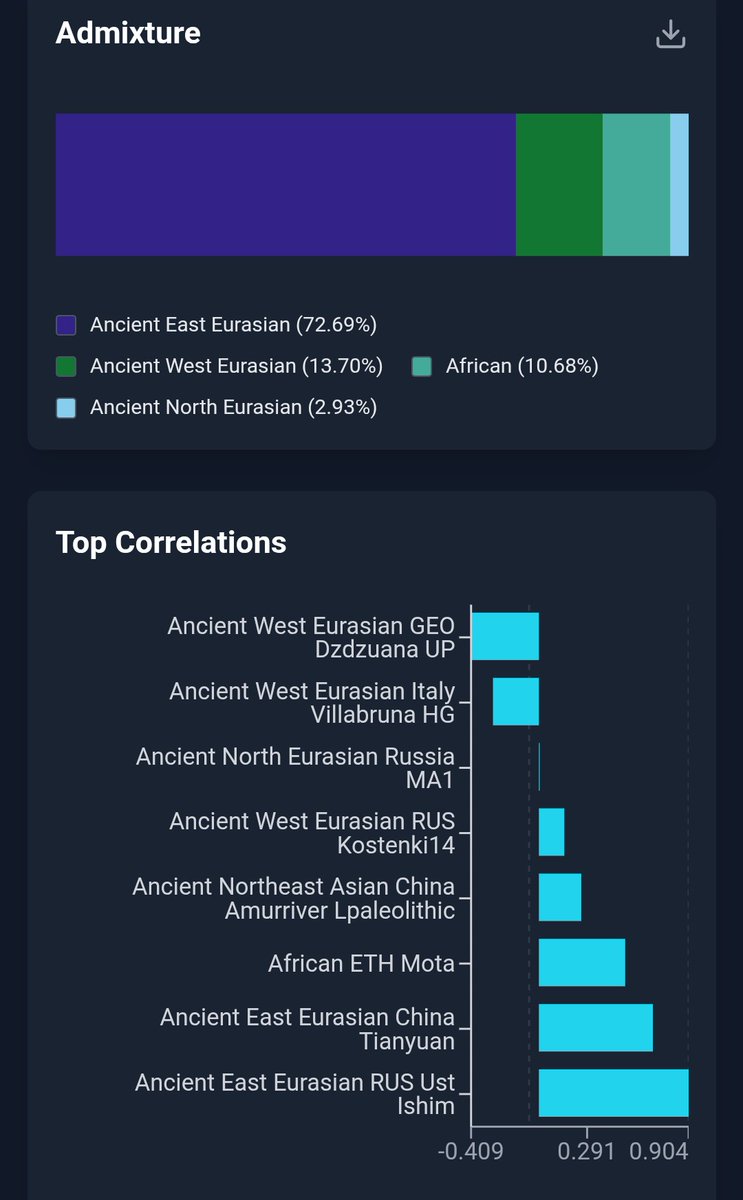


🔥 Andalusi Bloodlines: The Genetic Mosaic of I12514 🔥
I12514 was a man living in the Valencian Community of Spain between 1025 and 1160 CE, during the Islamic period of Al-Andalus. His genome tells a story of a complex, multiethnic society. While his paternal line reaches deep into the Eastern Mediterranean, his overall DNA reflects centuries of mixing between Iberians, North Africans, and eastern Mediterranean populations. He was both rooted in local Iberia and connected to the broader currents of the medieval Mediterranean world.
Historical Context
During his lifetime, the Taifa kingdoms of Al-Andalus flourished with rich cultural, scientific, and commercial activity, even as northern Christian kingdoms advanced through the Reconquista. I12514 was part of this multicultural tapestry a biological witness to centuries of migration, trade, and conquest.
Paternal Lineage: Y-DNA J2 (J-Y21862)
His paternal haplogroup, J2, traces back to the Eastern Mediterranean. It arrived in Iberia long before the Islamic conquest of 711 CE, possibly through Neolithic farmers, Phoenician traders, Greek colonists, Roman settlers, or Jewish communities. This lineage represents a deep Mediterranean connection already embedded in Iberia by his time.
Maternal Lineage: mtDNA HV0
His maternal lineage, HV0, is an ancient West Eurasian branch present throughout Europe, North Africa, and the Near East. In Iberia, it likely reflects long-term local continuity, anchoring him in the region while also connecting him to the broader Mediterranean world.
Autosomal DNA: The Full Genetic Portrait
I12514’s genome reveals the rich admixture of medieval Al-Andalus:
Majority Ancestry (70–75%): Southern and Western European, reflecting local Iberian roots.
Secondary Ancestry (20–25%): North African and Eastern Mediterranean, consistent with Islamic-era population movements and the presence of Berber and Arab communities.
Minor Component (a few percent): Sub-Saharan African, likely introduced via North African populations and trans-Saharan trade networks.
Conclusion: A Genetic Palimpsest
I12514 is a living record of Iberian history:
His paternal J2 lineage reflects ancient Mediterranean migrations.
His maternal HV0 and autosomal DNA root him firmly in local Iberia while reflecting North African and eastern Mediterranean connections.
A trace of sub-Saharan ancestry adds yet another layer to his genetic story.
He embodies the Andalusi identity a fusion of Iberian, Mediterranean, and African heritage, shaped by centuries of cultural and genetic exchange. I12514’s DNA is a palimpsest: layers of history written into the human genome, telling the story of movement, mixing, and resilience.
#IberianHistory #AlAndalus #GeneticHeritage #MediterraneanDNA #AndalusiLegacy #AncientDNA #GeneticMosaic #HistoryInGenes #MedievalSpain #HumanMigration #DNAStories
"The Stranger in the Sarcophagus: An Asian Outlier in Ancient Egypt"
Far from the Nile: The Mysterious Asian Outlier of Ancient Egypt
Overview
Mummy1290 is a Late Period Egyptian mummy, dated to around 800 BC, discovered at Abusir el-Meleq in Middle Egypt.
What sets him apart is not his mummification which follows traditional Egyptian burial practices but his DNA, which appears to be completely unlike that of typical ancient Egyptians from the same site and era.
Instead of showing close genetic ties to the Levant and North Africa, as the majority of Abusir el-Meleq mummies do, his genetic profile aligns strongly with populations from South, Southeast, and East Asia. If correct, this would make him an exceptional case of long-distance ancestry in ancient Egypt.
Genetic Profile
Strongest affinities with South & Southeast Asian populations, including the Chola Dynasty (India/Sri Lanka/Southeast Asia), Man Bac in Vietnam, and Hoabinhian Malaysia.
Additional links to East & Central Asian populations such as the Mongol Horde, Golden Horde, Jomon and Yayoi Japan, Korean Three Kingdoms, and Han Dynasty China.
Northern Indian and Himalayan links, including Nepal’s Licchavi Kingdom.
No strong matches appeared to ancient Egyptian, North African, or Levantine samples — the typical genetic signature for this region in this period.
Closest ancient parallels included:
Bronze Age Man Bac, Vietnam (~1750 BC)
Sanganji Jomon, Japan (~610 BC)
Late Medieval Mongolia (~1400 AD)
Bronze Age Nepal (~785 BC)
Modern parallels were clustered in Central, South, and Southeast Asia including Uyghur, Burmese, Hazara, and Uzbek groups.
> ⚠️⚠️⚠️ Caution: A total absence of local genetic ancestry is extremely unusual. Contamination, dataset gaps, and algorithmic quirks could all influence results. This must be confirmed by peer-reviewed studies before being accepted as fact.
Why He’s an Outlier
The 2017 Max Planck study found that other Abusir el-Meleq mummies closely resembled ancient Levantines and had far less Sub-Saharan ancestry than modern Egyptians.
Mummy1290’s Asian-oriented genome stands in stark contrast, suggesting he was a first- or second-generation migrant or at least descended from parents with no local genetic input.
Historical Possibilities
Egypt in 800 BC was far from isolated. The Late Period saw active trade through the Red Sea, linking Egypt to Arabia, the Persian Gulf, and India.
Direct contact with Southeast or East Asia is less documented, but could have occurred through multi-stop maritime trade routes.
Possible identities for Mummy1290 include:
Merchant or sailor on long-distance routes
Diplomat or envoy from a far-off kingdom
Skilled artisan or specialist integrated into Egyptian society
His full Egyptian burial suggests he was socially respected and likely integrated into the cultural and religious framework of the time.
> Note: Archaeological proof of people from Southeast/East Asia in Egypt during this period is scarce so while intriguing, the theory remains speculative until more evidence emerges.
⚠️⚠️ Limitations
Ancient DNA is prone to contamination and post-mortem damage.
Extraordinary claims require extraordinary evidence independent lab verification is essential before rewriting history.
Final Thoughts
If confirmed, Mummy1290’s genetic profile would be a vivid example of early global connections — showing that human movement across continents happened earlier and more dramatically than many assume.
But for now, his story remains a mystery waiting for scientific confirmation — a reminder that the Nile’s banks have always been a crossroads of the ancient world.
#AncientEgypt #Mummy1290 #Genetics #Archaeology #AncientDNA #LatePeriodEgypt #GlobalHistory #AncientMigration #WorldHistory #DNAResearch #EgyptianHistory #AncientTrade #Historiography #Archaeogenetics #HumanMigration
“Edge of Empire”
Profile of Individual I15529
This individual, designated as Sample I15529, was a male who lived during the 2nd century CE a period corresponding to the Pax Romana, when the Roman Empire experienced political stability and extensive cultural integration. His burial was uncovered at the Viminacium-Péciné necropolis, located in what is now Serbia, on the Roman frontier of Moesia Superior. The simplicity of his grave suggests he was not an elite figure, likely a person of modest status.
What makes this individual remarkable is that while his remains were found in the Balkans, his genetic ancestry points far east, deep into Western Asia, particularly the Anatolia–Caucasus region. This reflects the extraordinary mobility of people across Rome’s vast network whether as soldiers, traders, officials, or migrants.
Archaeological and Historical Context
Viminacium, a major Roman military base and urban center along the Danube frontier, functioned as a crossroads where cultures, goods, and people converged. The 2nd century CE was marked by extensive movement throughout the empire, from Britain to Syria. The discovery of a man with Anatolian roots in the Balkans illustrates the empire’s role as a connector of populations, not just ideas and commodities.
Genetic Insights
Paternal Lineage (Y-DNA): J1a2b2b (J-BY94/FGC29938)
This lineage is deeply tied to Western Asia, especially regions such as the Near East, Anatolia, and the Caucasus. Ancient parallels include individuals from:
Roman-era Anatolia (Aegean coast)
Cilicia during the Armenian Kingdom
Late Bronze Age Levant (Megiddo region)
While not pinpointing an exact birthplace, it strongly indicates origins in Anatolia or the Caucasus corridor.
Maternal Lineage (mtDNA): H11a2
Part of haplogroup H, dominant in Europe but with deep roots across West Asia and the Caucasus. Its occurrence here supports the paternal signal—ancestry shaped in the Anatolian–Caucasus zone.
Together: Both lines reject local Balkan ancestry, reinforcing a genetic heritage rooted in Western Asia, with no strong European (Indo-European) signal.
Autosomal DNA (Overall Ancestry)
Autosomal data provides the most complete picture. In I15529, the genetic blend is overwhelmingly West Asian, with three dominant ancestral sources:
About 40% Caucasus Hunter-Gatherer (CHG)
About 40% Anatolian Neolithic (Early Farmers)
Around 15% Levantine (Natufian-like)
Crucially, the genome lacks significant Western Hunter-Gatherer or Steppe ancestry, typical in Europeans of the time. This absence sets him apart from local Balkan populations, further confirming an eastern origin.
Modern and Ancient Affinities
When compared to modern populations, I15529 aligns most closely with:
South Caucasus peoples (Georgians, Armenians)
Eastern Anatolian Turks (Trabzon, Erzurum, Van)
Pontic Greeks and some Cypriot groups
Minor shared components appear with Sardinian-like ancestry, reflecting an old Neolithic farmer signal common in Anatolia.
Closest ancient matches include:
Roman and Byzantine Anatolian samples
Iron Age Anatolia and Lydian individuals
On PCA plots, I15529 clusters firmly with West Asian populations, far removed from local Balkan or northern European groups.
Interpretation and Historical Meaning
This man was likely born, or descended from people born, in Eastern Anatolia or the Caucasus, but lived and died on the Danube frontier. His journey whether as a soldier, servant, merchant, or migrant speaks to the vast interconnectedness of Rome’s world.
He is a vivid reminder that the empire was not an abstract political map, but a living network of human movement, bringing distant communities into intimate contact. Far from being an isolated case, individuals like I15529 personify the biological and cultural diversity of the Roman Mediterranean.
#AncientDNA #PopulationGenetics #RomanEmpire #HumanMigration #AnatolianHistory #Caucasus #GeneticAnthropology #Archaeogenetics #HistoryInDNA #PaxRomana
The Romani DNA Trail: From India to Europe
When we talk about migrations that shaped history, the Romani journey stands out as one of the most fascinating. Today, millions of Roma live across Europe and beyond—but their roots lie far away, in the heart of northwestern India.
Where It All Began
Over a thousand years ago, the ancestors of the Romani people started moving westward from India. Their language, Romani, still carries the echoes of Sanskrit and Hindi. And their DNA tells the same story: the most common Y-DNA haplogroup among Romani men is H1a-M82, a lineage found mostly in South Asia and virtually unique among European populations.
This genetic marker is like a fingerprint from the past, proving the South Asian origin of the Roma.
The Long Road West
By the 10th or 11th century, these travelers had crossed into Persia, then moved through Armenia and Anatolia (modern-day Turkey). Along the way, they met and mixed with local peoples, leaving traces in their DNA. Haplogroups like J2a (common in Iran and the Caucasus) and T1a (Near East) entered the Romani gene pool during this Middle Eastern stage of their journey.
Welcome to Europe
The first European records of Romani groups appear in the Byzantine Empire around the 11th century. By the 14th century, they had reached the Balkans, where they stayed for centuries—and that left a mark in their DNA.
Here, they absorbed haplogroups native to Europe:
I2 – ancient European, especially strong in the Balkans.
E-V13 – linked to early farmers and Bronze Age cultures of Southeast Europe.
R1a and R1b – markers tied to Slavic and other European peoples.
By the time Romani groups spread further into Central and Western Europe in the 15th–17th centuries, they had already become a genetic mosaic of South Asian roots with layers of Middle Eastern and Balkan influences.
What the DNA Says Today
Studies of over 2,600 Romani men show a clear pattern:
H1a (South Asian) is the strongest signal—a genetic reminder of their Indian homeland.
I2 and E-V13 (Balkan) tell of centuries in Southeastern Europe.
J2a (West Asian) whispers of their time in the Middle East.
R1a and R1b (European) mark later contacts during their westward travels.
This genetic mix mirrors their history: a journey across continents, blending with new communities while preserving a core identity.
More Than Genes
DNA is only part of the story. The Romani language still holds words from Sanskrit, while music, crafts, and traditions connect the Roma to their South Asian origins—even after a millennium of movement and adaptation.
Their resilience is legendary: despite centuries of slavery in the Balkans, persecution in Europe, and even genocide during the Holocaust, Romani culture endures, vibrant and diverse.
In Short:
Romani DNA is a living time capsule. It tells of an odyssey from India through Persia, Anatolia, and into every corner of Europe—a journey written in the chromosomes of a people who refused to disappear.
#Romani #Genetics #HumanMigration #PopulationHistory #Ancestry #DNAHistory #EthnoGenetics #Haplogroups #GenomicHeritage #CulturalHistory #HumanOrigins #RomaniHistory #Anthropology #PopulationGenetics #Genealogy #HistoricalMigration #SouthAsianOrigins #EuropeanHistory #RomaniCulture #HumanEvolution

Understanding Y-Chromosome Evolution and Mutation Accumulation
The human Y chromosome is passed down exclusively from father to son, making it a powerful tool for tracing paternal ancestry and human evolution. Every man today can trace his Y chromosome back to a single individual often called Y-chromosomal “Adam”, who lived in Africa roughly 200,000 to 300,000 years ago. This doesn’t mean he was the only man alive then, but that his Y lineage is the only one that survived in unbroken continuity.
Among all Y-chromosome lineages, haplogroup A is the most ancient and sits closest to the root of the Y-chromosome family tree. In contrast, the most derived haplogroups that branched off recently are found near the tips of this tree.
How Haplogroups Are Defined
A haplogroup is like a branch on this tree. Each branch is defined by a unique set of single nucleotide polymorphisms (SNPs) tiny changes in the DNA sequence that occur through random mutations. These mutations accumulate over generations, providing a record of divergence between different lineages.
Mutation Rate and Time Depth
On average, the Y chromosome accumulates one new mutation every 100–150 years, or roughly every 4–6 generations. However, this is average. Recent research shows that mutation rates vary significantly between haplogroups, due to both genetic and environmental factors. This leads to differences in branch lengths, meaning some haplogroups have more mutations than others even if they share the same age.
The variation in mutation accumulation can be dramatic up to 83% between some major lineages. This means that using a single mutation rate for all Y lineages can produce misleading estimates if these differences are not considered.
How Many Mutations Separate Ancient and Modern Haplogroups?
The gap between haplogroup A, at the root, and the most recently derived haplogroups is enormous. Current estimates suggest over 1,000–2,000 SNP differences separate the earliest paternal lineage from the youngest branches. These differences represent hundreds of thousands of years of divergence.
With advances in sequencing, the Y-chromosome tree keeps expanding. As of 2024, researchers have documented over 730,000 Y-chromosome variants and 86,000 distinct branches, and the number continues to grow as new lineages are discovered.
Key Points Summarized
Haplogroup A is the oldest branch, closest to Y-chromosomal Adam.
Modern derived haplogroups differ from A by well over 1,000 SNPs, reflecting hundreds of thousands of years of mutation accumulation.
Mutation rates are variable, which affects how we calculate time estimates for each branch.
The Y-chromosome tree is growing rapidly, revealing deeper complexity in human paternal history.
Why This Matters
Understanding mutation accumulation and haplogroup divergence is not just academic. It helps reconstruct human migration, population bottlenecks, and the timing of evolutionary events. The Y chromosome, alongside ancient DNA and archaeology, gives us a detailed map of how our species spread and diversified across the globe.
#HumanOrigins
#GeneticAncestry
#EvolutionaryTree
#YChromosome
#HaplogroupHistory
#DNAJourney
#AncestralRoots
#GeneticHeritage
#PaternalLineage
#DeepTime
#HumanMigration
#GenomicArt
#EvolutionInColor
#ScienceAndArt
#EpicAncestry
Genetic and Historical Analysis of Gladiator 3DT26
Overview
The subject of this analysis, 3DT26, is a Roman-era gladiator whose remains were discovered in York, England (ancient Eboracum). The find dates to around 250 AD, a time when York was a critical military outpost on the Roman Empire’s northern frontier. What makes this individual fascinating is his unmistakably Eastern Mediterranean genetic profile, evidence of the empire’s extraordinary diversity and movement of people.
Identity and Geographic Origin
The genetic evidence is unambiguous: this man was not British. His DNA reveals strong roots in the Nile Valley and the Levant, combined with ancestry from the Arabian Peninsula. This mixture aligns with the cultural crossroads of the Roman East—regions like Egypt, Palestine, Jordan, and Syria—suggesting he was likely recruited or enslaved and transported across the empire to fight in Britain.
Autosomal DNA Findings
When compared to modern populations, his DNA matches most closely with Egyptians, Palestinians, Samaritans, and Jordanians. Coptic Egyptian ancestry dominates his profile, pointing toward pre-Islamic Egyptian roots, while significant contributions from Levantine Christians and Samaritans further confirm his Near Eastern identity. Arabian elements, seen in Kuwaiti and Yemeni signals, complete the picture.
Interestingly, small Sardinian components also appear. These act as proxies for ancient Mediterranean farmer ancestry common throughout the Near East and consistent with his background.
On principal component analysis (PCA), his genetic signature falls neatly between modern Egyptians and Levantines, visually confirming the autosomal results.
Deep Ancestry
The oldest layers of his ancestry are typical of the Near East. Over half derives from Natufian hunter-gatherers, the foundational population of the Levant. Additional contributions from Caucasus and Anatolian hunter-gatherers and Iranian Neolithic farmers illustrate the blend that defined early agricultural societies in this region. A minor East African component reflects the Nile Valley’s historical connections to Africa.
Haplogroups
His paternal lineage belongs to J2b1-M205, a classic Fertile Crescent haplogroup linked to the spread of farming during the Neolithic. It is still common in the Levant and surrounding areas. His maternal lineage, H5, while widespread in Europe, is also well attested in the Near East and North Africa, consistent with his overall genetic makeup.
Historical Context
This genetic profile tells a compelling story: a man from the eastern edge of the empire, likely Egypt or the Southern Levant, found himself in distant Roman Britain, living and dying as a gladiator. His existence embodies the interconnected world of Rome, where military conquest, trade, and slavery bound together people from every corner of the Mediterranean.
#AncientDNA #Gladiator #RomanEmpire #Genetics #Archaeogenetics #HistoryUncovered #DNAResearch #NearEasternHistory #Egypt #Levant #HumanMigration #Archaeology #GeneticHistory #AncientWorld #RomanBritain #HistoricalGenetics
"From Viking warriors to ancient Semitic farmers—this DNA tells a story of Northern power mixed with Middle Eastern roots. #Genetics #Ancestry #VikingDNA #HaplogroupJ".
"A modern man from Utah, USA"
Genetic & Ancestral Breakdown
Paternal Line: Haplogroup J-CTS5368
Belongs to J-M267, common in the Middle East, especially Saudi Arabia, Yemen, Iraq.
Linked to ancient Semitic-speaking populations.
Indicates Middle Eastern paternal roots.
Autosomal DNA: A Mixed Heritage
The genome reveals a European-dominant ancestry with ancient Middle Eastern influence.
European Majority
Northern Europe Core:
Viking Influence: Up to 65.8% (Sweden, Scotland Viking samples).
Celtic Element: England Iron Age & Roman era (~32.8%).
Ancient Europeans:
Western Steppe Herder, Scandinavian & Western Hunter-Gatherers, Early Farmers (~69.2% combined).
Other signals:
Balkans Mesolithic (28%), Spain (11.6%), Denmark (10%), Belarus (10.6%).
Middle Eastern & Anatolian Layer
Anatolian Neolithic Farmers: Up to 25.2%, the first farmers who spread into Europe.
Levantine/Natufian Roots:
Early Levant Farmers (13.6%), Eastern Natufian (8.8%), Israel IA samples (~8%).
Ashkenazi Jewish Signal: 17.2% in one model, mixing Levantine + European ancestries.
Minor Traces
South & Central Asia: Dravidian, Iran Neolithic.
East Asia/Siberia: Jomon, Paleo-Siberian.
Africa: Tiny Iberomaurusian & Sub-Saharan hints.
Summary
Paternal lineage = Middle Eastern Semitic origin.
Overall ancestry = Mostly Northern European (Viking + Celtic) with deep Anatolian & Levantine layers.
Likely reflects European roots blended with ancient West Asian and possible Ashkenazi heritage.
#Genetics #Ancestry #VikingDNA #MiddleEasternRoots #HaplogroupJ #AncientDNA #PopulationHistory #HumanMigration #Ashkenazi #EuropeanHeritage #AnatolianFarmers #LevantDNA #GeneticOrigins
Human Genetic Dispersal and the Birth of Regional Gene Pools
Modern humans first evolved in Africa, and their journey out of the continent shaped the genetic diversity we see today. As small groups left Africa, they carried only a fraction of the genetic variety found at home. This created what scientists call a founder effect, where populations outside Africa became less genetically diverse the farther they traveled.
The Great Migration: Two Main Routes
Humans spread out of Africa through two key pathways:
Southern Route (through Bab el Mandeb): Early humans crossed from the Horn of Africa into southern Arabia. These groups experienced population bottlenecks, which further reduced genetic diversity.
Northern Route (through the Sinai): Later groups moved through the Levant, creating a bridge between Africa and Eurasia and allowing genes to flow back and forth for thousands of years.
Regional Gene Pools Take Shape
As humans settled across Southwest Asia and the Eastern Mediterranean, distinct genetic profiles developed:
Arabia: The first settlers of the Arabian Peninsula left behind unique genetic markers. Today’s Arabian populations are more mixed, but those early groups were important founders for later populations.
The Levant: This crossroads of civilizations covering modern Palestine, Lebanon, Jordan, and parts of Syria has always been a melting pot. Its people mixed with groups from Africa, Arabia, Anatolia, and Iran.
Iranian Plateau: Populations in the Iranian highlands formed a unique genetic signature that lasted for millennia and influenced surrounding regions.
Anatolia: Home to early farming communities, Anatolia’s people played a key role in spreading agriculture—and their genes—into Europe.
The Neolithic Revolution: A Genetic Turning Point
The Fertile Crescent, stretching from Mesopotamia through the Levant and Anatolia, was the birthplace of farming. These early farmers spread their way of life and their DNA into Europe, North Africa, and beyond, mixing with local hunter-gatherers and leaving a lasting mark on human history.
Our genetic story is one of movement, mixing, and adaptation. From small bands leaving Africa to the rise of farming and complex societies, every step left a trace in the DNA of modern populations.
#HumanOrigins #OutOfAfrica #GeneticHistory #NeolithicRevolution #FertileCrescent #PopulationGenetics #AncientDNA #HumanMigration #Ancestry #GenomicHistory
⚠️A scientific sample!!.
Genetic Profile of GRC15560151
This individual is a male of Palestinian origin with deep roots in the Levant, the historic crossroads of civilizations. His DNA reveals a story stretching from the earliest farmers of the Fertile Crescent to later migrations across Africa, Europe, and Asia.
Core Ancestry: Mostly Levantine, blending Natufian hunter-gatherers, Anatolian Neolithic farmers, and Caucasian hunter-gatherers.
Admixture: Noticeable traces of European, Sub-Saharan African, and minor East Asian ancestry, echoing centuries of contact and exchange.
Paternal Lineage: Y-haplogroup T-Y62903, a branch linked to early agriculturalists in the Near East.
Maternal Lineage: mtDNA U5a2a1, an ancient European hunter-gatherer lineage, hinting at a European maternal ancestor far back in history.
Detailed Breakdown
Sample Info
ID: GRC15560151 (ERS1789512)
Sex: Male
Reported Origin: Palestine
Paternal Line: T-Y62903
Origin: Near East, around 25,000–30,000 years ago.
Spread: Found today at low to moderate levels in the Middle East, North Africa, Horn of Africa, and parts of Southern Europe and South Asia.
Significance: Associated with the first farmers who spread agriculture from the Fertile Crescent.
Maternal Line: U5a2a1
Origin: Ancient Europe—one of the oldest European lineages.
Distribution: Common among Mesolithic hunter-gatherers in Europe.
Significance: Points to an ancient European maternal ancestor joining Levantine populations thousands of years ago.
Autosomal DNA: Full Ancestry Story
Ancient Components
Natufian (≈36%) – The backbone of his DNA. Natufians were pre-agricultural hunter-gatherers of the Levant.
Anatolian Neolithic & CHG (≈43%) – The first farmers from Anatolia and the Caucasus who revolutionized life in the Fertile Crescent.
Iran Neolithic (≈7%) – Farmers from the Zagros Mountains region.
Steppe/EHG (≈15%) – Bronze Age waves from the Pontic-Caspian Steppe, bringing Indo-European influence.
Sub-Saharan African (≈12%) – Reflecting trade, migration, and contact across the Sahara for thousands of years.
Modern Regional Signals
Near Eastern Core: Strong Levantine affinity, clustering with Druze, Arabic-speaking groups, and East Mediterranean populations.
European Influence: Signals from North-Iberian, Atlantic Mediterranean, and even Northern Europe, pointing to ancient Steppe impact and later historical contacts (e.g., Crusades, Mediterranean trade).
African Roots: Presence of Kushitic, East African, Berberic components, showing ancient and medieval North African connections.
Asian Echoes: Small traces of Turkic and East Asian ancestry, likely from historical migrations like the Seljuks and Ottomans.
Key Takeaways
Deep Levantine heritage tied to the cradle of agriculture.
Genetic footprints of Europe, Africa, and Asia, reflecting the Levant’s role as a cultural and genetic hub.
Direct paternal and maternal lines link this individual to two very different worlds: Neolithic Near Eastern farmers and European hunter-gatherers.
#Genetics #PopulationHistory #PalestineDNA #LevantineOrigins #AncientDNA #YHaplogroupT #MitochondrialDNA #HumanMigration #NearEastHistory #NatufianRoots #BronzeAge #GenomicAnthropology #DNAResearch #FertileCrescent #GeneticHeritage
“The Arabian Woman of the Southern Levant: A Medieval Genetic Mystery”
Genetic and Historical Analysis of Individual I11095
Summary of the Individual
Sample ID: I11095
Biological Sex: Female
Date: 1400 CE – 1700 CE (Late Mamluk to Early Ottoman Period)
Location: Tell el-Hesi, Southern Levant
Cultural Context: Buried in the medieval Islamic Levant; genetic evidence points to Arabian ancestry.
This woman lived during the late Middle Ages to early modern period in the Southern Levant. Although interred in this region, her genome reveals a strong genetic affinity to populations from the Arabian Peninsula rather than the local Levantine gene pool.
1. Modern Genetic Affinity
Autosomal DNA analysis shows:
Classified entirely within the “Arab, Egyptian & Levantine” cluster.
Detailed modeling, however, reveals overwhelming Arabian ancestry with minor Levantine input.
Advanced Modern Population Modeling:
Model 1: ~70.8% Arabian Peninsula, ~23.0% Yemenite Jewish
Model 2: ~87.0% Peninsular Arab
Model 3: ~81.6% Arabia
Closest modern matches: Bedouins of the Negev, Saudis, southern Arabian populations, and Yemenite Jews (due to shared deep Arabian ancestry with minimal later admixture).
Conclusion:
Unlike typical modern Southern Levantines who often show Anatolian or European influence, this individual’s genome is dominantly Arabian, closely aligned with Bedouin and Yemeni profiles.
2. Ancient Genetic Components
Her ancestry reflects a deeply Near Eastern genetic structure:
Natufian/Levant Mesolithic: ~66–75%
Iranian Neolithic / CHG: ~14–31%
African-related ancestry: ~2–4% (up to ~9% when modeled with modern Ethiopian references)
Minor traces of ancient Asian input
This profile mirrors modern Arabian Peninsula populations: a Levantine Mesolithic foundation, enriched by eastern farming ancestry and minor African admixture introduced through historical Red Sea gene flow.
3. Maternal Haplogroup (mtDNA): J2b1a
Haplogroup J2b1a, a subclade of J, is associated with Neolithic expansions and persists today in low frequencies across Arabia and the Near East.
This lineage aligns perfectly with her autosomal profile, reinforcing an origin in Southwest Asia.
4. Historical Context and Interpretation
Why Was She in the Southern Levant?
Genetics suggests she was either:
A first-generation migrant from the Arabian Peninsula
Or a descendant of Arabian families who settled in the Levant during Islamic rule
During the Mamluk and early Ottoman periods, the Levant was highly connected to Arabia via:
Pilgrimage routes to Mecca
Trade networks across the Red Sea and Hijaz
Military service and administrative mobility
This woman likely participated in these transregional networks, reflecting the cosmopolitan nature of the Islamic world in that era.
Final Conclusion
Individual I11095 was not genetically typical of the Southern Levant. Instead, her genome aligns overwhelmingly with populations from the Arabian Peninsula, particularly Bedouins, Saudis, and Yemenis.
Her burial in Tell el-Hesi highlights the dynamic movement of people across the Islamic world during the late medieval and early modern periods. While culturally tied to the Levant, her biological heritage was deeply Arabian.
#AncientDNA #ArabianPeninsula #SouthernLevant #MedievalHistory #HumanMigration #Genetics #OttomanEra #Bedouin #Genomics #Anthropology
🚨🚨🚨 New Sample from Yfull
“A Stranger in Tylos: The DNA Story of a Sasanian Man”
Genetic Story of Individual MH1_LT
This is the story of MH1_LT, a man who lived about 1,565 years ago during the early Sasanian era (432–561 CE). His remains were found in Madinat Hamad, Bahrain, a key hub in the Persian Gulf during late antiquity. But his DNA tells a story that begins far from Bahrain—deep in the Fertile Crescent.
Who Was MH1_LT?
He was biologically male and lived in the 6th century CE. Historical evidence shows Bahrain (then Tylos) was part of the Sasanian Empire, a powerhouse stretching from Mesopotamia to Central Asia. This man’s genetic makeup suggests he was not native to Bahrain but rather came from regions that formed the empire’s core—Mesopotamia, western Iran, or northern Levant.
He could have been a soldier, an official, or a merchant stationed in Bahrain, reflecting the empire’s control over Gulf trade routes.
His Father’s Line: J2 from the Fertile Crescent
His Y-chromosome belonged to haplogroup J-PF5016 (J-BY54316), part of the J2 branch. This lineage originated in the Fertile Crescent and spread with the rise of farming. Today, it is most common in Iraq, eastern Turkey, and western Iran, and far less frequent in the Arabian Peninsula.
The common ancestor of this line lived around 8,500 years ago, during the dawn of agriculture. MH1_LT’s paternal roots clearly tie him to Mesopotamian or Iranian ancestry, not to the Arabian tribes dominant in Bahrain at the time.
His Mother’s Line: mtDNA R2
On his maternal side, he carried haplogroup R2, a lineage found in West Asia, Central Asia, and parts of South Asia. It appears among populations in Iran, Afghanistan, and even some Jewish communities from the region. This again points to a West Asian origin.
His Genome: A Mesopotamian Signature
When his entire genome is analyzed, MH1_LT clusters tightly with Iraqi Arabs, Assyrians, Syrian Arabs, and Mizrahi Jews from Iran and Kurdistan. This means his DNA fits with populations of the northern Fertile Crescent, not the Arabian Peninsula.
Modern genetic comparisons show his ancestry is closest to Persians and Kurds, with minor ties to Armenians and Syrian groups. There’s only a small trace of Arabian influence, likely from ancient regional contact rather than local ancestry.
Ancient Ancestry Breakdown
When modeled against ancient populations:
The largest share comes from Neolithic Levantines (first farmers of the Levant).
Additional ancestry links to Zagros Mountains farmers in Iran and Kura-Araxes culture in the Caucasus.
A small fraction traces to Steppe peoples from the Bronze Age.
His deepest roots combine three ancestral groups:
Caucasus Hunter-Gatherers (40–45%)
Natufian-related Levantines (34–42%)
Anatolian Hunter-Gatherers (11–14%)
This blend is classic Fertile Crescent heritage—the genetic foundation of early civilizations.
The Big Picture
MH1_LT was genetically West Asian—a man whose origins were north of the Gulf. Yet he was buried in Bahrain, the Sasanian Empire’s trade hub. His presence illustrates the mobility of people during Late Antiquity, when soldiers, merchants, and administrators moved freely across imperial frontiers.
He might have been:
A Sasanian soldier on duty.
A merchant connecting Mesopotamia with the Indian Ocean world.
Or a member of a religious minority, like Assyrian Christians or Mesopotamian Jews, who migrated under imperial networks.
Why It Matters
His DNA is a time capsule of ancient globalization—evidence that Bahrain was a crossroads of cultures and genetics during the Sasanian period.
🔍 In short:
MH1_LT wasn’t Arabian. He was Mesopotamian in blood, Sasanian in world, and Bahraini in death.
#AncientDNA #Genetics #History #SasanianEmpire #Bahrain #Mesopotamia #Archaeology #HumanMigration #FertileCrescent #PopulationHistory #GenomicHistory #AncientWorld
Recent studies in ancient DNA are changing what we know about the Y-DNA haplogroups J1 and J2. Scientists have now found these lineages in East Africa, in ancient remains from places like Mtwapa, Kenya, and even one from Tanzania. These remains date back about 500–1,000 years, showing that these haplogroups were present in the region much earlier than once thought. Some even suggest older related lineages may exist elsewhere in Africa.
Traditionally, J1 and J2 were believed to be limited to the Near East and Europe, but new evidence says otherwise. A 2023 Nature Communications study estimates both haplogroups originated around 45,000 years ago in West Asia. Researchers think ancient migrations possibly across the Red Sea brought these genetic lines to East Africa far earlier than expected.
Most ancient DNA data so far comes from Eurasia, largely because of better preservation and research focus. But the discoveries in Kenya prove Africa still holds untapped genetic history. This could completely reshape our ideas about early trade, migration, and human connections across continents.
#AncientDNA #HumanMigration #Genetics #PopulationHistory #EastAfrica #Kenya #Tanzania #HaplogroupJ1 #HaplogroupJ2 #Archaeogenetics #RedSeaCrossing #HumanOrigins #Anthropology #DNAResearch

اليوم تم الانتهاء من تجميع وتحليل قرابة 500 رفاة للمجموعه الفردانية J بشقيها J1 & J2
تم تجميعها وفرزها من الدراسات والمواقع العلمية
وجميع الرفاة مسجلة بأرقام ID
فيها مفاجآت وفيها صدمات
مثلا هناك 18 رفاة في كينيا وواحده في تنزانيا (أعمار صغيره)
الاعمار 13484 سنه - 342 سنه
.


Genetic and Historical Profile of Individual KEB.6
Time Period: 3800–3600 BCE (Late Neolithic)
Location: Kelif el Boroud, Morocco
Sex: Male
Paternal Haplogroup: T-L208
Maternal Haplogroup: K1a4a1
KEB.6 lived nearly 6,000 years ago during a time of dramatic cultural change in North Africa. His genetic profile gives us a unique window into the formation of early Berber ancestry and the spread of farming communities from the Near East into Morocco.
1. Historical Context
The Late Neolithic in Morocco was a turning point. For thousands of years, the region was home to Iberomaurusian hunter-gatherers, but by 3800 BCE, farming communities were spreading westward from the Fertile Crescent. This agricultural revolution was introduced by Near Eastern migrants, not locally invented.
KEB.6 lived at the heart of this transformation: the shift from foraging to farming, which laid the foundations for Berber culture and language.
2. Haplogroup Insights
Paternal Line – T-L208
This Y-DNA lineage originated in the Fertile Crescent and is associated with the spread of agriculture from the Near East. Today, it survives in low frequencies in North Africa and the Arabian Peninsula. Its presence in KEB.6 is strong evidence that his male ancestors were part of the Neolithic farmer migrations into North Africa.
Maternal Line – K1a4a1
This mitochondrial lineage also comes from the Near Eastern Neolithic gene pool and is frequently found among Early European Farmers. The fact that both his paternal and maternal lines are Near Eastern strongly suggests that KEB.6 belonged to a fully farming community, not a mixed group of locals and newcomers.
Bottom line: His family tree—both sides—points to a Near Eastern farming heritage.
3. Autosomal DNA (Overall Ancestry)
His genome shows a dominant Near Eastern farming signal, with small but significant African admixture:
Anatolian & Levantine Farmers (AHG + NHG): Over 75%
Caucasus-Related: ~10%
African Influence: ~8%
This means his ancestors came mostly from Anatolia and the Levant, the original centers of agriculture. By his time, some African admixture had already occurred, probably from neighboring populations in the Sahara or Sub-Saharan regions.
4. Ancient Affinities
When compared to ancient populations, KEB.6 clusters closely with:
Levantine Farmers
Early European Farmers (LBK, French ENMN)
This does not mean he had German or French ancestors. It reflects a shared origin—these farmers all came from the same Near Eastern source population.
Notably, he has very little Taforalt ancestry (2.4%), showing that the earlier Iberomaurusian hunter-gatherers were mostly replaced, not absorbed.
5. Modern Genetic Similarities
KEB.6’s closest genetic matches today are:
North African Jewish groups (Libyan, Algerian, Tunisian)
Certain Moroccan and Tunisian communities
Sardinians and Maltese
Why Sardinians? Because they are the best modern proxy for Early European Farmer ancestry—a genetic time capsule of the Neolithic.
This means the core ancestry of Berbers today goes back to people like KEB.6, and North African Jews and Sardinians preserve much of this ancient genetic signature.
6. Big Picture
KEB.6 was part of a Near Eastern farming population that colonized North Africa, introducing agriculture and shaping the genetic base of modern Maghrebi populations. His people:
Overwhelmingly came from Anatolia and the Levant
Replaced most local hunter-gatherers
Started mixing with African populations, creating the distinctive North African genetic profile we see today.
This ancestry is still present, particularly in:
Berber-speaking populations
North African Jews
Certain Maghrebi groups
In short: KEB.6 is a key ancestor of modern North Africans, especially Berbers.
#AncientDNA #Neolithic #Morocco #KelifElBoroud #BerberOrigins #Genetics #Anthropology #Archaeogenetics #PopulationHistory #NorthAfrica #T_L208 #mtDNA #EarlyFarmers #HumanMigration #Prehistory #MaghrebHistory
Genetic and Historical Profile of Individual I15499 (Roman Serbia, 80–215 CE)
Who Was He?
Sample I15499 belonged to a man who lived between 80 and 215 CE, during the peak of the Roman Empire. He was buried at Viminacium, a major Roman city and military stronghold in what is now Serbia. This site was the capital of the province of Moesia Superior and the base of Legio VII Claudia, making it a vibrant hub of administration, trade, and military activity.
What makes this man extraordinary is his genetic identity. Every piece of evidence shows that he was recently and directly from Northeast Africa—likely from the Horn of Africa region, including modern Ethiopia, Eritrea, Somalia, or Sudan.
His Genetic Signature
Both his paternal and maternal lineages are unambiguously African:
Y-DNA: #E-V32
This is a classic Horn of Africa lineage, common among Somali, Ethiopian, and Eritrean populations, with roots in Northeast Africa. It strongly rules out any European paternal origin.
mtDNA: #L2a1j
This maternal lineage is widespread across Sub-Saharan Africa and confirms that his mother also came from the African continent.
Together, these haplogroups confirm he was not of mixed Balkan origin—he was almost certainly a first- or second-generation migrant from Africa.
Autosomal DNA – The Full Picture
His overall genetic profile is dominated by components typical of the Horn of Africa:
Primary Affinity: Closest to modern Ethiopians, Eritreans, Somalis, and Sudanese.
Additional Signals: Small fractions of ancient North African (Taforalt) and Levantine (Natufian) ancestry, which are common in East African populations due to ancient back-migrations from the Near East.
Modeling his ancient ancestry reveals:
A strong African hunter-gatherer foundation (linked to Shum Laka and Sub-Saharan populations).
A significant Iberomaurusian/North African layer from prehistoric North Africa.
A Natufian-related component, representing ancient Levantine ancestry.
This combination is exactly what we expect for someone from the Horn of Africa in antiquity.
Life in Roman Viminacium
Why was a man of African origin living on the Danube frontier? Several plausible explanations:
Military Service: The most likely scenario. The Roman army recruited extensively from Egypt and Nubia. He may have been an auxiliary soldier or a member of a specialized African cohort serving at Viminacium.
Trade: Viminacium was a major commercial hub. He could have been involved in trade, perhaps bringing prized African goods like ivory, spices, or animals.
Slavery or Freedman: While possible, the nature of his burial suggests higher status than a common enslaved person—perhaps a freedman or someone integrated into Roman society.
Why This Matters
This individual’s story demonstrates the extraordinary diversity and mobility within the Roman Empire. A man whose parents were likely born in the Horn of Africa could end his life on the banks of the Danube in Serbia. His presence challenges outdated notions of ancient Europe as homogeneous and highlights the global reach of the Roman world.
#AncientDNA #RomanEmpire #PopulationGenetics #AfricanHistory #HornOfAfrica #Viminacium #HumanMigration #Archaeogenetics #HistoryOfRome #DNAResearch #Genetics
Genetic Story of a Hui Man from Shandong, China
This is the genetic and historical profile of a male individual named Li (李), from Jining, Shandong Province, who identifies as Hui (回族). His DNA tells a fascinating story of migration, intermarriage, and cultural blending over centuries.
1. Overall Ancestry (Autosomal DNA)
Autosomal DNA represents the total heritage from all ancestors. Across all analyses, a clear pattern emerges:
Dominant Northern Chinese Heritage: The largest share of his DNA is East Asian, specifically Northern Han. One result shows 79.31% Northern Han, which is typical for someone from Shandong.
West Eurasian & Central Asian Admixture (10–15%): This is the hallmark of Hui ancestry. Historically, Hui people descended from Persian and Arab traders, soldiers, and scholars who traveled to China along the Silk Road and married local women. Evidence of this includes:
Signals of Uyghur-like ancestry (6.98%), reflecting a Central Asian bridge population.
Traces of Iranian and Persian components, like Iran Neolithic and Ancient Persia.
Minor European and South Asian influences, reflecting ancient Silk Road connectivity.
Siberian / Northeast Asian Elements: Persistent signals of ancestry linked to northern peoples such as Mongols and Tungusic groups. Examples include Korean/Joseon, Buryat, and Oroqen-like ancestry.
Takeaway: His autosomal DNA is mostly Northern Han, with a significant West/Central Asian component (10–15%) and some Northeast Asian traces, matching the known history of Hui ethnogenesis.
2. Paternal Lineage – Haplogroup J (J-Y173274)
The Y-chromosome tells the story of the direct male line:
Haplogroup J is West Asian: It’s extremely common in Arabia, the Levant, and Iran—but extremely rare in native East Asians.
J-Y173274 belongs to J1, a branch strongly tied to the Arabian Peninsula and Fertile Crescent.
Historical Meaning: His paternal ancestor almost certainly came from the Middle East, arriving in China as a trader, soldier, or scholar during the Silk Road era (Tang, Yuan, or Ming dynasties). This line stayed intact for centuries in China.
3. Maternal Lineage – Haplogroup Y1
Mitochondrial DNA shows the maternal ancestry:
Haplogroup Y1 is East Asian, most frequent among Tungusic-speaking groups in Siberia and Manchuria (e.g., Oroqen, Ulchi).
This means his maternal ancestor was an East Asian woman from Northeast Asia, complementing the foreign paternal line.
The Historical Narrative
His DNA is a living document of the Silk Road:
A Middle Eastern man (carrying Haplogroup J1) migrated to China centuries ago.
He or his descendants married local East Asian women (maternal Haplogroup Y1).
Over generations, this family integrated into Chinese society, mainly marrying Han women.
Today, the result is a Hui identity culturally Chinese, genetically a blend of East Asian majority with a trace of West and Central Asian heritage.
Why It Matters
This single genome captures a major theme in human history: migration, exchange, and assimilation. It shows how identities like the Hui were forged—not through purity, but through diversity.
#SilkRoadDNA #HuiHeritage #GeneticHistory #ChinaHistory #PopulationGenetics #HumanMigration #MiddleEastToChina #HaplogroupJ #Ethnogenesis #HistoryInOurGenes
Most Popular Users

Elon Musk 
@elonmusk
239.8M followers

Barack Obama
@barackobama
118.6M followers

Cristiano Ronaldo
@cristiano
114.3M followers

Donald J. Trump
@realdonaldtrump
111.7M followers

Narendra Modi
@narendramodi
106.9M followers

Rihanna
@rihanna
98.6M followers

NASA
@nasa
92.1M followers

Justin Bieber
@justinbieber
91.7M followers

KATY PERRY
@katyperry
89.9M followers

Taylor Swift
@taylorswift13
83.9M followers

Lady Gaga
@ladygaga
75.4M followers

Virat Kohli
@imvkohli
73.3M followers

Kim Kardashian
@kimkardashian
70.8M followers

YouTube
@youtube
68.6M followers

Neymar Jr
@neymarjr
66.3M followers

Bill Gates
@billgates
65.1M followers

Selena Gomez
@selenagomez
63M followers

The Ellen Show
@theellenshow
62.1M followers

CNN
@cnn
61.7M followers

X
@x
60.6M followers