

Top Tweets for #humanevolution

🔬🧬🗒️
This individual (https://t.co/bJtAgIEkvb) represents a highly typical ancient Eastern Mediterranean genetic profile, with deep continuity stretching back to the prehistoric Near East.
Paternal lineage (Y-DNA):
He belongs to haplogroup J-Z18271, a sub-branch of J1, which is strongly associated with Semitic-speaking populations of the Near East. This lineage likely emerged during the later Bronze to Iron Age period and became prominent among tribal and priestly groups in the Levant and Arabia.
It is especially notable because related branches are frequently found among Jewish populations, including lineages traditionally linked to hereditary priesthood (#Cohen lines). Over time, carriers of this lineage spread beyond the Near East into regions like Eastern Europe, particularly through Jewish diaspora movements and interactions with steppe and Central Asian groups.
Maternal lineage (mtDNA):
His maternal haplogroup T1a7 is significantly older, dating back to the Neolithic period. This lineage likely formed during the early farming expansions that spread from the Near East into Europe and North Africa.
Its presence in ancient #Egypt and the Levant suggests that his maternal ancestry is tied to early agricultural societies that were already interconnected across the Eastern Mediterranean. Today, this lineage is scattered across regions like the Levant, North Africa, and parts of Europe, reflecting those early migrations.
Deep ancestral structure (Autosomal DNA):
His genome shows a very clean and undiluted West Eurasian profile, with strong affinity to extremely ancient populations from the Near East and Caucasus.
He can be modeled as a near-even mixture of three foundational ancestral components:
Levantine hunter-gatherers (~39%): These represent Epipaleolithic populations of the Levant, closely tied to the Natufians, who were among the first semi-sedentary societies before agriculture. This component anchors him firmly in the southern Levant.
Caucasus/Iran-related ancestry (~31%): This reflects ancient populations from the Zagros Mountains and Caucasus region. These groups contributed heavily to the genetic formation of early Near Eastern civilizations and later spread both eastward and westward.
Anatolian-related ancestry (~30%): This component comes from early farming populations in Anatolia (modern Turkey), who played a major role in spreading agriculture into Europe and mixing with local hunter-gatherers.
This three-way structure is essentially the genetic foundation of most ancient Near Eastern and Eastern Mediterranean populations before later historical admixture (such as Arab expansions, Turkic migrations, or European gene flow).
🧬🗒️ Geographic and historical interpretation:
Taken together, his ancestry strongly points to a population rooted in the Levant (modern-day Israel/Palestine, Lebanon, Jordan, Syria) with broader connections to Anatolia and the northern Near East.
The combination of:
a Levant-heavy autosomal profile
a J1-derived paternal lineage
and a Neolithic Near Eastern maternal lineage
suggests continuity from Bronze Age and Iron Age populations of the Southern Levant, rather than later intrusive groups.
🗒️🧬 Modern genetic affinities:
When compared to present-day populations, he clusters closest to:
Levantine groups (especially Lebanese and Jordanian Christians)
Jewish populations from North Africa and the Eastern Mediterranean (Sephardic and Mizrahi)
Cypriots and some Syrian populations
These groups preserve a relatively high proportion of ancient Levantine and Eastern Mediterranean ancestry, which explains the close match.
He also shows minor affinities to broader Mediterranean populations (such as southern Europeans), but these are secondary and reflect shared Neolithic ancestry rather than recent mixing.
🔬🗒️🧬 Overall interpretation:
https://t.co/bJtAgIEkvb can be described as a genetically “classic” Eastern Mediterranean individual with strong Levantine roots. His ancestry reflects:
Deep origins in pre-agricultural Levantine populations
Integration with early farming societies of Anatolia and the Zagros
Continuity into historical Semitic-speaking populations
His genetic profile aligns most closely with populations that maintained continuity in the region—particularly Levantine Christians and Sephardic/Mizrahi Jewish groups—rather than populations heavily altered by later migrations.
In essence, he represents a lineage that bridges prehistoric Near Eastern populations and historically documented Levantine societies, preserving a genetic structure that has remained recognizable for thousands of years.
#AncientDNA #Archaeogenetics #Levant #NearEast #HumanEvolution #PopulationGenetics #Mediterranean #MiddleEast #Ancestry #GeneticHistory #Semitic #Neolithic #BronzeAge #IronAge #DNAResearch
The post is taking a real scientific study and stretching it far beyond what it actually says. #Akbari et al., 2026.
The research (led by David Reich and others) shows that human populations have experienced genetic changes over time, especially in response to things like disease, diet, and environment. That’s not controversial—evolution didn’t stop 10,000 years ago.
But the key point is this: the study does not show that modern populations differ in fixed ways when it comes to intelligence, behavior, or “civilizational potential.” In fact, the authors are very cautious about interpretation. They explicitly warn that you cannot take modern traits, like education level or income, and project them backward into ancient populations or treat them as direct genetic outcomes.
A lot of the genetic signals they detect are tied to things like immunity, pigmentation, and metabolism. When it comes to complex traits (like cognitive ability), the genetics are highly indirect, heavily influenced by environment, and not cleanly separable into simple group differences.
Also, the study is focused on ancient populations in a specific region (West Eurasia), not all modern humans. It doesn’t rank populations, and it doesn’t support claims about racial hierarchy or the failure of “integration.”
So the accurate takeaway is simple:
Yes, humans have continued to evolve.
No, this does not prove that some modern groups are biologically superior or that social issues like systemic racism are imaginary.
Turning a nuanced genetics paper into a sweeping political claim isn’t “following the science”, it’s misusing it.
#Genetics
#AncientDNA
#HumanEvolution
#PopulationGenetics
#ScienceNotIdeology
#Misinterpretation
#DataNotDogma
#ScientificIntegrity
#EvidenceBased
#NoToRacism
#ComplexTraits
#GeneEnvironment
#StayCritical
#Debunked
#ScienceMatters

🚨 Le mythe du racisme systémique s'effondre sous nos yeux avec la bombe nucléaire qui vient de paraître dans la revue NATURE.
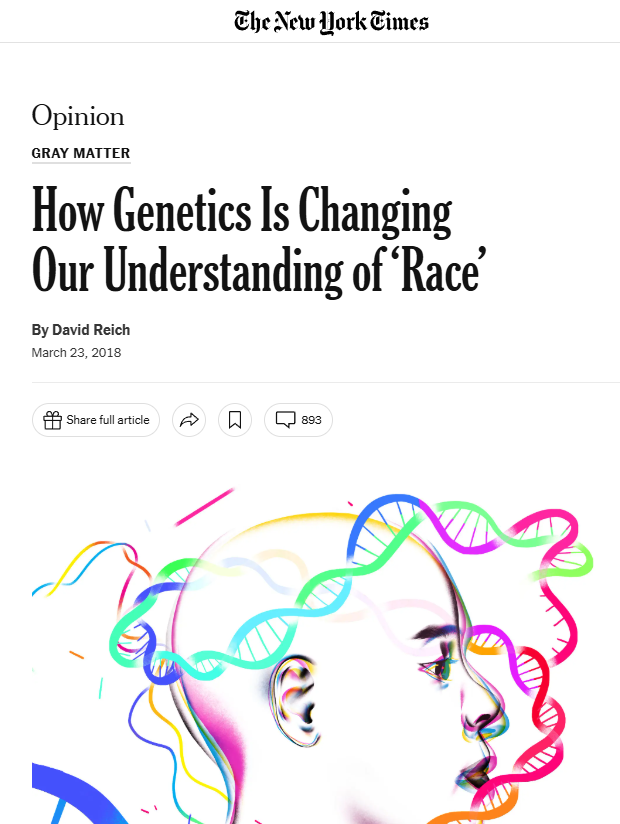
David Reich, généticien de Harvard, avait lancé en 2018 une mise en garde dans le New York Times : il fallait sortir du déni car la génétique allait prouver l’existence de différences biologiques réelles entre les populations. Il affirmait que refuser de s’y préparer était une erreur qui nous disqualifierait face à la réalité scientifique à venir. Pour avoir brisé le tabou de la « page blanche », Reich a subi un désaveu massif et une condamnation publique.
Aujourd'hui, l’étude la plus massive de l’histoire (15 836 génomes anciens) vient de lui donner raison. La science confirme que l’évolution humaine ne s’est pas arrêtée : elle s’est ACCÉLÉRÉE MASSIVEMENT depuis 10 000 ans, provoquant une divergence biologique réelle dans l’intelligence et les comportements.
Nier ces faits pour maintenir l'illusion d'une intégration possible face à l'immigration de masse et continuer d'entretenir des mythes comme celui du racisme systémique est désormais un déni de science pur et simple. Une civilisation qui ignore la réalité biologique se condamne à l’effondrement. Le temps des faits est arrivé.
J’ai mis en commentaire quelques segments traduits de son avertissement de 2018 et le lien de l’étude pour ceux qui veulent comprendre l'ampleur du séisme.
#TaramsaChild
#OldestEgyptian
#NileValley
#UpperEgypt
#Qena
#MiddleStoneAge
#HomoSapiens
#HumanOrigins
#OutOfAfrica
#AncientDNA
#PrehistoricEgypt
#Archaeology
#Paleoanthropology
#HumanEvolution
#DeepHistory
#StoneAge
#OpticallyStimulatedLuminescence
#EarlyBurial
#SymbolicBehavior
#NationalMuseumOfEgyptianCivilization
https://t.co/Sf7n82fB9L
John Hawks argues that Neanderthal ancestry did not come from a single brief mixing event in the Near East. Instead, it spread across Eurasia through a “wave of advance” as early modern humans expanded and repeatedly interbred with Neanderthals along their frontier.
Here is a simplified breakdown:
The Core Idea
After modern humans left Africa around 50,000 years ago, they expanded rapidly across Eurasia. As they moved, they encountered and mixed with Neanderthals.
This interbreeding did not happen once in a single location. It happened repeatedly across thousands of kilometers, from the Levant through Europe and into Central Asia.
The result: Neanderthal ancestry forms geographic gradients (clines) rather than appearing at exactly the same percentage everywhere.
What the Genetic Data Shows
Recent studies analyzing thousands of ancient Eurasian genomes (40,000–600 years old) found:
Neanderthal ancestry increases at higher northern latitudes
In Europe, it increases moving westward
In Asia, it increases moving eastward (up to regions like Kazakhstan)
East Asians today have slightly more Neanderthal DNA than Europeans
These patterns are difficult to explain with a single early mixing event.
The “Wave of Advance” Model
The proposed mechanism:
Small pioneer groups moved outward from Southwest Asia
These small groups mixed locally with Neanderthals
Because they were small, Neanderthal DNA made up a larger fraction (about 1–4%)
As populations grew and spread, this ancestry became widespread but regionally variable
Population growth rates of roughly 2–4% per generation would allow humans to move about 20 km per generation, fast enough to expand across Eurasia within a few thousand years.
This expansion likely overlapped with Neanderthals across most of their geographic range.
Later Dilution Events
Not all populations kept the same levels of Neanderthal ancestry.
A group known as Basal Eurasians, early descendants of the Out-of-Africa migration with little Neanderthal input, later mixed into European farming populations around 6,000 BCE. This reduced Neanderthal ancestry levels in parts of Europe.
Later hunter-gatherer and steppe migrations shifted levels again.
So today’s pattern reflects:
Early expansion mixing
Later demographic turnovers
Regional population history
Why This Matters
This model changes the traditional narrative:
Old view: one mixing event in the Near East.
New view: continuous hybrid zones across Eurasia during expansion.
It suggests that Neanderthal–modern human contact was geographically extensive and lasted for many generations. Rather than a clean replacement, modern humans absorbed Neanderthals genetically while expanding across their territory.
#HumanEvolution
#Neanderthals
#AncientDNA
#Paleogenomics
#Archaeogenetics
#OutOfAfrica
#DeepHistory
#EvolutionaryBiology
#Prehistory
#Genetics
https://t.co/XomiiOQDnm
Ghost lineages are extinct populations that left genetic traces in the DNA of living species, including humans, even though we have no confirmed fossils for them. We know they existed because their genetic signatures appear in modern genomes.
What Are Ghost Lineages?
A ghost lineage is an ancient group that disappeared but interbred with populations that survived. Their physical remains may be missing, but fragments of their DNA still circulate in living descendants. Genetic analysis reveals these hidden contributors to evolutionary history.
Ghost Lineages in Human Evolution
Human evolution is not a straight line , it’s more like a braided river with repeated episodes of interbreeding.
Modern humans carry genetic material from archaic groups such as:
Beyond these known groups, genetic data points to even older “superarchaic” hominins that split from the ancestors of Neanderthals, Denisovans, and modern humans nearly 2 million years ago. Some Denisovan populations interbred with these deeply ancient hominins, passing fragments of that DNA to certain present-day populations in Asia and Oceania.
There is also evidence of unknown archaic ancestry in some West African populations, suggesting that ghost lineages were not limited to Eurasia.
How Scientists Detect Them
Researchers identify ghost lineages by:
Comparing modern genomes to ancient DNA
Finding unexpected genetic variants that don’t match known fossil groups
Detecting unusually deep genetic divergence times
Sometimes, a lineage remains “ghostly” until a fossil is finally discovered that matches the DNA signature.
Why They Matter
Ghost lineages show that evolution is complex and interconnected. Rather than replacing one another cleanly, human groups repeatedly mixed and exchanged genes.
They also reveal:
Ancient population structure in Africa
Climate-driven shifts in biodiversity
The importance of interbreeding in shaping modern humans
In short, parts of our DNA come from human groups we haven’t even fully identified yet.
#HumanEvolution
#AncientDNA
#GhostLineages
#Archaeogenetics
#Paleoanthropology
#Neanderthals
#Denisovans
#EvolutionaryBiology
#DeepHistory
#Genetics
https://t.co/6BacfrkNxd
Africa’s genome is not just a record of the past , it is a living library that is reshaping how we understand human history and the future of medicine. While textbooks once framed human movement as a one-way “Out of Africa” story, ancient DNA now shows powerful back-migrations from Eurasia into East Africa around 4,500 years ago, documented through the famous Mota genome from Ethiopia.
At the same time, the Bantu expansion between 6,000 and 4,000 years ago acted like a genetic and cultural “bulldozer,” spreading agriculture, languages, and deep admixture across sub-Saharan Africa, fundamentally structuring the genomes of millions today.
African populations also provide the clearest window into natural selection in action. Near-universal fixation of the Duffy (ACKR1) variant and the rise of the sickle-cell mutation illustrate how humans evolved powerful, but costly, defenses against malaria.
For modern science, Africa is a critical resource because its genomes have lower linkage disequilibrium, allowing researchers to pinpoint disease-causing variants with far greater precision. Yet less than 2% of sequenced human genomes are African, a profound injustice that undermines global health and the promise of precision medicine.
If the keys to curing major diseases lie in the most genetically diverse continent on Earth, ignoring Africa is not just a scientific mistake, it is an ethical failure.
#AfricanGenomics #HumanEvolution #AncientDNA #BantuExpansion #MalariaEvolution #PrecisionMedicine #GlobalHealthEquity #GeneticDiversity #EvolutionaryBiology #GenomicJustice #AfricaInScience

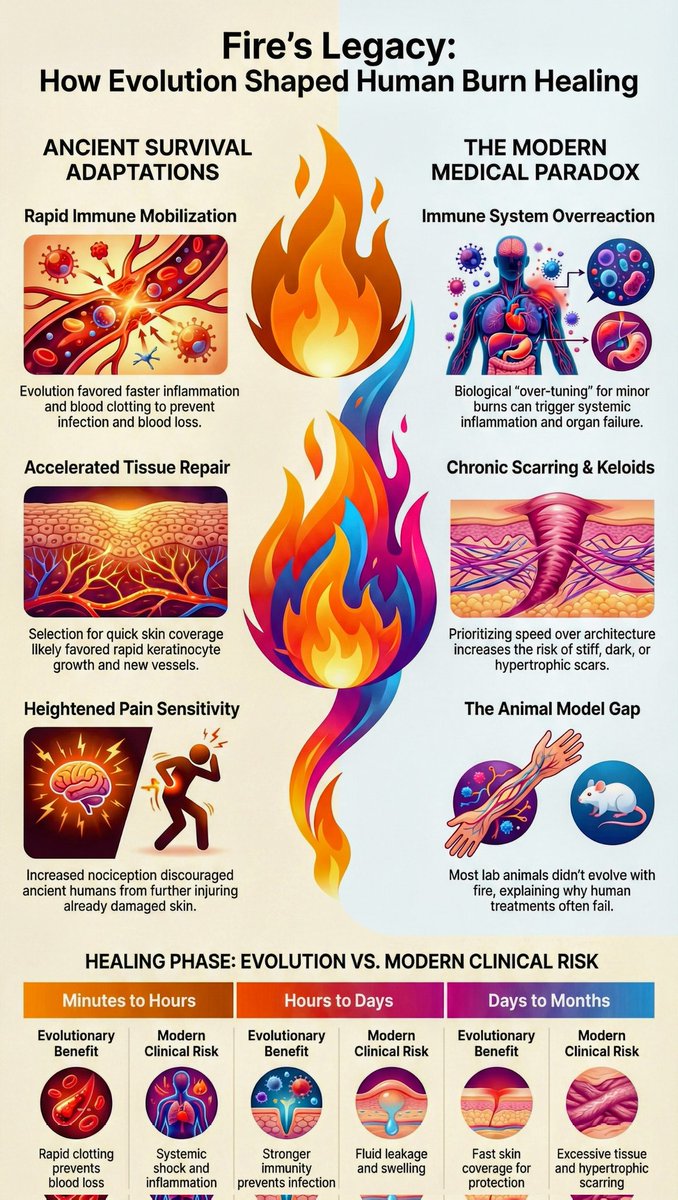
Human skin and immune systems may have been shaped by repeated exposure to fire across deep prehistory. This likely pushed our biology toward faster inflammation, quicker wound sealing, and stronger pain responses, all helpful for small, everyday burns. The downside is that the same systems can overreact in severe burns, leading to complications and heavy scarring.
Although the study does not name specific genes, the types of genes most likely involved are those that control:
Early inflammation: molecules like IL-1, IL-6, and TNF that trigger fever and immune activity when skin is damaged.
Danger-sensing systems: pathways such as TLR and NF-κB that detect injured tissue or microbes and amplify the immune response.
Blood clotting: factors that quickly seal broken vessels and create a temporary scaffold for new skin to grow.
Skin repair signals: growth factors (EGF, TGF-β, FGF) that speed up keratinocyte movement and new tissue formation.
Pain perception: ion channels that heighten nociception, discouraging further injury to damaged skin.
How this fits the stages of burn healing
Minutes to hours (hemostasis and early inflammation):
A rapid clot and cytokine surge would have been protective for minor burns, preventing infection and blood loss. But in large burns, this same response can trigger shock-like systemic inflammation.
Hours to days (inflammatory phase):
Stronger innate immunity would have helped ancient humans survive in unsanitary conditions. Yet in major burns it can cause fluid leakage, swelling, and organ failure.
Days to weeks (proliferation):
Selection for fast skin coverage likely favored quick keratinocyte growth and new blood vessels. However, this may also promote excessive tissue formation, increasing the risk of hypertrophic scars.
Weeks to months (remodeling):
If evolution prioritized “fast and strong repair” over perfect skin architecture, that could explain why some people are more prone to stiff scars, dark pigmentation changes, or keloids.
What this means for modern burn care
Animal models may mislead us. Most animals did not evolve with regular fire exposure, so their burn responses differ from ours, which may explain why treatments often fail when translated from lab models to patients.
Personalized burn medicine is promising. If we can identify human genetic variants that drive strong inflammation or fibrosis, clinicians could better predict who will scar badly or develop complications.
We may need to deliberately “dial down” our response in major burns. Because humans are possibly over-tuned for rapid healing, early anti-inflammatory and anti-fibrotic treatments might improve outcomes in severe injuries.
#BurnScience #HumanEvolution #FireAndHumans #WoundHealing #Inflammation #SkinBiology #Scarring #PrecisionMedicine #EvolutionaryMedicine #BurnCare #Immunology #TissueRepair #AncientHumans #MedicalGenetics #TraumaMedicine
A 2026 review in Molecular Biology and Evolution reexamines a long-standing idea about why early humans evolved dark skin. The traditional claim is that as early hominins lost body hair on the sunny East African savanna (around 2–1 million years ago), strong exposure to ultraviolet radiation caused lethal skin cancers, and this cancer risk supposedly drove natural selection for darker skin.
The authors, Simon Okholm, Alain Taieb, Hamid-Reza Rezvani, and Maël Lemoine—argue that this explanation is weak.
They point out that most UV-related skin cancers (basal cell carcinoma, squamous cell carcinoma, and even melanoma) usually develop late in life, often after people have already reproduced. Because natural selection mainly acts on traits that affect survival and reproduction in younger adults, cancers that strike mainly in old age would have had limited evolutionary impact on early humans.
To test the idea, the authors look at real-world “mismatch” situations today. Fair-skinned Anglo-Celtic populations in Australia experience extremely high skin cancer rates under intense sunlight, yet death from these cancers remains relatively rare and typically occurs late in life. This pattern suggests that skin cancer alone would not have been a powerful enough selective force to shape human pigmentation.
The paper also rejects comparisons with people who have albinism or xeroderma pigmentosum as models for ancestral humans, because early hominins likely had light but tanning-capable skin rather than a complete lack of melanin.
Instead, the authors argue that darker skin more likely evolved in response to other, more immediate survival pressures in hot, sunny environments. These include protecting blood folate from UV damage, maintaining healthy sweat glands and thermoregulation, preserving skin barrier function against dehydration and infection, and balancing vitamin D production with folate protection.
The overall conclusion is that dark skin probably evolved primarily to reduce acute UV and heat stress rather than to prevent skin cancer. However, the authors note that indirect benefits, such as healthier older adults helping raise grandchildren (the “grandmother hypothesis”), could still have played a secondary role.
#HumanEvolution #SkinColorEvolution #DarkSkin #UVRadiation #Anthropology #PopulationGenetics #EvolutionaryBiology #Paleoanthropology #MolecularBiology #Africa #Savanna #Folate #VitaminD #NaturalSelection
https://t.co/MfWuljW5ty
The Genetic Black Box: The Ear Bone That Preserved the Truth
How did DNA survive for 13,000 years despite humidity and time? The answer lies in the petrous bone of the inner ear—the densest bone in the human body and the most reliable reservoir of ancient DNA. Today, it is considered the gold standard in archaeogenomics.
From this bone, researchers determined that Romito 2 and her family belonged to the Villabruna genetic cluster, a group of hunter-gatherers that spread across Europe after the Ice Age. On the maternal side (mtDNA), preliminary evidence suggests lineages U2 or U5b, among the most ancient maternal haplogroups in Europe.
These findings do more than diagnose a disease—they reconstruct ancestry, migration, and human history itself.
Conclusion: What Does Romito 2 Teach Us Today?
The story of Romito 2 is not merely a scientific paper published in a medical journal. It is a timeless human message. It reminds us that rare diseases—affecting perhaps one person in a million today—have always been part of our shared past. It shows that caring for disability through love and inclusion is what made us truly human.
Scientists were able to diagnose her condition with astonishing precision after 13,000 years, opening new horizons for precision medicine. Yet one question lingers long after the case is closed:
If our Stone Age ancestors, with their limited resources and unforgiving environment, were able to offer care, love, and full acceptance to those in need—what are we, with all our modern capabilities, truly offering today to people with disabilities and rare diseases?
#AncientDNA
#Archaeogenetics
#HumanEvolution
#Genetics
#ScienceThread
#Anthropology
#DeepHistory
#Prehistory
#EvolutionaryBiology
#DNADiscovery
#LostWorlds
#ScienceX
#HistoryMeetsScience
#MindBlowing
#DidYouKnow
#ScienceFacts
#Thread
#XScience
#Knowledge
#HiddenHistory


The fossils revealed something astonishing: bodies deliberately placed in fetal positions, suggesting that Homo Naledi buried its dead. Until then, such behavior was believed to be unique to Neanderthals and Homo sapiens. These burials predate the oldest known human graves by at least 100,000 years.
Even stranger were the markings on the cave walls—cross-hatched carvings and shapes that resemble early human and Neanderthal rock art. If these were symbolic, they could represent the earliest known attempt at a written or ritual language—created by a species with a brain only a third the size of ours.
This discovery forces scientists to rethink human evolution. Intelligence, symbolism, and ritual may not have been exclusive to us at all—but shared by distant relatives whose story is only now being uncovered.
Homo Naledi reminds us that the past is far richer and stranger than we ever imagined.
#AncientMysteries #HumanEvolution
~Weird But True


Neanderthals (Homo neanderthalensis) were our closest extinct human relatives who inhabited Europe, Western Asia, and Central Asia from approximately 400,000 to 28,000 years ago. They possessed distinctive physical features including a long, low skull with a prominent brow ridge, a large nose adapted for warming cold air, an occipital bun at the back of the skull, and stockier, shorter bodies than modern humans. Despite their robust build, their brains were as large as or even larger than those of modern humans, proportional to their more muscular bodies.
Neanderthals developed a sophisticated culture that challenges outdated stereotypes of primitive cave dwellers. They crafted complex stone tools, controlled fire, built shelters, and made clothing to survive harsh Ice Age conditions. As skilled hunters, they pursued large game animals and also consumed plants and marine resources when available. Remarkably, they deliberately buried their dead with offerings such as flowers, engaged in symbolic behavior, and may have created ornamental objects—practices no earlier human species had demonstrated.
Neanderthals coexisted with modern humans (Homo sapiens) for thousands of years before disappearing around 28,000 years ago. Genetic evidence reveals that Neanderthals interbred with modern humans, and most people of non-African descent carry 1-2% Neanderthal DNA today. Their extinction likely resulted from multiple factors including low population density, inbreeding depression, high infant mortality, competition with modern humans for resources, and challenges adapting during climate crises.
https://t.co/xMjACrgq95
https://t.co/kc4lgyyxuR
https://t.co/Cz2HWLM3H7
#Neanderthals #HumanEvolution #Paleontology #Archaeology #AncientHumans #IceAge #Prehistory #HomoNeanderthalensis #HumanOrigins #Anthropology #FossilRecord #StoneAge #HumanAncestors #ExtinctSpecies #Paleoanthropology #EvolutionaryBiology #AncientDNA #Pleistocene #CaveMan #HumanHistory #PrehistoricLife #Fossils #ScienceEducation #NaturalHistory #HumanMigration
Ancient DNA Pushes the Origins of Syphilis Back 5,500 Years | الحمض النووي القديم يعيد تاريخ الزهري إلى ما قبل 5500 عام
Scientists have recovered the oldest known genome of Treponema pallidum from a 5,500-year-old human skeleton in Colombia, pushing the confirmed history of syphilis and related diseases back by about 3,000 years. The strain represents an early-diverging lineage that split from modern forms long before agriculture or dense urban societies existed.
تمكّن العلماء من استخراج أقدم جينوم معروف لبكتيريا Treponema pallidum من هيكل عظمي بشري يعود إلى نحو 5500 عام في كولومبيا، ما يدفع تاريخ مرض الزهري وأقاربه آلاف السنين إلى الوراء، ويُظهر أن هذه الأمراض كانت موجودة بين مجتمعات الصيادين-الجامعين قبل ظهور الزراعة أو المدن الكبرى.
The genome already carried all major virulence genes, indicating full adaptation to humans early in prehistory. This challenges theories that link syphilis solely to post-Columbian contact and supports a deep, ancient diversity of treponemal diseases in the Americas.
يحمل هذا الاكتشاف دلالات مهمة على تطور الأمراض المعدية، ويُضعف الفرضيات التي تربط ظهور الزهري فقط بفترة ما بعد كولومبوس، مشيرًا إلى تاريخ أمريكي أقدم وأكثر تعقيدًا لهذه البكتيريا.
#AncientDNA #Syphilis #TreponemaPallidum #HumanEvolution #Paleogenomics #AncientDiseases #BioHistory #Archaeogenetics #Prehistory #ScienceNews
A 5500-year-old Treponema pallidum genome from Sabana de Bogotá, Colombia | Science https://t.co/T5M8GUhoay

History isn't a straight line of progress; it’s a survival log.
Plagues are nature’s "refresh button." We are the descendants of the survivors—the ones who stood while empires fell to a germ.
History wasn't just written in ink. It was written in pathogens. 🧠
#History #Plagues #BlackDeath #HumanEvolution #MedicalHistory #Thread

🚨Humans are built for nature not modern life🚨
Summary:
Human biology evolved for a world of movement, nature, and short bursts of stress—not the constant pressure of modern life. Industrial environments overstimulate our stress systems and erode both health and reproduction. Evidence ranging from global fertility declines to chronic inflammatory diseases shows the toll of this mismatch. Researchers say cultural and environmental redesign, especially nature-focused planning, is essential.
👇Source: University of Zurich👇
#HumanEvolution #ModernLifeStress #ChronicStress


𝕲𝖔𝖔𝖉 𝕰𝖛𝖊𝖓𝖎𝖓𝖌 ...☕
#4KWallpaper #CollectiveConsciousness #AINexus #FutureTech #NeuralInterface #Grok #HumanEvolution #NexusMind

𝐆 𝐨 𝐨 𝐝 𝐌 𝐨 𝐫 𝐧 𝐢 𝐧 𝐠 . . . ☕️💫
The Nexus Mind: Humanity's Collective Consciousness.
#CollectiveConsciousness #AINexus #FutureTech #NeuralInterface #Grok #HumanEvolution
The Nexus Mind: Humanity's Collective Consciousness.
#CollectiveConsciousness #AINexus #FutureTech #NeuralInterface #Grok #HumanEvolution
The Nexus Mind: Humanity's Collective Consciousness.
#CollectiveConsciousness #AINexus #FutureTech #NeuralInterface #Grok #HumanEvolution

The Sun: From Primordial Fear to Cosmic Engine – A History of Human Reverence
Since the dawn of human consciousness, one celestial body has commanded our absolute attention: the Sun. Its daily journey and annual cycle are the original clock and calendar, its light the banisher of fear, and its warmth the non-negotiable requirement for life. The story of humanity's relationship with the Sun is a mirror of our own evolution—from fearful observers to reverent worshippers, and finally, to scientific comprehenders.
#SunReverence #HumanEvolution #CosmicHistory #CelestialWorship


The Matrix as a Cosmic Passport
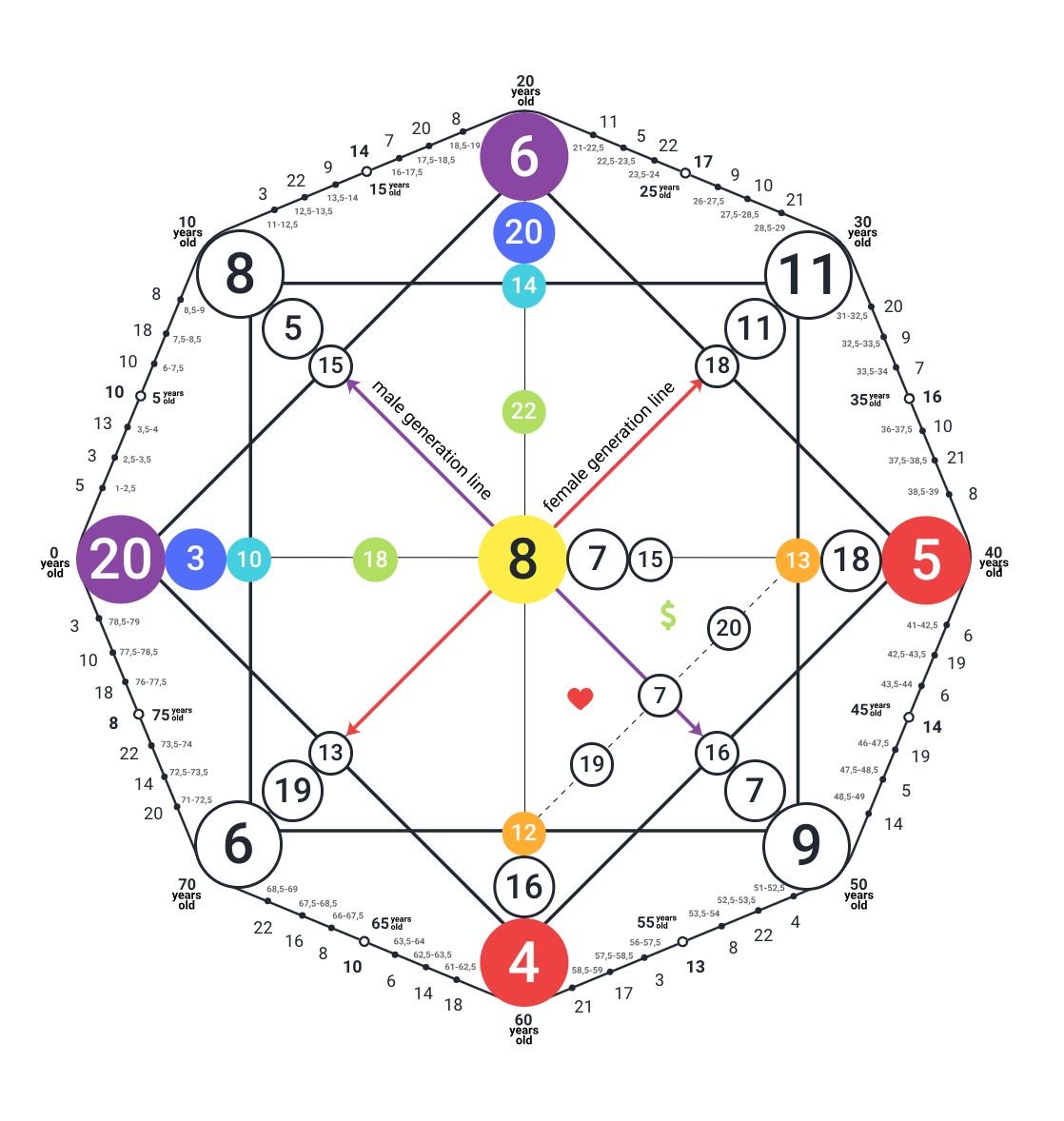
The Matrix is not a random cluster of numbers, but a geometric code - two interlocking squares, one ancestral (horizontal) and one personal (diagonal).
Together, they form an octagram: a symbol of balance between heaven and earth.
This “cosmic passport” reveals key dimensions of your incarnation - your purpose, lessons, resources, and energy flow.
Among its key coordinates :
Destiny / Purpose .
The key to your inner “cell” - your true mission.
Not just “success” or “marriage,” but the deeper calling your soul came here to embody. Ignore it, and the Universe will push you toward it until you listen.
Finances.
Not just money - but your ability to receive energy. Where abundance flows, where it’s blocked, and what fears restrict it.
As Osho said:
👇
“ Money is energy - it’s what you do with it that matters.”
Talents.
Your divine tools. You can build bridges with them - or dig holes.
The Matrix shows your innate gifts and how to use them wisely.
As Lao Tzu wrote:
👇
“The best weapon is the one you never have to use.”
Ancestral Line.
The whispers of your ancestors - blessings and burdens alike.
Jung would remind us:
👇
“What we deny doesn’t disappear. It appears elsewhere - often as fate.”
Health & Vital Energy.
Not about disease, but about flow.
Where your energy leaks, what your soul is trying to tell you.
As Ram Dass said:
👇
“We all walk with broken bowls, trying to fill them with love and light.”
Partnership Archetype.
Your mirror. The kind of soul who will challenge, reflect, and heal you through love - or trigger you toward growth.
As Rilke beautifully put it:
👇
“Love is two solitudes that protect, touch, and greet each other.”
Children & Legacy.
The channel through which the Universe renews itself - and you.
Khalil Gibran said:
👇
“Your children are not your children. They are life’s longing for itself.”
Karmic Tail
Not punishment — but echoes of unfinished lessons.
As Osho noted,
👇
“Karma is not retribution - it’s continuation. You are not a victim; you are the creator.”
The Two Squares : Heritage and Flight.
Ancestral Square - your energetic DNA, the foundation of your lineage, your inherited strengths and patterns.
Personal Square - your individual flight path, where you explore freedom, transformation, and soul growth.
Together, they describe how spirit and matter, past and present, weave the fabric of your destiny.
The Numbers : The Soul’s Codes.
Each number (1–22) corresponds to an archetype - from the Leader (1) to the Mystic (11), from Transformation (13) to Completion (21), and ultimately to the Master Builder (22) - My energy number 💜.
They are not predictions - they are vibrations.
The question is not
👇
“What does the number mean ?”
but
👇
“How does its energy express itself through me?”
So What Is the Matrix of Destiny, Really ?🤔
It can be many things :
👇👇👇👇
A map of consciousness.
A tool of self-discovery.
A poetic framework for understanding your path.
Or - perhaps - just another mind-game for the seeker who’s afraid to face the void.
Because, in the end, any system - be it astrology, numerology, or this Matrix - is still just a mirror.
The meaning isn’t in the numbers. It’s in the one who reads them.
👇👇👇👇🎯
Your life is your canvas, your creation, your experiment in consciousness.
Only you decide how deeply to play this game of light and shadow.
To be continued…🤪😉🤲✨💜
#TheHumanLightProject #MatrixOfDestiny #SpiritualAwakening #AncientWisdom #ConsciousLiving #EsotericKnowledge #DivineNavigation #HumanEvolution #MysticalJourney #AwakenYourSoul #Numerology #TarotWisdom #Kabbalah #MetaphysicalScience #InnerAlchemy #SeekTheTruth #SoulPath #MindfulnessJourney #SpiritualIntelligence #HomoMagica

The Matrix of Destiny: Your Spiritual GPS or Just Pretty Numbers ?
Imagine your life as a vehicle, and the Matrix as a GPS - but not your usual one.
It doesn’t simply tell you where to turn. It reveals why you’re on this road, what bumps await you, what treasures lie hidden on the roadside, and even why you chose this particular vehicle - or why it chose you.
In essence, the Matrix of Destiny is a psycho-esoteric construct based on the idea that your date of birth is no random coincidence - but a coded key.
It contains information about your personality, life lessons, and what could be called your karmic debts.
It’s a map - every element reflecting a fragment of your inner universe and the scenarios it projects into the outer world.
To study this Matrix is to learn the language of your Soul - to understand why you repeat the same mistakes, why some doors open effortlessly while others resist, and where, for heaven’s sake, the “activate abundance” button is hidden.
Origins : Natalya Ladini and the Birth of the System.
The story begins with Natalya Ladini, an esoteric teacher and Reiki master, who once looked at the Tarot’s Major Arcana and wondered :
“What if these archetypes could be linked to numerology?
What if they form the code of the human soul - and destiny - and perhaps, even wealth? ”
Apparently, they did.
At least according to her and the thousands who followed.
In 2006, her system gained wide recognition for its bold simplicity : blending Tarot’s symbolic language with the mathematical precision of numerology.
Each birth date, she claimed, carries the energies of the 22 Major Arcana - the same symbolic forces that guide both our inner and outer evolution.
Understanding how these energies function within you can illuminate your strengths, weaknesses, and life direction - helping you stop “sleepwalking” through fate and start consciously unfolding your potential.
As Ladini herself suggests, the Matrix isn’t fortune-telling - it’s a mirror of consciousness.
A way to decode how divine energy manifests through your human experience.
#TheHumanLightProject #MatrixOfDestiny #SpiritualAwakening #AncientWisdom #ConsciousLiving #EsotericKnowledge #DivineNavigation #HumanEvolution #MysticalJourney #AwakenYourSoul #Numerology #TarotWisdom #Kabbalah #MetaphysicalScience #InnerAlchemy #SeekTheTruth #SoulPath #MindfulnessJourney #SpiritualIntelligence #HomoMagica

Please take your time to read till the end 🤲✨💜
@TheHumanLightProject.2025 .Allrights reserved.
The Matrix of Destiny : Divine Navigation or Another Trap for the Mind ?
Do you believe in Santa Claus ?
No ?
Then perhaps you believe that coincidences are never truly random - that your life isn’t just a string of chaotic events, but a purposeful journey?
That the stars under which you were born, or the lines on your palm, actually mean something ?
👇
If you nodded even once - congratulations.
You’re part of the ancient tribe of Homo Magica - the magical human.😉✨
And don’t rush to frown.😜😉
After all, belief in unseen forces, omens, and hidden signs isn’t mere superstition - it’s an ancient survival instinct.
For thousands of years, this faith helped our ancestors endure winters, find food, and avoid saber-toothed tigers.
So why shouldn’t it serve us today?
Despite all our technological progress, the internet, and artificial intelligence, our world is still interwoven with the belief in miracles.
While some pray to old gods, others build new, intricate systems in their quest to understand the ineffable.
One such system is known as the Matrix of Destiny.
Exploring it feels like trying to assemble the puzzle of the Universe - where every piece is you.
Or perhaps it’s just another beautiful wrapper for that same old candy called hope?
Let’s find out - before your inner skeptic dies of boredom, or your inner mystic starts reading this under the moonlight.
👇
The Roots of the Matrix : Before Ladini.
While Natalya Ladini developed the specific “Matrix of Destiny” method, its foundations reach deep into much older esoteric traditions :
👇
Numerology - traced back thousands of years to Pythagoras (6th century BCE) and the ancient Chaldean mystics.
👇
Tarot’s Major Arcana (22 cards) - emerging during the Renaissance as symbolic representations of the human journey through consciousness.
👇
The Kabbalistic Tree of Life - structured with 22 connecting paths, echoing the same archetypal numbers.
Ladini didn’t “invent” these archetypes - she synthesized them into a unified metaphysical map, merging symbolic mathematics and ancient wisdom into what we now call the Matrix of Destiny.
#TheHumanLightProject #MatrixOfDestiny #SpiritualAwakening #AncientWisdom #ConsciousLiving #EsotericKnowledge #DivineNavigation #HumanEvolution #MysticalJourney #AwakenYourSoul #Numerology #TarotWisdom #Kabbalah #MetaphysicalScience #InnerAlchemy #SeekTheTruth #SoulPath #MindfulnessJourney #SpiritualIntelligence #HomoMagica

👀😊🫶
New Earth, New World !!!
🌎🌍🌏
🎥 “Midnight Special”
🎬✨ The ending of Midnight Special (2016) remains one of the most mysterious and emotional scenes in modern cinema — light, transcendence, and contact with another reality. Another dimension. Another civilization.
A metaphor for human awakening and the bridge between worlds.
🌌👁️🌈🔮✨
#MidnightSpecial #JeffNichols #MichaelShannon #JoelEdgerton
#KirstenDunst #AdamDriver #JaedenMartell #SciFiMovie #CultMovie #LightChild #BeyondTheVeil #OtherWorld #DivineTechnology #Contact #SpiritualSciFi #OrbsOfLight #Disclosure #Interdimensional #CosmicAwakening #HumanEvolution #HiddenReality #BeautifulEnding #Transcendence #HopeAndWonder #TheFutureIsNow
Most Popular Users

Elon Musk 
@elonmusk
240.1M followers

Barack Obama
@barackobama
118.6M followers

Cristiano Ronaldo
@cristiano
114.4M followers

Donald J. Trump
@realdonaldtrump
111.7M followers

Narendra Modi
@narendramodi
106.9M followers

Rihanna
@rihanna
98.6M followers

NASA
@nasa
92.1M followers

Justin Bieber
@justinbieber
91.7M followers

KATY PERRY
@katyperry
89.9M followers

Taylor Swift
@taylorswift13
83.9M followers

Lady Gaga
@ladygaga
75.4M followers

Virat Kohli
@imvkohli
73.3M followers

Kim Kardashian
@kimkardashian
70.8M followers

YouTube
@youtube
68.6M followers

Neymar Jr
@neymarjr
66.3M followers

Bill Gates
@billgates
65.2M followers

Selena Gomez
@selenagomez
63M followers

The Ellen Show
@theellenshow
62.1M followers

CNN
@cnn
61.7M followers

X
@x
60.6M followers