

Top Tweets for #interpretable

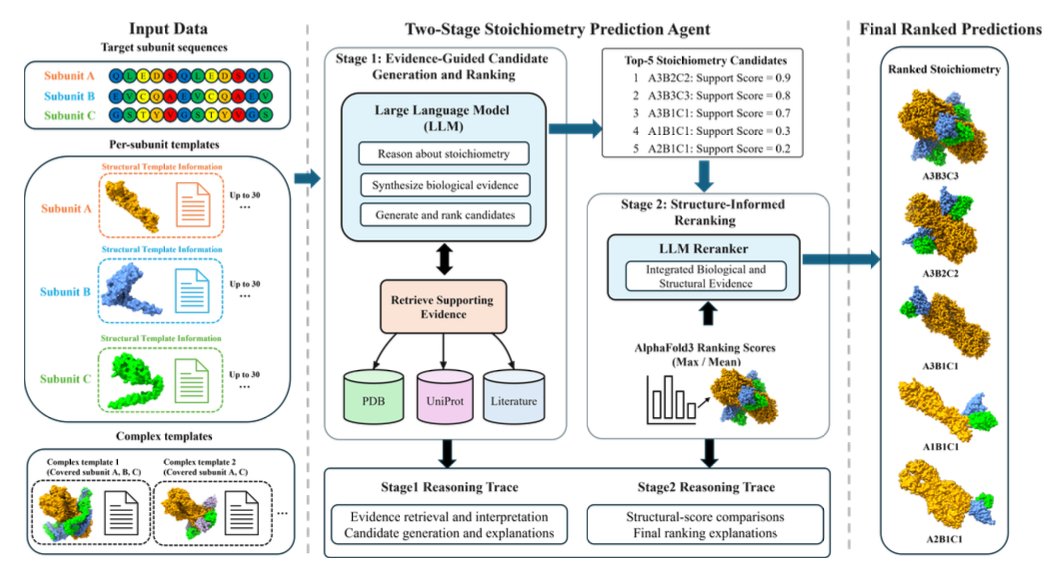
Accurate and interpretable protein complex stoichiometry prediction through agentic AI with StoiAgent
1. StoiAgent is an LLM-powered “agentic” pipeline that predicts protein complex stoichiometry by automatically retrieving and integrating heterogeneous evidence (sequences, PDB/UniProt records, PubMed literature, structural templates, and AlphaFold3 ranking scores) while preserving interpretable reasoning traces for its decisions.
2. Core design: a two-stage workflow. Stage 1 proposes and prioritizes multiple candidate stoichiometries via evidence retrieval + synthesis; Stage 2 reranks a fixed shortlist (top-5) by combining Stage-1 support with AlphaFold3 structural ranking scores, aiming to pick the biologically correct assembly rather than just the most “confident-looking” structure.
3. Blind-style benchmark: 56 CASP17 multimer targets (43 heteromers, 13 homomers; 18 distinct native stoichiometries). Evidence was temporally restricted to what existed before each target’s release date (PDB/UniProt/PubMed cutoffs per target; template DB cutoff April 1, 2026) to approximate the CASP setting.
4. Performance on CASP17: StoiAgent Stage 2 reaches 75.0% top-1 accuracy (42/56), improving over PreStoi + AF3 ranking (51.8%) by 23.2 percentage points, matching StoPred’s top-1 (75.0%), and exceeding StoPred on top-3 (85.7% vs 80.4%) and top-5 (87.5% vs 85.7%) accuracy.
5. It also beats general-purpose frontier LLM baselines when they are asked to predict stoichiometry directly from sequences + target descriptions: ChatGPT top-1 62.5% (35/56) and Gemini 50.0% (28/56), highlighting the value of domain-specific evidence (templates + AF3 scores) and an explicit agent workflow.
6. Group-balanced evaluation (to reduce overweighting of biological systems with many targets): StoiAgent achieves the best group-balanced top-1 accuracy (74.8%) across 34 biological systems, compared with StoPred 71.8% and PreStoi 51.5%; group-balanced top-3/top-5 also lead (79.4%/82.4%).
7. Stage-1 candidate coverage is strong: the native stoichiometry appears in the full Stage-1 candidate pool for 53/56 targets (94.6%), and within the top-5 shortlist for 49/56 (87.5%). But Stage-1 top-1 is only 58.9% (33/56), motivating Stage-2 reranking to resolve competing hypotheses.
8. Stage-2 gains are not explained by “just sort by AlphaFold3 score”: reranking the same top-5 candidates by AF3-max or AF3-mean yields only 60.7% and 62.5% top-1, versus 75.0% with StoiAgent’s evidence-aware reranking—suggesting the LLM is integrating structural scores with biological/template/literature context rather than following AF3 blindly.
9. Interpretability and case studies: reasoning traces show how StoiAgent weighs incomplete/conflicting template evidence (e.g., LujoGP + Fab complexes) and how templates can prevent systematic mistakes (e.g., correctly preferring A1B1C1D1 over a doubled A2B2C2D2 for a Fab–Fab target). Another example shows Stage 2 selecting the correct A1B1 enzyme–nanobody stoichiometry even when Stage-1 support and naive AF3 sorting favor alternatives.
10. Backbone matters: among open-weight LLMs tested under the same evidence configuration, Qwen3.6-27B performs best on CASP17 (75.0% top-1), followed by Gemma-3-27B-it (69.6%), OLMo-2-32B-Instruct (51.8%), and Mistral-Small-3.2-24B (42.9%), affecting both candidate generation and final ranking.
💻Code: https://t.co/32TBYmh9Jd
📜Paper: https://t.co/s5kMQW00NF
#ComputationalBiology #Bioinformatics #ProteinComplexes #Stoichiometry #CASP #AlphaFold3 #LLM #AgenticAI #StructuralBiology #ProteinStructurePrediction
Amino acid clustering and epistasis guide sequence-based prediction of phenotype modulation
1. The study presents an interpretable, sequence-only framework to identify phenotype-modulating residues and predict quantitative traits from protein MSAs, explicitly modeling both epistasis (2nd-order interactions) and position-specific amino acid alphabet reduction.
2. Core idea: pick a small subset of alignment positions (or position pairs) that maximizes the Spearman correlation between pairwise sequence distances (Hamming-like) and pairwise phenotype distances across a family, then use those positions for phenotype prediction in unseen sequences.
3. Methodological upgrade over prior work: a Monte Carlo + Metropolis-Hastings search (with an L1/Lasso-like penalty on subset size) replaces a greedy search, improving robustness and helping avoid overfitting while staying usable in data-limited regimes (around ~100 sequence–phenotype pairs).
4. Epistasis is incorporated via a “joint-divergence” rule on residue pairs: a pair contributes to distance only when both positions differ between two sequences, enabling detection of context-dependent effects that single-site scoring misses.
5. Amino acid clustering is optimized per MSA column: residues are merged/split via an independent MC/M-H procedure to maximize the same sequence–phenotype distance correlation, effectively learning a position-specific reduced alphabet that better captures phenotype-relevant variation.
6. Across 13 diverse case studies (temperature traits across multiple proteins, rhodopsin absorption wavelength, myoglobin concentration, and HIV-1 protease drug inhibition for 3 drugs), the combined model AC-MC-E (Monte Carlo + epistasis + clustering) shows the best overall training and prediction performance among their variants.
7. A Pareto analysis highlights two practical operating points: AC-MC-SS gives strong prediction using ~5% of alignment positions on average, while AC-MC-E improves prediction further but uses ~30% of positions—trading sparsity for capturing distributed epistatic signal.
8. The learned amino-acid clustering patterns suggest hydrophobicity is a major axis of phenotype modulation: the first principal component of amino-acid co-occurrence across learned groupings correlates strongly with hydrophobicity (R² ~0.61–0.62), and much of the effective alphabet can be summarized by only ~3–4 groups.
9. Spatial interpretation: single-site models preferentially select positions closer to functional sites (peak around ~8 Å), while epistasis-enabled selection yields a broader distribution across the scaffold—supporting a view where quantitative phenotypes are governed by networks of interacting residues, including distal contributors.
10. Comparison to literature-annotated “important residues” shows low overlap (median Jaccard ~0.05 for AC-MC-SS and ~0.12 for AC-MC-E) and weak ROC single-point performance in most datasets, implying existing annotations are incomplete; HIV protease resistance is a notable case where literature is more exhaustive and overlap/performance improves.
11. Benchmarking against phylogenetic imputation and an ESM-2 embedding + ridge regression baseline suggests the proposed approach is consistently competitive: it ranks among the top methods across all datasets and is especially strong for temperature-related phenotypes and HIV drug resistance, where epistasis is known to matter.
📜Paper: https://t.co/sceYRWyhse
#ComputationalBiology #Bioinformatics #ProteinEngineering #Epistasis #SequenceAnalysis #GenotypePhenotype #MachineLearning #EvolutionaryBiology

Decoding Antibody-Antigen Recognition: The BL8 Language and Its Application in Calibrating Deep Learning Predictions
1 BL8 is presented as an interpretable “8-view” structural language that turns antibody–antigen interfaces into auditable, discrete signatures, enabling an independent calibration layer for deep-learning complex predictions (separating physical plausibility from model-native confidence).
2 The work builds a fixed experimental reference atlas from 15,396 curated interface records (from 8,273 PDB structures in SAbDab), yielding 1,498 naturally observed BL8 signatures; a single PDB can contribute multiple interface records via explicit chain-role annotation.
3 BL8 integrates 328 features and clusters each view independently, then concatenates the 8 state codes into a complex-level signature: topology, geometry/shape, interaction chemistry, CDR conformation, flexibility/disorder, interface area (SASA/BSA), amino-acid property-pair composition, and variable-region sequence background.
4 A key biological takeaway is “structural degeneracy”: similar geometric/topological scaffolds can support very different chemical networks and sequence contexts. Mutual information between views is low on average, indicating the views are complementary rather than redundant.
5 The atlas reveals a pronounced long-tail in interface diversity. At a coarser BL6 level (geometry/physics-focused) the repertoire appears more concentrated, while adding amino-acid-pair and sequence context (BL8) greatly expands rare combinations (e.g., many more low-frequency and singleton signatures).
6 BL8 is used to challenge common one-dimensional heuristics in antibody design/assessment: (i) topology vs geometry are decoupled (the same “who contacts” pattern can yield compact or broad interfaces with different burial), (ii) longer/protruding CDRs do not guarantee larger buried surface area, and (iii) hydrogen-bond counts alone do not define interface chemistry because hydrophobic/aromatic vs electrostatic-dense modes can trade off.
7 For AI evaluation, the study projects 28,501 predicted complexes for three targets (PD-L1, SARS-CoV-2 RBD, PD-1) generated by AlphaFold 3, Protenix-v2, and OpenDDE into the frozen BL8 space (no target-specific retraining or reclustering), enabling consistent cross-model and cross-target comparison.
8 BL8 highlights that model-native confidence metrics (e.g., ipTM, PAE/GPDE) are not directly comparable across methods and show only moderate cross-model agreement, implying different priors/sampling behaviors; BL8 provides a shared physical coordinate system to interpret what binding paradigm a prediction represents.
9 The analysis surfaces “cross-target hallucinations”: models can generate high-confidence interfaces that resemble globally common binding paradigms but do not match target-specific experimental modes, especially for data-scarce targets (PD-L1 and PD-1 show far fewer experimental BL8 signatures than RBD).
10 As a calibration/filter, BL8 retains most positives (reported positive recall ~95.1%–100.0%) while rejecting 15.3%–20.1% of high-confidence false positives in constructed negatives. It also uses multi-model consensus on out-of-vocabulary (OOV) signatures to prioritize plausible out-of-distribution binding modes beyond the experimental atlas, and distinguishes conservative (template-biased) vs exploratory generative behaviors across models.
💻Code: https://t.co/4gWCE1eAIn
📜Paper: https://t.co/faOzfVKkS6
#ComputationalBiology #Bioinformatics #Antibodies #ProteinStructure #StructuralBiology #DeepLearning #AlphaFold #Immunology #ProteinInteractions #Benchmarking


Como diria el pajero pelotudo del hermano de edul, esa jugada era revisable o interpretable segun el arbitro
Predicting Protein-Protein Interactions Using Vectorized Sequence Descriptors and Machine Learning Classifiers
1 The study presents a sequence-only, interpretable PPI prediction pipeline that combines handcrafted protein descriptors with classical ML (SVM, Random Forest, XGBoost), aiming to deliver strong accuracy without relying on protein structure data or black-box deep learning.
2 A key result is generalization on a fully unseen human PPI test set: Random Forest reaches 99.51% accuracy with precision 99.72%, recall 99.29%, F1 99.50%, AUROC 0.9990, and AUPRC 0.9989; XGBoost follows with 98.54% accuracy (AUROC 0.9979, AUPRC 0.9974), while SVM is notably lower (87.58% accuracy; AUROC 0.9499).
3 On stratified 5-fold cross-validation, XGBoost slightly leads (97.97% accuracy; recall 98.09%; precision 98.10%; F1 98.09%), with Random Forest close behind (97.75% accuracy/F1) and SVM at 86.92% accuracy—highlighting that CV ranking can differ from unseen-test ranking.
4 The feature representation is explicitly constructed and biologically grounded: 2,626 total features per protein pair, formed by concatenating descriptors from both proteins—120 Auto-Covariance (AC), 686 Conjoint Triad (CT), and 1,820 Local Descriptor (LD) features.
5 AC features encode short-range and medium-range sequence-order correlations using six physicochemical properties (hydrophobicity, polarity, polarizability, side-chain volume, solvent-accessible surface area, and net charge index) across lags 1–10, capturing periodic patterns along the sequence.
6 CT features compress the 20 amino acids into 7 groups (by side-chain volume/dipole) and count frequencies of 3-residue patterns (343 triads per protein; 686 per pair), targeting local motif-like signals relevant to interaction propensity.
7 LD features model multi-scale regional patterns by splitting each sequence into 10 regions (quarters, halves, central segments, and 75% windows) and computing Composition/Transition/Distribution statistics per region (91 per region; 910 per protein; 1,820 per pair), capturing where residue groups occur and how they transition.
8 Interpretability is emphasized via feature-importance analysis. For Random Forest, top drivers include Protein 2 short-lag physicochemical correlations: polarity autocovariance at lag 2 and hydrophobicity autocovariance at lag 2, plus a specific CT triad pattern (A/G/V–M/S/T/Y–M/S/T/Y) and a regional LD signal (K/R composition in the first half of Protein 2).
9 XGBoost’s most important features are dominated by regional LD and CT signals: composition of the M/S/T/Y group in the last 75% of Protein 2, triad patterns enriched in M/S/T/Y, and K/R→K/R transition features in late/middle regions of Protein 1—suggesting charged-patch and region-specific composition cues matter for discrimination.
10 The paper positions the approach as computationally lightweight and practical for high-throughput screening when structural data are missing, while noting limitations typical of sequence-only learning (e.g., dependence on benchmark negative sampling and lack of explicit 3D/PTM modeling) and proposing future extensions with AlphaFold structures and evolutionary profiles.
📜Paper: https://t.co/3uDkZT4Wrr
#ComputationalBiology #Bioinformatics #ProteinInteractions #PPI #MachineLearning #XGBoost #RandomForest #ProteinScience #DrugDiscovery #InterpretableML


@efimenkoand @GenLayer For the Agentic Economy, adjudication must be part of the infrastructure, not an emergency fallback: contracts need interpretable context, independent validation, and affordable appeals when automated decisions affect real people
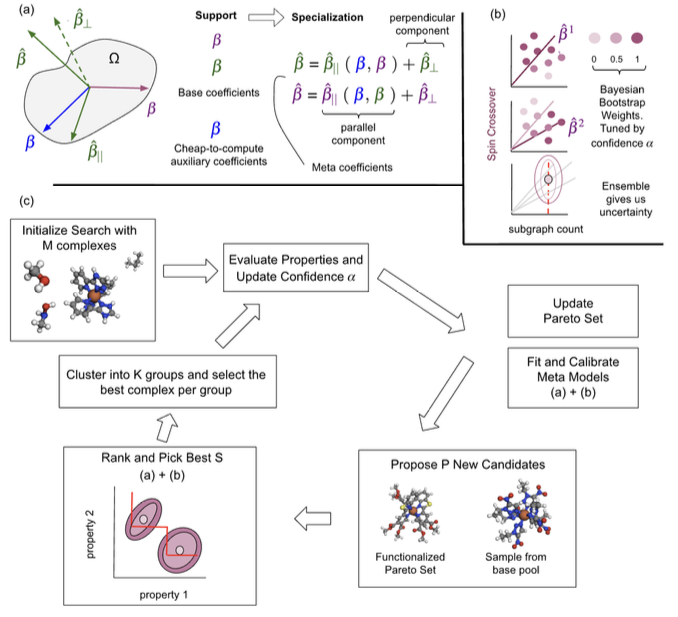
Interpretable Meta-Learning for Multi-Objective Chemical Search
1. The paper proposes an interpretable, data-efficient alternative to deep models for multi-objective molecular discovery: linear graphlet surrogates + linear meta-learning + uncertainty-aware Efficient Global Optimization (EGO), designed for the practical constraints of quantum-level chemistry and human-in-the-loop workflows.
2. Key novelty: it is (to their knowledge) the first deployment of linear meta-learning in a multi-objective chemical search loop. The meta-learner is trained across multiple search objectives plus cheap auxiliary properties, so it can adapt to new/undersampled objectives with limited labeled data while keeping full interpretability.
3. The surrogate model is built on sparse graphlet fingerprints (around 10k features): each feature corresponds to a molecular subgraph count, enabling fast ridge regression training and direct attribution of predicted properties to specific structural motifs (graphlets), rather than opaque latent representations.
4. The meta-learning method (LAMeL) constructs task-specific coefficients as a sum of (i) a component constrained to the low-dimensional subspace spanned by coefficients of related support tasks and (ii) an orthogonal residual fitted to the new task’s data. This keeps transfer learning explicit and linear, and adds only about 2× the cost of a single ridge fit.
5. Uncertainty quantification is handled with Bayesian bootstrapping ensembles (Dirichlet-weighted fits). A concentration parameter alpha controls how variable/sparse the bootstrap weights are, which directly modulates predictive variance and thus the exploration–exploitation behavior during acquisition.
6. A second core innovation is adaptive confidence tuning: because active search queries are biased toward distributional tails (where calibration breaks), the method dynamically updates alpha(t) using a feedback rule based on a log normalized squared error calibration statistic, while enforcing an effective sample size constraint to avoid pathological bootstraps.
7. In offline multi-objective optimization on QM9 (4 objectives), model-guided search converges nearly two orders of magnitude faster than random sampling. Meta-guided selection outperforms the non-meta version notably in early and mid stages, then both become similar as data accumulates.
8. In a large-scale live search for spin-crossover (SCO) Fe complexes (ligands filtered from CSD, functionalization-based generation, evaluation via Architector with xTB), meta-learning yields substantially better Pareto fronts: the meta pipeline’s final front dominates about 78% of baseline Pareto points, while the baseline dominates meta in only about 18% of cases.
9. Dynamic confidence tuning further improves search outcomes: by the final generation, about 52% of points from the static-confidence Pareto front are dominated by at least one point from the adaptive-confidence front (vs ~21% in the reverse direction), suggesting the ability to recover from suboptimal exploration–exploitation settings as the campaign evolves.
10. Mechanistic insight from ablations: meta-learning acts as a chemically aware regularizer. Compared to the base linear model (very high coefficient inequality), the meta model spreads weight across roughly an order of magnitude more graphlets (lower Gini, higher inverse Simpson index), reducing overfitting in the low-data regime while retaining interpretability via dominant subgraph motifs.
💻Code: https://t.co/sDgOBXUL85
📜Paper: https://t.co/OaZmPWsuoN
#ComputationalChemistry #MetaLearning #BayesianOptimization #MultiObjectiveOptimization #MolecularDiscovery #Cheminformatics #UncertaintyQuantification #InterpretableML #ActiveLearning

Cyber attacks in industrial systems unfold over time, demanding fast detection.
A digital-twin framework combines temporal sequence modeling with interpretable rules for real-time anomaly detection and operator triage.
https://t.co/BLQDRc4RYy
#AcadeMax #ZJUP #CyberSecurity #IndustrialAutomation @ZJU_China @ZJUPRESS @AhliyyaAmmanUni


Nick Cammarata has published an essay arguing that large language models are more interpretable than the AI field assumed, offering hope for AI safety and control efforts.
https://t.co/2Am7h3gUQz
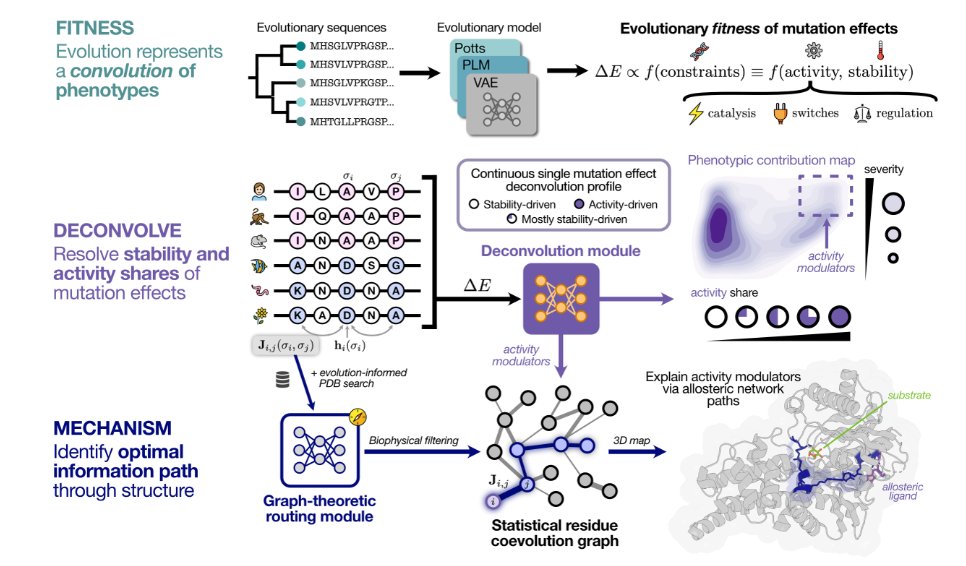
Dual-graph deconvolution of enzyme fitness: an interpretable framework to identify and explain catalytic modulators
1. The study introduces a “dual-graph” pipeline that separates stability-driven from activity-driven mutational effects while also producing mechanistic, structure-grounded explanations for allosteric regulation.
2. Core idea: evolutionary fitness scores conflate multiple phenotypes (stability, solubility, regulation, catalysis). The method deconvolves this mixture by combining (i) a GNN-based stability predictor and (ii) an interpretable probabilistic coevolution model, yielding a probability that a variant is stable-but-inactive (or the converse: high specific activity).
3. The deconvolution module is non-parametric and rank-based: it compares fractional ranks from stability vs evolutionary fitness, models the bulk of rank differences with a KDE, and assigns tail probabilities. Right-tail variants are predicted “stable-but-inactive” (activity loss beyond what stability explains), left-tail variants are predicted “high specific activity”.
4. Benchmarking spans the limited set of enzymes with multidimensional DMS for both abundance-based stability and catalytic activity (e.g., GCK, PTEN, CYP2C9, NUDT15, VKOR1, OXDA, SRC kinase domain). Joint models consistently outperform evolutionary models alone at recovering stable-but-inactive variants.
5. A key result for interpretability: alignment-based coevolution models (EVmutation) match large protein language models (ESM2) for stability-independent signal recovery when paired with stability predictors, suggesting black-box pLMs are not required to reach comparable deconvolution fidelity.
6. The framework also outputs a parameter-free 2D “phenotypic contribution map” that places any substitution along continuous stability vs activity contribution axes, enabling transparent variant annotation rather than a single opaque score.
7. Beyond scoring variants, the second “graph” layer routes putative allosteric communication: coevolutionary couplings are projected onto a 3D contact-filtered residue graph, and shortest high-confidence paths are traced from deconvolved modulators (sources; top 1%) to active-site residues (sinks).
8. Case study (human glucokinase): starting from an allosteric-pocket modulator (L451W), routing identifies an 8-residue corridor to an active-site glucose-binding residue (K169). The path traverses known mechanistic elements (ATP-contacting residues and a hinge residue) and is enriched for mutational tolerance/stability relative to RSA-matched null sets, consistent with a “shielded conduit” model.
9. Interface-to-active-site signaling shows two modes across targets: (a) stability-enriched, mutationally tolerant conduits in non-obligate/regulatory interfaces (e.g., GCK–GKRP, OXDA), and (b) activity–stability coupled, mutationally fragile subnetworks in obligate assemblies (e.g., NUDT15 dimer) and essential kinase allostery (SRC), aligning with known functional constraints.
10. De novo discovery example (PTEN): the method prioritizes a solvent-accessible activity modulator (D77), including a variant (D77W) consistent with a potential “catalytic dial” (maintained activity with reduced stability), and routes a short buried corridor to the active site enriched for stability by DMS—highlighting a plausible mechanism and an actionable allosteric target site.
💻Code: https://t.co/PeQuR5maB6
📜Paper: https://t.co/tw52wPfZn8
#ComputationalBiology #ProteinEngineering #EnzymeDesign #Allostery #DeepMutationalScanning #Coevolution #GraphNeuralNetworks #Interpretability #VariantEffectPrediction
Auditing Protein-Protein Interaction Signals with Sparse Autoencoder Fingerprints
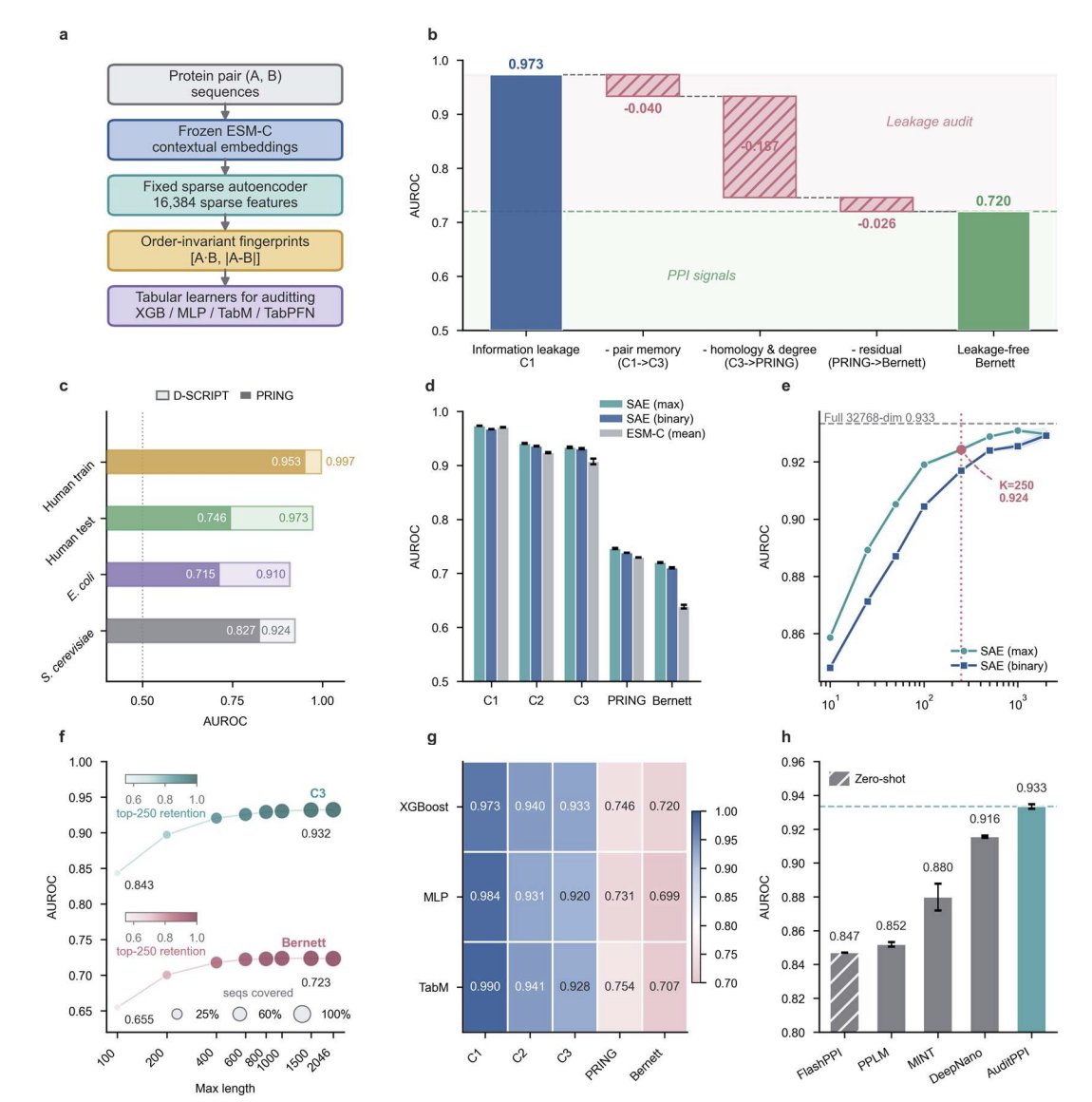
1. The paper introduces AuditPPI, an interpretable framework that turns sequence-based PPI prediction into an auditable tabular-learning problem, aiming to separate “good benchmark accuracy” from evidence of partner-specific binding signals.
2. AuditPPI uses a frozen protein language model (ESMC-6B) plus a fixed sparse autoencoder (SAE) dictionary (16,384 features). Residue activations are max-pooled into protein fingerprints, then two proteins are combined into an order-invariant pair fingerprint: [A∘B, |A−B|], preserving feature identities for downstream interpretation.
3. Despite being interpretable and sparse, AuditPPI remains competitive across benchmarks: AUROC 0.973 (C1), 0.933 (protein-disjoint C3), but drops under stricter topology/leakage controls (0.746 on PRING human BFS; 0.720 on the Bernett leakage-controlled benchmark), highlighting how evaluation design changes apparent generalization.
4. The same “lenient split → topology-controlled split” performance drop is consistent across species: human 0.973→0.746, E. coli 0.910→0.715, yeast 0.924→0.827, suggesting the issue is not limited to one interactome.
5. Predictive information concentrates in a small subset of SAE dimensions: keeping ~250 top-ranked pair features nearly recovers full C3 performance (0.924 vs 0.933). Sequence truncation hurts mainly when it prevents recovery of these informative SAE features.
6. Protein-level audits show partner-independent “participation propensity” signals remain substantial in conventional benchmarks (even in protein-disjoint C3). A minimum-participation score derived from single-protein predictors separates labels in C1–C3, but is near-chance for PRING, indicating topology-aware benchmarks reduce shortcut reliance on single-protein properties.
7. Pair-level audits show protein-disjoint splits do not eliminate contextual structure. In C3, subcellular co-localization is highly label-informative (compartment-set Jaccard AUROC 0.850; 97.4% of positives vs 55.8% of negatives share a compartment), and SAE fingerprint similarity still adds signal even within co-localized or non-co-localized subsets.
8. Model interpretation (TreeSHAP) indicates predictions are often driven more by the |A−B| block than A∘B under stringent settings (e.g., 73%/76%/86% of attribution in C3/Bernett/PRING). Importantly, |A−B| frequently acts as feature-wise matching (larger differences push toward negative), not as “dissimilarity implies interaction.”
9. Biological themes of the learned signals are benchmark-dependent: C3 emphasizes concordance in secretory/ER-targeting and RNA/RNP-related features; Bernett emphasizes mitochondrial targeting and membrane-associated features. This supports the claim that predictors can exploit context compatibility rather than binding-interface mechanisms.
10. Structural audits provide limited evidence that the strongest predictive single-feature signals are truly interface-specific: while some SAE features appear enriched at interfaces, the enrichment disappears after controlling for solvent exposure. Contact-specific enrichment is observed only for a minority of testable SAE feature pairs, implying “predictive” is not necessarily “mechanistic.”
💻Code: https://t.co/EtOPa7j2WR
📜Paper: https://t.co/9hKSL76a19
#ProteinProteinInteraction #PPI #ProteinLanguageModels #Interpretability #SparseAutoencoders #Benchmarking #ComputationalBiology #Bioinformatics #MachineLearning
SoftGene: Protein language model-enhanced soft prompting for interpretable gene set annotation
1 SoftGene is a gene set annotation framework that conditions a frozen local LLM on protein-sequence structure, not just gene symbols. It encodes each gene set from amino-acid sequences (including multiple isoforms per gene) and uses the resulting embedding as learned soft prompt tokens for free-text functional summaries.
2 The core architectural idea is hierarchical attention over biology’s natural hierarchy: amino acids → protein isoforms → genes → gene sets. ESM-2 provides frozen protein embeddings; trainable attention pooling learns which isoforms matter for a gene and which genes matter for the set, producing a single gene-set embedding plus attention weights for interpretation.
3 SoftGene uses hybrid prompting: (a) soft prompts derived from the gene set embedding, plus (b) hard prompts consisting of an instruction prompt and an auxiliary context prompt. The context is generated by a stronger LLM given the gene symbols, then appended to guide the smaller local LLM’s generation.
4 Training is parameter-efficient and modular: both the protein LM (ESM-2) and the local LLM (e.g., Llama 3.1 8B, Mistral 8B, Qwen 8B) are frozen. Only the hierarchical attention encoder and an MLP “projector” that maps the gene-set embedding into n soft tokens are trained, using standard token-level cross-entropy against reference annotations.
5 On benchmarks, SoftGene improves gene set annotation quality versus (i) prompt engineering (zero-shot/few-shot/CoT), (ii) prompt-tuning baselines (P-tuning, prefix tuning, gene-symbol soft prompts), and (iii) agentic/RAG-style systems (Discovera, TALISMAN, GeneAgent). Example (Llama 3.1 8B): GO METEOR 0.220, ROUGE-L 0.267, BERTScore-F1 0.806; MSigDB METEOR 0.157, ROUGE-L 0.215, BERTScore-F1 0.795.
6 Ablations clarify what drives gains. Removing the soft prompt collapses performance (GO METEOR 0.020; MSigDB METEOR 0.006), showing that continuous conditioning on structured embeddings is central. Removing LLM-generated context reduces scores but remains strong, indicating text context helps but does not replace sequence-aware conditioning.
7 Protein embeddings provide complementary signal, but the benefit is domain-dependent. In GO, replacing PLM embeddings with random noise shows the largest drop for Cellular Component (e.g., METEOR -0.062), smaller drops for Molecular Function, and near-zero change for Biological Process—suggesting sequence features particularly help localization/compartment-oriented labels.
8 SoftGene generalizes beyond gene co-occurrence: under a gene-disjoint split (test genes held out from training as much as possible), performance remains close to the random split (GO METEOR 0.205 vs 0.220; MSigDB METEOR 0.136 vs 0.157), supporting transfer via learned sequence/functional patterns rather than memorization.
9 Interpretability is explicit rather than purely narrative: attention weights identify influential genes and isoforms. Case studies show the model upweights canonical zinc transporters for “zinc ion transmembrane transport,” and can prefer functionally relevant splice variants (e.g., PRKG1α) without isoform-level supervision, implying PLM embeddings encode discriminative isoform signals.
💻Code: https://t.co/ziljmf7Cjt
📜Paper: https://t.co/dSWr7q0H9u
#ComputationalBiology #Bioinformatics #Genomics #ProteinLanguageModels #LLM #Prompting #GeneOntology #MSigDB #Interpretability #AI4Science


@diganmeHenry @erkimista @AleCiroAlvarez Para diganmeHenry la historia es interpretable, no importan los datos. Por eso es el ejemplo simple del boludito promedio. No lo hagan sentir mal, a éstos los necesitamos para que sigan generado votos para el javote.
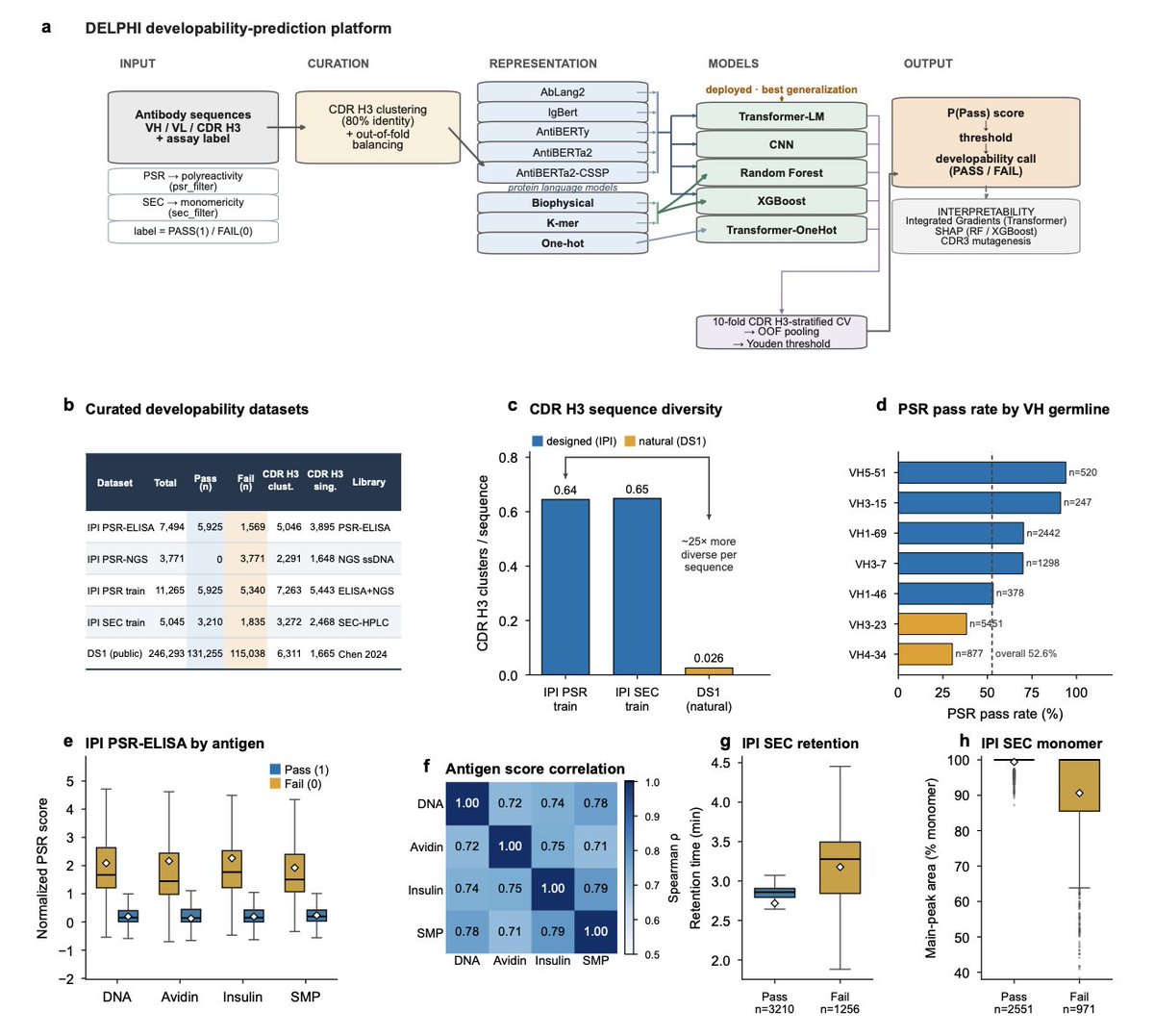
An interpretable open platform for sequence-based antibody developability prediction
1. Traditional antibody discovery faces significant challenges due to late-stage biophysical liabilities such as polyreactivity and non-monomeric aggregation, which cause many promising candidates to fail after costly experimental assays. Computational biologists have introduced DELPHI, an open-source, end-to-end framework that predicts antibody developability directly from sequence data. The platform incorporates multi-PLM benchmarking, CDR H3-cluster-stratified cross-validation, training-set sizing, and residue-level attribution into a unified software tool.
2. Across 20 language-model and classifier combinations tested under CDR H3-cluster cross-validation on in-house polyreactivity (PSR) and size-exclusion chromatography (SEC) datasets, DELPHI achieves high within-distribution mean AUCs of 0.959 and 0.933, respectively. When trained solely on internal data, models using framework-centric paired-antibody PLMs (such as AbLang2 and IgBert) transfer effectively to an external 246,293-antibody public library with an AUC up to 0.950.
3. In zero-shot evaluations across three external clinical-stage antibody cohorts, DELPHI achieves predictive transfer without training on target library data. On the blinded Ginkgo GDPa3 panel, DELPHI reaches a Spearman rank correlation of |ρ| = 0.35 on the PR-CHO assay, performing on par with the top-ranked submission in the 2025 Ginkgo Developability Competition.
4. DELPHI provides automated learning-curve analyses demonstrating that predictive performance for Transformer + AbLang2 models plateaus near 5,000 CDR H3-diverse antibodies. This provides quantitative design guidance for experimental laboratories aiming to balance dataset size and model accuracy.
5. Combining Integrated Gradients on a dual-branch one-hot Transformer with SHAP analysis on tree-based classifiers reveals a conserved electrostatic risk signature across both polyreactivity and monomer purity failure. Arginine and lysine enrichment, aspartate depletion, extended CDR H3 length, and net positive charge drive developability failure, forming a sequence-based engineering rule to guide candidate optimization.
📜Paper: https://t.co/bmYKbv0gtl
#ComputationalBiology #AntibodyEngineering #MachineLearning #ProteinLanguageModels #Bioinformatics #DrugDiscovery
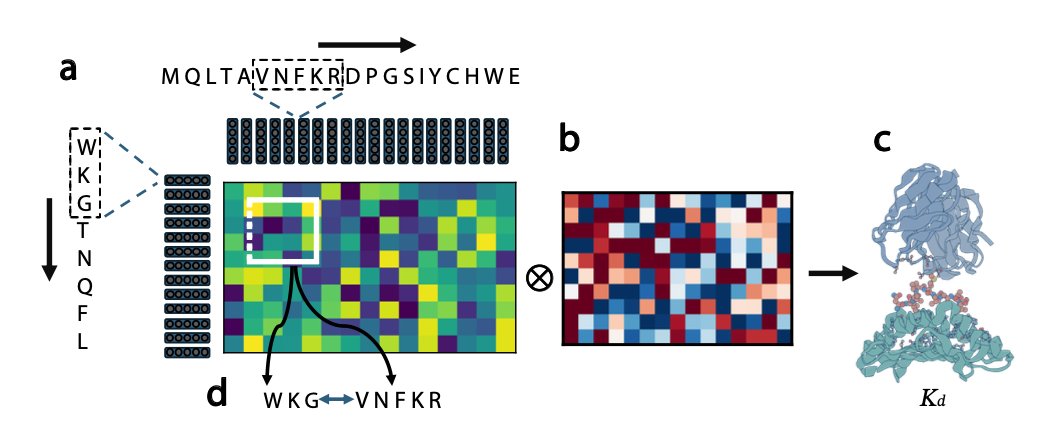
An interpretable peptide–HLA model emergently learns binding energetics and structure
1 LAMINA introduces an interpretable-by-construction architecture for peptide–HLA (pMHC) binding/presentation: predictions are exactly decomposable into additive HLA–peptide residue-pair contributions, avoiding post-hoc explainers (no baselines, no sampling variance, no completeness error).
2 Core idea: replace “hard” motifs (logos/PSSMs) with learned “soft” latent motifs over every gapless subsequence window (length 1–8) in both the 34-residue HLA class I pseudosequence and the peptide (8–14 aa). Every HLA window motif is scored against every peptide window motif via inner products, then aggregated with a learned motif–motif interaction map.
3 The model is intentionally austere (linear motif extraction + bilinear aggregation). This constraint is what makes attribution exact: the final logit is provably the sum over residue-pair terms, enabling faithful per-position and per-residue-pair explanations in the same units as the prediction.
4 Despite being small (4.7M parameters) and trainable in ~10 hours on a single desktop workstation, LAMINA matches or exceeds strong baselines on strictly de-duplicated held-out binding-affinity data (IEDB 2021–2026), including top AUROC at both 500 nM and 50 nM binder thresholds and the lowest mean absolute error among models with continuous affinity outputs.
5 On affinity regression, LAMINA tracks measured values across ~4 orders of magnitude (Pearson r ~0.79; Spearman ρ ~0.81 on n=603). Rank correlation is very close to the best-performing baseline, while calibrated error is improved versus widely used tools in their comparison.
6 For eluted-ligand source-protein recovery (FRANK; ranking the true ligand among all 8–14mer windows in the source protein), LAMINA is competitive but slightly behind specialist presentation models (median FRANK ~0.36% vs ~0.23% for two leading baselines), highlighting a tradeoff where presentation-tail ranking may benefit from additional presentation-specific modeling.
7 A major biological/biophysical result: LAMINA’s exact attributions correlate with in silico alanine-scan interface energetics from 1,413 structurally characterized pMHC complexes (13,097 single mutants). Residues given higher positive contribution by the model tend to be those whose alanine mutation costs more interaction energy (pooled Spearman ρ ~0.49).
8 The same attributions also track interface geometry: across 1,577 pMHC structures (14,522 peptide residues), attribution correlates with buried solvent-accessible surface area (SASA) upon binding (pooled Spearman ρ ~0.57). Standardized per-complex attributions can classify “buried” residues (relative bound SASA < 0.5) with pooled AUROC ~0.66 (median per-complex AUROC ~0.75).
9 LAMINA can compute allele-specific binding preference logos exactly and efficiently. Because the score is additive over peptide positions for a fixed allele and length, a full 9-mer logo requires only 20×L substitution evaluations (e.g., 180 for a 9-mer), not enumeration over 20^L peptides. These logos agree well with experimentally derived affinity motifs (e.g., pooled Spearman ρ ~0.85 vs IEDB SMM matrices across 6 alleles).
10 Broader implication: exact interpretability enables treating attributions as testable scientific objects—directly comparable to energetics and structure—suggesting a general design pattern for other “short pattern in sequence A interacts with short pattern in sequence B” problems (e.g., SLiMs, protease motifs, TF/RBP elements, antibody–antigen contacts).
💻Code: https://t.co/eEfwAmSmXa
📜Paper: https://t.co/yKj6kBgE1M
#Immunology #ComputationalBiology #MachineLearning #ExplainableAI #MHC #HLA #Neoantigen #VaccineDesign #ProteinScience #Bioinformatics

New in @The_InnovationJ! Predicting phase III clinical trial outcomes with an evidence-driven large language model.
Zhang et al. developed and temporally externally validated Xuanwu-TrialMind, an interpretable, evidence-driven in silico framework for predicting phase III clinical trial outcome.
https://t.co/0qixs3rn0J
#LargeLanguageModels #ClinicalMedicine


@javarienw1 Body language is interpretable without being inside his head you don’t know if he’s pouting, and your not in the sidelines talking to his teammates chief. Keep thinking you can read into situations with 10 percent of the data if it makes you feel right pal
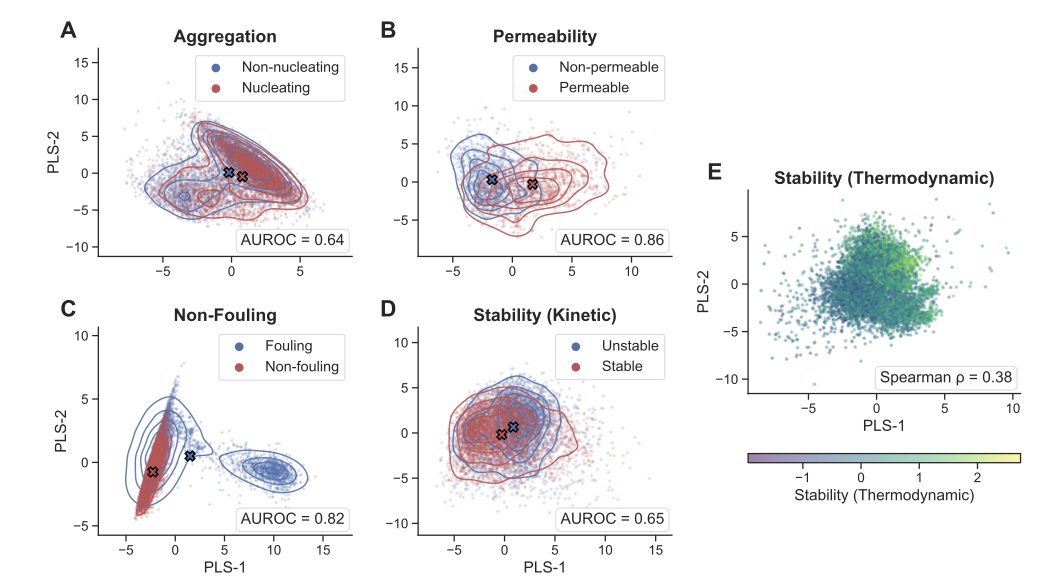
Chemical Descriptors and Deep Learning Embeddings for Scoring de novo Peptide Designs
1. The study benchmarks a practical question in de novo peptide design: for high-throughput scoring, do simple, interpretable chemical descriptors already capture most “developability” signal, and when do deep learning embeddings actually help?
2. They assemble 9 public datasets spanning 5 developability traits (aggregation, membrane permeability, non-fouling, kinetic stability, thermodynamic stability) plus 4 binding-affinity sources, yielding a combined peptide–protein affinity set of 8,538 measurements (log10(µM), mixing KD/IC50/Ki/others).
3. A key contribution is leakage-aware splitting. For developability tasks, they use strict homology-controlled splits (MMseqs2 clustering + DIAMOND audit) to reduce train/test sequence leakage versus original paper splits. For binding affinity (paired sequences), they introduce graph-based partitioning that constrains similarity on both peptide and target simultaneously, preventing “memorize the ligand” style inflation.
4. They compute 45 sequence-derived physicochemical descriptors (charge/electrostatics, hydropathy, size/composition, flexibility, secondary-structure propensity, H-bond capacity, disorder/degron signals, PTM motifs, plus RDKit descriptors). Single features can be highly predictive for some tasks (e.g., charge for permeability), but weak for others (aggregation, kinetic stability).
5. Classical ML on descriptors is a strong baseline: an XGBoost model improves across all developability tasks and often matches or approaches deep learning at far lower compute and with clearer interpretability (e.g., Permeability AUROC ~0.93; Kinetic stability AUROC ~0.73; Thermodynamic stability Spearman ~0.47).
6. Protein language vs folding-model embeddings: frozen ESM2 embeddings generally do not beat the descriptor+XGBoost baseline except for thermodynamic stability (Spearman rises to ~0.58). Fine-tuning ESM2 helps more on aggregation/stability than on already “near-saturated” tasks like permeability/non-fouling.
7. Somewhat unexpectedly for short, flexible peptides, Boltz-2 trunk embeddings are competitive with ESM2 on developability. Fine-tuning Boltz-2 (via LoRA on late pairformer layers) yields only marginal gains, suggesting much of the useful signal is already present in the pretrained representation for these tasks.
8. Fusion experiments (ESM2 + Boltz-2 single + Boltz-2 pair representations) show modest improvements when encoders are frozen, and the clearest consistent benefit is for thermodynamic stability (largest headroom). Once ESM2 is fully fine-tuned, fusion gains mostly disappear except for thermodynamic stability and a smaller bump on permeability.
9. Binding affinity: they evaluate simple pooled-embedding MLPs and an adapted Boltz-2 affinity module. The Boltz-2 pair representation ranks binders best across 14 held-out assay panels (mean Spearman ~0.44), with ESM2 close behind (~0.40). Zero-shot use of the pretrained Boltz-2 affinity module (trained on small molecules) largely fails on peptides, but training the same module architecture on peptide data recovers usable ranking signal.
10. A major caveat is molecular-weight bias: peptide MW alone correlates with affinity (mean panel Spearman ~0.35), and the Boltz-2 pair-based predictor correlates even more strongly with MW, implying predictions are confounded by size. Models also collapse predicted affinities into a narrow range (good within-assay ranking, poor absolute potency calibration), highlighting data limitations under strict pairwise leakage control.
💻Code: https://t.co/JOYg8gWhGJ
📜Paper: https://t.co/SJJboOHvFa
#PeptideDesign #ComputationalBiology #MachineLearning #DeepLearning #ProteinLanguageModels #ProteinFolding #ADMET #BindingAffinity #Developability #Benchmarking
Edge-aware graph attention networks for interpreting biophysical mechanisms from molecular dynamics simulations
1. The study proposes an interpretable workflow that couples MD trajectory prediction with mechanism extraction: train a GAT to predict the next MD frame, validate attention via perturbation-based faithfulness tests, then convert attention into residue communication networks for mechanistic analysis.
2. Core methodological innovation: three edge-aware GAT variants that isolate how physical edge features influence message passing—Edge-Conditioned (edges bias attention), Edge-Injected (edges enter the message), and Edge-Gated (edges gate transmission). All else is held constant to attribute differences to edge usage.
3. Interpretability is not assumed from attention alone. The authors quantify whether attention is prediction-relevant by masking top-attended edges and comparing error increases to random masking, reporting metrics like maximum attention advantage and how concentrated vs distributed the dependence is across edges.
4. Attention is transformed into time-dependent residue communication networks and summarized with three complementary descriptors: node weight (communication throughput over time), node strength (communication intensity when contacts occur), and betweenness (communication relay/bottleneck role in long-range pathways).
5. On Chignolin (10-residue folding benchmark), edge-aware models improve one-step coordinate prediction to sub-angstrom accuracy versus a standard GAT (~1.4–1.5 Å). The learned communication patterns recover known folding determinants rather than only reproducing coordinates.
6. Chignolin mechanistic differences across architectures: Edge-Conditioned centers communication around Tyr2 (consistent with the Tyr2–Trp9 aromatic interaction); Edge-Injected separates high-throughput/intensity hubs from relay residues (turn-region residues emerge as relays); Edge-Gated most strongly emphasizes the Asp3–Gly7–Thr8 turn network while retaining the Tyr2–Trp9 signal.
7. On HIV-1 protease (WT vs a non-active-site mutant linked to drug resistance), edge-aware models again achieve <~1 Å prediction error and reproduce functionally relevant dynamics including flap tip-to-tip distances and residue fluctuation profiles (RMSF), whereas a standard GAT overestimates RMSD.
8. Mutation-induced remodeling is captured in functionally important regions despite mutations being distal: active-site residues show altered throughput/intensity/relay depending on architecture; flaps show a consistent pattern of reduced persistent throughput but increased interaction intensity when present, aligning with increased flap flexibility and disrupted regulation in resistant variants.
9. Region-level aggregation clarifies complementary “mechanistic lenses”: Edge-Conditioned emphasizes functional-region throughput/intensity remodeling; Edge-Injected highlights high-intensity communication in functional regions while shifting sustained throughput toward scaffold regions; Edge-Gated most clearly resolves relay reorganization toward active site/fulcrum/terminal regions, supporting long-range allosteric pathway interpretation.
📜Paper: https://t.co/gtJ0FWmFAD
#ComputationalBiology #MolecularDynamics #GraphNeuralNetworks #GAT #ProteinDynamics #Allostery #Interpretability #DrugResistance #HIVProtease #ProteinFolding

Leveraging Latent Space Models for Enzyme Discovery and Sampling
1. The study presents a VAE-based latent space model that maps enzyme sequences into a continuous, interpretable 2D space, aiming to overcome key limitations of phylogenetic trees and sequence similarity networks (SSNs): scalability, threshold sensitivity, loss of distant relationships between clusters, and inability to capture higher-order residue interactions.
2. A central practical contribution is “sampling by geometry”: because the latent space is continuous, enzyme discovery can be guided by interpolation/extrapolation and by traversing radial “spikes” that reflect evolutionary structure—rather than relying on discrete SSN clusters that can disconnect related groups.
3. The authors first optimize architecture using a simulated evolutionary dataset (10,000 sequences generated along a tree under an LG substitution model). Increasing model depth (two hidden layers vs one) improves high-resolution clustering consistency with tree-derived ground truth (AMI 0.77 vs 0.70) while preserving ancestry-to-leaf evolutionary gradients in the embedding.
4. Benchmarking against SSNs shows a nuanced result: SSNs can reach similar peak AMI under tuned alignment thresholds, but they fragment the family into disconnected components and lose global relatedness once clusters separate. The latent space retains global continuity, linking local neighborhoods back through major ancestors.
5. On a real enzyme family (Lanthionine synthetase C-like cyclases; PF05147), the model is trained on 11,469 curated sequences with class labels (I–IV) and peptide-substrate functional groupings inferred via RODEO. The 2D embedding separates major cyclase classes into distinct regions, consistent with known evolutionary divergence patterns.
6. The cyclase latent embeddings support downstream function prediction: classic classifiers trained on the 2D embeddings achieve strong performance (e.g., random forest / kNN / decision tree MCC ~0.94–0.95 for class I), showing that low-dimensional, family-trained representations can be highly informative.
7. A notable comparison: for these cyclases, the 2D VAE embeddings are generally on par with or better than embeddings from large protein language models (ESM-1b, ProtT5-XL, ESM-2 650M/3B) for the same supervised classification task—highlighting the value of targeted, family-specific representation learning when interpretability and visualization matter.
8. For enzyme discovery, latent-space clustering aligns substantially better with functional substrate-based labels than SSNs at commonly recommended thresholds (e.g., latent-space AMI up to 0.81/0.76/0.92 for class I/II/IV vs SSN AMI ~0.31–0.50–0.69 at 35–40% identity), while avoiding the tradeoff where raising SSN thresholds may discard distant but meaningful relationships.
9. The most experimentally grounded demonstration is in flavin-dependent monooxygenases (FDMOs; PF01494): a 2D VAE trained on ~34,000 aligned sequences is validated using reconstructed ancestral enzymes, showing agreement with phylogenetic clustering (AMI ~0.72–0.79 at higher cluster counts) and correlation between latent Euclidean distances and tree evolutionary distances (Pearson r = 0.78).
10. Guided by the latent space’s continuity, the authors sample uncharacterized FDMOs along a geometric path between known oxidative dearomatization (TropB-like) and decarboxylative hydroxylation (AtA/NahG-like) enzymes. Screening reveals a functional transition along the trajectory: enzymes near TropB perform oxidative dearomatization, while further along the path multiple enzymes perform C1-selective decarboxylative hydroxylation (with shifts in substrate preference and site-selectivity), illustrating how latent-space navigation can uncover uncharacterized reactivity.
💻Code: https://t.co/L7rIZZsZgL
📜Paper: https://t.co/3phaHDYT6B
#ComputationalBiology #Bioinformatics #MachineLearning #ProteinEngineering #EnzymeDiscovery #Biocatalysis #VAE #LatentSpace #SequenceFunction #FDMO




Unlike Dusty, Espada relies heavily on analytics. Is that always better? Not necessarily—baseball has high variance.
The difference is his moves are logically interpretable. Results get managers blamed, but at least understand the process before criticizing.
Results matter in sports, but baseball has massive variance. Managers rely on stats to make logical decisions, hoping the probabilities play out. It’s why managing is tough—the best logical process never guarantees the outcome.
PHASE: Encoding global protein ensembles with local Hamiltonians and all-atom backmapping
1. PHASE (Protein Hamiltonians for Sampling of Ensembles) turns an atomistic MD conformational ensemble into an explicit, interpretable statistical energy model: a sparse pairwise Potts Hamiltonian over per-residue torsional “microstates,” rather than an implicit set of trajectories or a black-box generator.
2. Core representation: each residue is discretized into Kr recurrent local torsional microstates by clustering backbone/sidechain dihedrals (residue-wise clustering, shared across all conditions). A full protein conformation becomes a discrete vector x = (x1,…,xN), enabling direct comparison of ensembles under different ligands/effectors within the same state space.
3. Key modeling choice: pairwise couplings are restricted to a local contact graph built from the ensemble (edges if residues ever come within a Cα cutoff). Despite this locality, PHASE aims to reproduce global organization (including correlations between residues not directly connected by an edge) through networks of local dependencies.
4. Main quantitative result on locality: for A2A receptor ensembles, a 6 Å Cα cutoff largely saturates statistical fidelity. With only local couplings within ~6 Å, the fitted Hamiltonians reproduce (i) residue-wise microstate populations and (ii) all-to-all residue-pair joint microstate statistics, including for residue pairs that are not directly coupled in the model.
5. Fitting and sampling: parameters are learned by regularized pseudolikelihood maximization (avoids partition function), reported in a consistent zero-sum gauge. New configurations are generated via Gibbs sampling and replica-exchange Gibbs sampling, demonstrating that the model is generative in the discrete microstate space (not just a compressor of observed frames).
6. Activation-landscape coordinate without biochemical labels: independently fit “inactive” (INzma, inverse agonist ZM241385) and “active” (FANG, agonist NECA + mini-Gs) endpoint Hamiltonians. Their energy difference defines an endpoint preference score ΔEINzma−FANG(x) that orders newly sampled configurations and ensembles along an inactive→active axis, even though ligand identity, starting state, and mini-Gs coupling are not provided as model inputs.
7. The endpoint ordering across ten A2A ensembles (from ~37 µs MD) is broadly consistent with GPCR pharmacology and trajectory regimes, including controls that decouple ligand identity from conformation: e.g., ACzma contains the inverse agonist but remains on the active side because it starts from an active conformation; FApo vs pAs are two time segments of the same apo trajectory yet separate along the coordinate.
8. Spatial interpretability: because the model is an explicit Hamiltonian with residue fields and pair couplings, ΔE can be decomposed into regional contributions. Extracellular (orthosteric pocket/loops) vs intracellular (cytoplasmic TM/ICL) decompositions show partially distinct signatures: ligand-dependent separations are prominent extracellularly, while mini-Gs coupling adds intracellular separation—supporting the idea of regional “statistical fingerprints” of activation.
9. Closing the loop with all-atom backmapping: PHASE adds a cluster-conditioned structure generator (SimpleFold fine-tuned) to reconstruct all-atom coordinates from sampled microstate vectors. On held-out MD frames, it achieves sub-Å Cα accuracy on structured regions and recovers the prescribed microstate patterns with ~22% mismatch (structured regions). For Potts-sampled configurations (no unique atomistic target), cycle consistency is evaluated by re-coarse-graining the generated structures and checking microstate agreement.
10. Optimization/quantum-annealing angle: the discrete Potts Hamiltonian admits exact one-hot QUBO encoding, enabling exploration with annealing methods. The paper reports a classical simulated-annealing baseline and positions this as a route toward future quantum-annealing implementations for exploring low-energy regions of the learned conformational landscape.
💻Code: https://t.co/KTg14nmFXb
📜Paper: https://t.co/om3uPwMenM
#ComputationalBiology #ProteinDynamics #MolecularDynamics #GPCR #GenerativeModels #StatisticalPhysics #PottsModel #CoarseGraining #Backmapping #QuantumComputing


💻Can AI help regulators find the non-conforming shipments?
🔎In 389,389 South Korean seafood import records, a soft-voting ensemble achieved 75.57% recall and 87.49% AUC—while SHAP made key risk factors rare interpretable.
🔗Read: https://t.co/hXhzyLakpC
#AI #FoodSafety
As multi-messenger astronomy enters a data-intensive era, GW-Eyes integrates large-language-model-powered agents with domain-specific astronomical tools to achieve automated, interpretable, and scalable gravitational-wave counterpart association.
@The_InnovationJ
https://t.co/XYs7PGP1VW
#Astrophysics #gravitationalwaves


@BiologyAIDaily I’m curious whether steering the trunk changes diffusion outputs in a causally interpretable way, or just shifts confidence. Worth tracking the literature on this—Sci-Quest generates biomedical literature reviews: https://t.co/AMUYFvZ8PU

Evolutionary profiles for protein fitness prediction
1 The paper frames zero-shot mutation scoring from protein language models (pLMs) as an interpretable learning problem: natural evolution is treated as implicit reward maximization, and masked language modeling (MLM) is connected to maximum-entropy inverse reinforcement learning (IRL). Under this view, pLM log-probability (and log-odds between mutant and wild type) becomes a principled surrogate for fitness differences.
2 Building on that lens, the authors introduce EvoIF, a lightweight sequence–structure model that explicitly injects two complementary evolutionary signals: (i) within-family evolutionary profiles computed from retrieved homologs (sequence- or structure-retrieved, e.g., via Foldseek) and (ii) cross-family structural evolutionary signal distilled as an inverse folding (IF) profile from IF logits.
3 Key design choice: rather than feeding raw MSAs, EvoIF uses compact profile matrices (position × amino-acid frequencies) as an efficient evolutionary representation. This avoids variable MSA depth/quality issues and makes the evolutionary context easier to fuse with a small backbone.
4 The IF profile is treated as a structure-conditioned evolutionary prior: because inverse folding models are trained on natural sequence–structure pairs, their likelihoods reflect structural constraints and cross-family couplings. EvoIF uses these likelihoods as a portable “structural evolutionary profile,” helping when homolog retrieval is shallow or biased.
5 Architecture summary: ESM-2 embeddings provide sequence context; a GVP-based graph neural network encodes backbone geometry (SE(3)-aware). ESM-2 and ProteinMPNN are frozen; only the GVP layers plus small “transition blocks” that process the external profiles are trained.
6 Fusion mechanism: EvoIF computes residue-type probabilities from the sequence–structure backbone and adds transformed evolutionary and IF profile distributions via compact transformer-like transition blocks, then softmaxes to obtain calibrated probabilities. Fitness is predicted by standard zero-shot log-odds scoring between mutant and wild type at mutated sites.
7 Results on ProteinGym (217 DMS assays; >2.5M mutants): EvoIF (MSA-free) reaches Spearman 0.489, outperforming several sequence-only pLMs and baseline sequence–structure hybrids like S2F (0.454) and S3F (0.470). An MSA-enabled variant (EvoIF-MSA) ensembles EvoIF with GEMME at inference and reaches Spearman 0.519, comparable to retrieval-heavy systems.
8 Data/compute efficiency is a central claim: EvoIF is trained on ~30,948 non-redundant CATH structures (reported as ~0.15% of the training data used by large pLM pipelines) and trains in ~5 hours on 4×H800 GPUs, while remaining competitive with much larger or more retrieval-intensive methods.
9 Ablations support complementarity: no-profile baseline Spearman 0.454; adding evolutionary profile alone 0.462; adding IF profile alone 0.478; combining both yields 0.489. Additional analyses show robustness trends across function types (notably stability and organismal fitness), MSA depths, taxa (including viruses), and increasing mutation depth, though the method still relies on an additive multi-mutation assumption.
💻Code: https://t.co/gMZD6a0cUZ
📜Paper: https://t.co/0CwSJfn3yf
#ProteinEngineering #ProteinFitness #DeepMutationalScanning #ProteinLanguageModels #InverseFolding #ComputationalBiology #MachineLearning #Bioinformatics #ProteinDesign


🎥 How is AI reshaping molecular biology?
✍FBL Guest Editor Assoc. Prof. Nguyen Quoc Khanh Le discusses interpretable AI, multiomics integration, biomarker discovery & precision medicine.
📹Watch the interview:https://t.co/8rVVM8Vn5j
#AI #Bioinformatics #Multiomics
Most Popular Users

Elon Musk 
@elonmusk
240.1M followers

Barack Obama
@barackobama
118.6M followers

Cristiano Ronaldo
@cristiano
114.4M followers

Donald J. Trump
@realdonaldtrump
111.7M followers

Narendra Modi
@narendramodi
106.9M followers

Rihanna
@rihanna
98.6M followers

NASA
@nasa
92.1M followers

Justin Bieber
@justinbieber
91.7M followers

KATY PERRY
@katyperry
89.9M followers

Taylor Swift
@taylorswift13
83.9M followers

Lady Gaga
@ladygaga
75.4M followers

Virat Kohli
@imvkohli
73.3M followers

Kim Kardashian
@kimkardashian
70.8M followers

YouTube
@youtube
68.6M followers

Neymar Jr
@neymarjr
66.3M followers

Bill Gates
@billgates
65.2M followers

Selena Gomez
@selenagomez
63M followers

The Ellen Show
@theellenshow
62.1M followers

CNN
@cnn
61.7M followers

X
@x
60.6M followers