

Top Tweets for #kingsoft


Guten Morgen meine lieben ...
🖥️ KINGSOFT & ANCO liefern…👉 Spielesammlungen statt Einzelkauf
👉 direkt loslegen auf C16 / Plus/4
Und plötzlich ist der Sonntag zu kurz 😄
#RetroComputing #C16 #Plus4 #Kingsoft #Nostalgie #SaveThePaper

Bedrijfsresultaten
#Baozun
#Cintas
#Hera
#KGHM
#Kingsoft
#Paychex
#PDDHoldings
#SequanaMedical
#SoYoung
#Waterdrop


22 million users testify: WPS for HarmonyOS completes office experience innovation with AI+ distributed collaboration
#WPSOffice #HarmonyOS #phones #PC #universal #Native #Milestone #Users #Huawei #Kingsoft
https://t.co/JLH9qQ2Gda
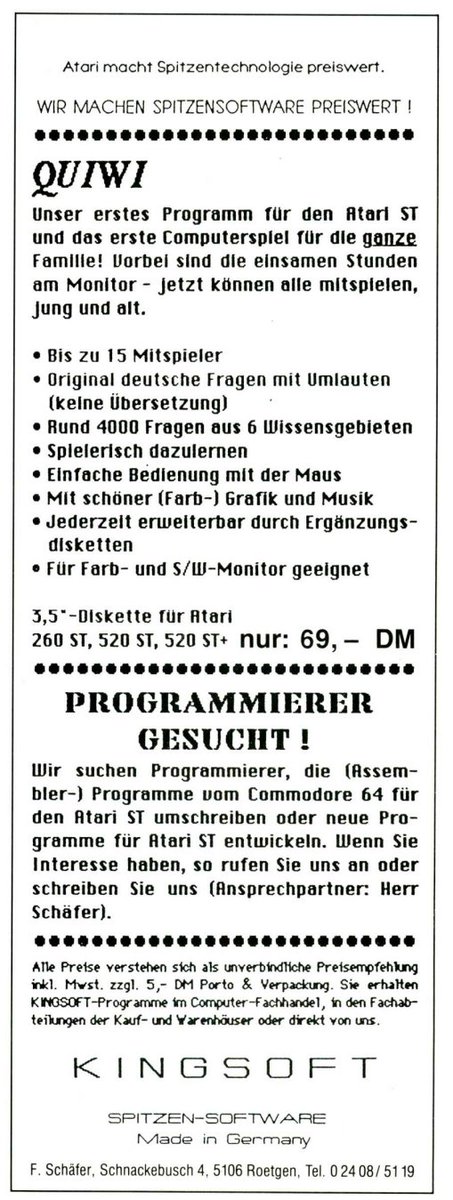
🕹️QUIWI – das erste Familienspiel für den Atari ST!
Bis zu 15 Mitspieler, 4000 Fragen, echte deutsche Umlaute, Mausbedienung, Farb- & SW-Monitor.
3,5"-Diskette für 260/520/520ST+ – 69 DM.
Bonus: Programmierer gesucht!😄#AtariST #Kingsoft #QUIWI #1980s #SoftwareGeschichte

【Kingsoft】
WPS Officeを展開する中国ソフト大手。
生成AIを統合した「WPS AI」で文書作成や業務効率を革新。
クラウド、ゲーム事業も展開し、多角化戦略を推進。
#Kingsoft #WPS #AIオフィス #香港株

【 ステーブルコイン発行急増でアメリカ地銀の破綻リスクは高まる 】
このリスクは今後よくみておいた方が良いですね。ステーブルコインを取引所に預けておくと、今なら年間で5%近い利息をもらえますので、銀行預金よりも高いのです。
ステーブルコインの発行量が拡大すると、まず中小銀行の預金の流出リスクが高まります。利用者が銀行預金ではなくステーブルコインを保有するようになれば、特に中小の地域銀行から資金が抜けやすくなり、貸出原資が減少します。これは資金繰りの悪化や信用収縮につながりやすい構造です。
次に、こうした資金流出の影響は銀行の規模によって異なります。大手行は多様な収益源を持つため影響を吸収できますが、地域経済に依存する中小銀行は預金基盤の縮小が直撃しやすく、シリコンバレー銀行破綻時のように金利上昇と相まって経営リスクが表面化しやすくなります。
さらに、各国の規制や政策対応も大きな意味を持ちます。中央銀行が検討するCBDCは預金流出を加速させる可能性がある一方で、ステーブルコイン発行体には資産裏付けや流動性の規制が強化されつつあり、制度設計によって銀行への圧力は和らぐことも考えられます。
総合的に見ると、ステーブルコインの拡大そのものが即座に銀行破綻を招くわけではありません。しかし、預金流出、貸出縮小、含み損の顕在化といったプロセスを通じて、中小銀行ほど破綻リスクが高まり、銀行セクターの二極化が進む可能性は否定できません。
来年以降のタイミングでアメリカの地銀をショートする良いタイミングが来るかもしれませんね。
#アメリカ株 #地銀


„BONGO“ – das wohl einzige Spiel, bei dem eine Muskelmaus eine Prinzessin über Rutschen, Leitern und Trampoline rettet. 🐭💪
Damals beworben als „das schönste und lustigste Spiel für den VC-20“.
Heute: ein Fiebertraum in 8 Bit. 😄
#C64 #VC20 #RetroGaming #Kingsoft


#Digitalsouveränität: Nachdem #Trump damit drohte, den Export von US-#Software nach #China zu untersagen, veröffentlicht das chinesische Handelsministerium seit letzter Woche seine Dokumente nur im Format der eigenen inländischen Software von "#Kingsoft":
https://t.co/11mycZhrTz

💰Finance & Markets
📈#Kingsoft Office: #AI MAU 29M+, WPS365 revenue +62%.
🧾#ChatExcel raises ~$10M angel round for AI data platforms.
🎭Culture & Society
🎭#Google #Gemini Edu free for all—AI quietly reshaping classrooms.


#2025SORANtheNorthermost
#稚内市
#KingSoft
めぐちゃん、元気そうでした
たこ焼き購入🐙
札幌からワシの行きつけの
#チュロスとカレー専門店ワヤワヤカフェ
でぇすけ氏日帰りで来てくれた
終わり間近に寄ったので食べ物少なく、得意のキウイレモネード購入😁


On June 6, a delegation of foreign consular corps and business representatives in #HongKong SAR visited #Zhuhai. They visited the Huitong Ancient Village and the #Kingsoft Software Park, experiencing the vitality of Zhuhai's development amid the interplay of history and technology. #Netherlands #Russia #Isreal


“The Hegemony Is Fading—That’s Why Trump Acts This Way”
An Analysis by South Korea’s Public Broadcaster, KBS
■ America’s Pathological Crisis—Ignored by the World
What’s unfolding isn’t merely the result of an extreme “madman strategy” employed by one erratic leader. It’s the outcome of deep-rooted structural issues.
This is not to justify U.S. behavior, but to argue that it stems from rational—albeit uncomfortable—reasons. One needs to step back to see the bigger picture.
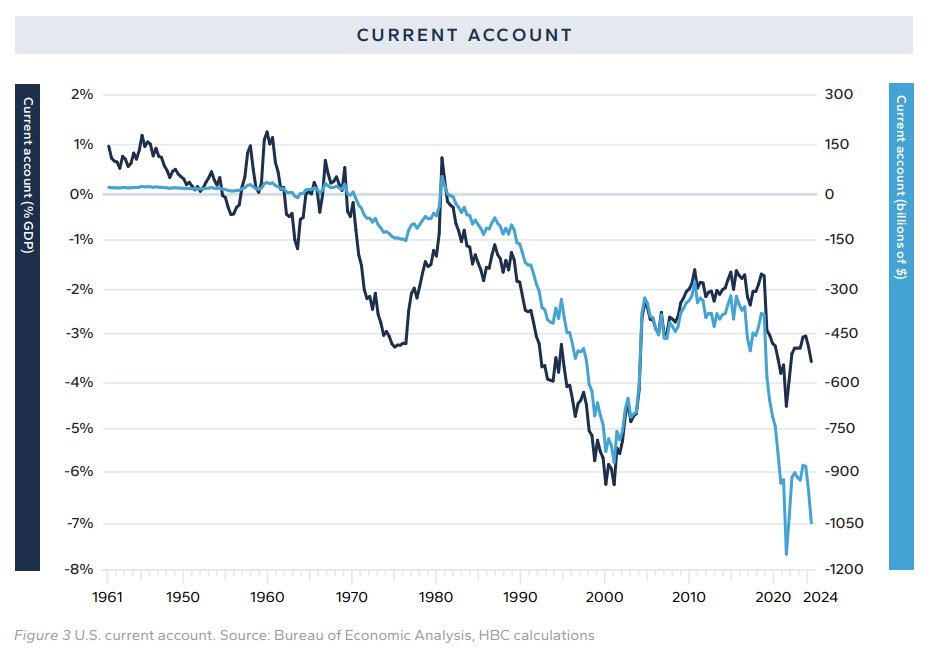
The U.S. is grappling with a persistent, fundamental problem—a chronic headache that it’s carried for over half a century despite being a global hegemon. The tragedy is that no one else seems to care.
Start with the twin deficits—chronic trade and fiscal deficits. They may sound cliché, but for the U.S., they’re deeply serious. Add to that the collapse of domestic manufacturing, the decline of the white blue-collar middle class, and the rage of the Rust Belt. And of course, China—the ultimate scapegoat, blamed for stealing American jobs. These were the root causes of the Trump era.
But these are just symptoms. The real pathology lies deeper. That’s where the so-called “Miran Report”—an economic worldview embraced by the ruling establishment—comes into play.
■ The “Miran Report” Worldview
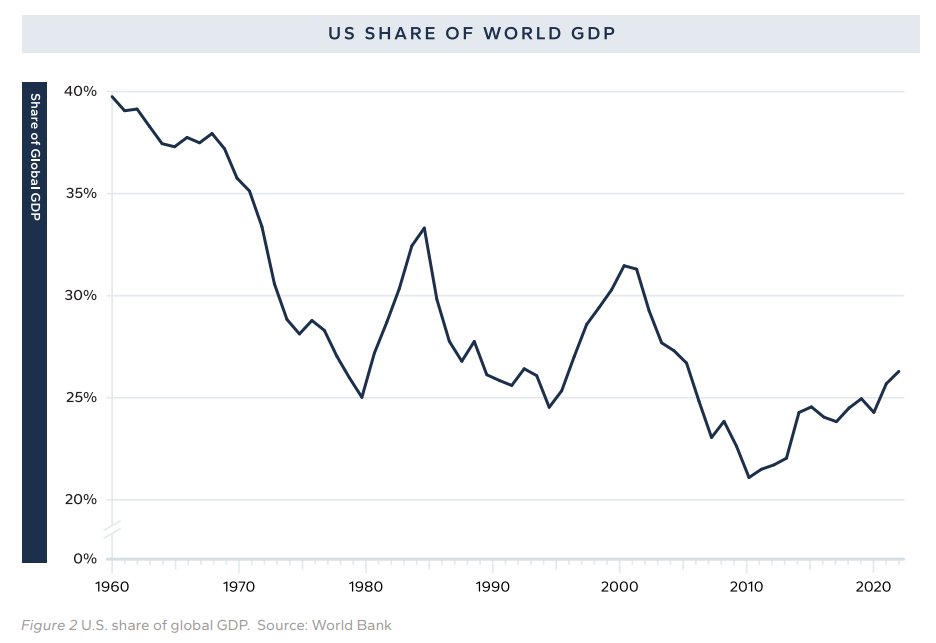
America’s shrinking share in the global economy
In 1960, the U.S. accounted for 40% of the global economy. By 2012, it had fallen to 21%. (It has since recovered slightly to around 26%, but the trend remains clear.)
This decline explains the worsening of the twin deficits. It’s why the Rust Belt turned into swing states, and why angry voters chose populist leaders.
The report’s most essential takeaway? Trump acts this way because American economic hegemony—and the American era itself—is in decline.
It rejects the simplistic idea that deficits stem from American overspending or reckless money printing. Instead, it blames the “cross the U.S. must bear”—the U.S. dollar as the world’s reserve currency.
This may sound like circular logic, but hear it out.
■ The Triffin Dilemma—If It Bursts, So Does U.S. Hegemony
Regardless of whether it’s right, this is the worldview held by those in power. It’s a twisted interpretation of the Triffin Dilemma.
The Triffin Dilemma illustrates the contradiction facing any reserve currency country: the world needs more dollars, which requires the U.S. to run persistent deficits. These deficits are inevitable. But over time, they erode trust in the U.S. economy—and in the dollar.
Eventually, a tipping point arrives: “The U.S. has too much debt. It’s no longer credible.”
At that moment, the U.S. may be “freed” from the burden of the Triffin Dilemma—but at the cost of its hegemonic status. The strong dollar collapses. The U.S. loses not only hegemony, but faces a catastrophic debt reckoning. National collapse becomes a real possibility.
This is the nightmare that haunts them.
■ The Fear Carried by a Fading Hegemon
Koreans have never had to think about such a problem. We often view the U.S. with envy: “They can just print money. The dollar strengthens during crises. They benefit while we suffer.”
But Americans live with a constant fear: “What if we collapse?” That’s the true weight of hegemony.
When will that day come? According to the Miran Report, it’s visible in the downward-sloping graph of America’s shrinking economic share. The further it declines, the closer the tipping point.
Why? Because the smaller the hegemon’s economy becomes relative to global GDP, the more unsustainable its role as reserve currency issuer becomes.
The world’s demand for reserve currency increases with global GDP. The larger the global economy, the more dollars are needed. If the hegemon is large, supplying that demand isn’t a problem. But if the U.S. only accounts for a quarter—or even a fifth—of the world economy, then maintaining deficits becomes increasingly burdensome. If long-term projections show it shrinking further, the nightmare intensifies.
And indeed, the strong dollar has become a growing burden on the U.S. economy. Since the 2008 global financial crisis, the dollar has been structurally strong. During every crisis, it grows even stronger. While the world envies this “safe-haven” currency, for U.S. manufacturers, it’s a disaster: their products become uncompetitive, and factories close.
So yes, the twin deficits aren’t just academic—they’re an existential threat.
■ America’s Shrinking Size, Growing Burden
To put it simply: America’s relative size is shrinking, and its burden is growing.
The fear within the hegemon mounts. The twin deficits are its most visible symptom. Domestic manufacturing has been hollowed out. Imported goods are forever cheap; domestic production is forever expensive.
So the factory towns revolt. That’s how the first Trump presidency was born. Biden tried to restore order, but the Rust Belt remains broken. The gravitational force of the Triffin Dilemma is too powerful.
It all leads to one conclusion: American national strength is declining. Hegemonic power is weakening.
■ As Hegemony Declines, the U.S. Faces Internal Civil Conflict
What happens inside a declining hegemon? Political civil war.
The U.S. is now a fractured nation. Rage and cynicism fuel division. These frustrations have become political explosives.
Trump capitalized on this mood—blaming the “corrupt elites,” the “inefficient deep state,” and “Sleepy Joe”—and secured a second term.
Yes, the U.S. remains wealthy on average, but the average no longer matters. Silicon Valley and Wall Street flourish, but the Rust Belt has no jobs.
After the 2008 crisis, anger and resentment became irreversible. The meltdown was caused by Wall Street’s greed, by turning subprime loans into complex financial products. A house of cards collapsed—and while workers lost everything, financiers threw bonus parties.
Legally, it wasn’t a crime. But morally? Devastating.
“Occupy Wall Street” chanted in the streets, but nothing changed. The communities were destroyed, yet no one was punished. Instead, the elites kept raking in astronomical wealth. For average Americans, this was unforgivable. They stopped trusting the media and the establishment. The resentment calcified into hate.
■ The Hegemony Is Fading—That’s Why Trump Acts This Way
This is why American democracy is in crisis. As FT’s Martin Wolf put it, we’re seeing a “crisis of democratic capitalism.” Democracy and capitalism were always in tension, but they fueled Western prosperity after WWII. Now, that system is breaking.
Capitalism failed in redistribution. Communities were splintered into hostile factions. Democracy became a battleground between polarized camps.
As the anger spread, so did its political consequences—Brexit, Trump, and beyond.
Again, it comes down to one thing: American power is in decline.
Everything happening now must be understood in this context. What may appear irrational or erratic may, in fact, be grounded in their own desperate logic.
There is urgency behind these actions.
Trump may be impulsive and erratic, prone to ill-conceived and risky moves. But to simply say “Trump is insane” or “abandoning allies is foolish” is to miss the deeper motivations.
Understand their reasoning first. Then critique the realism and feasibility of their plans. Examine the internal contradictions in their worldview—and the consequences it may unleash.
And finally, assess what strategic options South Korea must now prepare in response.
Kingsoft Office will build an AI and HarmonyOS R&D headquarters in Wuhan
#WPSOffice #HarmonyOS #Kingsoft #China #Ecosystem #OfficeApp


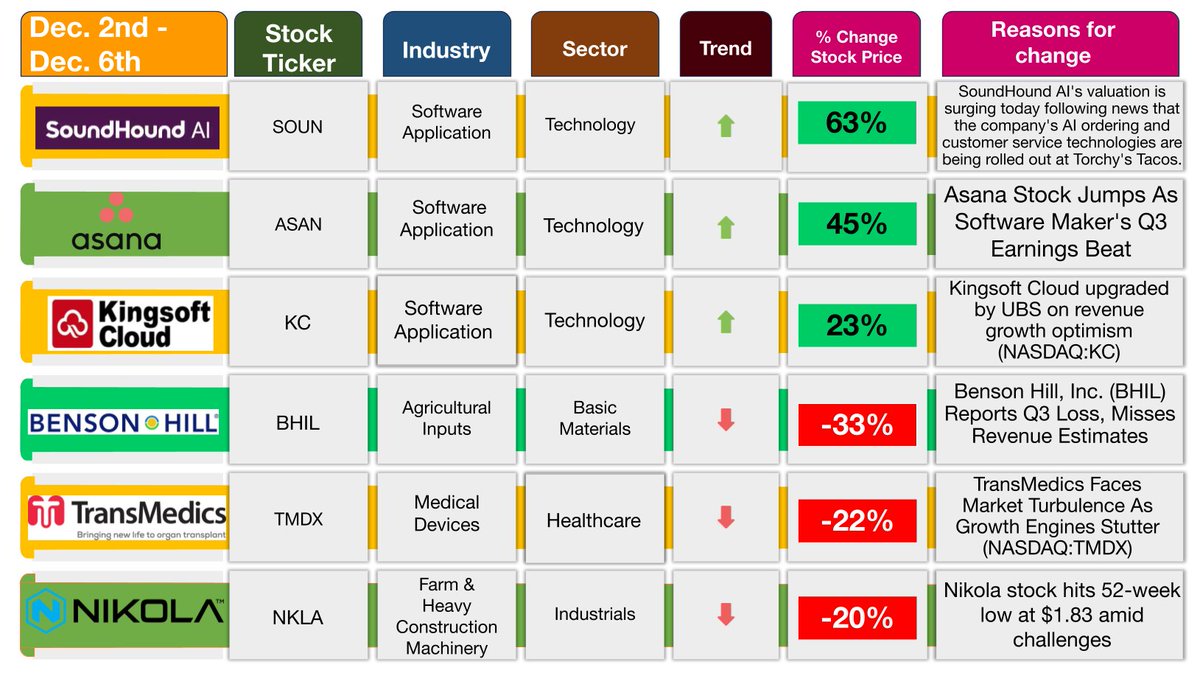
📈 Weekly US #StockMarket Recap Dec.2-6:
#SP500 up +0.83%!
🚀Top Gainers:
$SOUN #SoundHound AI +63%
https://t.co/cCuNOzjAJR
$ASAN #Asana +45%
$KC #Kingsoft Cloud +23%
📉Top Losers:
$BHIL #Benson Hill -33%
$TMDX #TransMedics -22%
$NKLA #Nikola -20%
#Investing #Stocks #Trading
#KingSoft
が稚内に来てた
タコ焼き食べよと思たら、待っていた稚内JKの注文で品切れ🤣
初めての
#チュロスドック
#アイスコーヒー生クリームトッピング
#黒蜜きなこクレープ
久しぶりに会えて色々お話😊
2人とも元気そうで良かった😊
LPガスの調子がイマイチで、早めに営業終了するみたい😢




Last Seen Hashtags on Sotwe
FloridaFeet
Seen from Ecuador
smile34me
Seen from France
कॉमनवेल्थ_गेम्स
Seen from Ukraine
ホビッチョ
Seen from Ecuador
dad #caption
Seen from Italy
Dominanteltaliano
Seen from Ecuador
momson()********************************************
Seen from Netherlands
NEET_JEE
Seen from United States
ครางชาย
Seen from Thailand
diyarbakirgay
Seen from Netherlands
Trends for you
Most Popular Users

Elon Musk 
@elonmusk
241.2M followers

Barack Obama
@barackobama
119.1M followers

Cristiano Ronaldo
@cristiano
112.7M followers

Donald J. Trump
@realdonaldtrump
111.8M followers

Narendra Modi
@narendramodi
107.1M followers

Rihanna
@rihanna
98.2M followers

NASA
@nasa
92.2M followers

Justin Bieber
@justinbieber
91.4M followers

KATY PERRY
@katyperry
88.9M followers

Taylor Swift
@taylorswift13
82.8M followers

Lady Gaga
@ladygaga
74.3M followers

Virat Kohli
@imvkohli
71.8M followers

Kim Kardashian
@kimkardashian
70.4M followers

YouTube
@youtube
68.8M followers

Neymar Jr
@neymarjr
64.7M followers

Bill Gates
@billgates
64.6M followers

The Ellen Show
@theellenshow
62.4M followers

Selena Gomez
@selenagomez
62M followers

CNN
@cnn
61.8M followers

X
@x
60.8M followers