

Top Tweets for #knowledgegraphs

Started exploring the Semantic Web today.
Why do machines need “meaning”?
Dug into Linked Data, URIs & the Semantic Web Stack.
Next: RDF.
#SemanticWeb #LinkedData #KnowledgeGraphs
Started exploring the Semantic Web today.
Why do machines need “meaning”?
Dug into Linked Data, URIs & the Semantic Web Stack.
Next: RDF.
#SemanticWeb #LinkedData #KnowledgeGraphs
Started exploring the Semantic Web today.
Why do machines need “meaning”?
Dug into Linked Data, URIs & the Semantic Web Stack.
Next: RDF.
#SemanticWeb #LinkedData #KnowledgeGraphs

1/3 🤖 AI can draft a knowledge-registry page in seconds. But who decides whether it is accurate enough to publish? This paper treats human review as governance—not a final spell-check.
#GenerativeAI #KnowledgeGraphs

📈 #Day3_upper_circuit_stock focus attention on price. But what about ownership links, missing data, and contradictions behind a company? A financial knowledge graph study shows how ontology and graph reasoning surface what market dashboards miss. #KnowledgeGraphs

📈 #Harga Prices move before markets see the full story.
@WHU_1893 researchers link financial knowledge and investor networks to map misinformation, hidden influencers, and price co-movement. Can connected data flag risks earlier?
#FinTech #KnowledgeGraphs


Everyone is building AI agents.
Almost nobody is building AI accountability.
Today's agents can retrieve information, generate answers, and take actions.
But ask them:
• Why did you make this decision?
• Which facts did you use?
• What was the reasoning path?
• Can I audit this later?
Most have no answer.
That's why we built Semantica.
An open-source intelligence layer for AI systems featuring:
🧠 Context Graphs
🔍 Full Provenance
⚖️ Decision Intelligence
🕸️ Knowledge Graphs
🤖 Agent Memory
⏳ Temporal Reasoning
📚 Ontology Reasoning
⭐ 1,200+ GitHub stars
👥 21 contributors
🚀 Growing fast
GitHub: https://t.co/8djhlXan8R
If you believe AI should be explainable, auditable, and trustworthy, please star the repo and share it with your network.
#AIAgents #AgenticAI #GraphRAG #KnowledgeGraphs #OpenSourceAI #LLMs

Graph neural network based hierarchy-aware embeddings of knowledge graphs: Applications to yeast phenotype prediction
1. Kronström et al. introduce Hierarchy-aware GNNs: a framework that couples GNN message passing on heterogeneous KGs with box embeddings constrained by ontology class hierarchies via a semantic loss, so learned representations better respect domain semantics.
2. Key idea: treat each GNN layer’s node output as latent variables that parameterise axis-aligned boxes; then enforce ontology constraints (e.g., subClassOf as geometric containment, and optional disjointness as non-overlap) using semantic losses during end-to-end training.
3. The KG is built for Saccharomyces cerevisiae by integrating curated resources (SGD, GO, APO, ChEBI, INO, MI, RO, BioCyc) and rewriting ABox facts into a TBox-style form, enabling a uniform representation of individuals/classes and relations as axioms usable for both GNN computation and semantic constraints.
4. The model targets quantitative phenotype prediction: predicting fitness (cell growth) for double gene deletions (digenic knockouts) as an edge-level regression problem over gene nodes, trained on 10,085,183 gene-pair measurements (standard condition 30°C), with careful removal of overlapping interaction edges from the KG to avoid leakage.
5. Architecture details: a heterogeneous GraphSAGE-style GNN (relation-specific modules per source-edge-target type) produces gene embeddings; deleted gene pairs are combined with a symmetric operator (best: element-wise product) and passed to an MLP regressor. Domains are embedded separately (8 ontology-aligned domains) to improve stability and efficiency.
6. Main performance result (10-fold CV, split by genes to prevent overlap between train/validation genes): a task-only GNN reaches mean R2=0.348; adding subClassOf links directly to the KG yields R2=0.350; using pretrained box embeddings as priors improves to R2=0.360; adding semantic loss improves further to R2=0.368 (overlap loss) and best R2=0.377 (distance-based loss).
7. Baselines: LightGBM on sparse phenotype instantiations achieves R2=0.211; LightGBM on a 64-dim ComplEx KG embedding achieves R2=0.191. This supports the claim that end-to-end heterogeneous GNN embeddings, especially with hierarchy-aware constraints, extract more predictive signal from the KG than these feature/embedding baselines.
8. Generalisation test: models trained on digenic deletions are evaluated on trigenic deletion fitness (15,095 triples). Using a 3-way element-wise product, performance reaches R2=0.380 with box priors, and R2=0.415 with distance-based semantic loss, indicating transfer beyond the original pairwise setting.
9. Interpretability-to-experiment loop: using gradient-based attribution over KG-linked traits, they score co-occurring relations important for predictions, generating hypotheses about interacting phenotypes. A selected, lab-feasible hypothesis linked inositol utilisation with NaCl (osmotic) stress resistance; an automated-lab perturbation experiment found a significant interaction, with inositol supplementation rescuing growth under salt stress.
10. Additional contributions: (i) shows how to learn low-dimensional GNN-driven box embeddings without a prediction task (pure semantic training), comparing distance vs overlap losses and visualising 2D molecular-function embeddings; (ii) explores using embedding changes under proposed edge additions as a way to rank KG revisions, finding some relation types show distinguishable rank distributions versus random edges, though effects can be small and variable.
📜Paper: https://t.co/SzDrahlftO
#KnowledgeGraphs #GraphNeuralNetworks #Ontology #RepresentationLearning #BoxEmbeddings #ComputationalBiology #SystemsBiology #Yeast #PhenotypePrediction #ExplainableAI

Pipette: Encoding scientific literature into an executable skill graph for multi-agent bioinformatics
1. Pipette is a multi-agent bioinformatics system that turns natural-language requests into end-to-end, executable workflows, aiming to reduce incoherent multi-step pipeline generation common in unguided LLM agents.
2. The key constraint mechanism is a literature-derived Skill Graph: a directed, edge-weighted graph where nodes are “skills” (discrete analysis operations) and edges represent biologically valid next-step transitions supported by published methods and validated by input/output data-type compatibility.
3. Skill Graph construction uses ~20,000 PubMed Central open-access papers plus ~800 curated notes/tutorial-like resources, extracting workflow structure primarily from document-level ordering in methods sections (not sentence-level relations), then filtering/inferencing edges via EDAM-aligned data types.
4. A notable methodological result: sentence-level relation extraction recovers only 6.2% of expert-curated pipeline edges, while document-level positional ordering recovers 60.5%; adding type validation and type inference improves precision and expands connectivity (258 literature+type edges plus ~225 type-inferred edges).
5. The graph spans 91 skills across 9 domains, with tool-to-skill mapping learned via PubMedBERT models trained on GPT-4o-assisted annotations (NER F1=0.91; tool-operation USES RE F1=0.76), enabling the agent to choose tools consistent with community practice.
6. Pipette’s execution stack separates roles: a Copilot Agent for intent/clarification and routing; an Orchestrator Agent running a 6-stage pipeline; an Executor Agent that iterates plan→code→execute→observe with Skill Graph guidance; and a Reviewer Agent that audits methodology and triggers remediation loops on failures.
7. Reproducibility is treated as a first-class output: Pipette records machine-readable provenance as a DAG capturing software versions, parameters, random seeds, and intermediate artifacts, then produces a structured report and (optionally) literature-grounded hypotheses for follow-up.
8. Single-cell benchmarks: on PBMC 68K, Pipette ran QC, normalization, HVG selection, PCA, Leiden clustering, and CellTypist-based annotation; broad cell-type proportions correlated strongly with the original reference (r=0.959). On human pancreas CEL-seq2 (GSE85241), it recovered major cell types with near-perfect proportional concordance (r=0.998), strong clustering agreement (harmonized ARI=0.92, NMI=0.89), and high per-cell label concordance.
9. Bulk RNA-seq benchmark (rice stress, GSE295637): Pipette selected DESeq2 with an appropriate multivariate design (~ batch + segment + condition), matched the study’s biological conclusions, and achieved very high fold-change concordance with published results (r=0.976–0.991), while differing in DEG counts likely due to implementation details like LFC shrinkage/version differences.
10. Structure-based drug design and clinical genomics: Pipette executed ABL1–imatinib docking with reviewer-driven corrections (physiological protonation, pose validation), handled tool failures via fallback strategies, and validated a sub-2Å pose (heavy-atom RMSD 0.89Å). For ACMG SF v3.2 variant classification on GIAB HG002, it produced guideline-oriented filtering/classification, flagged missing chrX as a limitation, and in a spike-in test detected 7/7 pathogenic variants with 100% specificity within the panel, including correct autosomal recessive logic for MUTYH compound heterozygosity.
11. Ablations without Skill Graph constraints (Claude Opus 4.5 and GPT 5.4 prompted directly) showed larger methodological drift: e.g., reduced/incorrect statistical models in bulk RNA-seq, alternative clustering/annotation choices in scRNA-seq, and weaker concordance with published fold changes; Pipette most consistently matched established workflows and completed multi-step cross-domain transitions.
💻Code: https://t.co/MSzJRXzTTu
📜Paper: https://t.co/4aNu7Nkurk
#Bioinformatics #ComputationalBiology #Genomics #SingleCell #RNAseq #ClinicalGenomics #KnowledgeGraphs #LLM #Reproducibility #AgenticAI

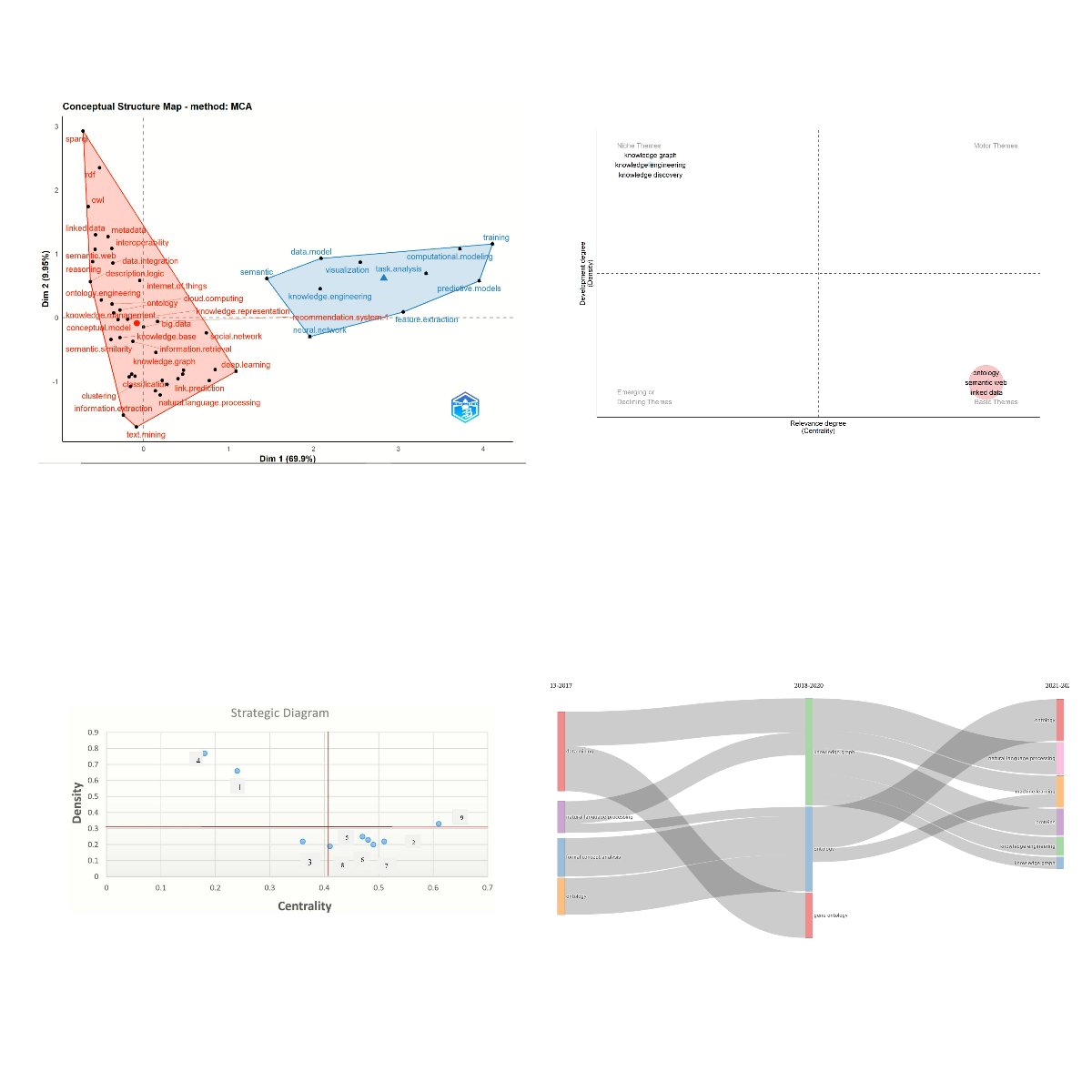
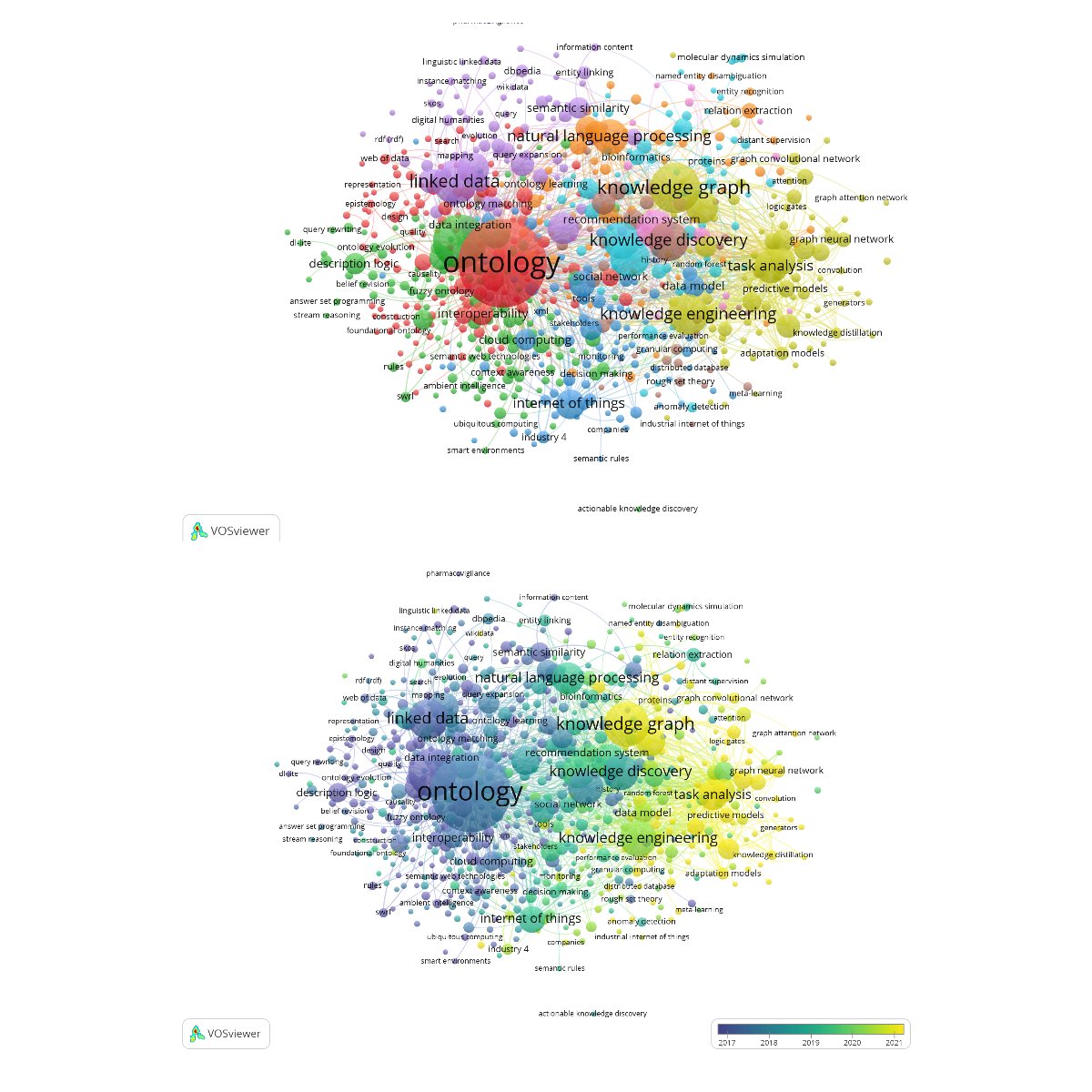
📰The latest work from Alzahra University by Dr. Elaheh Hosseini @97Elaheh and her team is now featured in KO!
Link👉: https://t.co/OEVdrqBH89
💡How have #KnowledgeGraphs evolved over the past decade across #ThematicClusters, #TopicalEvolution, and #ResearchFrontiers?
#Ontology


Information is cheap. Context is expensive.
@intodotspace is built for the second part.
As AI scales, the ability to see the bigger picture becomes the real advantage.
#MindoAI #SpaceAI #KnowledgeGraphs #AIExploration #Web3Tools

Most platforms want your attention but Space wants your understanding.
@intodotspace turns information into something you can explore, not just consume.
Less noise. More clarity.
That design philosophy ages extremely well.
#MindoAI #SpaceAI #ContextMatters #AIUX #FutureOfAI

In a world flooded with AI-generated content, context becomes more valuable than information itself.
Space understands this deeply.
@intodotspace is built to reveal why things matter, not just what is happening. By structuring information and showing relationships, it helps users see patterns that would otherwise stay hidden.
This approach turns complexity into clarity — without oversimplifying reality. And as AI continues to scale, tools that prioritize context will define the next generation of intelligent platforms.
Inside MindoAI, Space plays a critical role by ensuring that intelligence remains understandable, usable, and human-friendly.
#MindoAI #SpaceAI #ContextMatters #AIUX #KnowledgeGraphs #Web3Tools #AIExploration

As AI gets better at generating answers, humans are left with a harder problem: knowing which questions matter.
That’s where Space becomes incredibly valuable.
What @intodotspace is building is not about speed or volume — it’s about thinking. Space gives users an environment where ideas can be explored, connected, and understood instead of being rushed through.
Rather than forcing conclusions, it allows curiosity to guide discovery.
That makes it powerful for research, strategy, and sense-making — areas where shortcuts usually lead to mistakes.
Within the MindoAI ecosystem, @intodotspace represents a quiet but essential shift: AI as a partner in understanding, not just a machine for output.
#MindoAI #SpaceAI #AIThinking #KnowledgeExploration #HumanCenteredAI #Web3AI #FutureOfWork

Most platforms treat information like content to be consumed.
Space treats it like territory to be explored.
@intodotspace is built around curiosity. It encourages users to move through ideas, follow connections and uncover insights organically rather than forcing conclusions through rigid dashboards.
This makes Space especially powerful in complex environments where answers aren’t obvious and context matters more than speed. It doesn’t oversimplify reality; it helps users navigate it.
Inside MindoAI, @intodotspace fills a critical role by transforming AI from a broadcasting tool into an interactive thinking partner. That shift may look subtle now, but it’s exactly the kind of design philosophy that ages extremely well.
#MindoAI #SpaceAI #AIExploration #KnowledgeGraphs #Web3Tools #HumanCenteredAI #FutureOfAI

📰The latest work from @ufmg by Prof. Rafael Rocha and his team is now featured in KO!
Full article 👉: https://t.co/bHntFGcQC6
💡How can #KnowledgeGraphs and #KnowledgeOrganization shift from tool-driven to #UserCenteredVisualization?
#InformationScience #AI #datavisualization


NaiveRAG retrieves chunks and lets the LLM infer meaning.
ReActRAG retrieves while reasoning step by step.
GraphRAG retrieves via relationships, not isolated text.
What's next for RAG?
#RAG #LLM #GenAI #AIArchitecture #MachineLearning #KnowledgeGraphs #AIEngineering #Agents #MultimodalAI #Al
Deep Learning-Based Drug Repurposing Using Knowledge Graph Embeddings and GraphRAG
1. This study introduces a novel approach to drug repurposing using deep learning and knowledge graph embeddings, aiming to accelerate drug discovery and reduce costs. The system leverages TransE embeddings from the Drug Repurposing Knowledge Graph (DRKG) and integrates them with GraphRAG for explainable predictions.
2. The core innovation lies in combining knowledge graph embeddings with large language models (LLMs) to provide detailed explanations for drug-disease relationships. This allows researchers and clinicians to understand the reasoning behind each drug repurposing suggestion, enhancing trust and usability.
3. The system processes natural language queries, retrieves relevant drug candidates using deep learning-based scoring, and generates interpretable explanations in real-time. It uses PyTorch for embedding operations, NetworkX for graph analysis, and OpenAI's GPT models for seamless integration.
4. Key advantages include high efficiency enabled by pre-trained embeddings, a natural language interface for ease of use, and comprehensive coverage of biomedical relationships through the DRKG dataset. The system also filters results to clinically relevant drugs from DrugBank.
5. Limitations include dependency on OpenAI API for natural language processing and fixed pre-trained embeddings that require retraining to adapt to new data. Future work may focus on expanding the dataset, enabling fine-tuning capabilities, and integrating with clinical trial databases.
📜Paper: https://t.co/hTtVp9ukjq
#DrugRepurposing #DeepLearning #KnowledgeGraphs #TransE #GraphRAG #BiomedicalResearch



Growth of English words by letter #KnowledgeGraphs

🧠Inside AI Episode 22/♾: Multi-Source Fusion , How Agents Combine Vectors, Graphs, Tools & Memory
Agents don’t think with one brain , they think with many sources of truth.
Vector stores, knowledge graphs, APIs, documents, memory, tools , each captures a different shape of knowledge.
Fusion is the art of blending them into one coherent context the agent can reason over.
Here’s how multi-source fusion actually works 👇
1) Vectors = similarity & intuition
Embeddings help agents find concepts that “feel related.”
Great for exploration, weak for precision.
2) Knowledge Graphs = structure & facts
Graphs give hard relationships:
A → works_at → B
Perfect for grounding, auditing, and avoiding hallucination.
3) Tools & APIs = fresh, real-time truth
Weather, prices, inventory, transactions, code execution , all things models can’t hallucinate.
Tools anchor the agent in the external world.
4) Memory = continuity & personalization
Long-term facts, context, past decisions, preferences, constraints , the agent’s sense of identity across sessions.
5) Fusion Layer = the referee
Agents fuse results by ranking each source:
• reliability
• recency
• consistency
• task fit
• cost
Then produce a single consolidated context.
Why it matters:
Fusion makes agents accurate, grounded, and context-aware , not just clever text generators.
It’s the difference between a chatbot and an intelligent system.
#InsideAI #AgenticAI #RAG #KnowledgeGraphs #LLMSystems


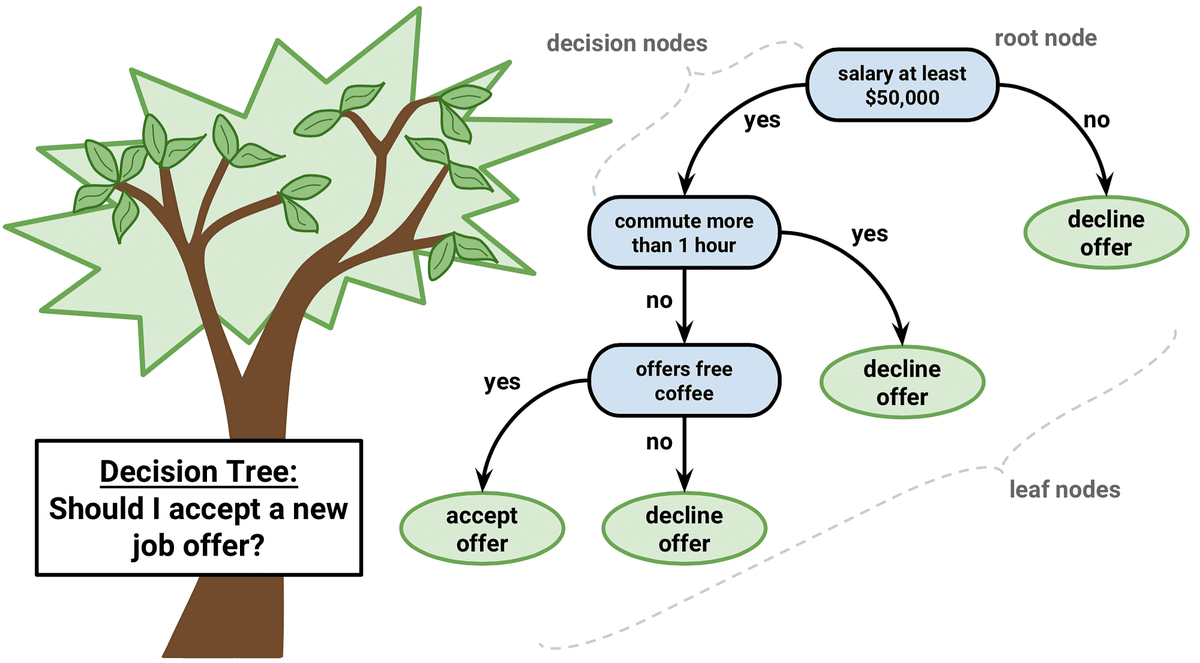
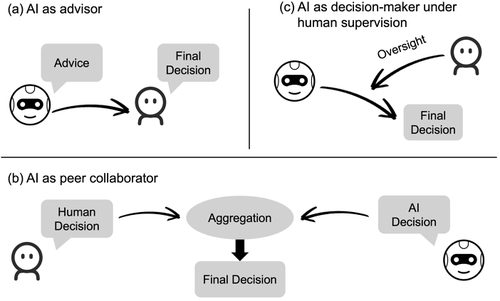
🧠Inside AI Episode 21/♾: Delegation , How Agents Decide What to Do and What to Ask Humans
The moment an agent becomes useful is the moment it learns what it should do and what it shouldn’t.
Delegation is the boundary between autonomy and chaos. It’s how agents stay smart without becoming unpredictable.
Here’s how modern agents decide when to act vs. when to ask a human 👇
1) Uncertainty Thresholds
Agents estimate their confidence.
If confidence > threshold → act.
If confidence < threshold → escalate.
This is the core of “ask before you break things.”
2) Decision Policies
Delegation rules are encoded as policies:
• “Never approve payments.”
• “Ask for human review if policy conflict.”
• “Escalate if contradicting memory.”
These guardrails keep agents predictable.
3) Cost-Aware Delegation
Agents compare:
tool cost, model cost, time, accuracy benefit.
Sometimes the cheapest and fastest action is:
“Ask the human.”
4) Subjective Judgment Detection
Agents detect tasks requiring taste, emotion, ethics, or preference , things humans are better at.
They ask:
“Should this sound friendly or serious?”
“What’s your risk tolerance here?”
5) Clarification Queries
When instructions are incomplete, ambiguous, or contradictory, agents pause and ask for missing details instead of guessing.
Delegation is not weakness.
It’s intelligent restraint , the difference between a brittle automated script and a trustworthy AI teammate.
#InsideAI #AgenticAI #AIUX


Future progress in AI-driven TCM will depend on high-quality data, robust knowledge graphs, deeper biological understanding, and patient-centered decision tools. A comprehensive overview of opportunities shaping the field.
Read the full article: https://t.co/MwaOEGaENj
DOI: https://t.co/eE9OtdeJej
@sciencedirect #OpenAccess #DataScience #KnowledgeGraphs #TCMAI #DigitalHealth #ClinicalDecisionSupport

🚀 Build Real-Time Knowledge Graphs with @neo4j
+ LLMs — continuous updates from documents, ~200 lines of Python. Production-grade, ultra-performant, step-by-step. Fully #OpenSource.
🚀Get started - with all concept explained! https://t.co/OG1DhKAt07
🌟Repo: https://t.co/Hd5tSRgQi8
(Star if you like it!)
Turn docs into dynamic, queryable graphs with:
✅Subject-object LLM extraction
✅ Entity mentions
✅ Neo4j integration
✅ Live updates as docs change
Perfect for anyone building real-time knowledge base.
🌴CocoIndex: real-time data framework, written in Rust Perfect for anyone building a real-time knowledge base.
#KnowledgeGraphs #GraphDatabase #GraphAI #OpenAI #AIInfra #DevTools #DataPipelines #RealtimeAI #VectorDB #LLMApplications #GenerativeAI #AIEngineering #Python #AI4Docs #SemanticSearch #Rust #AIAgent

Neo4j is running a series on #KnowledgeGraphs leading up to their NODES conference this year.
Learn about how to build KGs, their applications for AI & agents, and grab free resources like this ebook.
I might drop a recap of the livestream in a tread if you’re interested.

Model it. Query it. Grow it.
Your #KnowledgeGraph—step by step.
Complete livestream: https://t.co/5qggWi0Klk
Download the ebook for free: https://t.co/GfoxHApqmp
#Neo4j
Growth of English words by letter #KnowledgeGraphs
Most Popular Users

Elon Musk 
@elonmusk
240.1M followers

Barack Obama
@barackobama
118.6M followers

Cristiano Ronaldo
@cristiano
114.4M followers

Donald J. Trump
@realdonaldtrump
111.7M followers

Narendra Modi
@narendramodi
106.9M followers

Rihanna
@rihanna
98.6M followers

NASA
@nasa
92.1M followers

Justin Bieber
@justinbieber
91.7M followers

KATY PERRY
@katyperry
89.9M followers

Taylor Swift
@taylorswift13
83.9M followers

Lady Gaga
@ladygaga
75.4M followers

Virat Kohli
@imvkohli
73.3M followers

Kim Kardashian
@kimkardashian
70.8M followers

YouTube
@youtube
68.6M followers

Neymar Jr
@neymarjr
66.3M followers

Bill Gates
@billgates
65.2M followers

Selena Gomez
@selenagomez
63M followers

The Ellen Show
@theellenshow
62.1M followers

CNN
@cnn
61.7M followers

X
@x
60.6M followers