

Top Tweets for #marginpressure

FMCG कंपनियों पर लागत की मार: पाम तेल 21% व चीनी 18% महंगी, आगे और बढ़ेंगे रोजमर्रा के सामाान के दाम
#FMCG #MarginPressure #PriceHike #PostDiwali #PalmOil #SugarPrices #Inflation #ParleProducts #NestleIndia
https://t.co/4yK5MgQ7YR

RBI’s tighter daily CRR norm may withdraw up to Rs 800 billion liquidity, marginally pressure banks’ margins: Jefferies
Read @ANI Story | https://t.co/kjRg4b3Nio
#RBI #CRR #marginpressure

Bank profits may rise 25% in Q2FY27, margins to recover gradually in second half: Report
Read @ANI Story |
https://t.co/tmyJCi5elp
#bankprofits #marginpressure

Indian banks' Q2FY27 earnings seen rising 11%; FCNR deposits may weigh on margins: Kotak
Read @ANI Story | https://t.co/WHtGTixDW8
#bankearnings #marginpressure #FCNR
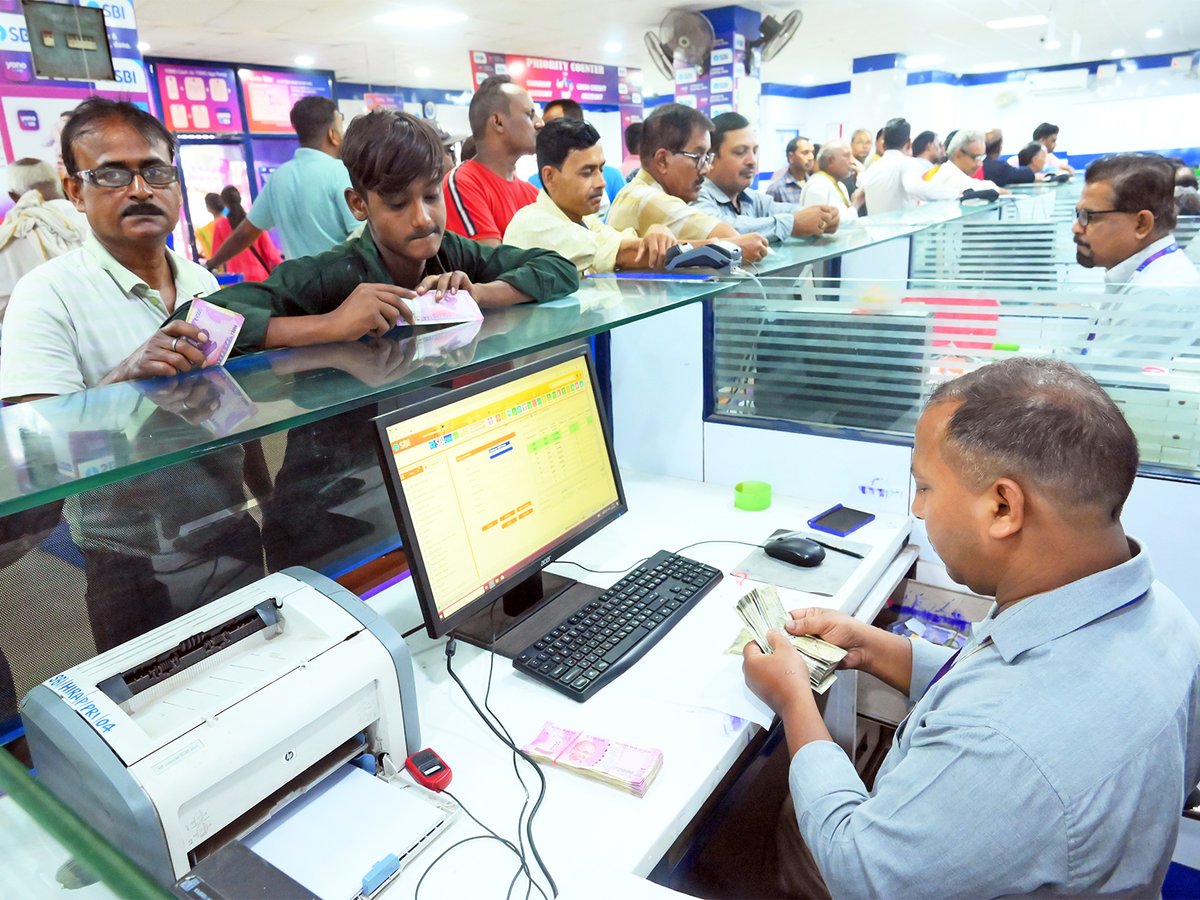

जब मार्जिन पर दबाव आने लगे और मैनेजमेंट आगे की गाइडेंस स्पष्ट न दे पाए तो समझना चाहिए कि कहानी बदल चुकी है। पुराना कॉन्फिडेंस नए नंबर के आगे नहीं टिकता।
विजिबिलिटी कमजोर पड़ जाए तो वैल्यूएशन चाहे जितनी सस्ती लगे, रिस्क बढ़ चुका होता है।
#MarginPressure #GuidanceMatters

🎙️ Schneider Electric Infrastructure (SCHNEIDER) call was streaming live on EquiSense, it just ended. Please find the summary below ⬇️
#ConcallInsights #OrderBookRecord #MarginPressure #DataCenterGrowth
The earnings call kept circling back to one question: How does a company book its highest-ever quarterly orders but still call the start of the year a soft one?
Schneider Electric Infrastructure just reported a record ₹915 crore in new orders for Q1 FY2027. Its total backlog now sits at a massive ₹2,100 crore, up 33% from last year.
But the P&L tells a more painful story. Revenue grew just 5% YoY, and EBITDA landed at ₹32 crore as margins were squeezed by an 8% Rupee depreciation and a spike in copper and oil prices.
Management says the culprit is legacy. Roughly 75-80% of their current backlog consists of fixed-price contracts signed before December 2025. They are stuck executing old orders at today's inflated raw material costs without the ability to raise prices on those specific deals.
According to the CEO, the strategy is now a pivot to high-tech. Data centers and semiconductors already make up 20% of the order bag. They have also initiated price hikes on all new standard products to protect future margins.
Do the math: A ₹2,100 crore backlog provides roughly a year of revenue visibility. But with 10-15% of raw materials imported and only 10-12% of revenue coming from exports, the company remains highly vulnerable to currency swings until the new Kolkata export plant fully ramps up.
The demand is clearly there, but the next two quarters will be a race to clear out low-margin legacy work and replace it with the new, higher-priced tech orders.
That's the scoreboard to watch.
Full concall breakdown → https://t.co/X75jOxrRAu
Public NSE/BSE filings · Not Investment Advice
#SCHNEIDER #ConCall #Earnings
जब मार्जिन दबाव में हो लेकिन वॉल्यूम ग्रोथ तेज हो, तो थोड़ा इंतजार करना बेहतर है। मार्जिन रिकवरी बाद में आती है।
#MarginPressure
🎙️ Gaudium IVF And Women Health (GAUDIUMIVF) call was streaming live on EquiSense, it just ended. Please find the summary below ⬇️
#ConcallInsights #GuidanceMaintained #MarginPressure #CapacityExpansion
How does a company growing at 9.1% today promise to hit 30% by the end of the year?
Gaudium IVF's first full quarter as a listed company was a study in aggressive expansion versus immediate reality. Revenue grew 9.1% to 19.4 crore, but the bottom line told a tougher story. PAT dropped 42% to 1.8 crore, and margins crashed from 29% to 12.5%.
The tension in the call was obvious: why the sluggish growth and the margin collapse?
Management's answer was twofold. First, seasonality—extreme heat in Q1 keeps patients away. Second, they are 'front-loading' the future. They spent heavily on marketing new AI tools and preparing 10 new hubs for FY27. According to the CFO, if you strip out these expansion costs, margins would have been a healthy 27.6%.
The evidence for their confidence lies in the rollout. One hub is live, two more (Gurgaon and Nagpur) open within 25 days. They are also pivoting, adding a 15 crore Women's Hospital in Lucknow to the mix, funded entirely by internal cash.
Do the math: To hit 30% growth for the full year after a 9% start, Gaudium needs to average roughly 27 crore in revenue for each of the next three quarters. That is a 40% jump from the current run rate. It is a steep ask that assumes new hubs break even in their promised 3-month window.
The scoreboard to watch is simple: the break-even speed of the Gurgaon and Nagpur hubs and whether the AI-led success rates actually pull in the volumes management expects.
That's the scoreboard to watch.
Full concall breakdown → https://t.co/SVdNVXD674
Public NSE/BSE filings · Not Investment Advice
#GAUDIUMIVF #ConCall #Earnings
🎙️ Advanced Enzyme Technologies (ADVENZYMES) call was streaming live on EquiSense, it just ended. Please find the summary below ⬇️
#ConcallInsights #GuidanceMaintained #MarginPressure #OneTimeItem
The earnings call kept circling back to one question: How does Rs 10 crore in missing revenue change the outlook for India's enzyme leader?
The Q1 FY2027 numbers showed the impact of transit delays. Revenue grew 2% to Rs 189.8 crore, but profit after tax dipped 5% to Rs 38.6 crore. EBITDA margins softened to 27% compared to 30% in the same period last year.
Analysts were quick to poke at the sluggishness in the core Human Healthcare segment, which saw a 7% decline. Management attributes this to a temporary shift in the sales mix and elevated energy costs that ate into the bottom line.
Management's answer was firm: the underlying business is intact. They explained that Rs 10 crore of sales were reversed simply because the goods hadn't reached customers by quarter-end—revenue that will now flow into Q2. They reiterated their target of double-digit growth for the full year and expect margins to normalize back to the 30% mark.
Evidence of management conviction came in the form of a Rs 69.7 crore buyback at Rs 500 per share, significantly above the current market price. Additionally, they moved to 100% ownership in JC Biotech, cleaning up the subsidiary structure to capture more value from their anti-inflammatory enzyme portfolio.
Do the math, though: Management is targeting 13-15% annual growth. To hit even the lower end of that range, they need to overcome a slow start where YoY growth was just 2%. Even adding back the Rs 10 crore spillover, underlying growth is only 7.5%, meaning the rest of the year must deliver nearly double that pace to stay on track.
The Scoreboard to watch includes the recovery in US B2C branding, the liquidation of the current Rs 190 crore inventory pile, and the successful commissioning of the new R&D facilities.
That's the scoreboard to watch.
Full concall breakdown → https://t.co/79Z1KlBuDE
Public NSE/BSE filings · Not Investment Advice
#ADVENZYMES #ConCall #Earnings
🎙️ Gokaldas Exports (GOKEX) call was streaming live on EquiSense, it just ended. Please find the summary below ⬇️
#ConcallInsights #GuidanceCut #MarginPressure #CapacityExpansion
How does an apparel exporter grow 21% while the rest of the Indian industry shrinks by 12%?
Gokaldas Exports just answered that question in their Q1 FY27 call. Revenue grew 21% YoY, with the Africa business surging 44%. While the sector struggles with demand, management is aggressively taking market share.
But the growth isn't free. Margins are under a pincer attack. A ₹20 crore incremental wage bill in India and 'worst-ever' shipping delays are eating into the gains. Finished goods are sitting in ports for two weeks just waiting for a vessel.
Management's response? They are doubling down on capacity. They are adding 3,000 machines and building new units in Jharkhand and Karnataka. According to the MD, they are targeting 15% plus growth for the full year, though they admitted to tempering the Africa revenue target slightly to $112-115 million.
The real wildcard is BTPL, the fabric unit. It lost money this quarter due to chemical and fuel costs. Management says it will hit EBITDA breakeven by Q3 and PBT positive by Q4. If that turnaround happens, it becomes a massive margin tailwind for next year.
Do the math: Management claims every 1,000 machines brings ₹200 crore in revenue. Adding 3,000 machines implies a ₹600 crore topline jump. However, with the new units not hitting full stride until FY29, the near-term heavy lifting must come from existing floors and productivity gains.
The order book for Spring 2027 looks strong, but the scoreboard to watch is the BTPL breakeven and the successful renewal of the AGOA trade pact in December.
That's the scoreboard to watch.
Full concall breakdown → https://t.co/mahiLWTrVv
Public NSE/BSE filings · Not Investment Advice
#GOKEX #ConCall #Earnings
🎙️ IFGL Refractories (IFGLEXPOR) call was streaming live on EquiSense, it just ended. Please find the summary below ⬇️
#ConcallInsights #MarginPressure #TurnaroundStory #DomesticDemandStrong
How does a company report a 58% jump in consolidated profit when its core gross margins just collapsed from 47% to 33%?
That is the puzzle IFGL Refractories presented in its Q1 FY2027 call. Consolidated revenue grew 13% to ₹515 crore, and PAT surged 58% to ₹17 crore. But look under the hood, and the Indian standalone business is hurting. Operating profit there dropped 17% to ₹31 crore.
The tension is clear: raw material and fuel costs are rising faster than the company can hike prices. In India, LPG availability issues and global supply chain disruptions have eaten the lunch of the domestic business.
Management's answer is a turnaround story. They are doubling down on the US market, which is already seeing double-digit growth, and they have promised that the long-struggling Monocon UK will finally break even by the end of this fiscal year. According to the CFO, the goal is to get consolidated EBITDA margins back into double digits from the current 7.7%.
Evidence of the shift sits in the new product pipeline. Management says new lines for Mag Carbon Bricks and Casting Flux could add up to ₹200 crore in peak revenue. They have already started producing Sheffield's specialized products at their Vizag plant to serve the Indian market.
Do the math, though: To hit a 10% EBITDA margin on ₹515 crore of revenue, the company needs ₹51.5 crore in EBITDA. They only managed ₹40 crore this quarter. Bridging that ₹11.5 crore gap every single quarter requires either a massive drop in input costs or a very swift turnaround in the UK.
The scoreboard to watch over the next six months is simple: can they stop the margin bleed in India while finally pulling the UK operations out of the red?
That's the scoreboard to watch.
Full concall breakdown → https://t.co/RuCpVfk2Rq
Public NSE/BSE filings · Not Investment Advice
#IFGLEXPOR #ConCall #Earnings
🎙️ Avenuesai (CCAVENUE) call was streaming live on EquiSense, it just ended. Please find the summary below ⬇️
#ConcallInsights #StrongOutlook #StrategicPivot #MarginPressure
The earnings call kept circling back to one question: how does a company go from INR 4,863 crore to a guidance floor of INR 11,000 crore in one year?
The FY26 numbers earned management the right to be asked. Revenue grew 110% to INR 4,863 crore. PAT rose 25% to INR 295 crore. While the topline is exploding, profits are being partially digested by heavy reinvestments into what the company calls its AI-first future.
Except the identity shift is total. Renaming itself Avenuesai, the company is moving away from being just a payments bridge. They are now pitching Transaction Intelligence—using AI to score financial behavior across their INR 1.47 trillion quarterly volume base.
Management is projecting high conviction. They have set the FY27 revenue floor at INR 11,000 crore, targeting an upper limit of INR 13,000 crore. According to the CEO, they are not building for a short-term margin spike but for a structural shift that compounds by FY28.
The logic sits on two pillars: credit distribution and AI monetization. By taking stakes in NBFCs like Ratafin and Online PSB Loans, they intend to distribute credit to their merchants without holding the debt on their own books. It is a high-reward, asset-light strategy, backed by a newly acquired UAE retail license and an RBI PPI license.
Do the math: Reaching the INR 11,000 crore revenue floor from a base of INR 4,863 crore requires over 126% growth in 12 months. That is a massive step-up for any business, especially one merging subsidiaries and integrating a consumer platform like Rediff simultaneously.
The ambition is clear, but execution is now the only currency that matters. The scoreboard to watch will be the quarterly take-rates on that INR 11,000 crore target and the eventual listing of the Rediff unit.
That is the scoreboard to watch.
Full concall breakdown → https://t.co/cbUpTUAf3t
Public NSE/BSE filings · Not Investment Advice
#CCAVENUE #ConCall #Earnings
🎙️ Sonata Software (SONATSOFTW) call was streaming live on EquiSense, it just ended. Please find the summary below ⬇️
#ConcallInsights #MarginPressure #ExecutionDelay #StrategicPivot
Why did a 29% jump in quarterly revenue lead to a 17% drop in profit? That was the core tension of the Sonata Software call.
The numbers look contradictory at first glance. Consolidated revenue hit ₹3,279.1 crore, largely thanks to a seasonal spike in the domestic business. But net profit fell to ₹108.6 crore.
Management attributes the profit squeeze to a massive ₹35.4 crore swing in foreign exchange and a temporary dip in utilization to 88.5%. The culprit? A delay in ramping up a large international deal and heavy spending to retool the workforce for an AI-native future.
According to CEO Rajshekhar Dattaroy, the worst of the ramp-up delays are now behind them. He says the company is being rebuilt around 'Agentic AI,' with a pipeline of $340 million (roughly ₹2,856 crore) now focused on AI-led work.
The evidence sits in the order book. The book-to-bill ratio is healthy at 1.18x, and AI-specific orders now make up 18.2% of the total pipeline. In the domestic segment, the company has successfully defended accounts that were at risk of moving to direct billing with OEMs, with the SMB segment growing 82% year-on-year.
Do the math, though: management claims an AI-led pipeline of $340 million (₹2,856 crore). With quarterly international revenue run rates hovering around ₹770 crore ($92M), that pipeline represents nearly a full year of work. However, only $21.4 million (₹180 crore) is actually in the contracted order book. Converting that 'interest' into 'invoices' is the steep hill they now have to climb.
Success over the next two quarters will depend on utilization returning to the 90% range and the AI pipeline converting into billable hours. That is the scoreboard to watch.
Full concall breakdown → https://t.co/4SxBR3kGab
Public NSE/BSE filings · Not Investment Advice
#SONATSOFTW #ConCall #Earnings
🎙️ Epack Prefab Technologies (EPACKPEB) call was streaming live on EquiSense, it just ended. Please find the summary below ⬇️
#ConcallInsights #StrongOutlook #MarginPressure #OrderBookRecord
The earnings call kept circling back to one question: how does a company handle a 1,380 crore order book when raw material prices are moving against them?
The Q1 numbers earned management the right to be asked. Revenue grew 24% to 366 crore, but the story was under the hood. EBITDA margins slipped to 9.4% as a 15% jump in steel prices pinched the bottom line.
Most managements would sound defensive about a 110-basis-point margin dip. This one sounded aggressive. They didn't just maintain guidance; they doubled down on a 150% surge in order inflows, which hit 580 crore for the quarter.
Management attributes the margin hit to a temporary lag in passing through costs. They claim the "commodity impact is now behind us" and are guiding for a return to 10.5-11.5% margins starting next quarter. To back that up, they cited their single largest order ever—165 crore for a solar cell plant—and a new 75 crore pivot into specialized data center infrastructure.
Do the math, though: To hit the midpoint of their 1,900-1,950 crore revenue target for FY27, they need to generate about 1,559 crore over the next three quarters. That means averaging 519 crore per quarter—a 42% jump from the current 366 crore run-rate.
The 1,380 crore order book says the demand is there, but the jump required is substantial for an execution-heavy business. Management says their speed is their moat, often delivering months ahead of schedule, which is why they believe they can convert this pipeline so quickly.
Margin recovery in Q2 and the first major win in the data center subsidiary will be the ultimate proof of whether this is a structural breakout or just a volume game.
That's the scoreboard to watch.
Full concall breakdown → https://t.co/tyL6DN9PlK
Public NSE/BSE filings · Not Investment Advice
#EPACKPEB #ConCall #Earnings

Narayana Hrudayalaya Shares Dip as Q1 Margin Squeeze Overshadows 78% Revenue Growth
https://t.co/wyCgzDyy3W
#NarayanaHrudayalaya #Q1Results #StockMarketIndia #HealthcareSector #MarginPressure #RevenueGrowth #Nifty50 #Sensex #StockUpdate #EarningsReport #MarketTrends #Corporate

Sapphire Foods India #ConcallInsights
#GuidanceMaintained #MarginPressure #VolumeGrowth
The earnings call kept circling back to one question: can KFC’s massive momentum carry the weight of a struggling Pizza Hut and a volatile Sri Lanka?
The Q1 FY27 numbers gave management the right to be optimistic. Revenue grew 15% to ₹888 crore—the best topline performance in nearly three years. KFC led the charge with a 5% same-store sales growth, while Pizza Hut finally turned positive at 1% after five quarters of decline.
Except the bottom line at the brand level told a different story. Pizza Hut India posted an operating loss of 3.6%, as rising electricity bills and wage hikes ate up the meager sales growth.
Management's answer to the stagnant demand environment is a disruptive value strategy. They aren't waiting for the economy to pick up; they are recruiting with ₹99 chicken burgers. According to the CFO, the focus is squarely on getting people through the door, even if it means holding back on price hikes to protect the customer's wallet.
Backing the long-term story is a commitment to double the store count within five years. They are currently on track with KFC, adding 60-80 stores a year, but they've hit the brakes on Pizza Hut expansion until the unit economics make sense again.
Do the math, though: to double from 1,074 stores to roughly 2,150 stores in five years, they need to add more than 200 stores annually. At the current net run-rate of 22 stores a quarter (or ~88 a year), they are currently doing less than half of what the five-year target demands. That's a massive acceleration needed from the Pizza Hut and Sri Lankan segments.
The KFC engine is running hot, but the scoreboard to watch is Pizza Hut's path to breakeven and the speed of new store openings.
That's the scoreboard to watch.
Full concall breakdown → https://t.co/F1T5Rm8TcO
Public NSE/BSE filings · Not Investment Advice
#SAPPHIRE #ConCall #Earnings
Route Mobile #ConcallInsights
#MarginPressure #GuidanceMiss #StrategicPivot
The earnings call kept circling back to one question: can a security breach and a bank's software update derail a multi-crore growth story?
Route Mobile’s Q1 FY2027 numbers showed a business fighting friction. Revenue grew 10% YoY to ₹1,151.5 crore, but the profitability profile took a heavy hit. Gross margins dropped to 20.9%, and EBITDA margins squeezed down to 9.5%.
Management identified two culprits: a security incident at their Colombian subsidiary and a temporary suspension of high-margin traffic from a major Indian bank undergoing a tech upgrade. They labeled these as transient, but the impact was deep enough to drag margins well below their 12% target.
The defensive play? A strategic pivot. Management announced the acquisition of Heltar, an AI-driven engagement platform, to move away from commoditized SMS and into high-value AI interactions. According to the CEO, this deal compresses three years of internal R&D into a single move.
Despite the Q1 mess, they are sticking to their 12% EBITDA margin target for the full year. They are counting on a ₹1,300 crore cash pile to fund this transformation and a seasonal volume surge of 10-15%.
Do the math, though: starting at 9.5% in Q1 means they need to average nearly 12.8% for the next three quarters just to hit that 12% full-year goal. That is a massive jump from today's run rate, especially with wage hikes and integration costs still flowing through.
The scoreboard to watch is clear: how quickly that bank traffic returns in Q2 and how fast the Heltar integration starts moving the margin needle. If Q2 doesn't show a sharp recovery, that 12% target starts looking like a pipe dream.
That's the scoreboard to watch.
Full concall breakdown → https://t.co/V5LZPmCCPe
Public NSE/BSE filings · Not Investment Advice
#ROUTE #ConCall #Earnings
Sona BLW Precision Forgings #ConcallInsights
#StrongOutlook #StrategicPivot #MarginPressure
The earnings call kept circling back to one question: how does a company with ₹1,310 crore in quarterly revenue sit on an order book of ₹24,000 crore?
The Q1 FY27 results suggest the ambition is being matched by numbers. Revenue grew 54% to ₹1,310 crore, and profit jumped 45% to ₹181 crore. Electric vehicle sales didn't just grow; they more than doubled, now making up 44% of the automotive mix.
But a skeptic would point to the margins. Despite the top-line blast, EBITDA margins compressed by 70bps to 23.1%.
Management's answer is a structural shift they call Sona 2.0. They are moving from being a gear maker to a tech provider. According to the CEO, the margin dip is a conscious trade-off: they are selling more traction motors which currently have lower margins than gears, but the absolute profit growth and scale are what matter.
The evidence for this pivot is in the new verticals. Management says they have secured an ₹800 crore order book for Robotics and Physical AI, a completely new segment for them. Additionally, a massive joint venture with Denso aims to capture the high-voltage EV market, which management claims is a ₹24,000 crore opportunity in India by 2030.
Do the math: A ₹24,000 crore order book spread over 10 years implies an incremental ₹600 crore in revenue per quarter. To hit their 10x growth target, they need that conversion to accelerate while simultaneously ramping up the new Denso and Robotics businesses from zero. It's a stretch target, but with EV revenue up 107% in a single year, the pace is currently there.
Execution on the Robotics ramp-up, margin stabilization in the motor business, and the integration of the Denso JV are the concrete markers to follow.
That's the scoreboard to watch.
Full concall breakdown → https://t.co/ValULGqVyg
Public NSE/BSE filings · Not Investment Advice
#SONACOMS #ConCall #Earnings
Waterways Leisure Tourism #ConcallInsights
#StrongOutlook #MarginPressure #CapacityExpansion
The earnings call kept circling back to one question: how does a cruise line stay profitable when fuel costs spike 65% and geopolitical tensions disrupt global shipping?
The Q1 FY2027 numbers showed a business running at full steam despite the headwinds. Waterways Leisure Tourism reported revenue of 190.01 crore with a net profit of 22.77 crore. Even with the chaos in the Middle East, they maintained a 12% net profit margin.
The tension, however, was visible in the operating costs. Fuel prices for their specialized VLSFO grade surged from 580 dollars to 1,228 dollars per metric ton. That 65% jump took a 14 crore bite out of the bottom line. Meanwhile, finance costs doubled to 4 crore as the company restructured debt to improve its credit rating.
Management's answer is a capacity play. They are doubling the fleet. Cordelia Sky is set for delivery in September with a maiden voyage on October 23rd. According to the CEO, this isnt just about more rooms; it is about better rooms. While the existing Empress ship targets a steady 10-12% growth, management says the new Sky vessel could double the revenue for that segment.
The evidence for this demand is already on the scoreboard. Load factors hit a record 105% this quarter, meaning they are essentially overbooked. They served more than 55,700 guests across 24,245 staterooms—a 10% jump in volume. Average ticket prices also climbed 4.3% as the brand gains pricing power in the domestic market.
Do the math: Management says the new ship could double the revenue of its segment. The Empress has 800 cabins with 69 suites. Sky scales that to 1,000 cabins and 245 suites. That is a 25% jump in total keys but a nearly 255% increase in high-margin suites. If they maintain their 105% load factor, the premium mix shift alone makes that 100% revenue growth target look arithmetically sound, even before Cordelia Sun joins the fleet.
The real test will be the international pivot. Management is betting on visa-free destinations like Sri Lanka and the Maldives to offset seasonal domestic dips. Success depends on converting that premium cabin inventory into cash flow starting this October.
The delivery of Cordelia Sky, the cooling of fuel surcharges, and the transition of the new sales center in Kochi are the markers to track.
That's the scoreboard to watch.
Full concall breakdown → https://t.co/B6n7vEGGDj
Public NSE/BSE filings · Not Investment Advice
#CORDELIA #ConCall #Earnings
Mahindra Holidays & Resorts India #ConcallInsights
#GuidanceMaintained #MarginPressure #StrategicPivot
The earnings call kept circling back to one question: can MHRIL actually hit its 10,000 key target by FY2030 while reporting just 5 percent consolidated growth?
The Q1 FY2027 numbers earned the question. Consolidated revenue grew only 5% to ₹774 crore. Standalone PAT was flat at ₹54 crore. On the surface, the business looks like it is stuck in neutral.
Except management claims they are deliberately slowing down to move faster later. They have taken 400 keys offline for "transformation"—full-scale renovations that management says accounted for 30% of the profit drag this quarter. They also exited 300 low-quality rooms.
Management is leaning into premiumization. Their average unit realization surged 73% to ₹14.4 lakh. They are selling fewer memberships, but they are selling them for much higher prices. The 10-year Keystone product now makes up 40% of the mix.
But the elephant in the room is the 10,000-key target. To get there from the current base, they need to nearly double their historical addition rate. Management says the pipeline is ready, with 8,200 keys already approved or in early-stage design.
Do the math, though: to reach 10,000 keys by FY2030 means adding roughly 1,250 keys every year. In Q1, the net addition was negative after accounting for exits. Management admits the growth is "back-ended," which is a classic analyst red flag for a steep uphill climb in the final years.
The Scoreboard to watch: the conclusion of the strategic review for the loss-making Finland business and whether the 400 renovated rooms drive a margin rebound in H2.
That’s the scoreboard to watch.
Full concall breakdown → https://t.co/l0QWbMKp2c
Public NSE/BSE filings · Not Investment Advice
#MHRIL #ConCall #Earnings
Last Seen Hashtags on Sotwe
口交
نيج_عراقية
bursagay
Seen from Italy
prostateorgasm
Seen from Brazil
monkeyapp leaks
Seen from Germany
BhashaGauravSaptah
Seen from United States
MGAI(*)***+filter:native_video
Seen from Germany
JR学研都市線野崎駅
Seen from Japan
anxiouspandaa()** + filter:native_video
Seen from Canada
minichat
Seen from United Kingdom
Most Popular Users

Elon Musk 
@elonmusk
241.5M followers

Barack Obama
@barackobama
118.8M followers

Cristiano Ronaldo
@cristiano
114.5M followers

Donald J. Trump
@realdonaldtrump
111.9M followers

Narendra Modi
@narendramodi
107.1M followers

Rihanna
@rihanna
98.7M followers

NASA
@nasa
92.3M followers

Justin Bieber
@justinbieber
91.8M followers

KATY PERRY
@katyperry
90M followers

Taylor Swift
@taylorswift13
84M followers

Lady Gaga
@ladygaga
75.5M followers

Virat Kohli
@imvkohli
73.4M followers

Kim Kardashian
@kimkardashian
70.8M followers

YouTube
@youtube
68.7M followers

Neymar Jr
@neymarjr
66.4M followers

Bill Gates
@billgates
65.2M followers

Selena Gomez
@selenagomez
63.1M followers

The Ellen Show
@theellenshow
62.2M followers

CNN
@cnn
61.7M followers

X
@x
60.7M followers