

Top Tweets for #materialsScience

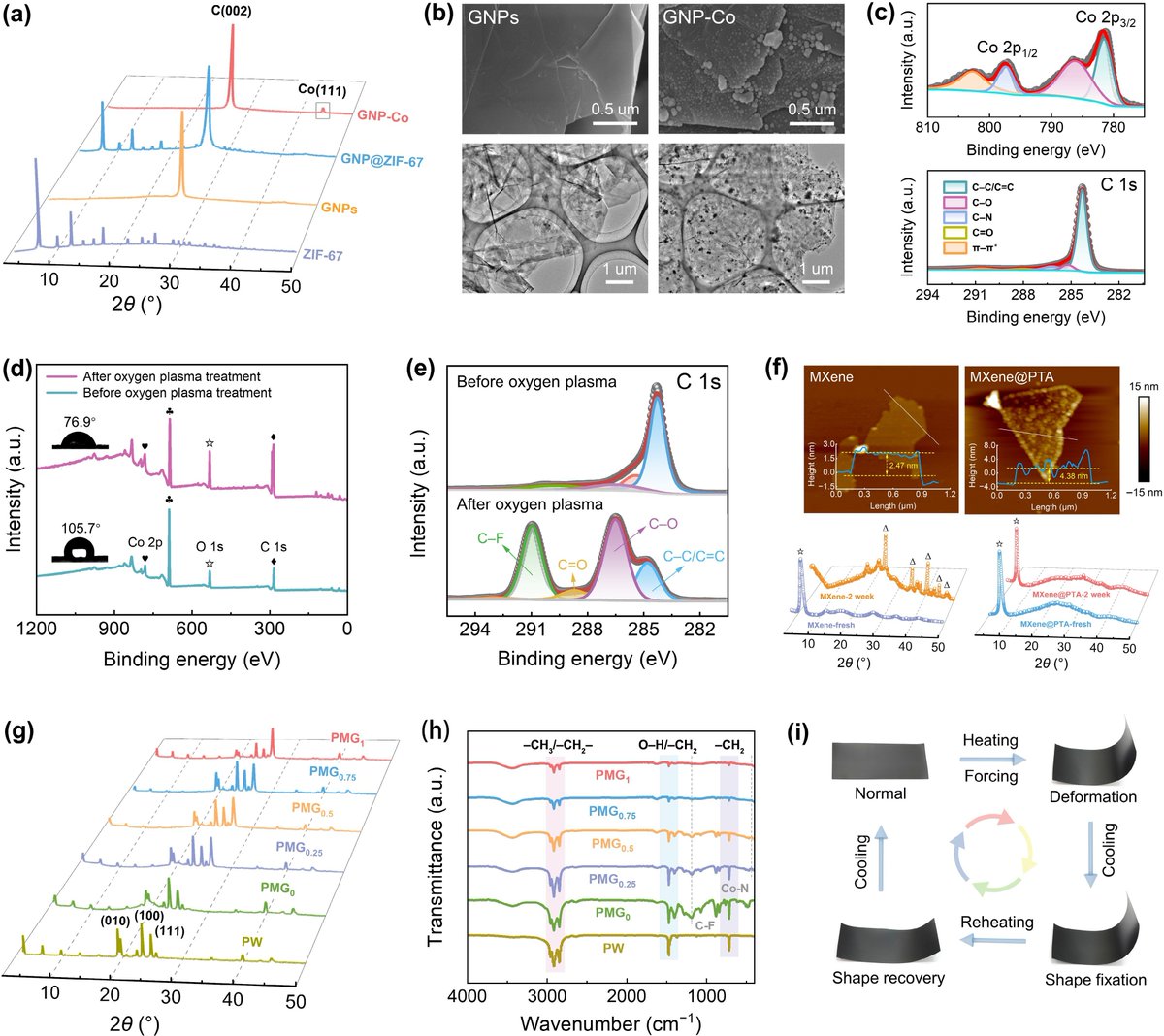
Meet the minds behind this research 🔬
Hong Guo, Boyang Hu, Huiting Shan, Xiao Yang, Baoan Li
#PhaseChangeMaterials #ThermalManagement #MaterialsScience @NUSingapore

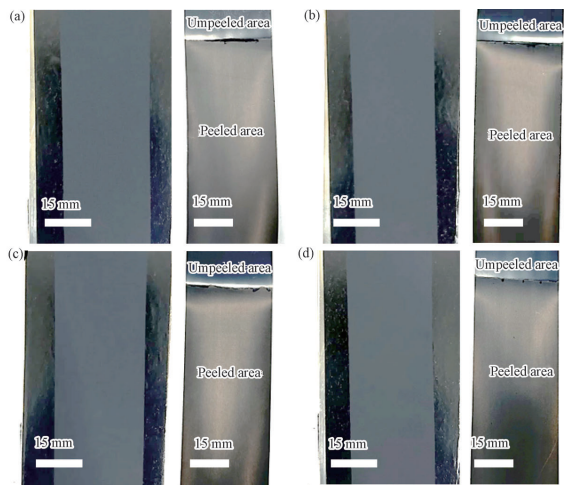
🔋 Just 5°C can make a difference to battery electrode bonding. This study traces how baking temperature changes PVDF and weakens cathode adhesion.
#BatteryResearch #LithiumIonBatteries #MaterialsScience #AcadeMax #ZJUP @ZJU_China
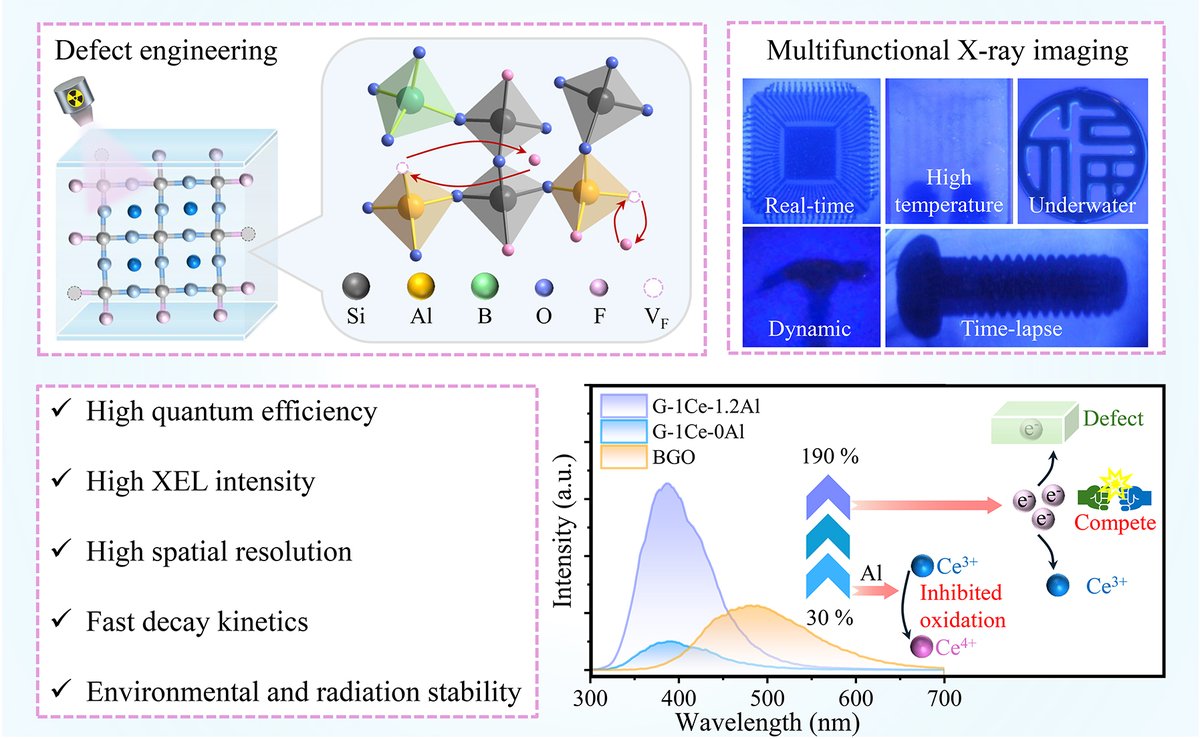
✨ Smarter X-ray imaging in extreme environments!
Defect-engineered Ce³⁺-doped glass delivers high efficiency, durability, and persistent information retention even underwater and at high temperatures.
#SciOpen #TUP #GlassScience 🧵👇 #AdvancedCeramics #MaterialsScience
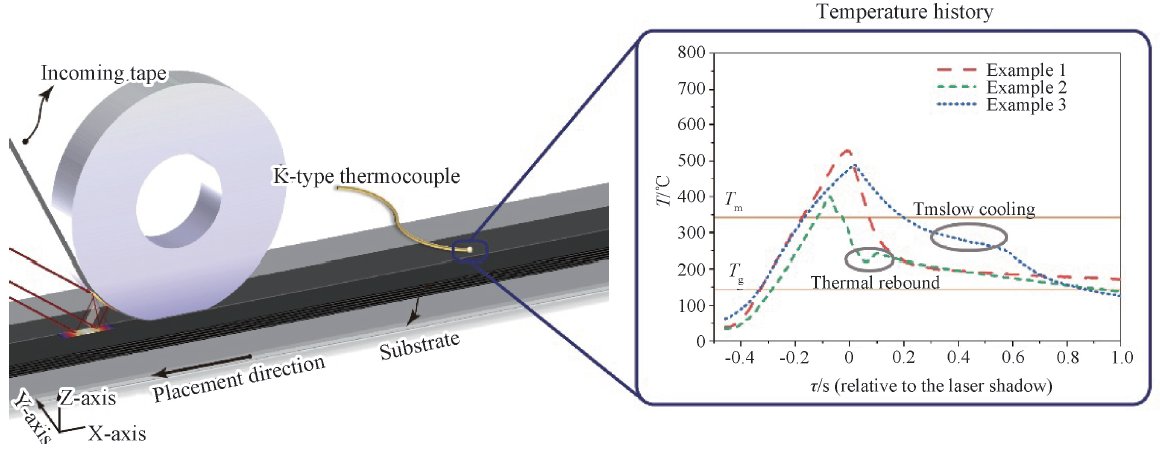
🌡️ How does temperature shape crystallisation in advanced composites?
This study models how cooling rates and mould temperatures influence CF/PEEK during laser-assisted layup.
#AcadeMax #ZJUP #MaterialsScience #Composites #Manufacturing @ZJU_China @ZJUPRESS
🔬 What makes a composite laminate stronger and more resistant to moisture?
This study explores how dual vacuum bag processing influences porosity, moisture absorption and strength in glass fibre/epoxy composites.
#AcadeMax #ZJUP #CompositeMaterials #MaterialsScience #Engineering @ZJUPRESS @ZJU_China
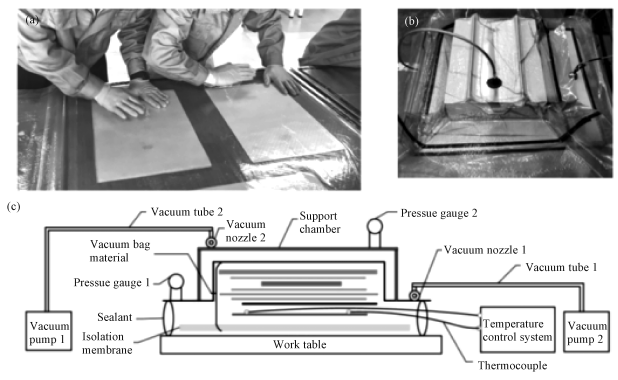
📢 Journal of the Week: Journal of Materials Science and Engineering
Established in 1983, the journal focuses on materials research, new material development, processing technologies and performance testing. 🧵👇
#AcadeMax #MaterialsScience #Engineering @ZJU_China @ZJUPRESS

🧪One nanosheet, two targets. New in DJNB: DFT simulations show carbon nitride (C6N8) adsorbs both sulphur mustard and minoxidil, with the bandgap shifting from 4.206 to as low as 3.067 eV.
Read free: https://t.co/DdamZVKMAI #Nanomaterials #DFT #Nanotechnology #MaterialsScience


💧 When a catalyst has already adsorbed half the dye before the lamp is on, how much of the cleanup is photocatalysis?
Read the open-access paper 👉 https://t.co/P5TboZdqqR
#Photocatalysis #Zeolites #TiO2 #CdS #WaterRemediation #MaterialsScience #GreenChemistry
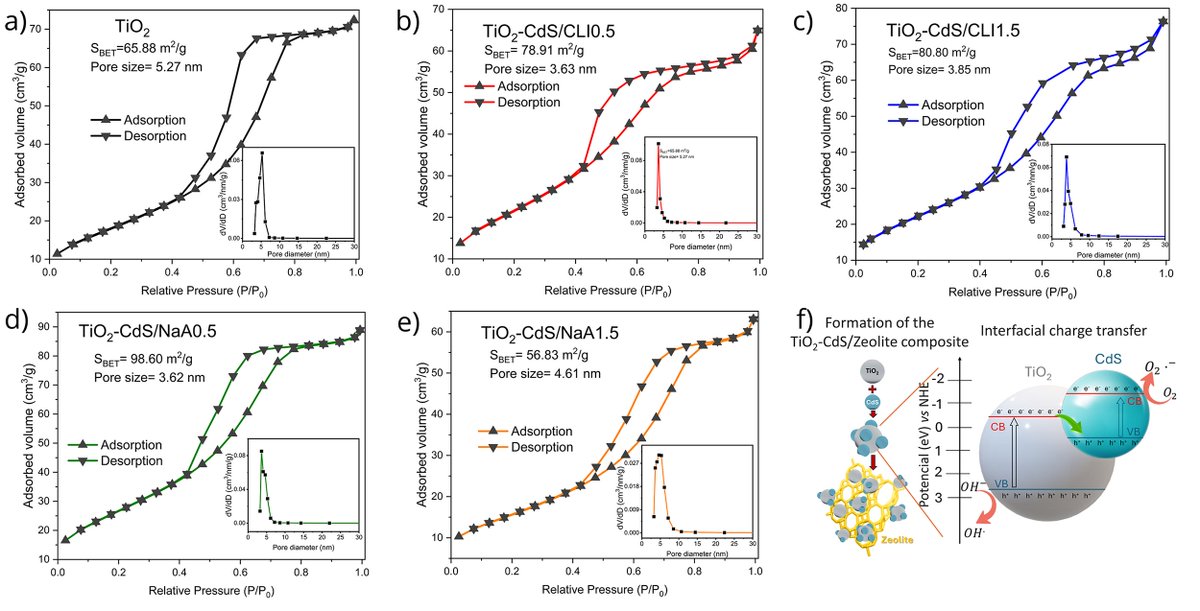

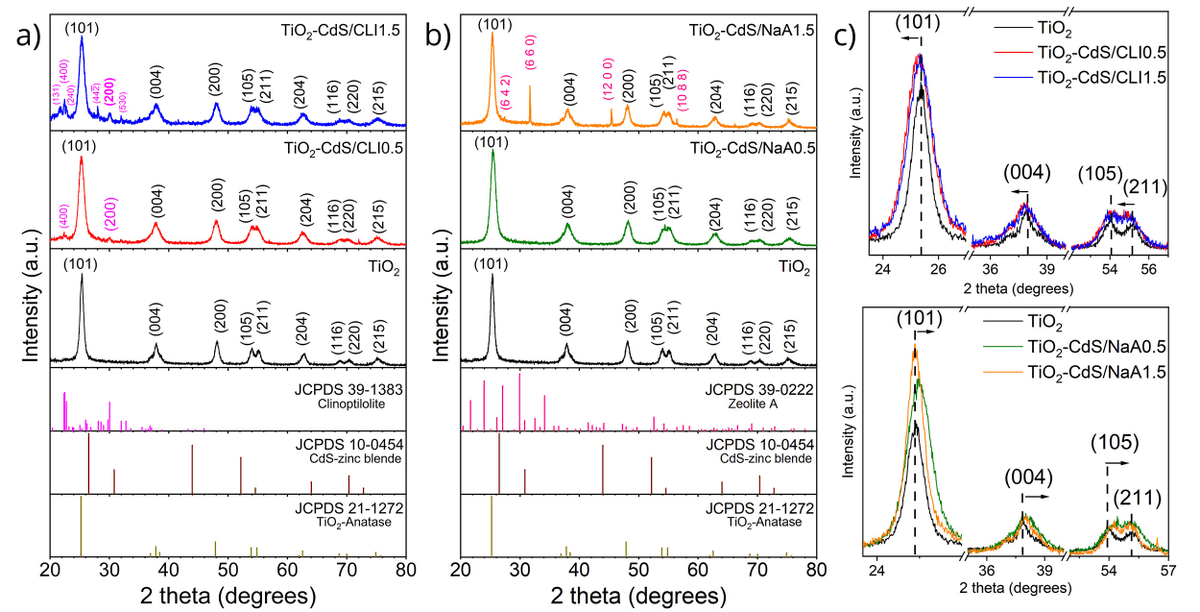
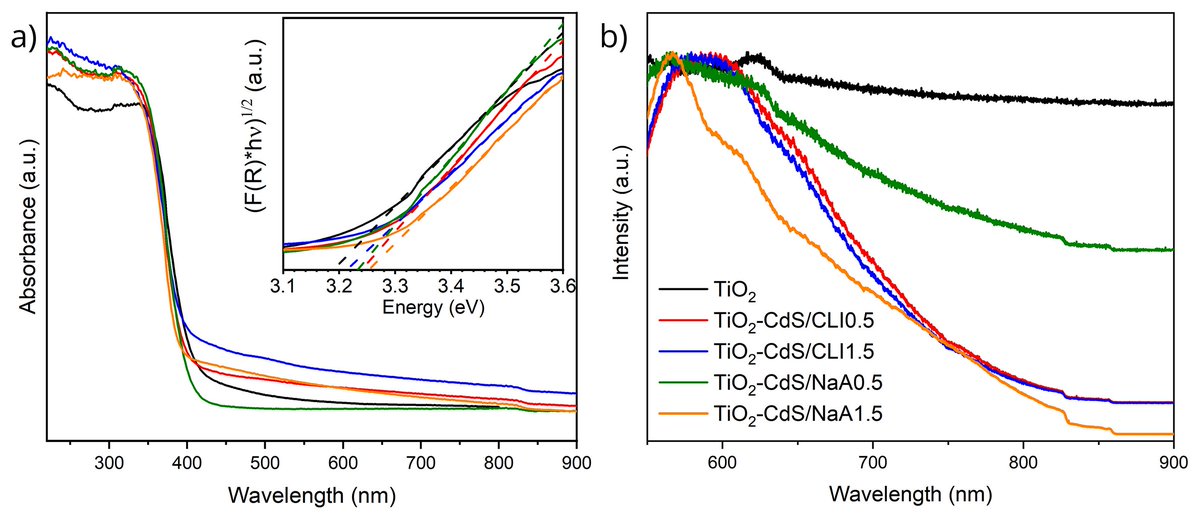
🧪 In borate glass, lithium oxide is what makes boron bond to four oxygens, which is what holds the network together. So why did cutting it by a third make the glass denser and 35 °C harder to soften? #GlassScience
https://t.co/LrjdrayYs5
#MaterialsScience #Chemistry #Research


The Innovation Coffee | Advanced Functional Materials.
Speakers: Drs. Mingchao Wang, Bin Zhang, Ling Zhou, Zhenya Ding
Date & Time: Oct. 20, 2026 | 1:00 – 2:00 PM (UTC+8)
Location: The Innovation Editorial Office, Shenzhen
Tencent Meeting ID: 656-454-869
#MaterialsScience

😲If a computer model can already predict how a lead-free ceramic behaves, why verify it in the lab?
Real knowledge comes from practice — the model only points to the next recipe.
Read the paper: https://t.co/AH53UYgfLo
#MachineLearning #AI #MaterialsScience #Science #India


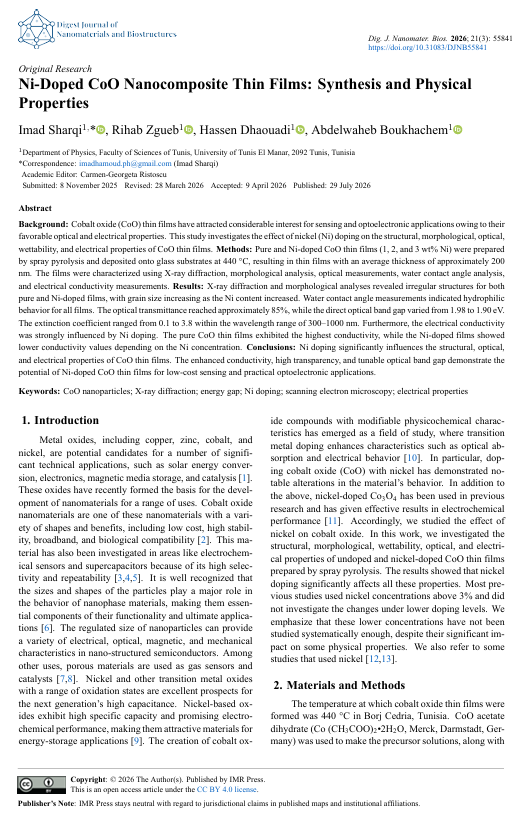
⚡Can Ni tune CoO thin films without sacrificing conductivity?
🔬Across 0–3 wt% Ni, the band gap changed non-monotonically and hit its minimum at 1% Ni. Yet pure CoO conducted best.
More Ni ≠ better. Why? 👇
https://t.co/IKJa8rTWR3
#MaterialsScience #ThinFilms #Nanomaterials


🧪 Can lasers create materials nature never could, and can AI tell whether they are feasible?
DJNB EIC Dr. Carmen-Georgeta Ristoscu discusses biomedical coatings, industry barriers and the journal’s future.
👉https://t.co/nvscM3EAT0
#MaterialsScience #Biomaterials #AIforScience
How low can strain hysteresis go?
A new study engineers high-active glassy polar nanoregions and defect dipoles in multiphase ceramics, achieving ~1.25% hysteresis.
https://t.co/ffi8Gzdhn4
@Tsinghua_Uni #SciOpen #TUP #MaterialsScience @2024_HUST @HIT_1920
What holds solid-state batteries back? Slow ion transport.
This study reveals why.
Two structural changes. One big result: 7.22 mS cm−1 at room temperature.
https://t.co/jW8Z0EqrrJ
@Tsinghua_Uni #SciOpen #TUP #SolidStateBatteries #MaterialsScience #BatteryResearch

Battery performance drops at high voltage. Why?
This research shows how Fe/Zr codoping stabilises Ni-rich cathodes, reducing oxygen loss and improving cycle life.
Read more: https://t.co/rGlAw8sX6P
@Tsinghua_Uni #SciOpen #TUP #EnergyStorage #MaterialsScience

Great share from @bravo_abad .
This research from @ScienceAdvances solves a quiet failure mode in ML potentials with an elegant information theory approach.
For more relevant studies, check out our journal: https://t.co/QFOTKwyAyK
#AcadeMax #MachineLearning #MaterialsScience

Information theory sharpens ML potentials on disordered alloys
Machine learning potentials have become the workhorse for atomistic simulation, but they share a quiet failure mode: they break down on chemically disordered systems. The reason is a data problem. When you train a potential on configurations sampled from random or equilibrium distributions, the local atomic environments cluster heavily around a few common patterns, and the rare-but-energetically-important ones are barely seen. The model never learns to resolve the fine energy differences that govern real materials behavior.
Killian Sheriff and coauthors attack this with a clean idea from information theory. They decompose each structure into local coordination polyhedra they call chemical motifs, then reframe dataset construction as an optimization problem: make the motif distribution as close to uniform as possible. Using reverse Monte Carlo to swap atoms within cells, they minimize the Jensen-Shannon divergence between the sampled motif distribution and a flat target. The cost is negligible, no architecture changes, and it slots into existing training pipelines.
The payoff is large. On the CrCoNi alloy, universal potentials like MatterSim, Orb, and MACE hit energy errors up to 287 meV/atom with 600% variation across compositions. Motif-based sampling collapses those errors to a low, uniform band across the entire ternary triangle. More importantly, the resulting potentials reproduce observables that demand real thermodynamic fidelity: phase diagrams for CrNi, CrCo and AuPt, melting points of refractory high-entropy alloys within 2-3% of experiment, Warren-Cowley order parameters, heat capacities, and composition-dependent stacking-fault energies. One model trained on a full composition space generalizes to binary subsystems with no retraining.
What makes this interesting from an ML standpoint is the framing. The bottleneck wasn't model capacity or dataset size, it was representational diversity in the training distribution. Curating input-space coverage with a principled divergence metric beat both brute-force sampling and the special quasirandom structures the field has leaned on for years.
This matters because it lowers the data cost of trustworthy simulation. Reliable phase diagrams inform heat-treatment protocols, stacking-fault energies guide deformation behavior, and getting these right computationally shortens the expensive experimental loop in materials development. The same motif-balancing logic should transfer wherever disordered or compositionally complex systems dominate: catalysts, battery electrodes, structural metals.
Paper: Sheriff et al., Science Advances (2026), CC BY-NC 4.0 | https://t.co/dJ32EhpaCL

What if your insulation could also store energy?
We explored exactly that. Aerogel + phase change materials is the thermal management combo no one talks about enough.
Read what we found: https://t.co/nkQoypBk4T
@ZJU_CHINA @ZJUPRESS #AcadeMax #Aerogel #MaterialsScience #ThermalManagement

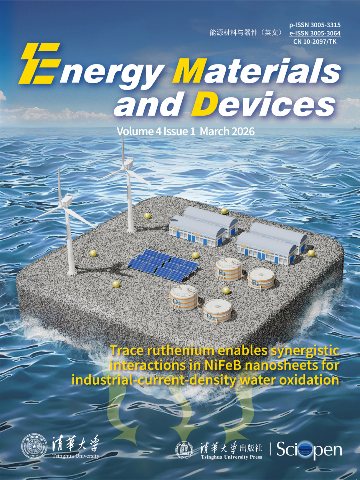
📣 Big news from the energy materials community! ⚡ Energy Materials and Devices enters a bold new chapter for 2026 under Editor-in-Chief Feiyu Kang.
With major new indexing milestones, the journal is accelerating clean energy innovation! 🌍
Read the editorial: https://t.co/NRc5S3Li0k 🧵👇
#CleanEnergy #MaterialsScience #SciOpen #AcademicPublishing @Tsinghua_Uni
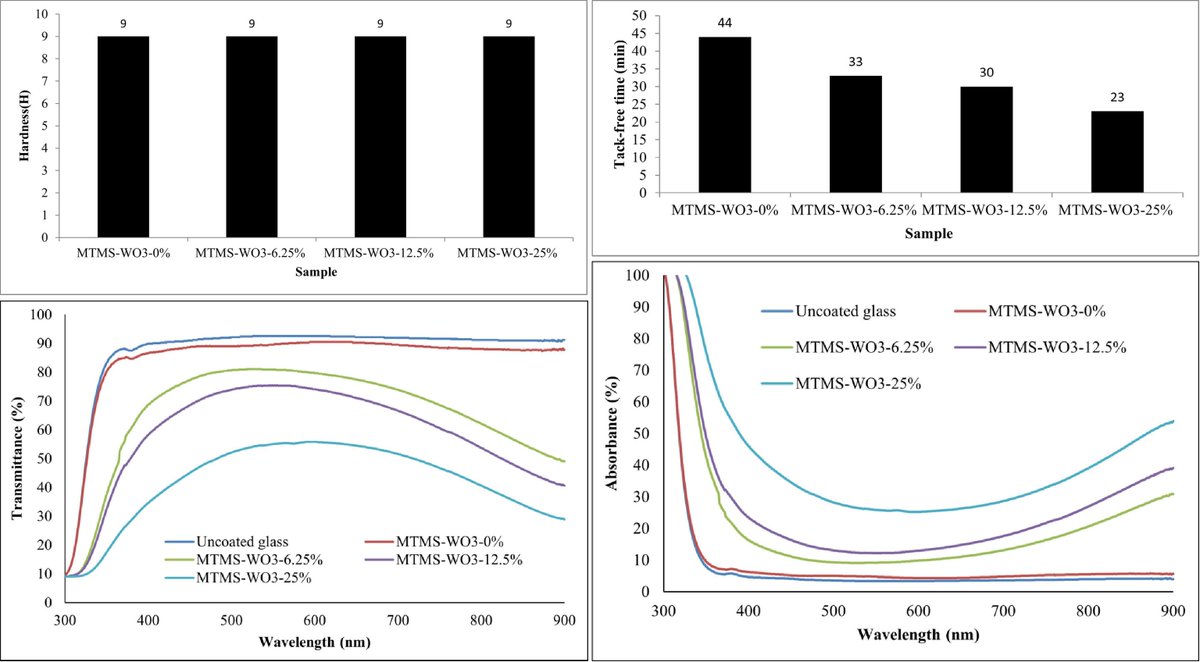
💡 Sponge swipe = glass → transparent #UVShielding powerhouse with #TungstenOxide #Nanoparticles & #SolGel #SmartCoatings!
🧠@uni_malaya Dr. Zainal Abidin Ali latest research published in DJNB!
👉 https://t.co/ehBNaodPTd
#Nanotech #MaterialsScience #ThinFilms #GreenBuilding


🌟 DJNB is recruiting Early-Career #EditorialBoard Members!
👨🎓Young scholars in nanomaterials & biostructures are invited to apply with CV📰 + cover letter✉️: [email protected].
#Nanomaterials #EarlyCareer #Biostructures #Publishing #MaterialsScience #ResearchCommunity

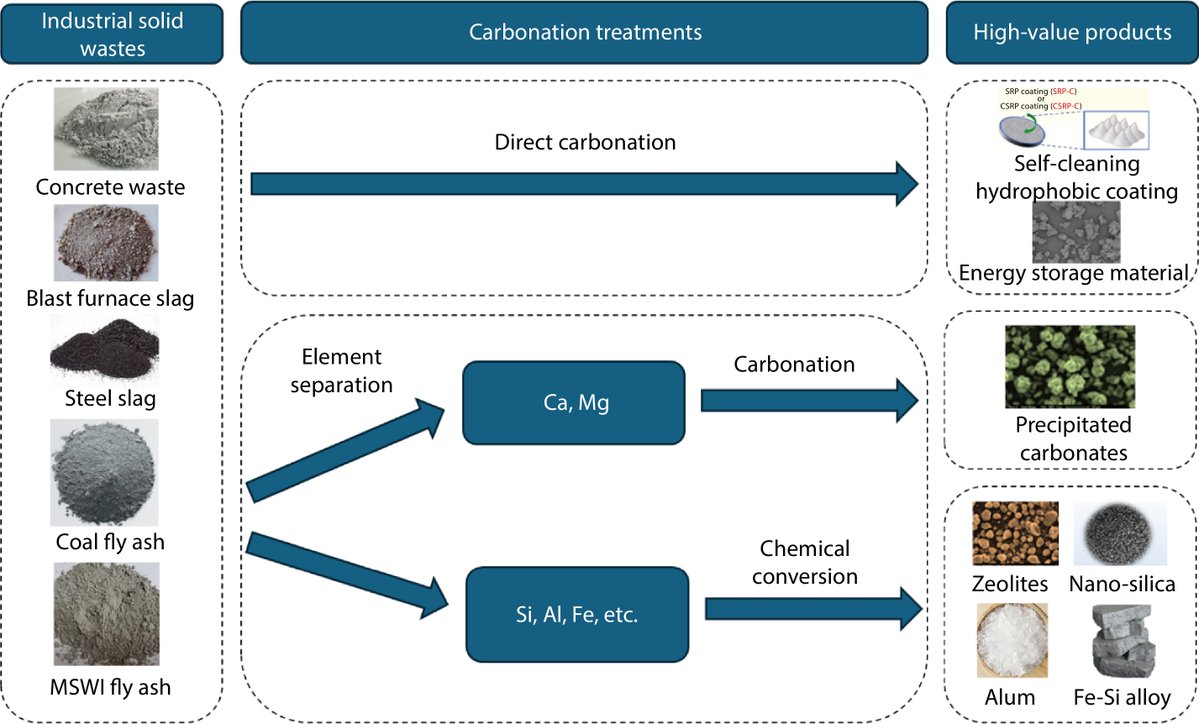
♻️ Turning industrial waste into higher-value materials
Mineral carbonation goes beyond CO₂ storage, this review highlights routes to produce zeolites, nanosilica, glass-ceramics, and energy materials from industrial wastes.
🔗 https://t.co/FoNdmCKU39
#CarbonCapture #CircularEconomy #MaterialsScience #Sustainability #SciOpen #TUP @Tsinghua_Uni

Morphology-Aware Peptide Discovery via Masked Conditional Generative Modeling
1 PepMorph is presented as an end-to-end pipeline that generates short peptides likely to self-assemble and steers the resulting aggregate morphology toward either spherical or fibrillar outcomes, using conditioning on monomer-level proxy descriptors rather than needing scarce, direct morphology labels.
2 The key modeling idea is a Transformer-based Conditional VAE with an explicit masking mechanism (arbitrary-subset conditioning): users can specify any subset of desired properties (e.g., length + charge, or β-strand flag + charge) and leave the rest unspecified; missing fields are treated as “masked/marginalized” instead of being imputed.
3 To enable this, the authors curate the PepMorph dataset (161,120 unique peptides, lengths 3–10 aa) by merging two large CG-MD-derived aggregation propensity (AP) sources and adding 50k random peptides to broaden descriptor coverage; AP is defined via SASA ratio from CG-MD, and SA/no-SA labels are reconstructed from operational thresholds (SA: AP ≥ 1.8; no-SA: AP ≤ 1.65).
4 Morphology “awareness” is injected through isolated-peptide descriptors computed from PEP-FOLD-predicted monomer structures: (i) β-strand assignment (binarized), (ii) hydrophobic moment (amphiphilicity), and (iii) net charge. Only ~50% of sequences have these 3D-derived descriptors available, and the masking mechanism allows training on the full dataset despite this sparsity.
5 Generative evaluation emphasizes avoiding motif collapse while still honoring constraints: ~97.7% of generated sequences are novel (not in training), nearest-neighbor normalized edit distance median ~0.375, and global alignment identities remain low (~9–10%) both vs training and within-condition generations—supporting diverse sampling rather than convergence to a few templates.
6 Condition satisfaction is quantified using external predictors (AP regressor + SA classifier built on an ESM-2 backbone) and PEP-FOLD recomputation for monomer descriptors. Aggregate “all-target” matching is ~55% overall, with a clear trade-off: as the number of simultaneously fixed descriptors increases (k=1→6), full satisfaction drops (about 85%→25%), motivating partial conditioning plus downstream filtering.
7 For morphology-targeted discovery, PepMorph is conditioned on heuristic proxy windows: spheres favor shorter length (5–7 aa) + higher hydrophobic moment + near-neutral charge; fibers favor longer length (7–10 aa) + β-strand-positive + near-neutral charge, while also forcing the self-assembly label to 1 during generation.
8 Post-generation filtering is treated as a necessary reliability layer: sequences are screened by predicted aggregation (classifier probability ≥75% and predicted AP ≥1.8), then filtered again by whether recomputed proxy descriptors match the target within tolerance. Under the same 4800-sample budget, proxy-conditioning is far more sample-efficient than length-only generation or uniform random peptides (e.g., 76 sphere “proxy-hits” vs 3 and 0, respectively).
9 End-to-end validation uses CG-MD (MARTINI) with 300 peptides per box and triplicate runs. All PepMorph-selected candidates aggregate under the AP criterion, and 83% match the intended morphology by visual inspection (25/30 across sphere+fiber targets). A quantitative morphology proxy (RMOI) is used but is acknowledged to misclassify borderline cases, especially for fibrils, highlighting the difficulty of robust morphology metrics.
10 The paper frames PepMorph as a descriptor-agnostic scaffold: additional descriptors (functional or structural) can be added without changing the core masked-conditioning interface. Limitations discussed include sparse regions in descriptor space (β-strand-positive is rare), protocol sensitivity of morphology in MD, and the potential need for richer/multimodal masked priors beyond a single diagonal Gaussian.
💻Code: https://t.co/wvQGFQ3MVM
📜Paper: https://t.co/xhZWqJn5FN
#ComputationalBiology #PeptideDesign #SelfAssembly #GenerativeAI #MachineLearning #MolecularDynamics #Transformers #MaterialsScience #SupramolecularChemistry

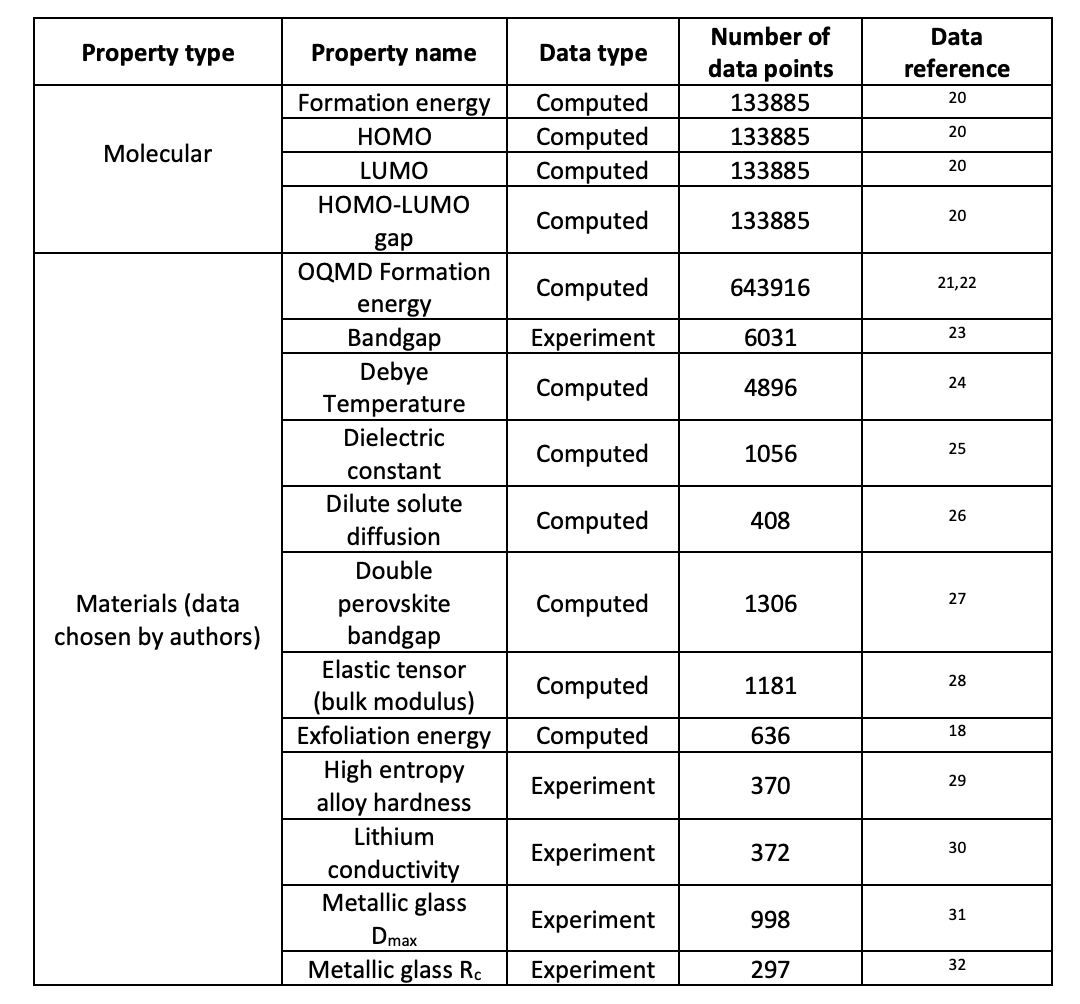
Regression with Large Language Models for Materials and Molecular Property Prediction
1. The paper reframes LLMs as text-to-text regression models for chemistry/materials: given only a SMILES string (molecules) or a composition string like “Al2O3” (materials), the model generates a numeric property value, trained purely with generative cross-entropy loss (no explicit regression head, no MSE/MAE optimization).
2. On QM9 molecular properties (formation energy, HOMO, LUMO, gap), fine-tuned LLaMA 3 shows strong data scaling: for formation energy MAE improves from 3.184 eV (1k train) to 0.749 eV (10k) to 0.100 eV (110k), following a power law (slope about -0.737), with best performance around ~5 epochs before overtraining increases error.
3. Zero-shot LLaMA 3 is effectively unusable for QM9 formation energy under this prompting: many blank outputs and a huge MAE (~59 eV on valid numeric responses), implying the regression capability comes from supervised fine-tuning rather than latent “chemical intuition” out of the box.
4. Compared with state-of-the-art geometric GNNs (PAMNet), LLaMA 3 is consistently worse on QM9 by ~4–17x depending on the target (average ~7.6x). The authors argue this gap is largely explainable by missing 3D structure information (PAMNet uses atom types + coordinates), not necessarily by a fundamental inability of LLMs to regress.
5. A key representation result: SMILES beats InChI for LLaMA 3 fine-tuning on all four QM9 targets, with ~25% lower errors on average (and longer training did not close the gap for InChI). This suggests that “how you write the molecule” is a statistically meaningful modeling choice for LLM regression.
6. Surprisingly, adding explicit atomic coordinates (XYZ-style) did not materially improve QM9 formation-energy accuracy in initial tests: MAE ~0.155 eV (2 epochs) → 0.101 eV (5) → 0.094 eV (9), only modestly better than SMILES (~0.100 eV). The paper highlights this as an open problem: LLMs may not yet be exploiting geometric data the way GNNs do.
7. On 24 smaller-to-midsize materials datasets (137 to ~10k points; broad property types), LLaMA 3 trained only on composition strings is often competitive with a random forest using engineered elemental descriptors: better on 8 properties, similar on 7, worse on 8, with average unitless error RMSE/σy of 0.489 (LLaMA) vs 0.450 (RF), i.e., ~8.6% higher on average.
8. On a large materials dataset (OQMD formation energy; ~634k training), LLaMA 3 reaches 0.054 eV MAE using composition-only text prompts, comparable to ElemNet (~0.055 eV) and better than an elemental-feature random forest (~0.067 eV), but still above composition-based SOTA Roost (~0.024 eV).
9. Model-choice matters in practice: with OpenAI API fine-tuning constraints, GPT-3.5-turbo and gpt-4o-mini reach ~0.154 eV MAE on QM9 formation energy (about 1.5x worse than LLaMA 3’s 0.100 eV). The authors attribute this more to limited fine-tuning control than to an inherent GPT disadvantage, and emphasize LLaMA’s open-source flexibility and cost.
10. The broader claim: optimizing only generative loss can still yield useful regression behavior, implying LLM tokenization/latent-space distances can act as an implicit featurizer for composition and molecular strings; however, closing the gap to structure-aware SOTA likely requires better ways to inject/encode geometry, alternative string encodings (e.g., SELFIES), and possibly multitask/transfer setups.
📜Paper: https://t.co/oHa7xTakVI
#MaterialsScience #Chemistry #MachineLearning #LLM #PropertyPrediction #ComputationalMaterials #Cheminformatics #QM9 #OQMD #LLaMA
⚙️ What controls melt flow in Mg alloys?
Simulations reveal how Ca content reshapes atomic structure and increases viscosity in Mg–Ca melts, offering new insight into fluidity control at high temperatures.
🔗 https://t.co/KTEhUbc4nT
#MaterialsScience #Alloys #Simulation #Metallurgy #sciopen #TUP @Tsinghua_Uni

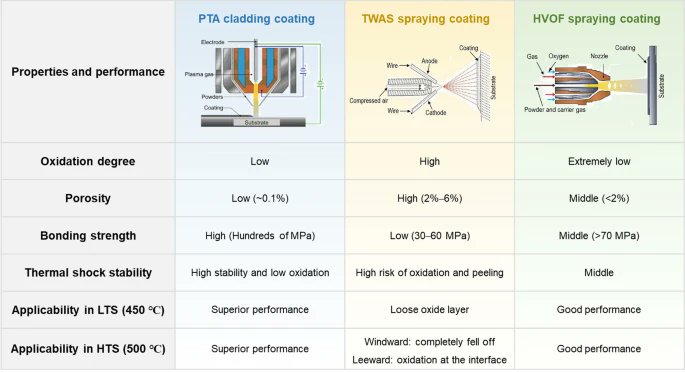
Which coating survives extreme waste-to-energy conditions?
New research reveals PTA-NiCr1 outperforms HVOF & TWAS in high-temp superheaters. Game-changing insights for industrial durability.
Read the findings: https://t.co/oX6iEKpa0e
#AcadeMax #ZJU #MaterialsScience #WasteToEnergy

Just like atoms in a Silicon Carbide (SiC) lattice stay strongly bonded to form an incredibly powerful structure ⚛️, a community becomes unstoppable when its members stay truly connected.
Check out this awesome SiC 4x4x2 supercell visualization from
https://t.co/Tm6kdekmwQ
In Glitch Follow Factory (and beyond), if we support each other genuinely – by dropping thoughtful comments, reposting value, liking what resonates, and bookmarking gems – the whole network levels up together.
Mutual support ≠ forced likes
Mutual support = authentic growth 🤝🔥
What’s one way you’ve seen real community boost someone’s reach/content? Share below! 👇
@GlitchGirl666
#MaterialsScience #CommunityBuilding #DataInsights
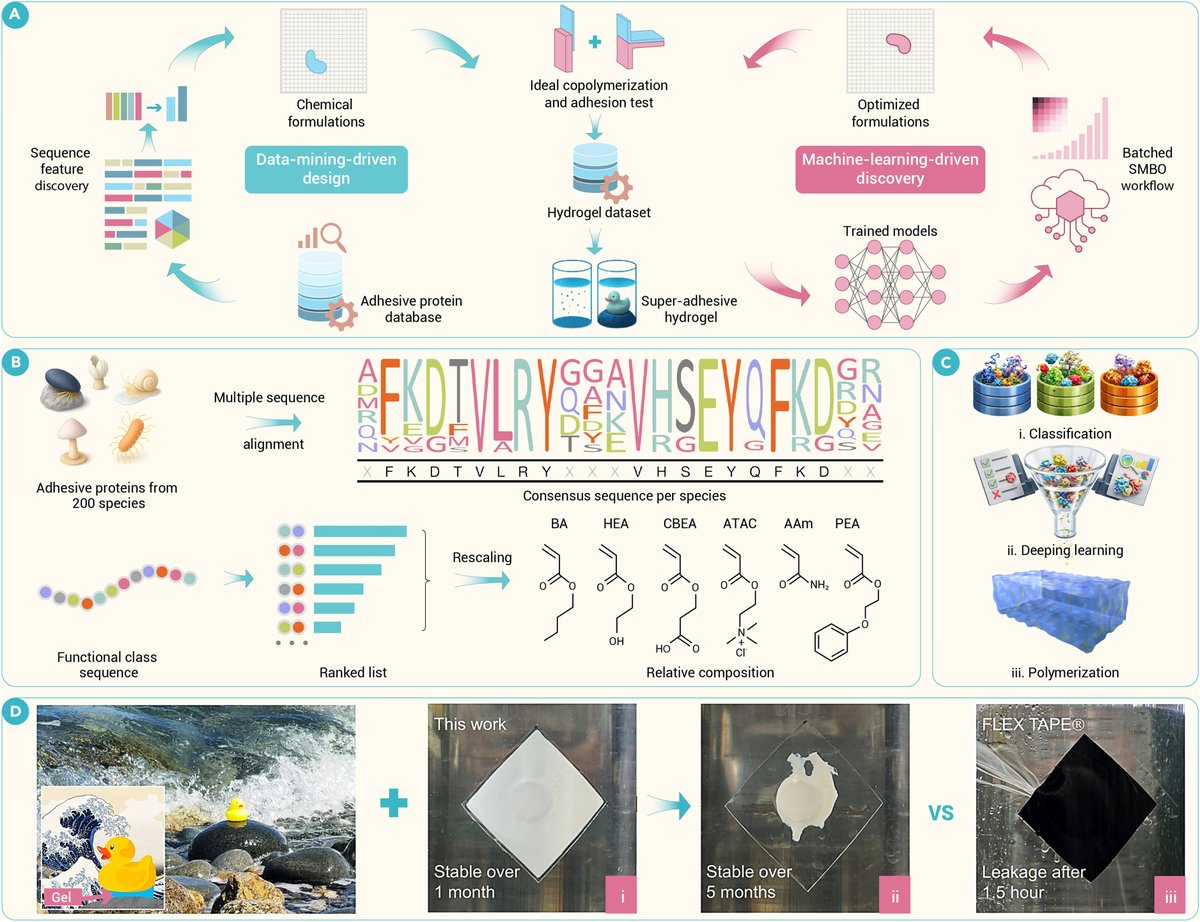
New in @The_InnovationJ! AI-driven soft materials design for superadhesives.
Struggling with underwater adhesion? AI has deciphered the secrets of natural glues, and designed smart hydrogels with tenfold stronger bond! Discover how machine learning co-designs, materials and unlock a new materials design paradigm.
https://t.co/0Kj3aHyqm4
#MaterialsScience #machinelearning #ai4science

3/
HydroGraph’s version is different:
✨ Ultra‑pure, few‑layer graphene, independently verified for quality.
That’s the base ingredient for real‑world products, not just lab slides. $HGRAF
#MaterialsScience #Graphene #Innovation #Sustainability
Trends for you
Most Popular Users

Elon Musk 
@elonmusk
240M followers

Barack Obama
@barackobama
118.6M followers

Cristiano Ronaldo
@cristiano
114.4M followers

Donald J. Trump
@realdonaldtrump
111.7M followers

Narendra Modi
@narendramodi
106.9M followers

Rihanna
@rihanna
98.6M followers

NASA
@nasa
92.1M followers

Justin Bieber
@justinbieber
91.7M followers

KATY PERRY
@katyperry
89.9M followers

Taylor Swift
@taylorswift13
83.9M followers

Lady Gaga
@ladygaga
75.4M followers

Virat Kohli
@imvkohli
73.3M followers

Kim Kardashian
@kimkardashian
70.8M followers

YouTube
@youtube
68.6M followers

Neymar Jr
@neymarjr
66.3M followers

Bill Gates
@billgates
65.2M followers

Selena Gomez
@selenagomez
63M followers

The Ellen Show
@theellenshow
62.1M followers

CNN
@cnn
61.7M followers

X
@x
60.6M followers