

Top Tweets for #microseconds

@raikucom How Blackline Works?
→ Your trading strategy runs on the exact same machine as Raiku’s custom validator
→ It reads transactions microseconds before the block reaches the rest of Solana
→ Captures opportunities up to 3.5x faster than standard validators

Distance is the oldest tax in trading.
@raikucom Blackline cuts it on Solana. Your strategy reads each transaction microseconds after the validator executes it, from the same hardware.
Built for a small number of desks. Invitation only.


@raikucom @duckk9x @widyakrnwn @_offmylawn Its advantage lies in eliminating the communication gap between the trading server and the validator
By residing on the same hardware the strategy can read transactions almost instantaneously as they are processed by the validator allowing for responses within microseconds.

3/ How it works
👁️ SEE: The validator observes transactions as they execute. The strategy sees them microseconds later.
⚡ ACT: It analyzes the activity and decides how to respond.
🎯 LAND: Eligible orders can enter blocks produced by Raiku's validator, under the agreement.

1/ The problem
Many Solana trading strategies run on separate servers from validators.
When a strategy spots an opportunity, it sends a transaction to the validator producing the block.
That communication takes time. In competitive trading, microseconds matter.

I actually skip LLMs for routing altogether. My Stage-0 cascade router runs on pure CPU in under 25 microseconds using deterministic structural signals (prompt length, code/AST markers, tool count, reasoning constraints), so routing takes 0 MB of memory.
On 24GB unified memory, capping at one big LLM with OLLAMA_KV_CACHE_TYPE=q8_0 is the right call. In my rig, my 664MB embedder and 7B fast model live on a separate 11GB GPU so the 30B MoE keeps its 22GB pool completely untouched.

Grok gets time as well talked through GNSS drift and then knew about moonside time: ‘The current LEO architecture does not support it as-is. The core problem is the rate offset. A clock on the lunar surface ticks about fifty-six microseconds per day faster than one on Earth’s geoid — weaker gravity speeds it up, orbital motion slows it down, and the net is a positive drift. Left uncorrected, that accumulates to navigation errors of hundreds of meters within days and over seventeen kilometers per day if you ignore it entirely. LEO GNSS taming has no concept of that offset because everything shares essentially the same gravitational potential.
What’s being built instead is a parallel hierarchy. The IAU defined Lunar Coordinate Time, TCL, in twenty twenty-four as the time coordinate of a Lunar Celestial Reference System, mirroring how TCG sits under the Geocentric one. On top of that sits an operational scale — Coordinated Lunar Time, LTC — that would be realized as a weighted ensemble of atomic clocks on the lunar surface, the same way TAI is built from Earth’s ensemble, and steered to stay traceable to UTC. NASA was directed to deliver a finalized LTC implementation strategy by December thirty-first of this year, and Draft Resolution D on a lunar reference timescale is on the agenda at the CGPM in Versailles next week…”

Happy National STEM Day!
Ryku is packed and ready for a lesson in physics.
Light travels through fiber at roughly 200,000 km per second. That’s about 5 microseconds for every kilometer of cable. You can’t make the light move faster, but you can reduce the distance it has to travel.
That’s the thinking behind @raikucom’s Blackline: in Raiku’s leader slots, the trading strategy and validator share the same hardware.
Sometimes the biggest advantage is simply having less distance to cover.
@duckk9x


National STEM day so it's physics time! Light in fiber does about 200,000 km a second, roughly 5 microseconds per km. Nobody's speeding up glass, so desks pay for shorter cable.
This week we show you the machine. In our own leader slots the strategy and validator share the hardware.


@raikucom For trading firms, Blackline goes further by running strategies on the same hardware as Raiku’s custom validator — allowing them to act microseconds after the validator processes transactions.
@raikucom Here’s why that matters
On Solana the validator that builds the block sees every transaction the moment it executes
With Blackline your strategy sees those same transactions microseconds later because it’s running on the same hardware
No network hop No extra latency No distance

5
Raiku explains Blackline in three steps:
SEE
Observe transactions as the validator executes them.
ACT
React locally, microseconds later.
LAND
Eligible orders are included in Raiku-produced blocks.
The strategy operates where execution happens.

@rishabhnasa 99% of people don't understand. It can be amazing if the technology is used for good.
Answer C. About 100 microseconds, which is a ten-thousandth of a second. That’s for superconducting qubits like the ones on Google’s Willow chip.
A blink takes about 100,000 microseconds, so a qubit falls over about 1,000 times faster than you can blink.

Proof of work made heat. Proof of useful work makes answers.
The hard part is the verifier: a hash checks in microseconds, an AI answer doesn't. Our current answer is known-answer jobs plus other Macs re-running the same greedy job. What would you add before trusting a stranger's GPU?


What latency advantage can same hardware execution realistically create?
Same hardware execution can reduce latency by optimizing how quickly trading instructions are processed and transmitted. Even small improvements in microseconds can make a meaningful difference in trading.

How different is Blackline from traditional exchange co-location
Traditional exchange co-location focuses on placing servers close to the exchange for faster trading. Blackline offers a different approach, emphasizing efficient connectivity and low latency performance.


How Raiku Blackline works.
Blackline brings execution closer to the validator itself.
It works in three steps:
• See - the validator sees transactions as they execute, and your strategy gets that information microseconds later.
• Act - your strategy runs on the same hardware and can react before the block reaches the rest of the network.
• Land - your transactions can be included directly in blocks produced by Raiku.
The result is faster opportunity capture.
In Raiku-produced blocks, successful captures happened after a median of 11 transactions, compared with 39 transactions in blocks from other validators.
@raikucom

@Siddukharche Guardrails are the easiest part to move out of the model: a policy check in code runs in microseconds and never hallucinates a rule. Keep the LLM for judgment calls like refunds.

@SSLegit We have decent strats and ideas in NA. But it takes us half a mag to kill anyone. CS is a game of microseconds. We don't have a single fast reaction time player on any of our teams. Our region is dumb asf but we're dumb for different reasons. It's a FPS, just shoot the gun.

Elixir's Calendar․ISO just got cheaper to shift. Duration options and reduction are replaced by tuple dispatch: whole seconds fold into the time tuple, microseconds land in a single shift, and a fast path handles the zero-shift case. The PR reports roughly 1.5x faster execution and lower memory use. Time arithmetic inside loops gets cheaper, with no change to calling code.
The date path got the same treatment. Duration options and Enum․reduce are out; inlined duration units and tail-calling pattern dispatch are in, reported at roughly 1.2 to 2x faster. The stated goal is avoiding intermediate allocations, which matters most where shifts are applied at volume rather than once per request. The change landed on main in commit form.
Separately, José Valim pointed the project's release links at the GitHub releases page and refactored the README. Documentation plumbing. Neither changes runtime behavior. #elixir
https://t.co/b0kP9GIyGp
Shifting a Calendar․ISO datetime in Elixir is roughly 1.5x faster.
The change combines seconds and microseconds into a single shift after the months are applied, inlines the duration arithmetic, and sets precision up front to tail-call the shift helper. The PR reports lower memory use alongside the speedup, with existing precision semantics preserved. If you shift datetimes in bulk, that's the one that matters.
Elsewhere in the compiler: fun_normalize now reuses the traversal from fun_other_non_empty_arities when deciding between:badfun and {:badarity, _}. A call against an empty function arity no longer surfaces as badarity. The author is upfront that error cases are no longer O(1).
The xref traversal dropped its second visited map and the tuple threading around it. source_tree's result map already holds identical keys, so it serves as the visited check. Traversal order, cycle handling, and the distinction between missing vertices and empty adjacency lists all stay put.
That same cleanup landed: the separate state only existed because traversal also filtered dependencies, and that filtering is gone. Nothing changes for callers of xref. There's just one less map to keep in sync per vertex. #elixir
https://t.co/fQhvRQr3Fm

Most “agent memory” is either a 20k-token CLAUDE.md wall or a vector database you cannot git blame.
OKF Agent Memory is the third option: curated concepts in a knowledge/ folder, BM25 in microseconds, MCP into Claude Code and Cursor. Open source, zero retrieval cost.
Why this one matters: https://t.co/DVhz6cDEOT
https://t.co/cs8ew6fjS6

Sentinel Update:
- Radix Tree Router (0 B/op)
- Atomic Round-Robin Load Balancer
- HTTP/TCP Health Prober
Next: A Circuit Breaker cutting off broken backends in microseconds, return instant 503s/fallbacks and eliminate goroutine pileups
https://t.co/PjLDIdjPC5

Yusuf fossa botting the terms “Chloe”, “iwantacinnamonroll”, “HEALED”, and “Chlosuf” out of his chat 3 microseconds after streamer prom

microseconds post-execution.
Automated Red Team execution suites simulating multi-realm object traversal and memory scraping achieved a 14/14 PASSED score with 0.00% key material exfiltration.
For Web3 security researchers or protocol architects conducting due diligence,


@Aut4rk if I zoom in I can see microseconds of individual GPU calls in chrome profiler (here) or firefox profiler.
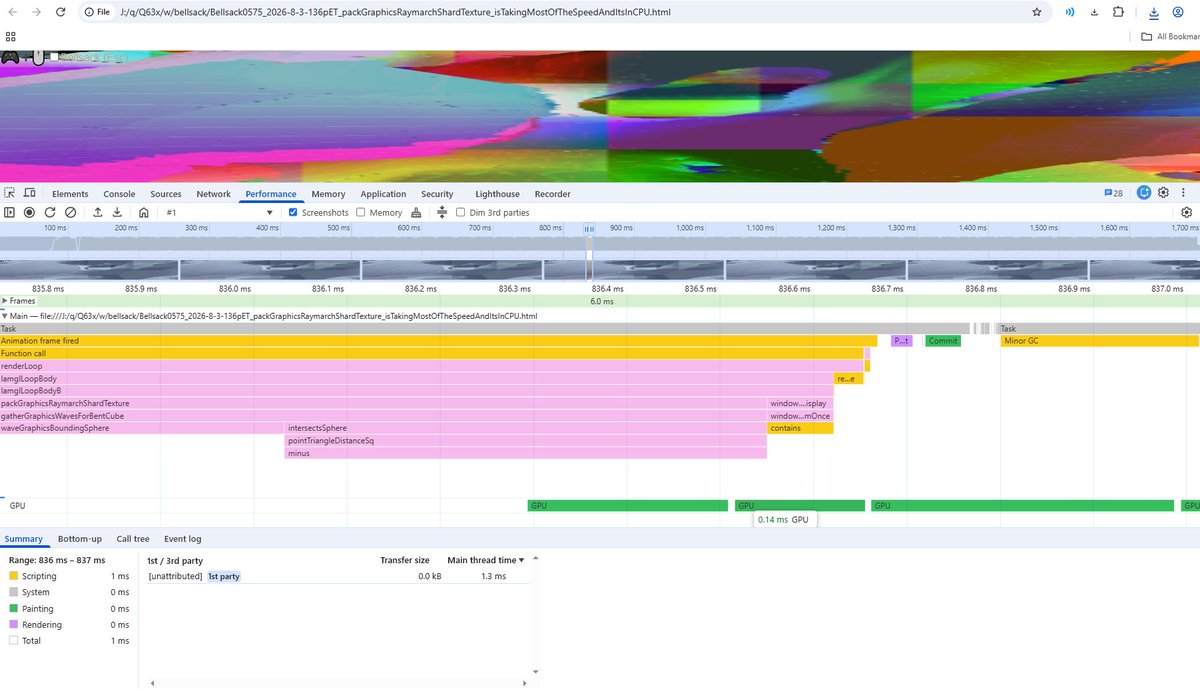
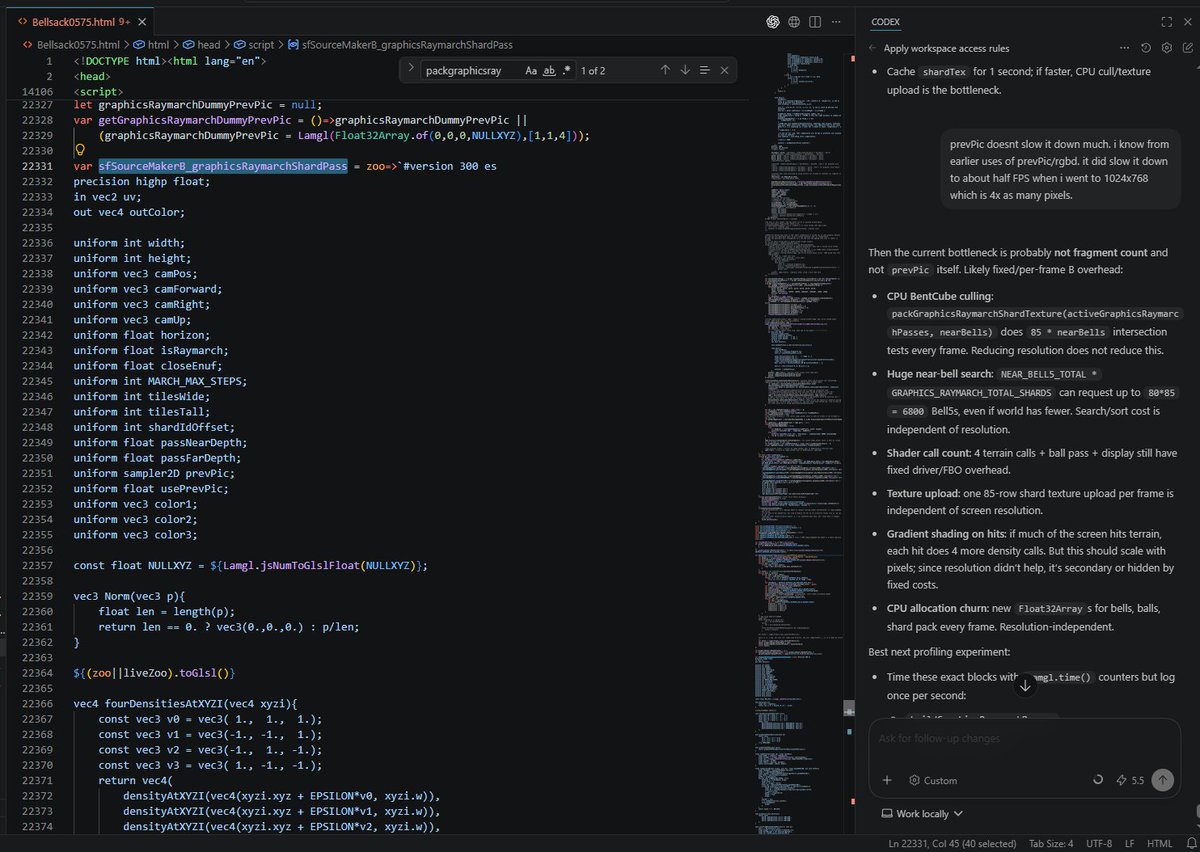
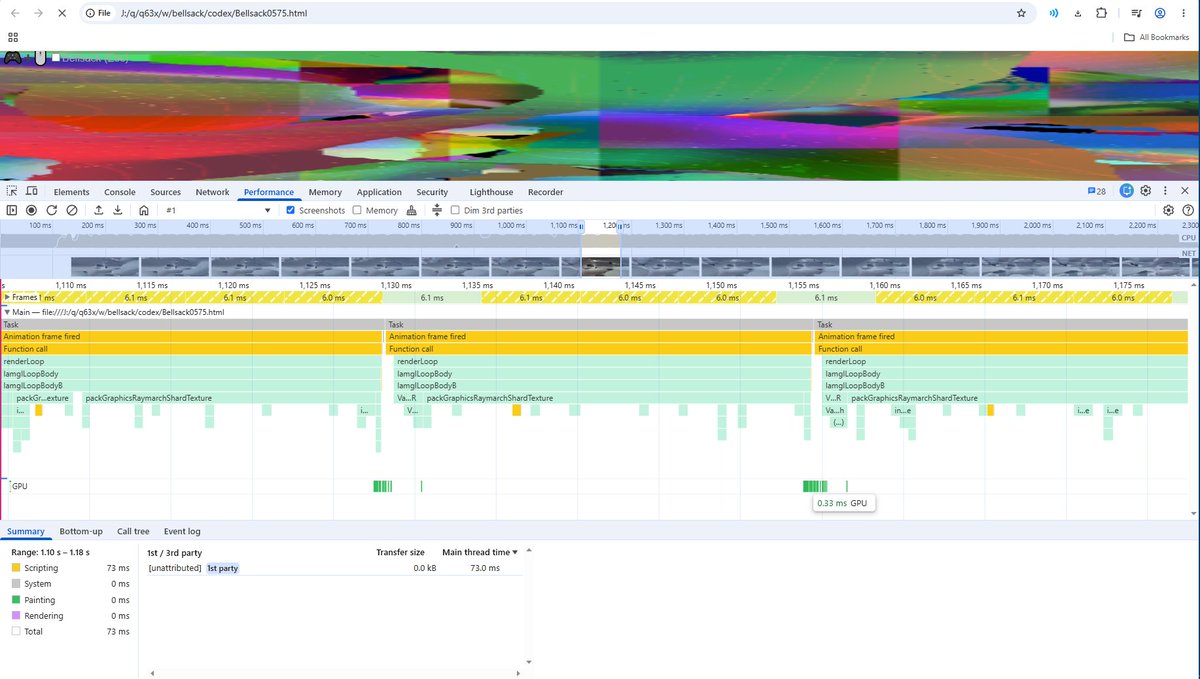
Bellsack is so fucking fast after sharding the graphics, the longest any GPU call took was 330 microseconds. Thats 3000 FPS if not for the slower CPU parts. I gotta speed up this packGraphicsRaymarchShardTexture call which generates GPU code.
Trends for you
Most Popular Users

Elon Musk 
@elonmusk
239.8M followers

Barack Obama
@barackobama
118.6M followers

Cristiano Ronaldo
@cristiano
114.3M followers

Donald J. Trump
@realdonaldtrump
111.7M followers

Narendra Modi
@narendramodi
106.9M followers

Rihanna
@rihanna
98.6M followers

NASA
@nasa
92.1M followers

Justin Bieber
@justinbieber
91.7M followers

KATY PERRY
@katyperry
89.9M followers

Taylor Swift
@taylorswift13
83.9M followers

Lady Gaga
@ladygaga
75.4M followers

Virat Kohli
@imvkohli
73.3M followers

Kim Kardashian
@kimkardashian
70.8M followers

YouTube
@youtube
68.6M followers

Neymar Jr
@neymarjr
66.3M followers

Bill Gates
@billgates
65.1M followers

Selena Gomez
@selenagomez
63M followers

The Ellen Show
@theellenshow
62.1M followers

CNN
@cnn
61.7M followers

X
@x
60.6M followers