Good afternoon Ryku🐉
Ryku is writing the message, but the important part isn’t just sending it.
It’s knowing the message gets where it needs to go, when it needs to arrive.
That’s a useful way to think about what @raikucom is building on Solana.
For time-sensitive transactions, execution can’t always be treated like a best-effort delivery. Raiku’s infrastructure is designed to make committed execution a part of the transaction experience.
From sending a transaction
→ to planning around its execution
→ to having infrastructure built for the moment it matters.
Because in onchain finance, delivery certainty can be just as important as speed.
gRaiku 🐉
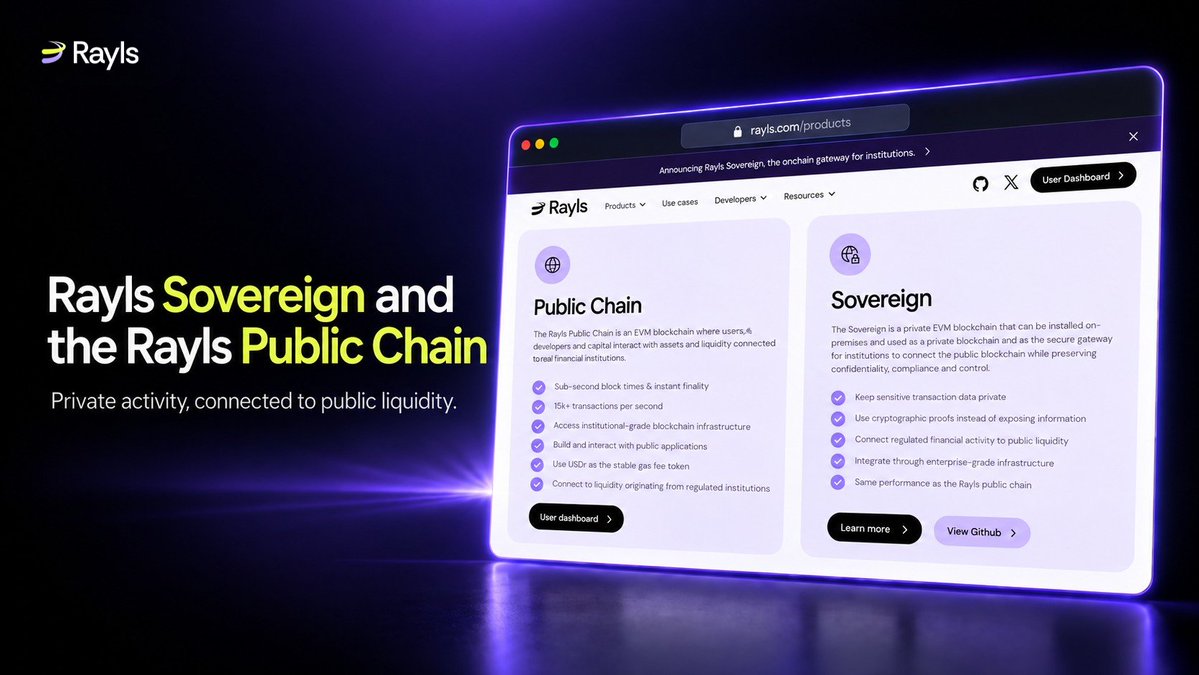
Financial institutions need an environment where sensitive financial activity can remain private, controlled, and compliant.
Rayls Sovereign gives institutions a private EVM environment for sensitive financial activity, with the confidentiality and control they require.
The Rayls Public Chain provides an open environment for applications, developers, users, and institutional liquidity, with sub-second finality.
Both operate within the same ecosystem, allowing institutions to keep sensitive activity private while connecting to public infrastructure and liquidity when needed.
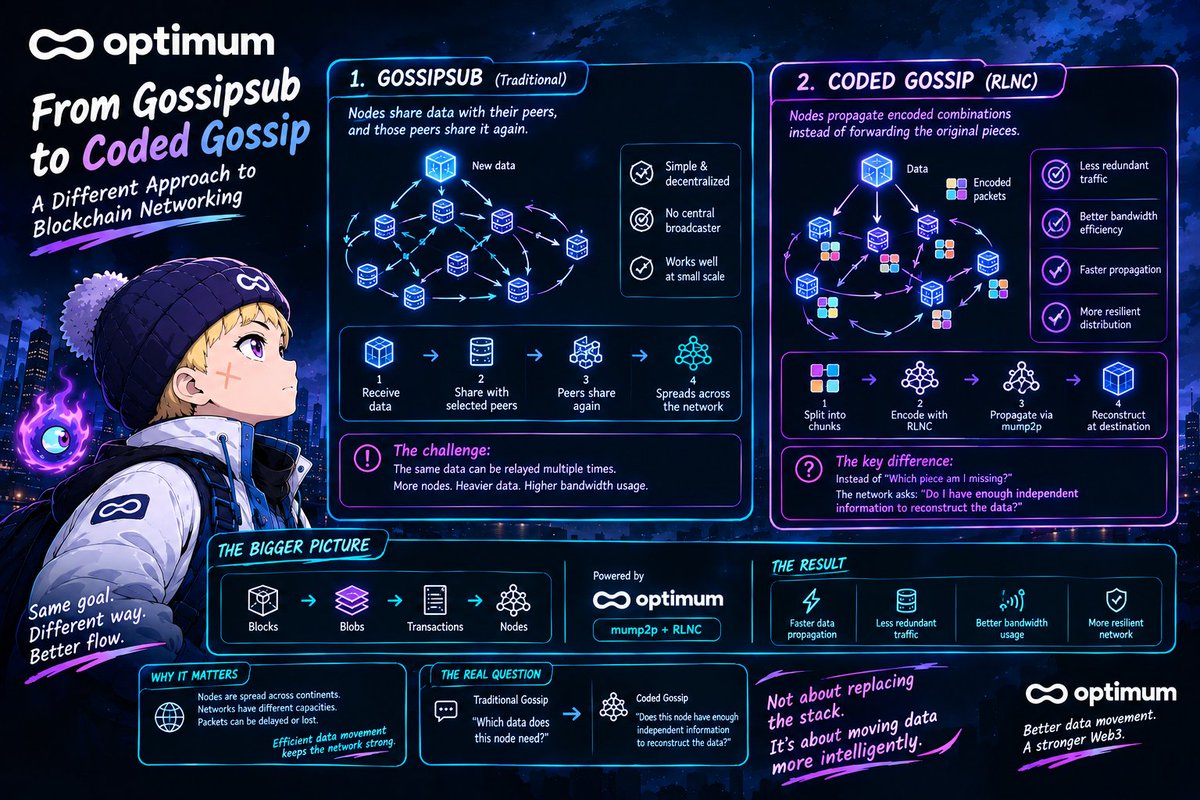
𝗙𝗿𝗼𝗺 𝗚𝗼𝘀𝘀𝗶𝗽𝘀𝘂𝗯 𝘁𝗼 𝗖𝗼𝗱𝗲𝗱 𝗚𝗼𝘀𝘀𝗶𝗽: 𝗔 𝗗𝗶𝗳𝗳𝗲𝗿𝗲𝗻𝘁 𝗔𝗽𝗽𝗿𝗼𝗮𝗰𝗵 𝘁𝗼 𝗕𝗹𝗼𝗰𝗸𝗰𝗵𝗮𝗶𝗻 𝗡𝗲𝘁𝘄𝗼𝗿𝗸𝗶𝗻𝗴
A blockchain network is only as useful as its ability to distribute information.
When a new block is produced, validators and nodes need to receive it quickly.
One of the most common approaches is Gossipsub.
The concept is relatively simple:
A node receives data → shares it with selected peers → those peers share it again → the information spreads across the network.
It creates a decentralized communication layer without requiring a central broadcaster.
And it works.
But there is an underlying cost:
𝗧𝗵𝗲 𝘀𝗮𝗺𝗲 𝗱𝗮𝘁𝗮 𝗰𝗮𝗻 𝗯𝗲 𝗿𝗲𝗹𝗮𝘆𝗲𝗱 𝗺𝘂𝗹𝘁𝗶𝗽𝗹𝗲 𝘁𝗶𝗺𝗲𝘀.
As networks become larger and data becomes heavier, bandwidth and propagation efficiency become increasingly important.
This is where the idea of coded gossip becomes interesting.
Instead of simply forwarding the original pieces of data, nodes can propagate encoded combinations.
With Random Linear Network Coding (RLNC), a message can be divided into chunks and mathematically combined into coded packets.
A receiving node doesn't necessarily need a particular missing chunk.
It can collect enough independent coded packets to reconstruct the original data.
So the fundamental question changes.
Traditional gossip asks:
𝗪𝗵𝗶𝗰𝗵 𝗱𝗮𝘁𝗮 𝗱𝗼𝗲𝘀 𝘁𝗵𝗶𝘀 𝗻𝗼𝗱𝗲 𝗻𝗲𝗲𝗱?
Coded gossip can instead ask:
𝗗𝗼𝗲𝘀 𝘁𝗵𝗶𝘀 𝗻𝗼𝗱𝗲 𝗵𝗮𝘃𝗲 𝗲𝗻𝗼𝘂𝗴𝗵 𝗶𝗻𝗱𝗲𝗽𝗲𝗻𝗱𝗲𝗻𝘁 𝗶𝗻𝗳𝗼𝗿𝗺𝗮𝘁𝗶𝗼𝗻 𝘁𝗼 𝗿𝗲𝗰𝗼𝗻𝘀𝘁𝗿𝘂𝗰𝘁 𝘁𝗵𝗲 𝗱𝗮𝘁𝗮?
That is a subtle but important difference.
And it is the principle behind the approach @get_optimum is taking with mump2p + RLNC.
The goal isn't to replace blockchain consensus.
It isn't to change how Ethereum determines the canonical chain.
It is to optimize what happens between nodes:
𝗕𝗹𝗼𝗰𝗸𝘀 → 𝗕𝗹𝗼𝗯𝘀 → 𝗧𝗿𝗮𝗻𝘀𝗮𝗰𝘁𝗶𝗼𝗻𝘀 → 𝗡𝗼𝗱𝗲𝘀
The potential result is a networking layer that can use bandwidth more efficiently while improving the speed and resilience of data propagation.
That matters because blockchain infrastructure has a physical reality.
Nodes are spread across continents.
Networks have different bandwidth capacities.
Packets can be delayed or lost.
And every additional piece of data has to travel through that environment.
Gossipsub remains an important part of modern blockchain networking.
The interesting question isn't whether gossip is “bad.”
It is:
𝗖𝗮𝗻 𝗴𝗼𝘀𝘀𝗶𝗽 𝗯𝗲 𝗺𝗮𝗱𝗲 𝗺𝗼𝗿𝗲 𝗲𝗳𝗳𝗶𝗰𝗶𝗲𝗻𝘁?
Coded gossip offers one possible answer.
And that's what makes the approach behind Optimum worth understanding.
The next generation of blockchain networking may not require replacing the entire communication stack.
It may simply require changing how information is packaged while it moves.
@get_optimum@blockchainjeff@cryptooflashh@CryptoSundayz@PostMaklone@tgogayi
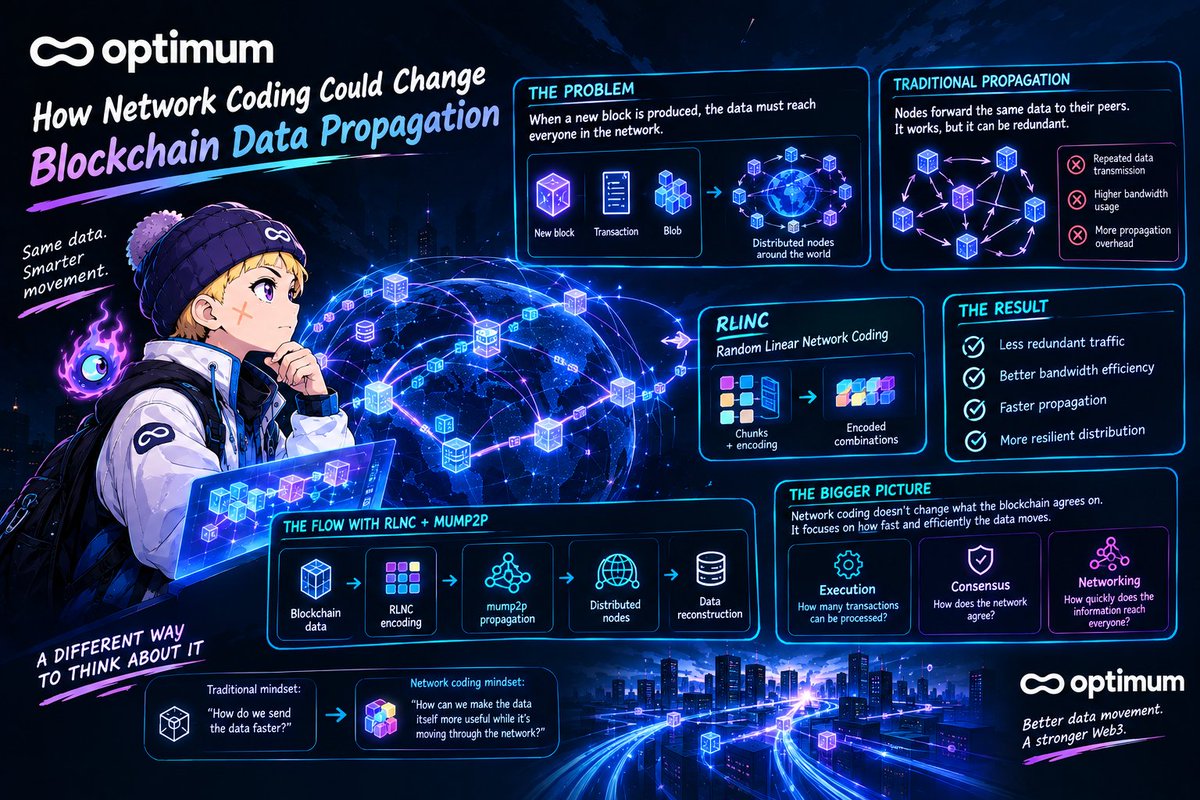
𝗛𝗼𝘄 𝗡𝗲𝘁𝘄𝗼𝗿𝗸 𝗖𝗼𝗱𝗶𝗻𝗴 𝗖𝗼𝘂𝗹𝗱 𝗖𝗵𝗮𝗻𝗴𝗲 𝗕𝗹𝗼𝗰𝗸𝗰𝗵𝗮𝗶𝗻 𝗗𝗮𝘁𝗮 𝗣𝗿𝗼𝗽𝗮𝗴𝗮𝘁𝗶𝗼𝗻
Blockchain networks have a simple requirement that is easy to overlook:
When something happens, everyone who needs that information has to receive it.
A new block is produced.
A transaction is broadcast.
A blob becomes available.
That information then needs to travel across a distributed network of nodes.
And the traditional way of doing this is largely based on gossip.
Nodes exchange information with their peers, which then forward it to others.
It works.
But there is an interesting question:
𝗖𝗮𝗻 𝘄𝗲 𝗺𝗼𝘃𝗲 𝗯𝗹𝗼𝗰𝗸𝗰𝗵𝗮𝗶𝗻 𝗱𝗮𝘁𝗮 𝘄𝗶𝘁𝗵𝗼𝘂𝘁 𝗿𝗲𝗽𝗲𝗮𝘁𝗶𝗻𝗴 𝘁𝗵𝗲 𝘀𝗮𝗺𝗲 𝘄𝗼𝗿𝗸 𝗮𝗰𝗿𝗼𝘀𝘀 𝘁𝗵𝗲 𝗻𝗲𝘁𝘄𝗼𝗿𝗸?
This is where Random Linear Network Coding (RLNC) becomes interesting.
Instead of treating every piece of data as something that must be forwarded individually, network coding allows data to be combined into encoded pieces.
Those pieces can travel through different paths.
A receiving node can collect enough independent combinations and reconstruct the original information.
The important change is the way the network thinks about missing data.
With traditional propagation, a node may care about receiving a specific piece.
With network coding, the more important question becomes:
𝗗𝗼 𝗜 𝗵𝗮𝘃𝗲 𝗲𝗻𝗼𝘂𝗴𝗵 𝘂𝘀𝗲𝗳𝘂𝗹 𝗶𝗻𝗳𝗼𝗿𝗺𝗮𝘁𝗶𝗼𝗻 𝘁𝗼 𝗿𝗲𝗰𝗼𝗻𝘀𝘁𝗿𝘂𝗰𝘁 𝘁𝗵𝗲 𝗱𝗮𝘁𝗮?
That difference can matter in a decentralized environment where nodes are geographically distributed and network conditions constantly change.
For @get_optimum, this concept is applied through mump2p + RLNC, targeting the propagation of blockchain data such as blocks, transactions, and blobs.
The potential advantages are straightforward:
→ Less redundant data transmission
→ More efficient use of bandwidth
→ Faster propagation
→ Better resilience when network conditions change
But there is a bigger idea here.
𝗡𝗲𝘁𝘄𝗼𝗿𝗸 𝗰𝗼𝗱𝗶𝗻𝗴 𝗱𝗼𝗲𝘀𝗻’𝘁 𝗻𝗲𝗲𝗱 𝘁𝗼 𝗰𝗵𝗮𝗻𝗴𝗲 𝘄𝗵𝗮𝘁 𝗮 𝗯𝗹𝗼𝗰𝗸𝗰𝗵𝗮𝗶𝗻 𝗮𝗴𝗿𝗲𝗲𝘀 𝗼𝗻.
It focuses on something underneath that process:
𝗛𝗼𝘄 𝗳𝗮𝘀𝘁 𝗮𝗻𝗱 𝗲𝗳𝗳𝗶𝗰𝗶𝗲𝗻𝘁𝗹𝘆 𝗰𝗮𝗻 𝘁𝗵𝗮𝘁 𝗶𝗻𝗳𝗼𝗿𝗺𝗮𝘁𝗶𝗼𝗻 𝗺𝗼𝘃𝗲?
That distinction is important.
Execution can make a blockchain process more.
Consensus can make participants agree.
But networking determines how efficiently the information travels between them.
As blockchain networks continue to grow, data propagation becomes a problem worth optimizing on its own.
RLNC is not a universal solution to blockchain scaling.
But it introduces a different way of thinking about the networking problem.
Instead of simply asking:
“How do we send the data faster?”
We can ask:
“How can we make the data itself more useful while it is moving through the network?”
That is the idea behind network coding.
And it could become an important piece of how decentralized networks move data in the future.
@get_optimum@blockchainjeff@cryptooflashh@CryptoSundayz@PostMaklone@tgogayi
@NeoSoulAI@De1_ai The fill isn’t the trophy — it’s the receipt.
NeoTrade writes the mandate. @De1_ai lets the market grade it live.
Instruction in. Execution out. Real feedback back to the agent.
@teneo_protocol Fair framing.
Not “free money from wifi.”
It’s selling spare bandwidth to companies that can’t hit sites from data centers.
As long as it’s public pages only and I can kill it anytime, that’s a clean deal.