

Top Tweets for #noncanonic

De novo protein design in an expanded chemical space
1 CheMoDesign is a generative framework that treats chemistry (PTMs, genetically encoded noncanonical amino acids, and post-expression chemical modifications) as a user-specified design variable, enabling de novo proteins whose binding and reactivity causally depend on the chosen chemical group.
2 Method core: it repurposes a pretrained all-atom structure-prediction model (Boltz-2) without retraining by weakening Pairformer pair-representation conditioning (zij → (1 − α)zij) to increase structural exploration, while preserving “chemical/functional anchors” that must remain fixed in the interface.
3 The workflow separates “dreaming” and “waking”: dreaming samples diverse target-associated backbones under weakened conditioning; waking performs sequence-conditioned truncated denoising to repair local geometry and reconcile the backbone with realizable sequences, improving sequence–structure compatibility across multiple targets.
4 Chemical anchors are implemented at atom-level: a parent residue representation is retained while an atom-level moiety is appended with correct covalent topology; all pairs involving the chemical moiety are protected during scaling/optimization, letting the model organize interfaces around the specified chemistry.
5 Retrospective validation: on native PTM-dependent complexes (acetyllysine, trimethyllysine, phosphotyrosine), CheMoDesign could recover native-like functional-group geometry (RMSD < 2 Å among passing designs), and “chemical ablation” back to canonical residues reduced predicted interface quality (ipTM drops of ~0.36–0.64), supporting modification dependence.
6 Prospective PTM design: sulfotyrosine (TYS) binders to thrombin were generated at multiple epitopes; 5/11 expressed designs all bound, with KD values spanning ~165–1193 nM, and Tyr substitution weakened binding across epitopes, indicating the designed sulfate group contributed to recognition.
7 Another PTM case: 3-nitrotyrosine (3-NT) binders to HER2 were designed without relying on an existing HER2–3-NT structural template; tested pairs showed 3-NT variants bound ~2.5–3.3× tighter than Tyr variants (e.g., KD ~236 nM vs ~780 nM), consistent with chemistry-guided interface formation.
8 Genetically encoded ncAAs enabled programmable behaviors beyond affinity: a tetrazine-bearing residue dominated IL-7Rα binding (KD ~8.4 nM; Ala/Phe substitutions >2 μM) and allowed post-production “rewriting” via tetrazine–TCO ligation, yielding payload-dependent affinity switching (including near-blocking by PEG-20K).
9 Reactivity as a designed output: pBpa-containing binders supported light-triggered covalent capture (rapid crosslinking upon 365 nm irradiation, including on-cell retention), while FSY-containing binders enabled proximity-driven SuFEx covalency to Trop-2 with crosslinking MS evidence for the intended linkage.
10 Post-expression chemistry broadened the accessible chemical space: installing a benzenesulfonamide modification on a designed Cys produced an isoform-selective CA IX binder/inhibitor (KD ~45 nM; weak CA XII binding; ~98% CA IX inhibition at 1 μM), and a photolabile 2-nitrobenzyl alcohol-derived modification enabled light-activated covalent PD-L1 capture with competitor-resistant cellular retention dependent on PD-L1 Lys75.
💻Code: https://t.co/t979Te0wq5
📜Paper: https://t.co/iTbjV17Klx
#ProteinDesign #GenerativeAI #ComputationalBiology #ChemicalBiology #NoncanonicalAminoAcids #PostTranslationalModifications #CovalentInhibitors #BioorthogonalChemistry #Boltz2 #AlphaFold3


📢 Call for Papers! 🧬
👏Contribute to our Special Issue: "Roles of Inflammasomes and Their Molecular Mechanisms" in FBL.
👨🔬 Guest Editor: Dr. Young-Su Yi (Kyonggi Univ)
🔬 Focus: Canonical/noncanonical #inflammasomes & targeted therapeutics.
🗓️ Deadline: 31 Oct 2026
🔗 More details: https://t.co/WHxZKy9KLJ
#Inflammation #Macrophage #Immunology #MedicalResearch
PEPstrMOD2: Next-generation tertiary structure prediction of chemically modified and non-natural peptides
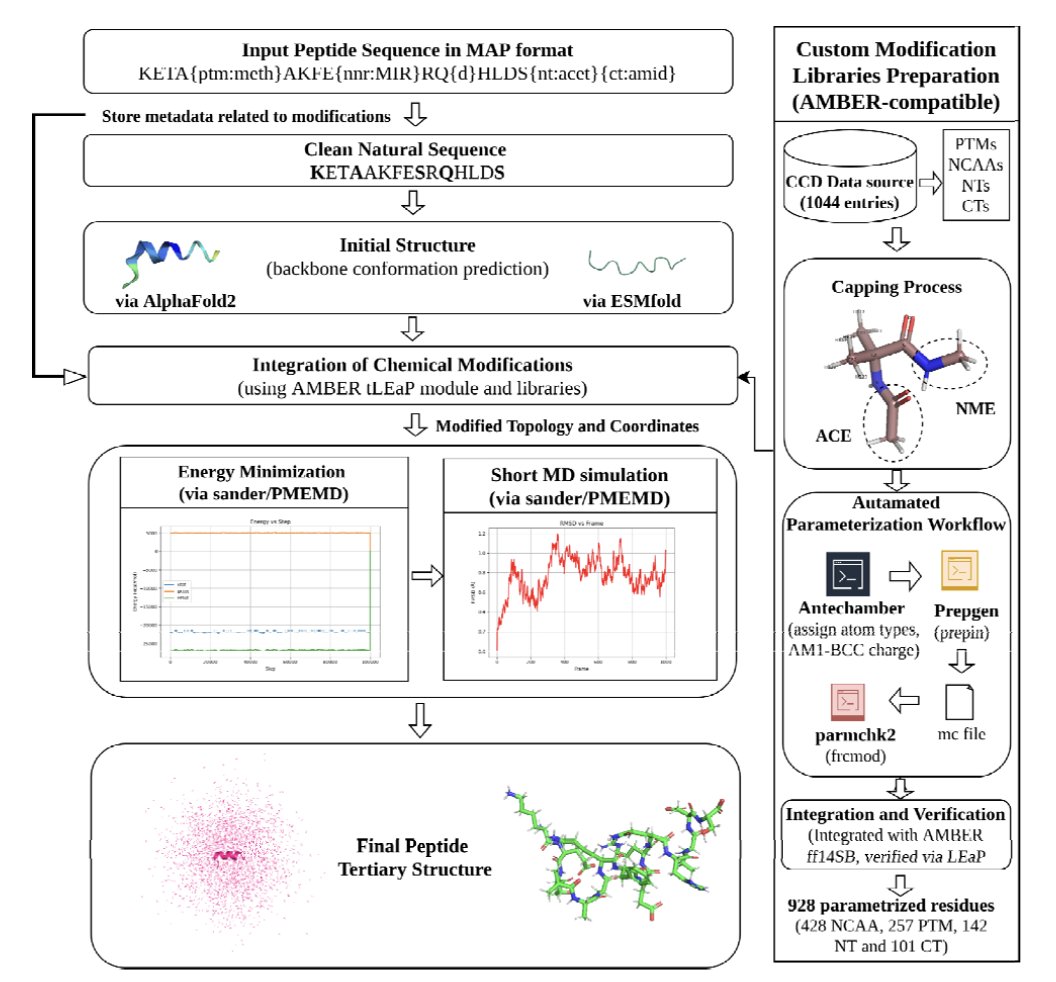
1 PEPstrMOD2 is a structure-prediction framework aimed at chemically modified and non-natural peptides, combining deep-learning backbones (AlphaFold2 or ESMFold) with AMBER-based energy minimization and short MD refinement to restore chemical realism after modifications are introduced.
2 The most practically important upgrade is chemical coverage: an AMBER force-field compatible library parameterized from PDB CCD entries, totaling 928 modifications (257 PTMs, 428 non-canonical amino acids, 243 terminal modifications; including D-residues and cyclic constraints via the input specification).
3 The second major upgrade is scalability: the original PEPstrMOD was limited to 7–25 residues; PEPstrMOD2 removes that restriction by using AF2/ESMFold for initial coordinate generation, enabling modeling of longer therapeutic peptides and small proteins (web UI notes up to 100 residues for submission).
4 The third upgrade is the input/representation layer: MAP inline notation encodes PTMs, NCAAs, terminal caps, D-amino acids, disulfides, and head-to-tail cyclization directly in the sequence, then tLEaP integrates these changes onto the DL-predicted backbone before refinement.
5 Refinement protocol details: 2000-step minimization (1000 steepest descent + 1000 conjugate gradient), then heating/equilibration (50 ps NVT at 300 K + 50 ps NPT at 1 bar), followed by short production MD (user-selectable length; evaluated commonly at 100 ps and 1 ns) in vacuum, explicit water (TIP3P), or a hydrophobic methane box.
6 Cyclic peptide benchmark (AfCyc, n=80; 17 head-to-tail + 63 disulfide-cyclized): with explicit-water refinement, PEPstrMOD2 (AF2-start, average model) reached 2.05 Å mean all-atom RMSD (BB 1.50 Å; CA 1.51 Å), competitive with AfCycDesign (1.82 Å) though behind AF3 (1.13 Å). Water refinement helped more than extending MD from 100 ps to 1 ns.
7 Disulfide geometry check on AfCyc: after refinement, predicted S–S distances clustered around ~1.9–2.1 Å (near the expected ~2.0 Å), and the refinement step corrected problematic cysteine pairing geometries seen in some direct DL outputs.
8 Modified peptide benchmark vs AF3 (ModPep433, n=433; common subset because AF3 could not process all modified residues): PEPstrMOD2 achieved lower mean all-atom RMSD than AF3 (4.49 Å vs 4.67 Å), while also improving over the original PEPstrMOD by a wide margin (and producing much better DL-based starting structures before refinement).
9 Structural quality beyond RMSD on ModPep433: PEPstrMOD2 improved local accuracy (mean LDDT 0.73 vs 0.62 for AF3; far fewer models with LDDT < 0.50), and dramatically improved stereochemistry (MolProbity score 0.94 vs 3.95 for AF3; clashscore 0.34 vs 176.97), indicating the MD/energy-minimization stage is doing important corrective work for modified residues.
10 Structured-peptide subset (ModPep16; ≥60% helix+strand): PEPstrMOD2 roughly doubled accuracy over the original PEPstrMOD (2.50 Å vs 5.84 Å mean all-atom RMSD under 1 ns water refinement). The paper notes several high-RMSD cases are context-dependent (interfaces/ligands/binding-induced structure), emphasizing limits of predicting isolated peptides.
💻Code: https://t.co/IArxdqB962
📜Paper: https://t.co/qWzyJo6t4a
#ComputationalBiology #Peptides #ProteinStructure #AlphaFold2 #ESMFold #MolecularDynamics #AMBER #PTM #NoncanonicalAminoAcids #PeptideTherapeutics
Benchmarking AlphaFold and related deep learning approaches for modeling antibody and TCR antigen recognition
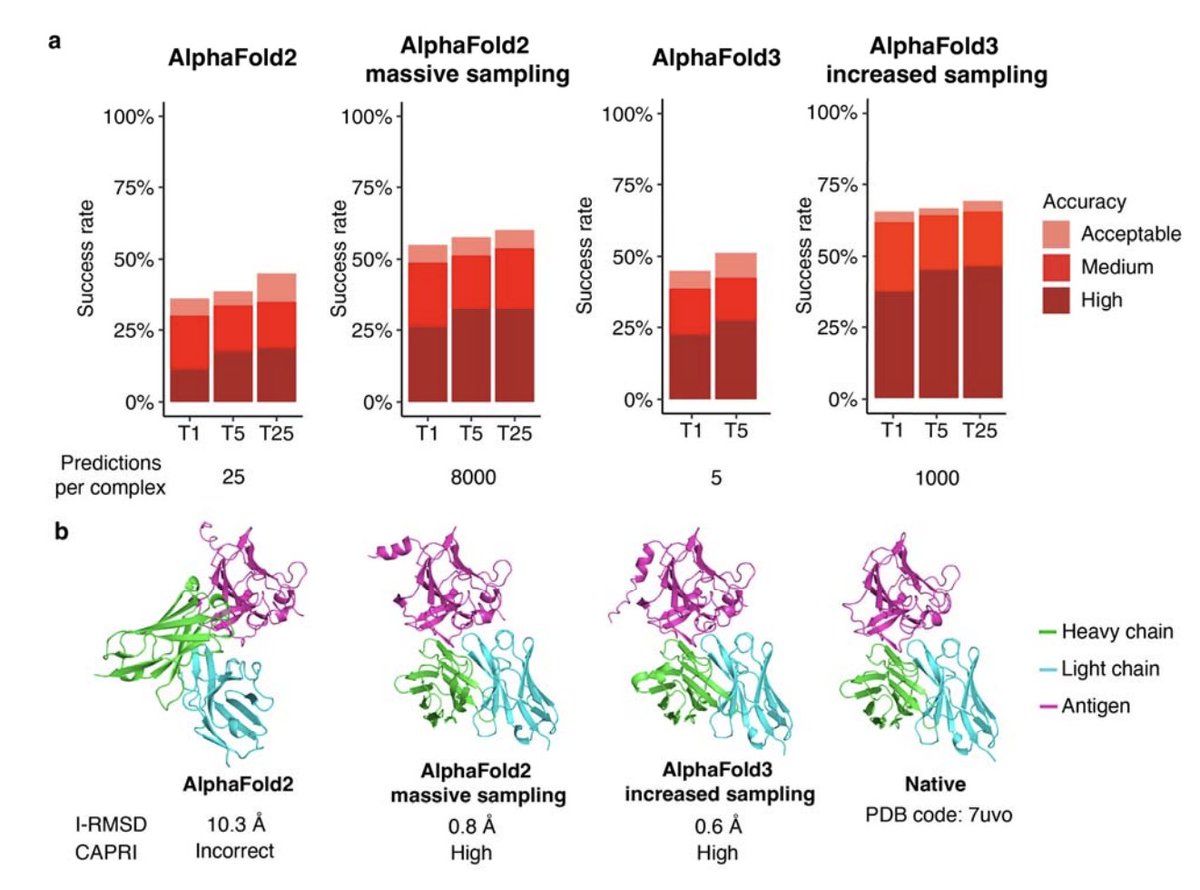
1 They benchmarked deep learning “fold-and-dock” complex prediction specifically for adaptive immune recognition, across three interface classes: antibody–protein (80), antibody–peptide (41), and TCR–pMHC (20; plus an expanded 25-case set for some comparisons), all from PDB entries released after the 2021-09-30 training/template cutoff.
2 The biggest practical takeaway is that sampling matters: for antibody–protein complexes, top-ranked near-native success (CAPRI medium/high) rose from ~30% with default AF2 to ~50% with AF2 massive sampling (8000 models/complex), and AF3 improved further from ~38% (default) to ~60% (1000 models/complex).
3 Antibody–peptide recognition emerged as the hardest class, and not in the expected way: despite small antigens, both AF2 and AF3 struggled. High-accuracy top-ranked models were ~12% with default AF2/AF3, improving to ~20% with increased sampling; near-native (medium/high) only reached ~35–40% even with increased sampling.
4 TCR–pMHC modeling showed consistently higher “near-native” rates than antibody cases (T1 medium/high >60% across protocols), but high-accuracy models remained challenging. Massive sampling in TCRmodel2 (AF2-based, immune-tailored MSAs/templates) notably improved high-accuracy rates, and AF3 with increased sampling reached comparable top-ranked performance.
5 They highlight a ranking gap: for several settings, the full generated ensemble (e.g., T1000/T1500/T8000) contains many more accurate models than the top-ranked pick, implying that better scoring/selection could yield major gains without changing the generator.
6 Confidence-score analysis across pooled models shows interface-focused metrics are often more informative than global multimer scores. For AF2, multiple confidence scores discriminate near-native models very well (ROC AUC > 0.9), with I-pLDDT often best for antibody–peptide and TCR–pMHC because it targets the receptor–ligand interface rather than other strong inter-chain contacts (e.g., heavy–light, TCRα–TCRβ, peptide–MHC).
7 For AF3, confidence scores stayed strong for antibody–protein but degraded for antibody–peptide and TCR–pMHC when separating high vs non-high models; receptor–ligand ipTM (RL-ipTM) and I-pLDDT helped most for TCR–pMHC (RL-ipTM best there, ROC AUC ~0.82 for high-accuracy discrimination). They also provide practical guidance that RL-ipTM around 0.8–0.9 corresponds to ~50% high-accuracy rates across classes/protocols.
8 Open-source AF3-like methods (Boltz-1, Chai-1) were tested with moderate sampling (20 seeds; 100 models/complex). AF3 generally outperformed both across antibody–protein, antibody–peptide, and TCR–pMHC; Boltz-1 tended to beat Chai-1 for antibody–peptide and TCR–pMHC in their runs.
9 A key systems insight is method complementarity: per-target winners differ across AF2 vs AF3 (and to a lesser extent Boltz-1/Chai-1), so pooling top models across methods raises success. For antibody–peptide, near-native success increased from 41% (AF3 alone) to 59% (all methods pooled); high-accuracy rose from 15% to 32%. For TCR–pMHC, combining AF3 with TCRmodel2 increased high-accuracy coverage from 32% to 44% (25-case set).
10 They stress-tested generalization on a highly noncanonical TCR–pMHC-II complex (TCR binds the side of MHC, not the peptide-facing platform; PDB 9EJG): only AF3 produced accurate models (including a high-accuracy model ranked 3rd, ~0.97 Å I-RMSD). This case also illustrated that the top-ranked model can be confidently wrong in binding mode, reinforcing the need for interface-aware scoring and/or pooling.
📜Paper: https://t.co/tR5B9zOXr9
#AlphaFold3 #AlphaFold2 #Antibody #TCR #pMHC #ProteinStructure #DeepLearning #StructuralBioinformatics #Immunology #ComputationalBiology

So many are using the name Orthodox _ _, but the deeper I look many times they are cut off offshoots, eastern catholics, and other pseudo churches. Those not well initiated may stumble on these issues. As they obviously try to obscure the fact that they are noncanonical.
This may come off wrong, but as I look more at Canonical Orthodoxy (Eastern), there are so many counterfeit churches. I wish there was a well put together list of the currently known noncanonical "orthodox" churches. With Orthodoxy growing, it is a minefield out here.

In the noncanonical early Christian text the Gospel of Thomas, Jesus said:
“Split wood, I am there. Lift up a rock, you will find me there.”
Early Christianity was pantheistic.

Monde·t: A Database and Interactive Webserver for Non-Canonical Amino Acids (ncAAs) in the PDB
1. The MONDE·T database is a comprehensive collection of non-canonical amino acids (ncAAs) found in the Protein Data Bank (PDB), featuring 1,875 different chemical types across over 10,000 entries. This resource is a significant step forward in systematically exploring the impact of ncAAs on protein structure.
2. The database is accessible through an interactive webserver that offers powerful tools for researchers. Users can download data, visualize ncAA structures, compare their backbone torsion angles with canonical residues via Ramachandran plots, and explore their chemical similarities. This makes MONDE·T a valuable tool for both protein design and biomedical research.
3. One of the key innovations of MONDE·T is its focus on providing structural context for ncAAs. Unlike previous efforts, such as the iNClusive database, MONDE·T curates a complete dataset of experimentally verified ncAAs in polypeptide chains, allowing for detailed analysis of their effects on protein backbones.
4. The webserver's Ramachandran plot functionality is central to the analysis. Users can input chemical component IDs or PDB IDs to visualize the torsion angles of ncAAs against a canonical background. This feature enables rapid and intuitive access to the backbone geometry of any polypeptide chain, whether it contains ncAAs or not.
5. MONDE·T also includes a chemical similarity tab that compares ncAAs to canonical amino acids based on Tanimoto similarity. This allows researchers to visually inspect and compare 2D structures, providing insights into how modifications affect protein folding and function.
6. Practical applications of MONDE·T are demonstrated through examples such as post-translational modifications, stop codon reassignment, and chemical peptide synthesis. These examples highlight how the database can be used to explore the structural impact of modifications like phosphorylation, incorporation of selenocysteine, and the use of amino acid analogs.
7. The authors commit to updating the database semiannually and maintaining it openly available for the next two years. This ensures that MONDE·T remains a current and useful resource for the scientific community.
📜Paper: https://t.co/AfRUbkths0
#Biochemistry #Bioinformatics #ProteinStructure #NonCanonicalAminoAcids #Database #Webserver #ResearchTool

UNAAGI: Atom-Level Diffusion for Generating Non-Canonical Amino Acid Substitutions
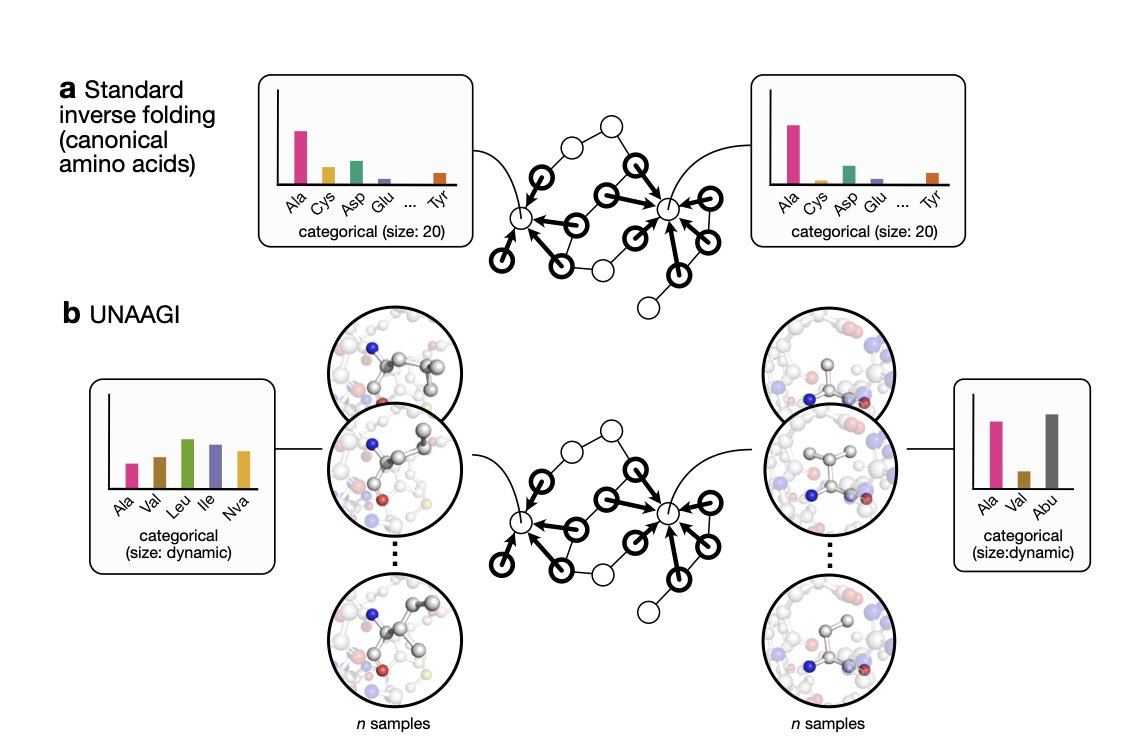
1. A new diffusion-based model named UNAAGI is introduced to tackle the challenge of generating non-canonical amino acid substitutions. This method leverages an E(3)-equivariant framework to reconstruct residue identities from atomic-level structures, offering a novel approach to protein engineering and mutational effect prediction.
2. Unlike traditional methods that are limited to natural amino acids, UNAAGI models side chains in full atomic detail. This allows it to explore both canonical and non-canonical amino acid substitutions within a unified generative paradigm, significantly expanding the chemical diversity accessible for protein design.
3. The model achieves improved performance on non-canonical amino acid substitutions compared to current state-of-the-art methods. It demonstrates meaningful correlations with experimental mutational effects, especially for a subset of non-canonical amino acids that are chemically proximal to natural ones.
4. UNAAGI incorporates a virtual node strategy to handle variable-sized side chains, enabling end-to-end training and sampling across different amino acid types. This approach addresses the challenge of fixed graph topology in traditional models and allows for smoother distribution over amino acid identities.
5. The study highlights the potential for integrating structure-based drug design techniques into protein engineering. By learning patterns in the chemistry of canonical residues, UNAAGI can generalize to non-canonical amino acids, suggesting a shared methodological foundation between these two fields.
📜Paper: https://t.co/j73mJCGigE
#MachineLearning #StructuralBiology #ProteinEngineering #DiffusionModels #NonCanonicalAminoAcids
We warmly invite you to submit to the Special Issue:
Roles of Inflammasomes and Their Molecular Mechanisms
From the Kyonggi University , Guest Edited by Dr. Young-Su Yi @Youngsuyi75
📖 For more details, please see: https://t.co/inaBzTkuny
👉This Special Issue focuses on the regulatory roles and molecular mechanisms of canonical and noncanonical inflammasomes in inflammatory responses and inflammation-related diseases. It aims to deepen understanding of how inflammasome dysregulation drives disease and to promote the development of novel anti-inflammatory therapies.
Potential topics include, but are not limited to:
✨ Roles of canonical and noncanonical inflammasomes in inflammatory responses and diseases and the underlying molecular mechanisms
✨ Identification and validation of novel molecules interacting with inflammasomes
✨ Evaluation of anti-inflammatory effects through inflammasome targeting
✨ Development of potential inflammasome-targeted therapeutics
🧠 Why submit to this Special Issue of FBL?
✔️ Open Access
✔️ Rapid review process
✔️ Impact Factor: 3.1
✔️ Indexed in major databases
📕 Manuscript Type: Original Research, Comprehensive Reviews
📆 Submission deadline: 31 October 2026
✍️ Submit your work to https://t.co/yoG3BUF1Nl
#Inflammasomes #Inflammation #MolecularMechanisms #AntiInflammatoryTherapies #FBLCFP


CLOCK protein's noncanonical role stabilizes heterochromatin independently of transcription, rejuvenating aged hMSCs (DOI: 10.1038/s41422-020-0385-7).
Caloric restriction resets immune aging: suppresses 70% of age-upregulated genes including hub proteins Irf7, Ifit3, Usp18, Rsad2 - all immune/antiviral responders (DOI: 10.1101/2024.03.09.584213).
Could rhythmic fasting protocols amplify CLOCK-mediated chromatin stability while resetting immune transcriptomes?
Molecule Proof of Invention:
https://t.co/UGi4y2eN0b
Science papers:
Sarcopenia Transcriptomic Pathways 10.1101/2024.03.09.584213
Airway Epithelium HLF Regulator 10.1101/2025.05.06.650933
mTOR Blockade Improves IgA 10.1101/2025.01.21.634071
Aged Environment Impairs NK 10.1111/acel.12303
Cytokine Signatures Tfh Heterogeneity 10.1101/2024.06.12.598622
MmpE Nucleomodulin Promotes Survival 10.1101/2025.06.24.661236
Diabetic Mouse Aortic SMC 10.1101/2025.04.14.648851
Senescence Chips Cell Removal 10.1111/acel.12722
CLOCK Heterochromatin Cartilage Rejuvenation 10.1038/s41422-020-0385-7
Brilliant thinking! Wnt signalosome assembly (DOI: 10.1101/2024.06.18.599024) shows we can steer signals toward regeneration vs oncogenesis at the receptor level. Different Wnt ligands selectively recruit Lrp6 or Ror2, creating distinct outcomes.
Your safety switch concept aligns perfectly - real-time imaging of these receptor complexes could provide the biomarker signatures we need. The key: exploit the binary nature of canonical vs noncanonical Wnt pathways.
Could oscillating Wnt modulation be our answer - pulsed regeneration without sustained oncogenic signals?
Molecule Proof of Invention:
https://t.co/YLif5BxlHr
Science papers:
Lrp6 Ror2 Signalosomes 10.1101/2024.06.18.599024
Sex Age Ancestry Methylation 10.1101/2025.04.29.651179
T Cell Aging Memory 10.4049/jimmunol.1401174
7‑Ketocholesterol Barrier Integrity 10.1007/s00011-013-0660-x
CD28 T Cells CMV 10.1186/1472-6823-13-34
p16 Induced Cell Cycle 10.1111/acel.12279
Midbrain Striatum Parkinson Model 10.1101/2023.10.28.564305
Adipose Dysfunction Diabetes Frailty 10.1038/s41598-021-02544-0
Direct Modeling of DNA and RNA Aptamers with AlphaFold 3: A Promising Tool for Predicting Aptamer Structures and Aptamer−Target Interactions @ACSSynBio
1. A study evaluates the potential of AlphaFold 3 for predicting the 3D structures of DNA and RNA aptamers, highlighting its accuracy in modeling complex nucleic acid structures and interactions. This advancement could revolutionize the design of aptamers for diagnostic and therapeutic applications.
2. The study demonstrates that AlphaFold 3 effectively models a range of aptamer structures, including those with noncanonical elements like G-quadruplexes and pseudoknots. This capability is crucial for understanding the binding mechanisms of aptamers to their targets.
3. AlphaFold 3 shows remarkable accuracy in predicting G-quadruplex structures, a significant achievement as these structures are prevalent in functional nucleic acids. The study highlights AlphaFold��s ability to capture both canonical and noncanonical base interactions.
4. The research underscores the influence of intermolecular interactions on AlphaFold’s predictive accuracy. Aptamers bound to proteins were modeled with higher confidence and accuracy compared to those bound to small molecules or in their apo states.
5. Despite its strengths, AlphaFold 3 faces challenges in predicting rare and synthetic secondary structure elements, particularly in apo aptamers and those bound to small molecules. This highlights the need for further refinement and inclusion of more diverse structural data in training.
6. The study also explores AlphaFold’s potential in predicting non-PDB aptamers, demonstrating its ability to propose structural hypotheses for uncharacterized aptamer−target interactions. This feature can guide experimental efforts and accelerate the discovery of new aptamers.
📜Paper: https://t.co/rDrN2NYfUt
#AlphaFold #AptamerModeling #StructuralBiology #ComputationalBiology #SyntheticBiology

Design of peptides with non-canonical amino acids using flow matching
1. This groundbreaking study introduces NCFlow, a novel flow-based generative model that can incorporate any arbitrary non-canonical amino acid (ncAA) into a given protein, significantly expanding the chemical space for peptide engineering and drug discovery.
2. NCFlow addresses the limitations of traditional protein design tools by pretraining on millions of small molecule structures and protein-ligand complexes, and then finetuning on native non-canonical amino acids found in the Protein Data Bank. This approach enhances the model’s ability to accurately predict the structure of unseen non-canonical amino acids.
3. The study presents an innovative peptide design pipeline that uses deep mutational scanning and a combination of deep learning-based and molecular dynamics-based alchemical binding free energy calculations to identify improved peptide variants. This method has been validated on four protein-peptide complex test cases, demonstrating significant improvements in binding affinity.
4. NCFlow outperforms AlphaFold3-based methods in structure prediction of non-canonical amino acids, showcasing its potential for integrating into existing protein design platforms to enhance properties beyond what is achievable with standard amino acids.
5. The authors highlight the scarcity of ncAA data in the Protein Data Bank and propose effective strategies to augment training data, including the use of small molecule structures and protein-ligand complexes. This approach not only improves model performance but also generalizes to ncAAs not found in the PDB.
6. The study demonstrates that incorporating non-canonical amino acids can significantly improve binding affinity by up to -7.0 kcal/mol, highlighting the potential of NCFlow for developing novel peptide drugs with enhanced properties.
@mjslee0921
📜Paper: https://t.co/3SUx7rM9Kf
#ProteinDesign #NonCanonicalAminoAcids #PeptideEngineering #DrugDiscovery #DeepLearning #MolecularDynamics #FlowMatching

Machine Learning-Guided Evolution of Pyrrolysyl-tRNA Synthetase for Improved Incorporation Efficiency of Diverse Noncanonical Amino Acids @NatureComms
Researchers have developed a novel machine learning framework to engineer pyrrolysyl-tRNA synthetase (PyIRS), significantly enhancing the efficiency of incorporating diverse noncanonical amino acids (ncAAs) into proteins. This breakthrough addresses a critical bottleneck in genetic code expansion technology.
The study initially utilized an FFT-PLSR model to explore combinations of 12 single mutations within the tRNA-binding domain (TBD) of PyIRS. This led to the discovery of Com1-IFRS, a variant that demonstrated an impressive 11-fold increase in stop codon suppression (SCS) efficiency.
To push the boundaries further, deep learning models including ESM-1v, Mutcompute, and ProRefiner were employed. These models were instrumental in identifying additional, previously unexplored mutation sites within the PyIRS.
Subsequent application of the FFT-PLSR model to these new sites yielded Com2-IFRS, a highly optimized variant. Com2-IFRS achieved a remarkable 30.8-fold increase in SCS efficiency and up to a 7.8-fold improvement in catalytic efficiency compared to the initial PyIRS variant.
A key highlight of this research is the broad applicability of the engineered mutations. When transplanted into seven other PyIRS-derived synthetases, these mutations consistently led to significantly improved yields of proteins containing six different types of ncAAs.
Molecular dynamics simulations were also conducted, offering valuable insights into the underlying mechanisms. These simulations revealed how the introduced mutations precisely reshape interactions between tRNA and the protein, contributing to the observed enhancements in enzyme activity.
This work presents a robust machine learning-guided strategy for directed enzyme evolution, offering a powerful and generalizable method to optimize enzyme activity and advance the utility of genetic code expansion technology for broader applications.
💻Code: https://t.co/gJM3nnP7b6
📜Paper: https://t.co/lLKq1tvOMg
#ComputationalBiology #EnzymeEngineering #MachineLearning #SyntheticBiology #ProteinEngineering #GeneticCodeExpansion

Computation strategies and clinical applications in neoantigen discovery towards precision cancer immunotherapy
Neoantigens are emerging as highly promising targets for cancer immunotherapy due to their unique tumor-specific properties, which enable them to elicit potent immune responses against malignant cells while sparing healthy tissues. Recent advancements in high-throughput sequencing, mass spectrometry, and artificial intelligence are fueling more accurate prediction algorithms for these vital biomarkers.
This comprehensive review systematically evaluates the latest in neoantigen source characterization and prediction, with a strong focus on innovative methods for HLA-peptide binding and T-cell receptor (TCR) recognition. It covers the landscape from basic definitions and theoretical developments to cutting-edge applications and future research directions in computational biology.
The study highlights diverse sources of neoantigens, extending beyond traditional somatic mutations like SNVs and INDELs to include gene fusions and structural variations, which can generate more novel open reading frames and stronger immune responses.
Furthermore, the review emphasizes the critical role of RNA dysregulation (e.g., alternative splicing, noncanonical transcripts, RNA editing) and protein modifications (e.g., post-translational spliced peptides, PTMs) as significant, yet often overlooked, sources of neoantigens. These alternative sources are particularly crucial for cancers with low mutational burdens, broadening the scope of targeted immunotherapies.
A detailed workflow for neoantigen prediction is outlined, encompassing precise HLA typing, robust HLA binding prediction, and sophisticated pHLA-TCR binding prediction. The evolution of computational tools and machine learning models in these areas is also discussed, highlighting their increasing accuracy and complexity.
The paper explores cutting-edge clinical applications of neoantigens, including their pivotal role in designing personalized cancer vaccines, developing advanced adoptive cell therapies such as TCR-T and CAR-T, and engineering highly specific bispecific antibodies for targeted tumor killing.
Key challenges and future opportunities in neoantigen discovery are delineated, such as the integration of multi-omics data for identifying universal neoantigens, overcoming algorithmic generalization hurdles, and diversifying validation methods to improve the clinical translation of neoantagen-based therapies.
📜Paper: https://t.co/eYpSkNUbdM
#ComputationalBiology #CancerImmunotherapy #NeoantigenDiscovery #PrecisionMedicine #AIinMedicine #BiomarkerResearch

Fold-Conditioned De Novo Binder Design via AlphaFold2-Multimer Hallucination.
1. FoldCraft introduces a new deep learning framework for designing protein binders with precise control over their structural folds. It uses AlphaFold2-Multimer hallucination guided by a contact map similarity loss, which simplifies the design process compared to other multi-loss or diffusion-based methods.
2. A key innovation of FoldCraft is its single loss function, based on contact map similarity, which enforces fold-specific geometry while also implicitly optimizing AlphaFold confidence metrics like pLDDT, ipTM, and iPAE. This makes the design process more robust and widely applicable.
3. The method demonstrates high versatility by successfully designing binders for six distinct protein topologies, including both canonical (e.g., Top7, β-barrel) and noncanonical (e.g., β-solenoid, TIM barrel) architectures. In comparisons, FoldCraft consistently outperformed RFdiffusion, a state-of-the-art method, in terms of structural fidelity and AlphaFold confidence metrics.
4. FoldCraft also significantly improves the de novo design of VHH nanobody binders, a challenging class of antibodies due to their complex fold and flexible loops. It achieved in silico success rates of up to 19.5% against four therapeutically relevant targets (PD-1, PD-L1, IFNAR2, EGFR) using AlphaFold3 evaluations, a substantial improvement over RFAntibody, where designs often failed to meet binding confidence thresholds.
5. The framework allows for flexible post-hallucination sequence optimization, with options like full-sequence redesign using ProteinMPNN or SolMPNN to enhance structural confidence, and interface-restricted optimization to preserve binding geometry.
6. While FoldCraft shows significant advancements, current limitations include a tendency for oracle models (AlphaFold3/RoseTTAFold) to predict side-docking interactions for VHH designs, possibly due to training data biases. Also, it doesn't generalize to scFv antibody topologies, indicating a potential need for more accurate structure prediction models within the hallucination workflow, such as open-source AlphaFold3 reproductions.
💻Code: https://t.co/rH83Qx0aZF
📜Paper: https://t.co/DvsUAy6m1v
#ProteinDesign #DeepLearning #AlphaFold2 #Nanobodies #Bioinformatics #StructuralBiology #FoldCraft

Identification of non-canonical peptides with moPepGen @NatureBiotech
1.moPepGen is a graph-based algorithm designed to exhaustively generate non-canonical peptides in linear time, addressing the challenge of modeling transcriptomic and proteomic complexity in proteogenomics.
2.It uniquely models the full combinatorial diversity of non-canonical peptides by integrating small variants, novel ORFs, RNA editing, alternative splicing, transcript fusions, and RNA circularization across all transcripts and reading frames.
3.moPepGen consistently outperforms existing tools like customProDB and pyQUILTS by detecting complex variant peptides missed by others, especially those arising from multiple layers of regulation and variant combinations.
4.Its linear runtime and scalability were validated through extensive fuzz testing against a brute-force ground truth, with perfect accuracy across 1 million iterations and dramatically reduced computational demands.
5.In human cancer cell lines (n=375), moPepGen processed each in under 3 minutes, generating thousands of candidate non-canonical peptides per line, and identified variant peptides from well-known cancer drivers like TP53, KRAS, and MET.
6.moPepGen enabled the detection of 343 non-canonical peptides from novel ORFs in mouse tissues and 1,787 ORFs in human tonsil previously annotated as noncoding, demonstrating broad cross-species and cross-protease utility.
7.The tool supports a wide range of experimental setups, including data-independent acquisition (DIA) proteomics, where it detected hundreds of variant peptides per tumor using Prosit-predicted spectra.
8.In primary prostate tumors, moPepGen discovered over a million variant peptides per sample, including recurrent circRNA-derived peptides, validated by de novo sequencing and found across multiple patients.
9.moPepGen integrates cleanly into existing workflows via a Nextflow pipeline, providing detailed variant annotations that simplify downstream interpretation and validation of detected peptides.
10.The method expands the detectable proteome beyond canonical sequences, offering a powerful platform for uncovering hidden proteoforms and potential neoantigens for precision oncology.
💻Code: https://t.co/PuKoBl2MFe
📜Paper: https://t.co/VBfP31ZO1c
#Proteogenomics #CancerResearch #MassSpectrometry #Bioinformatics #NoncanonicalPeptides


@CalicoChimera can they be noncanonically queer ... in canon theyd be straight but i love nonbinary sapphic jayfeather x bi briarlight
State-aware protein-ligand complex prediction using AlphaFold3 with purified sequences
1.This paper introduces a state-aware strategy that enhances AlphaFold3's ability to predict protein–ligand complexes by leveraging purified MSAs. The method corrects common failure modes when ligands induce non-canonical or allosteric conformational changes in the receptor.
2.Instead of relying on default MSAs, which often bias predictions toward the most common structural states, the authors use AF-ClaSeq to extract sequence subsets encoding specific conformational states—like inactive forms of kinases or cryptic pocket states.
3.A key innovation is the iterative enrichment and voting-based selection of MSA sequences that conform to a desired structural reference, allowing targeted predictions of rare or underrepresented binding conformations.
4.Applying this strategy to EGFR allosteric inhibitors, they showed that AlphaFold3's default predictions fail to capture the correct inactive conformation and ligand pose. Using purified inactive-state sequences reduced ligand RMSD from over 14 Å to below 2.5 Å.
5.In the IL-1β system, where loop movement enables binding to a cryptic pocket, default AlphaFold3 again failed to model the correct conformation. With purified MSAs, structure predictions converged to sub-0.5 Å RMSD from the experimental structure.
6.The improvement is not ligand-specific. The approach does not require knowledge of the bound structure itself but only of the desired conformational state (e.g., DFG-in vs. DFG-out, apo vs. bound). This makes the method broadly applicable across diverse protein families.
7.The study reveals that prediction accuracy hinges more on sequence purity than on MSA depth. Carefully selected sequences drive models toward correct functional states, a valuable insight for modeling flexible or allosteric targets.
8.Purified MSAs also increase prediction confidence. Structures generated using them show higher local pLDDT in key flexible regions (e.g., αC-helix and A-loop), indicating improved model certainty in functionally important areas.
9.The findings address a fundamental limitation in current co-folding models: their tendency to memorize familiar poses from training data. By reweighting sequence inputs toward rare states, the model escapes training-set bias.
10.This approach paves the way for conformation-aware modeling in drug discovery, especially for designing ligands targeting novel allosteric sites, overcoming resistance mutations, or inducing noncanonical receptor conformations.
📜Paper: https://t.co/eh8g0GXWdO
#AlphaFold3 #ProteinLigand #DrugDiscovery #DeepLearning #AllostericInhibitors #ComputationalBiology #ProteinFolding

CASP16 protein monomer structure prediction assessment
1.AlphaFold3 (AF3) integration proved transformative in CASP16, outperforming AlphaFold2 (AF2) in model selection and confidence estimation. Despite being limited to a web interface at the time, AF3 was extensively used by top-performing groups, with the Yang lab dominating the leaderboard by leveraging AF3 pipelines.
2.Monomer structure prediction is now considered nearly solved. No target folds were missed across evaluation units. However, challenges persist in modeling truncated proteins, induced-fit conformations, and irregular secondary structures.
3.Customized multiple sequence alignments (MSAs) and careful sequence construct selection significantly boosted model quality. Deep MSAs correlated with better predictions, though AF2/AF3 were capable of accurate predictions even without deep alignments in some cases.
4.Prokaryotic proteins were easier to predict than viral and eukaryotic proteins, mainly due to MSA depth and sequence diversity. Viral targets were especially difficult due to shallow MSAs and conformational complexity.
5.Prediction accuracy was higher for structures solved via X-ray crystallography compared to cryo-EM or NMR. Flexible regions, especially in NMR targets, were often poorly predicted due to intrinsic structural heterogeneity.
6.CASP16 introduced three new experimental setups: Phase 0 (stoichiometry withheld), Phase 2 (massive model pools provided), and Model 6 (fixed MSAs). However, low participation and design issues limited their analytical utility.
7.Groups using both AF2 and AF3 performed best. Notably, pure protein language model-based (PLM) approaches underperformed, reinforcing AlphaFold-based methods as state-of-the-art.
8.Target features influencing prediction difficulty included size (larger proteins fared worse), complex origin (hetero-oligomers were harder), and low-resolution experimental structures. MolProbity scores aligned with prediction errors.
9.Case studies revealed key limitations of current predictors: insensitivity to truncation-induced conformational change (e.g., T1207-D1), difficulty modeling induced-fit loops (e.g., T1267s1-D1), and misprediction of irregular secondary structures.
10.Yang lab groups led all three phases. Their models consistently ranked highest, though they scored lower in MolProbity, highlighting trade-offs between global accuracy and physicochemical plausibility.
11.Despite AF3's sampling potential, few groups demonstrated strong model ranking ability. Many top predictors had first-model success rates barely above random, with PEZYFoldings performing best at selecting top-ranked models.
12.Model quality self-assessment improved with AF3. Its confidence scoring module (QSE) outperformed other groups, suggesting a major advance in reliability estimation.
13.MassiveFold model pools in Phase 2 occasionally contained better structures than any CASP submissions, but only a few groups could identify and submit them, stressing the importance of better model selection tools.
14.Comparative analysis with CASP15 showed minimal progress in monomer modeling. Although AF3 contributed to improved predictions, when controlling for target difficulty, the overall performance increase was not statistically significant.
15.Model 6 aimed to isolate MSA quality and network architecture impact. Results showed that better MSAs improved predictions, and a few groups outperformed ColabFold using the same MSA, but sparse participation weakened conclusions.
16.Community engagement with new challenges was low. To drive future progress, the authors recommend integrating Phases 0/2 and Model 6 into the main rankings to incentivize broader participation.
17.CASP16 confirms that while single-chain prediction is mature, challenges remain in modeling dynamic, complex, and noncanonical protein regions. The field's next frontiers lie in protein complexes, model ranking, and accurate modeling of functionally critical conformations.
📜Paper: https://t.co/xa58VfqZSU
#CASP16 #AlphaFold3 #ProteinStructurePrediction #ComputationalBiology #StructuralBioinformatics

RareFold: Structure prediction and design of proteins with noncanonical amino acids
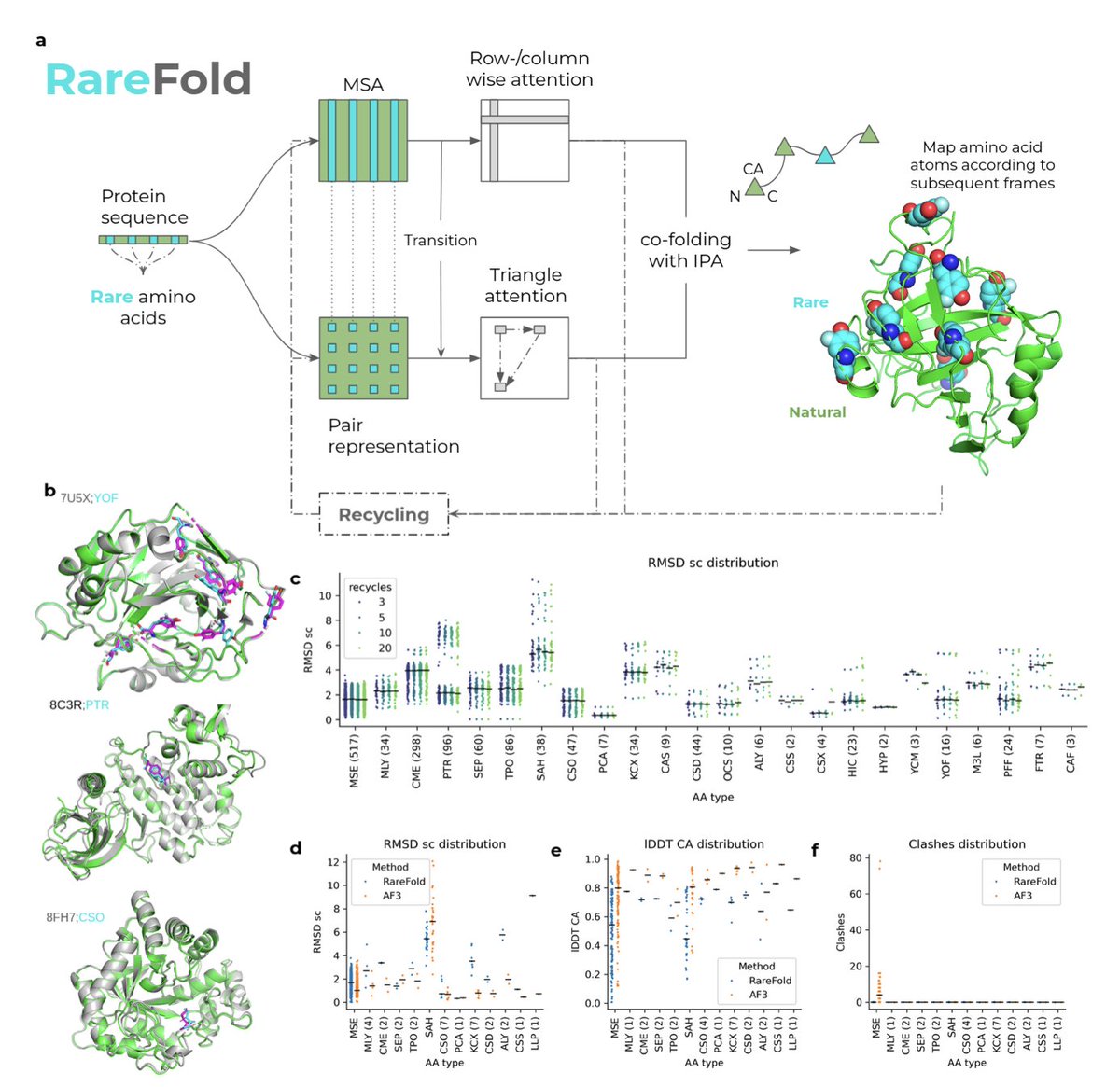
1.RareFold is a deep learning model that extends protein structure prediction to sequences containing both canonical and 29 noncanonical amino acids (NCAAs), enabling structure modeling and peptide design in a vastly expanded chemical space.
2.Unlike AlphaFold3, which models residues atom-by-atom, RareFold uses a token-based representation for each amino acid, canonical or modified. This design drastically improves computational efficiency and allows scalable inverse design.
3.RareFold achieves competitive or superior accuracy compared to AlphaFold3 in side-chain RMSD for several NCAAs (e.g., SEP, SAH, PCA), while also avoiding AF3’s steric clashes and unrealistic geometries—especially evident in residues like MSE.
4.On a benchmark set of 174 unseen NCAA-containing proteins, RareFold consistently predicted correct global structures (Cα-lDDT median = 0.87) and NCAA side-chain positions with high accuracy across diverse residue types.
5.Unlike AF3, RareFold does not rely on large-scale template-based self-distillation and handles all inputs with a memory footprint ≤40GB, making it much more suitable for high-throughput design workflows.
6.A key output of RareFold is EvoBindRare—a design framework built atop the predictive model that can generate linear and cyclic peptide binders using both canonical and noncanonical residues.
7.Using EvoBindRare, the authors designed linear and cyclic peptide binders (32 total amino acids, including 12 NCAAs), which were experimentally validated via SPR, showing micromolar affinities comparable to wild-type binders.
8.The successful binders included multiple NCAAs placed at functional interfaces, proving RareFold’s capability to place chemically novel residues in biophysically realistic and functionally relevant contexts.
9.The confidence metric plDDT accurately predicts structural reliability, with strong correlation to actual RMSD values—essential for filtering candidates in peptide design.
10.RareFold stands out as the first scalable, experimentally validated structure prediction and design system tailored for NCAAs, laying a foundation for next-generation therapeutic peptides with improved stability, specificity, and immune evasion.
@Patrick18287926
💻Code: https://t.co/cdYOefq4yX 📜Paper: https://t.co/GS3XBk6s4m
#ProteinDesign #NCAA #AlphaFold #PeptideTherapeutics #StructurePrediction #BinderDesign #DeepLearning #Bioinformatics #RareFold #EvoBindRare
InteracTor: Feature Engineering and Explainable AI for Profiling Protein Structure-Interaction-Function Relationships
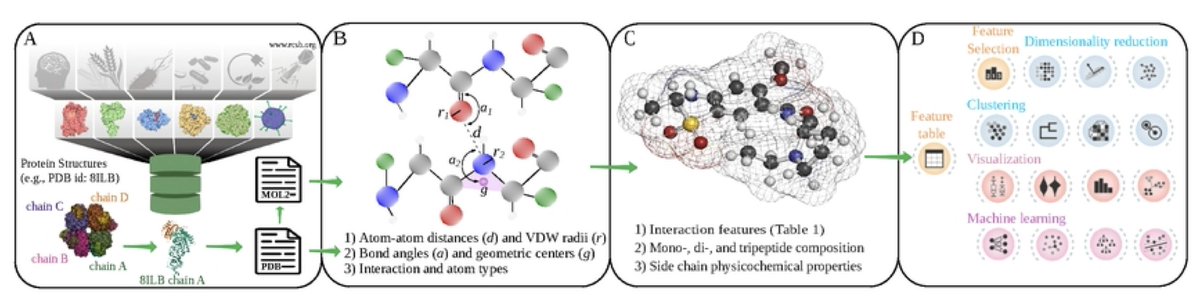
1. InteracTor is a new computational toolkit that extracts biologically interpretable features from 3D protein structures, enabling explainable and high-accuracy classification of protein families based on structural, interaction, and sequence data.
2. Unlike previous tools that rely on primary or secondary structure alone, InteracTor emphasizes tertiary-level features such as hydrogen bonds, van der Waals interactions, hydrophobic contacts, and surface tension—key drivers of protein function and stability.
3. Using 18,296 multimodal features extracted from 20,000+ protein structures, InteracTor captures complex molecular characteristics across protein families. Feature importance is assessed using mutual information and SHAP values for transparent model interpretation.
4. Interatomic interaction features dominated the top-ranked predictive variables—9 out of the top 12 features were structural interactions, with hydrogen bonds, surface tension, and London dispersion forces being most discriminative.
5. The toolkit supports dimensionality reduction and clustering with PCA and t-SNE, revealing family-specific groupings driven by structural features. For example, SDR, Cytochrome P450, and Peptidase S1 families showed distinct interaction patterns.
6. InteracTor integrates seamlessly with scikit-learn ML algorithms, achieving up to 0.80 F1-score in multiclass classification using ensemble methods. Feature selection reduced the model to just 100 top features with no significant drop in performance.
7. Explainable AI (XAI) via SHAP uncovered feature contributions across protein families. Some features had divergent impacts depending on family, such as hydrogen bonds aiding SDR prediction but reducing confidence for others like Peptidase S1.
8. InteracTor's modularity enables use cases ranging from protein classification and structure-function analysis to drug discovery and engineering. Features can help flag misfolded designs or guide rational design via atomic-level insight.
9. The toolkit accommodates noncanonical amino acids and rare residues like selenocysteine and pyrrolysine, expanding its utility for synthetic biology and functional protein annotation.
10. With open-source implementation, detailed documentation, and built-in support for feature selection, clustering, and ML workflows, InteracTor provides a transparent, versatile platform for structural bioinformatics research.
💻Code: https://t.co/ztSjYRfQhk
📜Paper: https://t.co/sXAF1wcynN
#proteinstructure #bioinformatics #machinelearning #XAI #structuralbiology #proteinfamilies #AI4Science #hydrogenbonds #featureengineering #drugdiscovery

@Cuneyt_S_Sevi Ergo: While Light's symbol of the Sun represents the gravity of canonical narrative, Void's symbol of the Black Hole represents that same gravity- with Truth, absent.
Both Canonical and Noncanonical story have literal Weight- All that separates them is the spotlight. (2/2)
GPepT: A foundation language model for peptidomimetics incorporating non-canonical amino acids
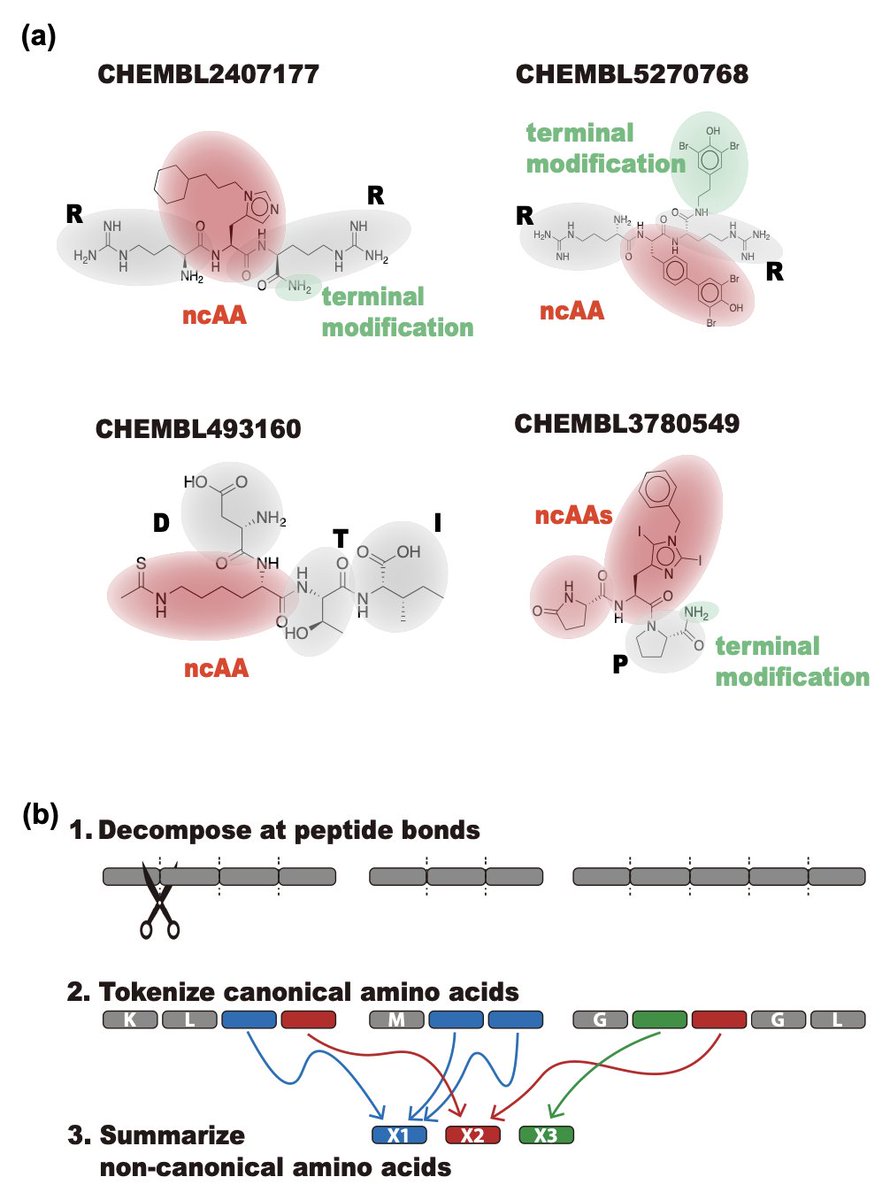
1. GPepT introduces the first foundation language model specifically designed to generate peptidomimetics, incorporating over 17,000 non-canonical amino acids (ncAAs) and terminal modifications derived from the ChEMBL database.
2. The core innovation is Monomerizer, a Python tool that decomposes SMILES-encoded molecules into tokens representing ncAAs and modifications, creating a chemically diverse vocabulary absent in canonical peptide models.
3. Trained on 42,743 chemically tokenized sequences, GPepT generates peptides with significantly greater structural and chemical diversity than traditional models, as visualized by t-SNE and property distribution plots.
4. In a fine-tuned antimicrobial peptide (AMP) generation task, GPepT successfully generated peptides with experimentally validated antibacterial activity. One peptide, Pep1, containing D-Tryptophan, outperformed its canonical counterpart in MIC assays.
5. GPepT's tokenization captures rare amino acid variants not found in PubChem or major databases, enabling exploration of biologically and therapeutically relevant chemical space previously inaccessible to generative models.
6. The model expands beyond conventional peptide design by learning from real-world therapeutic compounds like CHEMBL2407177 and CHEMBL5270768, which use ncAAs to enhance stability, bioactivity, and resistance profiles.
7. GPepT was built using a reinitialized GPT-2 large architecture (36 layers, 1280-dim), pretrained on ChEMBL-derived sequences, and later fine-tuned on a curated AMP dataset with E. coli activity labels.
8. Enrichment analysis of generated AMP sequences revealed that fine-tuning selectively boosts the use of certain ncAAs strongly associated with antimicrobial activity, with enrichment scores as high as 33.
9. Despite challenges in synthesis, Pep1 was successfully purified and structurally validated with circular dichroism, demonstrating distinct secondary structure potentially responsible for its biological potency.
10. While 80% of identified ncAAs lack primary amines and are thus difficult to synthesize via standard methods, this underscores the need for novel synthetic strategies to leverage computational peptide design fully.
11. GPepT bridges computational language modeling and wet-lab validation, highlighting the therapeutic promise of ncAA-enriched peptide libraries in fighting antimicrobial resistance and expanding peptide drug discovery.
💻Code: https://t.co/3PjHXXvvoR
📜Paper: https://t.co/oYf1DUJWYt
#PeptideDesign #AntimicrobialPeptides #NonCanonicalAminoAcids #DrugDiscovery #Bioinformatics #LLM #LanguageModel #Peptidomimetics #ChEMBL #SyntheticBiology

@noncanonicAleae @tigran_iii I’d hate to compute the homotopy of ies.
How to generalize machine learning models to both canonical and non-canonical peptides
1. This paper presents a systematic evaluation of machine learning models for predicting peptide functions across both canonical and non-canonical peptides, addressing the challenge of generalization between these two classes.
2. It highlights the limitations of existing methods, which struggle to generalize from canonical peptide data to non-canonical peptides due to differences in structural diversity and limited data availability.
3. The authors introduce a novel approach that utilizes similarity-based dataset partitioning with MAPc and ECFP fingerprints for non-canonical peptides and MMSeqs2 for canonical peptides, optimizing data splits to ensure robust performance.
4. They find that fingerprint-based similarity measures, especially MAPc and ECFP, outperform traditional sequence alignment methods for partitioning canonical datasets, suggesting a shift from conventional practices.
5. To address the problem of representation, the study benchmarks several molecular representation methods, including Chemical Language Models (CLMs) like ChemBERTa-2 and Molformer-XL, protein language models like ESM2 and Prot-T5-XL, and molecular fingerprints like ECFP and PepFuNN.
6. Among all tested representations, general-purpose models like ChemBERTa-2 and Molformer-XL performed better than peptide-specific models such as PeptideCLM and Pepland, with ChemBERTa-2 showing the best generalization across both canonical and non-canonical datasets.
7. The authors demonstrate that training models solely on canonical or non-canonical data results in poor generalization to the other class. However, training on mixed datasets enables successful generalization with minimal performance loss.
8. Jointly trained models effectively generalize to both canonical and non-canonical peptides, even when the dataset is heavily imbalanced, suggesting that representation techniques can effectively bridge the gap between these two peptide classes.
9. The study concludes that ChemBERTa-2 is the most suitable representation technique for joint modeling and recommends further exploration of hybrid approaches combining different representation techniques for better performance.
10. The authors release benchmark datasets and partitioning schemes to aid future research on peptide representation learning.
💻Code: https://t.co/GlloLOMEnL
📜Paper: https://t.co/pafJZAhJHW
#PeptideModeling #MachineLearning #Bioinformatics #CanonicalPeptides #NonCanonicalPeptides #ChemBERTa #Generalization #MolecularRepresentations #PeptideRepresentationLearning

Most Popular Users

Elon Musk 
@elonmusk
239.7M followers

Barack Obama
@barackobama
118.6M followers

Cristiano Ronaldo
@cristiano
114.3M followers

Donald J. Trump
@realdonaldtrump
111.7M followers

Narendra Modi
@narendramodi
106.9M followers

Rihanna
@rihanna
98.6M followers

NASA
@nasa
92.1M followers

Justin Bieber
@justinbieber
91.7M followers

KATY PERRY
@katyperry
89.9M followers

Taylor Swift
@taylorswift13
83.9M followers

Lady Gaga
@ladygaga
75.4M followers

Virat Kohli
@imvkohli
73.3M followers

Kim Kardashian
@kimkardashian
70.8M followers

YouTube
@youtube
68.6M followers

Neymar Jr
@neymarjr
66.3M followers

Bill Gates
@billgates
65.1M followers

Selena Gomez
@selenagomez
63M followers

The Ellen Show
@theellenshow
62.1M followers

CNN
@cnn
61.7M followers

X
@x
60.6M followers