

Top Tweets for #oneworldlearn

#oneworldlearn #learning #howtolearn
“The first thing that popped into my mind was a teacher friend of mine who gives every member of her class at the beginning of each term a joker, like the joker from a pack of cards. And they have one opportunity to play their joker at any point during that term. And when they play it, when the child plays the joker, that is a demand that the teacher stops what she's doing and explains the real life validity of what she's doing.”
— Professor Guy Claxton
https://t.co/04s1Wv6jKS
#bookquote #oneworldlearn
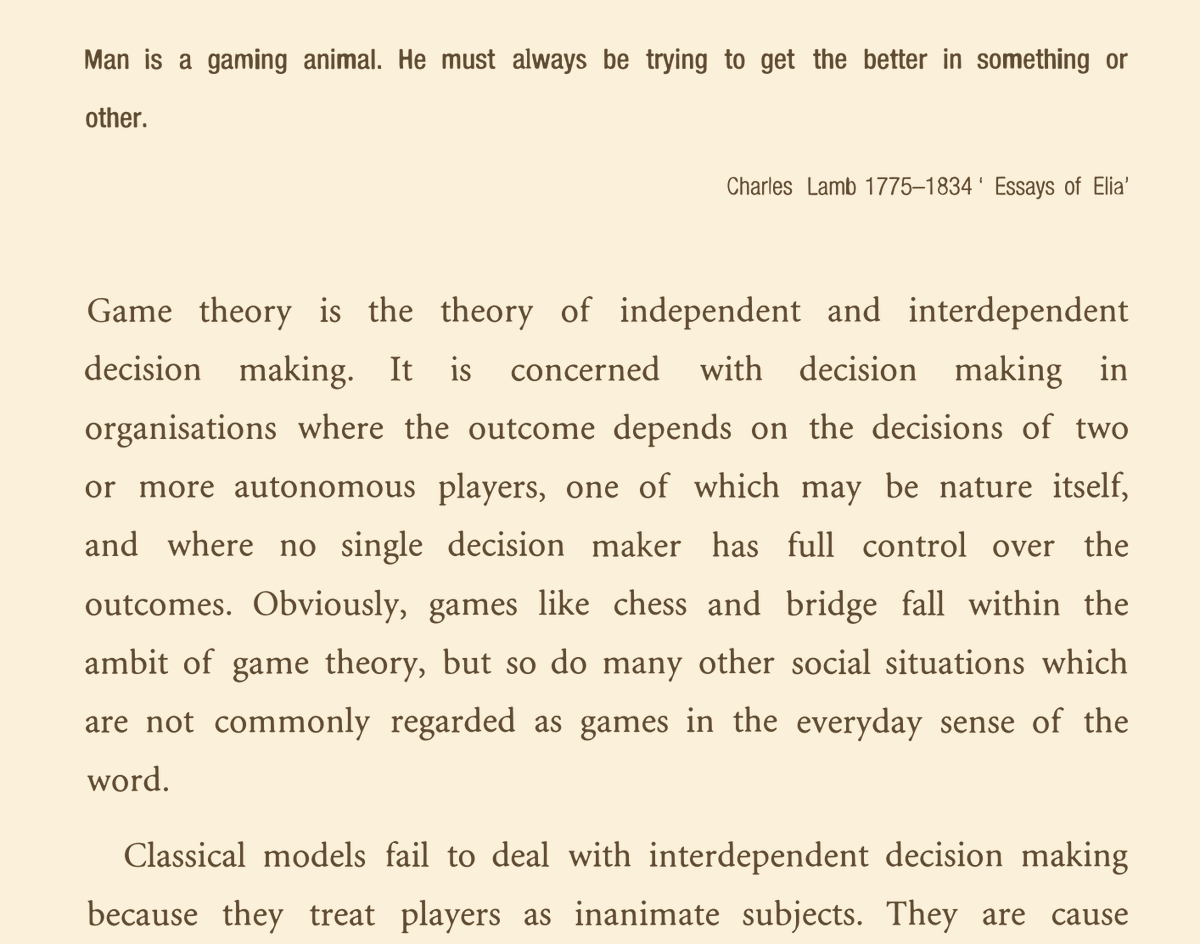
"Classical models fail to deal with interdependent decision making because they treat players as inanimate subjects. They are cause and effect models that neglect the fact that people make decisions that are consciously influenced by what others decide. A game theory model, on the other hand, is constructed around the strategic choices available to players, where the preferred outcomes are clearly defined and known."
Anthony Kelly. Decision Making Using Game Theory: An Introduction for Managers

1/
#bookoftheweek #Books #oneworldlearn
The title "Our Dollar, Your Problem" is an allusion to a famous remark made by U.S. Treasury Secretary John Connally in 1971. Connally was responding to European leaders who were upset about the United States' decision to suspend the convertibility of the U.S. dollar to gold, which threatened the value of their dollar reserves. Connally bluntly told them, "Our dollar, your problem," highlighting how U.S. monetary decisions could significantly impact other countries reliant on the dollar.

2/
#dailybook #oneworldlearn #bookclub #capsulebookreview
How to Listen When Markets Speak by Lawrence G. McDonald argues that the disinflationary, globalization-driven era of the past 30 years is over, ushering in a new age of persistent inflation, geopolitical instability, and hard asset opportunities. He explains how central banks and policymakers have distorted markets with repeated bailouts and low interest rates, leaving investors exposed to systemic risks and bubbles, especially through passive investing. The book emphasizes the need to abandon outdated portfolio models and instead shift toward value stocks, commodities, and inflation-resistant assets. Through historical analysis, market psychology, and insights from top investors, McDonald shows how listening closely to subtle market signals can reveal both danger and opportunity in the years ahead.
@Convertbond
1/
#oneworldlearn academy
Highly recommended talk
https://t.co/7bnrQMNij9
-----------------------
Recommend the following paper discussed
https://t.co/LzYqoQFtyU
Paul David's "The Dynamo and the Computer" remains a foundational text for understanding technological diffusion and its economic impacts. By illuminating the historical parallel between electrification and computerization, David provides a compelling explanation for the productivity paradox and a framework for understanding similar phenomena in the future.
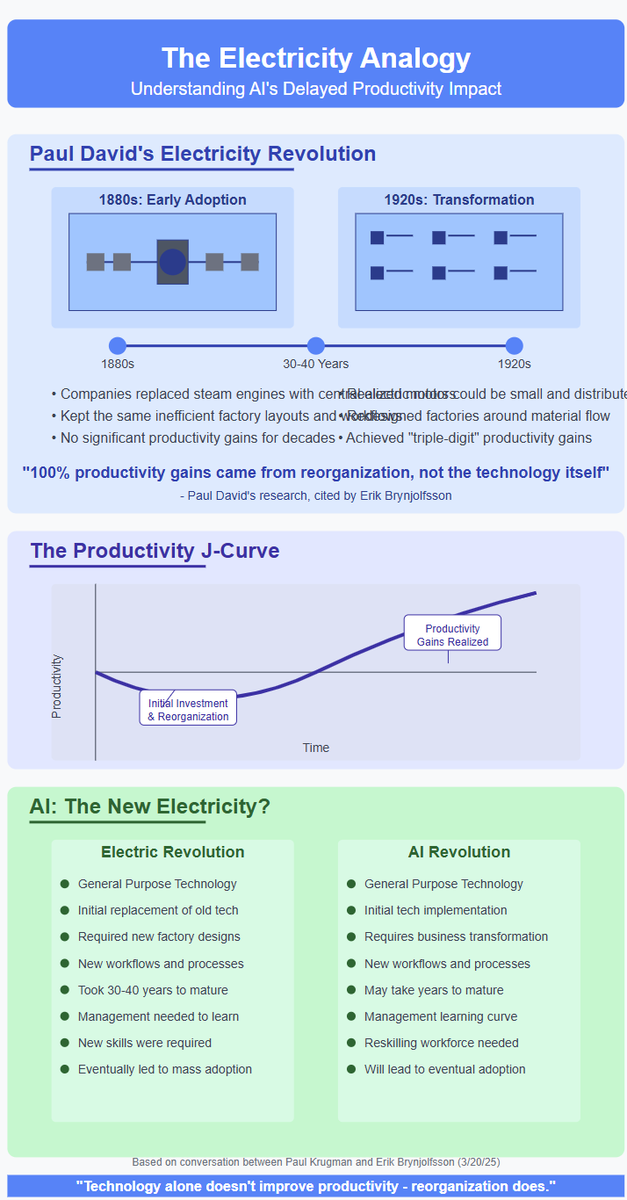


I had a fun conversation with @paulkrugman about the weird and wonderful economics of AI.
Link in next post:
3/
#bookquote #oneworldlearn
"I learned to fail better from Ray Dalio. He is, by any conceivable measure, wildly successful. The founder of Bridgewater Associates (one of the world’s largest hedge funds) is also one of the world’s 100 wealthiest people.
Bridgewater has been called the fifth most important private company459 in America; his book Principles: Life and Work was a New York Times bestseller. Given all of these accomplishments, you may be surprised to learn that Dalio attributes the secret of his success to failure.
He started Bridgewater in 1974; eight years later, a new bull market was just getting underway. However, Dalio’s research found problems in the credit markets. Earlier in the year, he had warned that emerging market bank debt could potentially pose a major risk to the economic recovery. When Mexico defaulted in August 1982, Dalio was hailed as an economic seer and market wizard.
His reputation grew, and in November 1982, he appeared on Wall Street Week with Louis Rukeyser, the most important financial news program of its time. Dalio “confidently declared we were headed for a Depression.” But that’s not what happened; months earlier, timely central bank interventions had a positive effect on emerging market banking, and Dalio’s disaster forecast never materialized.
However, it was a disaster for Bridgewater Associates, and the firm almost went bankrupt. He had to lay off all his employees and borrow money from his father to support his wife and two young children. He wrote, “I am still shocked and embarrassed by how arrogant I was.”
But from failure comes rebirth: Dalio rebuilt his firm from scratch; he looked at failures—from ordinary flops to major disasters and every error in between—as fodder for future gains. Each error was an opportunity to learn something new and get better as an investor. “Principles” are what came out of his public failure."
Barry Ritholtz. How Not to Invest: The ideas, numbers, and behavior that destroy wealth—and how to avoid them

1/
Podcast recommendation #oneworldlearn bookclub
https://t.co/J9zdoQzQcw
Barry Ritholtz — Make Fewer Errors,
-------------------------------------
From the transcript-
https://t.co/QgwsYVk76u
"Panic is the enemy - have a Plan B
“You know what? I started on a trading desk and the most interesting thing I learned from the senior traders, one was a former Army ranger, one was a Navy SEAL, another was a Marine jungle combat instructor, and these guys used to tell stories, literal war stories about the prep they did before they would go on a mission. And they literally map out everything that happens. And what do you do if this goes wrong here? There's a plan A, plan B, Plan C every step of the way. But the thing that the SEAL had mentioned that I found so fascinating was your gun jams in a firefight, what's your plan B? How do you deal with it? How much time do you take to try and fix it? When do you abandon the weapon? And what is your emotional state? If your reaction is panic, you're going to get yourself killed and your teammates killed. But if your reaction is, "Hey, mechanical things break. I have another sidearm, I have another piece. I could grab this weapon." Panic is when things go bad and you don't know what to do, but if you have a plan A, plan B, plan C and you are prepared for the emotionality of the moment, they just say, "We just do our jobs and keep moving towards the objective.”


1/
#bookquote #oneworldlearn
"Thanks to the winds of the Asian monsoon, India lies at the centre of a great network of navigable sea roads and maritime trade routes.
Every summer, the heating of the Tibetan plateau creates an area of low pressure which sucks in moist, cool winds from the Bay of Bengal. Every winter, cold dry winds rake out from the snows of the Himalayas to the warm seas beyond. The Indian peninsula sits in the middle of this vortex of winds which blow one way for six months a year, then reverse themselves for the next six. The regularity and predictability of these winds generate monsoons that have allowed millennia of Indian sailors to raise their sails and propel themselves at speed across the oceans that surround them; then, when the winds reverse, safely back again.
Early Indian traders used the sea roads of monsoon Asia to travel in two directions. Many headed westwards on the winter winds to the east coast of Africa and the rich kingdoms of Ethiopia. Here they had a choice. One northern fork led through the Persian Gulf to Iran and Mesopotamia; the other, to its south, via Aden, took them through the Red Sea to Egypt. Indian traders heading west used to arrive with the trade winds in early summer and ride the summer monsoon home in August; with the winds behind you, the journey from the mouth of the Red Sea to Gujarat could take as little as forty days, though if you missed the winds the round trip might take as long as a year, and cause you to take a prolonged holiday on the Nile. The equivalent overland route by camel caravan through Afghanistan would take at least three times as long.
For 300 years, from the time of the Battle of Actium in 31 BCE and the integration of Egypt into the Roman imperial system, the main arteries of early east–west travel lay less overland, through a Persia often at war with Rome, and much more across the Golden Road of the open oceans, via the choppy waters of the Red Sea and the Indian Ocean."
@DalrympleWill "The Golden Road: How Ancient India Transformed the World"
-----------------------------


4/
#dailybook #oneworldlearn
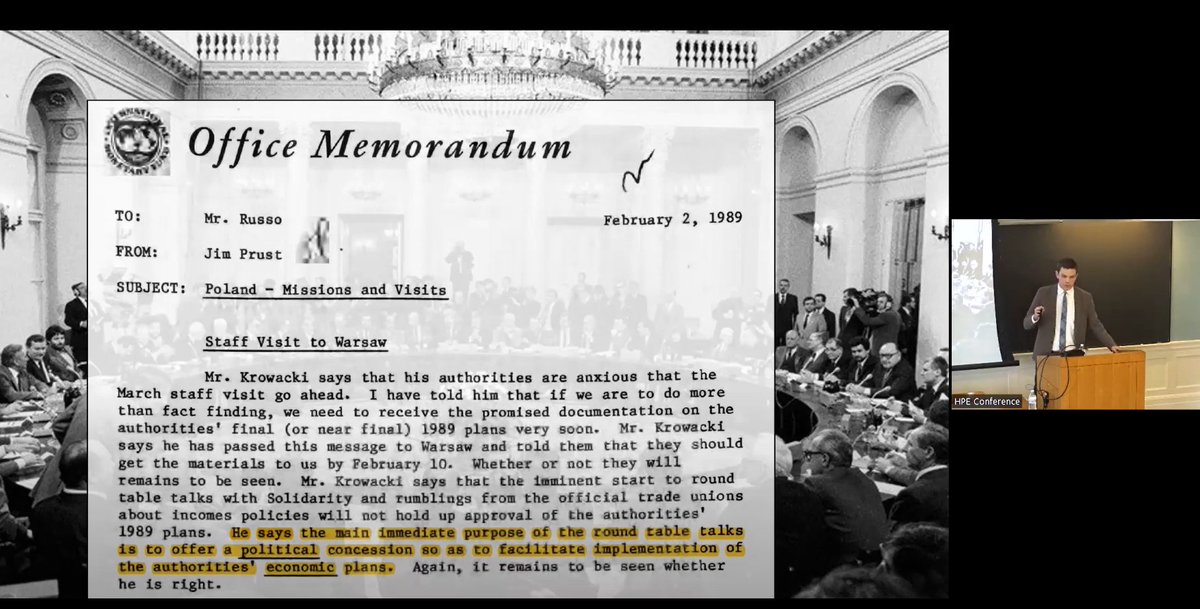
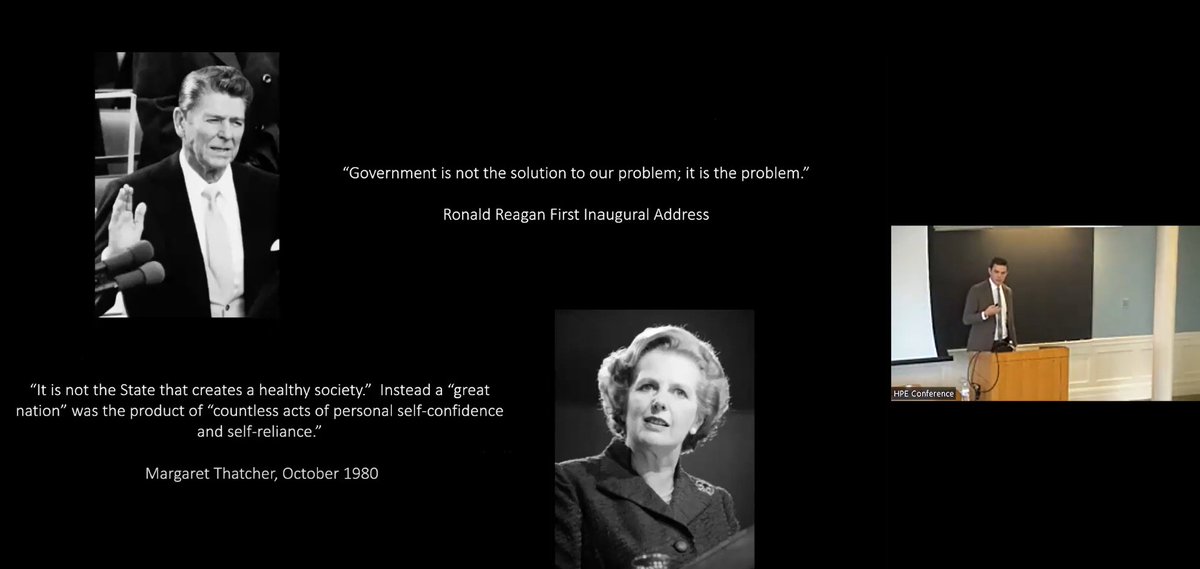
We highly recommend the book, The Triumph of Broken Promises;
The main takeaway from the book is that the end of the Cold War and the rise of neoliberalism were deeply intertwined, both resulting from a global shift from the "politics of making promises" to the "politics of breaking promises." This shift was driven by economic crises in the 1970s, which forced governments in both the East and West to impose economic discipline and austerity measures. Democratic capitalist states proved more adept at breaking promises and imposing discipline, leading to the collapse of communism and the rise of neoliberalism as the dominant ideology.
https://t.co/yfs15LnIkZ


#dailybook #oneworldlearn #capsulebookreview
"The DOSE Effect" by Tj Power is a practical guide that explores the mind-body-hormonal connection, offering strategies to enhance well-being by understanding and optimizing four key hormones: Dopamine, Oxytocin, Serotonin, and Endorphins.
@tjpower https://t.co/8XGDkO15mV

#dailybook #capsulebookreview #oneworldlearn
"Equality: What It Means and Why It Matters" is a collaborative work by economist Thomas Piketty and philosopher Michael J. Sandel that explores the concept of equality, its significance, and the measures necessary to bridge societal divides.


#books #oneworldlearn
House of Huawei: The Secret History of China's Most Powerful Company by @evadou
A deeply researched exposé on Huawei's rise, revealing the intersection of business, politics, and China's global ambitions.
Land Power: Who Has It, Who Doesn't, and How That Determines the Fate of Societies by @mikealbertus
An insightful exploration of land ownership's influence on social, economic, and political dynamics worldwide.
The Obvious Choice: Timeless Lessons on Success, Profit, and Finding Your Way by @itscoachgoodman
A concise guide offering practical wisdom for personal and professional growth without chasing trends.
Open Socrates: The Case for a Philosophical Life by @AgnesCallard
A compelling argument for embracing a philosophical mindset as a way of navigating modern life's complexities.
Vulture Capitalism: Corporate Crimes, Bailouts, and the Death of Freedom by @graceblakeley
A fiery critique of neoliberal economics, exposing the systemic flaws that perpetuate inequality and exploitation.
Red Team Blues: A Martin Hench Novel by @doctorow
A thrilling and witty cyberpunk mystery delving into the worlds of finance, hacking, and moral dilemmas.
---------------------------

1/
#weeklybook #oneworldlearn
"Wicked Problems: How to Engineer a Better World" by Guru Madhavan explores how systems engineering principles can be applied to tackle complex, multifaceted global challenges by integrating technical expertise, civic engagement, and cultural awareness to create innovative solutions.
@BioengineerGM

1/
#dailybook #oneworldlearn #capsulebookreview
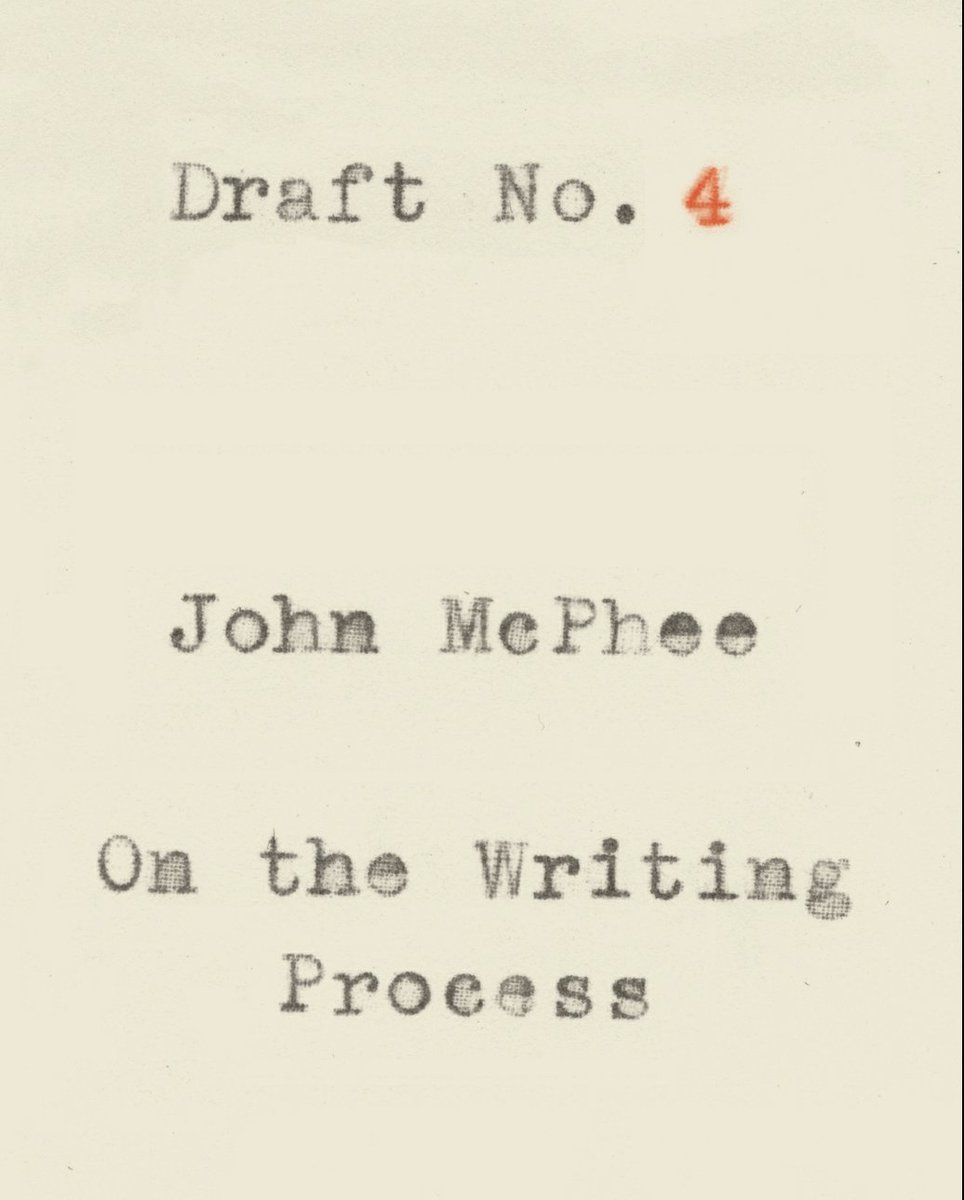
John McPhee's "Draft No. 4: On the Writing Process" is a masterful collection of essays that offers invaluable insights into the craft of writing, emphasizing the importance of structure, revision, and selection while providing both inspiration and practical advice for writers at all levels.
#dailybook #oneworldlearn #capsulebookreview
@njkobie 's "The Long History of the Future" is a captivating exploration of why futuristic technologies remain elusive, blending historical analysis with insightful observations on the complexities of technological advancement.


5/
#AI4All #books #oneworldlearn
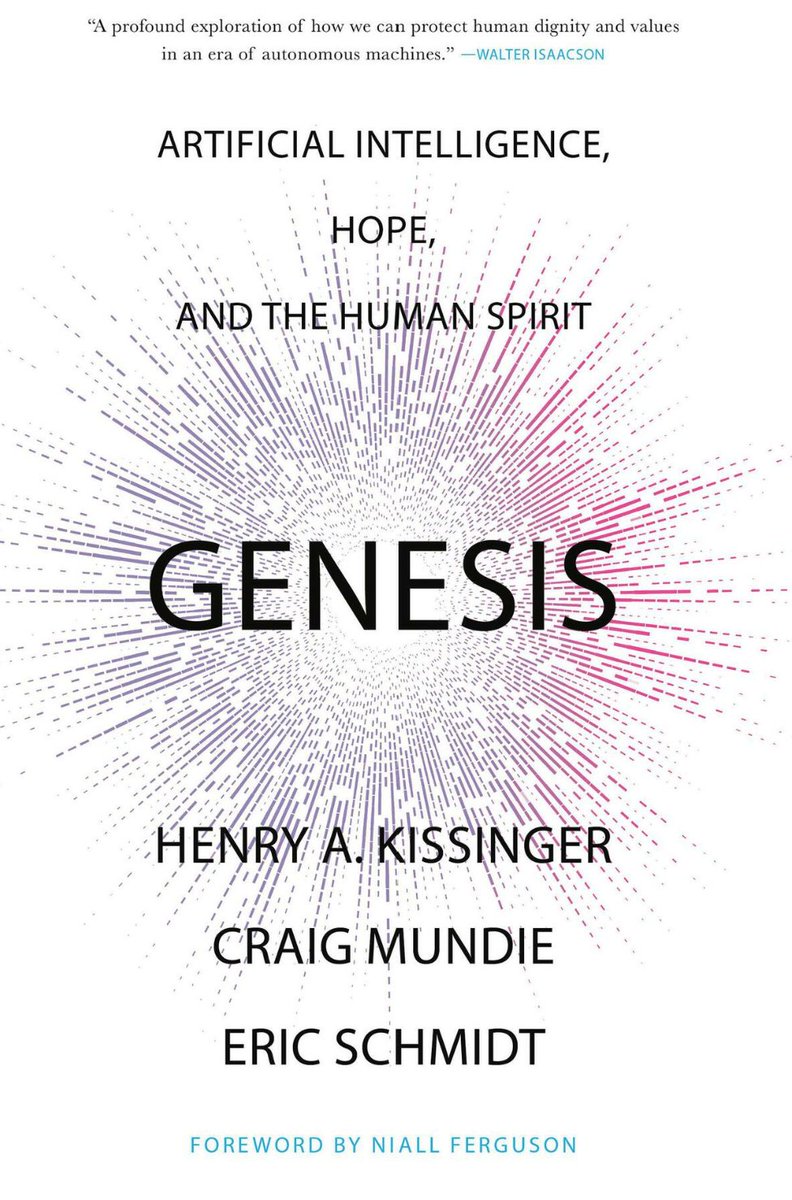
We do highly recommend the recent book by @ericschmidt and others on AI
https://t.co/hoF3Hz4qff
1/
Recommended podcast
#oneworldlearn
Inside How Perplexity is Disrupting Online Search
https://t.co/wDLX6z0WMC
#7takeaways
1. Product Development Philosophy:
- Rather than having formal product review meetings, Arun gives immediate feedback as a user
- Believes feedback from authority figures often comes with ulterior motives
- Encourages fast iteration and bug fixes over formal presentations
2. Organizational Structure:
- Teams operate independently in parallel for different features
- Each team has a standard composition (designer, frontend engineer, backend engineer, AI engineer, etc.)
- This structure enables faster shipping across multiple projects simultaneously
3. Growth Strategy:
- Prioritizes queries per day as their north star metric
- Grew from 3,000 to 3 million to 16 million queries per day
- Major growth channels include Twitter, LinkedIn, newsletters, and organic sharing through WhatsApp/messages
4. User Retention Metrics:
- Focuses on getting users to complete their first 10 questions
- Once users ask 100 questions, they rarely churn
- Three key dimensions: accuracy, latency, and readability of answers
5. Hiring Philosophy:
- Values potential over past credentials
- Looks for people with "chip on their shoulder" who haven't had their big break yet
- Experience at failed startups can be valuable if the person showed strong work ethic
6. Monetization Approach:
- Deliberately generous with free tier (4 pro searches every 4 hours)
- Prioritizes user growth over immediate revenue
- Successfully got millions of paid subscribers despite skepticism
7. Future of Search Advertising:
- Plans to replace traditional link-based ads with sponsored questions at bottom of answers
- Aims to integrate product catalogs directly into answers for seamless transactions
- Believes influencers and brands can provide sponsored multimedia content without corrupting answer quality
“What the Chicken Knows” by Sy Montgomery offers a fascinating, research-backed exploration into the intelligence, personalities, and social lives of chickens, encouraging readers to see them as complex and remarkable animals.
#capsulebookreview #oneworldlearn

#capsulebookreview
#oneworldlearn @terencemauri
In "The Upside of Disruption: The Path to Leading and Thriving in the Unknown", Terence Mauri argues that leaders should embrace disruption as an opportunity to innovate and adapt, transforming uncertainty into a catalyst for growth and resilience.

Last Seen Hashtags on Sotwe
mlbb #r34
Seen from Malaysia
Teenage() +filter:native_video
Seen from Mexico
inter Inter,.,.,.........,.,..,.,
Seen from Italy
teenage teenagegirls nolimit
Seen from Turkey
cuckoldkocaları
Seen from Turkey
incest #desi #mom
Seen from Netherlands
ometv video*
Seen from Ireland
nsfwtwtًً
Seen from Turkey
sexy18
Seen from Turkey
뚱남
Seen from Korea
Most Popular Users

Elon Musk 
@elonmusk
240.3M followers

Barack Obama
@barackobama
119.3M followers

Donald J. Trump
@realdonaldtrump
111.6M followers

Cristiano Ronaldo
@cristiano
109.5M followers

Narendra Modi
@narendramodi
107M followers

Rihanna
@rihanna
97.4M followers

NASA
@nasa
92.1M followers

Justin Bieber
@justinbieber
90.7M followers

KATY PERRY
@katyperry
87.1M followers

Taylor Swift
@taylorswift13
80.9M followers

Lady Gaga
@ladygaga
72.5M followers

Kim Kardashian
@kimkardashian
69.5M followers

Virat Kohli
@imvkohli
69M followers

YouTube
@youtube
68.6M followers

Bill Gates
@billgates
63.6M followers

The Ellen Show
@theellenshow
62.5M followers

CNN
@cnn
61.9M followers

Neymar Jr
@neymarjr
61.6M followers

X
@x
60.9M followers

Selena Gomez
@selenagomez
60.2M followers