

Top Tweets for #peterdclack

"Der Drang, die globale Energiewirtschaft umzubauen, beruht auf einem tiefgreifenden Missverständnis der Physik: Er behandelt die Energieversorgung als ein „Software“-Problem, während er den verheerenden Rohstoffstau ignoriert, ..."
#PeterDClack

The world consumes roughly 28 million tonnes of copper every year—a mass equivalent to five Great Pyramids of Giza.
Yet that refined metal is just the tip of the iceberg of a far more monstrous physical reality. Beneath those 28 million tonnes of copper sits a massive geological footprint: billions of tonnes of blasted rock, colossal volumes of chemical tailings, vast energy expenditures and trillions of litres of water. This is all fresh, relentless demand.
Crucially, up to 75% of that copper never enters individual turbines, solar panels or electric vehicles. It goes into the invisible grid infrastructure required to link everything together and make it function. When you trace 28 million tonnes of copper backward into the Earth, the true scale and cost is staggering.
The drive to overhaul the global energy structure rests on a profound misunderstanding of physics: it treats energy supply as a 'software' problem while ignoring the devastating raw material gridlock caused by manufacturing billions of solar panels and over a million wind turbines, with hundreds of thousands more in the pipeline.
When an energy system shifts from reliable, high-density fuels—hydrocarbons and uranium—to low-density, intermittent sources like wind and solar, the physical apparatus needed to capture, convert, stabilise and transmit that diffuse flux just explodes.
It becomes an absurd trade-off: expending colossal amounts of finite, high-grade fossil fuels upfront simply to dig up materials for low-density generators—generators that can never run a steel mill, power an ocean cargo vessel or sustain international air travel.
Mining is already a vast consumer of continuous energy. As global copper ore grades decline—frequently dropping to 0.5% or lower—the mass of rock that must be dug, hauled, and crushed grows exponentially per unit of recovered metal.
Crushing rock alone accounts for roughly 3% to 4% of total global electricity consumption. Demanding billions of additional tonnes of processed metal creates a self-defeating loop: huge volumes of reliable, baseline power are consumed just to extract the raw materials needed to construct weather-dependent hardware.
Yet the primary metals drain does not come from the turbines or arrays themselves. It stems from the enormous physical web needed to transport that energy across vast distances. Diffuse generators located hundreds of kilometres from cities require unprecedented volumes of step-up transformers, substations, high-voltage transmission lines and regional grid overhauls.
The heavy overhead wiring looping across the landscape regularly dwarfs the metal required to build the turbine in the first place. Because two centuries of industrial civilisation have already extracted the highest-grade deposits, meeting future demand forces miners to dig deeper, crush harder and manage billions of tonnes of toxic slurry.
This is a twin crisis: the escalating physical cost of ore recovery on the front end, and an unprecedented tsunami of industrial e-waste bound for landfills on the back end. The physical limits of this model are not dictated by how much metal remains in the crust, but by the soaring energy penalty required to dig them up and refine them.
Heavy industrial processes—blast furnaces, chemical synthesis, cement production and deep-shaft mining—all need continuous, high-temperature thermal energy and uninterrupted high-voltage power. Intermittent turbines and panels cannot reliably deliver that dense power to sustain heavy industry, let alone an entire national economy.
The ultimate irony is that the staggering industrial muscle needed to build, maintain, and periodically replace these diffuse energy systems relies entirely on the coal, oil and gas they were meant to replace.
The dream of a fully weather-dependent industrial grid ignores physical reality. It overlooks a looming nightmare of endless ore extraction, refining bottlenecks, and perpetual grid expansion.
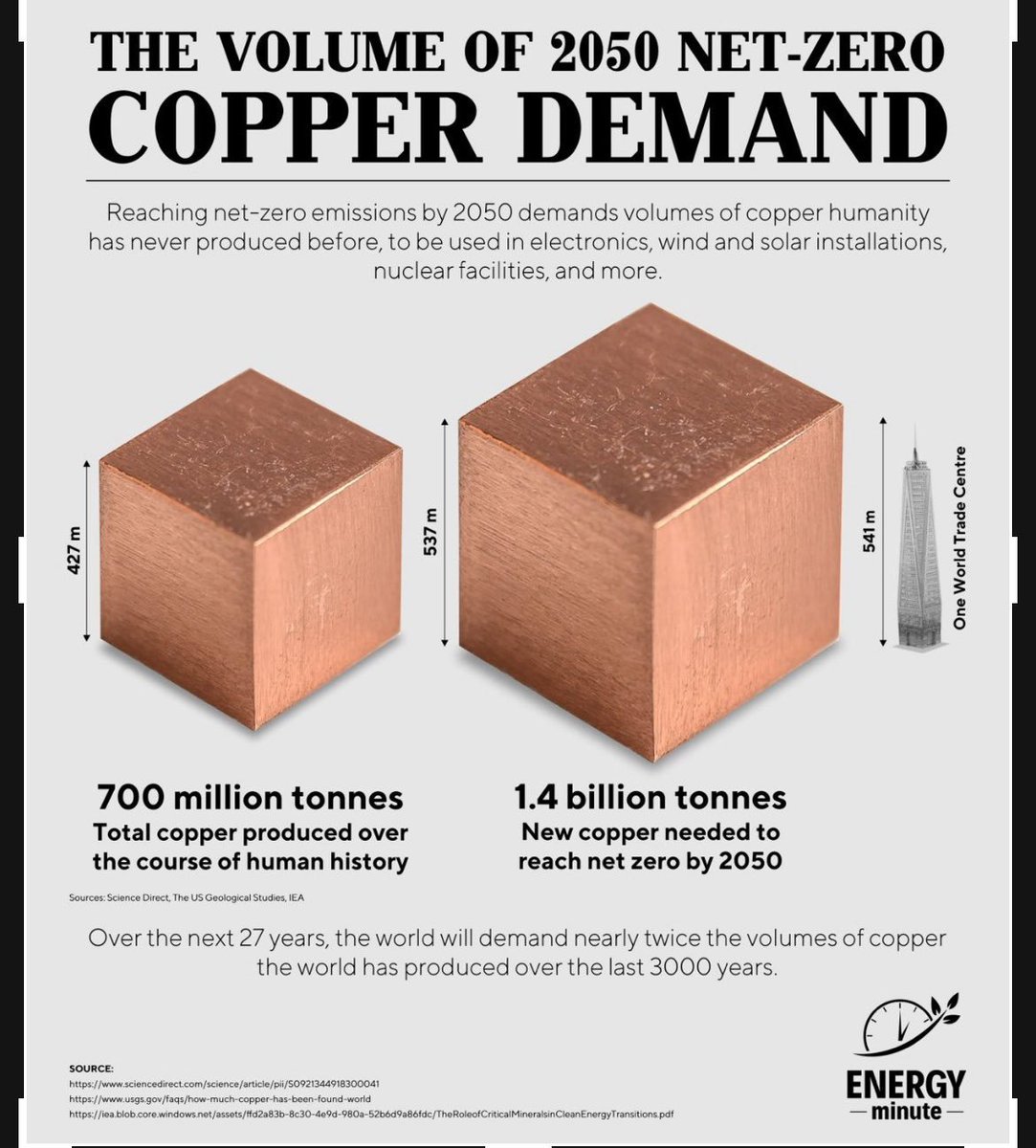
"Jede ernsthafte Energiepolitik muss Stahl, Schiffe, Flugzeuge, Hitze, Düngemittel und 24-Stunden-Industrie am Laufen halten. Wind und Solar sind kein gleichwertiger Ersatz für die Energiedichte, die die moderne Welt aufgebaut hat."
#PeterDClack
Hydrocarbons are not ‘dirty electricity’. The political agenda treats them as a moral defect to be stripped out first, then assumes a substitute will appear.
What usually appears is dearer, less reliable energy. Wind and solar generate intermittent electricity. Hydrocarbons supply dense, portable, storable energy — and the reduction chemistry that still makes primary steel.
Primary steel still depends on coal in the blast furnace, not only for heat but as a reductant. Electric-arc furnaces recycle scrap; they do not turn ore into iron. Long-haul aviation and ocean freight need liquid fuels. Batteries cannot fly a jetliner across an ocean. Synthetic e-fuels can, in principle — but they consume several times as much electricity, often five to seven times, to yield one unit of fuel.
Diesel holds on the order of 12,000 watt-hours per kilogram. A lithium-ion pack holds a few hundred. A barrel of oil is a few hundred pounds in a tank. Matching that energy in batteries means tonnes of hardware and a ruinous bill. That density is why steel mills, cargo ships and aircraft exist in their present form.
Heat, reduction chemistry, aviation, shipping, fertiliser and most heavy industry need energy that is dense and available on demand — not when the wind is up. Intermittent generation without vast firm backup is not ‘clean power’. It is weather-dependent power.
The West set out to replace coal and gas, and imported the kit and the coal-fired supply chain. The world’s manufacturing of panels, turbines and batteries was moved to China, which runs on cheaper, denser coal.
Rooftop solar is a useful household supplement, but not enough to start a mill, a kiln or a smelter at 7pm on a still winter night. The modern world would grind to a halt if you believed the slogan that renewables can power everything.
To stand in for firm power, wind and solar would have to be built on a physical scale far beyond what existing grids were designed for. That is what is now being attempted. Assets last roughly 20–30 years; then the fleet has to be replaced. Worn blades and spent panels are already a disposal problem.
Any serious energy policy has to keep steel, ships, aircraft, heat, fertiliser and 24-hour industry running. Wind and solar are not a like-for-like replacement for the energy density that built the modern world.

"Wind und Solarenergie könnten auf kleinerer, lokalisierter Ebene erfolgreich sein. Aber sie auf eine Skala zu bringen, die eine gesamte moderne Zivilisation versorgt, stellt eine grundlegend andere Herausforderung dar. Es sollte nie funktionieren. ..."
#PeterDClack
Wind and solar may succeed at a smaller, localised scale. But scaling them to power an entire modern civilisation is a fundamentally different challenge.
It was never going to work. They don't provide crucial baseload power, and traditional industrial grids were not built to accommodate their erratic delivery.
Decades of government incentives, feed-in tariffs and tax credits have heavily subsidised their rollout across wealthy Western nations. But it's an exercise resembling hopeless love. These desperate initiatives have ignored the fundamental mismatch between intermittent generation and existing grid architecture.
A complete rebuild of the global grid carries an estimated price tag of $21 trillion — a task made harder by decades of underinvestment in basic transmission infrastructure and heavy-duty storage.
Traditional power grids rely on synchronous generation — massive spinning turbines in coal, gas, nuclear or hydro plants. This physical rotating mass provides natural mechanical inertia, keeping grid frequency locked at a stable 50 or 60 Hz.
In sharp contrast, wind and solar just can't plug in. They rely on inverter-based technology, which gives zero inherent inertia. While engineers try to patch this stability gap with complex synthetic controls and giant spinning flywheels, it adds layer upon layer of extra cost and friction.
Meanwhile, the colossal scale of battery storage required to bridge multi-day lulls in wind and sunlight — the dreaded Dunkelflaute — runs into an immediate brick wall. It creates yawning bottlenecks in copper, lithium and cobalt mining, compounded by soaring production costs.
Crucially, the system can't even build itself. It just hasn't got the muscle. Mining the quartz, smelting the silicon, forging the structural steel and transporting massive turbine blades - all demands high-density, uninterrupted process heat and power. In an ironic twist, this energy is supplied almost exclusively by coal, oil and gas.
The gridlock this creates is almost farcical. Because wind and solar remain weather-dependent, grids must keep fast-ramping gas peakers or idling coal plants on standby. They are burning fuel in the background to step in the instant the wind drops or clouds roll over.
Great business plan.


There's no zero in net zero - just a fake propaganda cloud by Google & the mainstream media. Soaring household energy costs since 1990 are the highest ever experienced in the modern world. There's not one online entry about it - yet wind-solar subsidies are costing $trillions.

Volcanic warming & cooling fully explains any measurable changes in temperatures since 1979. In short, nothing. Nada. As for CO₂, there's no scientific basis for the UN driven campaign of hysteria, distortion & assumptions (i.e. global boiling) of anthropogenic climate change.


To @elonmusk : If Twitter is censorship-free, then why was Peter D Clack’s outstanding account suspended?👇(1)
His voice and knowledge - sample tweets below (2-4) - is needed now more than ever.
#peterdclack #bringbackpeterdclack
#ClimateScam #ClimateEmergency #ClimateCrisis


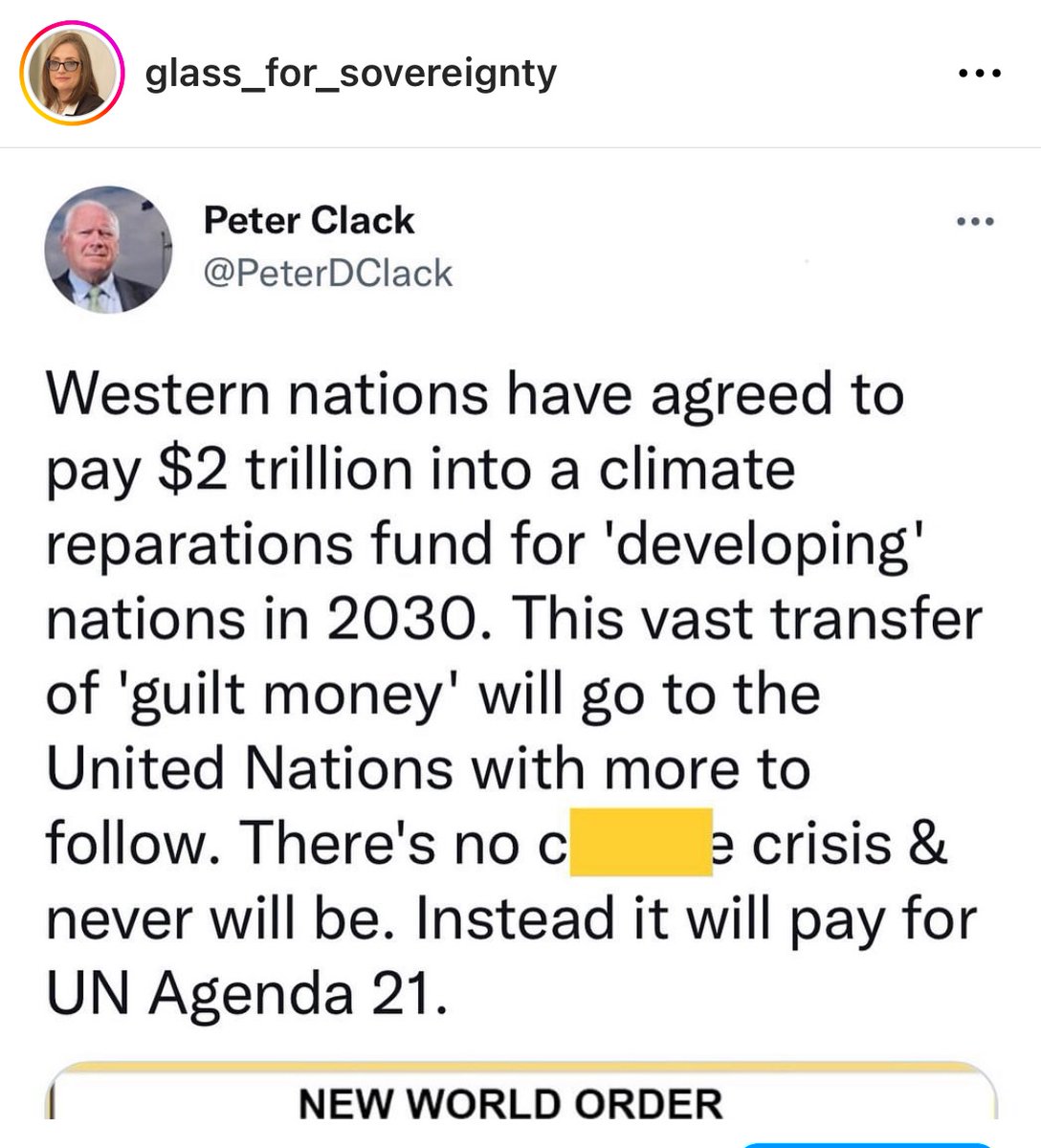


@elonmusk @TwitterSupport
Bring back Peter D Clack @PeterDClack.
There was ZERO reason for suspending him!! #PeterDClack


@coco88nut @AcresOfTruth Oil is the second most prevalent liquid on earth next to water and regenerates within the earth faster than it can ever be depleted ✔️💯
Just sayin 😉

@PeterDClack Most of what #PeterDClack knows and tweets is way way way above my #IQLevel but this makes sense! and for #AlGore & #JohnKerry “cents”
Last Seen Hashtags on Sotwe
anxiouspanda
Seen from United States
snapchat
Seen from Singapore
musclegiant
Seen from Brazil
unexpected
Seen from United States
yaoi #LuckVoltia
Seen from United States
HearseVan
Seen from United States
brosis
Seen from United States
minichat filter:videos until:2026-09-27
قحبةاخويا
Seen from United States
DeathFrisbee
Seen from United States
Most Popular Users

Elon Musk 
@elonmusk
241.5M followers

Barack Obama
@barackobama
118.9M followers

Cristiano Ronaldo
@cristiano
114.6M followers

Donald J. Trump
@realdonaldtrump
111.8M followers

Narendra Modi
@narendramodi
107.1M followers

Rihanna
@rihanna
98.7M followers

NASA
@nasa
92.3M followers

Justin Bieber
@justinbieber
91.8M followers

KATY PERRY
@katyperry
90.1M followers

Taylor Swift
@taylorswift13
84M followers

Lady Gaga
@ladygaga
75.5M followers

Virat Kohli
@imvkohli
73.5M followers

Kim Kardashian
@kimkardashian
70.9M followers

YouTube
@youtube
68.8M followers

Neymar Jr
@neymarjr
66.6M followers

Bill Gates
@billgates
65.3M followers

Selena Gomez
@selenagomez
63.1M followers

The Ellen Show
@theellenshow
62.2M followers

CNN
@cnn
61.8M followers

X
@x
60.7M followers