

Top Tweets for #randmanipulation

@XC_I_XXIII South Africans don't care about anything other than their tik Tok dances & alcohol we tried to make noise about a mere #Randmanipulation saga they continue with their lives. They don't want justice these people they want to be tenderpreneurs & do the same corruption
South Africans don't care about anything other than their tik Tok dances & alcohol we tried to make noise about a mere #Randmanipulation saga they continue with their lives. They don't want justice these people they want to be tenderpreneurs & do the same corruption

South African government hates us South African citizens. Listen carefully

We applaud the Competition Commission for its continued push for accountability in the #RandManipulation matter.
For far too long, it has appeared that the powerful and wealthy can evade accountability, while the full force of the law is reserved for the poor and those without political connections.
We will continue to demand accountability and fight for justice in the #RandManipulation matter.

[MUST WATCH]
We joined the portfolio committee on Trade, industry and competition briefing by the competition commission on the court judgement regarding its #RandManipulation case.
Although we gave credit where it was due, Hon. @ZungulaVuyo raised a few issues regarding white collar crimes in our country.
#ATMInParliament
The Competition Commission will appear before @Parliament’s Trade and Industry Portfolio Committee to account on the #RandManipulation matter and the impact of the recent court ruling.
For ordinary South Africans, this is not just about banks and court cases. A manipulated Rand affects the cost of food, fuel, transport and the everyday cost of living.
We will keep pushing for accountability. If banks can be held accountable for wrongdoing in other countries, South Africans deserve the same justice here at home.
White-collar crime is still crime.
#ATMInParliament


You just reminded me of the who #RandManipulation saga that was thrown under the rug.
South African politicians, their donors (handlers) and part of the justice system piss me off.

South Africa should have been a $1 trillion economy by now.

@QueOrSomething @KasiEconomy The banking cartel has been stifling SA’s economy, they scam consumers and practice racial descrimination against native South Africans. At the end of June the cartel was alowd to escape accountability for #RandManipulation. We need banking reform, more competition is progress.

Guys I'm so tired of no one taking #RandManipulation seriously.
This is the reason South Africa can't reach its full potential.
There are no consequences for breaking the law. We need consequences, this literally hurt every South African yet no one is in jail?

South Africa hear her out!!!!🙌

ConCourt clears major SA banks of collusion in manipulating the #rand
#TheMoneyShow is sponsored by @AbsaSouthAfrica
#ZAR #RandManipulation #ConstitutionCourt
https://t.co/fAKt7WQsKX

#CountryDuty
Today, the Constitutional Court delivered a judgment on the #RandManipulation judgment.
Our #CountryDuty Chief Legal Strategist @diggiebongz has been following the matter closely and has gladly done a summary on what the judgment says & what it means:
1. What Happened
On 30 June 2026, a unanimous Constitutional Court (Rogers J, nine judges concurring) brought down the curtain on nearly a decade of litigation over allegations that 18-plus global and local banks colluded between 2007 and 2013 to manipulate the USDIZAR exchange rate — South Africa's long-running "forex cartel" case.
The case began with a Competition Commission complaint initiated in April 2015, amended in August 2016, and referred to the Competition Tribunal in February 2017 alleging a single overarching conspiracy (SOC) to fix prices and divide markets in contravention of section 4(1)(b) of the Competition Act.
The judgment resolves three consolidated matters: BNP Paribas's appeal (CCT 25/24), Credit Suisse Securities's appeal (CCT 27/24), and the Commission's own appeal together with HSBC Bank plo's cross-appeal (CCT 30/24). The scorecard is mixed and bank-specific — this was never a case where "the banks won" or "the Commission won" as a block.
2. Why Most Banks Walked Free — The Pleading Problem
This was, at its core, not a trial on the facts of whether banks colluded — it was a fight over whether the Commission's papers were good enough to put each bank on trial at all. South African competition procedure allows respondents to except to (challenge the legal sufficiency of) a referral before a single day of evidence
is led.
The Commission lost most of these battles because its “superseding affidavit” — filed after an earlier 2020 CAC ruling (CAC I) required it to plead with more particularity — repeated the same broad-brush
allegations bank after bank, rather than pleading bank-specific conduct sufficient to found a cause of action under section 4(1)(b).
[ANALYSIS]
The pattern that emerges across the judgment is consistent: where the Commission could point to a named trader, a specific chatroom, or a specific platform incident tying a bank into the alleged single
overarching conspiracy, the case survived. Where the allegations amounted to guilt by association — a bank's trader appearing in the same Reuters quote pattern as other banks, without more — the case did not.
JPM Bank and SAI are the exceptions that prove the rule: their revival turned on the Constitutional Court finding the CAC had committed an identifiable legal error (as opposed to a mere factual judgment call), which is the narrow gate through which an appeal to the apex court must pass in this kind of case.
“This Court's jurisdiction is not engaged by a complaint that the CAC should have assessed the
facts differently or even that the CAC got the facts plainly wrong.”
Rogers J, on why most of the Commission's appeals failed (paraphrased from para 283 of the judgment)
READ OUR SUMMARY BELOW: 👇🏿
![tumisole's tweet photo. #CountryDuty
Today, the Constitutional Court delivered a judgment on the #RandManipulation judgment.
Our #CountryDuty Chief Legal Strategist @diggiebongz has been following the matter closely and has gladly done a summary on what the judgment says & what it means:
1. What Happened
On 30 June 2026, a unanimous Constitutional Court (Rogers J, nine judges concurring) brought down the curtain on nearly a decade of litigation over allegations that 18-plus global and local banks colluded between 2007 and 2013 to manipulate the USDIZAR exchange rate — South Africa's long-running "forex cartel" case.
The case began with a Competition Commission complaint initiated in April 2015, amended in August 2016, and referred to the Competition Tribunal in February 2017 alleging a single overarching conspiracy (SOC) to fix prices and divide markets in contravention of section 4(1)(b) of the Competition Act.
The judgment resolves three consolidated matters: BNP Paribas's appeal (CCT 25/24), Credit Suisse Securities's appeal (CCT 27/24), and the Commission's own appeal together with HSBC Bank plo's cross-appeal (CCT 30/24). The scorecard is mixed and bank-specific — this was never a case where "the banks won" or "the Commission won" as a block.
2. Why Most Banks Walked Free — The Pleading Problem
This was, at its core, not a trial on the facts of whether banks colluded — it was a fight over whether the Commission's papers were good enough to put each bank on trial at all. South African competition procedure allows respondents to except to (challenge the legal sufficiency of) a referral before a single day of evidence
is led.
The Commission lost most of these battles because its “superseding affidavit” — filed after an earlier 2020 CAC ruling (CAC I) required it to plead with more particularity — repeated the same broad-brush
allegations bank after bank, rather than pleading bank-specific conduct sufficient to found a cause of action under section 4(1)(b).
[ANALYSIS]
The pattern that emerges across the judgment is consistent: where the Commission could point to a named trader, a specific chatroom, or a specific platform incident tying a bank into the alleged single
overarching conspiracy, the case survived. Where the allegations amounted to guilt by association — a bank's trader appearing in the same Reuters quote pattern as other banks, without more — the case did not.
JPM Bank and SAI are the exceptions that prove the rule: their revival turned on the Constitutional Court finding the CAC had committed an identifiable legal error (as opposed to a mere factual judgment call), which is the narrow gate through which an appeal to the apex court must pass in this kind of case.
“This Court's jurisdiction is not engaged by a complaint that the CAC should have assessed the
facts differently or even that the CAC got the facts plainly wrong.”
Rogers J, on why most of the Commission's appeals failed (paraphrased from para 283 of the judgment)
READ OUR SUMMARY BELOW: 👇🏿](https://pbs.twimg.com/media/HME97vFX0AAiBfF.jpg)
![tumisole's tweet photo. #CountryDuty
Today, the Constitutional Court delivered a judgment on the #RandManipulation judgment.
Our #CountryDuty Chief Legal Strategist @diggiebongz has been following the matter closely and has gladly done a summary on what the judgment says & what it means:
1. What Happened
On 30 June 2026, a unanimous Constitutional Court (Rogers J, nine judges concurring) brought down the curtain on nearly a decade of litigation over allegations that 18-plus global and local banks colluded between 2007 and 2013 to manipulate the USDIZAR exchange rate — South Africa's long-running "forex cartel" case.
The case began with a Competition Commission complaint initiated in April 2015, amended in August 2016, and referred to the Competition Tribunal in February 2017 alleging a single overarching conspiracy (SOC) to fix prices and divide markets in contravention of section 4(1)(b) of the Competition Act.
The judgment resolves three consolidated matters: BNP Paribas's appeal (CCT 25/24), Credit Suisse Securities's appeal (CCT 27/24), and the Commission's own appeal together with HSBC Bank plo's cross-appeal (CCT 30/24). The scorecard is mixed and bank-specific — this was never a case where "the banks won" or "the Commission won" as a block.
2. Why Most Banks Walked Free — The Pleading Problem
This was, at its core, not a trial on the facts of whether banks colluded — it was a fight over whether the Commission's papers were good enough to put each bank on trial at all. South African competition procedure allows respondents to except to (challenge the legal sufficiency of) a referral before a single day of evidence
is led.
The Commission lost most of these battles because its “superseding affidavit” — filed after an earlier 2020 CAC ruling (CAC I) required it to plead with more particularity — repeated the same broad-brush
allegations bank after bank, rather than pleading bank-specific conduct sufficient to found a cause of action under section 4(1)(b).
[ANALYSIS]
The pattern that emerges across the judgment is consistent: where the Commission could point to a named trader, a specific chatroom, or a specific platform incident tying a bank into the alleged single
overarching conspiracy, the case survived. Where the allegations amounted to guilt by association — a bank's trader appearing in the same Reuters quote pattern as other banks, without more — the case did not.
JPM Bank and SAI are the exceptions that prove the rule: their revival turned on the Constitutional Court finding the CAC had committed an identifiable legal error (as opposed to a mere factual judgment call), which is the narrow gate through which an appeal to the apex court must pass in this kind of case.
“This Court's jurisdiction is not engaged by a complaint that the CAC should have assessed the
facts differently or even that the CAC got the facts plainly wrong.”
Rogers J, on why most of the Commission's appeals failed (paraphrased from para 283 of the judgment)
READ OUR SUMMARY BELOW: 👇🏿](https://pbs.twimg.com/media/HME97u3XsAA5ycx.jpg)
![tumisole's tweet photo. #CountryDuty
Today, the Constitutional Court delivered a judgment on the #RandManipulation judgment.
Our #CountryDuty Chief Legal Strategist @diggiebongz has been following the matter closely and has gladly done a summary on what the judgment says & what it means:
1. What Happened
On 30 June 2026, a unanimous Constitutional Court (Rogers J, nine judges concurring) brought down the curtain on nearly a decade of litigation over allegations that 18-plus global and local banks colluded between 2007 and 2013 to manipulate the USDIZAR exchange rate — South Africa's long-running "forex cartel" case.
The case began with a Competition Commission complaint initiated in April 2015, amended in August 2016, and referred to the Competition Tribunal in February 2017 alleging a single overarching conspiracy (SOC) to fix prices and divide markets in contravention of section 4(1)(b) of the Competition Act.
The judgment resolves three consolidated matters: BNP Paribas's appeal (CCT 25/24), Credit Suisse Securities's appeal (CCT 27/24), and the Commission's own appeal together with HSBC Bank plo's cross-appeal (CCT 30/24). The scorecard is mixed and bank-specific — this was never a case where "the banks won" or "the Commission won" as a block.
2. Why Most Banks Walked Free — The Pleading Problem
This was, at its core, not a trial on the facts of whether banks colluded — it was a fight over whether the Commission's papers were good enough to put each bank on trial at all. South African competition procedure allows respondents to except to (challenge the legal sufficiency of) a referral before a single day of evidence
is led.
The Commission lost most of these battles because its “superseding affidavit” — filed after an earlier 2020 CAC ruling (CAC I) required it to plead with more particularity — repeated the same broad-brush
allegations bank after bank, rather than pleading bank-specific conduct sufficient to found a cause of action under section 4(1)(b).
[ANALYSIS]
The pattern that emerges across the judgment is consistent: where the Commission could point to a named trader, a specific chatroom, or a specific platform incident tying a bank into the alleged single
overarching conspiracy, the case survived. Where the allegations amounted to guilt by association — a bank's trader appearing in the same Reuters quote pattern as other banks, without more — the case did not.
JPM Bank and SAI are the exceptions that prove the rule: their revival turned on the Constitutional Court finding the CAC had committed an identifiable legal error (as opposed to a mere factual judgment call), which is the narrow gate through which an appeal to the apex court must pass in this kind of case.
“This Court's jurisdiction is not engaged by a complaint that the CAC should have assessed the
facts differently or even that the CAC got the facts plainly wrong.”
Rogers J, on why most of the Commission's appeals failed (paraphrased from para 283 of the judgment)
READ OUR SUMMARY BELOW: 👇🏿](https://pbs.twimg.com/media/HME97u2WMAAhL0s.jpg)


@Matlhatse___ @sthedoingtingss It was about time we called out service providers
They milk us and we just sit back quietly
Someone please add the EFF to the chat
#RandManipulation

Use same effort fighting unemployment, poverty, illegal immigration, lack of service delivery, crime, drugs, human trafficking, gun violence, GBVF, #randmanipulation rape, gangsterism, disfuntional SOEs.

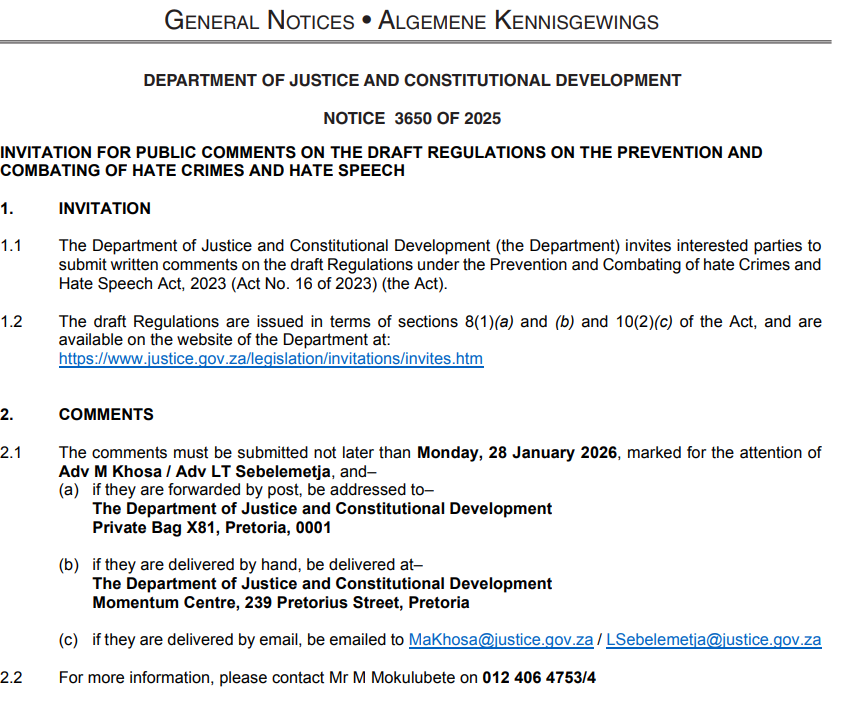
🇿🇦 Have your say against hate crimes and hate speech.
The Department of Justice invites you to comment on new draft regulations meant to prevent and combat hate crimes and hate speech.
🗓️ Deadline: Monday, 28 January 2026
How to submit your comments:
📧 Email: [email protected] / [email protected]
🔗 Full details: https://t.co/psIpoaNy6l
#GovZAUpdates #HateCrimesAct
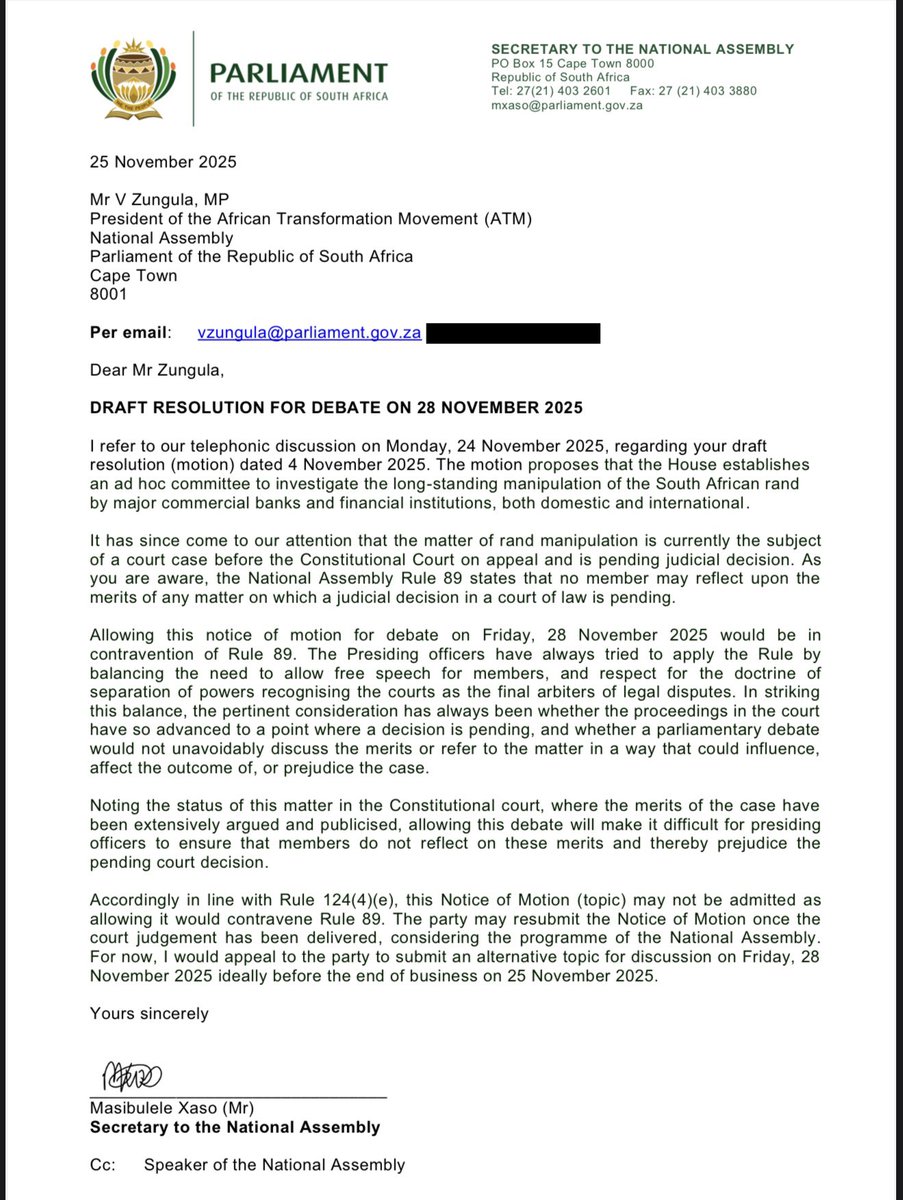
This is how Parliament has tried to stop scrutiny on #RandManipulation.
We will NOT stop pressing,those banks WILL account !!


NATIONAL PICKET -SOUTH AFRICA, IT’S TIME TO STAND UP! Our country is being crippled by #RandManipulation, corruption, and policies that are destroying our economy. We are no longer waiting we are taking action. Join us at the National Picket as we demand accountability, transparency

[MUST READ]
The ATM notes with concern that despite Parliament agreeing to our motion on 4 November, the debate on #RandManipulation has now been withdrawn just three days before it was scheduled, with Parliament citing the pending Constitutional Court case; as an opposition party committed to transparency and accountability.
The ATM views this last-minute reversal as a setback to meaningful oversight and the public’s right to answers.
#ATMInParliament
![ATMovement_SA's tweet photo. [MUST READ]
The ATM notes with concern that despite Parliament agreeing to our motion on 4 November, the debate on #RandManipulation has now been withdrawn just three days before it was scheduled, with Parliament citing the pending Constitutional Court case; as an opposition party committed to transparency and accountability.
The ATM views this last-minute reversal as a setback to meaningful oversight and the public’s right to answers.
#ATMInParliament](https://pbs.twimg.com/media/G6mkkmLXQAEFxNv.jpg)
A motion we submitted and which Parliament agreed to on 4 November has now been blocked just three days before the scheduled debate. In the eleventh hour, Parliament says we cannot debate #RandManipulation on Friday.
South Africans deserve transparency, not last-minute reversals.
Parliament failed to do its work on the Steinhoff matter where billions of the pension money was lost. We can’t have a passive Parliament on a such a critical issue of #RandManipulation that systemically impoverishes the people.
The private sector must be held accountable !!
Most Popular Users

Elon Musk 
@elonmusk
241.6M followers

Barack Obama
@barackobama
119M followers

Cristiano Ronaldo
@cristiano
114.1M followers

Donald J. Trump
@realdonaldtrump
111.8M followers

Narendra Modi
@narendramodi
107.2M followers

Rihanna
@rihanna
98.7M followers

NASA
@nasa
92.4M followers

Justin Bieber
@justinbieber
91.8M followers

KATY PERRY
@katyperry
89.8M followers

Taylor Swift
@taylorswift13
83.8M followers

Lady Gaga
@ladygaga
75.2M followers

Virat Kohli
@imvkohli
73M followers

Kim Kardashian
@kimkardashian
70.8M followers

YouTube
@youtube
68.8M followers

Neymar Jr
@neymarjr
66M followers

Bill Gates
@billgates
65M followers

Selena Gomez
@selenagomez
62.9M followers

The Ellen Show
@theellenshow
62.3M followers

CNN
@cnn
61.8M followers

X
@x
60.7M followers