

Top Tweets for #scenium


@chiradex145709 @sceniumapp @AEmmanuel76744 @BigBg02 @bigyardband @blessingthestar @Buddy_Boo_io @candela_web3 @Chain_gurl I follow you follow me back let's connect
@Harry_Goodjob @sceniumapp @AEmmanuel76744 @BigBg02 @bigyardband @blessingthestar @Buddy_Boo_io @candela_web3 @Chain_gurl You can start now o

@chiradex145709 @sceniumapp @AEmmanuel76744 @BigBg02 @bigyardband @blessingthestar @Buddy_Boo_io @candela_web3 @Chain_gurl +89% since June? That’s serious performance.
Respect to Scenium App for delivering results.
@sceniumapp @AEmmanuel76744 @BigBg02 @bigyardband @blessingthestar @Buddy_Boo_io @candela_web3 @Chain_gurl @asherrkiinee @Chase_frmda0 Stop overthinking your first move. ⏳Build a multi-asset portfolio: Private Funds, Stocks, and Crypto in one dashboard.
Start today from $1: https://t.co/9sXjZiiZvV
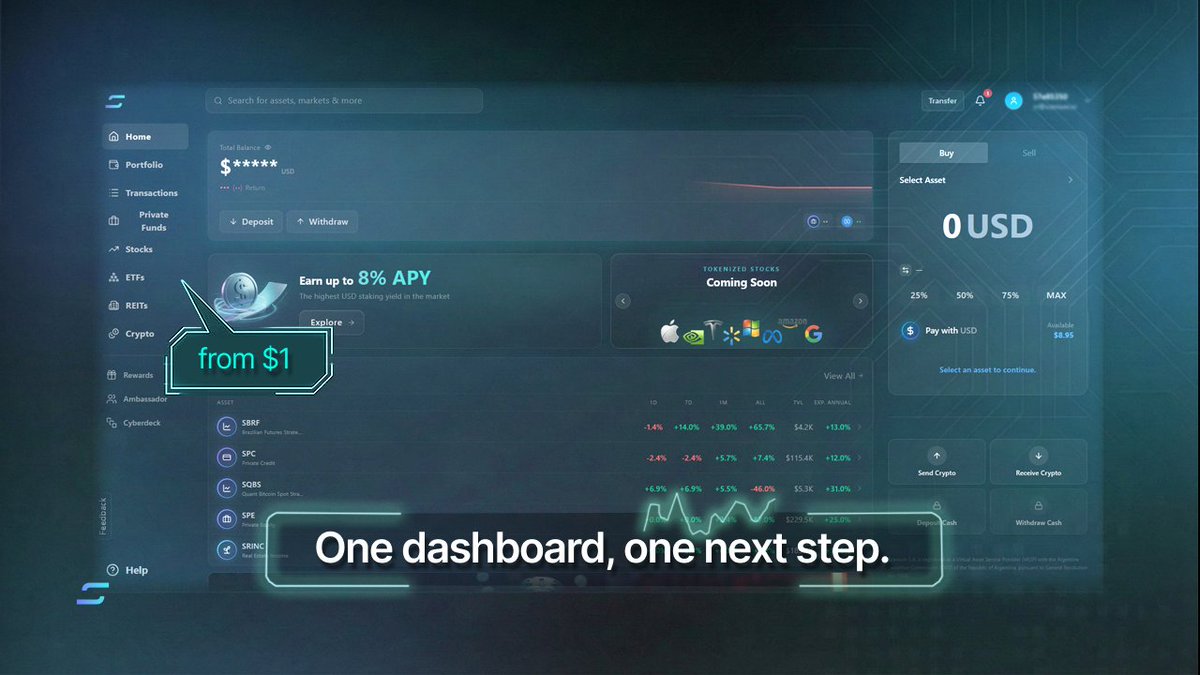
@sceniumapp @AEmmanuel76744 @BigBg02 @bigyardband @blessingthestar @Buddy_Boo_io @candela_web3 @Chain_gurl @asherrkiinee @Chase_frmda0 +89% is just the start.
Follow along as we keep building. @sceniumapp
#Bitcoin #Crypto #Trading #scenium

@sceniumapp @AEmmanuel76744 @BigBg02 @bigyardband @blessingthestar @Buddy_Boo_io @candela_web3 @Chain_gurl @asherrkiinee @Chase_frmda0 We’re still early.
As the crypto market evolves, this strategy is built to scale and improve even further.
@sceniumapp
#scenium

@sceniumapp @AEmmanuel76744 @BigBg02 @bigyardband @blessingthestar @Buddy_Boo_io @candela_web3 @Chain_gurl @asherrkiinee @Chase_frmda0 Most people hold and hope.
We execute and adapt.
That’s the difference between passive exposure and active strategy.
@sceniumapp
#scenium

@sceniumapp @AEmmanuel76744 @BigBg02 @bigyardband @blessingthestar @Buddy_Boo_io @candela_web3 @Chain_gurl @asherrkiinee @Chase_frmda0 The result?
📊 Consistent upward performance
📊 Compounding gains over time
📊 Resilience through market swings
#Scenium
@sceniumapp

@sceniumapp @AEmmanuel76744 @BigBg02 @bigyardband @blessingthestar @Buddy_Boo_io @candela_web3 @Chain_gurl @asherrkiinee @Chase_frmda0 And yes — transparency matters.
Our strategy includes Proof of Reserve verification, so users can trust what they see. 🔐
@sceniumapp

@sceniumapp @AEmmanuel76744 @BigBg02 @bigyardband @blessingthestar @Buddy_Boo_io @candela_web3 @Chain_gurl @asherrkiinee Risk management is everything.
Capital protection > quick wins.
Every position is calculated, controlled, and optimized for long-term growth.
@sceniumapp

@sceniumapp @AEmmanuel76744 @BigBg02 @bigyardband @blessingthestar @Buddy_Boo_io @candela_web3 @Chain_gurl We don’t just rely on prices going up.
We trade both directions:
📈 Long when the market trends up
📉 Short when the market turns
That’s how volatility becomes opportunity.
@sceniumapp

@sceniumapp @AEmmanuel76744 @BigBg02 @bigyardband @blessingthestar @Buddy_Boo_io @candela_web3 @Chain_gurl So what’s behind the growth?
Not luck. Not guessing.
A structured, data-driven strategy that adapts to market conditions in real time.
@sceniumapp

Starting NAV: ~$1.00
Current NAV: ~$1.90
That’s nearly 2x growth in under a year trading Bitcoin futures.
@sceniumapp
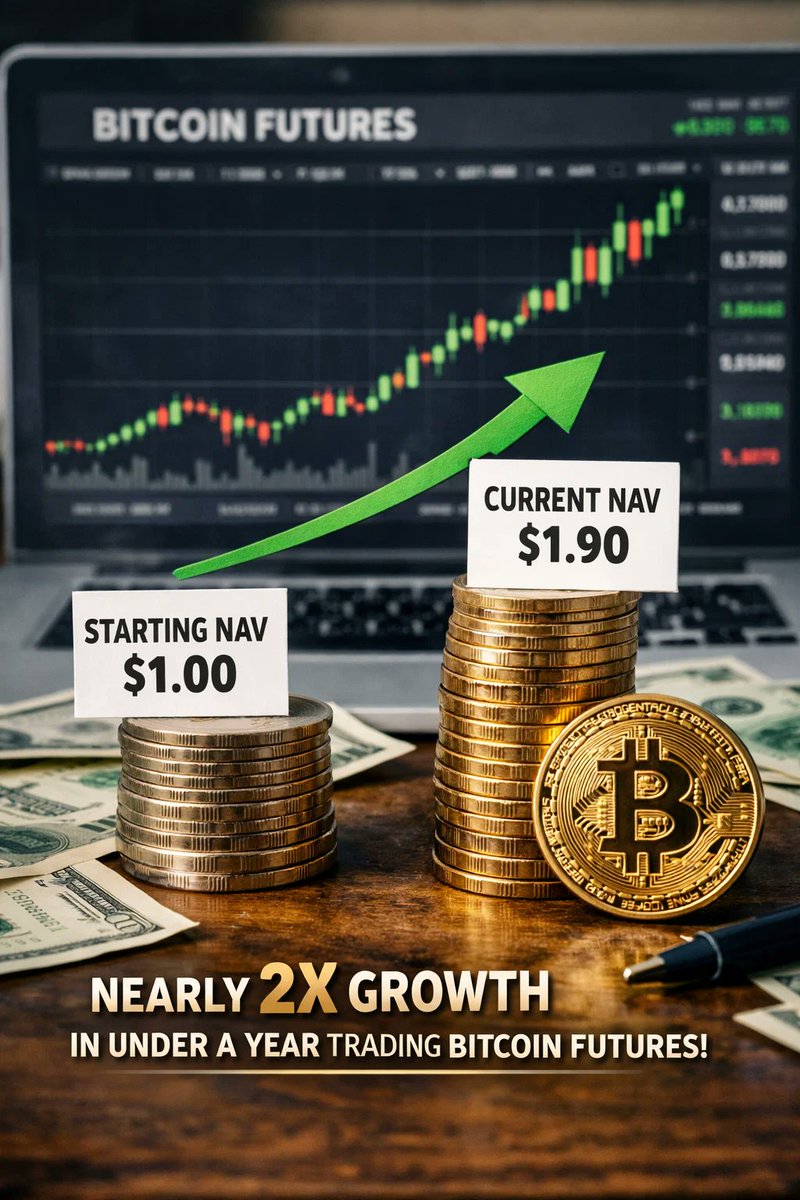
We finally have something real to show 📊
Our Bitcoin Futures Strategy just hit +89% returns since June 2025.
This isn’t hype. This is performance. 👇
@sceniumapp
#sceniumapp


Most tokenization platforms run on shared rollups, but Scenium chose dedicated blockspace for 24/7 trading of tokenized stocks, funds, and RWAs.
@sceniumapp operates a marketplace for tokenized US stocks, bonds, and RWAs serving global investors anytime.
Shared rollups break: fee predictability collapses during congestion, transaction ordering becomes non-deterministic, and execution guarantees vanish when needed, which for regulated securities are structural failures.
Scenium processes fractional stock ownership with real-time feeds, fund subscriptions requiring compliance checks, bond settlements with coupon automation, and RWA-crypto swaps where each requires specific execution logic shared rollups cannot provide.
Tokenizing securities brings regulatory constraints where KYC must execute before trades, dividend distributions need specific tax treatment, and settlement finality matters for reporting.
@TanssiNetwork let Scenium deploy with $350M+ Ethereum-backed security via Symbiotic, validator rotation, and production infrastructure in minutes not months.
Scenium is live in EcoCity processing actual tokenized assets with deterministic fees, custom execution logic, and governance aligned with securities compliance.
Sovereignty isn't technical preference but product requirement when your application must guarantee execution under regulatory constraints.
Which financial products could you build if launching a chain took minutes instead of months?
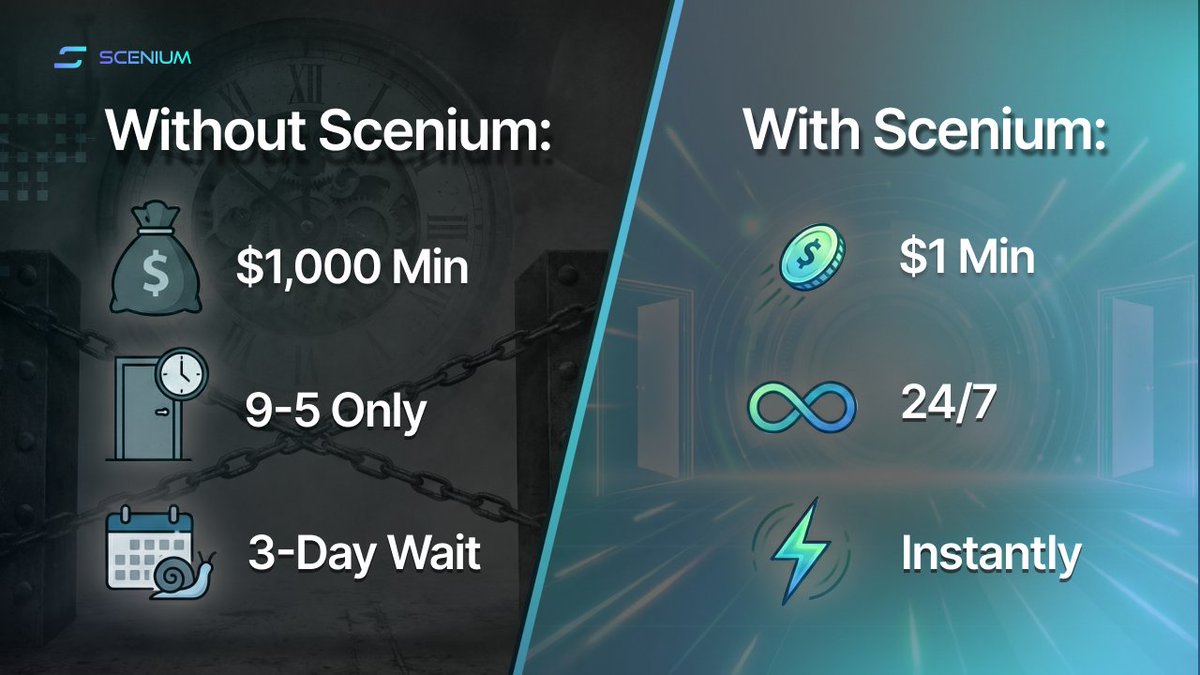

The Move to Sovereign L1s: The Economic Shift in LATAM Through Scenium and Rivool
The LATAM crypto narrative is shifting from adoption to economic utility. With a user base hitting 79 million and transaction volumes nearing $1.5 trillion, the region is a hotbed for innovation. But for real-world financial applications, the underlying infrastructure is becoming a critical bottleneck.
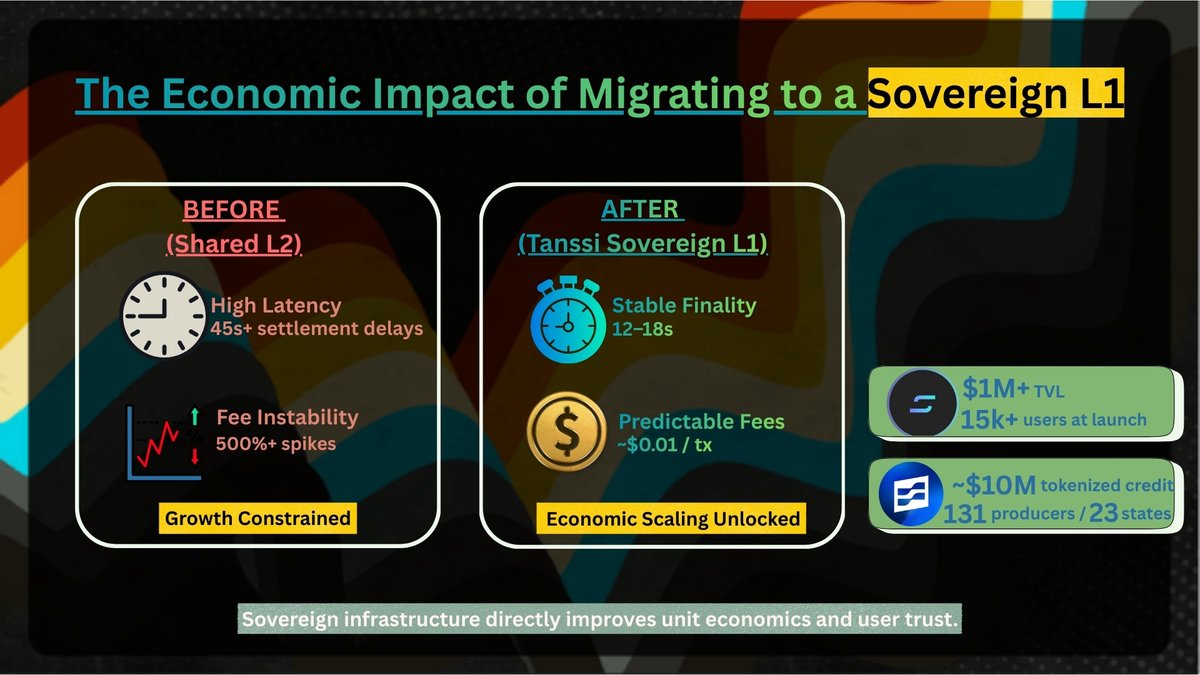
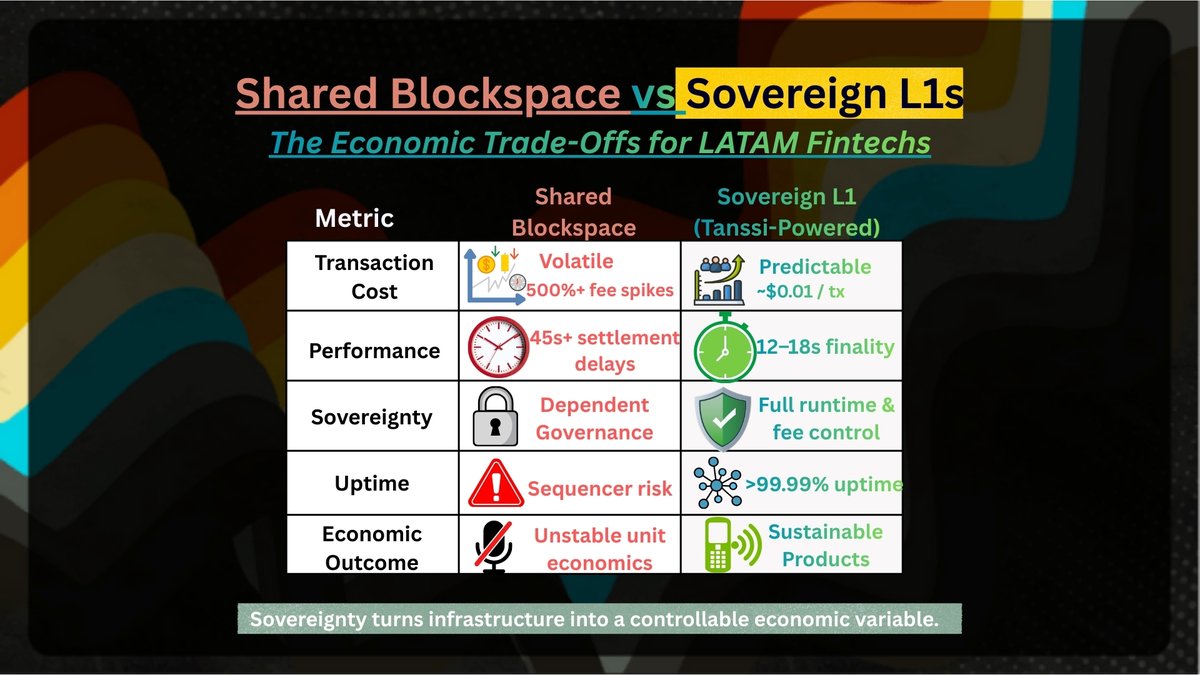
Fintechs and RWA platforms initially built on shared blockspace (like L2s) are hitting a wall. Why? Unpredictable economics. Shared environments lead to fee volatility (spikes of 500%+) and performance degradation during network congestion. For a financial service that requires 24/7 liquidity and predictable settlement, this is an existential threat.
This is driving an exodus toward sovereign L1s. The move isn't about chasing hype; it's a calculated economic decision to own the execution layer. Sovereignty provides control over fees, performance, and governance, essentials for building sustainable, scalable financial products in a market defined by economic volatility and a hunger for dollar-based assets.
---------------
The economic theory is proven by on-chain reality. Let's analyze the "before vs. after" migration for two key LATAM players: Scenium and Rivool.
Case Study: Scenium (Tokenized RWAs)
@sceniumapp offers 300+ tokenized assets to LATAM retail, a market hungry for financial inclusion.
Before (Shared L2):
The platform struggled with performance bottlenecks. During periods of high demand, users faced settlement delays exceeding 45 seconds, creating a poor UX for a 24/7 market. Fee volatility made micro-investments ($1 minimum) economically challenging.
After (Tanssi Sovereign L1 - Launched Nov 4, 2025):
Cost Efficiency:
Transaction costs stabilized at ~$0.01, a 98% reduction from volatile peaks, making the platform viable for its target users.
Performance:
Achieved consistent 6-second block times and 12-18 second finality with 99.99% uptime, eliminating delays and building user trust.
Growth Signal:
Launched with a strong base of $1M+ TVL and 15,000+ users from its beta, indicating clear product-market fit that was previously constrained by infrastructure.
Case Study: Rivool (Agricultural Credit)
@rivool_finance is tokenizing agricultural credit for Brazilian farmers, a high-stakes RWA sector requiring robust compliance and traceability.
Before (Conceptual/Limited Deployment):
Scaling a private credit market on shared infrastructure posed risks related to performance guarantees during critical settlement periods and lacked the custom logic needed for specific compliance rules.
After (Tanssi Sovereign L1):
Deployment Efficiency:
Launched a dedicated, sovereign L1 in hours, not months, allowing them to focus on their core business: structuring credit.
Market Impact:
Scaled operations to finance 131 agricultural producers across 23 states, tokenizing ~$10 million in credit by early 2026.
Reliability:
The L1's stable performance (6s blocks, 12-18s finality) is critical for managing high-value, time-sensitive financial instruments without risk of network halts.
---------------
So, what does this mean for LATAM builders? The path to market is changing. The ability to deploy a sovereign L1 in minutes fundamentally alters the cost-benefit analysis of building a new protocol.
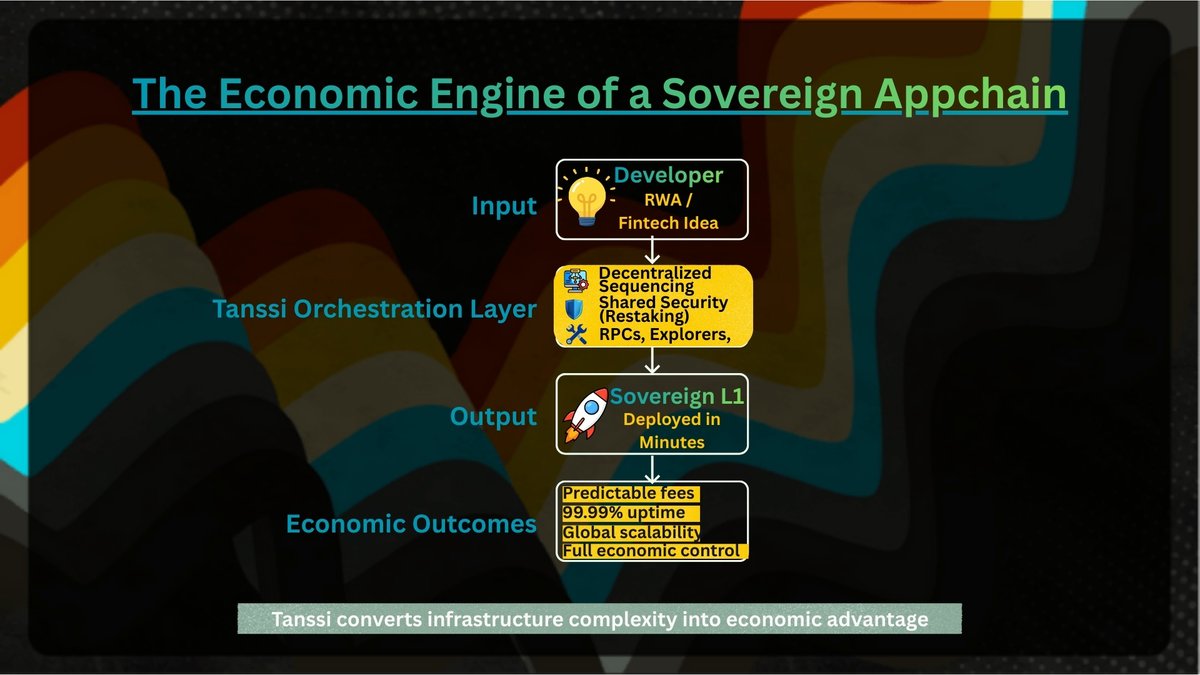
@TanssiNetwork's architecture is the economic engine enabling this shift. It's not just "infrastructure-as-a-service"; it's a decentralized economic model that abstracts away the two biggest hurdles for new chains:
Decentralized Sequencing:
Tanssi provides a permissionless, rotating pool of sequencers. Assignments rotate every ~4-6 hours, eliminating the single point of failure inherent in centralized rollup models and guaranteeing liveness (>99.99% uptime). This provides reliability without the operational overhead.
Security Abstraction:
Instead of spending months and millions bootstrapping a validator set, appchains inherit Ethereum-grade security via Symbiotic's restaking protocol. This drastically lowers the barrier to entry for launching a secure, sovereign chain.
By automating sequencer orchestration and security provisioning, Tanssi reduces deployment time from months to minutes, allowing teams to focus capital on product development, not infrastructure management.
My Personal Insight:
The narrative that L1s must migrate to L2s for scalability is being inverted. For RWA and fintech, where execution guarantees are paramount, migrating from a shared L2 to a sovereign L1 is the most economically rational move. Sovereignty *is* the scaling solution for applications where trust and predictability are non-negotiable.
Looking ahead, as LATAM's 79M+ crypto users demand more sophisticated financial products, the 'L1-in-minutes' model will become the default stack for serious builders. Tanssi isn't just providing infrastructure; it's providing a framework for economic sovereignty, enabling local builders to compete globally without permission.

Forward Outlook: Scaling Tokenization Beyond LATAM
Scenium’s next phase targets market entry into Africa and Southeast Asia, regions with large unbanked populations and strong mobile penetration. Early pilots in Nigeria and Kenya aim for 50,000 new users by Q4 2026, supported by localized compliance frameworks and community education programs. Infrastructure benchmarks set on its sovereign chain (350+ TPS, micro-fee predictability) will be crucial in markets with intermittent connectivity and varied mobile data costs. Furthermore, Scenium’s roadmap includes on-chain stable yield products tied to diversified global fixed-income indices, addressing demand for lower volatility exposure. Comparisons to Asia-Pacific tokenization pilots on public chains highlight differences in onboarding complexity: shared chain projects often require external wallets and bridging, which can deter mass adoption. Scenium’s integrated wallet and fiat on-ramp strategy are designed to meet users where they are. Looking at these developments through the lens of economic inclusion, the case for sovereign L1 tokenization strengthens: it combines performance, accessibility, and regulatory alignment in a way that legacy financial systems have struggled to match. From my perspective, this evolution illustrates that tokenization’s real promise lies in broadening financial participation, not just enabling new asset classes for the already financially served.

Economic Impact on Users: Savings Behavior and Portfolio Diversification
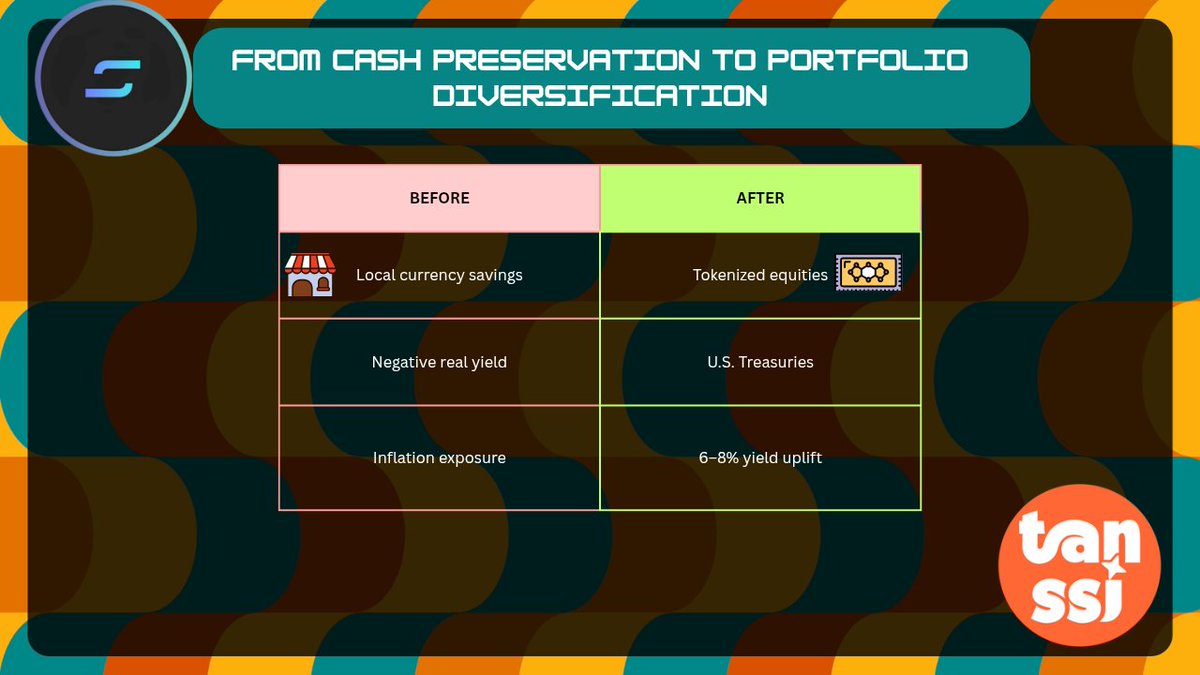
Quantitative surveys from Scenium users reveal shifting financial behavior. Within the first year, 48 percent of users reported reducing cash holdings in local currencies by at least 10 percent, redeploying funds into tokenized assets to hedge against inflation. In Argentina and Brazil—where inflation routinely runs above 50 percent annually—this behavior translates into meaningful purchasing power preservation. Users who tokenized global equities or U.S. Treasury products reported an average yield uplift of 6–8 percent annually (gross) compared to negative real yields on local savings accounts. This differential has incentivized broader engagement: 42 percent of active users diversified into two or more asset categories within 90 days of account creation. While these outcomes are not a substitute for professional financial planning, they demonstrate practical utility beyond speculative trading. In contrast, early decentralized finance yield aggregators in developed markets often reported high APRs tied to liquidity mining incentives rather than underlying real-world economics. Scenium’s metrics suggest that tokenization anchored to traditional asset returns may deliver more stable value propositions for retail participants. From a personal viewpoint, these behavioral shifts are consequential: they suggest tokenization can play a role in everyday financial resilience for investors in emerging economies.
Asset Mix and Market Penetration: What Users Are Actually Tokenizing
@sceniumapp asset catalog has expanded rapidly since launch. By January 2026, it hosted 320+ tokenized instruments: 45 percent equities, 30 percent U.S. Treasury products, 15 percent LATAM real estate exposure, and 10 percent private credit notes. Notably, real estate tokenization on Scenium has attracted $450,000 TVL within sub-$500 investment tranches—an indicator of demand for fractional property exposure. Comparatively, platforms like RealT (Ethereum-based real estate tokenization) saw initial uptake concentrated in U.S. markets with minimums around $100–$250 per property token, limiting access in lower-income regions. Scenium’s sub-$10 fractional share options have expanded participation: 65 percent of property token holders reported that this was their first real-estate exposure. In equities, LATAM users are tokenizing stakes in U.S. blue-chip stocks (e.g., fractional shares of firms in S&P 500) with an average ticket size of $80 per trade. Over three months, equities trades accounted for 57 percent of total on-chain volume, underpinning retail enthusiasm for global exposure. From a market penetration viewpoint, Scenium’s diversified catalog and low granularity have driven deeper adoption than many early tokenization projects that focused narrowly on institutional investors or high-value products.

Transaction Throughput, Fees, and Network Efficiency: @sceniumapp vs. Shared Chains
One of Scenium’s differentiators is performance predictability. On Tanssi’s sovereign L1, Scenium has consistently maintained block times under 3 seconds and an average throughput of 350+ transactions per second (TPS) during peak LATAM trading hours. Average transaction fees have stabilized near $0.004 per transaction, a meaningful contrast to shared layer-2 environments where gas price spikes can push costs above $5 per transaction during high DeFi demand. For retail tokenized equity trades—often involving small trade sizes—the difference between predictable micro-fees and volatile gas costs is material. For example, a $50 asset purchase subjected to a $5 gas spike effectively incurs a 10 percent fee, which would disincentivize participation. Scenium’s fee stability has correlated with a 32 percent month-over-month increase in on-chain trade volume, underscoring user preference for low and predictable costs. Compared with early iterations of Ethereum L2 tokenization platforms that struggled with latency and fee unpredictability, Scenium’s performance metrics illustrate how tailored infrastructure can reduce friction and improve market depth. Personally, I view this as evidence that sovereign chain performance directly impacts retail investor economics and should be a core design criterion for emerging market asset tokenization.

Financial Inclusion as a Measurable Outcome
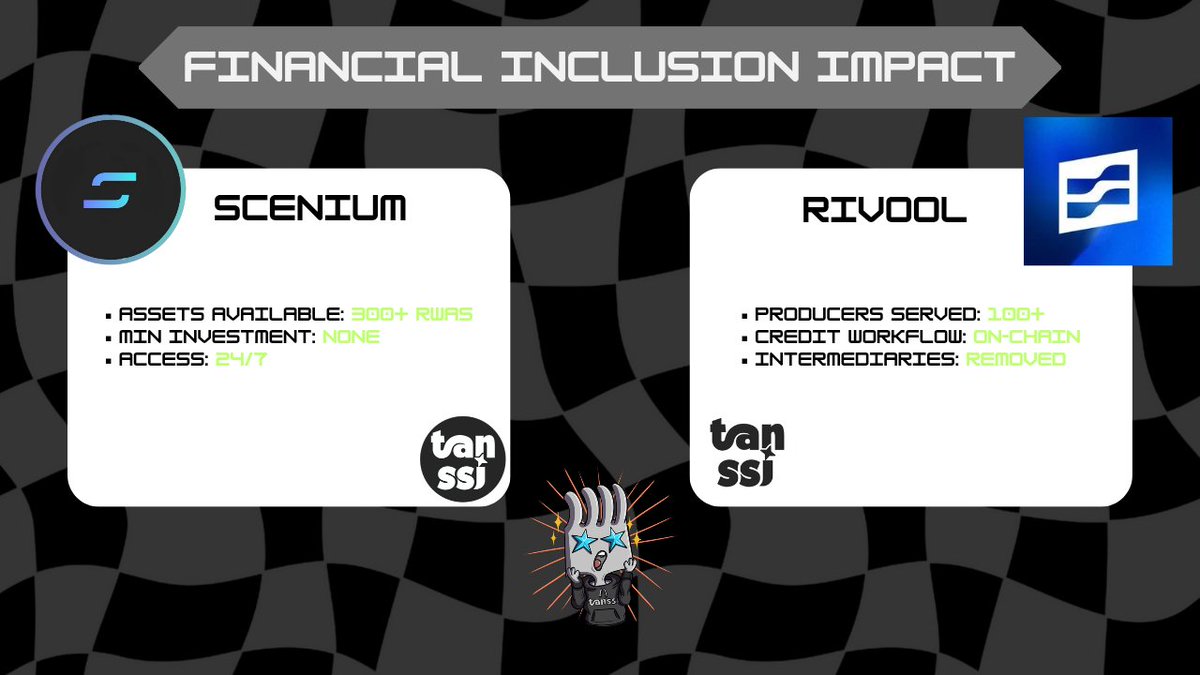
Financial inclusion is often discussed abstractly, but sovereign L1 deployments make it measurable. @sceniumapp sovereign L1 enables access to 300+ tokenized real-world assets without traditional minimum investment thresholds. For LATAM users facing inflation and currency instability, this provides a practical hedge—not a speculative one. Prior to this, access to such assets required brokers, high fees, and long settlement cycles. Post-migration, users can transact 24/7 with immediate settlement. @rivool_finance inclusion impact is equally tangible: agricultural producers who previously lacked reliable access to formal credit now interact directly with transparent on-chain systems. Compared to legacy finance or shared networks, sovereign L1s allow fee structures and governance tailored to underserved users. Personally, I see this as the most important economic effect. Infrastructure design determines who gets access. Sovereign L1s lower the barrier, and in emerging markets, that shift has compounding social and economic effects.
Transaction Volume, User Growth, and Behavioral Change
One of the strongest arguments for sovereign L1s is how they change user behavior. Before migration, both @sceniumapp and @rivool_finance faced adoption ceilings caused by infrastructure uncertainty. Users hesitated to transact frequently because fees and confirmation times were unpredictable. After deploying sovereign L1s, Scenium observed ~40% month-over-month growth in active usage during early phases, driven by repeat transactions rather than pure user acquisition. This distinction matters. Shared blockspace systems often inflate metrics through speculative spikes, while sovereign L1s foster steady economic activity. Rivool experienced similar effects at an institutional level, with increased transaction throughput as workflows became fully on-chain. From my view, the key metric isn’t peak TPS—it’s transaction reliability over time. When users know costs won’t spike and execution won’t stall, they transact more confidently. Sovereign L1s convert blockchain usage from episodic to habitual, which is the foundation of sustainable on-chain economies.

Last Seen Hashtags on Sotwe
Trends for you
Most Popular Users

Elon Musk 
@elonmusk
240.1M followers

Barack Obama
@barackobama
118.6M followers

Cristiano Ronaldo
@cristiano
114.4M followers

Donald J. Trump
@realdonaldtrump
111.8M followers

Narendra Modi
@narendramodi
106.9M followers

Rihanna
@rihanna
98.6M followers

NASA
@nasa
92.1M followers

Justin Bieber
@justinbieber
91.7M followers

KATY PERRY
@katyperry
89.9M followers

Taylor Swift
@taylorswift13
83.9M followers

Lady Gaga
@ladygaga
75.4M followers

Virat Kohli
@imvkohli
73.3M followers

Kim Kardashian
@kimkardashian
70.8M followers

YouTube
@youtube
68.6M followers

Neymar Jr
@neymarjr
66.3M followers

Bill Gates
@billgates
65.2M followers

Selena Gomez
@selenagomez
63M followers

The Ellen Show
@theellenshow
62.1M followers

CNN
@cnn
61.7M followers

X
@x
60.6M followers