

Top Tweets for #securityengineering

𝗛𝗼𝘄 𝗔𝗻𝘁𝗵𝗿𝗼𝗽𝗶𝗰 𝗱𝗲𝗰𝗶𝗱𝗲𝘀 𝘄𝗵𝗼 𝗴𝗲𝘁𝘀 𝗶𝗻
Projects are reviewed case by case.
Key signals include remote attack exposure and how many users or downstream projects depend on the software.
#SecurityEngineering #OSS

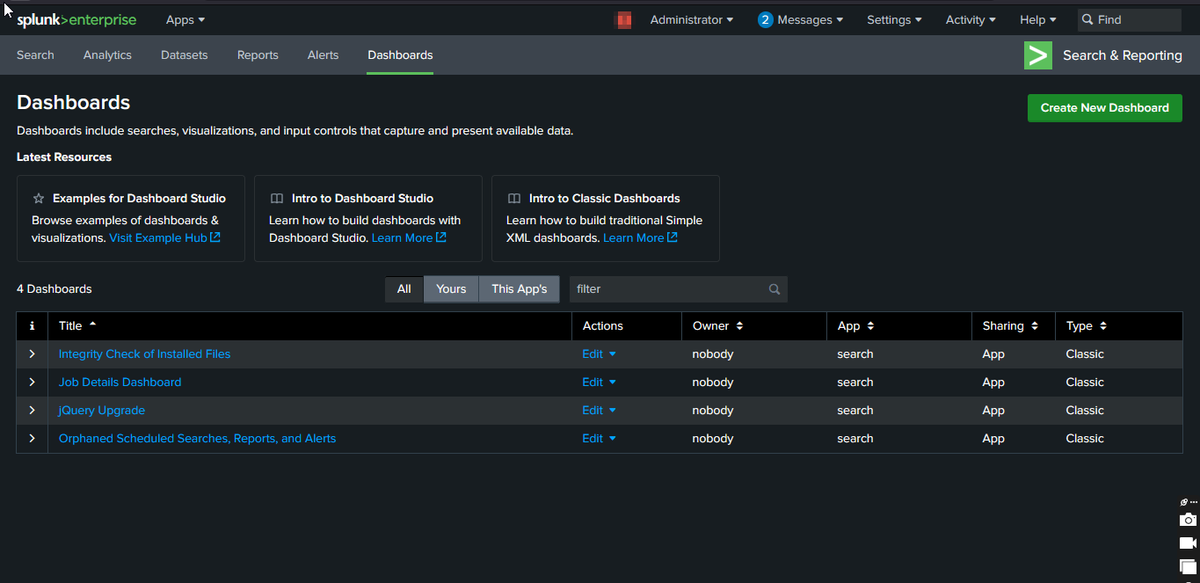
Today I moved one step closer to building a real Security Operations monitoring environment in the cloud.
I spun up an Azure virtual machine and began deploying a log monitoring pipeline using Splunk.
The goal wasn’t just installing software. The goal was building the foundation of a security visibility layer the kind security teams rely on to detect attacks in real time.
First, I accessed the Azure VM through SSH and verified the environment. Inside the server, I uploaded the Splunk packages: Splunk Enterprise and the Splunk Universal Forwarder.
From there, I extracted the Splunk Forwarder package and initialized the service from the command line. This is the component responsible for collecting and shipping logs from systems to the main Splunk SIEM.
Once the forwarder was running, I configured it to start automatically on boot so the monitoring pipeline remains persistent even after system restarts.
The next step was connecting the forwarder to the central Splunk server and enabling log monitoring from system directories. This allows the platform to ingest operational and security logs that can later be used for threat detection, anomaly analysis, and incident investigation.
Why does this matter?
Most organizations don’t get breached because attackers are invisible. They get breached because no one is watching the logs.
SIEM platforms like Splunk change that by giving security teams the visibility they need to detect suspicious activity before it becomes a major incident.
This project is part of a larger mission I’m working on: building a cloud-based security monitoring lab that simulates how real SOC teams detect, investigate, and respond to threats.
Security engineering isn’t just about finding vulnerabilities.
It’s about building systems that make attacks visible.
Next step: integrating detection rules, attack simulations, and automated alerts.
#securityOperations #SecurityEngineering

Security failures rarely come from attackers.
They come from assumptions.
“We thought no one would look here.”
“We assumed this key would stay private.”
“This was only temporary.”
Attackers don’t break systems.
They find the place where someone assumed it was safe.
Good security doesn’t rely on hope or good behavior.
It assumes mistakes — and survives them.
#CyberSecurity #InfoSec #SecurityEngineering #ZeroTrust #Privacy #AppSec


I rebuilt a password manager — this time with the goal of creating something people could realistically trust, not just a demo.
Biggest lesson:
Auth is just the door, sessions and key management are the real security model.
Built with client-side encryption
#SecurityEngineering

Spent today on threat modeling — shifting security thinking left, before vulnerabilities https://t.co/aUIjt2lbxs breaking applications into assets, trust boundaries, and attack surfaces, it becomes easier to anticipate how systems fail under real-world abuse.Applying STRIDE reinforces that many serious incidents are design flaws, not coding mistakes. Secure systems are built intentionally, not patched reactively.Continuing to deepen my application security and secure design practice.
#ThreatModeling #SecureDesign #AppSec #SecurityEngineering #LearningInPublic
Good security systems aren’t built around “what the user must do correctly”,
they’re built around the assumption that the user will eventually make a mistake.
Real security isn’t a strict policy.
It’s an architecture that survives the human factor.
#cybersecurity #infosec #privacy #securityengineering #tech #appsec #zerotrust

The goal wasn’t more alerts; it was better decisions, faster.
I built a Security Event Gateway using FastAPI that automated triage, filtered 90% of CSPM noise, and freed our team to focus on higher-impact security work.
Here’s how we turned alert fatigue into autonomous response:
https://t.co/rIl8jyVMOg
#SecurityEngineering #Automation #CloudSecurity #Cybersecurity

TEEs are hardware-isolated “enclaves” that let code run in a protected box where even the machine owner (or cloud provider) can’t peek.
For @tenprotocol, that means sensitive logic, private inputs, and model interactions can execute off-chain with confidentiality + integrity guarantees even before results touch the chain.
This isn’t marketing fluff; it’s a concrete cryptographic + hardware security primitive.
Inside a TEE, memory is encrypted, the compute is isolated, and the output can be remotely attested a cryptographic proof that the right code, on the right hardware, produced the result.
That’s how @tenprotocol can say: “trust the result, not the operator.”
Attestation = verifiable execution → fewer assumptions, stronger guarantees.
Why does this matter for a crypto+AI protocol?
Because data + inference often need to stay private, but still be usable.
With TEEs, @tenprotocol can ingest user signals, process them confidentially, and commit only the necessary proofs / commitments / state updates on-chain preserving secrecy without sacrificing verifiability.
Typical TEE benefits in this context:
• Confidentiality: Inputs/outputs shielded from infra operators.
• Integrity: Code measured + verified before it runs.
• Sealed storage: State can be persistently encrypted and bound to enclave identity.
• Deterministic pipelines: Same code hash → same verifiable guarantees.
#CryptoInfrastructure #SecurityEngineering
But let’s be real about the threat model: TEEs don’t magically solve everything.
Side-channel attacks, microcode bugs, and vendor trust still exist.
That’s why serious protocols (like @TENProtocol) often combine TEE attestation with on-chain verification, rate limits, auditing, or even zk-proof overlays for critical paths.
Defense-in-depth > blind trust.
#RiskModeling #ZeroKnowledge #CryptoPrimitives
Bottom line: TEEs give @TENProtocol a practical bridge between high-performance off-chain compute and on-chain verifiability, without exposing user data or business logic.
It’s how you get privacy, speed, and credibility in one stack—exactly what decentralized AI + intent-centric systems need to scale.
Snap with purpose. Build with proofs.
#TENProtocol #TEE #ConfidentialComputing #Web3Security #OnChainVerification #ReputationLayer #AIinWeb3 #DecentralizedAI #CryptoBuilders #ProofOfAlignment


Did you know that an AWS IAM user can delete other users, self and even delete the root user. Learn to secure your AWS users with IAM policies and MFA.
#AWS #IAM #securityengineering #awscloud
https://t.co/CTkBgnDKGn
Last Seen Hashtags on Sotwe
incesto con hermanos ****
Seen from Chile
brosis
洛丽塔
Seen from United States
shota
Seen from Chile
momson()*************************
Seen from Kenya
randomchat
Seen from United States
วังสะพุง
Seen from Thailand
teeNageeee(((((((((())))))))))
Seen from Germany
unexpected
Seen from Canada
minichat()*********************************
Seen from Netherlands
Most Popular Users

Elon Musk 
@elonmusk
240.1M followers

Barack Obama
@barackobama
118.6M followers

Cristiano Ronaldo
@cristiano
114.4M followers

Donald J. Trump
@realdonaldtrump
111.7M followers

Narendra Modi
@narendramodi
106.9M followers

Rihanna
@rihanna
98.6M followers

NASA
@nasa
92.1M followers

Justin Bieber
@justinbieber
91.7M followers

KATY PERRY
@katyperry
89.9M followers

Taylor Swift
@taylorswift13
83.9M followers

Lady Gaga
@ladygaga
75.4M followers

Virat Kohli
@imvkohli
73.3M followers

Kim Kardashian
@kimkardashian
70.8M followers

YouTube
@youtube
68.6M followers

Neymar Jr
@neymarjr
66.3M followers

Bill Gates
@billgates
65.2M followers

Selena Gomez
@selenagomez
63M followers

The Ellen Show
@theellenshow
62.1M followers

CNN
@cnn
61.7M followers

X
@x
60.6M followers