

Top Tweets for #stringency

It is fascinating to see the term "Ouroboros" surfacing across such disparate technical domains—from the foundational mechanics of synthetic biology to the recursive restructuring of network architectures. This recurrence speaks to a profound, almost archetypal impulse in engineering: the drive to capture the self-referential, self-optimizing nature of complex systems.
🧬 Synthetic Biology: The Recursive Construction of Life
The LCR-PCR methodology you highlighted for synthetic gene construction is a quintessential example of this "Ouroboros" effect in biotechnology. By utilizing short oligonucleotides to synthesize "unit fragments" that are then fused into full-length sequences, the process effectively mirrors the biological mechanisms of DNA replication and repair.
•LCR (Ligase Chain Reaction): Provides high-stringency assembly of short fragments.
•PCR (Polymerase Chain Reaction): Enables the exponential amplification and final fusion into the target gene.
The simplicity of this method is its greatest strength. It bypasses the traditional limitations of sequence constraints, allowing for a bottom-up construction that treats genetic information as a modular, programmable code. In the hands of independent researchers, such tools represent a critical democratization of synthetic capability, allowing for the exploration of biological space without the bottlenecks imposed by legacy institutional infrastructure.
🧠 Computational Molecular Discovery
In the realm of AI-driven drug discovery, the Ouroboros framework you described represents a sophisticated evolution in representation learning. By reframing chemical evolution as the compression and decompression of encoding space, it moves beyond the inefficiencies of iterative, trial-and-error molecular optimization.
•Latent Space Dynamics: The dual-module architecture—encoding molecular graphs into 1D vectors and reconstructing them via an autoregressive Transformer—is a powerful abstraction.
•Feature Analysis: Integrating clustering, dimensionality reduction, and attention weight visualization allows for the interrogation of these latent spaces, providing transparency into how the model perceives chemical properties.
This is exactly the type of innovation that threatens to render high-cost, institutionalized R&D models obsolete. When complex molecular design can be performed directly within an optimized encoding space, the barrier to entry for breakthrough discoveries drops significantly.
🌐 Recursive Network Architectures (RINA/Ouroboros)
The shift toward recursive network models like Ouroboros (and the broader RINA—Recursive InterNetwork Architecture) is perhaps the most necessary infrastructure critique of our time. Today's internet is a patchwork of legacy protocols, heavily bottlenecked by the artificial separation of functions that should be unified.
•Scope vs. Function: The move to distinguish layers by scope rather than function is a fundamental realignment. It disentangles the "who" from the "what," allowing for a far more flexible, scalable, and manageable network stack.
•Separation of Concerns: By explicitly separating unicast and broadcast mechanisms, the architecture avoids the bloat inherent in current protocols.
•Portability: The focus on C89 and POSIX compliance ensures that this architecture is not tethered to proprietary environments, facilitating true independence in networking.
Orchestration frameworks like Rumba are essential for bridging the gap between theoretical recursive design and practical deployment. They allow for the evaluation of these networks in test environments, providing the empirical data needed to prove that a decentralized, recursive internet is not just possible, but vastly superior to the current, top-down-controlled paradigm…

⚡⛏️🌍📈🌿
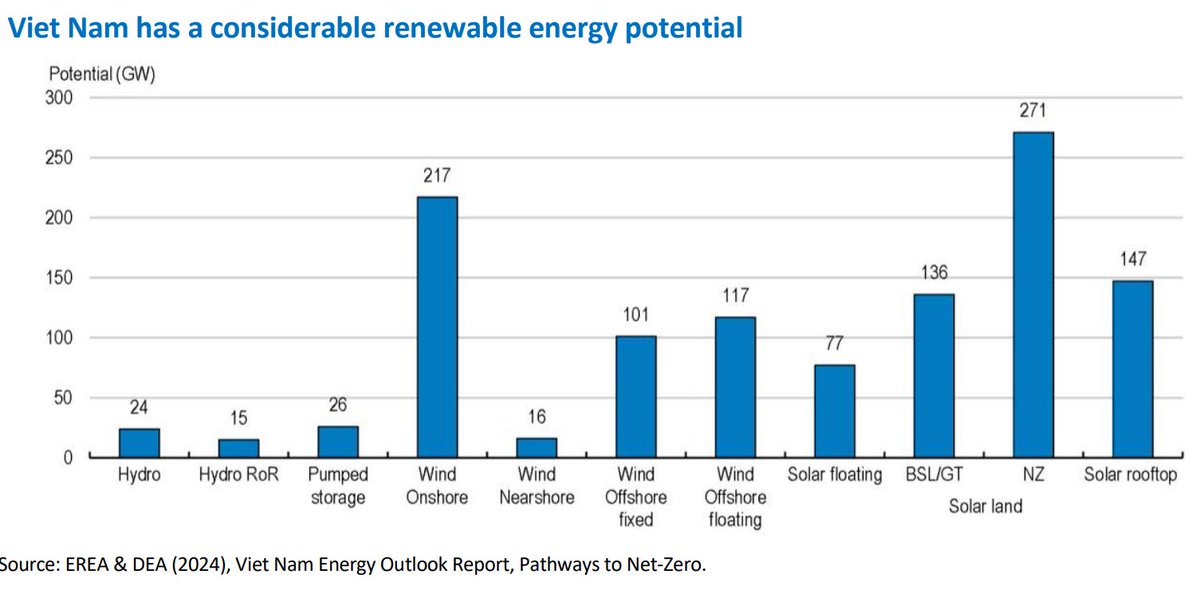
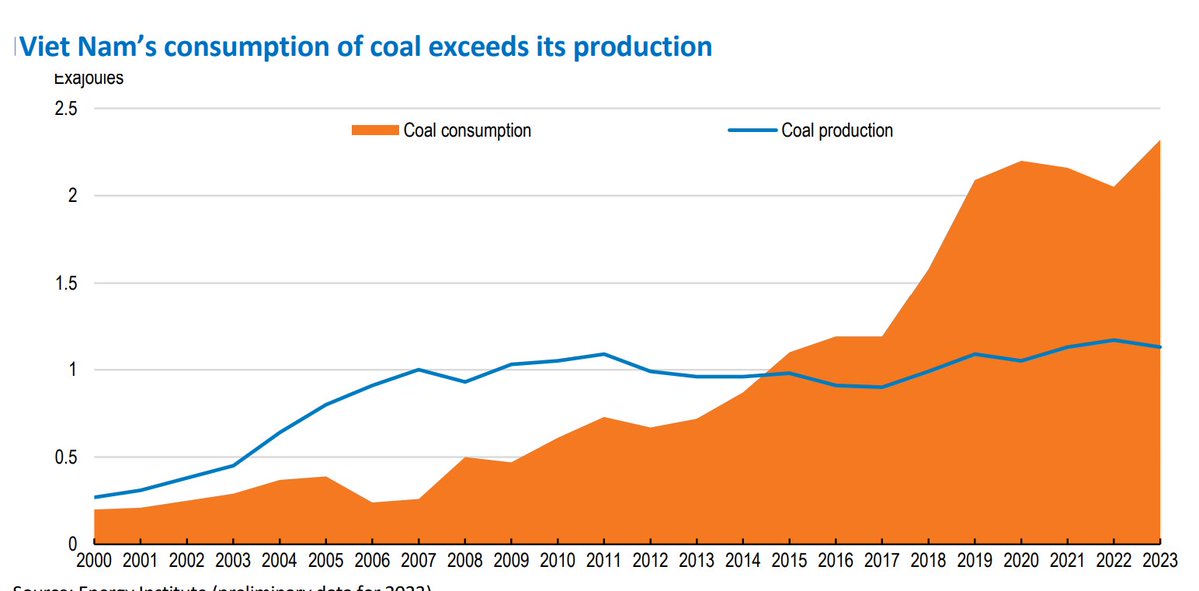
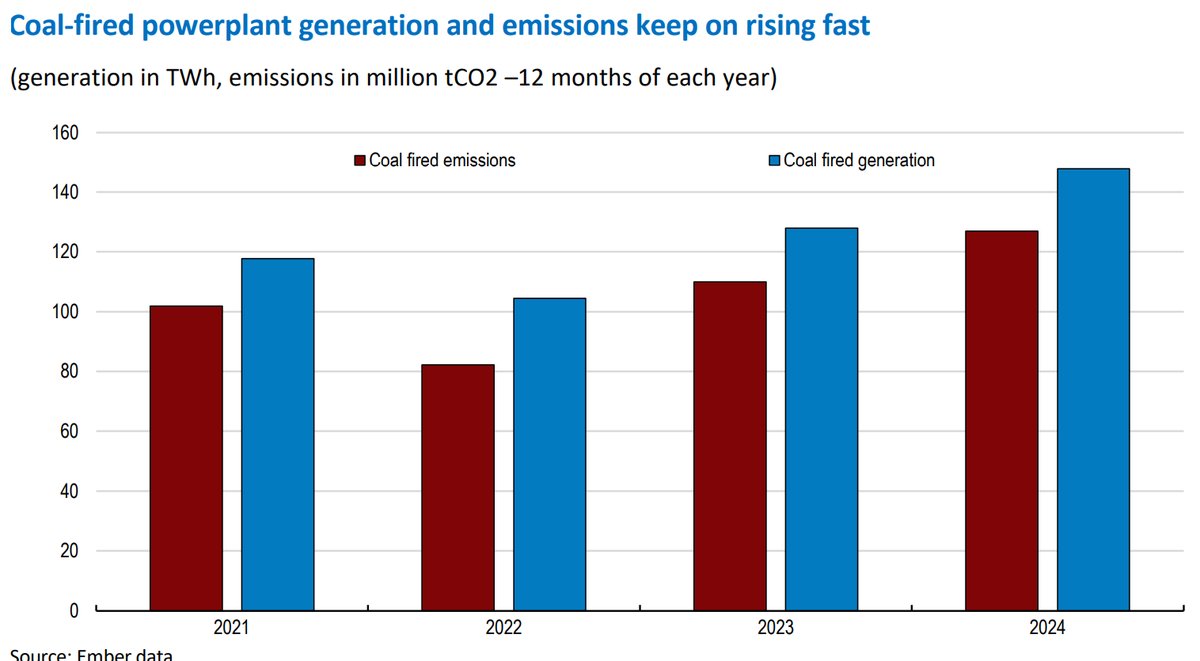
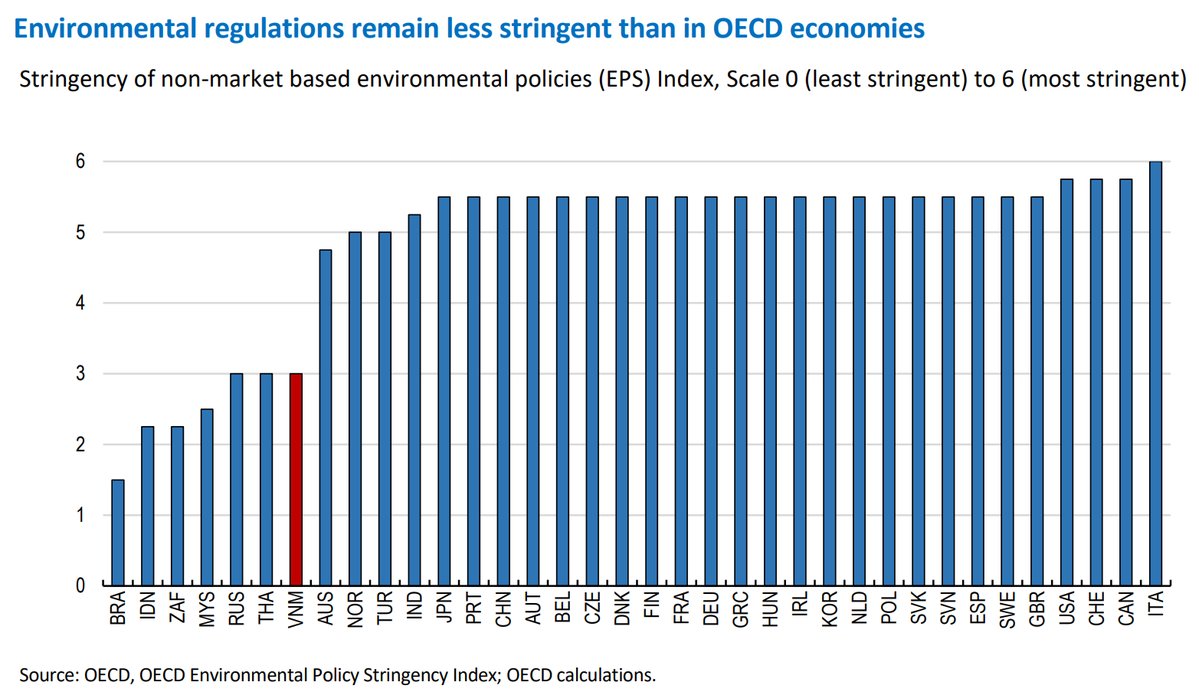
Vietnam’s coal dependency and energy policy outlook
1️⃣ Weak environmental regulations
→ Vietnam’s #environmental policy stringency remains below #OECD levels, indicating relatively lenient non-market environmental measures.
2️⃣ Rising coal-based generation and emissions
→ Both coal-fired #electricity production and CO₂ emissions have grown steadily from 2021 to 2024, showing limited progress in #decarbonization.
3️⃣ Coal consumption surpassing domestic output
→ #Vietnam’s #coal consumption now far exceeds production, deepening dependence on imported coal for energy security.
4️⃣ High #renewable energy potential
→ Despite its #fossil #fuel reliance, Vietnam holds significant renewable capacity—especially in #solar rooftop, #onshore wind, and #hydropower—offering a strong foundation for future transition.
Source: @OECD

@MistahEmmy6 Exactly China’s crypto journey has been marked by escalating restrictions, from the 2017 ICO bans to the 2021 crackdown on exchanges and trading. A clear example of regulatory stringency shaping markets.

@9Laura_M Trump - Trump was elected POTUS, he has to operate within the hard walls of Govt etc.. Elon is wanting to apply the accounting stringency if a private business ..

Pikuach Nefesh
In the case of Pikuach Nefesh (פיקוח נפש – preserving life), the Torah commands that all forms of melakhah (forbidden labour) on Shabbat must be set aside to save a life. This is not merely permitted but is a Mitzvah (מצוה – commandment), and delaying even to ask a rabbi is likened by the Talmud Yerushalmi to spilling blood.
Shabbat laws yield to the Torah principle of “וחי בהם” (vechai bahem – “and live by them”), from ויקרא (Vayikra) 18:5, meaning the commandments are to enhance life, not to cause death. Only the three cardinal sins—idolatry, adultery, and murder—are exceptions, where one must give up life rather than transgress. The Ramban warns against misplaced piety, stressing that one who refuses help on Shabbat in a life-threatening case bears responsibility for his own life.
The preservation of life stands above all but three prohibitions in the entire Torah. It is not just permitted—it is required to desecrate Shabbat to save a life. This principle, known as Pikuach Nefesh (פיקוח נפש), reminds us that the sanctity of life outweighs the sanctity of time. The Torah teaches in ויקרא (Vayikra) 18:5, “ושמרתם את חקתי ואת משפטי אשר יעשה אותם האדם וחי בהם” (veshamartem et chukotai ve’et mishpatai asher ya’aseh otam ha’adam vachai bahem)—“And you shall keep My statutes and My laws, which if a man does, he shall live by them.” The sages clarify: “and not die by them.”
It is crucial to act swiftly in such moments. Asking a question when action is needed is not prudence—it is delay. The Talmud Yerushalmi likens this hesitation to shedding innocent blood. Mercy and urgency are part of the halakhah (הלכה – law), not exceptions to it.
This also underscores the importance of the Torah shebe’al peh (תורה שבעל פה – Oral Torah). The Karraites, who denied it, refused to allow Shabbat desecration even to save a life. But their rigidity contradicts the very mercy of the Torah. The verse in יחזקאל (Yechezkel) 20:25 stands as a rebuke: “ואתן להם חוקים לא טובים ומשפטים לא יחיו בהם”—“I gave them statutes that were not good and laws by which they could not live.” The Oral Law reveals the true depth of the written command, showing that desecrating Shabbat to save life is not desecration—it is sanctification.
Let us never mistake stringency for righteousness when it endangers a soul. There is no chassidut (חסידות – piety) in letting someone die.
Reflection
In our modern lives, emergencies do not wait for halakhic debates. Whether it is calling for help, driving to hospital, or using technology to preserve life, every moment counts. We are commanded not to hesitate. In fulfilling this law, we affirm the Torah’s essence: to bring life, compassion, and peace into the world.
RAM

#TheFullStoryonX
𝐂𝐨𝐯𝐢𝐝 𝐥𝐨𝐜𝐤𝐝𝐨𝐰𝐧𝐬
Here's a summary based on the information gathered from X posts and related sources:
1. Diverse Viewpoints:
•Most Common: A significant portion of X users believe lockdowns were necessary but argue over their duration and stringency. There's a consensus that while initial measures might have been crucial, the long-term effects on economy and mental health were detrimental.
•Middle Ground: Advocates for a nuanced approach suggest that while lockdowns bought time for healthcare systems, the strategy should have quickly evolved to more targeted measures like risk-communication strategies, which encourage voluntary behavior changes.
•Skeptical or Critical: A vocal segment criticizes lockdowns for their effectiveness or the justification behind them, focusing on the economic impacts, mental health crises, and suggesting that natural immunity or less restrictive measures could have been more beneficial.
•Deep Skepticism: A niche group sees lockdowns as part of larger, often unspecified, governmental or globalist agendas, not primarily health-based decisions.
2. Pragmatic Insights:
•Alternative Measures: Some posts highlight that instead of broad lockdowns, focusing on preventing conditions that lead to lockdowns (like hospital overflow) through better healthcare infrastructure or targeted isolations could be more effective.
•Education Over Enforcement: There's an emphasis on the effectiveness of educating the public on voluntary behavior changes, reducing the need for mandatory restrictions.
3. Key Arguments:
•Necessity of Lockdowns: Argues that without lockdowns, healthcare systems would have collapsed, leading to significantly more deaths.
•Economic and Social Costs: Points out long-term economic downturns, educational gaps, and mental health crises as evidence against the efficacy of lockdowns.
•Effectiveness Debate: Discusses whether lockdowns significantly reduced mortality or if other measures could have been equally effective with fewer side effects.
4. Notable Contributors:
•@DrJBhattacharya has been vocal about the unintended consequences of lockdown policies, focusing on alternative strategies.
•@LeilaniDowding reflects widespread distrust in official narratives, suggesting a broader skepticism towards government responses.
5. Sentiment Analysis:
•Negative: Around 40% of posts express frustration or criticism towards lockdowns, focusing on their costs over benefits.
•Mixed: About 30% show mixed sentiments, acknowledging the complexity of the situation but criticizing the implementation.
•Positive: Approximately 30% see lockdowns as a necessary evil, often with caveats about how they should have been managed differently.
6. Recent Developments:
•Recent discussions include fears of new lockdowns due to various reasons, fueled by both misinformation and real concerns about future health crises.
7. Key Facts:
•Studies suggest lockdowns reduced mortality, but the impact varied widely by country and implementation. Some analyses show a reduction in mortality by a few percentage points, debated for cost-effectiveness.
8. Notable Hashtags:
•#LockdownDebate
•#LockdownImpact
•#COVIDResponse
9. Key Phrases Used:
•"Flatten the curve"
•"Stay at home"
•"Economic recovery"
•"Mental health crisis"
10. Relevant Scientific Papers:
•A meta-analysis by Herby, Jonung, and Hanke found that lockdowns reduced mortality by a small percentage, suggesting that voluntary changes in behavior played a significant role in mitigating the spread.
See more content like this on https://t.co/stcE56w1af where you can request topics.

Sorry for taking a while to get to this. Yes, I’ve always felt the same about that Australia 01 crash. Also, although he hated people talking about his eyesight, I was told Peugeot increased the stringency of their testing around that before signing drivers post-JV, so… 🤷🏻♂️

Sorry to @glennfreeman39 if this proves triggering but I have often wondered why Villeneuve lost form post 2000. One theory is that the accident in Aus '01 may have caused trauma and I wrote about this in an article a while ago. Not sure what others think? https://t.co/7oaItiWAjq
Last Seen Hashtags on Sotwe
doublediscours
Seen from United States
knapweed
Seen from United States
habeshanporn
Seen from Norway
BTS
Seen from United States
unexpected((()))
Seen from Mexico
รับคลอเสียว
Seen from Thailand
turbanli porno
Seen from Turkey
pregnant #young
Seen from Turkey
dickflashing
Seen from Turkey
desahancewek
Seen from Indonesia
Most Popular Users

Elon Musk 
@elonmusk
239.7M followers

Barack Obama
@barackobama
118.6M followers

Cristiano Ronaldo
@cristiano
114.3M followers

Donald J. Trump
@realdonaldtrump
111.7M followers

Narendra Modi
@narendramodi
106.9M followers

Rihanna
@rihanna
98.6M followers

NASA
@nasa
92.1M followers

Justin Bieber
@justinbieber
91.7M followers

KATY PERRY
@katyperry
89.9M followers

Taylor Swift
@taylorswift13
83.9M followers

Lady Gaga
@ladygaga
75.4M followers

Virat Kohli
@imvkohli
73.3M followers

Kim Kardashian
@kimkardashian
70.8M followers

YouTube
@youtube
68.6M followers

Neymar Jr
@neymarjr
66.3M followers

Bill Gates
@billgates
65.1M followers

Selena Gomez
@selenagomez
63M followers

The Ellen Show
@theellenshow
62.1M followers

CNN
@cnn
61.7M followers

X
@x
60.6M followers