

Top Tweets for #stringify

learning backend..
Axios offers advantages over Fetch by automatically parsing JSON responses and stringifying request data, eliminating extra code.
Furthermore, Axios natively handles HTTP errors, allowing developers to catch 4xx/5xx status codes within a standard catch block.

A breakdown of common computer science concepts that often overlap but have distinct purposes.
1. Parsing
Definition: Parsing is the process of analyzing a string of data (like text or code) to understand its structure and convert it into a more usable format, such as a data structure (e.g., parsing JSON into a JavaScript object).
Opposite: Stringification / Serialization
You serialize (or stringify) a structured object into a string and then parse it back.
🔹 2. Serialization
Definition: The process of converting a data structure (like a Python dictionary or JavaScript object) into a format that can be stored or transmitted (e.g., JSON, XML, binary).
Opposite: Deserialization / Parsing
Deserialization turns the serialized string/data back into the original structure.
🔹 3. Encoding
Definition: Conversion of data into a specific format using a known scheme so it can be safely stored or transmitted (e.g., UTF-8, Base64).
Opposite: Decoding
Decoding reverses the process using the same scheme (e.g., Base64 decoding).
✅ Encoding is not encryption — it’s easily reversible and not meant for security.
🔹 4. Hashing
Definition: Hashing transforms input data into a fixed-size string of characters (hash). It’s one-way — designed to be irreversible (e.g., SHA-256 for passwords).
Opposite: ❌ None (by design)
Hashing is irreversible. You can’t get the original input from the hash.
🔹 5. Encryption
Definition: Converts data into a scrambled (ciphertext) format using an algorithm and key, meant to be reversible for authorized parties.
Opposite: Decryption
With the correct key, encrypted data can be decrypted back to the original.
🔹 6. Signing (Digital Signing)
Definition: Produces a cryptographic signature of data using a private key to ensure integrity and authenticity (e.g., in JWT, emails).
Opposite: Verification
The receiver uses the public key to verify the data’s authenticity and integrity.
🔹 7. Salting
Definition: Adds random data (a "salt") to inputs (often passwords) before hashing to defend against precomputed attacks (rainbow tables).
Opposite: ❌ None exactly
There’s no "reversing" salting — it just strengthens the hash. But during verification, you recompute the hash using the stored salt.
🔹 8. Obfuscation
Definition: Makes code difficult to understand or reverse-engineer (e.g., renaming variables, flattening logic).
Opposite: Deobfuscation
This means trying to interpret or reconstruct the original logic of obfuscated code.
⚠️ Obfuscation is not security, just makes code harder to read.
🔹 9. Minification
Definition: Removes all unnecessary characters (spaces, comments) from code without changing its functionality — for performance.
Opposite: Beautification / Pretty-printing
Adds indentation, spaces, and formatting to make code readable again.
🔹 10. Compression
Definition: Reduces the size of data using algorithms (e.g., gzip, zip). Can be lossless (no data lost) or lossy (some data discarded).
Opposite: Decompression / Extraction
Restores the data back to its original or usable form.


Chat engine transmits JSON string (there is stringifying&encoding (at one end)-decoding&JSON parsing (at another end) lag due to this)
So In Game engine,I converted my Playerdata into ArrayBuffer (Binaries) directly-so that there is no stringifying or JSON parsing step
NFS>

This week we added 10 standard library modules to Script. Here's how:
1/ The modules:
- path (10 methods)
- date (22+ methods)
- fs (18 methods)
- json (parse/stringify)
- math (35+ methods)
- string (20+ methods)
- array (9+ methods)
- Promise (full API)
- console, ByteStream
2/ Design philosophy:
- Node.js compatibility where it makes sense
- Native Rust functions for performance
- JavaScript-like API surface
3/ Implementation pattern:
Each module = Rust native functions + VM registration
Fast, type-safe, and easy to extend
4/ What's next:
- crypto (SHA256, HMAC)
- os (platform detection)
- process (env vars, argv)
Im creating the documentation for it, for the time being: https://t.co/yxZUhD3OpH

Day 13: Had to revist this lesson again by @SuperSimpleDev , learnt also about how to save localStorage & also JSON methods to stringify and parse variables. Been struggling with consistency but we keep it going. #code #CodeNewbie #100daysofcode
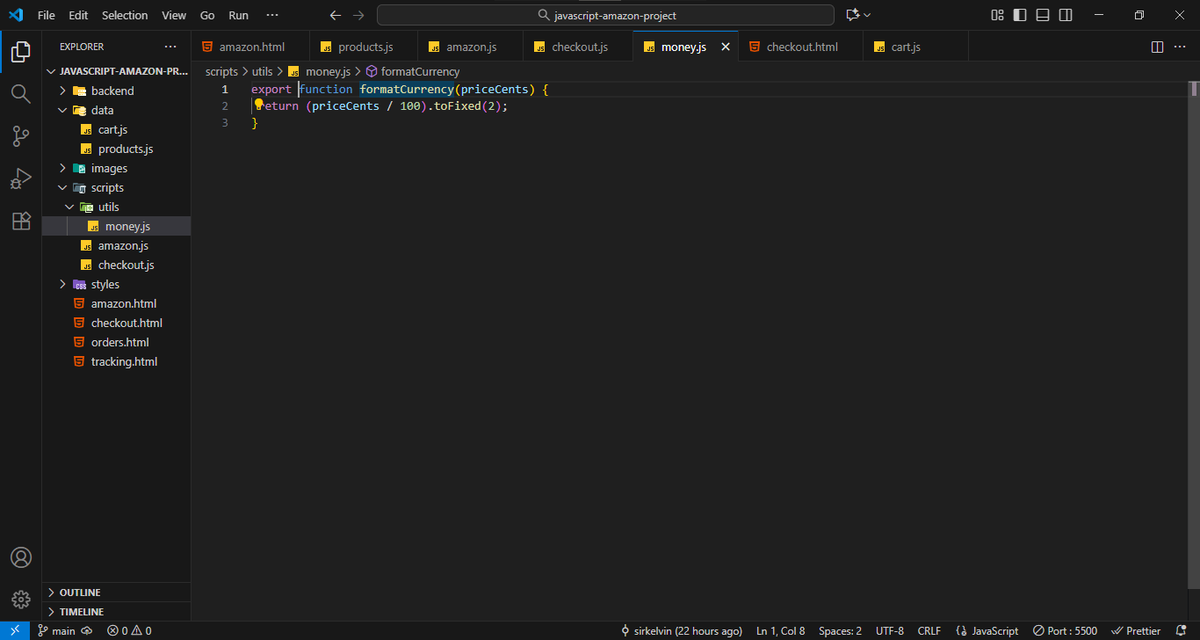
Day 12: Modules : Modules are code files that can export variables and functions to other files.The export keyword is used to make variables, functions, or classes available for use in other modules. while import is used to bring exported items from one module into another.


learn and practice Day so far: -
1. Event loops: microtasks, macrotasks.
2. callback Hell.
3. JSON (why it is not JavaScript Object, stringify () and parse ().

Opened another issue(https://t.co/nO2pxV8dkb)
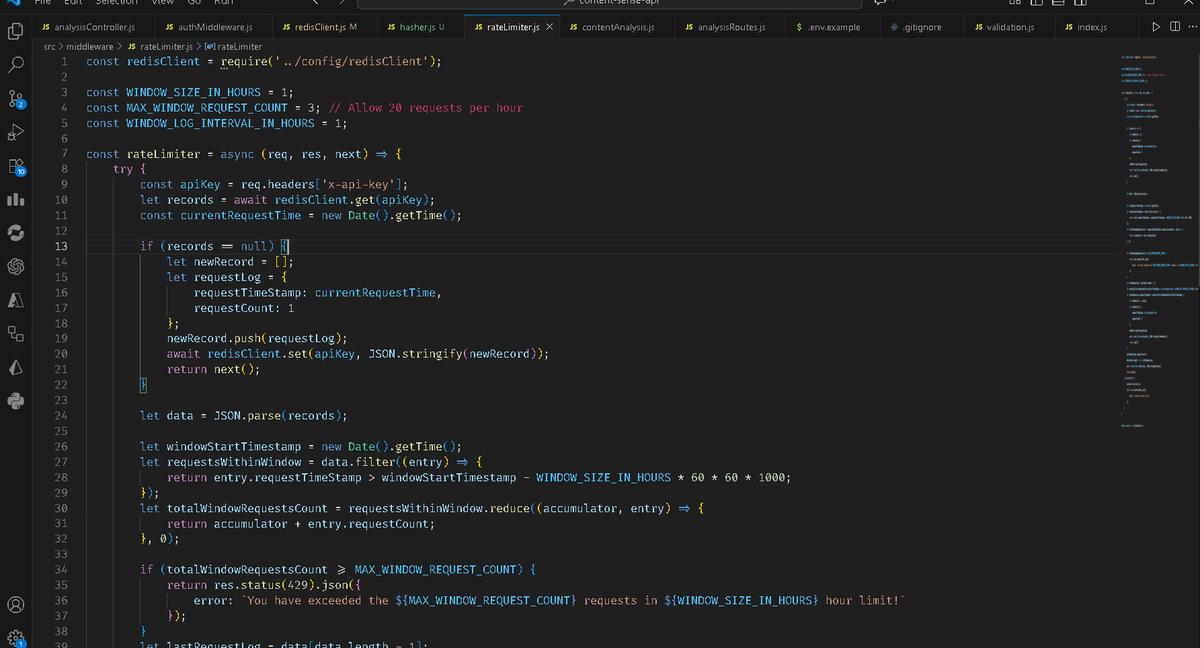
Currently for every request, this algorithm fetches the entire log of the timestamps, parses it, filters it in Nodejs, modify it, stringify it and then sets it back.
This can be a performance bottleneck if i am looking to scale this API. let me try to figure something out.
https://t.co/dDDSLDPX9L
I opened an issue. If you're willing to contribute, please review the codebase.
It's a fairly easy codebase to understand so far.

@WestmontiAllday Yeah, `enumerate` is a Glaze thing that allows it to do its reflection tricks to stringify enums. The `R"()"` is just a C++ multi-line string literal containing the text of the raw JSON we want Glaze to convert to the C++ objects.

Jour 27/100 de grind 🔝
Tjr sur les requêtes HTTP.
- J’ai découvert la lib json-server.
- POST : headers où on peut glisser des token, le body/stringify, mode : CORS, credentials
- L’asynchrone avec async await/promise(fetch)
- DELETE
✅ Project API user pour tester ça !!


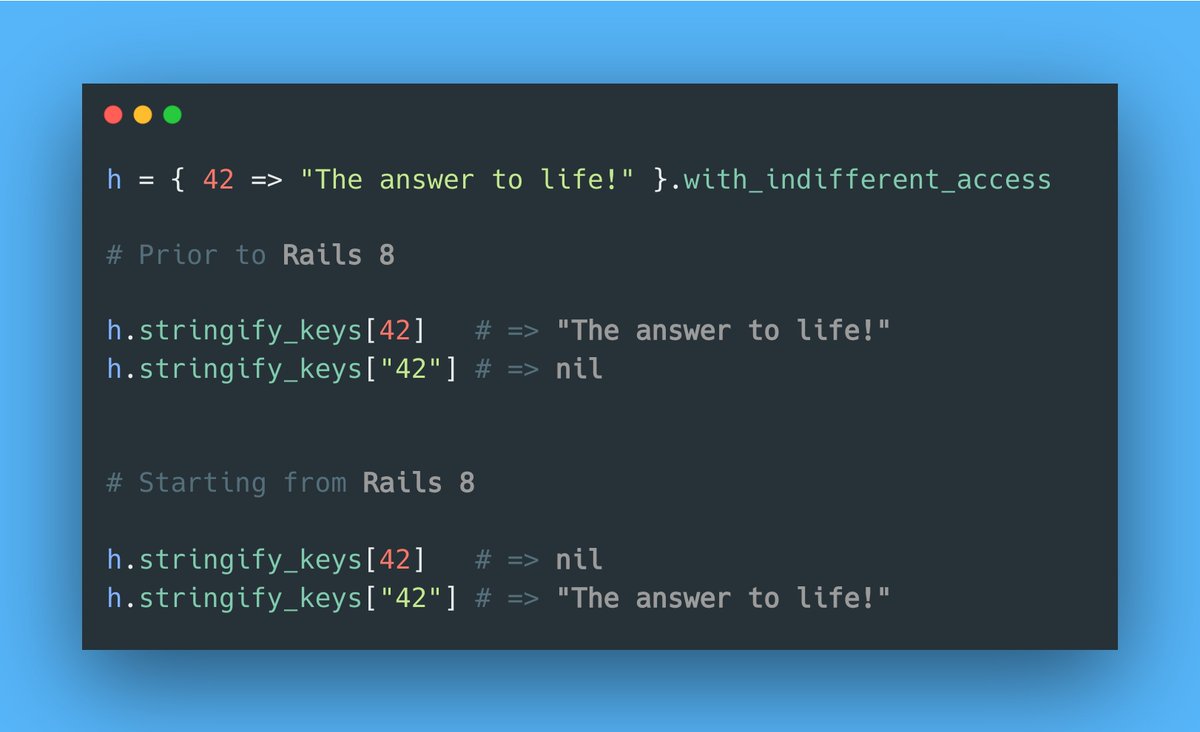
🚨 Rails 8 Breaking Change
`stringify_keys` now stringifies all keys, not just symbols! 😮
This could break things silently if you’re not careful.
#rubyonrails #activesupport

@arcbitbit recursive power or if you just want to output the object directly, using stringify

libraries for working with CSVs in node.js
csv-generate: write random and user-defined strings, objects and arrays
csv-parse: read CSV strings and buffers and write object and arrays
stream-transform: read and write objects and arrays
csv-stringify: read object and arrays and write CSV strings

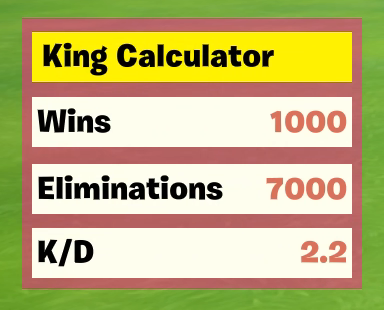
Calculate K/D and stringify with verse


🔰 JavaScript tip
Use a replacer function in the JSON stringify method to define which values should be included or modify them.


struggle for days with big json files in frontend
stringify all non null values
flatten json
breath
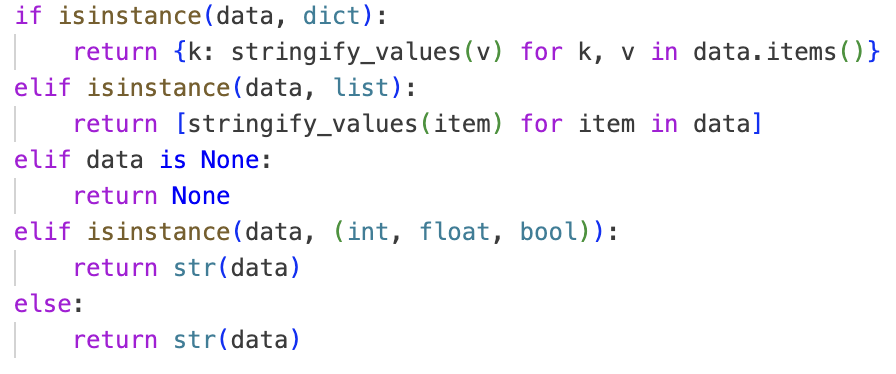

Sort is inefficient cause it also takes time to put the second smallest number in the second slot (aside from not working on numbers cause of stringifyification)
let smallest=Infinity
for(const i of a){
If(i < smallest){
smallest=i
}
}
return smallest
this would be the manual approach to work around this

Recap of Day 5 Build in Public: Today, I resolved the issue of saving an entry into the database, allowing me to fetch ideas, add an idea, and update an idea.
What I learned: When using NextJS server actions with MongoDB Documents, you have to stringify the Document because that Document (Object) comes with prototypes that can’t be serialized on the client. Also, it is not recommended to fetch items from the database using server actions. Server actions are mainly used with POST rather than GET methods.

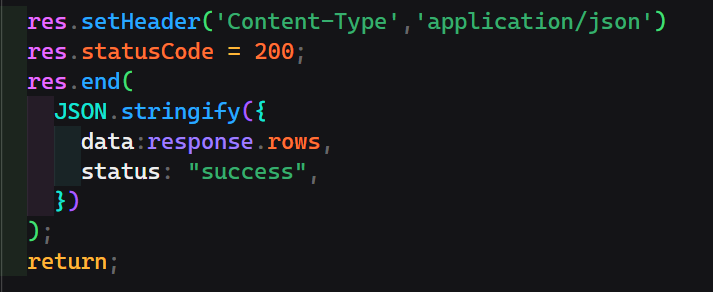
2. response formatting. every response needs manual setup:
setting content-type header
setting status code
handling errors separately
stringify data manually

How many of you have tried to stringify Map in javascript to send it to the API ?

Which method is used to join the elements of an array into a string in JavaScript?
a) join()
b) concat()
c) toString()
d) stringify()

@h4ckit y is an empty slice,so stringifying an empty slice is an empty string ""

parse and stringify JSON data 👇

Anybody can help how to print objects of an array in a new row by Javascript ? ( by id ) or find() or sort()
We can make it by console.log, but when do we want to make it to page, what must we do ?
JSON ? stringify ? How ?
Last Seen Hashtags on Sotwe
Most Popular Users

Elon Musk 
@elonmusk
240.1M followers

Barack Obama
@barackobama
118.6M followers

Cristiano Ronaldo
@cristiano
114.4M followers

Donald J. Trump
@realdonaldtrump
111.7M followers

Narendra Modi
@narendramodi
106.9M followers

Rihanna
@rihanna
98.6M followers

NASA
@nasa
92.1M followers

Justin Bieber
@justinbieber
91.7M followers

KATY PERRY
@katyperry
89.9M followers

Taylor Swift
@taylorswift13
83.9M followers

Lady Gaga
@ladygaga
75.4M followers

Virat Kohli
@imvkohli
73.3M followers

Kim Kardashian
@kimkardashian
70.8M followers

YouTube
@youtube
68.6M followers

Neymar Jr
@neymarjr
66.3M followers

Bill Gates
@billgates
65.2M followers

Selena Gomez
@selenagomez
63M followers

The Ellen Show
@theellenshow
62.1M followers

CNN
@cnn
61.7M followers

X
@x
60.6M followers