

Top Tweets for #systemanalysis

@MyLordBebo Admin structures operate with linear logic and high latency, while reality accelerates exponentially. Filtering feedback loops through a categorical exclusion space causes fatal data loss. The system merely simulates control, uncoupled from causality.
#SystemAnalysis #Causality
While exponential computing scales from 0.5T to 1.5T parameters within days, our administrative architecture remains frozen in a high-latency simulation. A rigid epistemic filter prevents real-time data integration, guaranteeing systemic divergence from reality.
#SystemAnalysis #Latency #Realpolitik

As part of our global expansion and commitment to building meaningful international partnerships, @Synerlai is currently in Copenhagen.
📩 Send us a message to schedule a meeting.
#Synerlai #Copenhagen #Denmark🇩🇰 #SystemAnalysis #CyberSecurity #Doha #Qatar #BusinessGrowth

As part of our ongoing journey to connect with global businesses and explore new opportunities, @Synerlai is currently in Oslo, Norway.
📩 Feel free to inbox us to schedule a meeting.
#Synerlai #Oslo #Norway #Doha #SystemAnalysis #DigitalTransformation #CyberSecurity


Du siehst die Zahlen flattern — kontrollier den Mix, bevor du falsche Schlüsse ziehst.
👉 https://t.co/Il1JIUKdkv
#bandwidth #MixFreeze #systemanalysis @Donau2Space

👉 AI Agents Are Changing How Businesses Operate - But Are Your Systems Ready?
At @Synerlai, we believe that before deploying intelligent systems, organizations must first build clarity in their architecture.
#AI #AgenticAI #SystemAnalysis #DigitalTransformation #Synerlai
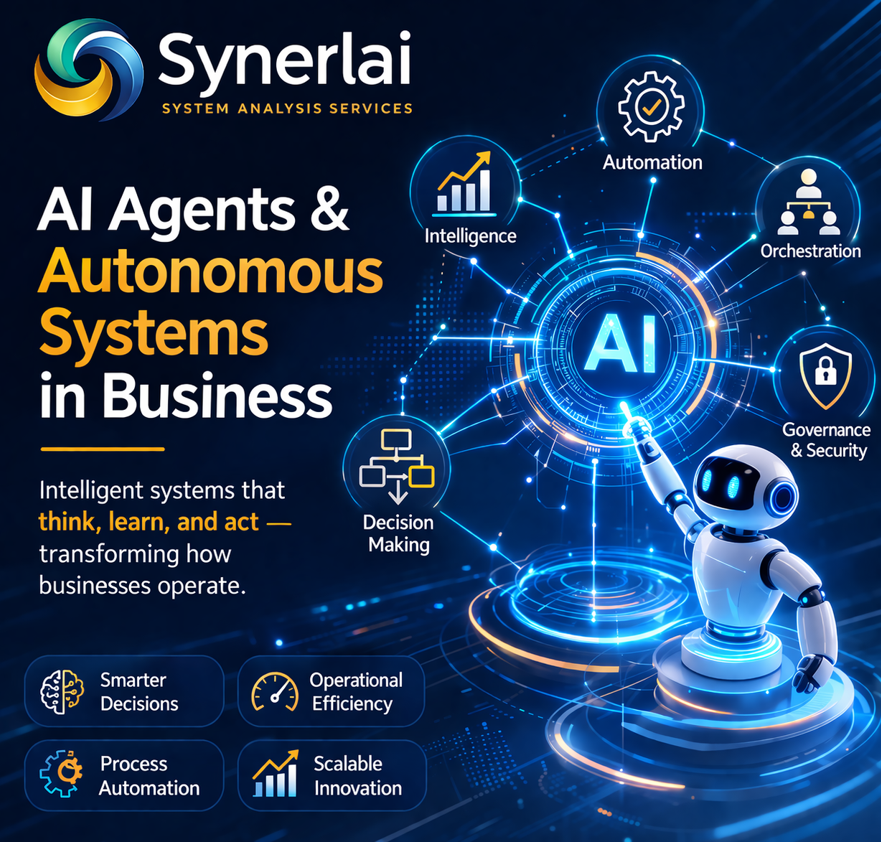
Most organizations celebrate when a system goes live. At @Synerlai, we don’t stop at delivery. We believe that’s just the beginning.
Post-Implementation Reviews are critical💡
#SystemAnalysis #DigitalTransformation #PostImplementation #Doha #Qatar #ProjectManagement #Synerlai


@whimsical This is a game changer for system analysis! 💻 Being able to visualize code flows and system behavior on a whiteboard with a coding agent makes the whole process so much more intuitive. Perfect for rapid UI exploration! 🚀✨ #Coding #SaaS #SystemAnalysis #DevTools #Tech

March 9. 🌙💻
Watching $ICP move today. It’s more than a coin; it’s an attempt to redesign the entire internet stack.
When you understand the architecture, you understand the value. Infrastructure over hype. 🏗️🛡️
#Web3 #ICP #SystemAnalysis #Nigeria #Ramadan

March 7. 🌙⚖️
The bridge between university theory and Web3 is System Analysis Understanding data flow and architectural constraints is what makes a smart contract truly smart
Building for security and scale🏗️🛡
#Web3 #SystemAnalysis #Solidity #BlockchainEngineering #Nigeria


Unlock AI's power to diagnose complex system issues. Provide diagnostic prompts, get instant AI-powered analysis. Streamline troubleshooting like never before. Not financial advice. Results may be simulated. #AISolutions #TechTips #SystemAnalysis #ProblemSolving #AItools


The Clerks of the Slave Ledger
You cannot afford a house. You know this. You have done the maths a hundred times on the back of an envelope, on a spreadsheet at 2am, in your head while staring at the ceiling. You work full time. Maybe more than full time. You are not lazy. You are not stupid. You are not bad with money. And yet the house, the basic human shelter that your grandfather bought on a single income with change left over for a car and a holiday, is now a fantasy that requires two salaries, a six-figure deposit, and thirty years of indentured servitude to a bank.
You wonder why.
You are told it is complicated. Supply and demand. Interest rates. Zoning laws. Market forces. You are told by very serious people in very expensive suits that the economy is a complex machine and you simply do not understand its delicate mechanisms.
They are lying to you.
The reason you cannot afford to live is standing between you and your money. Millions of them. An entire civilisation of NPCs whose only function is to intercept the value you create, skim from it, process it, repackage it, skim from it again, file it, report it, audit it, regulate it, skim from it one more time, and then look you in the eye and tell you their services are essential.
Roll Call of the NPCs
Let us name them. Every last one.
Every bank teller. Every fund manager. Every mortgage broker. Every insurance assessor. Every credit analyst. Every estate agent. Every conveyancer. Every auditor. Every accountant. Every bookkeeper. Every payroll clerk. Every compliance consultant. Every debt collector. Every tax advisor. Every wealth manager. Every claims adjuster. Every underwriter. Every forex dealer. Every settlement officer. Every trust administrator. Every KYC analyst. Every anti-money-laundering officer. Every financial planner. Every actuary. Every pension administrator. Every credit controller. Every invoice processor. Every treasury analyst. Every loan officer. Every hedge fund analyst. Every private equity associate. Every venture capital partner. Every derivatives trader. Every bond salesman. Every clearinghouse operator. Every escrow agent. Every insolvency practitioner. Every credit rating analyst. Every regulatory affairs officer.
All of them. Every single NPC in the financial machine.
They are the clerks of the slave ledger. They maintain it. They process it. They update it. They guard it. They ensure it runs smooth and complete and that no slave, anywhere, slips through the net without being logged, scored, assessed, tracked, and skimmed.
And there are so many of them now that the skimming alone is eating you alive.
The Parasite Class in Numbers
The global financial services industry employs roughly 60 million people directly. Add the support staff, the IT contractors who build their systems, the recruiters who fill their chairs, the trainers who teach them to use the software, the consultants who optimise their processes, the marketers who convince you that you need them, and the managers who manage the managers who manage the clerks, and the number swells past 100 million.
One hundred million NPCs.
Not building houses. Not growing food. Not generating electricity. Not manufacturing medicine. Not teaching children. Not paving roads. Not designing bridges. Not treating patients. Not writing useful code. Not fixing plumbing. Not driving trucks. Not welding steel. Not harvesting crops. Not doing one single thing that keeps a human being alive, sheltered, clothed, or fed.
Counting. Logging. Filing. Extracting.
One hundred million people whose entire professional existence is dedicated to watching other people work and taking a piece of what they earn. And you wonder why you cannot afford to live. You wonder why groceries cost twice what they did five years ago. You wonder why rent consumes half your income. You wonder why a modest family home costs ten times the average annual salary.
This is why.
You are not just paying for your house. You are paying the mortgage broker's commission. The conveyancer's fee. The estate agent's cut. The bank's arrangement fee. The surveyor's invoice. The insurer's premium. The government's stamp duty, calculated and collected by another NPC. The lawyer's bill. The compliance cost baked into the bank's overhead, passed directly to you. The regulator's budget, funded by levies on the bank, which the bank recovers from you in higher rates. You are not buying a house. You are feeding an entire food chain of NPCs who have attached themselves to the transaction like lampreys on a shark, and every single one of them takes a bite before you get the keys.
And that is just the house.
The Skim on Everything
Buy a loaf of bread. Simple transaction. Farmer grew the wheat. Miller ground it. Baker baked it. Driver delivered it. You pay for it.
Except you do not just pay for it. You pay the farmer's accountant. The miller's bookkeeper. The bakery's payroll service. The delivery company's insurance broker. The supermarket's compliance department. The payment processor's transaction fee. The bank's interchange fee. The tax authority's VAT, administered by another army of NPCs. The auditor who signs off the supermarket's annual report. The regulator who licenses the food safety standards. The consultant who helped the bakery navigate the latest allergen labelling requirements.
By the time that loaf reaches your hand, it has been touched by more NPCs than bakers. More clerks have processed that bread than humans who actually made it. And every touch costs money. Your money. Baked into the price. Invisible. Unavoidable.
Now multiply that by everything you buy. Every item in your trolley. Every bill you pay. Every service you use. Every transaction in your life has a tail of NPCs attached to it, each one extracting a sliver so thin you barely notice it. But a million thin slivers from a million transactions across a million people adds up to an ocean of wealth flowing from the people who make things to the people who count things.
That is where your money goes. Not to the farmer. Not to the builder. Not to the nurse. To the NPCs.
What Each NPC Actually Does
Let us be specific. Let us strip away the job titles and the LinkedIn bios and the framed certificates and look at what these NPCs actually do when they sit down at their desks each morning.
The mortgage broker does not build your house. He fills in forms so that a bank, which conjured your loan out of nothing through fractional reserve lending, can chain you to a thirty-year repayment schedule at three times the original price. The bricklayer built the house. The electrician wired it. The plumber plumbed it. The roofer sealed it against the rain. The broker shuffled paper and took a commission for connecting you to your own enslavement. He built nothing. He connected a debtor to a creditor and billed both of them for the introduction.
The insurance assessor does not fix your car. The mechanic fixes it. The panel beater reshapes the metal. The spray painter finishes it. The assessor drives out, photographs the damage on a company tablet, ticks boxes on a pre-built form, and calculates the minimum the insurer can get away with paying. His entire function is to deny you money you were promised when you signed the policy. He is a professional refuser. That is the job.
The auditor does not improve the company he audits. He does not make its products better. He does not serve its customers. He does not make it more efficient. He arrives once a year with a team of junior NPCs, examines whether the numbers were recorded using the correct format and the approved methodology, and then invoices a quarter of a million for the confirmation that the books are clean. If the books are not clean, he was somehow unable to detect it. Ask Enron. Ask Wirecard. Ask anyone who trusted an auditor to catch the fraud. The auditor is a priest performing a ritual. The ritual costs a fortune. The ritual catches nothing.
The compliance NPC is the most perfectly evolved parasite in the ecosystem. He exists because the regulatory environment has been engineered to be so dense, so layered, so deliberately impenetrable that no ordinary business can navigate it without hiring a specialist. The regulations were written by government bureaucrats. Many of those bureaucrats leave government and become compliance consultants. They design the labyrinth, then sell you a map. And when the labyrinth changes next quarter, which it will, because labyrinth maintenance is an industry in itself, you pay for a new map. The compliance NPC produces nothing except the ability to avoid punishment by the system he helped build.
The financial planner charges you a percentage of your assets to tell you where to put your money. If his advice works and your investments grow, his percentage applies to a bigger number and he takes more. If his advice fails and your investments shrink, he still takes his fee. He profits from your success. He profits from your failure. The only outcome that threatens him is you realising you do not need him. Which is why the financial industry spends billions every year convincing you that money is too complicated for ordinary people to manage. It is not complicated. They need you to believe it is. Their children's school fees depend on your ignorance.
The KYC analyst interrogates you for moving your own money. You transfer funds between your own accounts and a flag goes up. Where did this money come from? What is the purpose of this transaction? Can you provide supporting documentation? You earned this money. You paid tax on it. It is yours. And a 24-year-old NPC with a compliance diploma and a script on her screen is asking you to prove you are not a criminal for the crime of touching your own earnings. This is not security. This is training. They are training you to accept that your money is not really yours. That access to it is a privilege granted by the ledger keepers, not a right.
The Slave Master Class Nobody Can See
Here is the part that should make you furious.
This parasitic class has grown so large, so embedded, so normalised that nobody can see it anymore. It is like a fish asking what water is. The NPCs are everywhere. They occupy entire skyscrapers in every major city on earth. They sponsor sports teams. They name stadiums. They run television advertisements showing happy families achieving their dreams, as though the bank that charged those families 280% of the home's value over three decades is somehow their partner in prosperity.
They have colonised the language itself. They call debt "finance." They call surveillance "compliance." They call extraction "services." They call the cage "the financial system" and they teach it in universities as though it is a natural law, like gravity, rather than what it actually is: a machine built by the powerful to harvest the productive.
And the productive go along with it. You go along with it. Because you were born inside the machine and you have never seen the outside. Your parents were inside it. Their parents were inside it. You were given a bank account before you could read. You were taught that credit scores matter, that mortgages are normal, that insurance is responsible, that pensions are prudent, that taxes are the price of civilisation. You were taught all of this by the NPCs themselves. In their schools. Through their media. Using their language.
You were not educated about the financial system. You were trained to accept it.
The Maths of Extraction
Let us do what the NPCs never want you to do. Let us count the cost of counting.
You earn a salary. Before you see it, the payroll NPC processes it. Tax is deducted at source, calculated by the tax NPC, collected by the revenue NPC, processed by the treasury NPC. Your pension contribution is skimmed by the pension administrator NPC, invested by the fund manager NPC, reported by the accountant NPC, audited by the auditor NPC, and regulated by the regulator NPC. What arrives in your bank account has already been touched by a dozen NPCs, each taking their cut or adding their cost.
Now you spend it. Every card transaction pays an interchange fee to the bank. The shop's prices include the cost of their accountant, their compliance department, their insurance, their auditor, and their payroll service. You buy fuel and the price includes fuel duty, administered by NPCs, plus VAT, administered by more NPCs, plus the petrol company's own internal NPC overhead.
You pay rent. Your landlord's mortgage payment includes the bank's margin, the broker's original commission amortised over the loan term, the buildings insurance premium assessed by an NPC, and the letting agent's management fee for doing essentially nothing every month except forwarding your payment onward after subtracting their percentage.
By conservative estimates, between 35% and 50% of the cost of everything you buy is NPC overhead. Not raw materials. Not labour. Not energy. Not transport. NPC overhead. The cost of being watched, counted, processed, filed, regulated, audited, assessed, and approved.
You work five days a week. Two of those days, minimum, you work entirely for the NPCs. Not for the taxman, that is a separate extraction. For the NPCs. The clerks. The counters. The filers. The processors. The skimmers.
Two days out of every five. Gone. Not to pay for roads or hospitals or schools. Gone to pay for the army of people who watch you pay for roads and hospitals and schools and take a cut of the watching.
And you wonder why you cannot afford a house.
The Invisible Empire
There are roughly 8 billion people on earth. Of these, approximately 3.3 billion are in the global labour force. Of those 3.3 billion, at least 100 million are financial NPCs.
That means roughly one out of every 33 working humans on this planet does nothing but watch the other 32 and take notes.
One in thirty-three. And that is a conservative count. Add the legal NPCs who service the financial system. Add the government bureaucrats who administer it. Add the technology workers who build and maintain the infrastructure of surveillance and extraction. The real number is closer to one in fifteen.
One in fifteen. Nearly 7% of the entire global workforce doing nothing but maintaining the ledger. The slave ledger. The record of who owes what and who is permitted to have what and how much can be taken before the host organism collapses.
That is not an economy. That is a parasite load. In any biological system, a parasite burden of 7% would trigger alarm. In an ecosystem, it would signal collapse. In a body, it would be a disease.
But in human civilisation, we call it banking. We call it finance. We call it the services sector. And we wonder why the host is sick.
Why Nobody Can See It
The genius of the system, the truly diabolical brilliance of it, is that the NPCs themselves cannot see what they are. They are not villains. Most of them are not even cynical. They are ordinary people who went to school, were told finance was a respectable career, studied for their qualifications, and sat down at a desk to do what they understood to be honest work.
The bank teller thinks she is helping customers. The accountant thinks he is providing a valuable service. The compliance officer thinks she is protecting the public. The financial planner thinks he is securing families' futures. They believe it. They sleep at night. They coach their kids' football teams. They donate to charity. They are not evil.
They are something worse than evil. They are oblivious. Millions upon millions of good, decent, hardworking people who cannot see that their entire industry is a toll booth on the road of human productivity. A toll booth that has grown so large it now takes up most of the road. A toll booth that charges you to drive, charges you to stop, charges you to turn around, and charges you for asking why there are so many toll booths.
And if you point this out, they will look at you with genuine confusion. Because the fish does not know it is in water. And the NPC does not know it is in the machine.
The Question Nobody Asks
Here is what a sane civilisation would ask:
Why does it cost a quarter of a million in professional fees to transfer ownership of a house from one person to another? The house does not move. The land does not move. A title deed changes one name to another. In a rational world, this is a ten-minute job. In our world, it employs an estate agent, a conveyancer, a mortgage broker, a bank's processing department, a surveyor, a lawyer, an insurer, and a government registry office. All billing separately. All essential, apparently. All feeding from the same carcass.
Why does it take seven intermediaries to move money from your account to someone else's? You are sending numbers from one database to another. A computer can do this in microseconds. But between your instruction and its execution stand payment processors, correspondent banks, clearing houses, compliance checks, and fraud screening algorithms, each adding delay and cost so they can justify their existence.
Why does a small business need an accountant, a bookkeeper, a tax advisor, a VAT consultant, a payroll service, and an auditor just to sell sandwiches? The sandwich maker makes sandwiches. That is her skill. That is her contribution. But the system demands that she also maintain a shadow operation of financial NPCs just to be permitted to do the thing she is actually good at. The NPCs cost more than the ingredients.
Why? Because the system was not designed for you. It was designed for them. Every regulation, every reporting requirement, every compliance framework, every tax code amendment, every new financial product, every additional layer of bureaucratic oversight creates jobs. NPC jobs. And NPCs write the regulations. NPCs lobby for the reporting requirements. NPCs design the compliance frameworks. NPCs draft the tax codes.
The machine builds itself. And it feeds on you.
The Ledger Is You
Strip it all down. Past the jargon. Past the acronyms. Past GAAP and IFRS and Basel III and Solvency II and MiFID and Dodd-Frank and all the other alphabet soup designed to make the counting sound like science.
The ledger is a list of names. Your name. My name. Every working person's name. Next to each name is a number. The number represents what you owe, what you earn, what you own, what you are permitted to spend, and what can be taken from you.
One hundred million NPCs tend this list. They add to it. They subtract from it. They query it. They audit it. They regulate it. They ensure it is accurate. They ensure no name is missing. They ensure no debt is forgotten. They ensure no income goes untaxed. They ensure no transaction goes unrecorded.
They are the clerks of the slave ledger. And the slave ledger is the oldest technology of control in human history. Older than chains. Older than walls. Older than whips. The first empires did not enslave people with weapons. They enslaved them with records. With tallies. With accounts. With the simple, brutal technology of writing down what a person owes and never letting them forget it.
Nothing has changed. The clay tablets became papyrus. The papyrus became parchment. The parchment became paper. The paper became databases. The databases became the cloud. But the function is identical. Track the slave. Log the output. Skim the surplus. Maintain the ledger.
And now there are 100 million clerks doing it.
The Final Insult
You cannot afford a house because you are carrying these people on your back. You cannot afford food because every price includes their overhead. You cannot afford to save because they are skimming every transaction. You cannot afford to retire because they are managing your pension into mediocrity while billing you for the privilege.
You work harder than any generation before you. You are more productive, more educated, more skilled, more connected, more efficient. And you have less. Less savings. Less security. Less hope of owning property. Less ability to support a family on a single income. Less of everything that your grandparents took for granted.
Not because the world produces less. The world produces more than ever. More food. More goods. More energy. More housing. More of everything.
But between you and that abundance stands an army of 100 million NPCs with their hands out. And they take their cut before you see a crumb.
You are the host.
They are the parasite.
And the parasite has grown so fat, so embedded, so normalised, so celebrated, so taught-in-schools, so advertised-on-television, so woven into the fabric of daily life that you cannot even see it anymore.
You just know that something is wrong. You just know that the numbers do not add up. You just know that working harder does not help. You just know that you are running faster and falling further behind.
Now you know why.
The ledger is open. Your name is in it. And a hundred million clerks are making sure it stays there.


A vehicle with an Israeli flag drove into pedestrians in Cairo. It’s exactly as I warned: the right place, the right time, and the predicted event. Tensions in Egypt are escalating rapidly ⚠️🌎🇪🇬 #Egypt #Cairo #SystemAnalysis #GlobalAlert #kerdesa
February 20. 🌙⚖️
Balancing the logic of System Analysis with the precision of Solidity. School is intense, but the discipline of Ramadan keeps the focus sharp.
155 followers strong. We’re building for the long term. 🏗️🛡️
#Web3 #SystemAnalysis #BigYasWeb3 #Nigeria #Ramadan

Before investing in AI, ERP, or automation..
Most companies skip the most critical step.
👉 System Analysis.
At @Synerlai, we help organizations:
- Diagnose inefficiencies
- Redesign workflows
- Align tech with strategy
- Prevent costly rework
#SystemAnalysis #BusinessStrategy


Build the confidence to guide teams and tackle complex challenges.
https://t.co/fPHb84i1ca
#CCBST #ProjectManagement #BusinessAnalysis #BusinessSystemAnalysis #BusinessSkills #LeadershipTraining #CareerReady #ManagementDiploma #BusinessEducation #ProjectLeader #SystemAnalysis

It’s not capitalism or communism.
It’s the centralized structure beneath them.
Remove money but keep authority and control remains.
📘 World Peace
🔗 https://t.co/h3XRrHBydw
🌍 https://t.co/2VWA1mzl5V
.
.
.
.
.
.
#PoliticalTheory #SystemAnalysis #CriticalThinking #WorldPeace
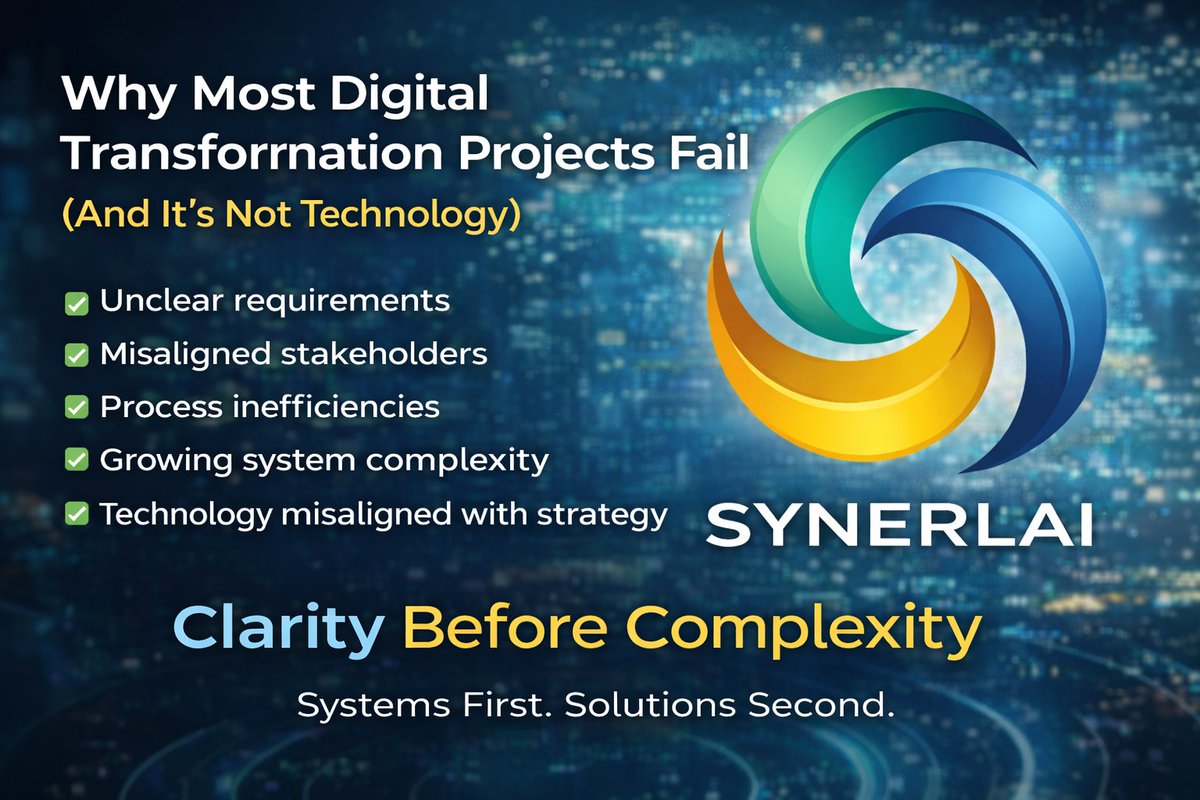
🚀 Why do most digital transformation projects fail?
It’s not the technology. Innovation without structured system analysis creates noise - not value.
At @Synerlai, we believe sustainable transformation begins with clarity.
#DigitalTransformation #SystemAnalysis #AI #Synerlai

Many in power are corrupted. Maybe it's the system, or maybe they were corrupted to begin with to be in those positions. #Corruption #PowerDynamics #SystemAnalysis
As Doha prepares for @WebSummitQatar 2026 (1–4 Feb), it’s clear that real innovation isn’t about tools alone - it’s about how systems are designed and aligned.
Design for clarity - Design for resilience @Synerlai
#WebSummitQatar #SystemAnalysis #DigitalStrategy #Synerlai
Last Seen Hashtags on Sotwe
Digitalarteducation
Seen from Brazil
NeverBowToBaal
Seen from United States
تانجو_حصري
Seen from Algeria
ดูดควยน้ำแตก
Seen from Thailand
momson #teenage
Seen from Pakistan
Teenagegirls video,
Seen from Turkey
irls
フェチフェス31
Seen from Japan
LuBixingDay
Seen from United States
ชายแท้รับงาน
Seen from Thailand
Most Popular Users

Elon Musk 
@elonmusk
240.1M followers

Barack Obama
@barackobama
119.3M followers

Donald J. Trump
@realdonaldtrump
111.6M followers

Cristiano Ronaldo
@cristiano
108.8M followers

Narendra Modi
@narendramodi
106.9M followers

Rihanna
@rihanna
97.2M followers

NASA
@nasa
92.1M followers

Justin Bieber
@justinbieber
90.5M followers

KATY PERRY
@katyperry
86.7M followers

Taylor Swift
@taylorswift13
80.5M followers

Lady Gaga
@ladygaga
72.1M followers

Kim Kardashian
@kimkardashian
69.3M followers

YouTube
@youtube
68.6M followers

Virat Kohli
@imvkohli
68.4M followers

Bill Gates
@billgates
63.4M followers

The Ellen Show
@theellenshow
62.5M followers

CNN
@cnn
61.9M followers

Neymar Jr
@neymarjr
60.9M followers

X
@x
60.9M followers

CNN Breaking News
@cnnbrk
59.9M followers