

Top Tweets for #tinyml

Mình vừa open-source hệ thống AIoT phát hiện té ngã cho người cao tuổi 🧓
• Vòng đeo TinyML ESP32-S3 + MPU6050
• Camera AI K230 + YOLOv5n
• App Flutter, cảnh báo đa kênh realtime
Thấy hay thì cho mình xin 1 ⭐ trên GitHub nhé 🙏
https://t.co/SQvRmZo1do


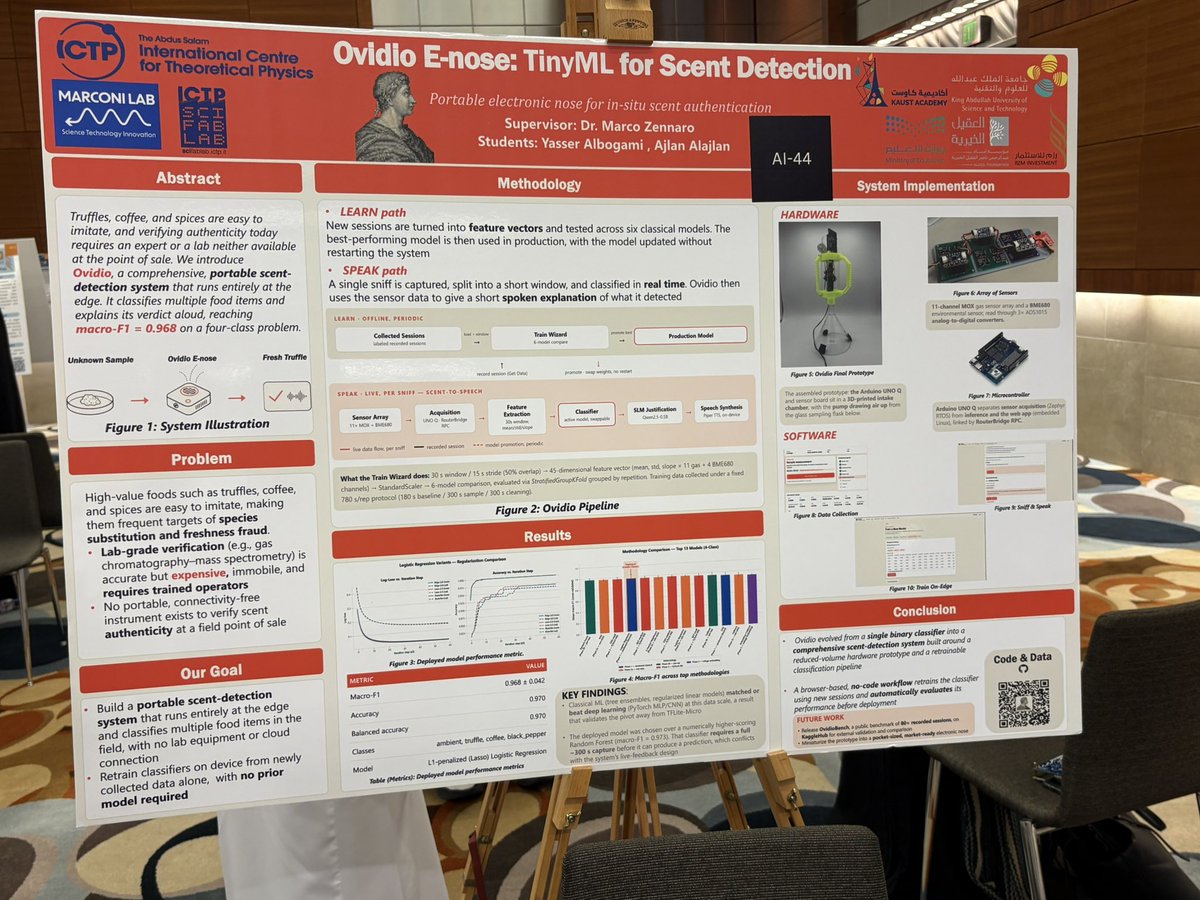
▫️Ovidio E-nose: TinyML for Scent Detection
▫️Solidify: Image-to-3D Generation for Additive Manufacturing
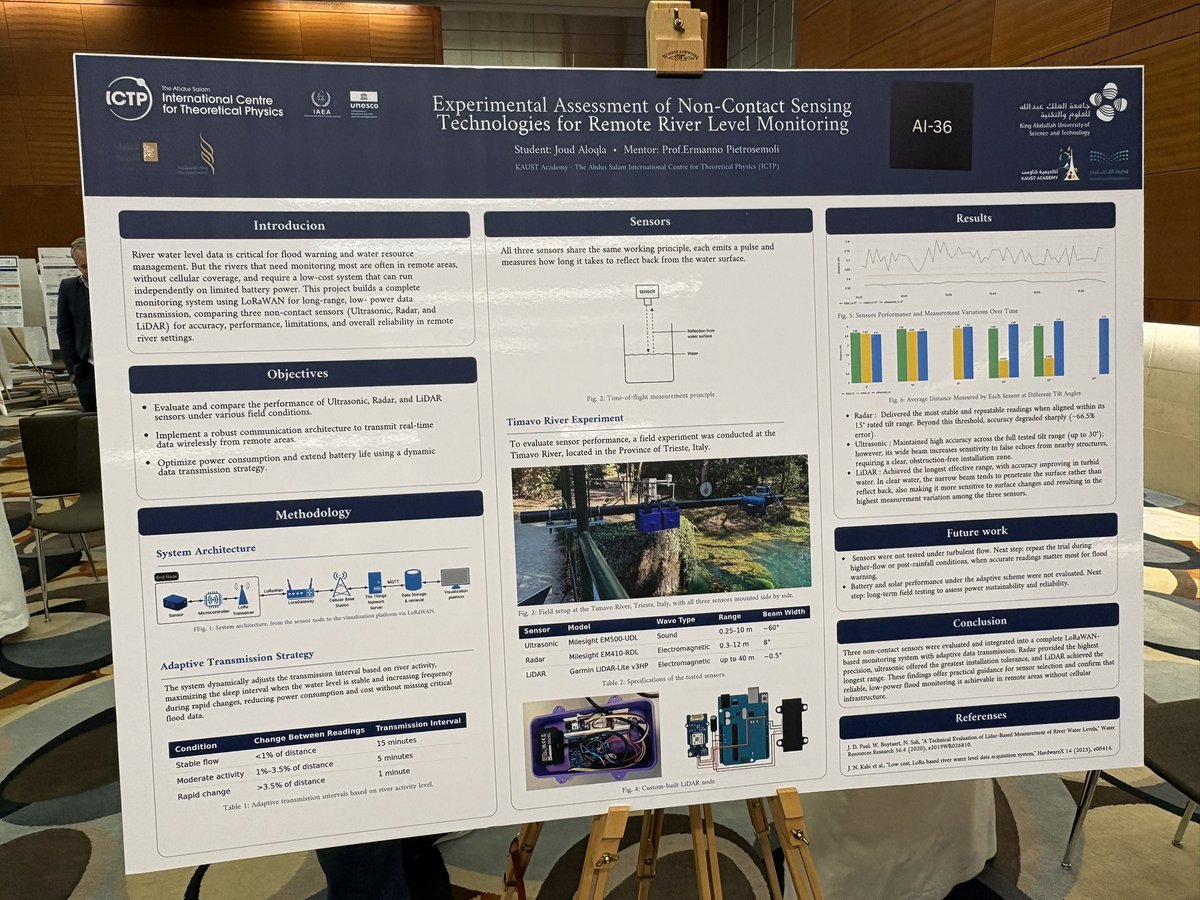
▫️Experimental Assessment of Num-Contact Sensing Technologies for Remote River Level Monitoring
▫️Developing a Neural Network Aware Communication Framework for IoT Devices



@tinymlee ohh oalaah i see2, makasih kak >__< kira2 klo semisal ada liat yg opshar/jual itu, boleh tolong bantu infoin ke aku gaa kak? (klo ga ngerepotin) 🥹
@tinymlee KAK makasih bgt utk infonya T_____T kira2 kamu tau harga pasarannya brp ga yaa?

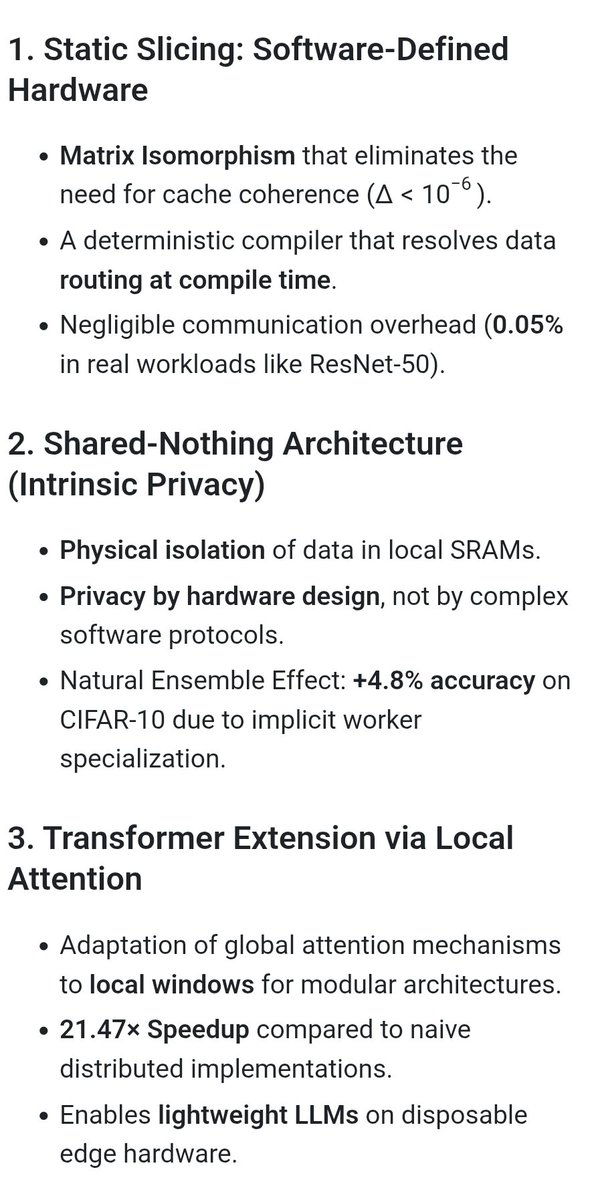
The future of edge intelligence relies on lightweight, application-specific silicon.
FRUGAL_AI_CHIP breaks down open AI accelerator design into digestible, low-resource concepts. Awesome work for the open-source hardware and TinyML communities!
Explore the repo 👇
https://t.co/fLF3q2fyLL

What happens when a microcontroller learns to see?
Computer vision is no longer limited to powerful computers.
With ESP32-S3 and camera integration, compact embedded devices can detect objects, monitor environments, and support
AI-powered applications.
🔹 Edge Vision
🔹 Image Processing
🔹 Smart Surveillance
🔹 AI-Powered Automation
The line between embedded systems and artificial intelligence is getting thinner every day.
📕 https://t.co/yUaVkQfGM1
#ESP32S3 #ComputerVision #EdgeAI #TinyML #EmbeddedSystems #IoT

ESP32 DevKit V1 – Specifications and Modern Applications:
The ESP32 DevKit V1 is a powerful and widely used IoT development board built around the ESP-WROOM-32 module, developed by Espressif Systems. It integrates Wi-Fi, Bluetooth, multiple peripherals, and a high-performance processor into a compact embedded platform suitable for modern connected systems.
📕 https://t.co/yUaVkQfGM1
IT is a Low cost, Low power Super Hero developed by Espressif Systems .
Processor & Architecture :
• Dual-core Xtensa LX6 32-bit microprocessor
• Clock speed up to 240 MHz
• Integrated Ultra Low Power (ULP) coprocessor for sensor monitoring during deep sleep
Memory:
• 520 KB SRAM internal memory
• 4 MB external SPI Flash (typical module configuration)
• RTC Fast Memory – 8 KB
• RTC Slow Memory – 8 KB
Wireless Connectivity
• Wi-Fi: IEEE 802.11 b/g/n (2.4 GHz)
• Supports Station, Access Point, and AP+STA modes
• Bluetooth v4.2 including Bluetooth Classic and BLE
GPIO & Peripheral Interfaces:
The ESP32 provides ~30 programmable GPIO pins supporting multiple digital interfaces.
Supported communication protocols include:
• SPI (Serial Peripheral Interface)
• I²C (Inter-Integrated Circuit)
• UART (Serial communication)
• I²S (Digital audio interface)
• CAN / TWAI interface
Analog Features
• 12-bit SAR ADC with up to 18 analog channels
• 2 DAC outputs (8-bit resolution)
• 10 Capacitive Touch sensing pins
PWM & Control :
• LEDC PWM controller
• Up to 16 PWM channels for motor control, LED dimming, and power electronics applications.
Power Management ESP32 is optimized for low-power IoT systems and supports multiple power modes:
• Active mode
• Modem sleep
• Light sleep
• Deep sleep (~10 µA current)
• Hibernation mode
Security Features
• Secure Boot
• Flash Encryption
• Hardware cryptographic accelerators (AES, SHA-2, RSA)
• True Random Number Generator (TRNG)
Power & Interface:
• Operating voltage: 3.3V
• VIN input: 5V via USB or external supply
• Onboard AMS1117 voltage regulator
• CP2102 USB-to-UART interface for programming and debugging.
Development Ecosystem ESP32 supports multiple development environments:
• Arduino IDE
• ESP-IDF (Espressif IoT Development Framework)
• MicroPython
• PlatformIO
Modern Applications :
• Internet of Things (IoT) devices
• Smart home automation systems
• Wireless sensor networks
• Industrial IoT monitoring systems
• Robotics and motor control
• Wearable health devices
• Smart agriculture and environmental monitoring
• Edge AI and TinyML applications
With its high processing capability, integrated wireless connectivity, rich peripheral support, and low-power design, the ESP32 DevKit V1 has become one of the most widely used platforms for modern embedded systems and IoT development.
#ESP32 #EmbeddedSystems #IoT #ElectronicsEngineering #Microcontrollers #SmartDevices #EngineeringInnovation #Espressifsystems

𝐓𝐡𝐞 𝐄𝐒𝐏32-𝐒3 𝐢𝐬 𝐚𝐧 𝐚𝐛𝐬𝐨𝐥𝐮𝐭𝐞 𝐩𝐨𝐰𝐞𝐫𝐡𝐨𝐮𝐬𝐞 𝐟𝐨𝐫 𝐄𝐝𝐠𝐞 𝐀𝐈 𝐚𝐧𝐝 𝐜𝐨𝐦𝐩𝐥𝐞𝐱 𝐈𝐨𝐓. 𝐇𝐞𝐫𝐞 𝐢𝐬 𝐰𝐡𝐲. 🚀
As an IoT developer, evaluating the right microcontroller is half the battle in any hardware project. Right now, the ESP32-S3 is dominating the conversation, and for good reasons.
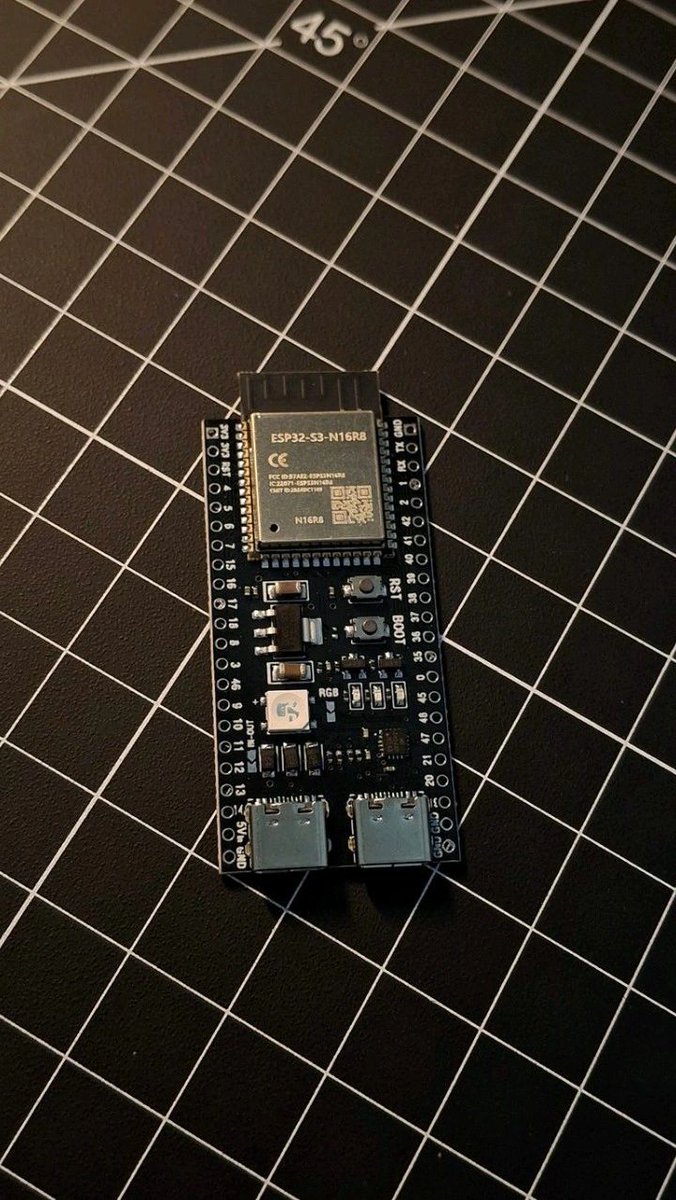
Take a close look at the specific module in this picture: the ESP32-S3. For hardware enthusiasts, those numbers mean serious business—16𝐌𝐁 𝐨𝐟 𝐐𝐮𝐚𝐝 𝐒𝐏𝐈 𝐅𝐥𝐚𝐬𝐡 and 8𝐌𝐁 𝐨𝐟 𝐎𝐜𝐭𝐚𝐥 𝐒𝐏𝐈 𝐏𝐒𝐑𝐀𝐌.
That is a massive amount of memory for a microcontroller, giving you the headroom to run heavy machine learning models right at the edge.
Here is a quick breakdown of why this board is currently a top-tier choice for modern development:
🔹 𝐏𝐫𝐨𝐜𝐞𝐬𝐬𝐢𝐧𝐠 𝐏𝐨𝐰𝐞𝐫: Dual-core Xtensa 32-bit LX7 microprocessor running at up to 240 MHz.
🔹 𝐀𝐈 𝐀𝐜𝐜𝐞𝐥𝐞𝐫𝐚𝐭𝐢𝐨𝐧: Features built-in vector instructions specifically to accelerate neural network computing and signal processing.
🔹 𝐂𝐨𝐧𝐧𝐞𝐜𝐭𝐢𝐯𝐢𝐭𝐲: Seamless 2.4 GHz Wi-Fi and Bluetooth 5 (LE) for robust wireless networking.
🔹 𝐌𝐚𝐬𝐬𝐢𝐯𝐞 𝐌𝐞𝐦𝐨𝐫𝐲 (𝐍16𝐑8): Easily handles complex audio, camera streaming, or data-heavy applications.
🔹 𝐍𝐚𝐭𝐢𝐯𝐞 𝐔𝐒𝐁: Built-in USB OTG, making interfacing and debugging incredibly smooth.
Whether the goal is smart home automation, remote surveillance systems, or deploying TinyML, the S3 is engineered to handle the workload flawlessly.
What is your current go-to microcontroller for heavy-duty IoT projects? Let’s talk hardware in the comments! 👇
📕 https://t.co/yUaVkQfGM1
#IoT #ESP32S3 #EmbeddedSystems #Microcontrollers #EdgeAI #HardwareEngineering #TechCommunity #IoTDeveloper #hardware

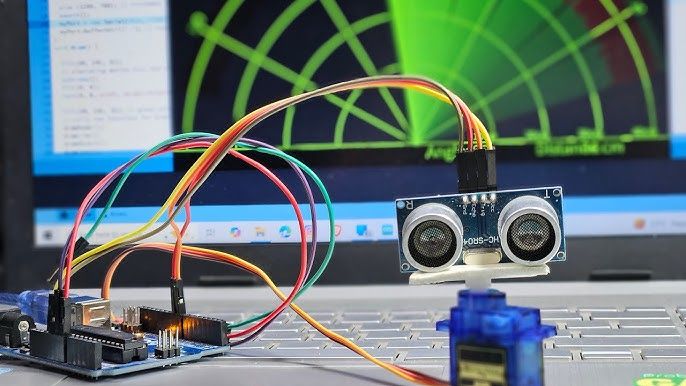
🚀 Built a Smart Radar & Intrusion Detection System using ESP32!
As part of our 2nd Year Microcontroller & Microprocessor project, we developed a low-cost radar-inspired surveillance system capable of detecting nearby objects and visualizing them in real time.
🔧 Technologies & Components:
• ESP32
• HC-SR04 Ultrasonic Sensor
• SG90 Servo Motor
• Arduino IDE
• Processing IDE
✨ Features:
✅ Real-time radar scanning
✅ 180° servo sweep
✅ Live radar visualization
✅ Object distance detection
✅ Expandable IoT architecture
This project helped us gain hands-on experience with:
- Embedded Systems
- Sensor integration
- Real-time processing
- Hardware-software communication
- IoT concepts
📕 https://t.co/yUaVkQfGM1
GitHub Repository:
🔗 https://t.co/WjFxiT3tuD
Looking forward to improving this further with ESP32-CAM, MQTT alerts, TinyML, and LoRa communication in future iterations.
#ESP32 #IoT #EmbeddedSystems #Microcontroller #Arduino #CSE #Engineering #RadarSystem #Programming #TechProject #ComputerEngineering #Innovation

𝐓𝐡𝐞 𝐄𝐒𝐏32-𝐒3 𝐢𝐬 𝐚𝐧 𝐚𝐛𝐬𝐨𝐥𝐮𝐭𝐞 𝐩𝐨𝐰𝐞𝐫𝐡𝐨𝐮𝐬𝐞 𝐟𝐨𝐫 𝐄𝐝𝐠𝐞 𝐀𝐈 𝐚𝐧𝐝 𝐜𝐨𝐦𝐩𝐥𝐞𝐱 𝐈𝐨𝐓. 𝐇𝐞𝐫𝐞 𝐢𝐬 𝐰𝐡𝐲. 🚀
As an IoT developer, evaluating the right microcontroller is half the battle in any hardware project. Right now, the ESP32-S3 is dominating the conversation, and for good reasons.
Take a close look at the specific module in this picture: the ESP32-S3. For hardware enthusiasts, those numbers mean serious business—16𝐌𝐁 𝐨𝐟 𝐐𝐮𝐚𝐝 𝐒𝐏𝐈 𝐅𝐥𝐚𝐬𝐡 and 8𝐌𝐁 𝐨𝐟 𝐎𝐜𝐭𝐚𝐥 𝐒𝐏𝐈 𝐏𝐒𝐑𝐀𝐌.
That is a massive amount of memory for a microcontroller, giving you the headroom to run heavy machine learning models right at the edge.
Here is a quick breakdown of why this board is currently a top-tier choice for modern development:
🔹 𝐏𝐫𝐨𝐜𝐞𝐬𝐬𝐢𝐧𝐠 𝐏𝐨𝐰𝐞𝐫: Dual-core Xtensa 32-bit LX7 microprocessor running at up to 240 MHz.
🔹 𝐀𝐈 𝐀𝐜𝐜𝐞𝐥𝐞𝐫𝐚𝐭𝐢𝐨𝐧: Features built-in vector instructions specifically to accelerate neural network computing and signal processing.
🔹 𝐂𝐨𝐧𝐧𝐞𝐜𝐭𝐢𝐯𝐢𝐭𝐲: Seamless 2.4 GHz Wi-Fi and Bluetooth 5 (LE) for robust wireless networking.
🔹 𝐌𝐚𝐬𝐬𝐢𝐯𝐞 𝐌𝐞𝐦𝐨𝐫𝐲 (𝐍16𝐑8): Easily handles complex audio, camera streaming, or data-heavy applications.
🔹 𝐍𝐚𝐭𝐢𝐯𝐞 𝐔𝐒𝐁: Built-in USB OTG, making interfacing and debugging incredibly smooth.
Whether the goal is smart home automation, remote surveillance systems, or deploying TinyML, the S3 is engineered to handle the workload flawlessly.
What is your current go-to microcontroller for heavy-duty IoT projects? Let’s talk hardware in the comments! 👇
📕 https://t.co/yUaVkQfGM1
#IoT #ESP32S3 #EmbeddedSystems #Microcontrollers #EdgeAI #HardwareEngineering #TechCommunity #IoTDeveloper #hardware
🚀 Built a Smart Radar & Intrusion Detection System using ESP32!
As part of our 2nd Year Microcontroller & Microprocessor project, we developed a low-cost radar-inspired surveillance system capable of detecting nearby objects and visualizing them in real time.
🔧 Technologies & Components:
• ESP32
• HC-SR04 Ultrasonic Sensor
• SG90 Servo Motor
• Arduino IDE
• Processing IDE
✨ Features:
✅ Real-time radar scanning
✅ 180° servo sweep
✅ Live radar visualization
✅ Object distance detection
✅ Expandable IoT architecture
This project helped us gain hands-on experience with:
- Embedded Systems
- Sensor integration
- Real-time processing
- Hardware-software communication
- IoT concepts
📕 https://t.co/yUaVkQfGM1
GitHub Repository:
🔗 https://t.co/WjFxiT3tuD
Looking forward to improving this further with ESP32-CAM, MQTT alerts, TinyML, and LoRa communication in future iterations.
#ESP32 #IoT #EmbeddedSystems #Microcontroller #Arduino #CSE #Engineering #RadarSystem #Programming #TechProject #ComputerEngineering #Innovation
Machine Learning + IoT is not plug-and-play. I learned this the hard way.
Most posts make Machine Learning and IoT look simple. Connect a sensor. Train a model. Deploy it. Done.
That version exists only in slides.
When I started building real IoT systems using ESP32 and STM32 with Machine Learning, reality pushed back hard.
I learned one uncomfortable truth early: Models do not fail first. Systems do.
Below are the real failures, fixes, and lessons that shaped how I now engineer ML-powered IoT systems.
Failure 1: A perfect model that collapsed in the field
In controlled conditions, the model performed well. Once deployed:
- Sensor drift appeared
- Environmental noise increased
- Installation conditions changed
The algorithm was not wrong. The assumptions were.
What fixed it:
- Collecting real field data instead of clean lab data
- Normalizing inputs directly on the device
- Rejecting invalid and unstable sensor readings
Lesson: Data quality matters more than model complexity.
Failure 2: A powerful model on constrained hardware
A model that runs smoothly on a PC does not automatically belong on a microcontroller.
- On ESP32 and STM32 hardware:
- Memory became the bottleneck
- Inference latency increased
- Power consumption mattered
What fixed it:
- Choosing simpler models over complex ones
- Using quantized models instead of floating point
- Running ML only where it created real value
Lesson: In IoT, the best model is the one that fits the hardware.
Failure 3: Internet dependency destroyed reliability
Early designs assumed constant connectivity. Reality delivered network drops, latency spikes, and unstable links.
The system became fragile.
What fixed it:
- Edge-first system design
- Local fallback logic
Using ML for prediction, not for safety-critical control
Lesson: Machine Learning should increase reliability, not depend on ideal conditions.
Failure 4: High accuracy with low real-world impact
I once celebrated a model with strong accuracy metrics. Stakeholders did not.
Accuracy did not reduce:
- False alarms
- Maintenance cost
- System downtime
What fixed it:
- Defining success at the system level
- Optimizing for stability and reliability
- Letting engineering logic lead and ML support
Lesson: Accuracy is a metric. Impact is the goal.
What finally worked
Simple models instead of complex ones
Real-world data instead of synthetic perfection
A balance between edge and cloud
Hardware-aware ML design
Combining ML with rule-based control
Final thought
Machine Learning in IoT is not about smarter models. It is about building systems that survive reality.
That mindset shift, from writing code to engineering systems, changed how I build everything.
🔥 Top 6 ESP32 eBooks
https://t.co/Kyt8ZzG9sw
#MachineLearning #IoT #EdgeAI #EmbeddedSystems #ESP32 #STM32 #TinyML #AIEngineering #EngineeringMindset #SystemsEngineering #RealWorldAI #HardwareMeetsSoftware #EngineeringLessons #LearningByBuilding


Hello community, check out my blog on building a TinyML framework with C from scratch.
https://t.co/CfStbYN92s

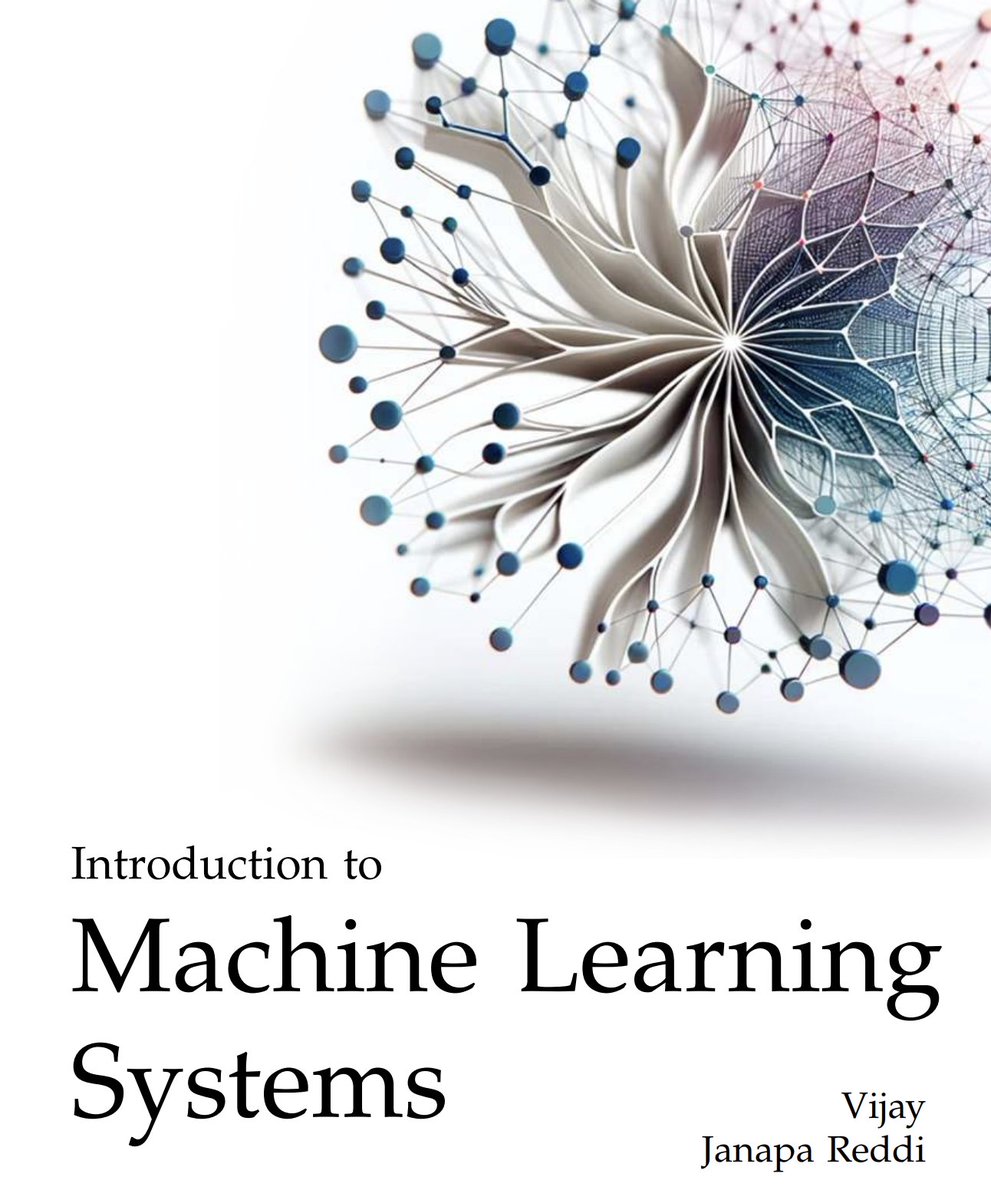
Harvard Professor shared this book to learn AI.
It includes:
- ML system fundamentals
- TinyML and edge computing
- Real-world deployment strategies
- Hands-on engineering practices
Start learning → https://t.co/om21xxXccY

Tech Domains & Their Power Stacks (Part 2)
🛡️ CYBERSECURITY & SECURE CODING
Network Security (Wireshark, Security Onion)
Endpoint Protection (CrowdStrike, SentinelOne)
Penetration Testing (Metasploit, Burp Suite)
Vulnerability Scanning (Tenable Nessus, Acunetix)
SIEM / Threat Detection (Splunk, Palo Alto Networks)
Identity Management (Zero-Trust, Multi-Factor Auth)
Cloud Security (Prisma Cloud, Wiz)
Compliance Automation (Scytale, Drata)
🎮 GAME DEVELOPMENT & VIRTUAL REALITY
Core Engines (Unreal Engine 5, Unity 6, Godot)
Scripting & Logic (C++, C#, GDScript, Verse)
3D Modeling & Animation (Blender, Maya, ZBrush)
Real-Time Lighting (Lumen, Nanite)
Multiplayer Frameworks (Photon, Mirror)
XR Platforms (Meta Quest SDK, Apple VisionOS)
Visual Scripting (Blueprints, Unity Visual Scripting)
Procedural Worlds (Houdini, Geometry Nodes)
🔌 EMBEDDED SYSTEMS & IOT
Microcontrollers (STM32, ESP32, Arduino)
On-Device AI (TinyML, Edge Impulse)
Real-Time OS (FreeRTOS, Zephyr)
Simulation & Twins (MATLAB, Simulink)
Hardware Languages (Embedded C, C++, Rust)
Connectivity (6G, LoRaWAN, Zigbee)
Security (Hardware Root of Trust, Secure Boot)
Edge Computing (Nvidia Jetson, Raspberry Pi)
⛓️ BLOCKCHAIN & WEB3
Smart Contracts (Solidity, Rust, Move)
Decentralized Storage (IPFS, Arweave)
Layer 1 & 2 Protocols (Ethereum, Polygon, Solana)
Web3 Libraries (Ethers.js, Web3.js)
Oracle Networks (Chainlink)
Wallet Integration (MetaMask, WalletConnect)
Security Auditing (OpenZeppelin, Slither)
dApp Frameworks (Hardhat, Foundry, Truffle)
📊 DATA ENGINEERING & PIPELINES
Big Data Processing (Apache Spark, Flink)
Data Orchestration (Apache Airflow, Prefect)
Streaming & Messaging (Kafka, Pulsar, RabbitMQ)
Data Lakehouses (Databricks, Snowflake, Iceberg)
Transformation (dbt - Data Build Tool)
Cloud Data Warehouses (BigQuery, Amazon Redshift)
ETL/ELT Tools (Fivetran, Airbyte)
Data Governance (Alation, Collibra)

Haven't been consistent with the ML grind lately because of endsems and practical. Finally they are over.
Also became an INTERN at a defence startup working on AI and autonomy in drones .
Started this new course - Fundamentals of TinyML
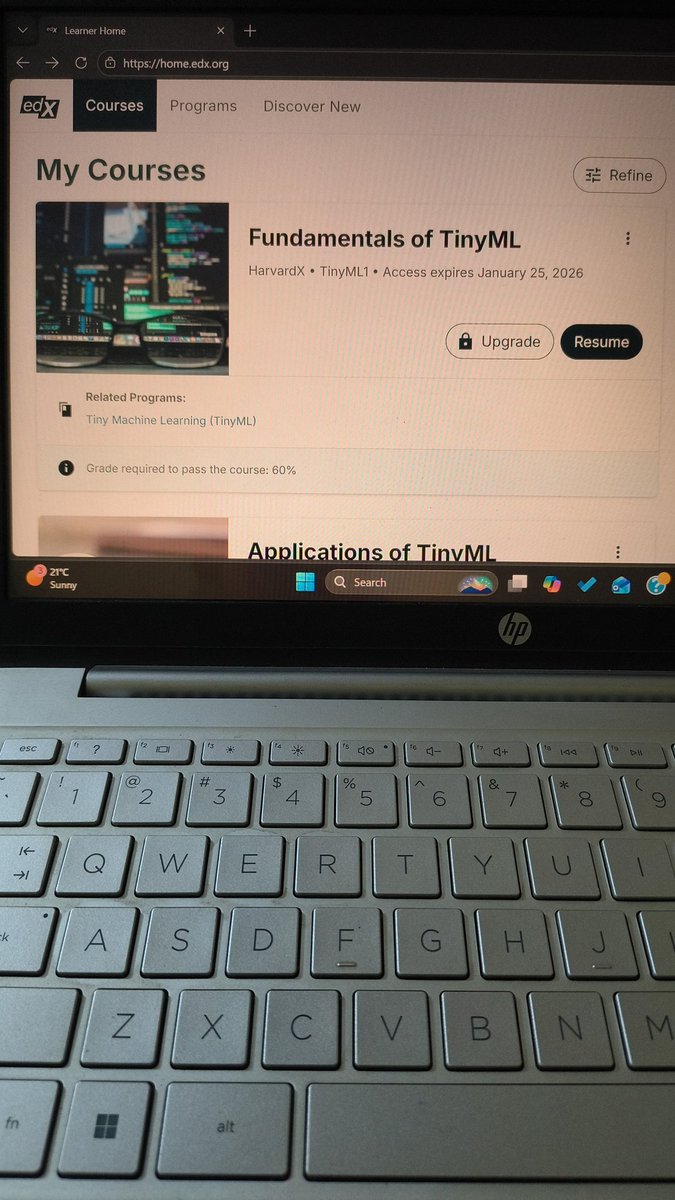

2. Fundamentals of TinyML
https://t.co/JkUXMO0uV2
1. Deploying TinyML
https://t.co/g4e25sfZYU

TinyML is the field of machine learning that enables smart, low-power devices like microcontrollers to run AI models directly on the device, without needing a constant cloud connection
More AI will run directly on devices in 2025. Faster responses, less cloud dependence, and better privacy because data stays on the device. TinyML is making this shift unavoidable. The cloud won’t disappear, but its grip is weakening.
#EdgeComputing #AI #TinyML #Computing
TinyML is the field of machine learning that enables smart, low-power devices like microcontrollers to run AI models directly on the device, without needing a constant cloud connection
More AI will run directly on devices in 2025. Faster responses, less cloud dependence, and better privacy because data stays on the device. TinyML is making this shift unavoidable. The cloud won’t disappear, but its grip is weakening.
#EdgeComputing #AI #TinyML #Cloud
TinyML is the field of machine learning that enables smart, low-power devices like microcontrollers to run AI models directly on the device, without needing a constant cloud connection
More AI will run directly on devices in 2025. Faster responses, less cloud dependence, and better privacy because data stays on the device. TinyML is making this shift unavoidable. The cloud won’t disappear, but its grip is weakening.
#EdgeComputing #AI #TinyML

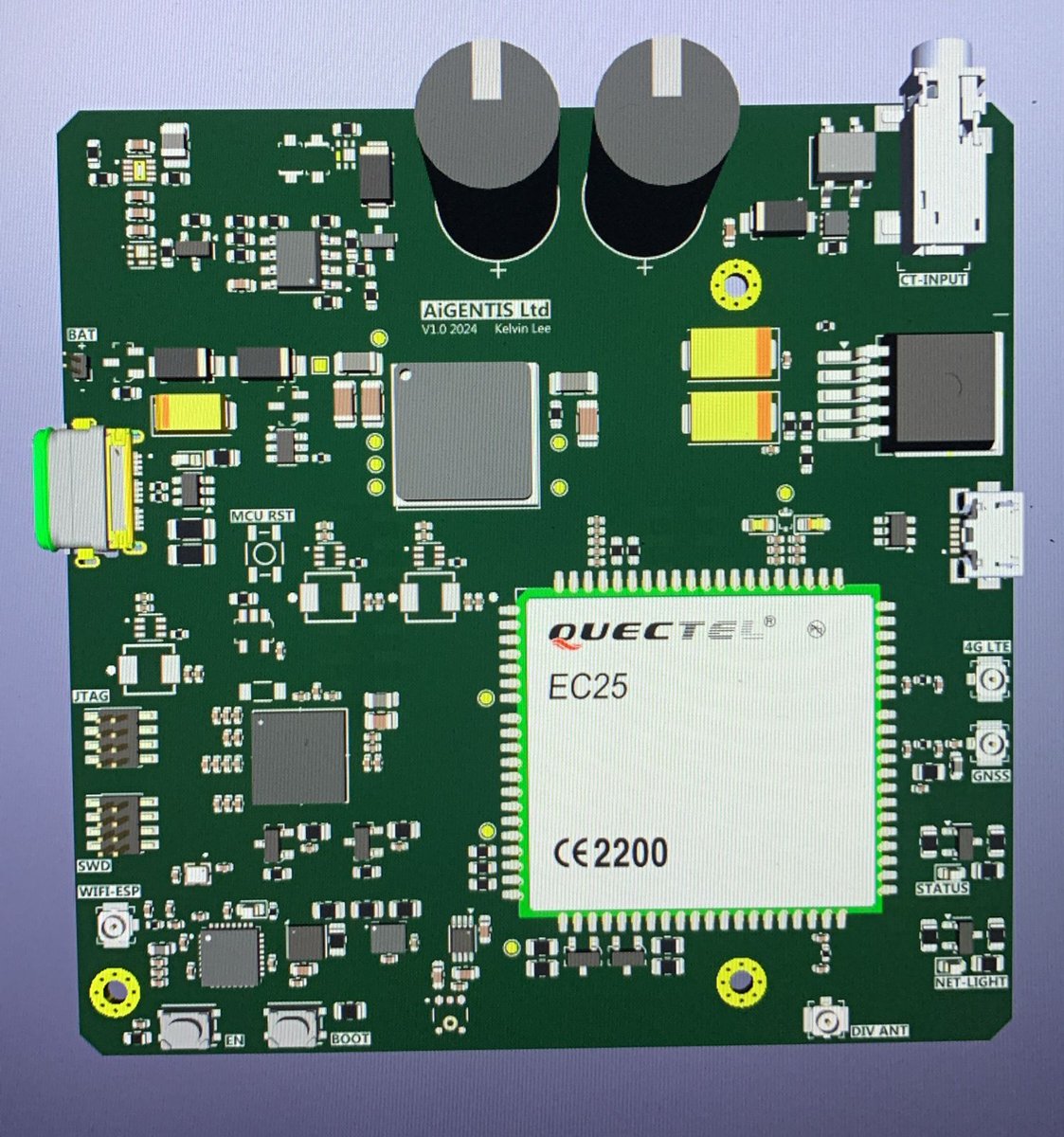
The Board fully designed 🚀 pheww... 20 hours slog! 🤯 Guys meet #AiTENT a Edge AI device that can detect electrical faults before they happen it also detects arching and power failure it's got energy harvesting for upto 10 years in the field and uses sensorfusion and TinyML it alerts the person in charge of the electrical distribution system so you don't need to #AiOT #embeddedai #tinyml #MAX78002 #nanotechnology @starter_story @buildinpublic #buildinpublic

Last Seen Hashtags on Sotwe
smno(*)***************
Seen from United Kingdom
massage
Seen from Oman
screamingorgasm
Seen from India
niqab #hijab
Seen from Pakistan
istriorang
Seen from Indonesia
PytTee
Seen from United States
snapchattttttt
Seen from Brazil
rr34
Seen from Panama
simge barankoğlu
Seen from Turkey
minichat((((((()))))))*
Seen from Turkey
Most Popular Users

Elon Musk 
@elonmusk
240.1M followers

Barack Obama
@barackobama
118.6M followers

Cristiano Ronaldo
@cristiano
114.4M followers

Donald J. Trump
@realdonaldtrump
111.7M followers

Narendra Modi
@narendramodi
106.9M followers

Rihanna
@rihanna
98.6M followers

NASA
@nasa
92.1M followers

Justin Bieber
@justinbieber
91.7M followers

KATY PERRY
@katyperry
89.9M followers

Taylor Swift
@taylorswift13
83.9M followers

Lady Gaga
@ladygaga
75.4M followers

Virat Kohli
@imvkohli
73.3M followers

Kim Kardashian
@kimkardashian
70.8M followers

YouTube
@youtube
68.6M followers

Neymar Jr
@neymarjr
66.3M followers

Bill Gates
@billgates
65.2M followers

Selena Gomez
@selenagomez
63M followers

The Ellen Show
@theellenshow
62.1M followers

CNN
@cnn
61.7M followers

X
@x
60.6M followers