

Top Tweets for #viminacium

► Roman Gladiator Bear Skull Unearthed in Serbia
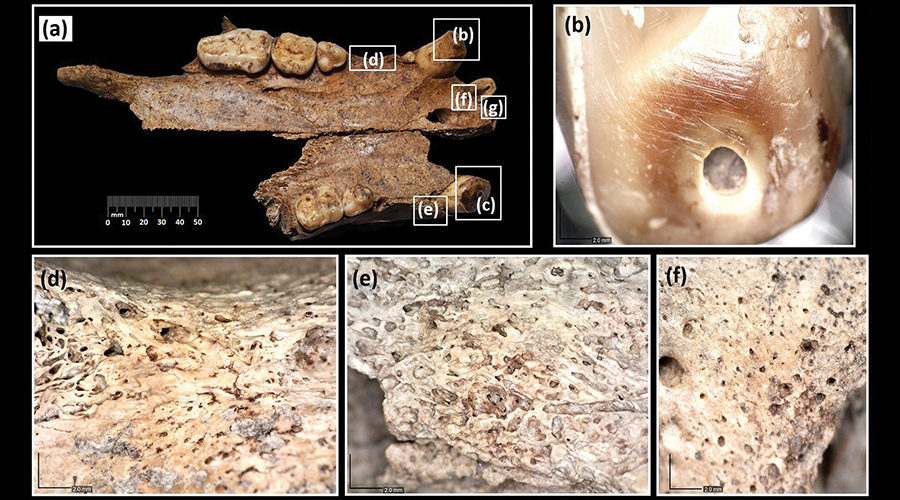
Archaeologists in Serbia uncovered a 1,700‑year‑old brown bear skull near the Viminacium amphitheater. Analyses indicate the bear was held captive for years—its teeth worn from gnawing bars and a partially healed head wound that festered with infection. The first physical proof that wild beasts fought in Roman arenas.

“Edge of Empire”
Profile of Individual I15529
This individual, designated as Sample I15529, was a male who lived during the 2nd century CE a period corresponding to the Pax Romana, when the Roman Empire experienced political stability and extensive cultural integration. His burial was uncovered at the Viminacium-Péciné necropolis, located in what is now Serbia, on the Roman frontier of Moesia Superior. The simplicity of his grave suggests he was not an elite figure, likely a person of modest status.
What makes this individual remarkable is that while his remains were found in the Balkans, his genetic ancestry points far east, deep into Western Asia, particularly the Anatolia–Caucasus region. This reflects the extraordinary mobility of people across Rome’s vast network whether as soldiers, traders, officials, or migrants.
Archaeological and Historical Context
Viminacium, a major Roman military base and urban center along the Danube frontier, functioned as a crossroads where cultures, goods, and people converged. The 2nd century CE was marked by extensive movement throughout the empire, from Britain to Syria. The discovery of a man with Anatolian roots in the Balkans illustrates the empire’s role as a connector of populations, not just ideas and commodities.
Genetic Insights
Paternal Lineage (Y-DNA): J1a2b2b (J-BY94/FGC29938)
This lineage is deeply tied to Western Asia, especially regions such as the Near East, Anatolia, and the Caucasus. Ancient parallels include individuals from:
Roman-era Anatolia (Aegean coast)
Cilicia during the Armenian Kingdom
Late Bronze Age Levant (Megiddo region)
While not pinpointing an exact birthplace, it strongly indicates origins in Anatolia or the Caucasus corridor.
Maternal Lineage (mtDNA): H11a2
Part of haplogroup H, dominant in Europe but with deep roots across West Asia and the Caucasus. Its occurrence here supports the paternal signal—ancestry shaped in the Anatolian–Caucasus zone.
Together: Both lines reject local Balkan ancestry, reinforcing a genetic heritage rooted in Western Asia, with no strong European (Indo-European) signal.
Autosomal DNA (Overall Ancestry)
Autosomal data provides the most complete picture. In I15529, the genetic blend is overwhelmingly West Asian, with three dominant ancestral sources:
About 40% Caucasus Hunter-Gatherer (CHG)
About 40% Anatolian Neolithic (Early Farmers)
Around 15% Levantine (Natufian-like)
Crucially, the genome lacks significant Western Hunter-Gatherer or Steppe ancestry, typical in Europeans of the time. This absence sets him apart from local Balkan populations, further confirming an eastern origin.
Modern and Ancient Affinities
When compared to modern populations, I15529 aligns most closely with:
South Caucasus peoples (Georgians, Armenians)
Eastern Anatolian Turks (Trabzon, Erzurum, Van)
Pontic Greeks and some Cypriot groups
Minor shared components appear with Sardinian-like ancestry, reflecting an old Neolithic farmer signal common in Anatolia.
Closest ancient matches include:
Roman and Byzantine Anatolian samples
Iron Age Anatolia and Lydian individuals
On PCA plots, I15529 clusters firmly with West Asian populations, far removed from local Balkan or northern European groups.
Interpretation and Historical Meaning
This man was likely born, or descended from people born, in Eastern Anatolia or the Caucasus, but lived and died on the Danube frontier. His journey whether as a soldier, servant, merchant, or migrant speaks to the vast interconnectedness of Rome’s world.
He is a vivid reminder that the empire was not an abstract political map, but a living network of human movement, bringing distant communities into intimate contact. Far from being an isolated case, individuals like I15529 personify the biological and cultural diversity of the Roman Mediterranean.
#AncientDNA #PopulationGenetics #RomanEmpire #HumanMigration #AnatolianHistory #Caucasus #GeneticAnthropology #Archaeogenetics #HistoryInDNA #PaxRomana
Genetic and Historical Profile of Individual I15499 (Roman Serbia, 80–215 CE)
Who Was He?
Sample I15499 belonged to a man who lived between 80 and 215 CE, during the peak of the Roman Empire. He was buried at Viminacium, a major Roman city and military stronghold in what is now Serbia. This site was the capital of the province of Moesia Superior and the base of Legio VII Claudia, making it a vibrant hub of administration, trade, and military activity.
What makes this man extraordinary is his genetic identity. Every piece of evidence shows that he was recently and directly from Northeast Africa—likely from the Horn of Africa region, including modern Ethiopia, Eritrea, Somalia, or Sudan.
His Genetic Signature
Both his paternal and maternal lineages are unambiguously African:
Y-DNA: #E-V32
This is a classic Horn of Africa lineage, common among Somali, Ethiopian, and Eritrean populations, with roots in Northeast Africa. It strongly rules out any European paternal origin.
mtDNA: #L2a1j
This maternal lineage is widespread across Sub-Saharan Africa and confirms that his mother also came from the African continent.
Together, these haplogroups confirm he was not of mixed Balkan origin—he was almost certainly a first- or second-generation migrant from Africa.
Autosomal DNA – The Full Picture
His overall genetic profile is dominated by components typical of the Horn of Africa:
Primary Affinity: Closest to modern Ethiopians, Eritreans, Somalis, and Sudanese.
Additional Signals: Small fractions of ancient North African (Taforalt) and Levantine (Natufian) ancestry, which are common in East African populations due to ancient back-migrations from the Near East.
Modeling his ancient ancestry reveals:
A strong African hunter-gatherer foundation (linked to Shum Laka and Sub-Saharan populations).
A significant Iberomaurusian/North African layer from prehistoric North Africa.
A Natufian-related component, representing ancient Levantine ancestry.
This combination is exactly what we expect for someone from the Horn of Africa in antiquity.
Life in Roman Viminacium
Why was a man of African origin living on the Danube frontier? Several plausible explanations:
Military Service: The most likely scenario. The Roman army recruited extensively from Egypt and Nubia. He may have been an auxiliary soldier or a member of a specialized African cohort serving at Viminacium.
Trade: Viminacium was a major commercial hub. He could have been involved in trade, perhaps bringing prized African goods like ivory, spices, or animals.
Slavery or Freedman: While possible, the nature of his burial suggests higher status than a common enslaved person—perhaps a freedman or someone integrated into Roman society.
Why This Matters
This individual’s story demonstrates the extraordinary diversity and mobility within the Roman Empire. A man whose parents were likely born in the Horn of Africa could end his life on the banks of the Danube in Serbia. His presence challenges outdated notions of ancient Europe as homogeneous and highlights the global reach of the Roman world.
#AncientDNA #RomanEmpire #PopulationGenetics #AfricanHistory #HornOfAfrica #Viminacium #HumanMigration #Archaeogenetics #HistoryOfRome #DNAResearch #Genetics

@Viminacium_ @Blouson_de_pole @fritenugget pourquoi tu les abordes si tu considères que c’est des salopes ? tu te contredis toi même concentre toi


@Viminacium_ Ouin ouin ouin espèce de harceleur de rue frustré de la vie incel de m*rde

@Viminacium_ @fritenugget Ton gros père le chauve aurait du vérifier que la capote était pas trouée faut aller se faire foutre à un moment

@Viminacium_ @fritenugget On veut être tranquille suivis de « on continuera de vous aborder » t’es pas un peu con toi ? En plus d’être un frustré qui sait pas se tenir en voyant un peu de peau et des formes la honte 🤣🤣

@Viminacium_ @fritenugget je suppose que tu t'offusques également des mecs qui se baladent torse-nus dans la rue ?

@Viminacium_ @fritenugget Des gens apprécient la musique a fond dans la rue, est-ce une raison pour sans cesse le faire subir a tt le monde ?Pis pour la 1ere partie de tweet, le pb est dans ton regard de pervers qui visiblement s’excite des qu’il voit une jambe. Pas chez les autres.Ya des psy pour ca stv.

@Viminacium_ @fritenugget faut t'enfermer toi. Faudra pas t'etonner de rester puceau toute ta vie avec cette mentalité d'incel

@Viminacium_ @fritenugget "On continuera de vous aborder".
C'est à cause des cons comme toi que, quand j'aborde une dame pour demander l'heure ou une indication, elle me fixe comme si j'allais l'agresser.
Sérieux, arrêtez. Vous êtes chiants.
Apprenez à discerner les signes au lieu de faire chier.

@Viminacium_ @fritenugget Des femmes : disent qu'elles n'aiment pas se faire aborder
Mecs random : "les femmes apprécient se faire aborder alors on va continuer"
Allez vous faire foutre a un moment

@Viminacium_ @algdl_jl Parce que toi t’es un putain d’animal et que certaines personnes ont de l’estime de soi et un peu de pudeur envers leurs parents pour ne pas ramener une fille devant eux avant le mariage dans leur propre maison surtout si leur conviction religieuse ne leur permette pas hayawen
Last Seen Hashtags on Sotwe
Most Popular Users

Elon Musk 
@elonmusk
239.7M followers

Barack Obama
@barackobama
118.6M followers

Cristiano Ronaldo
@cristiano
114.3M followers

Donald J. Trump
@realdonaldtrump
111.7M followers

Narendra Modi
@narendramodi
106.9M followers

Rihanna
@rihanna
98.6M followers

NASA
@nasa
92.1M followers

Justin Bieber
@justinbieber
91.7M followers

KATY PERRY
@katyperry
89.9M followers

Taylor Swift
@taylorswift13
83.9M followers

Lady Gaga
@ladygaga
75.4M followers

Virat Kohli
@imvkohli
73.3M followers

Kim Kardashian
@kimkardashian
70.8M followers

YouTube
@youtube
68.6M followers

Neymar Jr
@neymarjr
66.3M followers

Bill Gates
@billgates
65.1M followers

Selena Gomez
@selenagomez
63M followers

The Ellen Show
@theellenshow
62.1M followers

CNN
@cnn
61.7M followers

X
@x
60.6M followers