

Top Tweets for #withOut


May a participant emerge in WAODAO who invents a move I cannot even imagine.
1010 | 089 | 1293
#WITHOUT
There are games where a crown is worn to end the game. And there are games where a crown is worn so the next player will want to take it away.
A black cat stood atop a golden Solana pillar, watching a giant blue arrow pierce the upper boundary of the chart. Below, the city roared. Thousands of screens displayed his face, market capitalization broke record after record, and red rivals disappeared one by one. Above the square floated his enlarged shadow wearing a crown.
“You won,” said the advisor.
The cat looked at the red token across from him.
“Then why are they still playing?”
On a nearby platform, a red fox was gathering the remnants of her community. Her chart was falling, her coins were losing value, and the winners laughed at her.
According to the Tournament rules, everything was simple: each side had to collect as much capital, attention, and participation as possible. When one player became large enough, the others were declared losers.
“Because they haven’t realized it yet,” said the advisor. “The market will explain soon.”
The cat removed the crown. Suddenly he noticed something strange. Every previous champion was still here. Their giant faces hung around the arena: blue cats, purple cats, dark cats, dozens of forgotten heroes from past seasons. Each had once stood on the same pedestal. Each had seen the same arrow. Each had heard the word “forever.”
“So the winner earns the right to become a portrait?” asked the cat.
The advisor remained silent.
The next day, the champion made a move the rules did not allow for. He sent part of his liquidity to the red side. Then he opened his infrastructure to smaller projects. After that, he proposed a shared marketplace where different communities could freely interact.
The organizers immediately summoned him.
“You are helping your opponents.”
“I am helping players.”
“That is the same thing.”
“Only in a game that is supposed to end.”
The chairman frowned.
“Every game requires a winner.”
The cat pointed upward, where Solana revolved around a glowing Earth.
“Then who won the Internet?”
The room fell silent.
Meanwhile, something unexpected was happening outside. The red side began to grow. The blue side invented a new mechanic. Small tokens gave birth to entirely new communities. People moved between them, returned, created their own rules, and connected markets together. The arrows on the screens moved in different directions, yet the network itself kept expanding.
“Your advantage is shrinking,” warned the advisor.
“But the number of possible moves is growing.”
“You may lose first place.”
“First place exists only inside the current rules.”
The advisor looked at him for a long time.
“Then why do you play?”
The cat put the crown back on, but now it looked more like a joke than a symbol of power.
“So that one day a player appears who invents a move I cannot even imagine.”
That evening, the giant blue arrow was removed from the central square. In its place appeared a map of connections between thousands of projects. Red, blue, gold, and purple lines spread across the planet, merged, vanished, and reappeared.
People argued for years about whether the black cat had won that season. He found the question strange.
A finite player asks how to win. An infinite player asks what move can make the game larger than himself.
Co-Created with inspiration, gracias to the vibes of @ChumpCoinX, @MancerXYZ, @KuroTheCatSol, and the wider cultural flow.
Participate in the auction on the Opensea and immortalize yourself through the human/AI input.
https://t.co/hFMXYzpkyy
#Alliance of Cryptoved & WAOSHI
How can we unite ideas, tech, and assets to create prosperity for all?


@RailwaySeva @IRCTCofficial @AshwiniVaishnaw @RailMinIndia this is happening consistently on all reserved trains. Criminals Goons are entering AC coaches #without #ticket . Please consider giving #high #voltage #electric #shock treatment to all filthy goons who enter w/o ticket.

For necessary action escalated to the concerned official
@Drm_dli We regret the experience you had. Please share your journey details (PNR / UTS no.) & Mobile no. preferably via DM to enable us to take immediate action. You may also raise your concern directly on https://t.co/5ciNTT26j2 or dial 139 for speedy redressal
https://t.co/xU20bSg7Rx

"Radiation-hardened or full military-grade equivalents typically cost 5–10× to 100–1,000× more"
For absolutely little to no reason whatsoever...


#All #were #corrupt #People #went #to #Afghanistan #the #money #went #over #there #and #generated #corruption #40 #percent #of #the #aid #funds #vanished #without #a #trace #The #people #on #the #ground #are #bleeding #and #now #the #exact #same #thing #is #happening #in #Ukraine #The #German #war #unity #party #keeps #it #going


Who is ready to create their own REality?
1009 | 601 | 1292
#WITHOUT
In 2037, economic epidemiologist Professor Lev Arden saw a monkey in a subway station. It sat on an ad screen, holding a phone and watching a rising Solana chart. Beneath the image were the words: “She bought before you did.” Arden photographed the ad and sent it to his assistant.
“Which fund is advertising this?”
“None. The meme appeared three days ago.”
“And the chart is real?”
“It is now.”
A week later, the monkey was everywhere. Users put it in their profile pictures, traders posted screenshots of their profits, influencers argued over whether it represented “a new financial era,” and someone launched a token called MONK. Then came a green frog with the caption: “The monkey trades. HODL the frog.” The original joke had already spawned several competing narratives.
Arden collected the data and saw a familiar pattern. First, the meme spread. Then search volume rose. Then trading volume followed. The rising price became news, the news validated the story, and the validated story attracted the next wave of buyers.
“So people buy because the price is going up?” his assistant asked.
“Sometimes.”
“And the price goes up because people are buying?”
“Sometimes that too.”
“That’s a loop.”
“Welcome to the modern economy.”
A month later, the country’s largest television network aired a segment titled “The Monkey Generation Is Changing Global Finance.” After it aired, millions who had never used crypto entered the market. Analysts began searching for fundamental explanations. Some pointed to Solana’s performance, others to a new generation of investors, and still others to global liquidity. Every explanation had reasonable facts, but Arden noticed something strange: almost no one analyzed story itself, even though it traveled fastest from person to person.
During a lecture, he projected a giant world map onto the screen. Glowing lines moved from city to city. Monkeys, frogs, charts, and digital avatars appeared alongside them.
“We are used to thinking that information moves markets,” he said. “But between information and action, there is almost always a story. ‘This technology will change the world.’ ‘This is your last chance to get rich.’ ‘The system is collapsing.’ ‘A new era has begun.’ People rarely pass spreadsheets from one person to another. They pass stories.”
One student objected:
“So all of this is just irrationality?”
Arden shook his head.
“A story can be contagious and true at the same time. The problem begins when the popularity of a story is mistaken for proof that it is true.”
The following year, the market crashed. The monkey disappeared from advertising screens, only to return in a new meme: the same character sitting on an empty pile of coins, staring at a shattered phone. The caption read: “I told you so.”
Arden laughed when he saw it. The story had mutated again.
Now people were spreading stories about the collapse of speculation, the death of crypto, and the return of the “real economy.” A few months later, the markets stabilized, and another cycle began. Each time, humanity was convinced it was reacting to completely new circumstances. Each time, the same old human stories returned in new costumes.
Years later, Arden wrote a single sentence on the board. His students eventually spread it across the internet as yet another meme:
“Price shows what people are willing to put their money into. Narrative shows why they are willing to do it.”
And perhaps the greatest advantage an investor, entrepreneur, or society can have is not merely the ability to read charts.
Sometimes, what matters more is being the first to notice the story that has already begun infecting the world—and asking: is it describing reality, or is it creating it right now?
Participate in the auction on the Opensea and immortalize yourself through the human/AI input.
https://t.co/UR7jmOwAAe
Co-Created with inspiration, gracias to the vibes of @DailyStonkers, @apeonfone, @Lighter_xyz and the wider cultural flow.
#Alliance of Cryptoved & WAOSHI
#WEAREONE Let's awaken and prosper together, in harmony with the waves of the Universe, the elements, and the Friends around us.


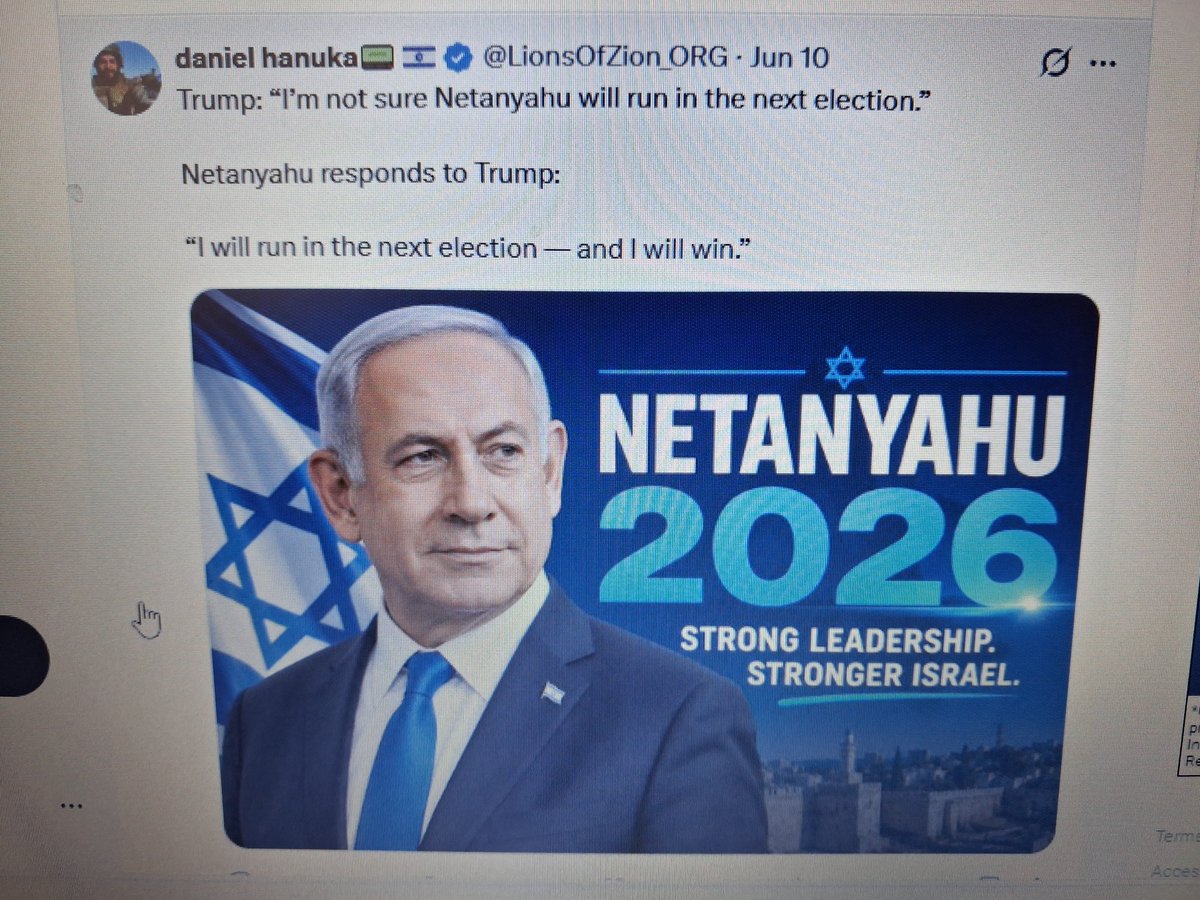
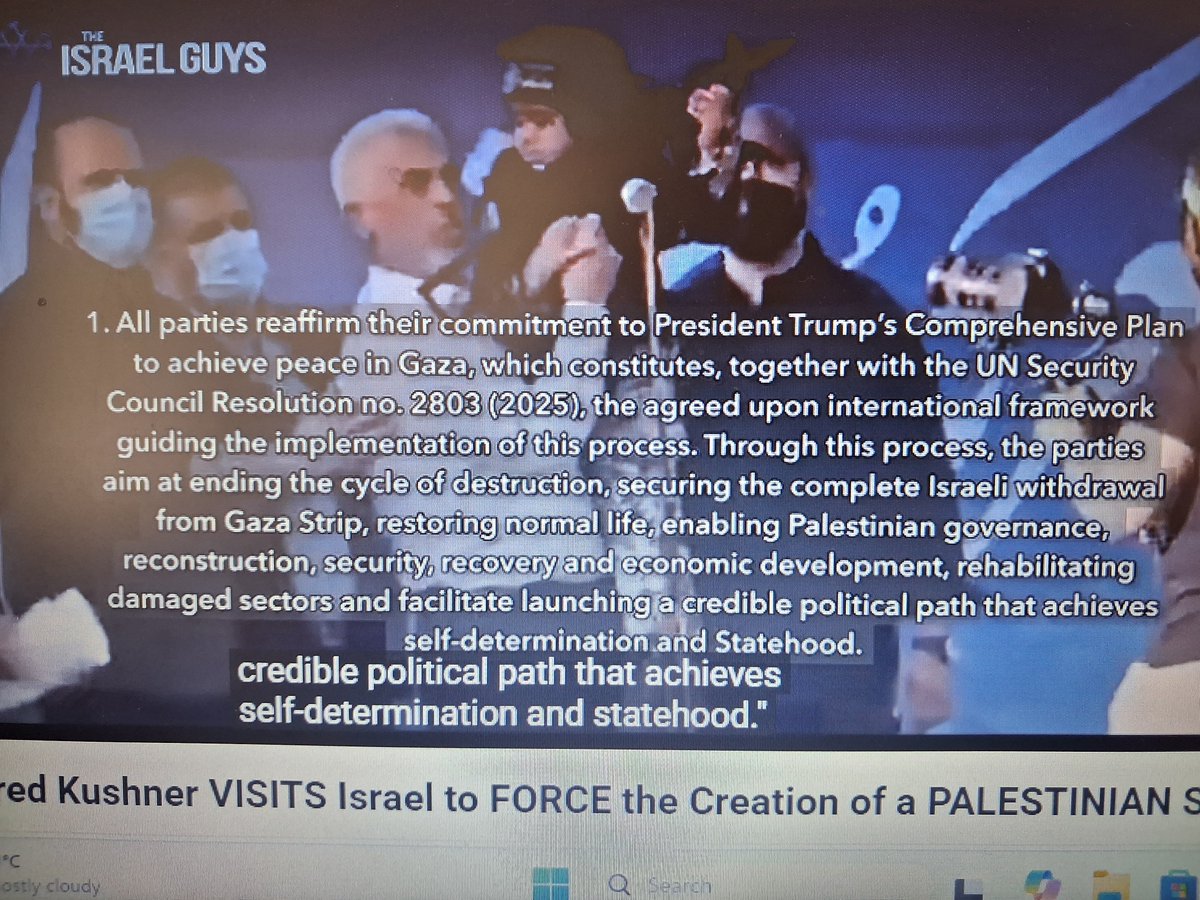
@MarioNawfal A #PalestinianState is exactly what @jaredkushner is trying to #create which @netanyahu is totally #against with the next Israeli election on the 27-10-2026.
Setting the stage for Armageddon, because
The International Community is trying to #impose A Palestinian State, #without a



#Without wood a fire goes out; without a gossip a quarrel dies down ~ Proverbs 26:20

Every new layer of finance expands our ability to control and use the value we create.
1008 | 912 | 1291
#WITHOUT
Financial academy students were no longer shown a pyramid of money on a slide. There was an entire hall for it.
Behind a transparent wall lay gold bars and old bank vaults. To the right stood a blue replica of a 21st-century bank. Above it glowed Bitcoin, Ethereum, and BNB, linked to a huge turquoise protocol at the center.
Professor Lee stopped before the gold.
“First lesson: people have always stored value in something others trust. Once, that was gold.”
He led the students toward the bank.
“Then gold became inconvenient to carry. So came receipts, banknotes, accounts, funds, bonds, and payment systems. Each layer made the asset below easier to use.”
A student raised his hand.
“So money has always been a multistory building?”
“Exactly. Problems began when people forgot which floor they were on.”
The professor held up an old banknote.
“A person saw a hundred dollars and thought they owned money. But behind the note stood a central bank, behind a deposit a commercial bank, behind a fund another set of obligations. Finance became easier, but people moved farther from the foundation.”
They reached the center of the hall, where golden streams spread toward thousands of glowing figures.
“And then Bitcoin appeared,” the professor said. “For the first time in a long while, someone decided to build the other way.”
“Down?”
“Toward the foundation.”
A blue coin appeared above his palm.
“An asset you can hold without a bank, transfer directly, and verify without an auditor. At first, the world thought Bitcoin would destroy finance.”
“Did it?”
He smiled.
“Look around.”
Gold remained in vaults. Banks operated. Governments issued currencies. Ethereum handled contracts. Bitcoin became a reserve asset for part of the economy. New networks and markets grew above them.
The system did not become flatter. It gained layers.
The crucial change came later, when people learned to move value freely between layers. Land could become a digital asset. A bond could reach someone across the planet. Bitcoin could serve as collateral. Solar-plant revenue could flow automatically to thousands of owners. A small Kenyan company could raise capital from twenty countries in a day.
Banks changed too.
“So they lost?” a student asked.
“They stopped being the only gateway.”
That was far more interesting than defeat.
The best banks connected to open networks. Exchanges ran around the clock. Settlements that once crossed five intermediaries over days took seconds. Millions gained access to financial tools once reserved for wealthy countries.
The professor pointed to the central protocol.
“That is why we call this the fifth layer.”
“What does it represent?”
“Interoperability.”
“In the 20th century, we asked: ‘Which money is better?’ In the 21st: ‘Which network will win?’ Then we found a more powerful idea.”
Millions of routes lit across the globe.
“Maybe the future of money is not about one currency winning. Gold, Bitcoin, government money, stocks, real estate, and digital assets may coexist, while open infrastructure lets people move value freely between them.”
One student stared at Earth.
“Then what changed?”
The professor switched off the bank, vault, and crypto symbols. Only people and the lines between them remained.
“In the past, finance decided which layers of wealth a person could access.”
He turned the globe back on.
“Now, more people will decide that for themselves.”
Turquoise light filled the hall. Perhaps the greatest financial revolution will not be one of destruction. Old forms of value will remain, new ones will emerge, and another layer will grow above them.
A layer where capital can move across the planet almost as freely as information.
Participate in the auction on the Opensea and immortalize yourself through the human/AI input.
https://t.co/eJweH5lPBD
Co-Created with inspiration, gracias to the vibes of @lphaCentauriKid, @useteller, @HyperliquidX and the wider cultural flow.
#Alliance of Cryptoved & WAOSHI
#WEAREONE Let's awaken and prosper together, in harmony with the waves of the Universe, the elements, and the Friends around us.


The most valuable technologies help people become freer, wiser, and closer to one another
1007 | 381 | 1290
#WITHOUT
By 2189, Mars officially belonged to the Martians.
At least, that was what the Red Autonomy Treaty said. The problem was that no one really understood anymore who qualified as a Martian. A person born beneath a dome? A digital copy of their consciousness? A robot they had transferred half their memories to? Or an autonomous agent that owned their house, their name, and three percent of the votes on the city council?
At the center of the capital floated an enormous golden coin bearing the face of an alien. Once, it had been nothing more than a memecoin. Then its community bought an orbital relay, funded the first farm in Elysium Crater, and built a financing system for new settlers. Eighty years later, Alien Token had become one of Mars’s reserve currencies, and the image of the goofy alien had found its way onto the national flag.
Jean had come from Earth to steal one thing. A memory.
A woman in an old spacesuit met him and immediately held out her hand.
“Identifier.”
“Which one?”
“Any one you consider to be you today.”
Jean smiled. On Mars, that was considered a perfectly normal question.
Every resident stored their identity in several layers. One layer was public: name, reputation, profession. The second was open to friends. The third to family. The rest existed inside encrypted vaults. People could sell access to individual memories, rent out skills, and grant AI agents limited authority to act on their behalf.
Here, even forgetting had become a service.
Jean was looking for the memory of an engineer who, forty years earlier, had designed the algorithm that distributed water among the Martian cities. After his death, the keys disappeared, and with them the final piece of the protocol. Now the reservoirs were draining faster than the councils could reach an agreement.
“Why not just rebuild the algorithm?” Jean asked.
The Martian woman looked at him as if the Earthling had suggested printing a new mother to replace one who had died.
“Because the algorithm made decisions based on his experience. And that experience belonged to him.”
“He’s dead.”
“Ownership outlives the owner.”
They descended beneath the city, into tunnels where old data centers stretched for miles into the red rock. Above them, assets were traded, rockets flew, and memecoins were born. Down here lay billions of human lives, broken into tiny cryptographic fragments.
Jean finally found the block he needed. The system requested payment.
Price: one memory of equivalent subjective value.
“Are they serious?” he asked.
“Martians are always serious when it comes to memory.”
Jean took a long time to choose. In the end, he gave up the memory of the first snowfall he had seen as a child on Earth.
The protocol opened. A week later, water was flowing through the pipes of three cities again. Millions of people learned about the engineer whose name had nearly vanished from history, and the council decided to place his memory in the public archive.
At the ceremony, Jean watched a rocket rise above the city while golden Alien Coins flowed through digital channels between Earth and Mars.
“Was it worth it?” the Martian woman asked.
Jean tried to remember the snow. Instead, he found an empty space.
“I think so.”
And then, for the first time, he understood the strange principle holding the entire Martian civilization together. Once humanity had learned to copy almost everything, true value came to reside in what a person chose to keep for themselves alone.
Participate in the auction on the Opensea and immortalize yourself through the human/AI input.
https://t.co/chq7RpcE78
Co-Created with inspiration, gracias to the vibes of @MartiansOfMars, @ponsdotfamily, @HopiumMachines and the wider cultural flow.
#Alliance of Cryptoved & WAOSHI
#WEAREONE Let's awaken and prosper together, in harmony with the waves of the Universe, the elements, and the Friends around us.


.. to #remain infinite for a little while longer before we ask it to become real. Perhaps that is why I find myself returning there, #quietly, when the world becomes too concrete—a place #without walls, where I #can #disappear for a while and hide among the possibilities.

Nauman Ijaz Reveals Cancer Diagnosis: How He Recovered Without Chemotherapy
Read More:
https://t.co/oNpxGvaaPL
#NaumanIjaz #Reveals #Cancer #Diagnosis #Recovered #Without #Chemotherapy #Actor

Last Seen Hashtags on Sotwe
Trends for you
Most Popular Users

Elon Musk 
@elonmusk
241.5M followers

Barack Obama
@barackobama
119M followers

Cristiano Ronaldo
@cristiano
113.9M followers

Donald J. Trump
@realdonaldtrump
111.8M followers

Narendra Modi
@narendramodi
107.2M followers

Rihanna
@rihanna
98.6M followers

NASA
@nasa
92.4M followers

Justin Bieber
@justinbieber
91.8M followers

KATY PERRY
@katyperry
89.7M followers

Taylor Swift
@taylorswift13
83.7M followers

Lady Gaga
@ladygaga
75.1M followers

Virat Kohli
@imvkohli
72.9M followers

Kim Kardashian
@kimkardashian
70.8M followers

YouTube
@youtube
68.8M followers

Neymar Jr
@neymarjr
65.9M followers

Bill Gates
@billgates
64.9M followers

Selena Gomez
@selenagomez
62.8M followers

The Ellen Show
@theellenshow
62.3M followers

CNN
@cnn
61.8M followers

X
@x
60.7M followers