@zaragoza_es Spoiler del spoiler: Si no te cargas los árboles que ya hay (y lo que no son los árboles) en una plaza perfectamente funcional... ¡¡¡No tienes que volver a plantar nada!!!. Sígueme para más obviedades.
NASA astronaut Frank Culbertson, aboard the International Space Station, takes photographs of the scene on Manhattan from space.
“Frank, we’re not having a very good day down on earth,” says Mission Control.
RIP John Irvin who directed what I consider the greatest 5 hours of television every aired on the BBC: Tinker, Tailor, Soldier, Spy.
https://t.co/K175nVnJMN
…and many more! 🎂🎈🎉
We wish a very happy birthday to the incomparable Gene Kranz, a legendary flight director who served our human spaceflight program for 34 years! Kranz is best known for his leadership in Mission Control during Apollo 13, but his composure and determination still inspire us today.
The partially eclipsed sun melts into the Mediterranean Sea.
I can’t get over this experience.
I captured thousands of photos- I’ll be sharing my favorite later tonight.
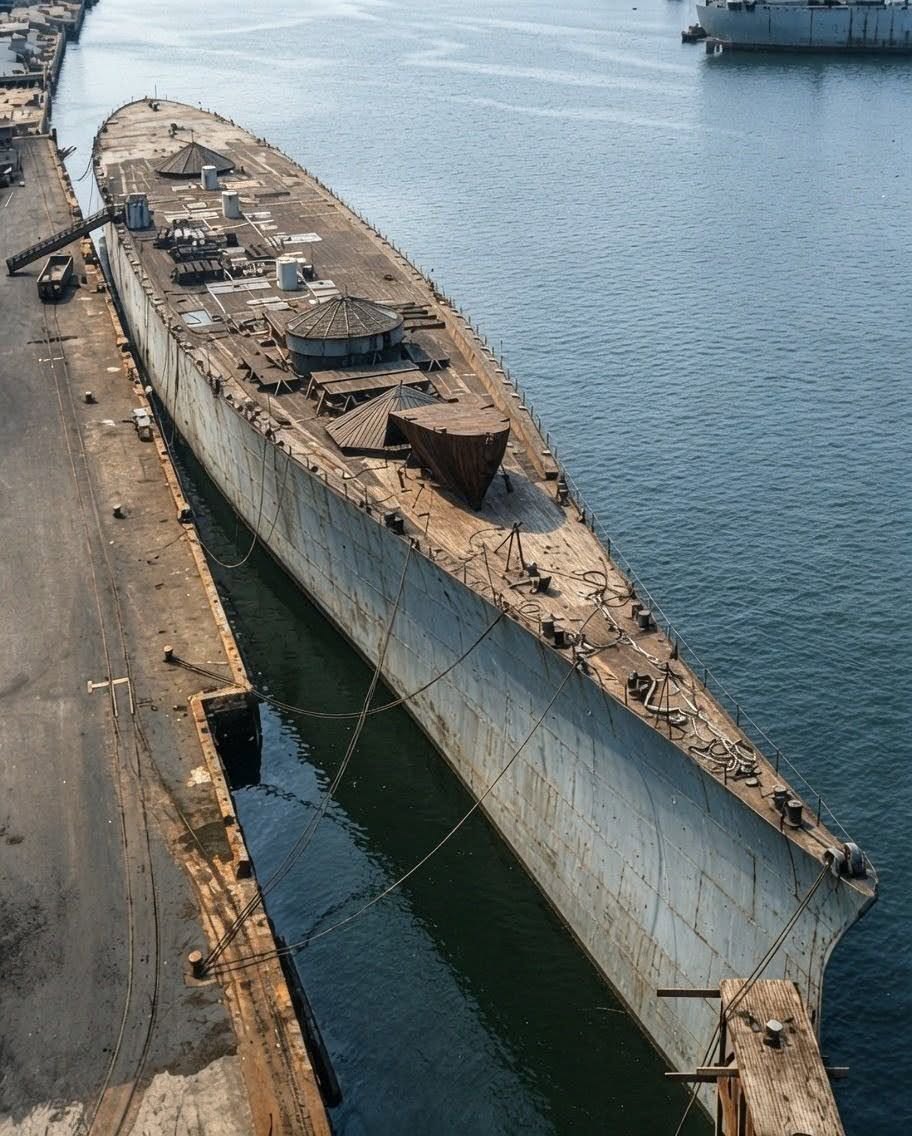
The never-completed hull of Iowa-class battleship USS Kentucky (BB-66), photographed in March 1955—about a year before the Navy removed her bow for transplant to USS Wisconsin (BB-64).
Kentucky was laid down in 1942 but construction was suspended before the battleship could be completed. Her unfinished hull remained at the Norfolk Naval Shipyard for years, a silent reminder of a warship that would never enter service.
Then, in 1956, USS Wisconsin suffered serious damage to her bow after colliding with the destroyer USS Eaton. Rather than build an entirely new bow from scratch, the Navy turned to Kentucky. A massive section of the unfinished battleship’s bow was cut away, transported, and fitted onto Wisconsin.
The never-completed Kentucky would never fire a shot—but part of her ultimately went to sea aboard her sister ship.
A tomar por culo el Complejo de Comunicaciones de Espacio Profundo construido por la NASA en Robledo de Chavela, una de las únicas tres que existen en el mundo. Es una pérdida de valor científico incalculable.
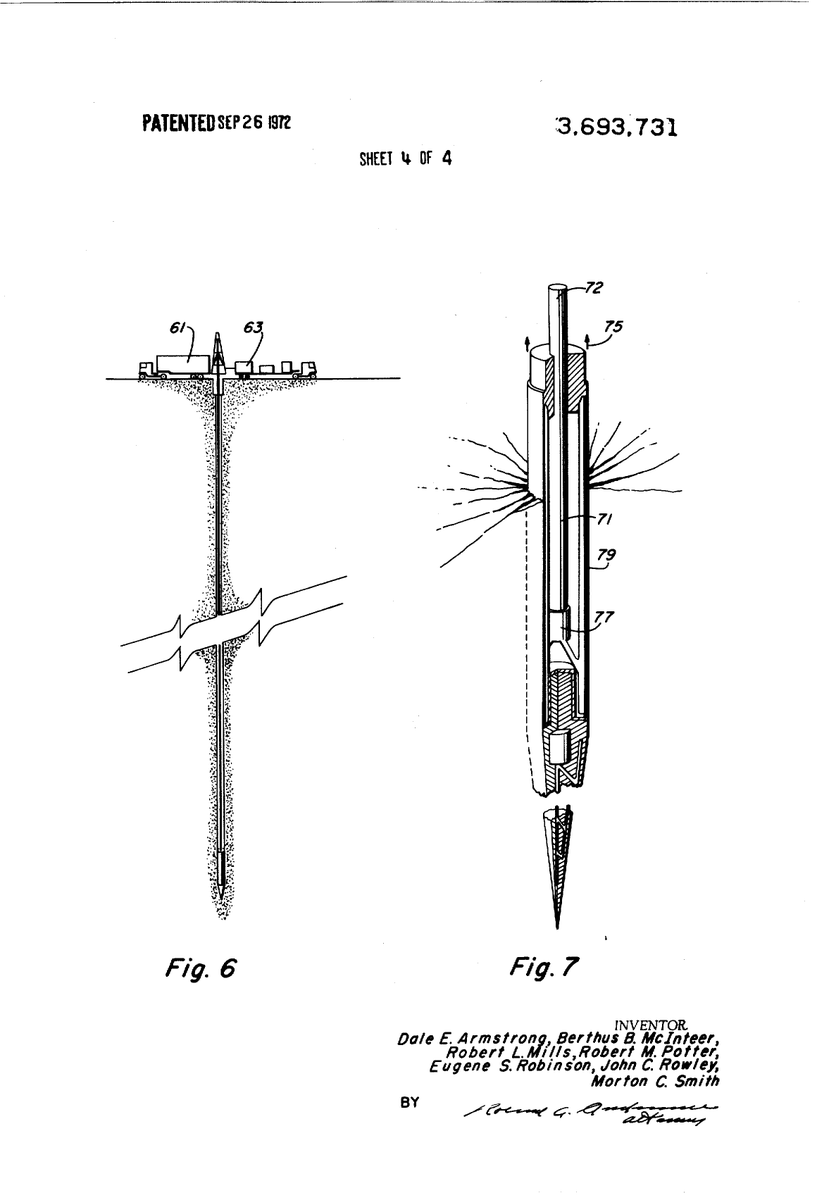
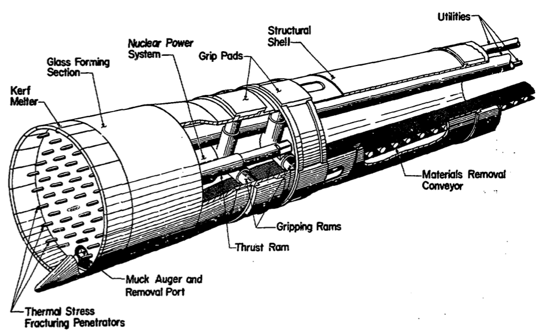
A U.S. patent filed in 1971 for a nuclear-powered boring machine that “drilled” holes in the ground by melting the rock into a glass tube using a tip heated to over 3000°F.
We used to be a proper country.