“My heart was warmed at Wal-Mart during lunch.
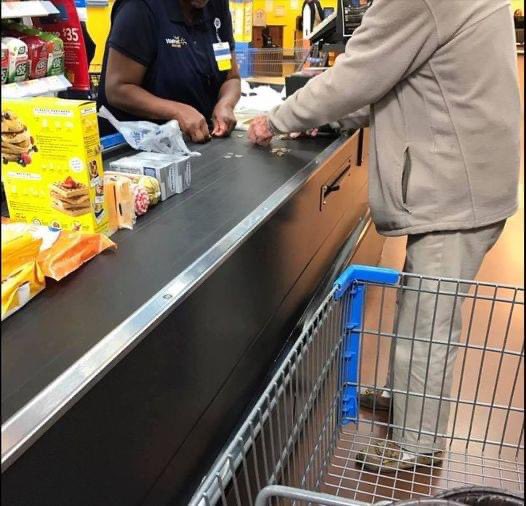
This gentleman's items were scanned and he was given the total. He looks apologetically back at me and starts taking handfuls of change out of his pockets.
He miscounts and starts to get flustered. Gives me a muttered, "I'm so sorry." His hands and voice are shaking.
This beautiful cashier takes his hands dumps all the change on the counter and says, "This is not a problem, honey. We will do this together."
He continues to apologize to both of us as we reassure him it's ok. They get his transaction handled and he shuffles away.
I looked at this wonderful woman and said, "Thank you for being so patient with him."
She shakes her head and replies, "You shouldn't have to thank me, baby. What's wrong with our world is we've forgotten how to love one another."
I want to be more like her.”
Credit: Spring Herbison Bowlin
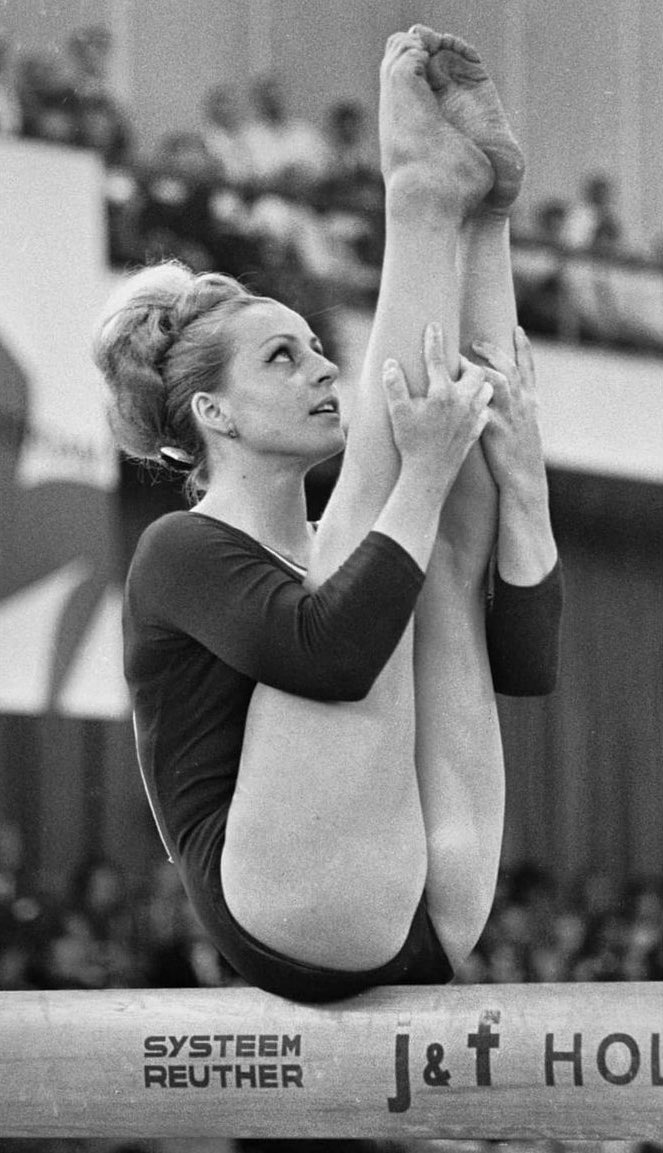
This is Czech gymnast Véra Cáslavská. In 1968, she faced off against the Soviets when she signed a manifesto calling for democratic change in Czechoslovakia. When the Soviet Union invaded the country, Cáslavská was forced to flee to the countryside, losing her training facility and dashing her hopes of competing in the 1968 Summer Olympics in Mexico City.
However, she did not give up. She continued her training in the forests of Moravia, where she trained by using logs as balance beams, swinging from tree branches, and lifting potato sacks to increase her upper body strength. At the last minute, she was given the green light to compete in the Olympics.
"While the Soviet gymnasts were already in Mexico City, adjusting to the altitude and the climate, I was hanging from trees, practicing my floor exercise in the meadow in front of the cottage and building calluses on my hands by shoveling coal. Then I went to Mexico and won the gold medal," she told the Los Angeles Times in a 1990 interview.
In her lifetime, she won 22 international titles between 1959 and 1968. This included 11 European championships, 4 world titles, and 7 Olympic gold medals.
Hedy Lamarr was a Hollywood actress in the 1940s and 1950s, and she was considered "the most beautiful woman in the world" during her time. She began her acting career in Austria and became notorious for being the first woman to simulate an orgasm on screen in 1933. It was during this time that she also got married to Friedrich Mandl, a Vienna-based arms dealer with ties to Mussolini and later Hitler.
The marriage did not last long. In her own words, she wrote, "I knew very soon that I could never be an actress while I was his wife... He was the absolute monarch in his marriage... I was like a doll. I was like a thing, some object of art which had to be guarded and imprisoned, having no mind, no life of its own." According to her autobiography, she disguised herself as one of the maids and managed to flee to Paris. Others say she convinced her husband to wear all of her jewelry for a dinner party and then disappeared afterwards.
She eventually booked a liner to New York, where she met the head of MGM, who was impressed enough to offer her a $500-a-week contract to work as an actress. In 1938, she arrived in Hollywood and went on to star in several movies, working with the likes of Clark Gable and James Stewart.
Beyond her acting career, Lamarr was also a scientist and co-patented spread-spectrum technology during World War II to prevent the Nazis from jamming navy torpedoes. However, her invention was rejected and wouldn't be implemented until the Cold War in 1962. The technology would eventually be used in developing Wi-Fi and Bluetooth technology.
On November 7th, 1920, in strictest secrecy, four unidentified British bodies were exhumed from temporary battlefield cemeteries at Ypres, Arras, the Asine and the Somme.
None of the soldiers who did the digging were told why.
The bodies were taken by field ambulance to GHQ at St-Pol-Sur-Ter Noise. Once there, the bodies were draped with the union flag.
Sentries were posted and Brigadier-General Wyatt and a Colonel Gell selected one body at random. The other three were reburied.
A French Honour Guard was selected and stood by the coffin overnight of the chosen soldier overnight.
On the morning of the 8th November, a specially designed coffin made of oak from the grounds of Hampton Court arrived and the Unknown Warrior was placed inside.
On top was placed a crusaders sword and a shield on which was inscribed:
"A British Warrior who fell in the GREAT WAR 1914-1918 for King and Country".
On the 9th of November, the Unknown Warrior was taken by horse-drawn carriage through Guards of Honour and the sound of tolling bells and bugle calls to the quayside.
There, he was saluted by Marechal Foche and loaded onto HMS Vernon bound for Dover. The coffin stood on the deck covered in wreaths, surrounded by the French Honour Guard.
Upon arrival at Dover, the Unknown Warrior was met with a nineteen gun salute - something that was normally only reserved for Field Marshals.
A special train had been arranged and he was then conveyed to Victoria Station, London.
He remained there overnight, and, on the morning of the 11th of November, he was finally taken to Westminster Abbey.
The idea of the unknown warrior was thought of by a Padre called David Railton who had served on the front line during the Great War the union flag he had used as an altar cloth whilst at the front, was the one that had been draped over the coffin.
It was his intention that all of the relatives of the 517,773 combatants whose bodies had not been identified could believe that the Unknown Warrior could very well be their lost husband, father, brother or son...
THIS is the reason we wear poppies.
We do not glorify war.
We remember - with humility - the great and the ultimate sacrifices that were made, not just in this war, but in every war and conflict where our service personnel have fought - to ensure the liberty and freedoms that we now take for granted.
Every year, on the 11th of November, we remember the Unknown Warrior.
At the going down of the sun, and in the morning, we will remember them.
Ready for the best giveaway ever? Celebrate the summer of pink by winning a pair of totally dreamy Malibu Pink Tieks! Enter to win now through July 31 at 11:59pm PDT at: https://t.co/qQg6t1wMSR
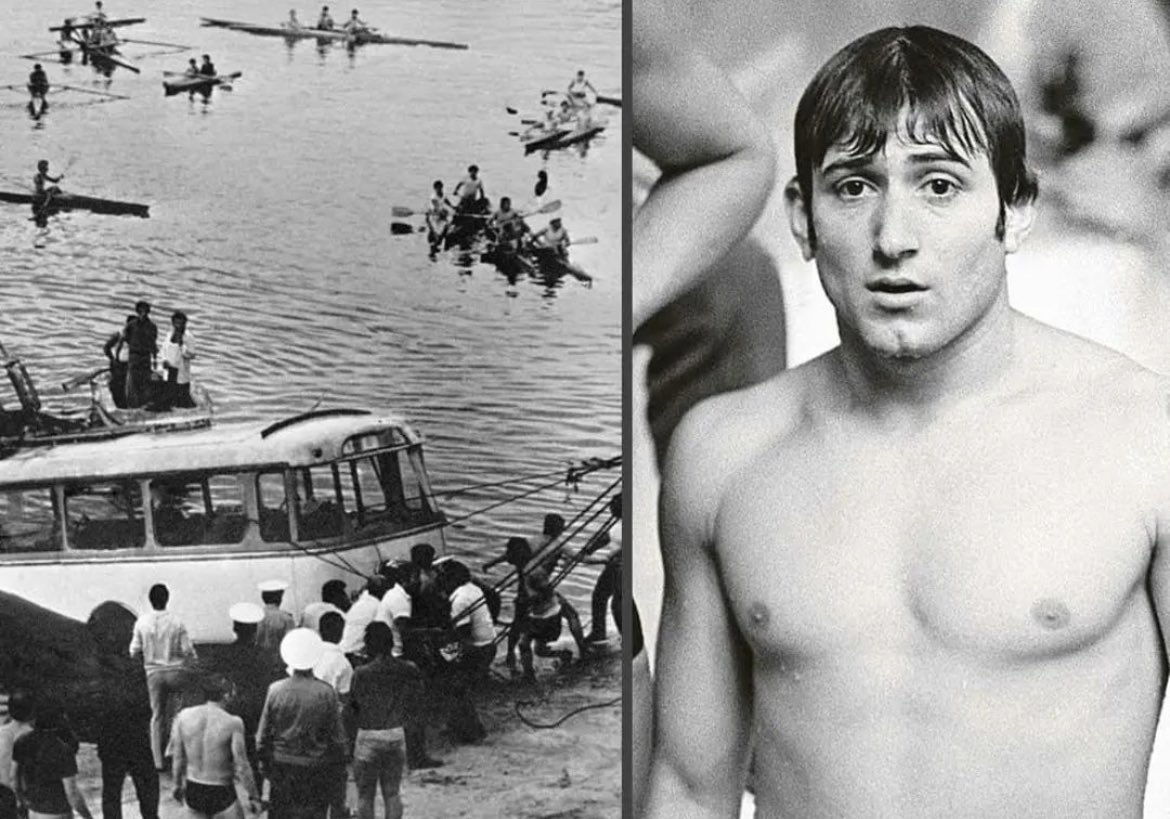
Shavarsh Karapetyan, an Armenian swimmer who retired from professional sports, had an extraordinary encounter in 1976. Upon completing a grueling 26 km (16 mile) run, he heard a loud commotion and discovered that a trolleybus had collided with a reservoir. The trolleybus had submerged 10 meters (33 ft) deep, approximately 25 meters (82 ft) away from the shore.
Despite the challenging circumstances of murky water and limited visibility, Karapetyan fearlessly plunged into the depths and utilized his legs to forcefully shatter the rear window of the trolleybus. With unwavering determination, he managed to save 46 out of the 92 passengers, rescuing a total of 20 lives.
However, the frigid water and shattered glass inflicted numerous lacerations on Karapetyan's body, leading to his hospitalization for a duration of 45 days. During his recovery, he confronted additional complications such as pneumonia and sepsis. Although he eventually regained his health, the damage sustained by his lungs rendered him unable to continue his highly successful swimming career.
"I was aware that I could only save a limited number of lives. I harbored a fear of committing errors. The darkness below was so profound that discerning anything became an arduous task. On one occasion, I inadvertently grasped a seat instead of an individual while diving, forfeiting the opportunity to save a life. That memory continues to haunt me in my nightmares," he shared.
In 1985, Karapetyan encountered a blazing building where several individuals found themselves trapped. Without a moment's hesitation, he valiantly entered the structure and commenced the rescue operation. Regrettably, he sustained severe burns during the heroic act, necessitating another hospitalization.
During his later years, Karapetyan relocated to Moscow and established a shoe company called "Second Breath." Astonishingly, he remains alive to this day and actively oversees his business endeavors.
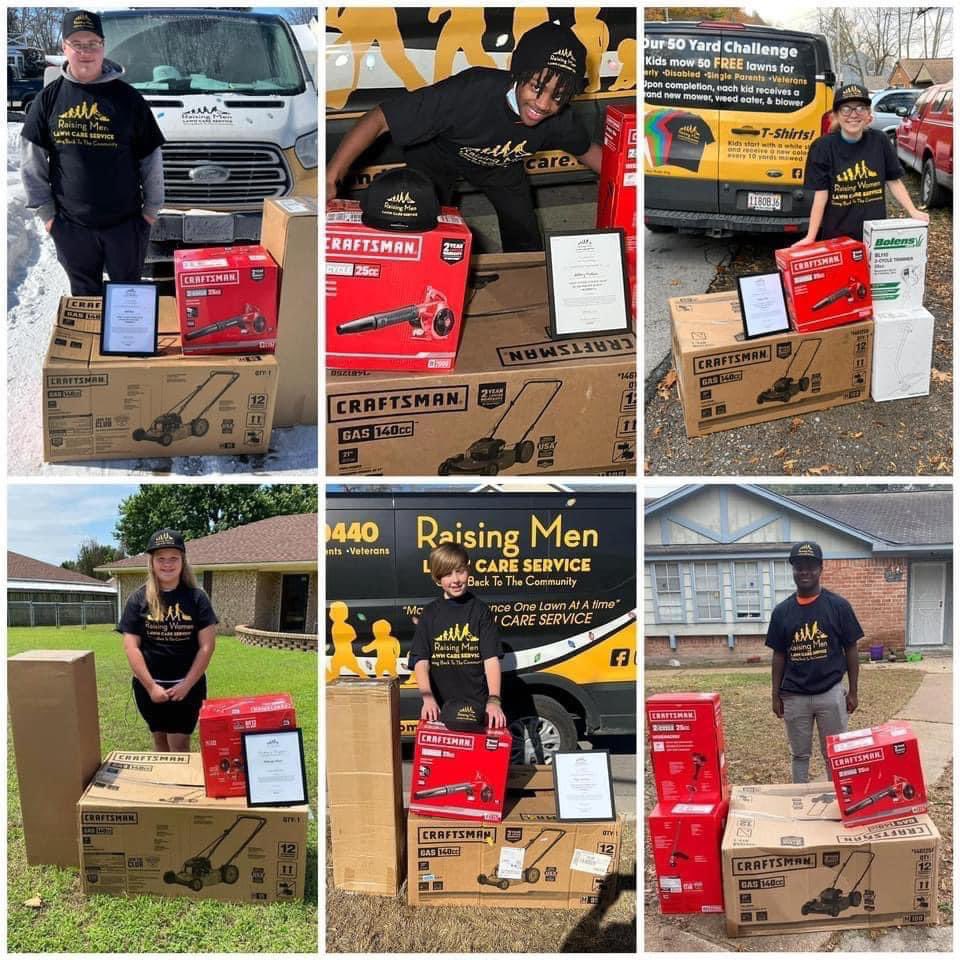
What do these six children share in common? They have all successfully completed our 50-yard challenge, which involved mowing 50 lawns free of charge in their respective cities for the elderly, disabled individuals, single parents, and veterans.
They received a new colored shirt for every 10 lawns completed. 10-orange , 20-green , 30-blue , 40-red & upon reaching the milestone of 50 lawns, they were awarded a black shirt, symbolizing their achievement, similar to a black belt in karate. Additionally, they received brand new lawnmowers, weed eaters, and blowers.
Could your child be the next one to take on the 50-yard challenge? Participation is open to kids from any city, state, or even another country, as we currently have kids involved from eight different countries. Raking leaves , snow shoveling & picking up trash is included .
Register at: in bio