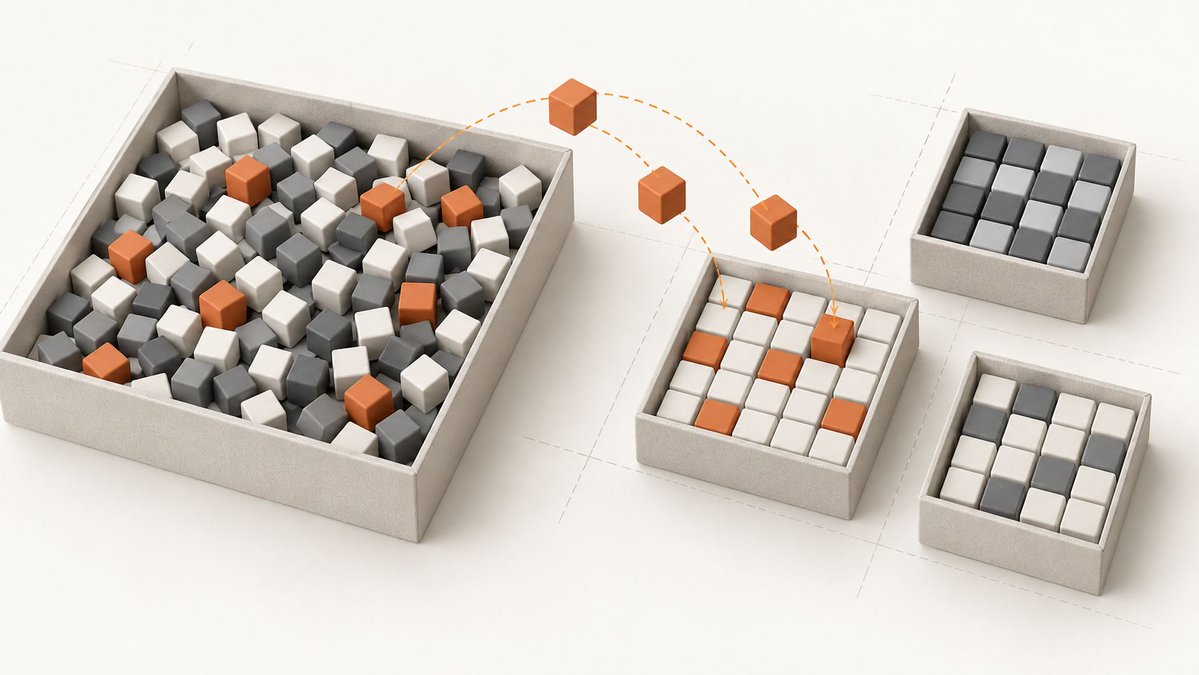
The idea is to prepare 𝘄𝗵𝗶𝗹𝗲 𝘁𝗵𝗲𝗿𝗲'𝘀 𝘀𝘁𝗶𝗹𝗹 𝗮 𝗰𝗵𝗼𝗶𝗰𝗲. HDC would find useful past trips; the robot would still need to forecast energy use and motor heating, then check its current limits.
At @hdclabs_ai, our other experiments give us reason to think HDC could help devices manage limited energy budgets
Read the full post to learn how this biological idea could guide machines:
https://t.co/8nMvlDX89u
5/5
In biology, organisms draw on past experience to anticipate what their bodies will need. Energy use and cooling have to adjust together as demands change.
Biologists call this 𝗮𝗹𝗹𝗼𝘀𝘁𝗮𝘀𝗶𝘀. What could machines borrow from it?
We cover some thought experiments in this fascinating new blog post. 🧵👇🏽
https://t.co/8nMvlDX89u
1/5
The robot's morning trip may be a poor guide: it was empty then. A trip up another ramp carrying a heavy parcel might tell it more about motor heating.
Hyperdimensional computing (HDC) could help find those records by comparing patterns of load, charge and temperature.
4/5
A warehouse robot finds a blocked aisle. 𝗪𝗵𝗮𝘁 𝗰𝗮𝗻 𝗶𝘁 𝗹𝗲𝗮𝗿𝗻 𝘁𝗵𝗮𝘁 𝗵𝗲𝗹𝗽𝘀 𝘁𝗵𝗲 𝗻𝗲𝘅𝘁 𝗿𝗼𝗯𝗼𝘁?
We'll explore this in a simulated robot fleet demo, combining hyperdimensional computing (HDC) for associative memory with graphs that connect decisions to evidence.
Come talk graphs, memory, and learning with us, and learn more about HDC! Sign up for the conference here: https://t.co/esLnbgyhEa
2/2
7 days to go until ODSC AI West 2026! @_odsc
Our "Connected Intelligence" sessions in the new graph-enhanced AI track explore how AI can recall relevant experience, check it against current rules, and learn something useful for the next decision.
David Hughes and @tech_optimist are going to be in San Francisco with @hdclabs_ai and @amyhodler, from October 27-29. 🧵👇🏽
1/2
The study walks through the intuition, predictions and experiments:
https://t.co/43w3pjeaFh
At large, this is how we aim to approach HDC applications at @hdclabs_ai: use theory (where it helps) to build an intuition or a hypothesis, and then provide 𝗲𝗺𝗽𝗶𝗿𝗶𝗰𝗮𝗹 𝗲𝘃𝗶𝗱𝗲𝗻𝗰𝗲 and 𝗱𝗮𝘁𝗮 to show how we think about solving the problem in practice.
6/6
As a dataset grows, unrelated hypervectors get more chances to look accidentally alike.
In part 2 of our research study on the scalability limits of bundling, we use probability theory to estimate that risk, then test the predictions with controlled experiments. 🧵👇🏽
https://t.co/43w3pjeaFh
1/6
For practitioners, the useful starting point is the workload: how many comparisons will you make, and what should count as a match?
Use that to choose hypervector lengths and similarity thresholds to test.
Our records had independent, evenly spread properties. Real data has popular values and correlations, so validate those choices on your own data.
5/6
The practical lesson from these bundling capacity experiments: 𝗰𝗵𝗼𝗼𝘀𝗲 𝘁𝗵𝗲 𝗻𝘂𝗺𝗯𝗲𝗿 𝗼𝗳 𝗱𝗶𝗺𝗲𝗻𝘀𝗶𝗼𝗻𝘀 𝗳𝗼𝗿 𝘁𝗵𝗲 𝗼𝗽𝗲𝗿𝗮𝘁𝗶𝗼𝗻 𝗮𝗻𝗱 𝗽𝗿𝗲𝗰𝗶𝘀𝗶𝗼𝗻 𝘆𝗼𝘂𝗿 𝘄𝗼𝗿𝗸𝗳𝗹𝗼𝘄 𝗻𝗲𝗲𝗱𝘀. Test exact value recovery and the closest matches separately.
These results come from 31 synthetic profiles. They give us evidence about representation quality. A real-world retrieval in much larger collections needs its own tests.
Read the full post and the experiment details here:
https://t.co/gbb6wnSVGf
6/6
Let's dig into our latest research study. A record may contain dozens of fields. If we combine them into one hypervector, how much of it is still useful in practice?
For an HDC practitioner, two questions matter: can we recover an exact value from an approximate result, and can we locate exact records with similar fields?
Our 50-questionnaire experiment show why these need separate tests.
1/6
We also changed 20% or 60% of each profile's answers by one point.
At 4,096 dimensions, the less-changed copies stayed closer to their originals. Similarity remained stable as bundles grew from 5 to 50 answers, with the changed proportion held fixed.
This tests whether adding fields weakens the signal used to find related records.
5/6
The next question is how reliably we can retrieve the intended facts as bundles grow, and when we should abstain.
We've studied recovery with up to 50 facts in a bundle, and we'll soon be sharing what we learned about crosstalk soon. Stay tuned!
Start with the intro to cleanup and crosstalk in the meantime:
https://t.co/v0SbM6uUoI
5/5
How does an approximate hypervector become a value your application can use?
In HDC, 𝗰𝗹𝗲𝗮𝗻𝘂𝗽 means matching it to a known, stored hypervector. Kanerva described this as 𝘯𝘦𝘢𝘳𝘦𝘴𝘵-𝘯𝘦𝘪𝘨𝘩𝘣𝘰𝘶𝘳 𝘴𝘦𝘢𝘳𝘤𝘩 𝘪𝘯 𝘢𝘯 𝘪𝘵𝘦𝘮 𝘮𝘦𝘮𝘰𝘳𝘺.
Today, a vector retrieval system like @lancedb can perform such a lookup.
1/5
For a practitioner perspective, crosstalk can be viewed as a ranking problem. The value we're looking for can lose its lead over competing answers.
If "blue eyes" overtakes brown eyes, cleanup may select the wrong value and an exact metadata filter follows it faithfully. This is why we state in the post that it's always important to measure the intended answer's rank and its gap to alternative results.
This is related to the quality of the encoder, and how we designed it. 𝗔 𝗴𝗼𝗼𝗱 𝗲𝗻𝗰𝗼𝗱𝗲𝗿 𝗺𝗶𝗻𝗶𝗺𝗶𝘇𝗲𝘀 𝘁𝗵𝗲 𝗲𝗳𝗳𝗲𝗰𝘁𝘀 𝗼𝗳 𝗰𝗿𝗼𝘀𝘀𝘁𝗮𝗹𝗸.
4/5