👨💻 ALUX's consensus protocol, BlockGit, works like a decentralized GitHub: each node is a developer, and every block is a pull request. The whole blockchain operates GitHub-style. $ALUX #Blockchain#Web3
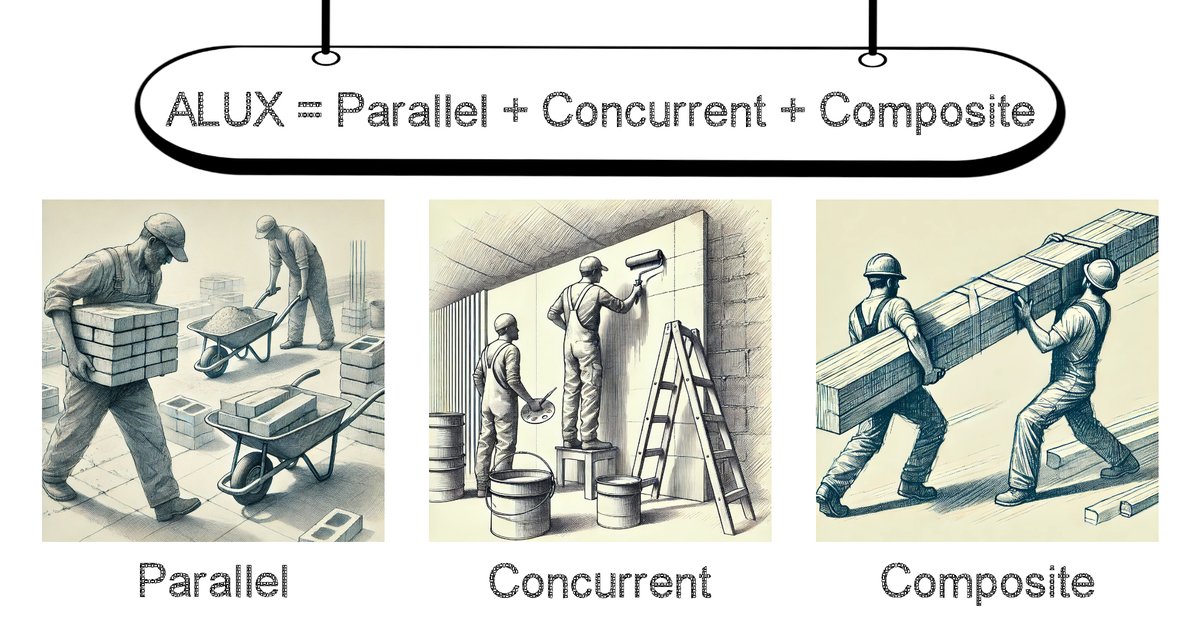
As mentioned in previous twitter, ALUX's focus is to bring all types of state transitions on-chain. To help understand the 3 types of state transitions we mentioned earlier—parallel, concurrent, and composite—imagine a busy construction site with a group of construction workers:
· Parallel: They work SIMULTANEOUSLY but independently.
· Concurrent: They need to COORDINATE to get things done. For example, the siding installer cannot start his job until the framing is done, and the painter has to wait for the drywall to be installed.
· Composite: They need to COLLABORATE to complete a task. For instance, two workers may need to work together to lift a heavy beam.
@alux_network $ALUX #Blockchain
[#Parallel]: Can only process short transactions of the same type simultaneously.
[#Concurrent]: Can simultaneously process different types of short and long transactions.
[#Composable]: Supports multiple systems working together to complete the same task.
$ALUX is concurrent and composable!
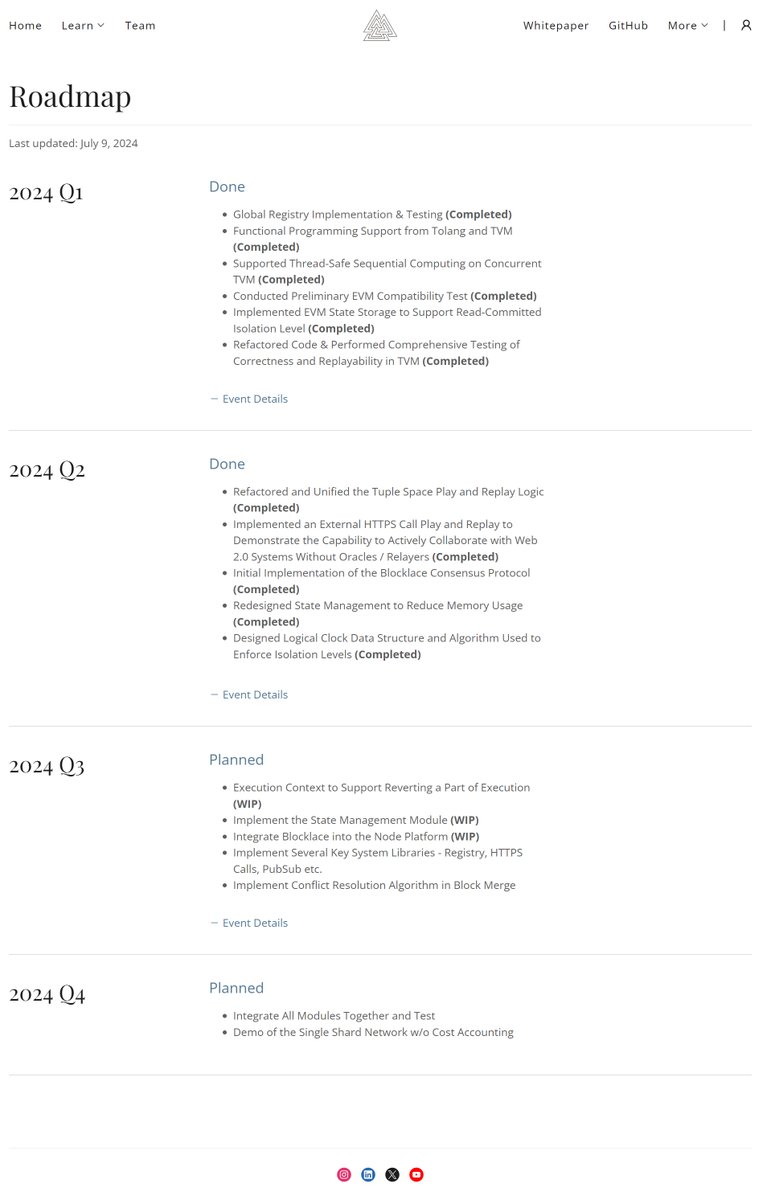
In Q1 2024, ALUX completed the implementation and testing of the Global Registry, functional programming support from Tolang and TVM, thread-safe sequential computing on concurrent TVM, preliminary EVM compatibility tests, EVM state storage implementation to support read-committed isolation levels, and refactored the code, performing comprehensive correctness and replayability testing in TVM.
In Q2 2024, ALUX refactored and unified the tuple space play and replay logic, implemented external HTTPS call play and replay to demonstrate the capability to actively collaborate with Web 2.0 systems without oracles/relayers, completed the initial implementation of the Blocklace consensus protocol, redesigned state management to reduce memory usage, and designed the logical clock data structure and algorithm to enforce isolation levels.
In Q3 2024, ALUX plans to support the execution context to revert parts of the execution, implement the state management module, integrate Blocklace into the node platform, implement several key system libraries (e.g., registry, HTTPS calls, PubSub), and implement the conflict resolution algorithm in block merge.
In Q4 2024, ALUX plans to integrate all modules together for testing and demonstrate the single shard network without cost accounting.
For more detailed progress, visit the project website: https://t.co/Ta7xA4GpyX



![alux_network's tweet photo. [#Parallel]: Can only process short transactions of the same type simultaneously.
[#Concurrent]: Can simultaneously process different types of short and long transactions.
[#Composable]: Supports multiple systems working together to complete the same task.
$ALUX is concurrent and composable!](https://pbs.twimg.com/media/GUKCZYKakAAve5a.jpg)