I spent a few days decompiling my favorite childhood game, Fast Food Tycoon 2, and figuring out:
‣ world rendering
‣ sprite animations/character movement
‣ light mechanics
so much to dig through and discover the dev team were on fire here: https://t.co/sHvmjbdOGs
the stronger the searcher, the more dangerous metadata about the existence of an answer becomes
in security: "just a rumour of a bug is enough to find an exploit these days"
in chess: Carlsen would be MUCH stronger with just one bit per game: "this position is critical"
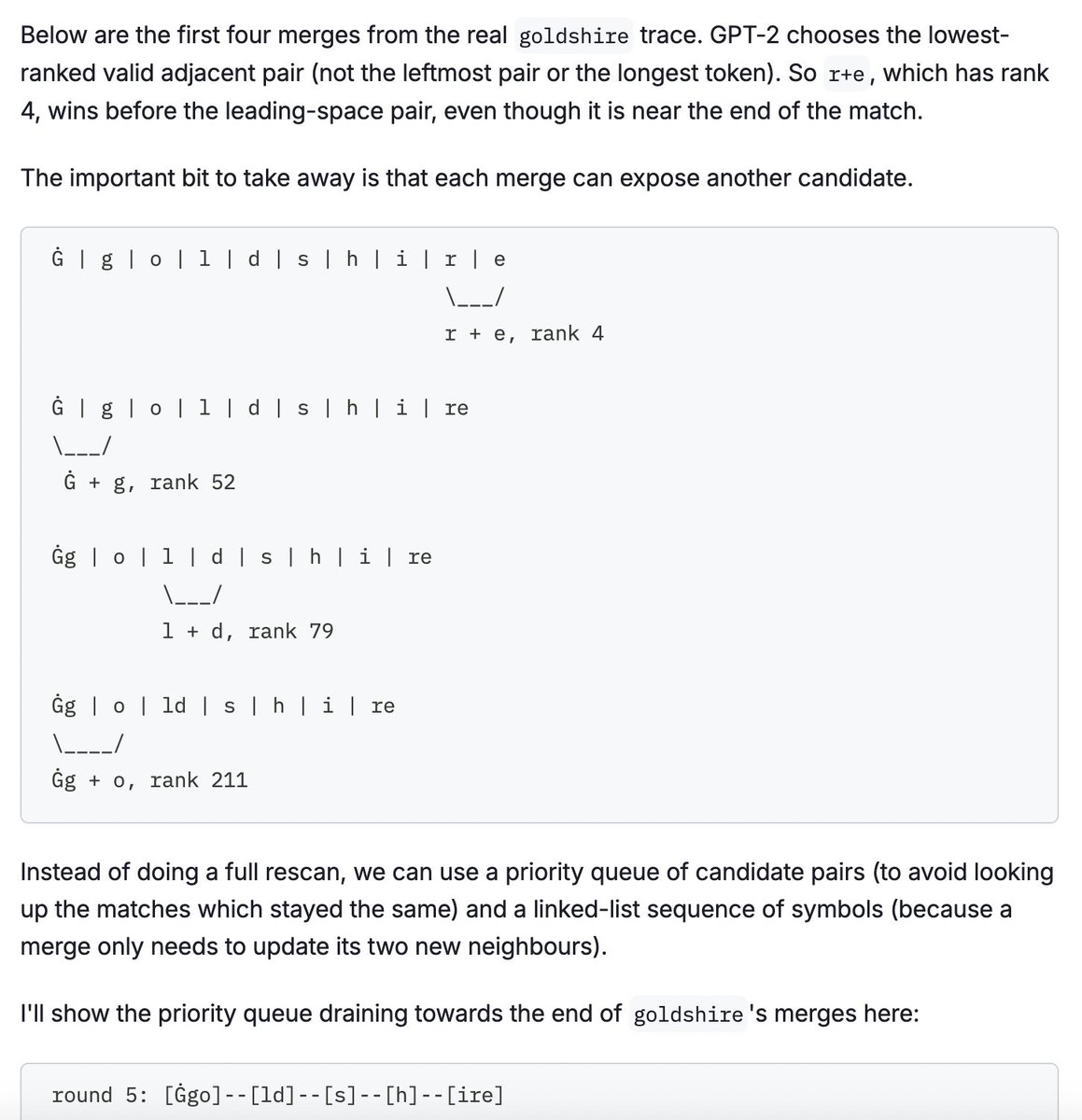
I wrote about the performance of LLM tokenizers
like most things you want to go fast, it's better to use compact contiguous state instead of complex data structures!
https://t.co/yxMmVGXFXY
I wanted to write a blog post titled (provocatively) "We Could Have Had Coding Agents in 2019"
I used the GPT‑2 XL weights (no post-training) and backported several later agent-design breakthroughs (action/observation loops, filesystem tools, etc.)
but GPT-2 can't reliably emit JSON, or call tools in a meaningful way.
the only hint of agency came from leaning into text completion: Programmer → ACTION, Computer → observation, etc.
to get it to fix tests, the examples were so close to the answer that it was kinda useless
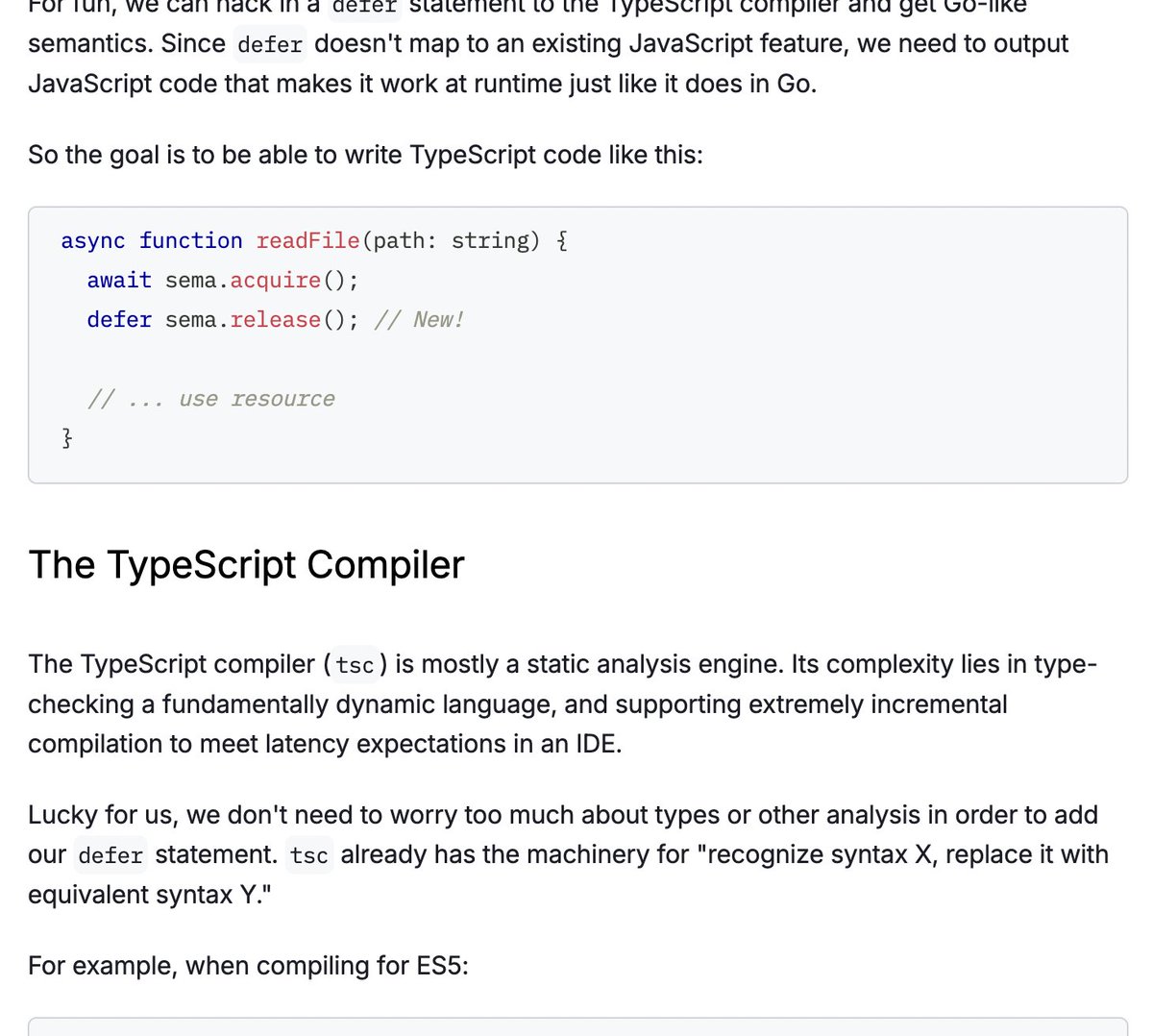
I added 𝚍𝚎𝚏𝚎𝚛 to the typescript compiler
but along the way, I realised that what I want is different syntax for 𝚞𝚜𝚒𝚗𝚐
I just want to be able to write:
𝚞𝚜𝚒𝚗𝚐 𝚊𝚠𝚊𝚒𝚝 𝚜𝚎𝚖𝚊.𝚊𝚌𝚚𝚞𝚒𝚛𝚎()
but you can't
↧
https://t.co/Xkfk9Aq3Cw
new post!
I wrote a tiny compiler that lowers simple kernel loops into explicit data-parallel code (lanes! masks!)
ofc I made up a language to make the input/output code easier to read
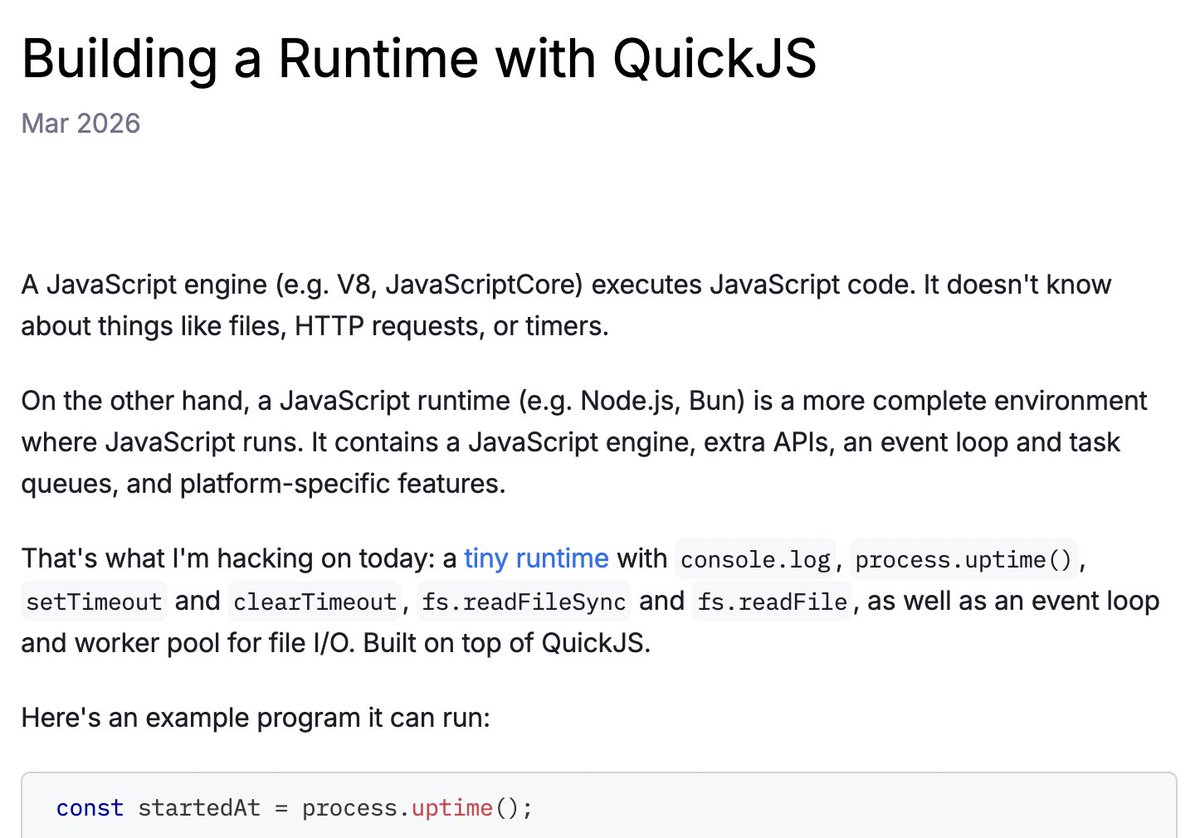
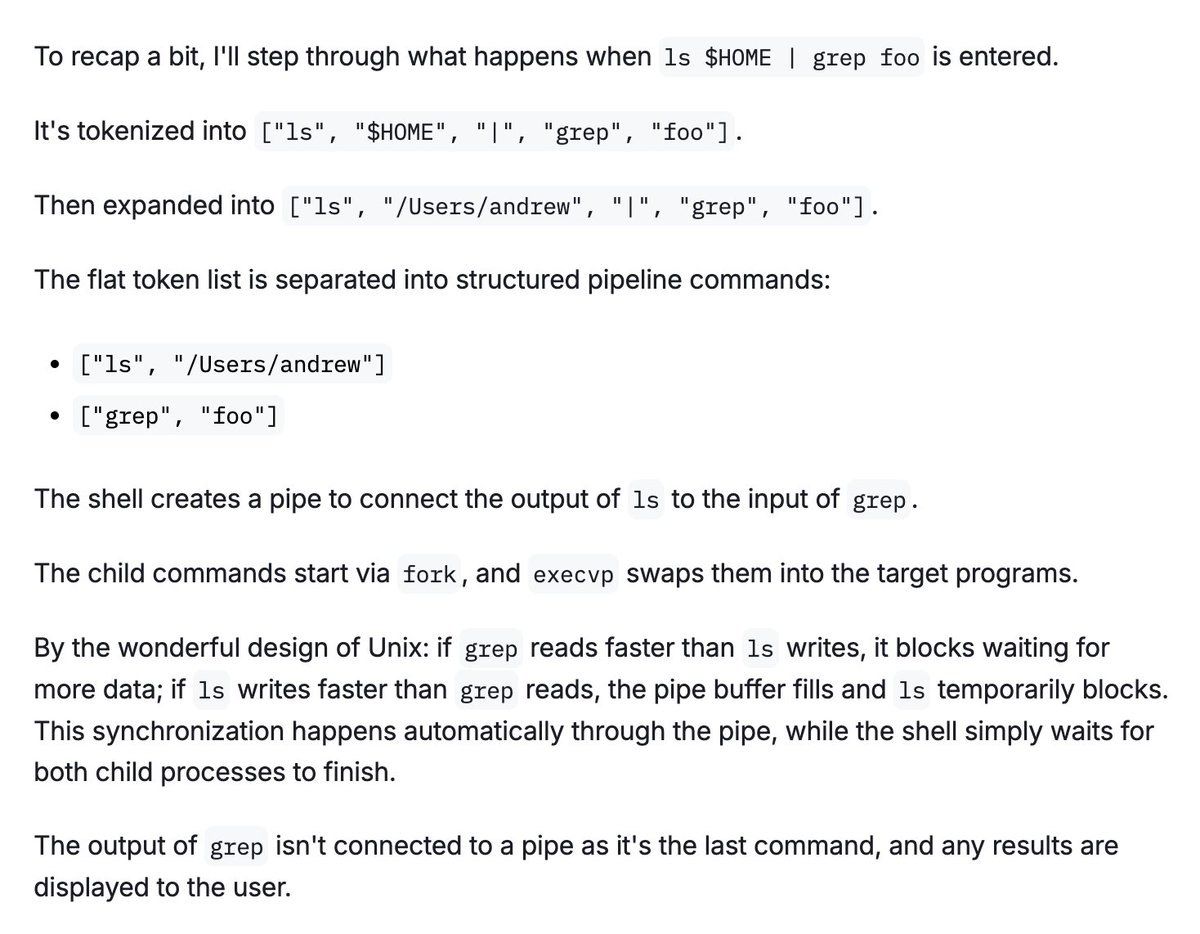
I built a tiny shell with C so I could learn more about syscalls and pipes
great fun
I found C to be quite suited for the task (fork, execvp) ... until I had to manage some string lifetime stuff 🥲
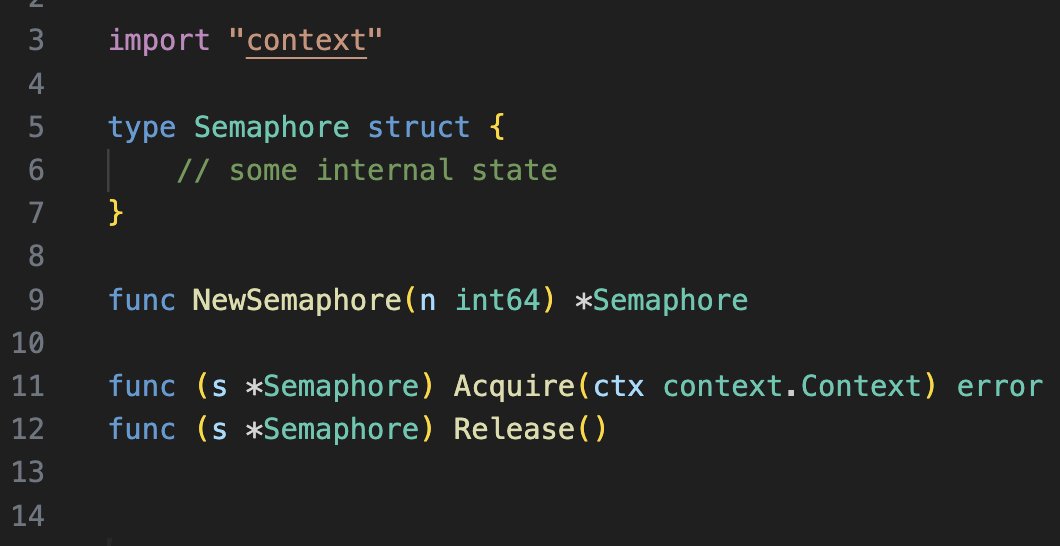
I suggested to my friend that writing a semaphore is fairly trivial but when I sat down to write one I was pretty humbled
the edge cases around context cancellation are no joke
more notes and my solution below down there ⇣