Integrative Health Coach, Nutrition Consultant, Product Formulator, Researcher & Writer. Work w/ Charities, Companies & Individuals. How Can I Help? DM me!
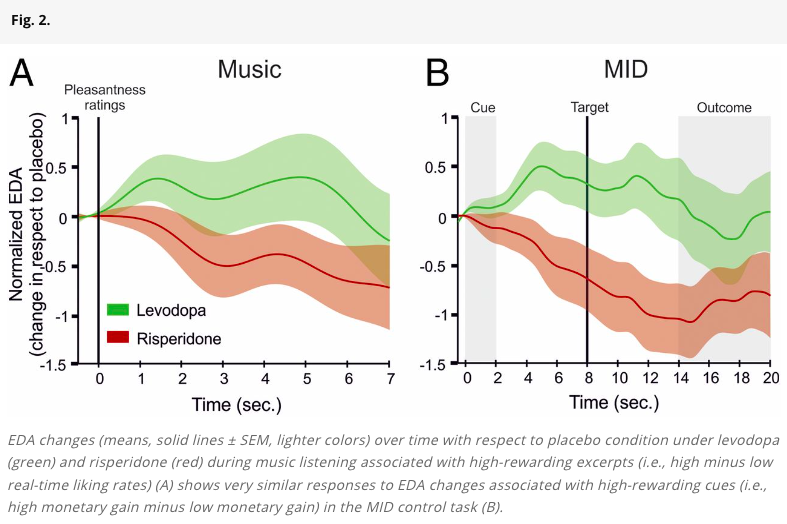
In case it seems confusing why I post songs on a largely health-related account. Please read on, if interested:
https://t.co/L1SzSF1Ef5
Study: https://t.co/szaj3ZnuF3
#dopamine#health#music
A new study suggests that interrupting prolonged sitting with frequent walking breaks may improve glucose regulation more than doing the same amount of walking in a single continuous session.
https://t.co/O3uROVb0EZ
Effects of a music-accompanied multimodal exercise program on trunk endurance, stress, and anxiety in university students: A randomized controlled trial
https://t.co/9zhYtJkPra
Insulin resistance makes urine more acidic, and acidic urine is the main reason uric acid kidney stones form.
Most people think of kidney stones as a problem of too much calcium or too much uric acid. For uric acid stones, acidity is usually the bigger issue. Uric acid stays dissolved in urine that's close to neutral, but as urine becomes more acidic, more of it shifts into a form that can't stay in solution, and it crystallizes. Those crystals can also help calcium oxalate stones form around them.
People who keep forming uric acid stones are severely insulin resistant compared with healthy people. Even among people who've never had a stone, the less sensitive someone is to insulin, the more acidic their urine tends to be across the day. This happens even when the amount of uric acid in the urine is normal.
The link runs through the kidney's ability to neutralize acid. Healthy kidneys make ammonia, which binds acid and carries it out in the urine. Insulin is one of the signals that tells the kidney to do this. Raising insulin in healthy people increases the ammonia they excrete, and their urine becomes less acidic. It also raises urine citrate, which helps keep stones from forming.
When the kidney becomes resistant to insulin, that signal weakens. Less ammonia is made, more acid stays free, and urine pH drops low enough for uric acid to fall out of solution.
This helps explain why uric acid stones are so common in people with type 2 diabetes and metabolic syndrome. The kidney is one more tissue where insulin resistance changes how the body works, and it can start long before diabetes is diagnosed.
If someone is hoping to lower their risk of uric acid kidney stones, it's clear that improving insulin sensitivity matters, since the acidity of the urine, more than the amount of uric acid in it, is what drives these stones.
Effects of fish oil intervention on residual risk of cardiovascular disease in middle-aged and elderly people: A randomized controlled trial
https://t.co/fvz34k7R6S
Migration and retention of black-rice anthocyanin-derived compounds during co-cooking are associated with white-rice matrix restructuring and reduced in vitro starch digestibility
https://t.co/UVHwnb5ueo
Reassessment of the Laxative Effects of Polyol Sweeteners Using Benchmark Dose Modeling, with an Analysis of Beverage Consumption Scenarios
https://t.co/vh0VMrPeeP
"Mexico sits at a particular crossroads. It has one of the richest agricultural traditions on the planet: milpa systems, polycultures, campesino knowledge that runs centuries deep, and at the same time, decades of policy that pushed agrochemical dependency so far into smallholder farming that it stopped feeling like a choice. Herbicides, synthetic fertilizers, monoculture." Learn how our friend and agronomist Homero Blas is fighting against the current of chemical ag in favor a system that works in harmony with nature: https://t.co/U09fQ3PnPe
At a time when some people are focused on claiming credit and wants to make truckloads of money, Dr Siva is educating people for free.
With the launch of his book, he is sharing his knowledge with an even wider audience.
Clinical Benefits and Safety of Triple-Strain BifidobacteriumSupplementation for Preterm Infants in a Neonatal Intensive Care Unit Setting: A Hospital-Based Clinical Study in Indonesia
https://t.co/lcMg3obeU5
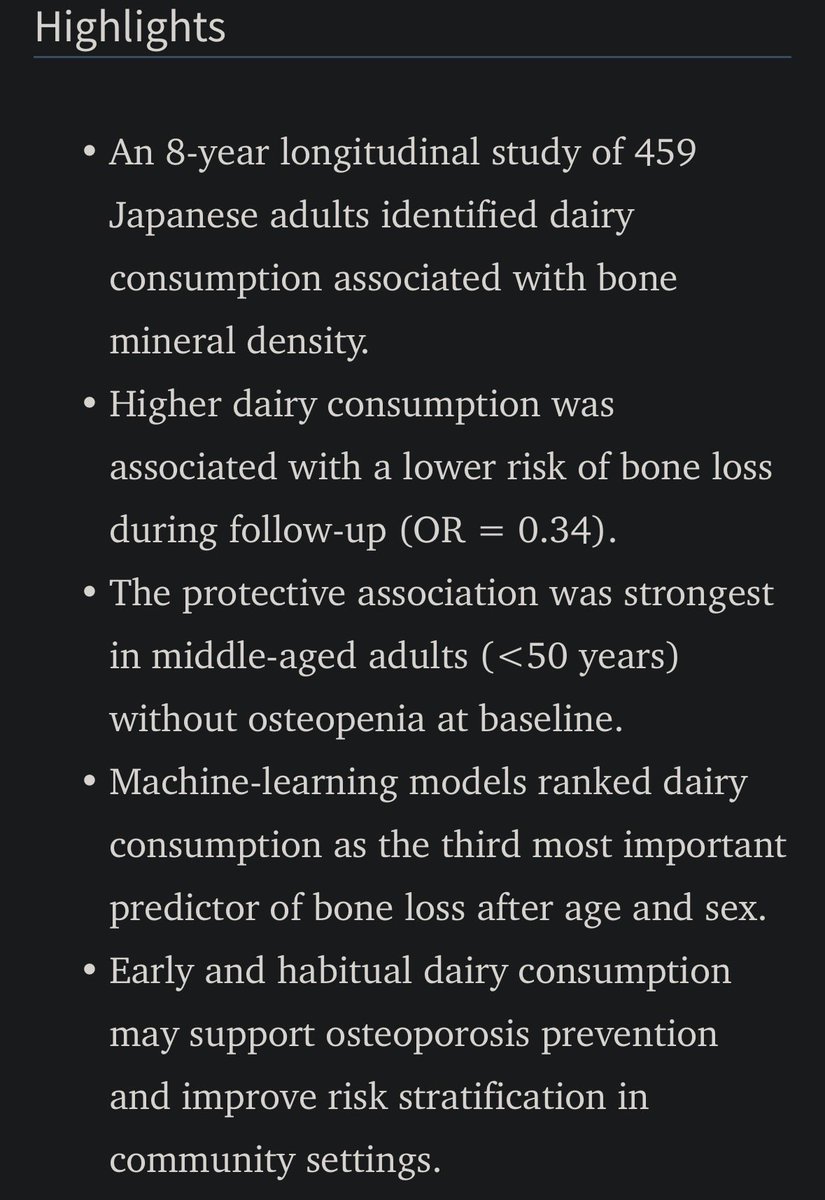
Dairy consumption and bone mineral density in Japanese adults: A longitudinal analysis and machine-learning models from the Iwaki Health Promotion Project
https://t.co/3hf3i6HKKR
Reishi mushroom just beat melatonin for insomnia in a new trial. 🍄
At the SLEEP 2026 meeting, researchers randomized 218 adults with chronic insomnia to one of two options every night for 8 weeks:
→ 980 mg reishi extract (standardized to 6% triterpenes)
→ 5 mg melatonin
Both groups slept better. The reishi group improved significantly more on the Insomnia Severity Index (−8.7 vs −5.6 points), with no serious side effects reported.
The likely reason: reishi's triterpenes appear to work through GABA, the same calming pathway many sleep aids target. In Chinese medicine, reishi has been classed as a spirit-calming herb for centuries.
One caveat: this was presented as a conference abstract. I want to see the full peer-reviewed paper. But if melatonin leaves you groggy, this is worth knowing about.
I just rebuilt my reishi article with the latest research. Here's my ranking of what the evidence shows:
✅ Strongest human data:
• Sleep quality
• Anxiety and mood
• Fatigue and energy
• Immune support (a 2024 trial improved T-cell function in older women)
• Quality of life during cancer treatment (Cochrane review)
🟡 Early or mixed:
• Stress and cortisol (a 2026 mushroom blend with reishi lowered cortisol ~5.5% in 12 weeks)
• Inflammation (mostly lab data)
• Blood sugar (trials disagree)
🔴 Overhyped:
• Cholesterol. A 2025 review of 7 trials found little effect on LDL, HDL or triglycerides. (Spore oil may be the exception for triglycerides.)
And the part most reishi articles skip: it's not risk-free.
Talk to your clinician first if you:
• Take blood thinners
• Take diabetes or blood pressure meds
• Take immunosuppressants
• Have surgery coming up
• Have liver or kidney disease
• Are pregnant or breastfeeding
Liver injury is rare but documented, mostly with powdered products. Quality matters. Look for a fruiting body or dual extract with listed beta-glucan and triterpene percentages, and third-party testing.
My honest take as an RD: reishi is a great supporting player. But if you're inflamed, wired and exhausted no matter what you take, the answer usually isn't another supplement. It's finding what's driving the inflammation in the first place.
Test, not guess.
Full breakdown with dosing, forms and every study linked:
https://t.co/6Oz5bHr5FE
#TheHealthyRD #Reishi #Sleep #FunctionalMushrooms #Adaptogens
Keep the mashed potatoes on your Thanksgiving plate, and eat them LAST.
A Weill Cornell team tested this with 16 adults with type 2 diabetes.
Each person ate the same meal on 3 different days.
The carbs were bread and orange juice, with chicken and salad on the side.
1 day, the carbs came first.
Another day, they came last, 10 minutes after the chicken and salad.
On the third day, everything was eaten together.
With the bread and juice last, the blood sugar rise was 44% smaller than eating it all together.
In the clip, Dr. Louis Aronne, whose team ran the trial, explains why.
It was 1 small trial, over 1 meal.
A 2026 review of 18 trials saw the same early dip, but called the evidence weak.
So I'd call it a free experiment, not a sure thing.
I like it because nothing comes off your plate.
On Thursday, try this:
• Turkey and vegetables first, like green beans or salad
• Wait about 10 minutes
• Then the mashed or sweet potatoes
It won't cancel out 3 helpings.
On insulin or other blood sugar medicine?
Ask your doctor before changing when you eat your carbs.
Your family will just think you really love green beans.
Start your day in a positive way. Contribute to reputable charities for free.
Seriously! Just "click to give". It'll only take a minute or so, but it can make a real difference.
🫶 Please join me! 🫶
https://t.co/htwsoMlYo1…