A woman in her 40s came to me completely destroyed by stress. Doctor said she was fine. She was not fine.
We fixed her cortisol, her gut, her nutrients, her sleep — comprehensively. She got her life back.
Then she told me to write it all down.
So I did. The Cortisol Fix — available for pre-order now, releasing May 15. 🧵👇
It’s October 26, 2026– and still hardly anyone with a medical degree is raising the issue of how ludicrous it is that a 26-year old and 86-year old are expected to have the same “ideal blood pressure” of 120/80
Most people think the gut heals during a fast.
The newest research says that’s only half the story. 🧵
In a 2024 study in Nature, MIT researchers found that gut stem cells regenerate most strongly in the 24 hours after a fast, when you start eating again. That was in mice, but it changed how I think about fasting.
Your break-fast meal lands when your gut lining is primed to rebuild.
So feed it like it matters:
✅ Quality protein
✅ Colorful, fiber-rich plants
✅ A healthy fat like olive oil
❌ Charred meat, ultra-processed snacks, sugary drinks
There’s more new research too. A 2026 randomized trial in Nature Medicine tested a 5-day-a-month fasting-mimicking diet in adults with mild-to-moderate Crohn’s disease. About two-thirds improved.
My own confession as a dietitian: fasting wasn’t my biggest lever for inflammation. MRT testing and the LEAP protocol were.
And in perimenopause, I fast less often, and my fasts are shorter and gentler, because long fasts pushed my cortisol the wrong way.
Fasting is a tool, not a religion. Test, don’t guess.
I just rebuilt my post with 13 science-backed benefits of fasting for gut repair 👇
https://t.co/l52LNJX2W0
#TheHealthyRD #GutHealth #IntermittentFasting
Breast cancer cells are LOADED with insulin receptors. That's important to know for preventing/treating it. Why? Read on...
In 159 breast tumors, insulin receptor content was more than 6 times higher than in normal breast tissue. And the receptors worked: they bound insulin and switched on.
Many cancer cells favor a form of the insulin receptor (IR-A) that acts mainly as a growth signal, not a sugar-handling one. Insulin tells these cells to grow.
So what happens when insulin runs high?
512 women with early breast cancer had fasting insulin checked. Highest vs lowest quarter: 2x the distant recurrence, 3.1x the death rate.
In the Women's Health Initiative, researchers measured insulin in about 1,650 postmenopausal women drawn from a cohort of 93,676. In women not on hormone therapy, the top quarter of insulin had 2.4x the breast cancer risk. And the obesity link mostly faded once insulin was accounted for.
Few doctors check fasting insulin. Fewer still know that Low-carb/Keto/Carnivore is the most direct way to bring it down. I've made videos on this (see below).
If high insulin goes with more breast cancer AND worse outcomes, why isn't fasting insulin part of every breast cancer workup?
Studies and my videos below...
I stayed nearly 20 years in a job I didn't love. Not for lack of skill. Just quiet fear of the unknown.
I see the same pattern with food: "I'll start Monday." "What if I'm hungry all day?"
The 10 food fears I see most, and the first step for each 👇
https://t.co/KbcGlSaL83
PCOS has a new name: PMOS.
In May 2026, polycystic ovary syndrome was officially renamed polyendocrine metabolic ovarian syndrome after a 14-year global consensus published in The Lancet.
As a dietitian for 25+ years, I cheered. The old name made it sound like a cyst problem. The new one puts the real driver front and center: metabolism.
Here's what most young women with PMOS are never told 🧵
1/ It's incredibly common, and rising.
An estimated 8–13% of women have PMOS, and up to 70% are undiagnosed. Among girls and young women aged 10–24, cases rose about 59% worldwide from 1990 to 2021. Most of the young clients who come to me have it, even when they booked for acne, belly weight, or fatigue.
2/ The pill is a bandage, not a fix.
Combined birth control pills work by stopping ovulation. That monthly bleed is a withdrawal bleed, not a true period. It can help symptoms, but it doesn't touch insulin resistance or inflammation. Many women come off it years later to find everything right where they left it.
3/ Lower-carb eating has the strongest evidence.
• A 2025 meta-analysis of 7 RCTs (495 women): keto lowered weight, visceral fat, insulin resistance, LH, and testosterone, and raised SHBG.
• A low-carb Mediterranean diet beat a low-fat diet for weight, testosterone, insulin, and cycle regularity.
• On a low-GI diet, 95% of women had more regular cycles vs. 63% on a conventional healthy diet.
4/ Build your plate around protein and whole-food fats.
⅓ protein (30–40 g), ⅓ vegetables, a generous serving of olive oil, avocado, nuts, or ghee, and a small portion of slow carbs. In a 2025 study, high protein preserved muscle during weight loss: 1.5 kg lost vs. 4.4 kg on standard protein.
5/ Intermittent fasting? It can help, but it isn't magic.
A 2026 Nature Medicine trial found a 1–7 p.m. eating window matched calorie counting for weight loss and also lowered the free androgen index and A1c. It didn't fix cycles in six months.
6/ The piece most plans miss: hidden food sensitivities.
Even "healthy" foods can keep inflammation and insulin resistance stuck. In my practice, MRT testing with the LEAP protocol often works better than any generic diet. I saw it in my own CGM data.
7/ Supplements can speed things up once the foundation is in place. Myo-inositol, vitamin D, and omega-3s have the strongest evidence. I graded 15 of them in the full guide.
Test, not guess.
Full evidence-based PMOS diet guide 👇
https://t.co/gltIfeVPyx
#PMOS #PCOS #TheHealthyRD
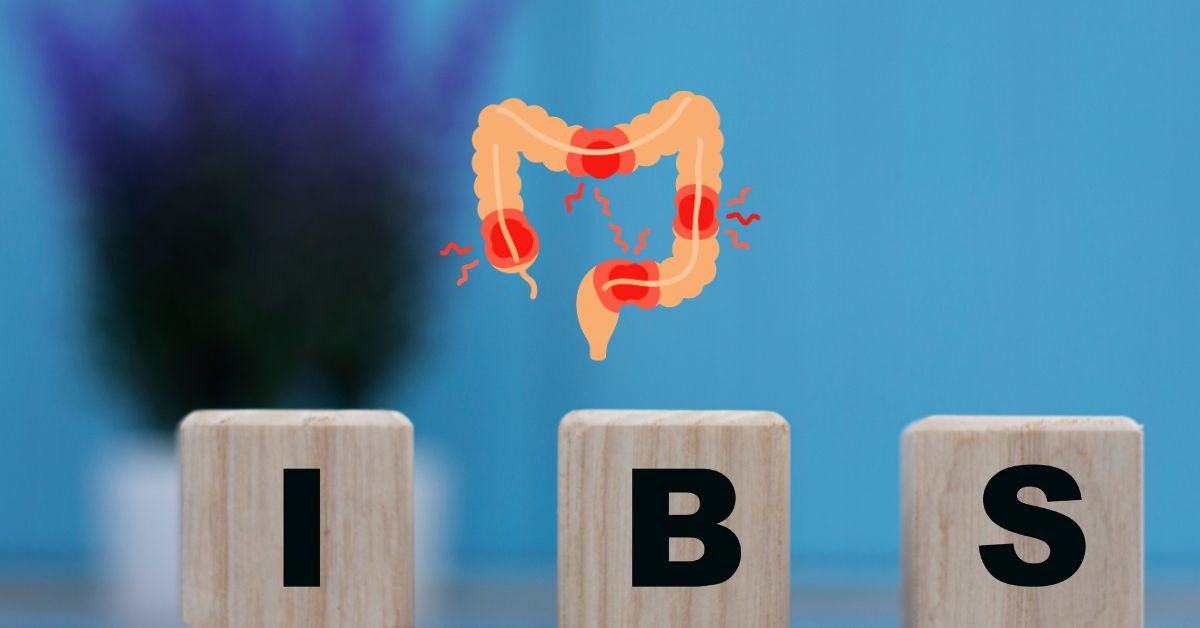
IBS is often called “just functional.” A 2020 study suggests the gut tissue tells a different story. 🧵
Researchers took biopsies from three sites in the gut (terminal ileum, cecum, and rectum) in three groups:
People with IBS
People with inflammatory bowel disease (Crohn’s and ulcerative colitis)
Healthy controls
They measured three inflammatory signaling molecules: TNF-α, IL-6, and IL-1β.
What they found:
→ TNF-α was HIGHER in IBS gut tissue than in both IBD and healthy controls.
→ Within IBS, TNF-α was highest in constipation-predominant IBS (IBS-C) and lower in diarrhea-predominant IBS (IBS-D).
→ IBD had a different pattern. IL-6 was the dominant inflammatory signal there.
→ IL-6 and IL-1β in IBS looked similar to healthy controls.
What this means:
IBS and IBD are not the same disease. IBD causes visible, destructive inflammation. IBS doesn’t.
But “not IBD” doesn’t mean “no inflammation.” IBS appears to have its own inflammatory fingerprint, and TNF-α may play a meaningful role in how it develops.
That fingerprint is easy to miss. A standard colonoscopy can look normal, and so can routine bloodwork. Then patients hear “everything looks fine” while they’re still bloated, in pain, and running to the bathroom (or not going at all).
Why it matters for treatment:
If low-grade inflammation is part of the picture, it’s worth asking what’s driving it:
Food sensitivities and reactive foods
Microbiome imbalances
Gut barrier (“leaky gut”) issues
Chronic stress and cortisol dysregulation
Post-infectious changes
Those are things you can actually work on.
A few honest caveats:
This was a small study, and it measured cytokines in tissue samples using staining, not blood levels. It doesn’t prove TNF-α causes IBS. But it adds to a growing body of research showing IBS is a real, biological condition, not something that’s “all in your head.”
But it's not an isolated study either. There are many other showing that IBS is inflammatory.
If you’ve been told your gut is fine but you don’t feel fine, your symptoms are real, and they deserve a deeper look.
📚 Mitselou A, et al. Proinflammatory cytokines in irritable bowel syndrome: a comparison with inflammatory bowel disease. Intest Res. 2020;18(1):115-120. https://t.co/NBwbejFcSO
#IBS #GutHealth #Inflammation #FunctionalNutrition
@zerothworld Probably a combination of toxins, chemicals, processed foods, antibiotic exposure, medications like PPIs, microplastics, and other factors.
Not all liver herbs are created equal.
Milk thistle, artichoke, dandelion, and burdock show up in nearly every “liver cleanse” on the shelf. But when you look at what happens when they’re tested in people, the gap is huge.
Here’s how they rank by human evidence:
🥇 Milk thistle: 26 randomized trials found lower liver enzymes and less fatty liver. In a 48-week trial in NASH, it reduced liver scarring in 22% of people vs. 6% on placebo.
🥈 Artichoke leaf: lowered ALT and AST across 8 trials, and it’s my go-to for sluggish bile and bloating after fatty meals.
🥉 Turmeric: lowered liver enzymes in 15 trials, but high-dose extracts with black pepper have been linked to rare liver injury.
4️⃣ Berberine: 10 trials and 811 people showed lower liver enzymes, triglycerides, and insulin resistance.
Then the drop-off:
Schisandra: promising animal data, but serious drug interactions
Dandelion: great as food; almost no human liver research
Burdock: a root vegetable first; some teas have been contaminated
One I’d skip for the liver: skullcap. Supplements have been found contaminated with germander, a plant that damages the liver.
Two more things nobody puts on the label:
→ Milk thistle tea barely works. Its active compound doesn’t dissolve well in water, so choose a standardized extract.
→ Many of these are in the daisy family. Ragweed allergy? Be careful.
I made a one-page chart with the evidence, best forms, and cautions for each 👇
Full research: https://t.co/kI7DBGkHKh
Test, don’t guess. #TheHealthyRD #LiverHealth
The effect of lavender scent recommended to the elderly on sleep quality and physical balance: A randomized controlled trial
https://t.co/KY6e40XITr
@HalCranmer@AARPHealth@HeidiHmoretti
Ultra-processed foods trigger a bigger insulin response than less-processed ones, even when they contain identical calories and nutrients.
When people consumed two different meals matched closely for protein, carbs, fat, and fiber, the ultra-processed one produced a larger insulin response despite a similar overall blood glucose response. It also blunted the normal shift toward burning carbohydrates after eating and changed the brain's response to eating.
I’ve talked before about Kevin Hall’s trial, where people eating an ultra-processed diet consumed about 500 extra calories per day and gained weight. This new study explains another part of why UPFs are so problematic - it shows that the way food is processed can change how our bodies handle it and even how our brains perceive it!
Inflammation is one of the most misunderstood drivers of chronic symptoms, because it rarely looks the same in two people.
After 25+ years as a dietitian, here’s what I see.
The most common pattern: puffiness
A swollen face. A bloated belly that won’t budge no matter how clean you eat. In some clients, a buffalo hump on the upper back, a sign that inflammation and cortisol are working together.
But inflammation can also show up as:
→ Migraines
→ Asthma and seasonal allergies
→ Vestibular problems and dizziness
→ POTS
→ Joint and muscle pain
→ Skin rashes
→ Gut issues
→ Fatigue
→ Poor sleep
→ A slow metabolism
That last one matters. Chronic inflammation hijacks your hormones: cortisol, thyroid, insulin, sex hormones. When that happens, your metabolism slows down and weight loss feels impossible.
Why generic advice fails
Most people are handed a standard “anti-inflammatory diet.”
But inflammation is personal. A food that’s healing for one person can be a trigger for another.
My own reactive foods? Olive oil, halibut, egg yolks, sunflower, and mustard.
Olive oil and halibut sit at the top of nearly every anti-inflammatory food list. For my body, they were doing the opposite. I never would have guessed it.
Food sensitivity reactions are sneaky
They can be delayed by hours or even days. Today’s migraine may come from yesterday’s lunch. That’s why food journals and guesswork so often come up empty.
What I use instead: MRT + LEAP
MRT (Mediator Release Test) measures how your white blood cells respond to foods and food chemicals. From there, the LEAP protocol builds your eating plan around your least reactive foods. The focus is on what you can eat, not just what to cut.
The results
In my clients, fixing their foods has near completely resolved every symptom on that list: the puffiness, migraines, asthma and allergies, dizziness, POTS symptoms, aches, rashes, gut issues, fatigue, poor sleep, and sluggish metabolism.
No drugs. Just nutritious, personalized food.
Read more:
Why MRT changes everything:
https://t.co/vrHqBvuxbA
My personal MRT case study:
https://t.co/W3cbhx1OFk
Food sensitivities + blood sugar, with my CGM data:
https://t.co/Ww0GWaR3Bn
Your symptoms are information. Your plan should be as unique as you are.