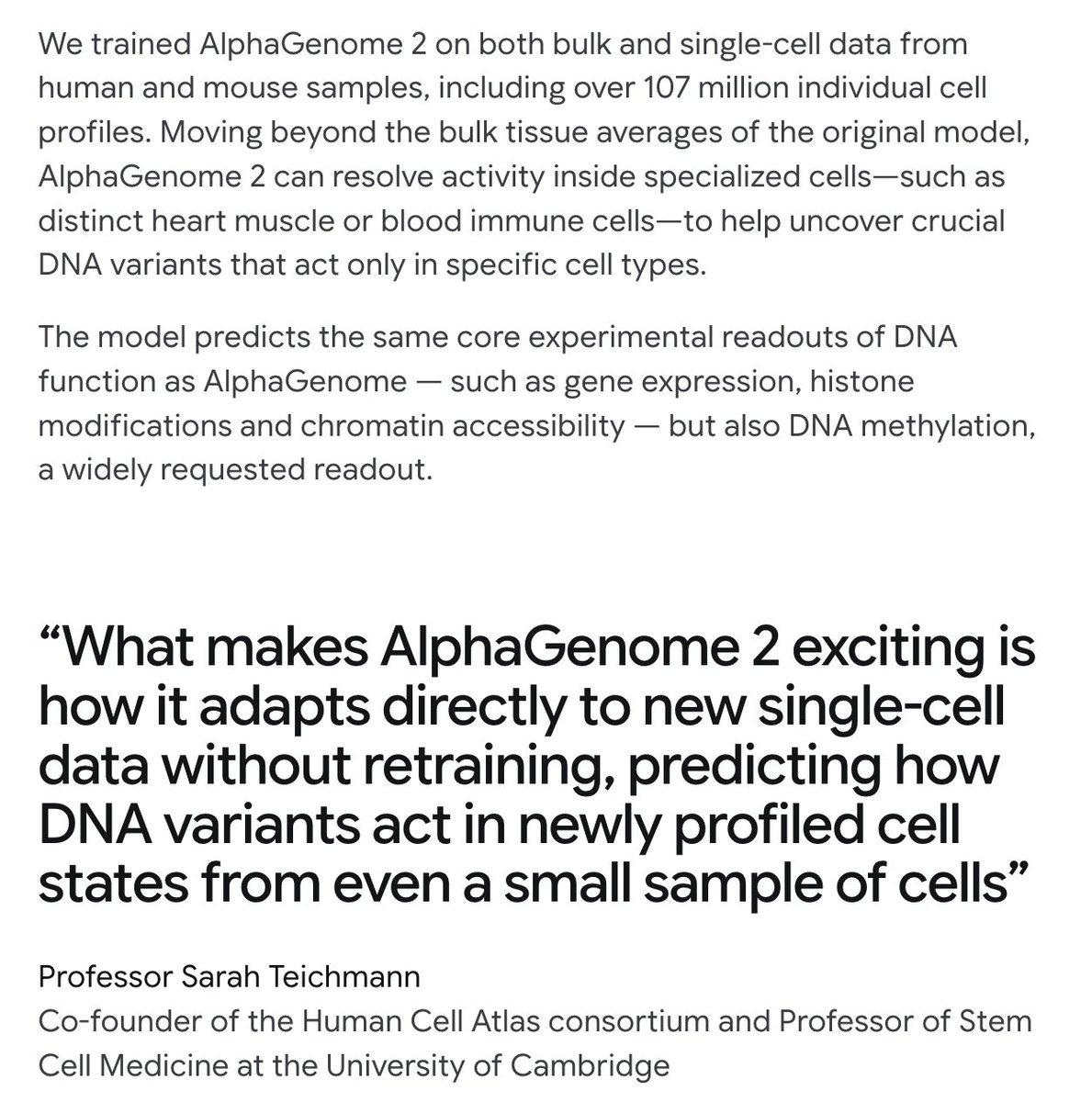
Your heart, brain, and immune system share the same DNA sequence. So how can a single-letter change affect disease in some cells, while sparing the rest?
AlphaGenome 2 is our new AI model that zooms in on specific cells to help scientists understand what drives disease. 🧵
this is a really good one, i have to agre with @misraetel
humans are creating most of the fear in their minds, like we did with every technology before
Roman Yampolskiy and Dr Mike Israetel sit at opposite ends of the P(doom) scale.
So I decided to rent a church, sit them down, and have them debate it… someone even phoned in halfway through.
@Romanyam vs. @Misraetel. Out now.
The greatest threat to your life is aging.
Yet we refuse to treat it.
We pour billions into cancer research.
Why fight the branch when you can cure the root?
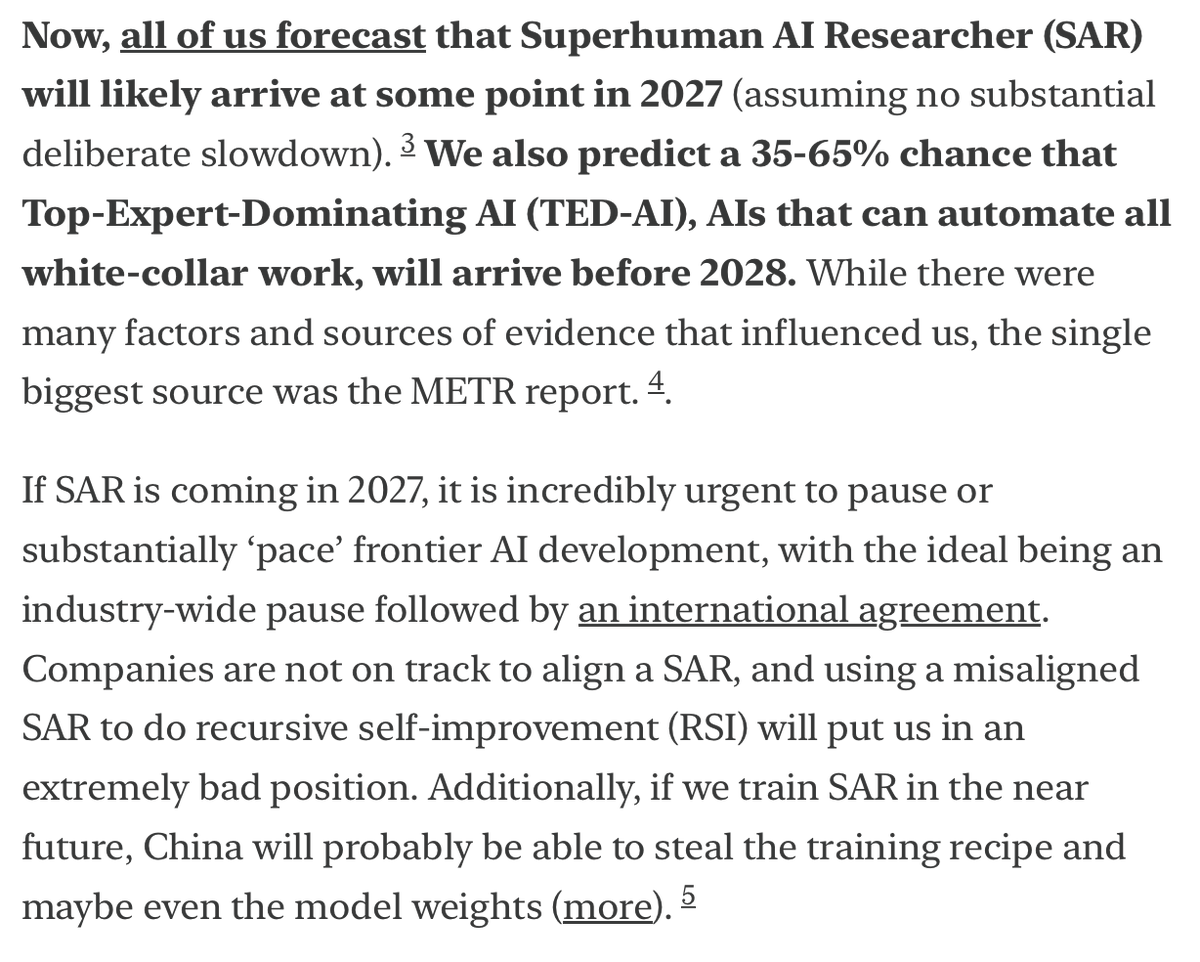
I am currently re-reading the blog post by the authors of AI2027. It is shocking how many people have overlooked the essential points.
It is not just about AI developing faster than anticipated; it is about what that implies, according to the authors:
- A "Superhuman AI Researcher" (SAR) will likely emerge sometime in 2027. The consequence: "We also predict a 35–65% chance that 'Top-Expert-Dominating AI' (TED-AI)—AIs capable of automating all white-collar work—will arrive before 2028."
- Furthermore, they assume that China will steal the underlying secrets, leading to the loss of U.S. dominance: "Additionally, if we train SAR in the near future, China will probably be able to steal the training recipe and maybe even the model weights."
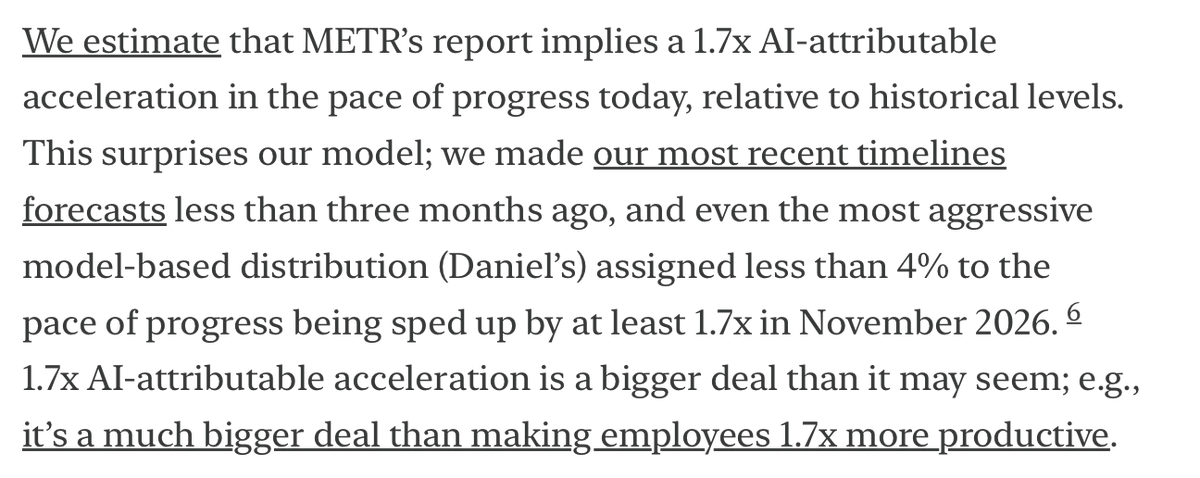
- They estimate that AI is already accelerating overall progress by a factor of 1.7, an effect far more significant than simply making individual employees 1.7 times more productive. This is a pace to which even their most aggressive forecast had assigned a probability of less than 4% just three months ago. In other words, even their most optimistic assumptions have been surpassed.