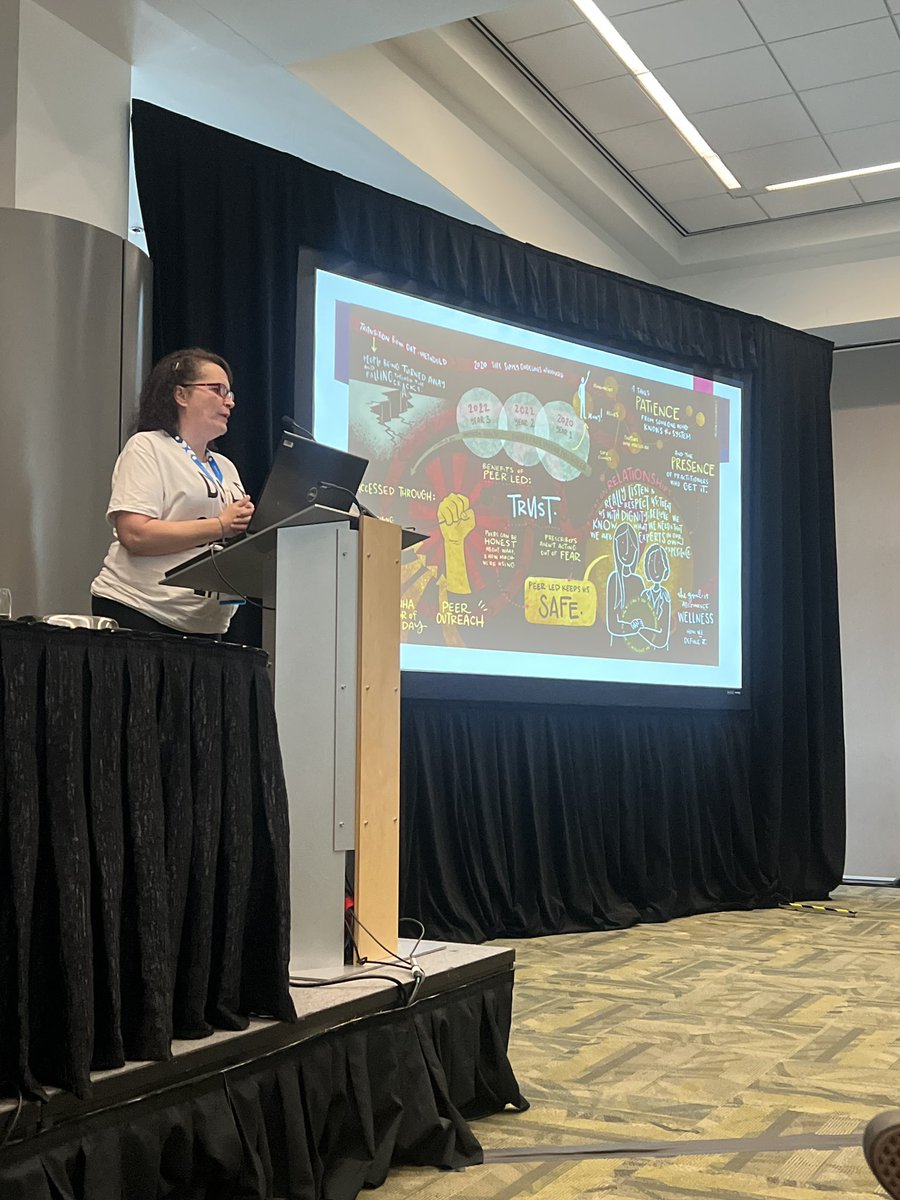
Very excited for the release of this paper, mapping the emergence of a moral panic around safer supply prescribing. Led by @liam_michaud, our team uses established criteria for moral panics to explore recent rhetoric around safer supply, diversion and youth drug use ���
“The evidence for safer supply is not perfect, but in countries where deaths are escalating due to toxic unregulated drug supplies, governments need to take urgent action. This means… investing in safer supply interventions”
Our editorial in @bmj_latest
https://t.co/6q4ITwaRPA
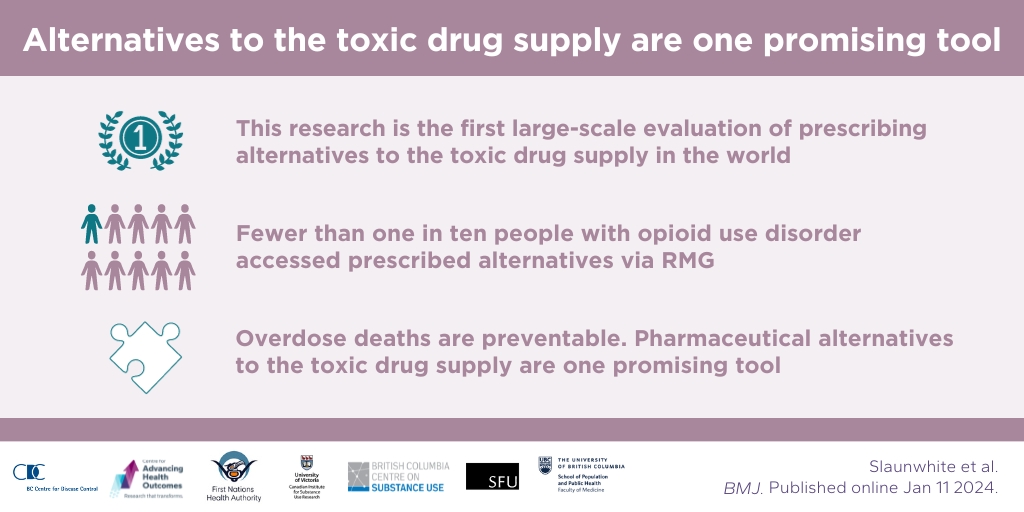
Check out Dr. Amanda Slaunwhite's new research published this week in @bmj_latest on evaluating prescribing pharmaceutical alternatives at a pop. level.
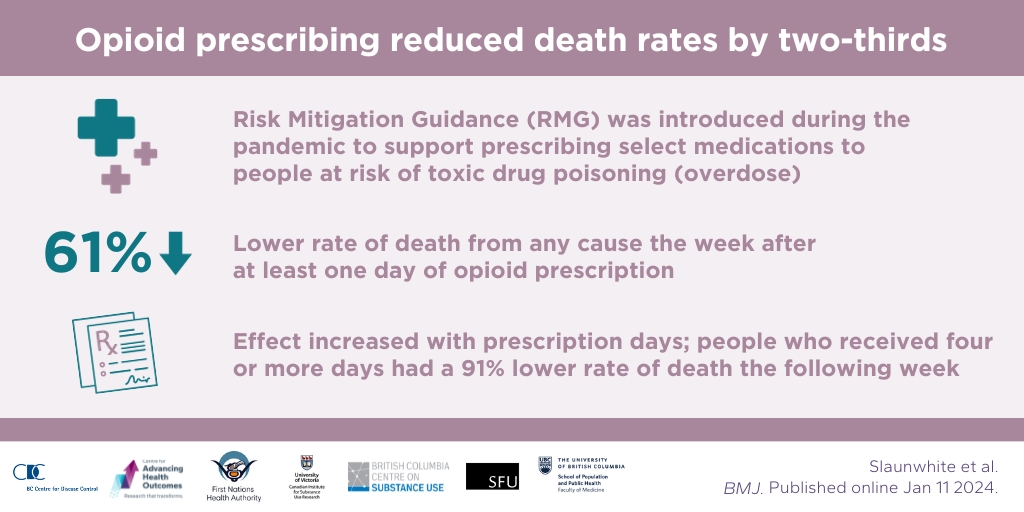
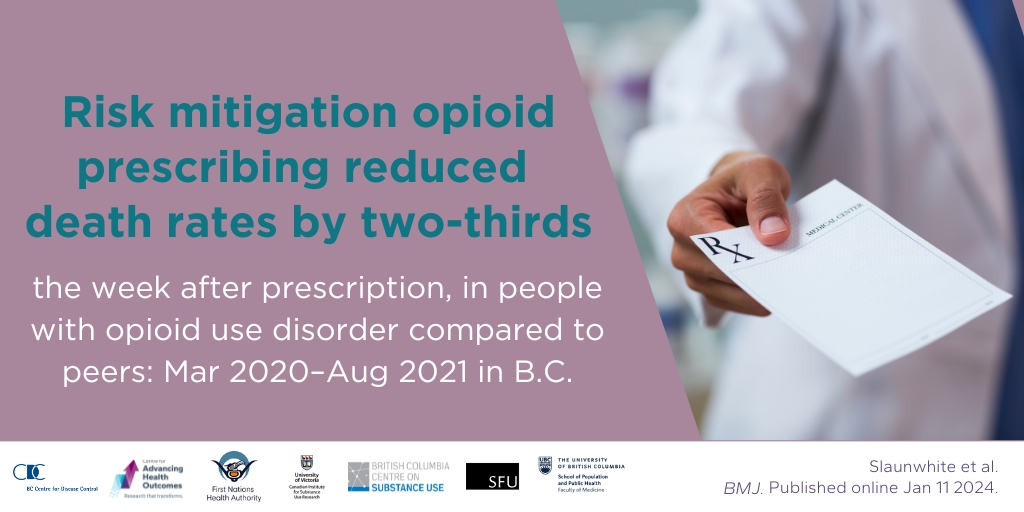
New study: People with an opioid use disorder prescribed 1+ day's supply of opioids as part of BC's Risk Mitigation Guidance were 61% less likely to die in the following week, compared to a similar group of people who did not receive a prescription. https://t.co/NsxUT3nMNu
A new study found that BC's hydromorphone program reduced the chance of overdose & death among recipients. But thanks to "save the children" fearmongering by politicians like Sturko & Poilievre, +1,000 people have been cut off their life-saving meds. https://t.co/D3jtq7lQvt
"Safer supply" means regulated drugs in place of dangerous contaminated illegal drugs. The evidence is not perfect, but where deaths are escalating governments need to take calculated risks in collaboration with affected populations. Our editorial in @BMJ: https://t.co/zNuS1a2KHW
People with opioid use disorder prescribed at least 1 day’s supply of opioids via B.C.’s Risk Mitigation Guidance were 61% less likely to die the following week, compared to peers who did not receive a prescription, published this week in @bmj_latest & led by @akslaunwhite.
Opioid overdoses are a public health emergency in North America and internationally.
Can a safer supply intervention reduce mortality and acute care visits?
New #BMJResearch investigates
https://t.co/LugxMspr2G
Just out! People with an opioid use disorder who received at least one day of a prescription for opioids as an alternative to the unregulated drug supply in a week had a 61% lower rate of death from any cause in the next week compared to those who did not receive a prescription!
@Providence_Hlth@heatherpalis@CMAJ@UBC Response to letters on using prescribed psychostimulants to treat stimulant use disorder in the CMAJ today:
https://t.co/EwGARPmKD2
Providence Health #CrosstownClinic's Dr. Scott MacDonald has co-authored a @CMAJ paper on how prescription stimulants can treat people using illicit and often toxic stimulants. Read more: https://t.co/4TwtSp78Fw #PHC@UBC
Stimulant use disorder: can prescribed psychostimulants reduce illegal use?
New articles this week on prescription psychostimulants, violent behaviour during sleep, diagnostic test accuracy, and more ➡️ https://t.co/4EAltoQTrj
#MedTwitter
@CMAJ@_DrScott_@UBC @UBCmedicine @Providence_Hlth We acknowledge the unregulated drug supply as the primary driver of drug toxicity deaths, and prescribed stimulants as one alternative for people accessing the unregulated stimulant supply.
👇👇👇
New commentary published in @CMAJ with @_DrScott_ calling for broader implementation of prescribed stimulant medications in Canada.
@UBC @UBCmedicine @Providence_Hlth
https://t.co/EkGd0zLTDi