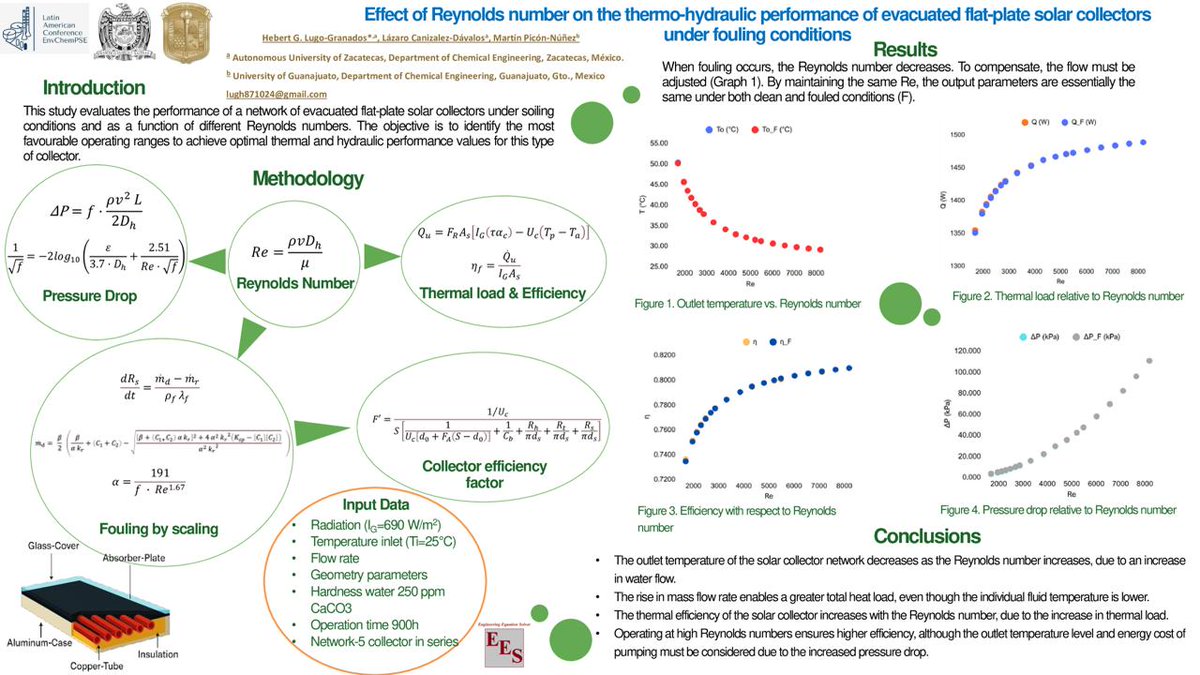
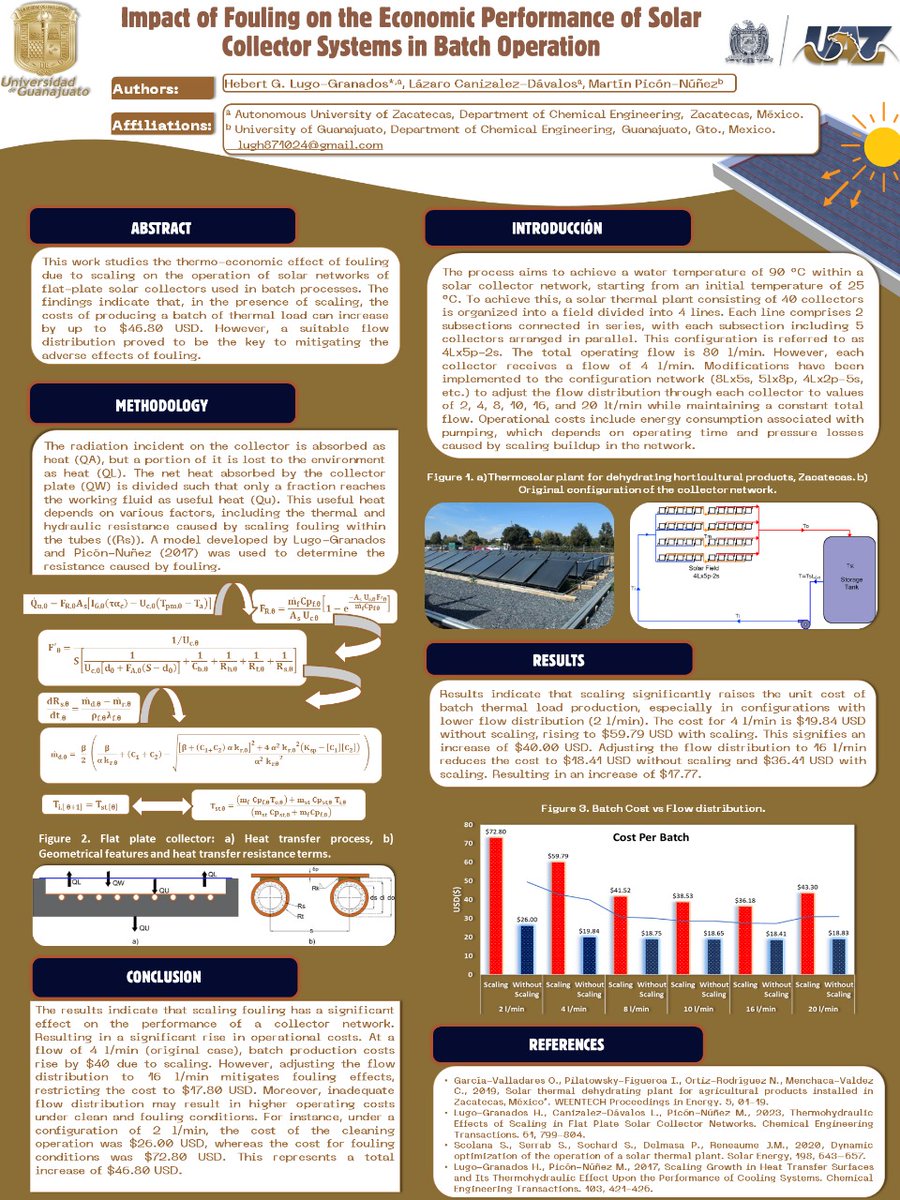
@GabbyElvir10@EnergytranPost At low flow velocities, scaling generation increases, reducing heat transfer and causing higher pressure drops, which in turn leads to increased operating costs. On the other hand, if the flow velocity increases excessively (20 l/min), significant pressure drops occur.
@L_MendezS@EnergytranPost Certainly, there are other factors such as environmental conditions and geometric designs; however, the one with the greatest influence on costs is the flow. This paper focuses on the impact that fouling has on operational costs.
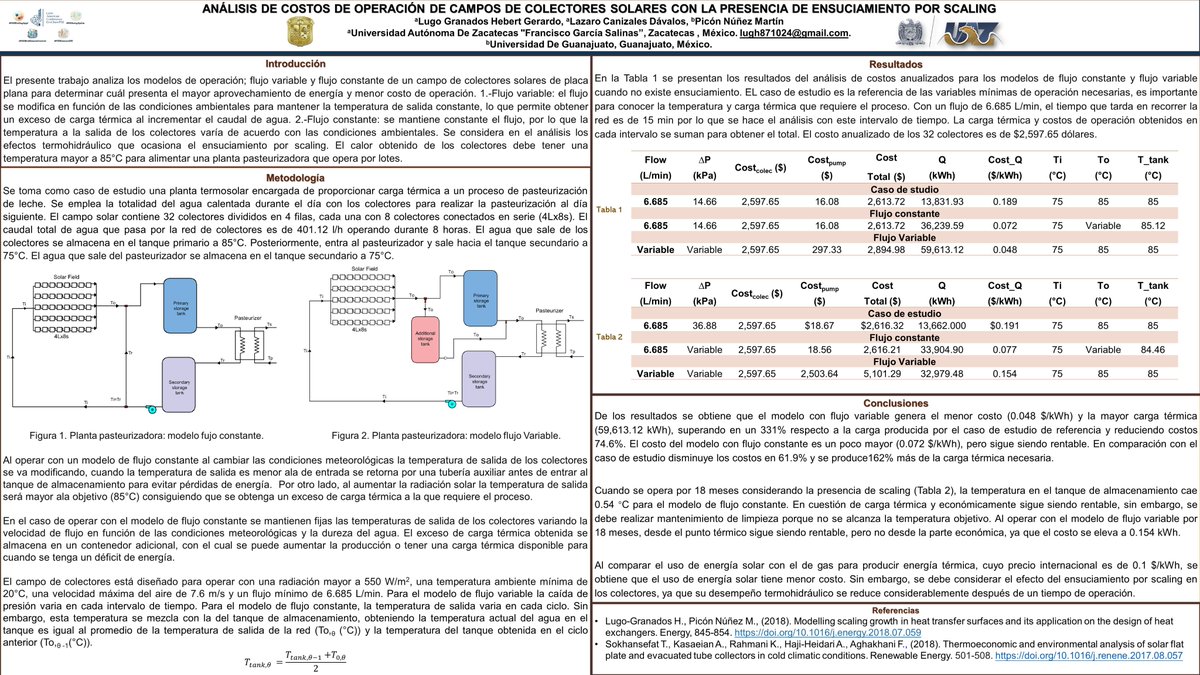
@RFonsPer@LatEnvChemPSE El costo total de operación es igual a la suma del costo anualizado de los colectores y el costo de bombeo generado por la caída de presión. El costo unitario ($/kWh) se obtiene al dividir el costo total entre la carga térmica total. Todas los parametros fueron anualizados.
¡Saludos!
Comparto mi trabajo sobre el análisis de termoeconómico de un campo de colectores solares. Se determina el mejor modelo de operación; flujo constante o flujo variable en condiciones limpias y cuando existe ensuciamiento por scaling.
@LatEnvChemPSE#PSEModSimulatControl
@OctavioDMA@LatEnvChemPSE Si se consideró el capital de inversión. En la tabla donde dice el costo de los colectores. El costo de inversión está anualizado a un periodo de vida de 20 años. Se utiliza un modelo para obtener este costo anualizado.