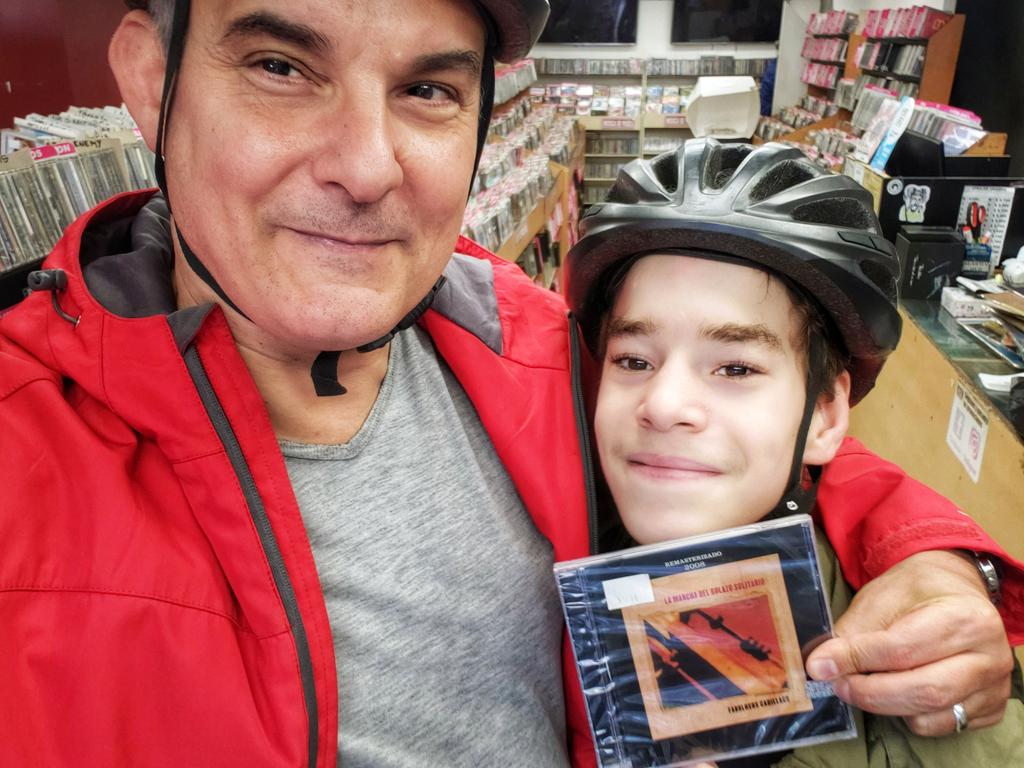
One minute talk with @vkaramurza , in three languages (and his Spanish is way better than my Russian!).
A brave fighter and one of the hopes for the future of Russia in a better world!
I decide to leave Quebec/Canada because:
1) the taxation system is astounding, rendering it nearly impossible to accumulate enough money to truly retire
2) the government's open immigration policies have made it unsafe for my family to remain here (due to the exponential increase in Jew-hatred).
Today I found out that I shall have to pay a departure tax for exercising my right to leave, and the money that will be taken from me (because the obscene amount of taxes that I've already paid in full is not enough) will be given to new incoming immigrants who hate Jews. My taxes funded my forced exit and will fund the harassment of any remaining Jews in Canada.
It would take me 10+ more years of work to save the amount that is likely to be taken via the departure tax.
Is this moral? Ethical? Just? In any case, off to bed. Tomorrow is a new day.
Há uns anos vi a Argentina trocar cinco passes curtos junto à linha, talvez contra a Croácia, talvez contra a Holanda ou até antes, e tive a sensação estranha de reconhecer uma coisa que o futebol moderno se tinha esforçado por nos convencer que já não existia. A bola não avançava ainda. Ficava ali, presa a dois ou três corpos, num pequeno atraso deliberado, como se recusasse a obrigação contemporânea de se tornar logo progressão, métrica, vantagem territorial.
É a Argentina de Menotti, da Scaloneta, de Aimar e Manna, de Messi, do toco y me voy, da pausa, do corta-luz. É a magia do enganche e dos criativos contra o império da força, da velocidade, dos dados e da optimização. O húngaro @Jozsef_Bozsik
chamou-lhe, com razão, “a última equipa de futebol”, numa era em que, como nos profetiza, evocando Mark Fisher, o bom velho @stirling_j , parece ser mais fácil imaginar o fim do mundo do que o fim do sistema posicional.
A globalização futebolística operou uma arrepiante desterritorialização do modelo de jogo, desde a academia até ao campo. Neste Mundial isso está evidente. Todos parecem ter aprendido a falar com o mesmo sotaque neutro: a mesma educação da jogada, a mesma saída a três, o mesmo duplo pivô, os mesmos extremos fixos, os mesmos laterais por dentro, as mesmas zonas ocupadas com zelo, os mesmos mapas, os mesmos relatórios. Sentamo-nos à frente da televisão e vemos a mesma gramática limpa e abstracta aplicada a corpos, histórias e culturas diferentes, com a bola a passar por estações previstas e o jogador a cumprir, muito direitinho, a pequena liturgia da posição.
A Argentina promoveu um retorno às suas raízes, a um modo de jogo que começa no potrero, no bairro, na cumplicidade dos jogadores que aprendem a reconhecer-se antes de obedecerem ao desenho. E fê-lo sem fingir que o presente não existe: a análise, o vídeo e a preparação estão lá, mas não chegam para confiscar o instante. O jogador aproxima-se, espera, toca e oferece-se, infere o tempo do outro antes de consentir a ordem do campo. A bola deixa de ser apenas uma circulação temporizada entre espaços para voltar a tornar-se numa conversa entre jogadores.
Há então um nostos rumo a um entendimento histórico e sociocultural da bola, relocalizando as relações afectivas entre os jogadores no seu devido contexto. A equipa não aparece como soma de funções, mas como comunidade de gestos, memórias e cumplicidades. Uma forma de jogar que ainda reconhece o improviso, a pausa, a hesitação, a parede, a diagonal e o encontro como parte essencial do jogo.
O tempo canonizou o atleta impecável; convém aqui distinguir o milagre da ginástica. Há uma santidade de ginásio, vontade e penitência que encanta multidões e vende mais suplementos. Mede-se a fome, vigia-se o sono, educa-se o músculo, corrige-se a alma ao espelho e entra-se em campo com a compostura de quem vai disputar um Mister Olympia contra Ronnie Coleman. Bonito, edificante, exemplar. Uma monotonia com jejum intermitente.
O futebol começa noutro sítio, longe da perfeição: no instante em que a bola descobre um corpo mais disponível ao assombro. O jogador torna-se protagonista e vemos que joga, como nas palavras do grande Eduardo Galeano, “pelo puro prazer do corpo que se lança na proibida aventura da liberdade”.
E sim, Messi é levado ao colo. Por Deus.
Escribí sobre por qué Borges está más vivo que nunca, hoy que se cumplen 40 años de su muerte. Para leer entre Ale-Curazao y Holanda-Japón: https://t.co/EsNqJ2mio5 @RevistaSeul
the masculine urge to use polymorphism to solve all problems is real
I am realizing my last 20 years were a lie and the strategy pattern isn't the best thing ever...
Maybe a function with 200 lines and a switch statement is just easier by all means
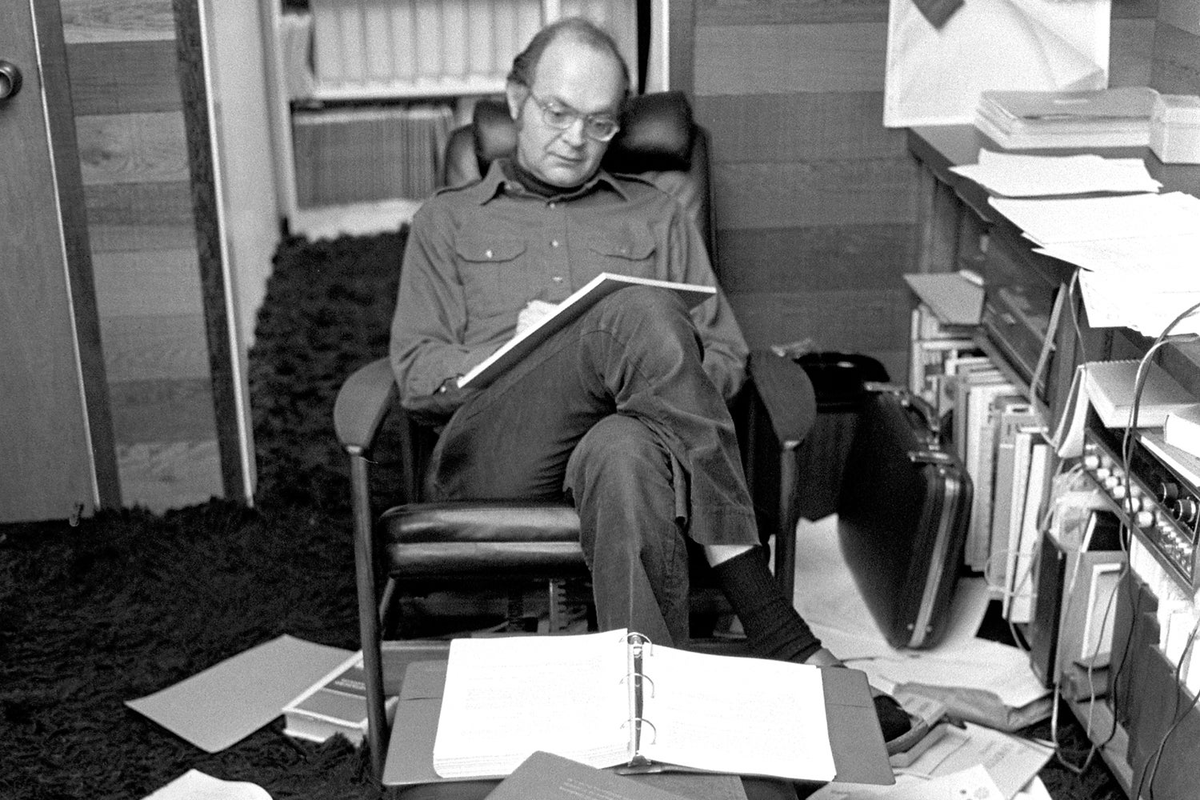
A computer scientist won the Turing Award at 36 and then walked away from almost every other project for the next 50 years to write one book that he has still not finished at age 88, and it may be the most important book in his field.
His name is Donald Knuth. He won the Turing Award in 1974, which is the closest thing computer science has to a Nobel Prize.
He was 36 years old. He had already written volumes one, two, and three of a book series called The Art of Computer Programming. He was the youngest person ever to receive the award at that point in its history.
Almost anyone else would have ridden that moment for the rest of their career. Founded a company. Sat on boards. Gone on speaking tours. Knuth did the opposite. He went back to his desk and kept writing.
He started the book in 1962. He was 24 years old. His publisher had asked him to write a short paperback on compilers. He sat down to outline it and discovered that to explain compilers properly he would have to explain the deeper algorithms underneath them first.
The short paperback became a draft outline of 12 chapters. The 12 chapters became a planned 7-volume series. The 7-volume series became the project he is still working on 63 years later.
Volume 1 came out in 1968. Volume 2 in 1969. Volume 3 in 1973. He was producing books faster than most academics produce papers. Then everything stopped.
In 1977 he received the printed proofs of the second edition of Volume 2. He looked at the pages and was so disgusted by how the publisher had typeset his mathematical notation that he could not bring himself to release the book.
The equations looked ugly. The fonts looked wrong. The spacing was off. He decided he could not in good conscience publish another volume of TAOCP until the typesetting problem was solved.
So he paused the book.
He stopped writing TAOCP and spent the next 8 years inventing TeX from scratch.
TeX is the typesetting system that every academic paper, every math textbook, every physics journal on earth now uses. Every PhD thesis in the sciences is set in TeX. Every paper on arxiv. Every equation in every paper Anthropic, OpenAI, and DeepMind have ever published. The system that the entire scientific publishing world runs on exists because one man refused to compromise on how the second edition of Volume 2 looked.
He gave the entire TeX system away for free. He never tried to commercialize it. He went back to writing TAOCP.
In 1992 he retired from Stanford at the age of 54. Most professors retire to slow down. Knuth retired to speed up. He explicitly said he was leaving teaching because he needed every remaining hour of his life to keep writing the book. He stopped using email on January 1, 1990.
He answers no calls. He takes paper mail only. He is on a personal mission to finish a multi-volume series that nobody is forcing him to write, on a deadline that only exists in his own head.
Volume 4A came out in 2011. Volume 4B in 2022. He is currently working on Volume 4C. Volumes 4D, 4E, 4F, 5, 6, and 7 are still ahead of him. He is 88 years old. He will almost certainly die before he finishes.
The thing that should haunt anyone reading this is the math of his choice.
Every modern incentive structure tells you to optimize for speed. Ship the imperfect version. Get it out the door. Iterate later. Move on to the next thing.
Knuth has spent 63 years doing the exact opposite. He pays a $2.56 reward in hexadecimal dollars to anyone who finds an error in his published books. Real checks, until check fraud made him switch to certificates of deposit. He treats every single error in every single volume as a personal failure. He revises. He rewrites. He goes back to fix issues that nobody else could have spotted.
He could have written 30 books in 63 years. He chose to write one.
The reason is the one almost nobody understands the first time they hear it. There is a category of work that loses all its value when it is done quickly.
A reference book that engineers will rely on for the next 200 years is not the same kind of object as a blog post that has to ship today. The slow project and the fast project look like the same activity from the outside. They are completely different games.
Bill Gates once said in an interview that if you can read the whole of TAOCP, you should send him your resume. He meant it. He was not joking. The man who founded Microsoft was telling the world that the rarest skill on earth is being able to finish a book that one man has spent his entire adult life writing for an audience that mostly does not have the patience to read it.
The book may never be finished.
The man writing it knows this and keeps writing anyway.
The work outlives the worker. That is the entire point.
Gracias @martinvars. Desde @UnblockComputos fue siempre esta la tesis.
Agregaría algo que pocos ven desde afuera: sacando Google y Meta los 10 mayores developers de data centers en EE.UU. son ex-mineros de Bitcoin (Crusoe, Coreweave, Nebius, Nscale, etc). No es casualidad. Es el mismo stack:
- Infra de bajo voltaje, alto amperaje (mas complejo en protecciones electricas, seguridad, etc)
- Manejo de energía inestable para lograr un output estable;
- Disipación de calor a gran velocidad;
- Lograr uptimes >99% en condiciones hostiles.
Y sobre todo: un método para formar electricistas, instaladores y operadores de cómputo - que en EE.UU. se está acercando al principal cuello de botella para ejecutar los datacenters en tiempo.
En Unblock venimos haciendo esto desde 2022. Tu tesis "continuidad del cómputo" es exacto la clave.
Contratamos este aviso para que saliera en @babelia_elpais el pasado sábado 16/5. La dirección de @el_pais rechazó publicarlo porque “no considera que una publicidad de libros deba contener discursos políticos dirigidos al gobierno de España [sic]”.
La dirección es clara. 👇







![LibrosdelZorzal's tweet photo. Contratamos este aviso para que saliera en @babelia_elpais el pasado sábado 16/5. La dirección de @el_pais rechazó publicarlo porque “no considera que una publicidad de libros deba contener discursos políticos dirigidos al gobierno de España [sic]”.
La dirección es clara. 👇 https://t.co/VjrEpqgZ6U](https://pbs.twimg.com/media/HI71M5gXoAAJ5D4.jpg)


